Let's Get Stoned: A Brief History of Stone Dials in Watchmaking
Published on 3/26/2026
In watchmaking, “new” ideas tend to arrive wearing vintage clothing. Trends cycle, materials return, and what once felt experimental eventually becomes tradition. Few examples prove this better than the stone dial, one of the most visually striking, occasionally outrageous, and undeniably charming expressions of watch design.
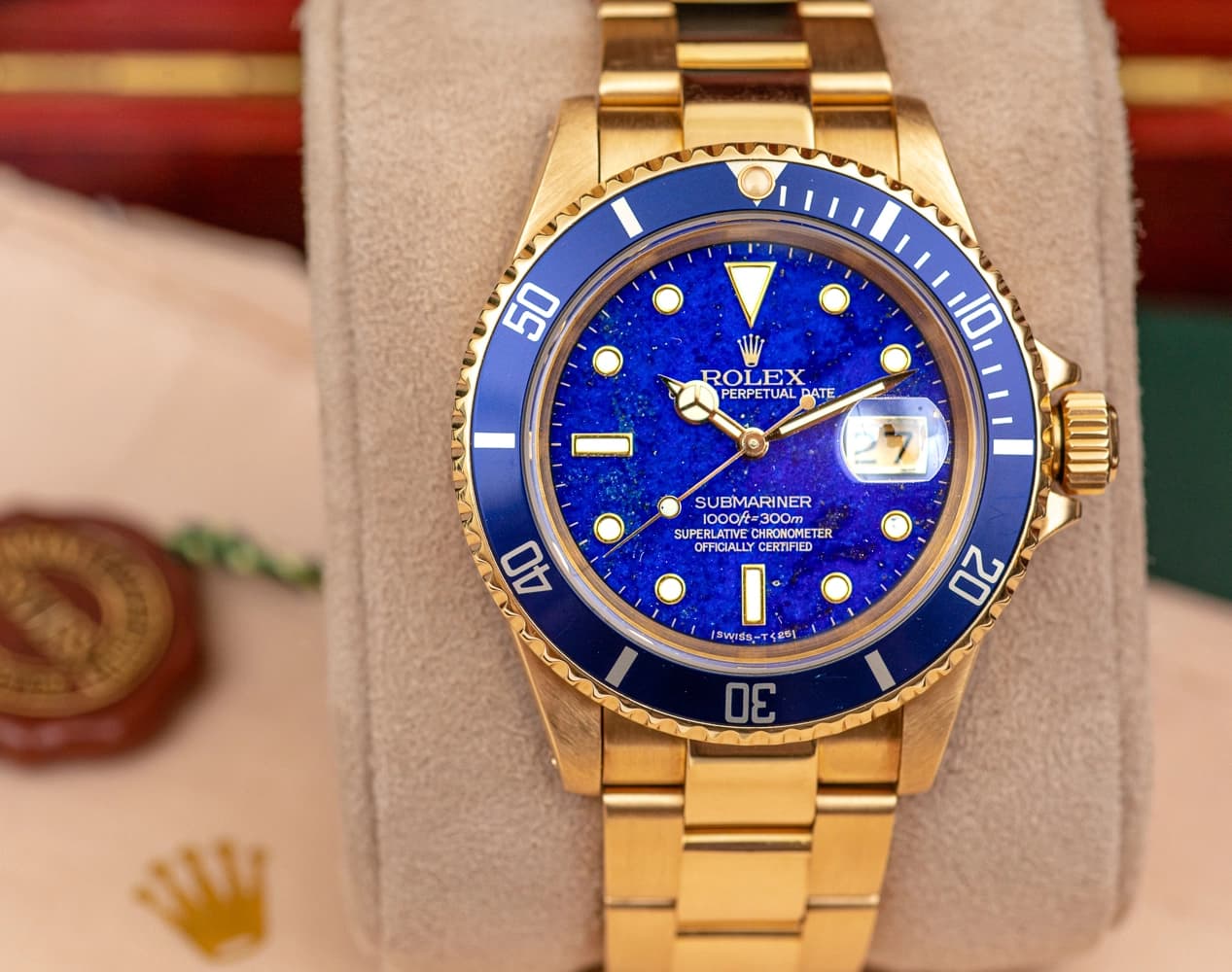
Instead of painted brass or lacquer, the dial is cut from natural minerals formed deep within the earth over millions of years. Lapis lazuli flecked with gold. Malachite swirling in hypnotic green waves. Tiger’s eye shimmering with warm chatoyance (make this your “word of the day”). The result is a dial that no designer could ever fully replicate, because nature has already done the hard work.
For something that looks so ancient, the stone dial is a relatively modern idea, in horological terms. Early watchmakers occasionally experimented with materials like mother-of-pearl, but true stone dials only became feasible in 1957 when Piaget introduced the ultra-thin calibre 9P, a movement measuring just 2mm thick. That breakthrough allowed watchmakers to carve incredibly thin slices of stone, often around a millimeter thick, without turning a watch case into something resembling a stack of pancakes.
By 1963, Piaget began releasing watches with dials made from lapis lazuli, jade, malachite, opal, and more. The process was delicate, but the effect was irresistible. These watches quickly became glamorous objects of desire; one jade-dial Piaget famously ended up on the wrist of Jackie Kennedy.
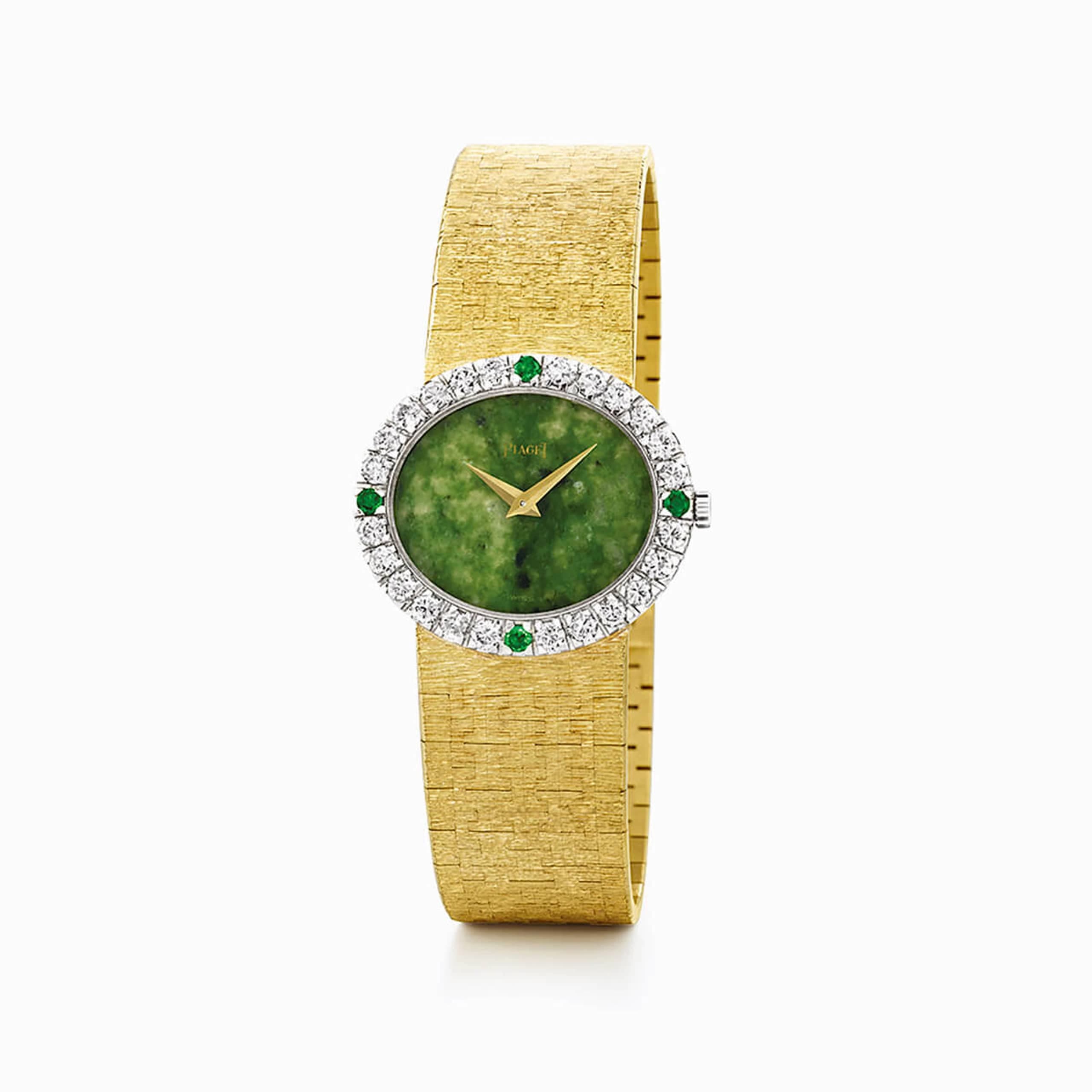
Image: Piaget
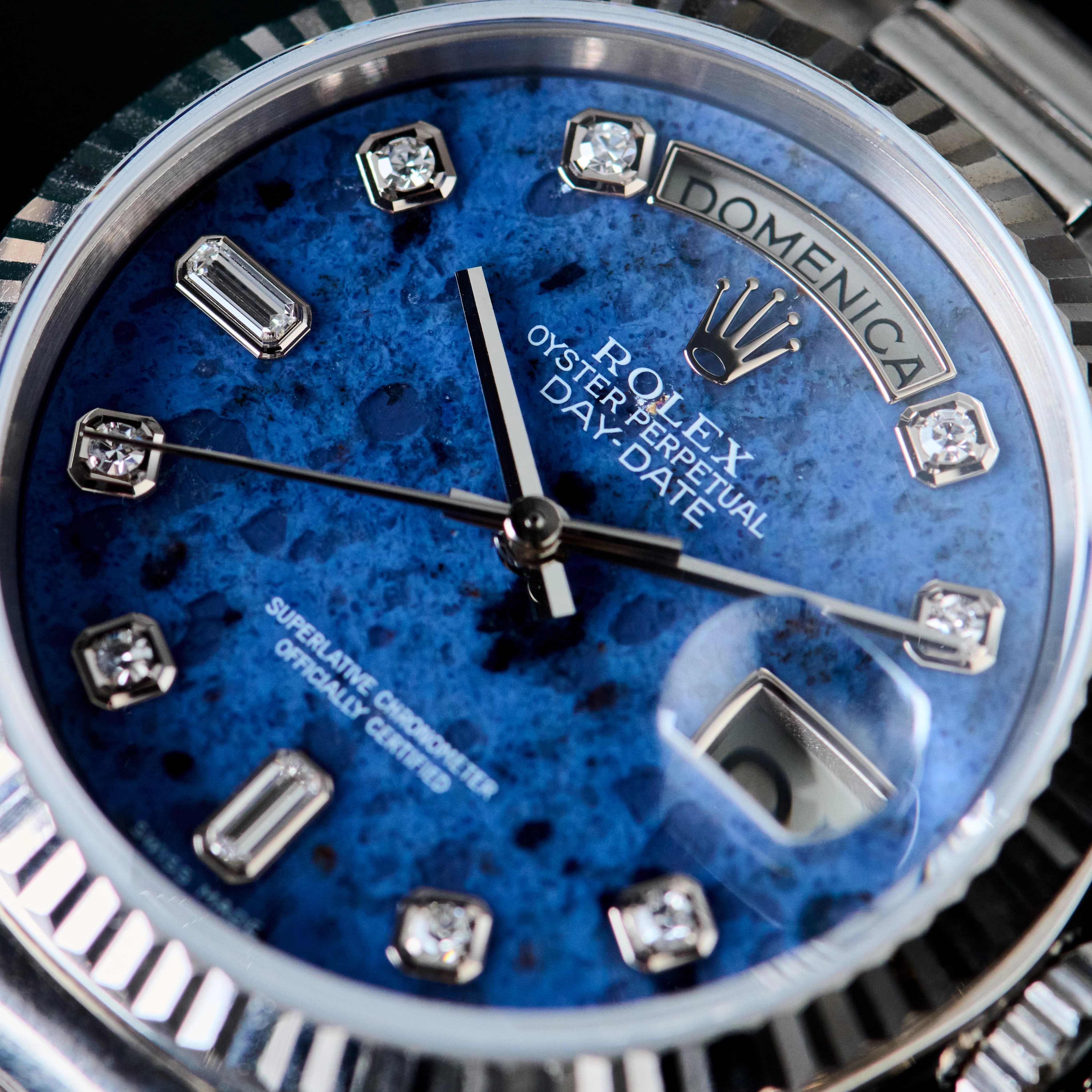
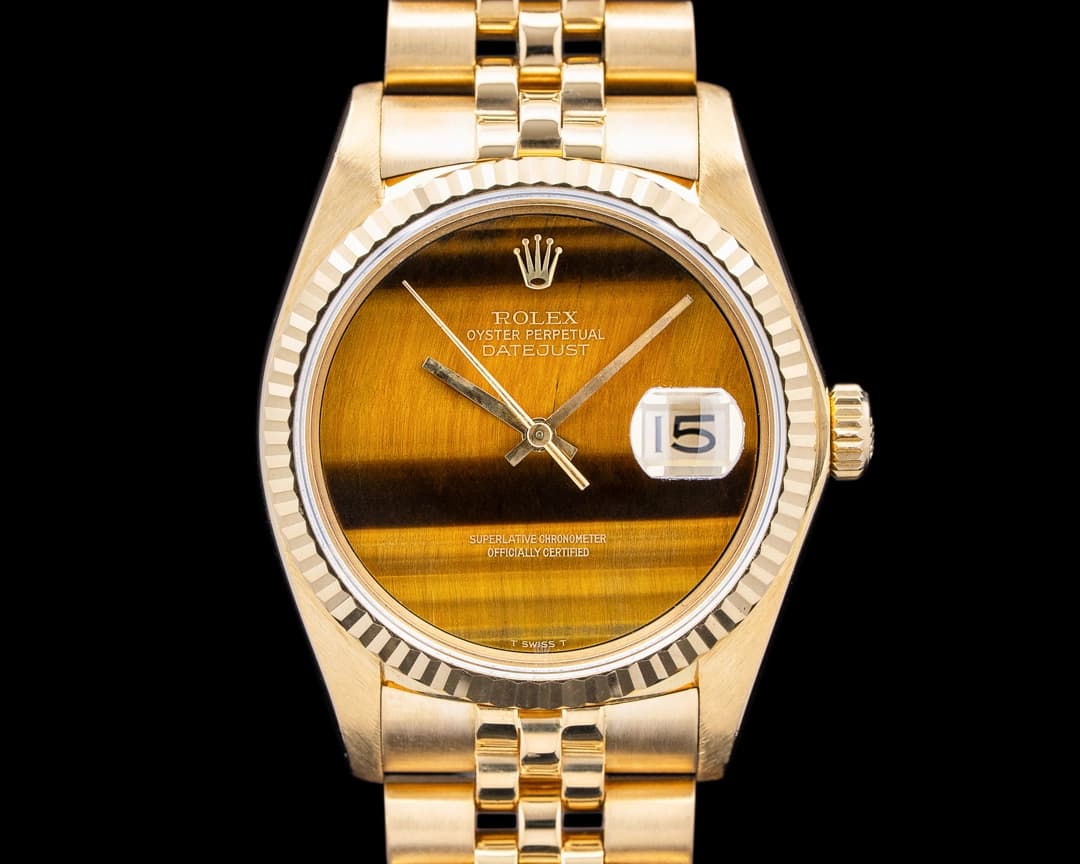
The idea soon spread. By the 1970s, Rolex was offering a dizzying array of stone dials across the Datejust and Day-Date, using materials like onyx, jasper, agate, and more extravagant dials that incorporated fossilized sea critters. The watches leaned unapologetically into luxury, turning geology into wristwear.
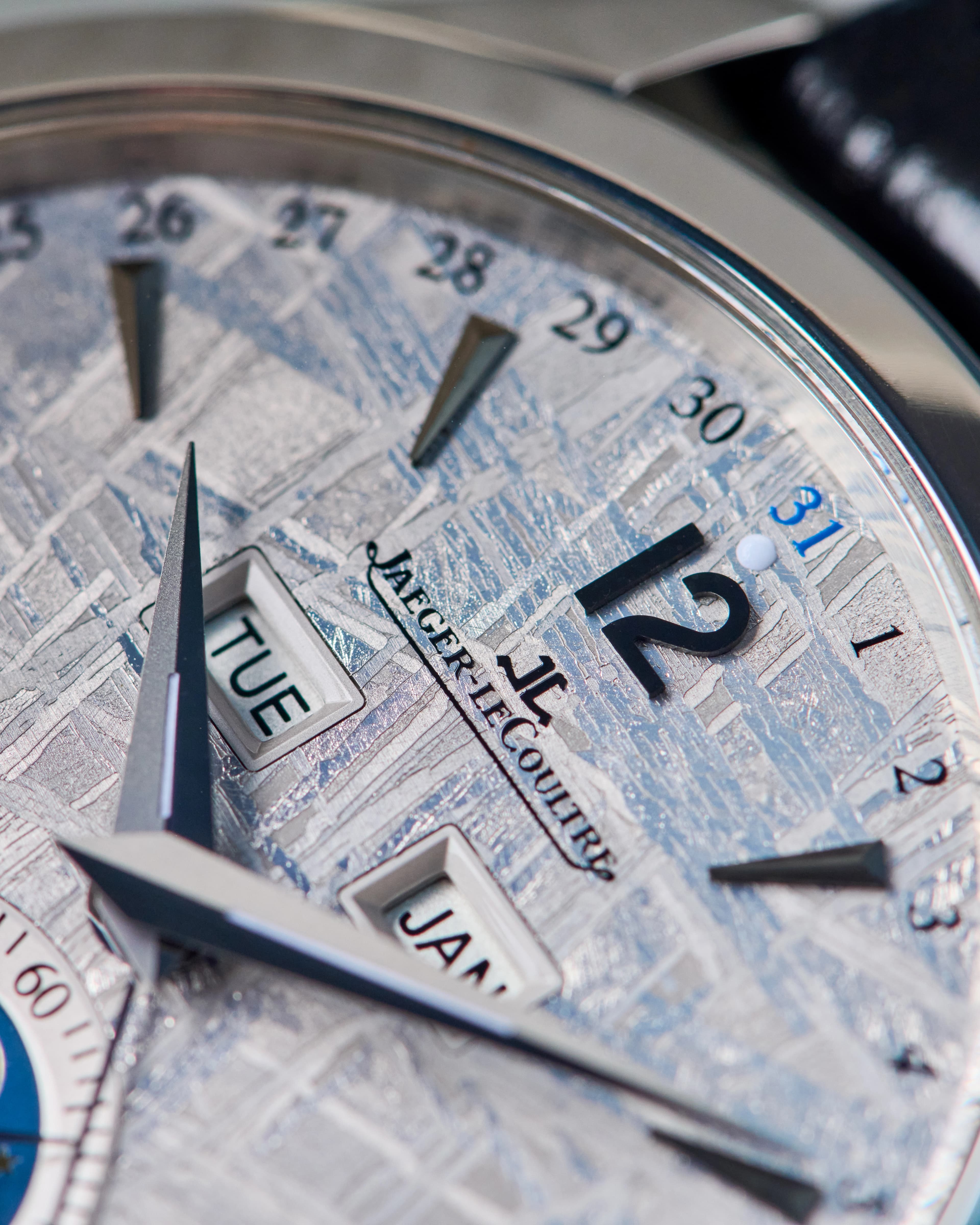
Stone dials briefly fell out of fashion during the quartz-dominated 1980s, but today they appear everywhere, from haute horology pieces by brands like Patek Philippe and Jaeger-LeCoultre to more accessible watches using materials like meteorite and aventurine.
In other words, the watch world is once again getting comfortably, enthusiastically stoned.
And the results are far more interesting than any plain old dial could ever hope to be.
Piaget: The Original Stone Dealer
While many brands now experiment with mineral dials, the origin story largely begins with a maison in the Swiss Jura that believed watches could be as expressive and daring as jewelry.
Piaget’s story began in 1874 in the small village of La Côte-aux-Fées, where the company initially built a reputation as a manufacturer of high-precision watch movements. For decades the brand operated behind the scenes, producing components rather than finished watches. That changed in 1943 when the founder’s grandsons, Gérald and Valentin Piaget, formally registered the Piaget name as a watch brand and began creating complete timepieces. Their vision was clear from the start: elegance would define the house, supported by technical mastery in ultra-thin watchmaking.
By 1963 the brand began introducing watches with ornamental stone dials cut to less than a millimeter thick. The process was painstaking. Stones frequently shattered during cutting, polishing, or even during the delicate process of fitting the hands. Many attempts never made it into a finished watch. Yet Gérald and Valentin Piaget persisted, convinced that the beauty of these natural materials justified the effort.
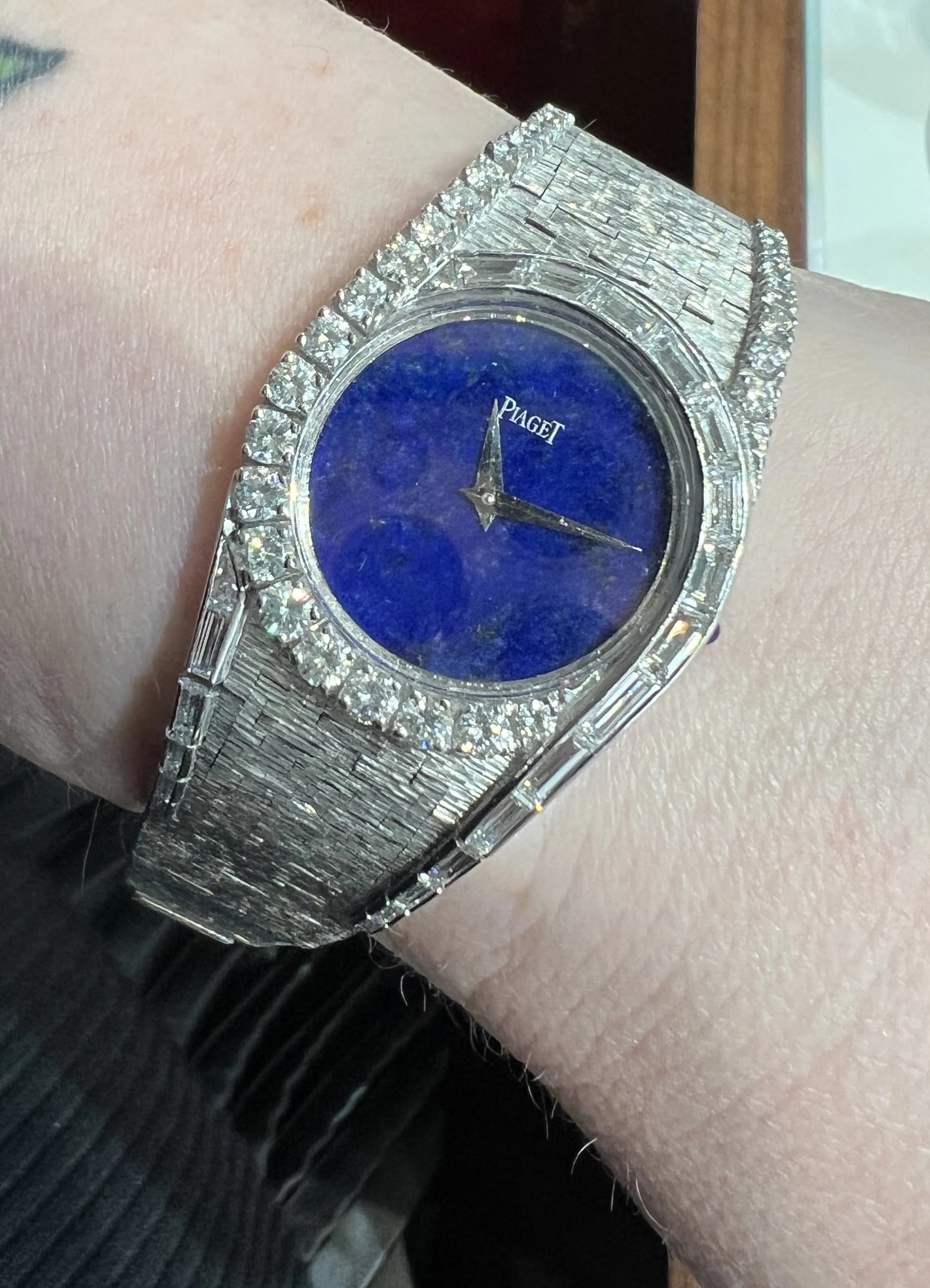
Images: Kathleen McGivney
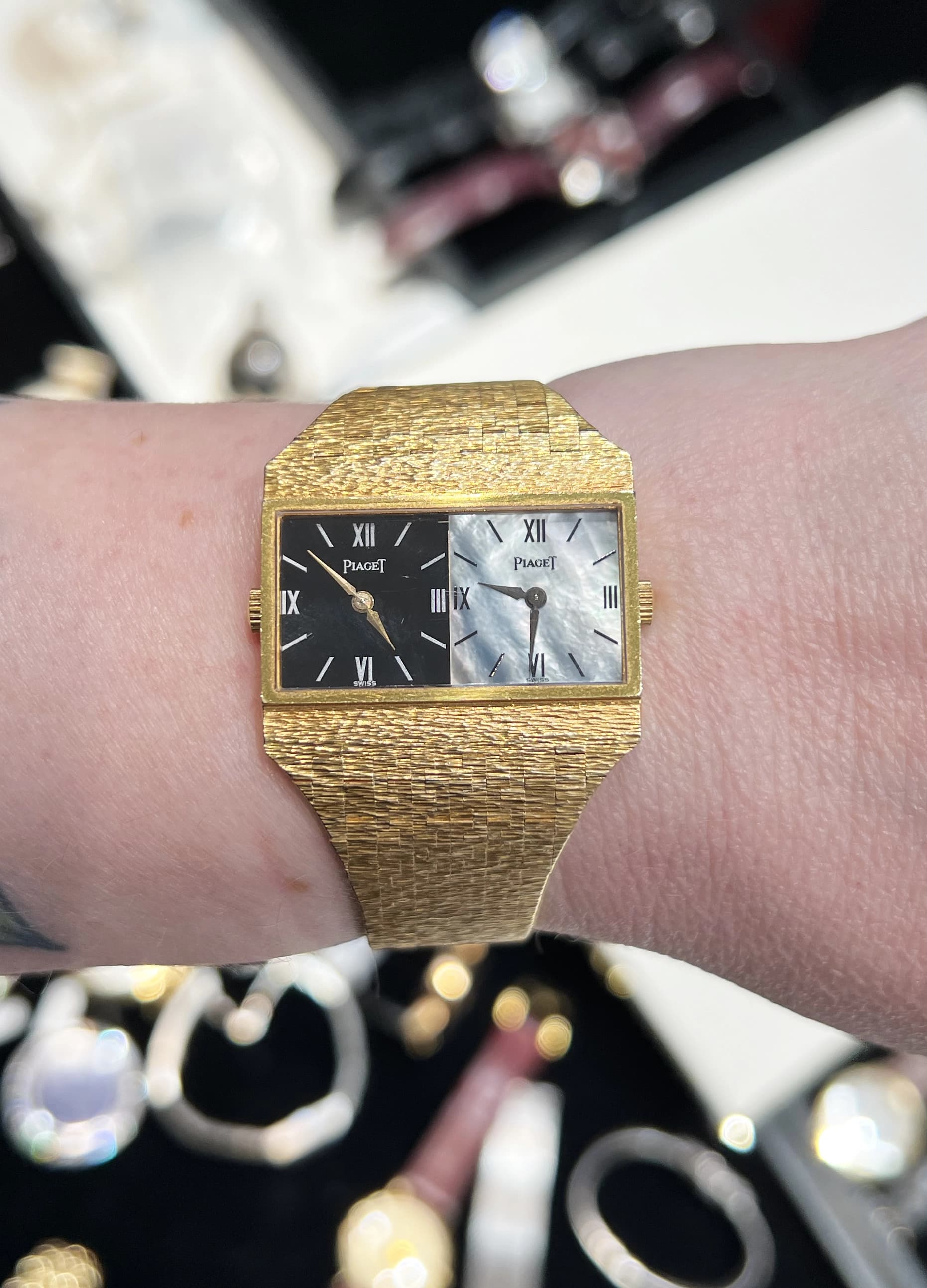
Vintage watches: Somlo London
This philosophy never really left the brand, said Alain Borgeaud, Heritage Officer of Piaget, who joined the brand in 2001 as Project Manager for jewelry watches and exceptional pieces after 15 years working as a jeweler in Geneva. “At that time, stone dials were not as frequent as today,” he explains, “but they always equipped feminine and masculine creations, as color is part of our DNA.”
During the 1960s, Piaget embraced the spirit of experimentation with enthusiasm. The brand paired vibrant stone dials with sculptural gold cases and intricately crafted bracelets, blurring the line between watchmaking and high jewelry. Index markers were often omitted so that nothing interrupted the natural patterns of the stone. Each dial appeared less like a manufactured component and more like a small fragment of the earth itself.
This fusion of disciplines was entirely intentional. “Watches and jewels have been created along the same way, as Piaget watches are often jewels which give time,” said Borgeaud.
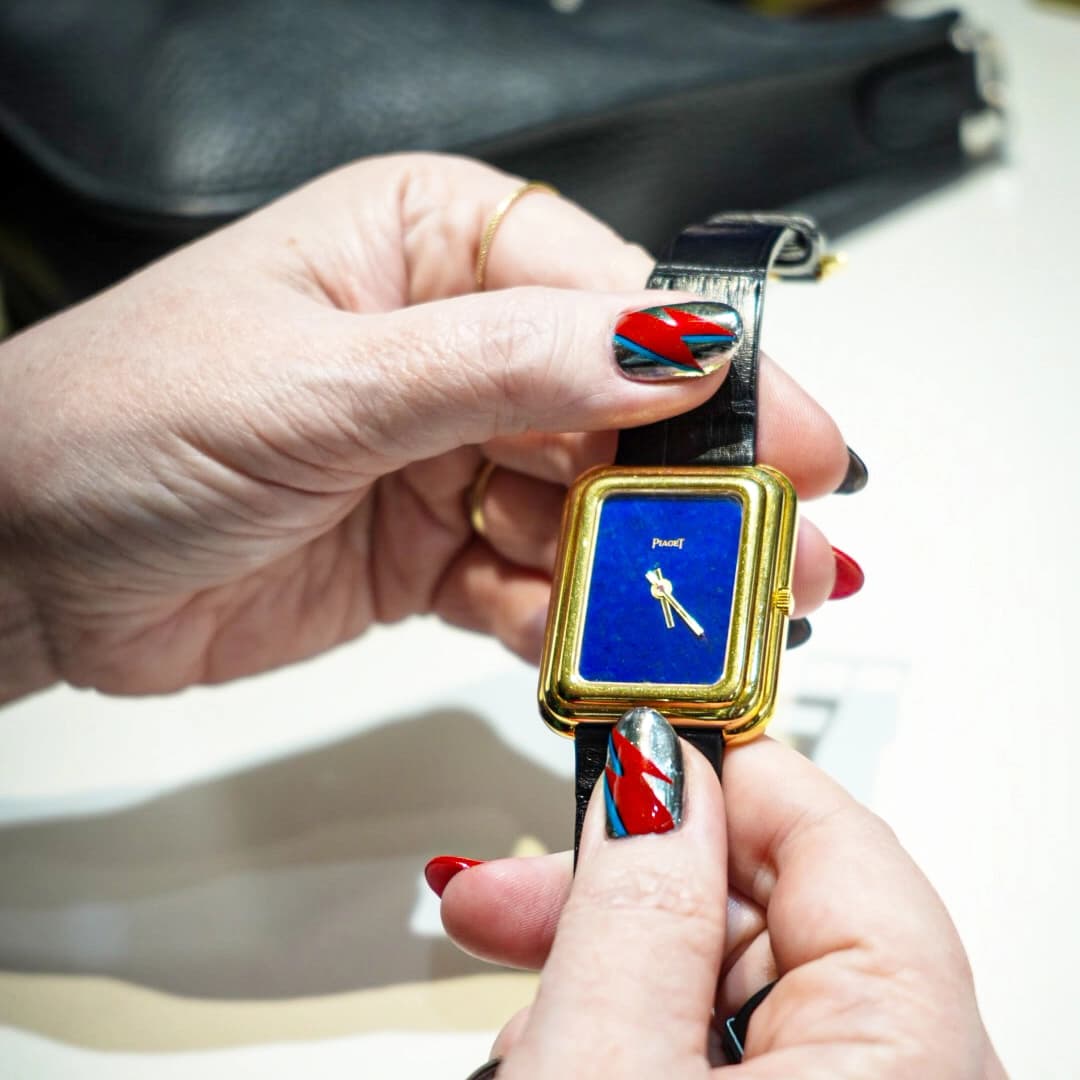
Image: Chris Antzoulis; Vintage watch: Somlo London
The watches quickly captured the attention of cultural tastemakers. Jackie Kennedy famously wore a Piaget watch with a jade dial set into a richly textured gold bracelet, while Elizabeth Taylor and other icons of the era embraced the brand’s bold aesthetic. These were watches designed not only to keep time, but to express individuality and glamour.
By the end of the decade, Piaget offered more than thirty different ornamental stones in its catalogue. Clients visiting the brand’s Geneva salon, opened in 1959, could choose among an extraordinary range of materials, case shapes, and bracelet designs, sometimes resulting in pieces that were effectively unique. The maison’s goldwork was equally imaginative, featuring finishes that ranged from woven textures to engraved or brick-like patterns.
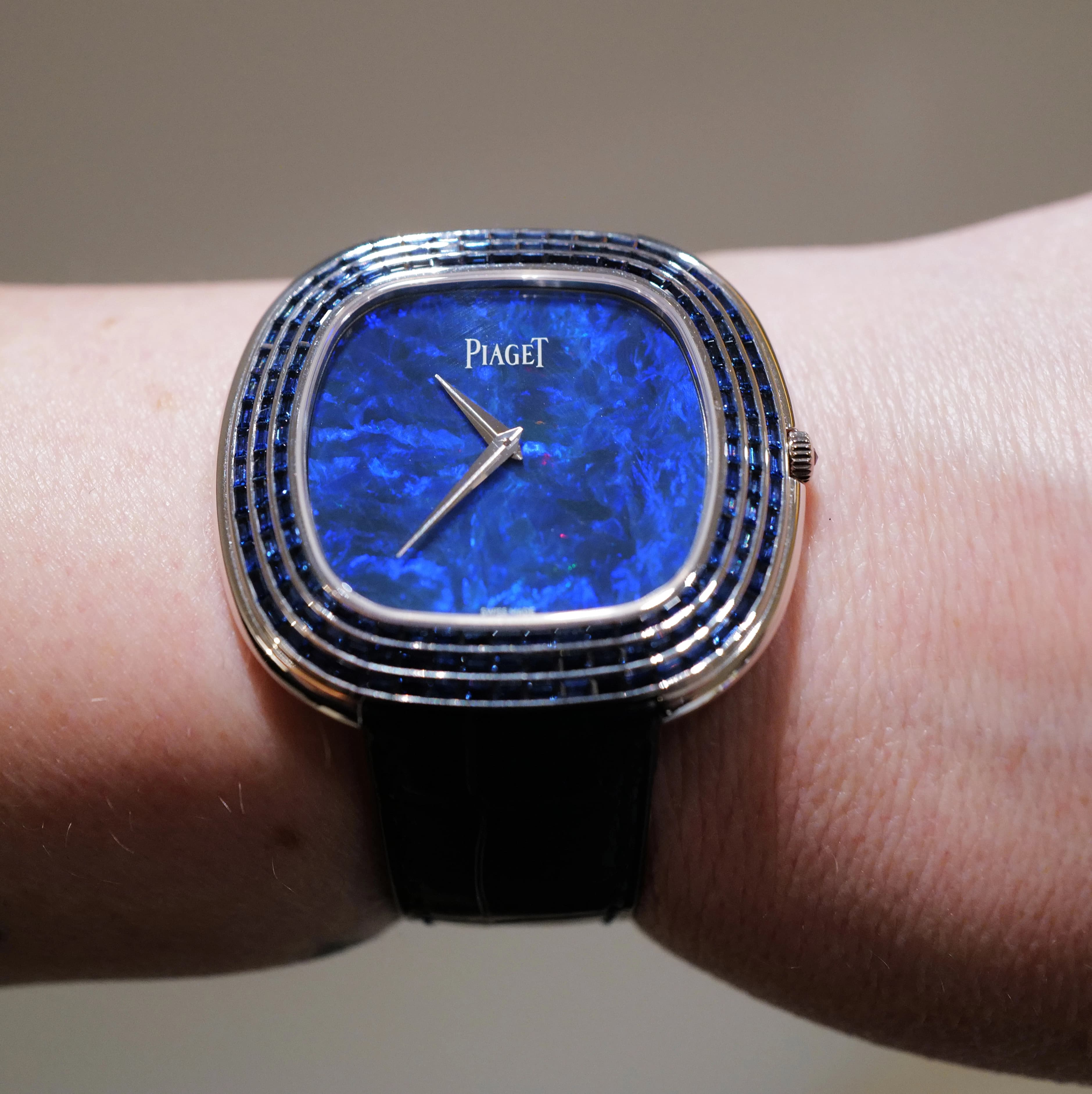
Image: Kathleen McGivney
That sense of uniqueness remains central to the appeal today. “As almost all ornamental stones are different, each watch is more or less unique,” Borgeaud notes—an observation that feels even more relevant in today’s era of mass production.
The overall effect felt organic. Rather than imitating nature literally, Piaget captured its movement and unpredictability. Each stone dial carried a natural randomness that ensured no two watches were ever truly identical.
Today, many brands explore the beauty of stone dials, but the blueprint remains unmistakably Piaget. Those exuberant watches of the 1960s established the formula: ultra-thin movements, fearless use of color, and a belief that the dial could serve as the artistic soul of a watch.
The People’s Republic of Stone
For decades, getting properly “stoned” in the watch world required a fairly serious budget. Stone dials were the territory of high luxury brands willing to absorb the cost of slicing fragile minerals into impossibly thin wafers, knowing that many would shatter before ever reaching a wrist. The result was beautiful, but also rare. If a collector wanted a malachite Day-Date or a lapis Piaget, the price of admission was usually measured in gold and four figures, or sometimes five. That equation has changed dramatically in recent years.
A quiet revolution has been happening behind the scenes in watchmaking, driven not by Swiss maisons but by the global network of specialist dial manufacturers. Workshops in places like China, Vietnam, and India have refined the art of cutting, stabilizing, and mounting stone dials with far greater efficiency than was possible decades ago. Advances in machining and finishing have reduced breakage, improved consistency, and made it viable to produce stone dials at scale. What was once an artisanal gamble has become a reliable manufacturing process.
At the same time, the market itself has evolved. Instead of chasing hype or obsessing over spec sheets, many buyers now gravitate toward watches that offer something tangible and distinctive. A dial cut from natural stone delivers exactly that. No two pieces of lapis, malachite, onyx, or meteorite will ever be identical, which means even a watch produced in large numbers still carries a dial that exists nowhere else on Earth.
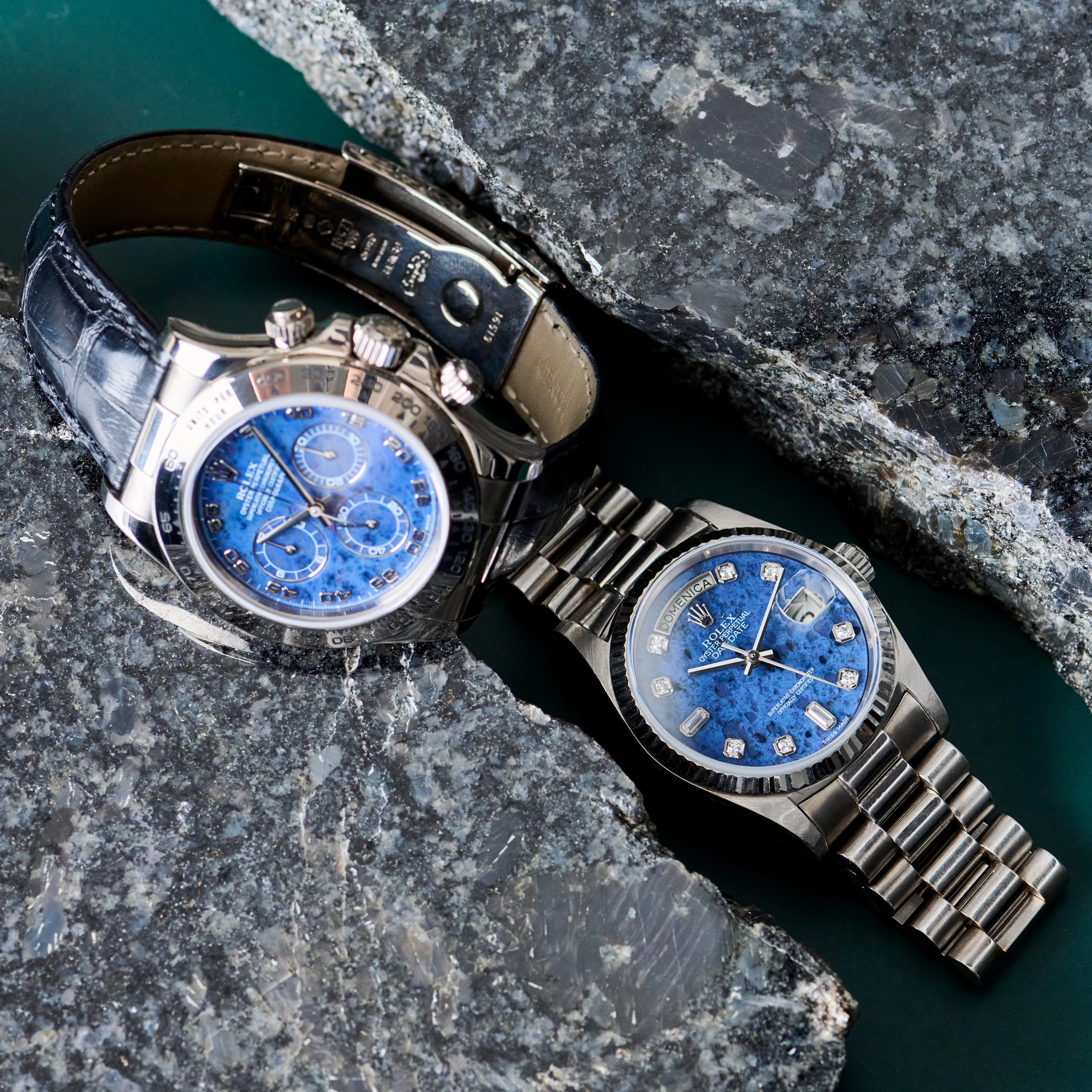
For younger collectors, especially, that individuality matters. In a world increasingly dominated by digital products and virtual experiences, a slice of mineral formed over millions of years feels more real than ever. It gives the watch a sense of story, one written long before the movement was ever assembled.
Even within Piaget, that long arc from exclusivity to expression has remained remarkably consistent. “Even when the period was less oriented towards color in the ’80s and ’90s, the house never abandoned this mode of creative expression that embodies the brand’s identity so strongly,” Borgeaud reflected.
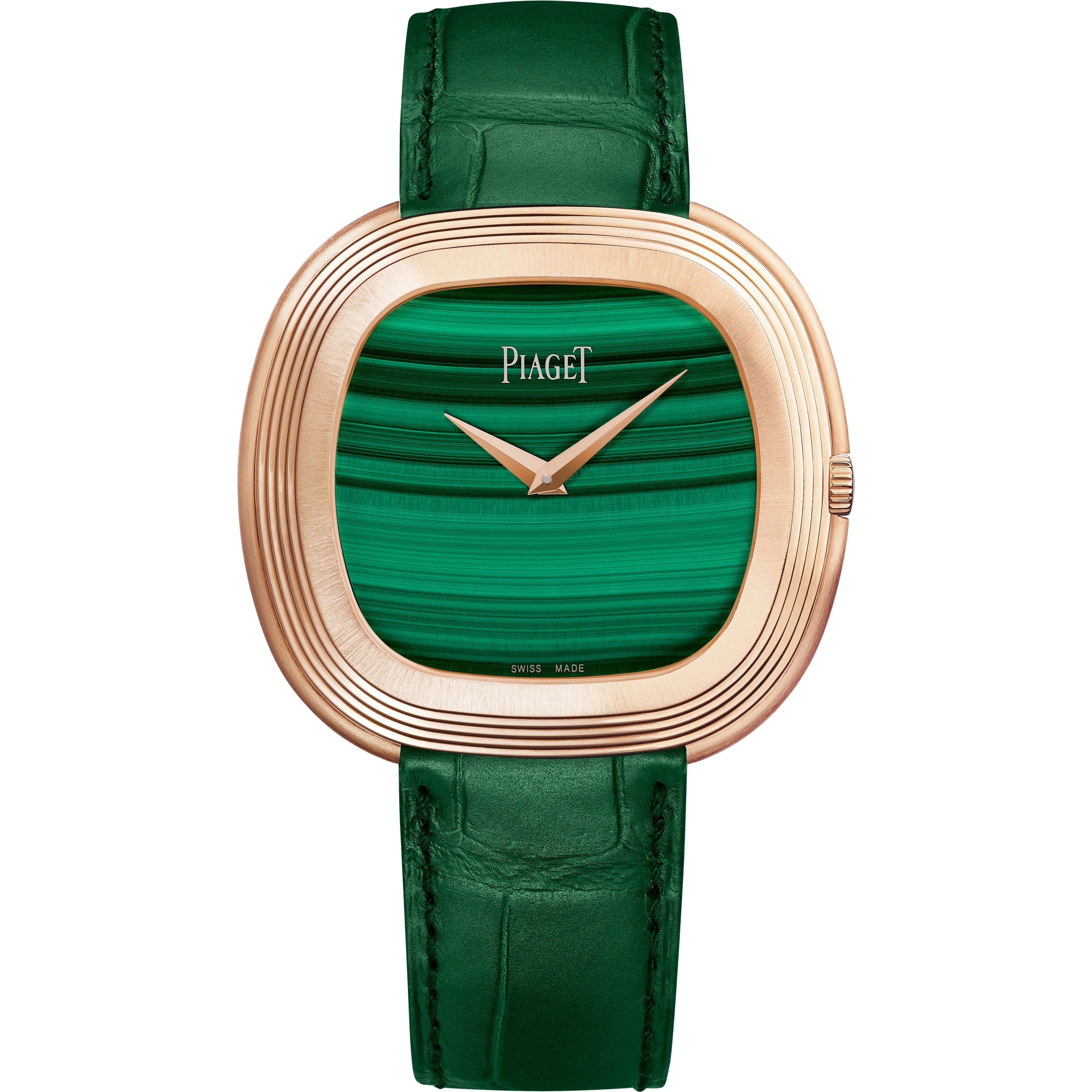
Image: Piaget
This continuity has allowed stone dials to evolve from status symbols into something more personal. Borgeaud points to modern interpretations, such as the revival of bold, stone-dial designs associated with figures such as Andy Warhol, as watches that resonate not because of what they signal but because of what they say about the wearer. They offer “a way to stand out… to assert a personal taste rather than a search for social status,” he said. That shift might be the most important evolution of all.
This is something that would have been almost unthinkable during the golden age of stone dials in the 1960s and ’70s: genuinely approachable stone-dial watches. Brands both large and small now offer models featuring malachite, aventurine, meteorite, lapis lazuli, and other minerals at prices that would have once seemed impossible. The look that once required a Piaget boutique or a Rolex authorized dealer can now be found across a far wider spectrum of watchmaking.
In other words, the watch world hasn’t just gotten stoned again; it has made the experience much more inclusive, now allowing everyone with the munchies to join in.
Stoned, Scaled, and Ready to Wear
Whether the goal is your first flirtation with lapis, a taste of meteorite, or a full commitment to malachite excess, the following watches prove that getting stoned is no longer an exclusive club; it’s a very well-populated party.
Isotope Hydrium Ice Fall
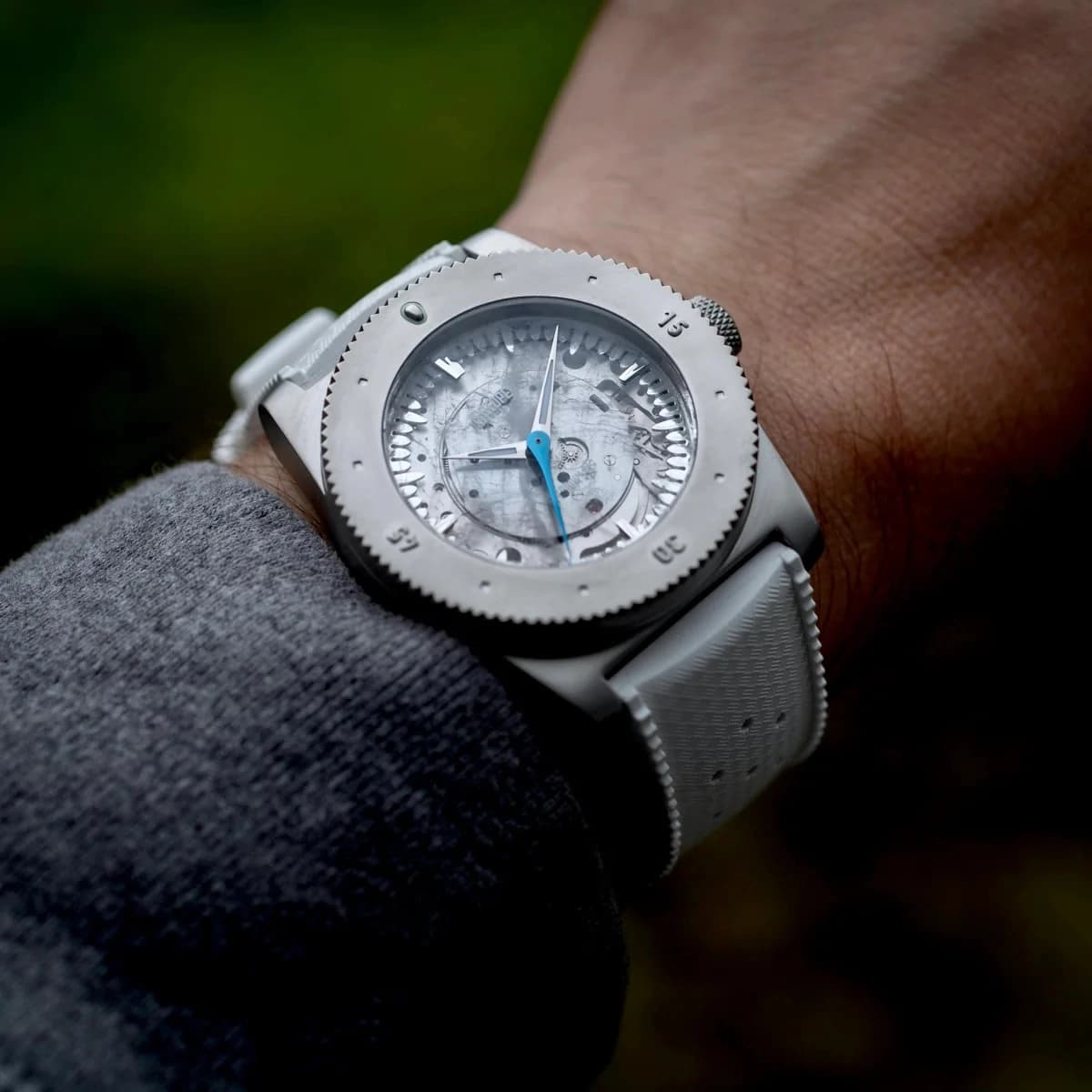
Leave it to Isotope to wander off the beaten path. The Hydrium Ice Fall takes the brand’s popular dive watch platform and inlays it with a dial crafted from Brazilian amethyst. At a glance, it looks like a skeletonized design, but a closer inspection reveals delicate white veining running through the surface. In its natural state, amethyst is richly purple, yet when sliced down to an astonishing 0.4mm, it becomes nearly transparent, transforming the material into something ethereal. Around the perimeter, the indices resemble frozen shards, while the center evokes the slow, fluid melt of a glacier, capturing a fleeting, frozen moment that feels equal parts geological and otherworldly.
“Finding the right stone was essential. We searched for a natural, organic material capable of reproducing the translucency, depth, and crystalline structure of ice. Amethyst proved to be the perfect choice. When cut ultra-thin, it reveals internal veins and luminosity that feel unmistakably glacial,” said Jose Miranda, on the Isotope website.
Zelos Comet 39 ‘Meteorite’
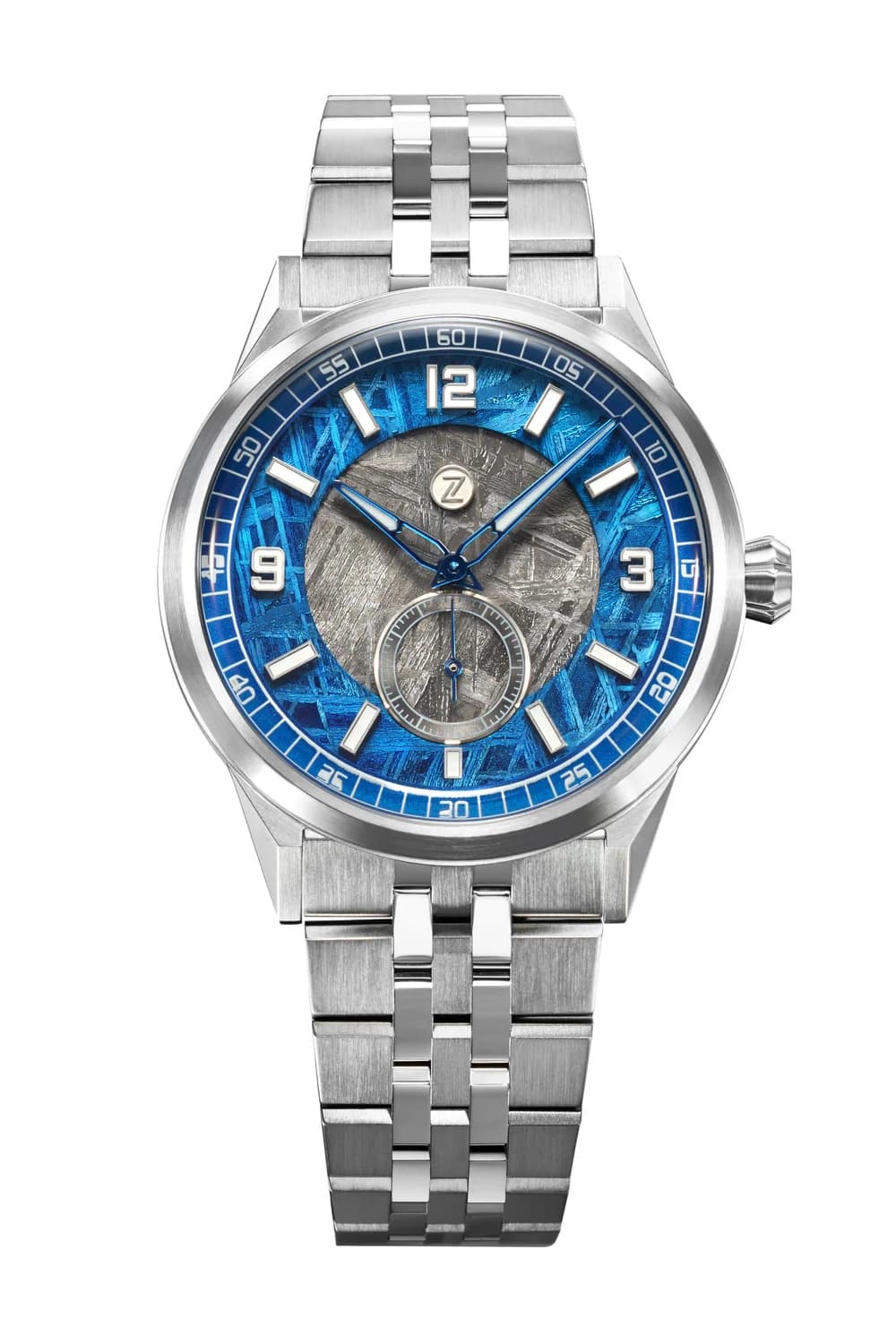
Zelos has built a reputation on delivering unconventional materials at prices that are suspiciously reasonable, and the Comet series is a perfect example of that ethos evolving. More restrained than the brand’s famously chunky divers, the Comet leans dressier, but not without a bit of cosmic flair. The meteorite variant, in particular, refuses to play it safe, pairing two distinct cuts of extraterrestrial material: a natural grey meteorite center surrounded by an outer ring treated with blue PVD. The result is a dial that feels both refined and unhinged in the best possible, space-born way.
Dennison Natural Stone Tiger Eye in Gold
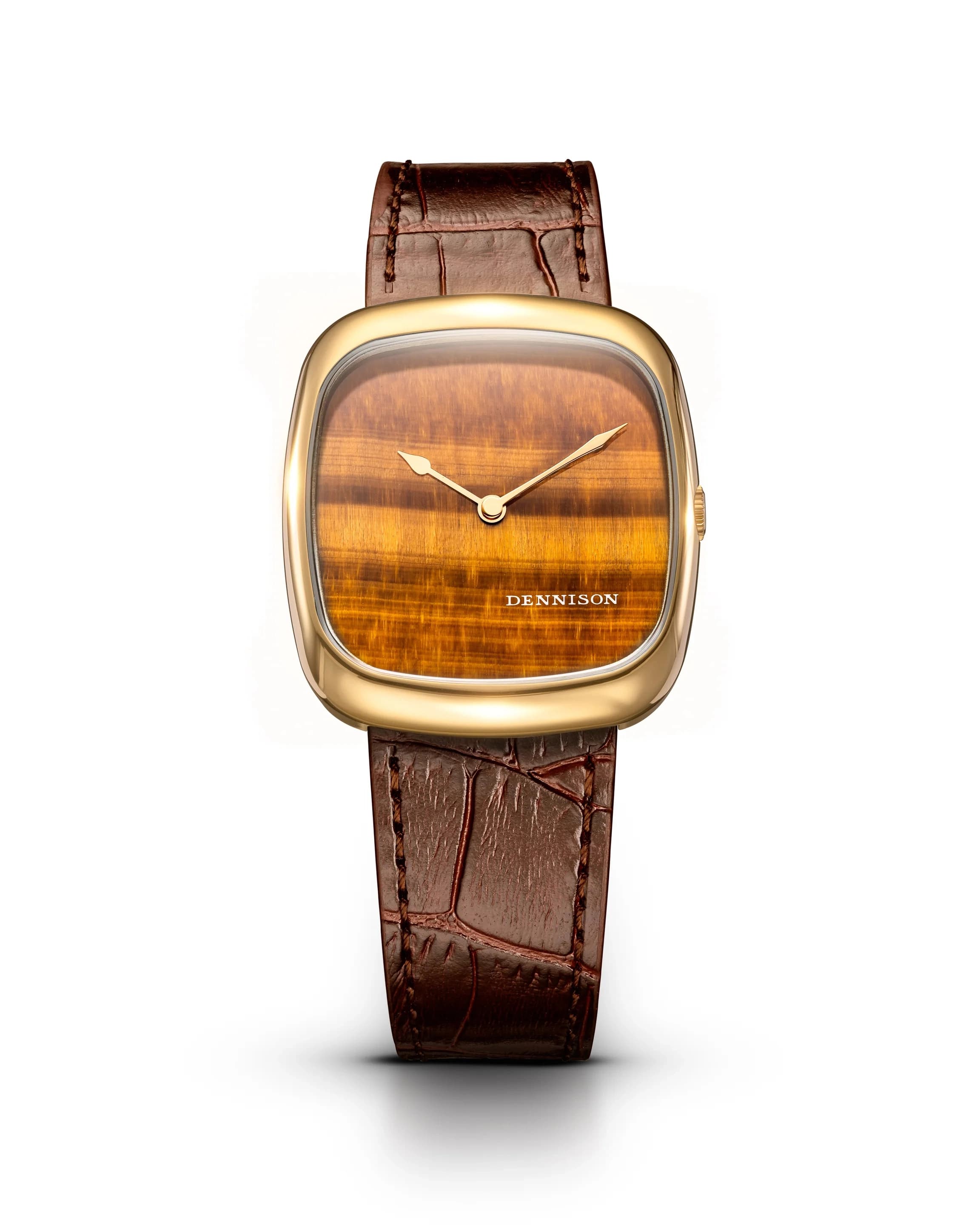
No survey of modern stone dials would feel complete without a nod to Dennison, the brand arguably leading the charge in making this once-again popular aesthetic genuinely attainable. Fresh off winning the “Challenge Prize” at the 2025 Grand Prix d’Horlogerie de Genève for its Natural Stone Tiger Eye in Gold, Dennison isn’t just riding the trend; it’s helping define it. With clean, elegant designs powered by accessible quartz movements, the brand captures all the warmth, shimmer, and visual drama of tiger’s eye without the traditional barrier to entry. In many ways, Dennison stands as the clearest example yet of a brand rockin’ hard without luxury-level commitment.
Piaget Andy Warhol Watch “Collage”
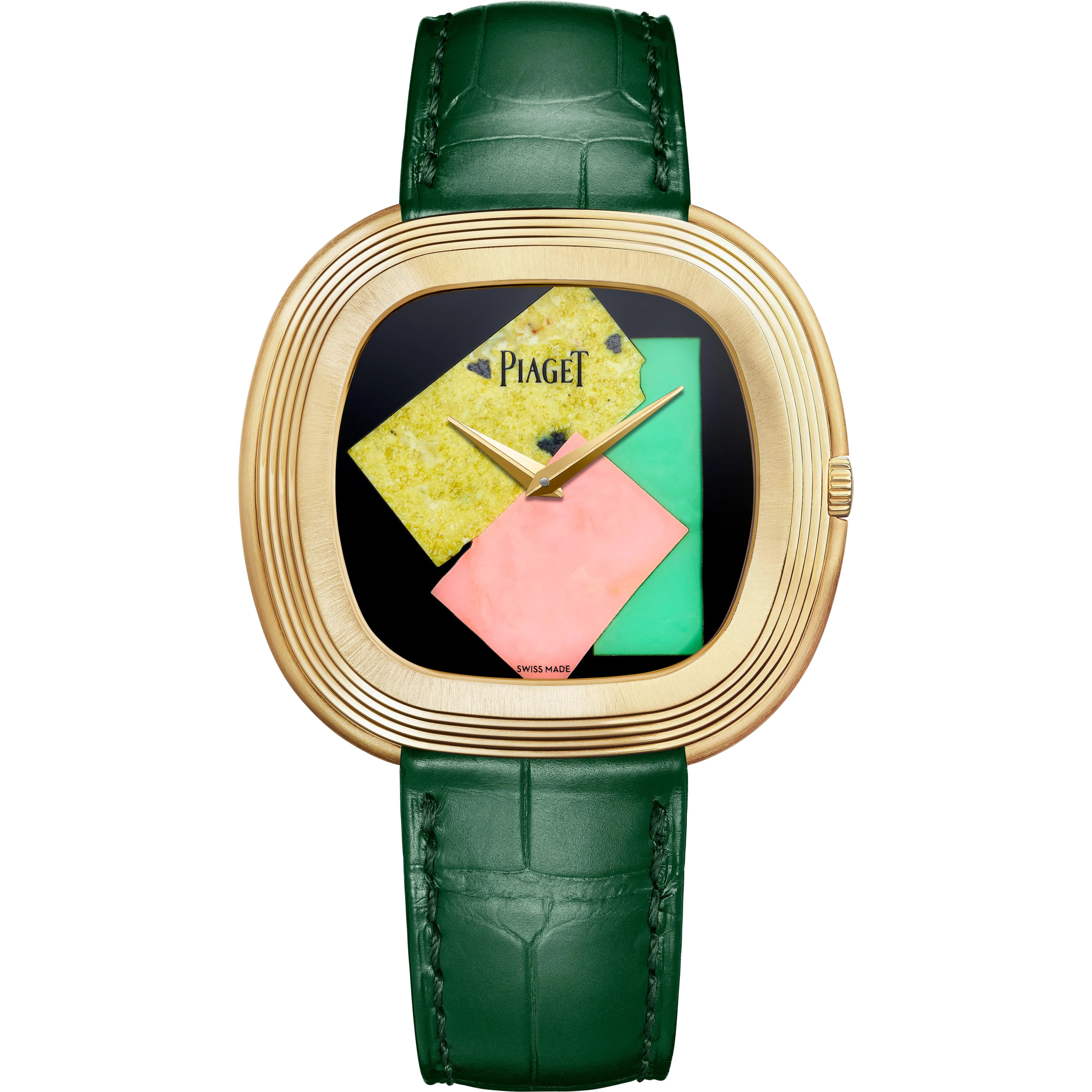
Piaget, unsurprisingly, hasn’t just revisited stone dials; it’s pushed them somewhere far more playful. The Andy Warhol “Collage” watch takes the maison’s long-standing connection to the artist and turns the dial into something closer to a miniature gallery piece. Instead of a single stone, the surface is composed of four: black onyx, yellow serpentine, pink opal, and green chrysoprase. Each is cut into impossibly thin segments and arranged in a mosaic that feels unmistakably Warholian: bold, graphic, and a little irreverent. It’s less about showcasing one perfect slice of nature and more about orchestrating several into something entirely new, proving that even within the world of stone dials, Piaget is still finding ways to surprise and bows to no one!
Zenith Chronomaster Original Triple Calendar Lapis Lazuli
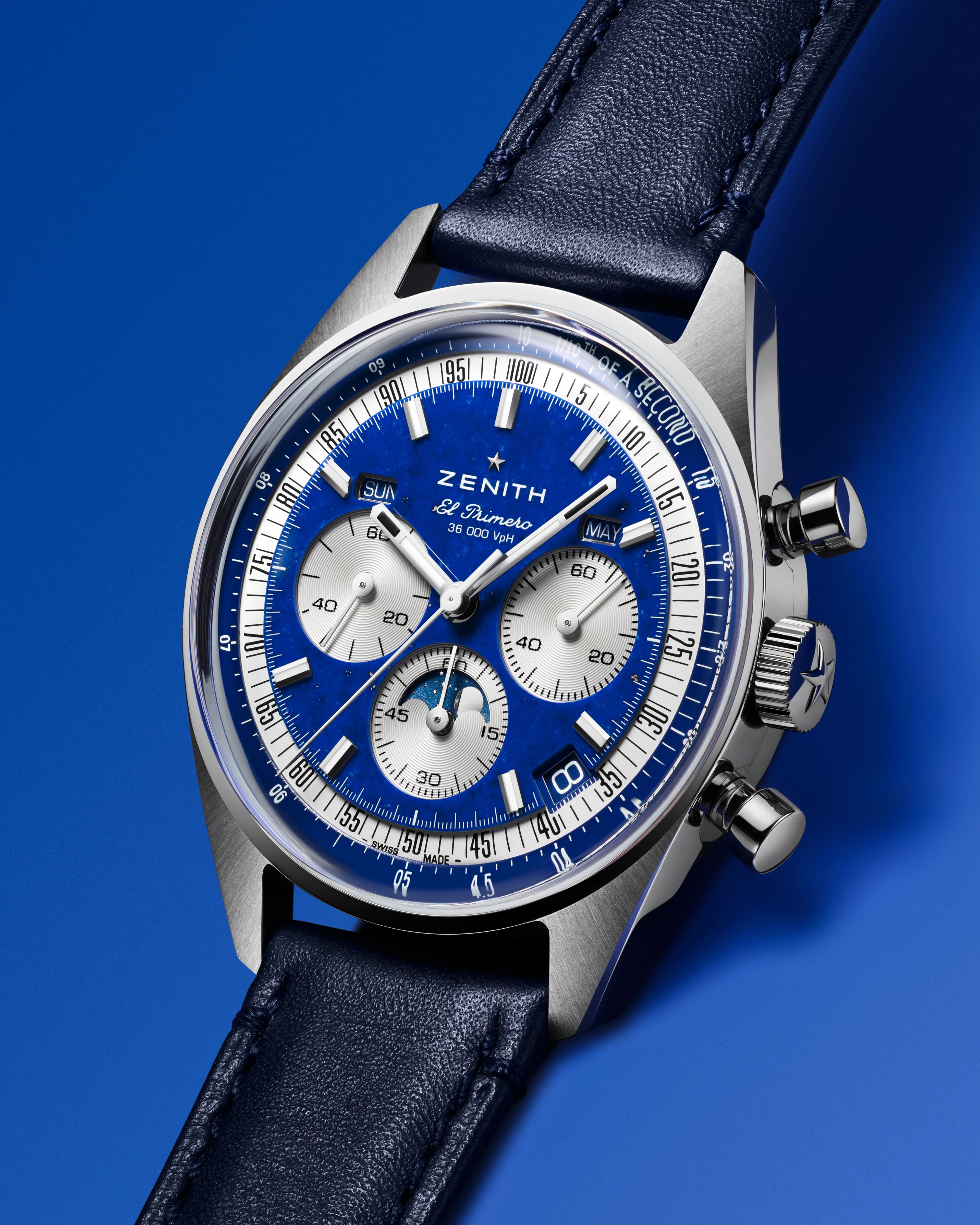
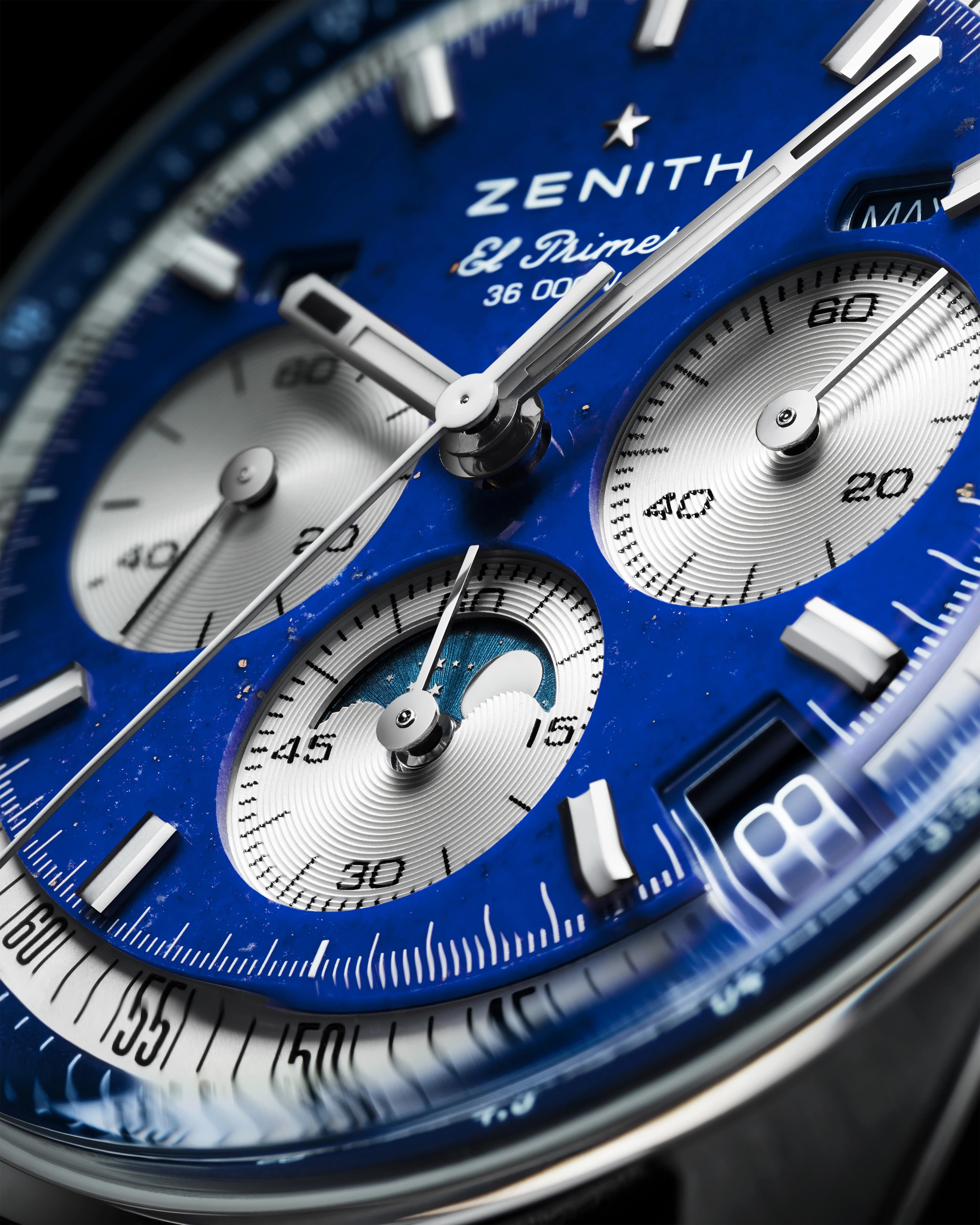
Zenith takes its heritage seriously with the Chronomaster Original Triple Calendar in lapis lazuli, reviving a long-lost 1970 prototype and bringing it fully into the modern era. The watch pairs its high-frequency El Primero chronograph with a full calendar and moonphase, all set against a deep blue lapis dial flecked with natural gold pyrite. It’s an ambitious combination, with six apertures, applied markers, and multiple complications layered onto a fragile stone surface, but the execution feels remarkably composed. The reworked sub-dial layout gives the material room to breathe, allowing the stone’s organic texture to shine without overwhelming legibility. It’s a compelling blend of history, mechanics, and materiality, where Zenith proves that even one of its most technically dense designs can still make space for a bit of geological drama.
Shop New Arrivals
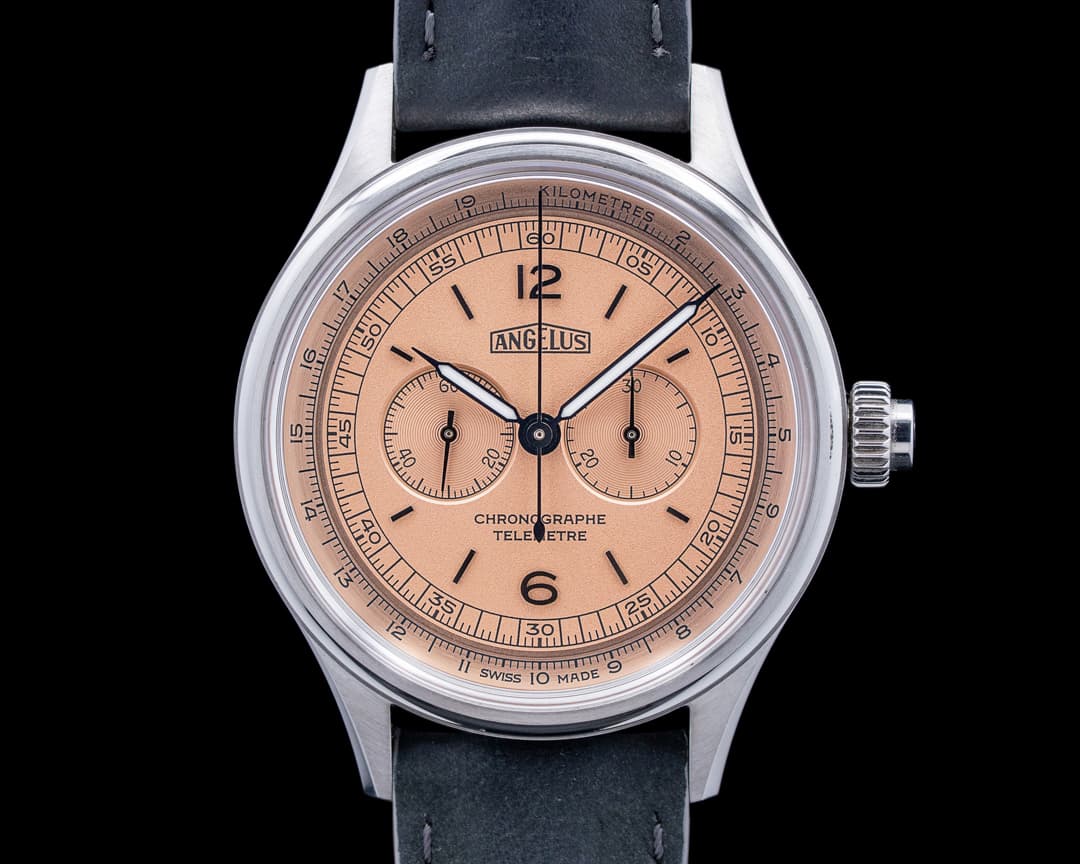
Chronographe Telemetre "Bronze Rose" SS Salmon Dial LIMITED 2026
$18,900
View Watch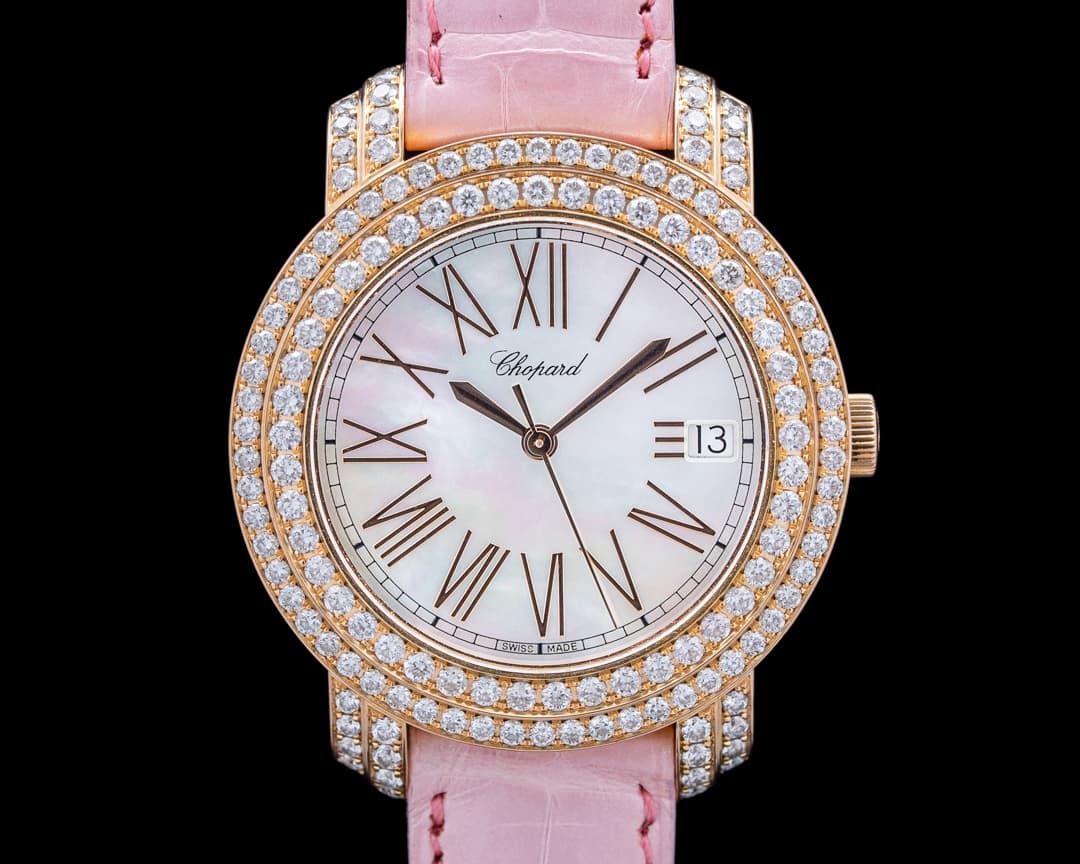
L'Heure Du Diamant 18K Rose Gold Diamond Bezel Mother of Pearl Dial
$23,900
View Watch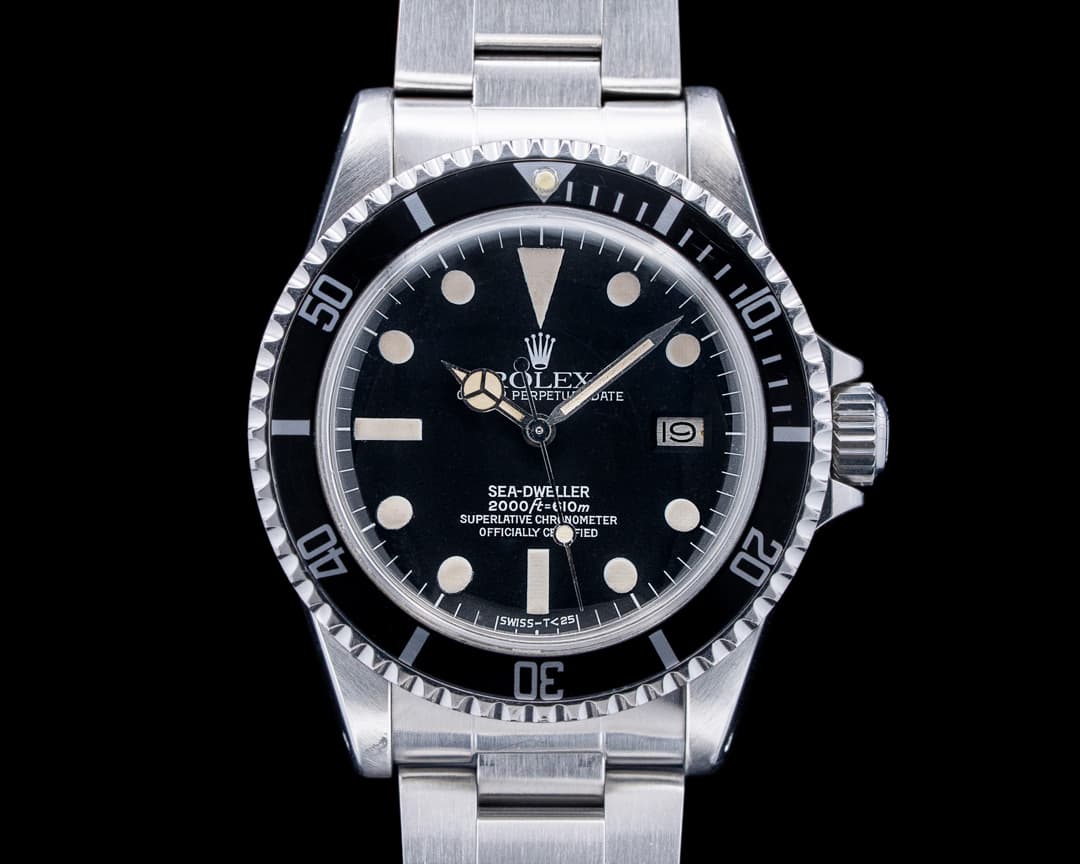
1665 Vintage Sea Dweller "Great White" SS Black Dial
$23,500
View Watch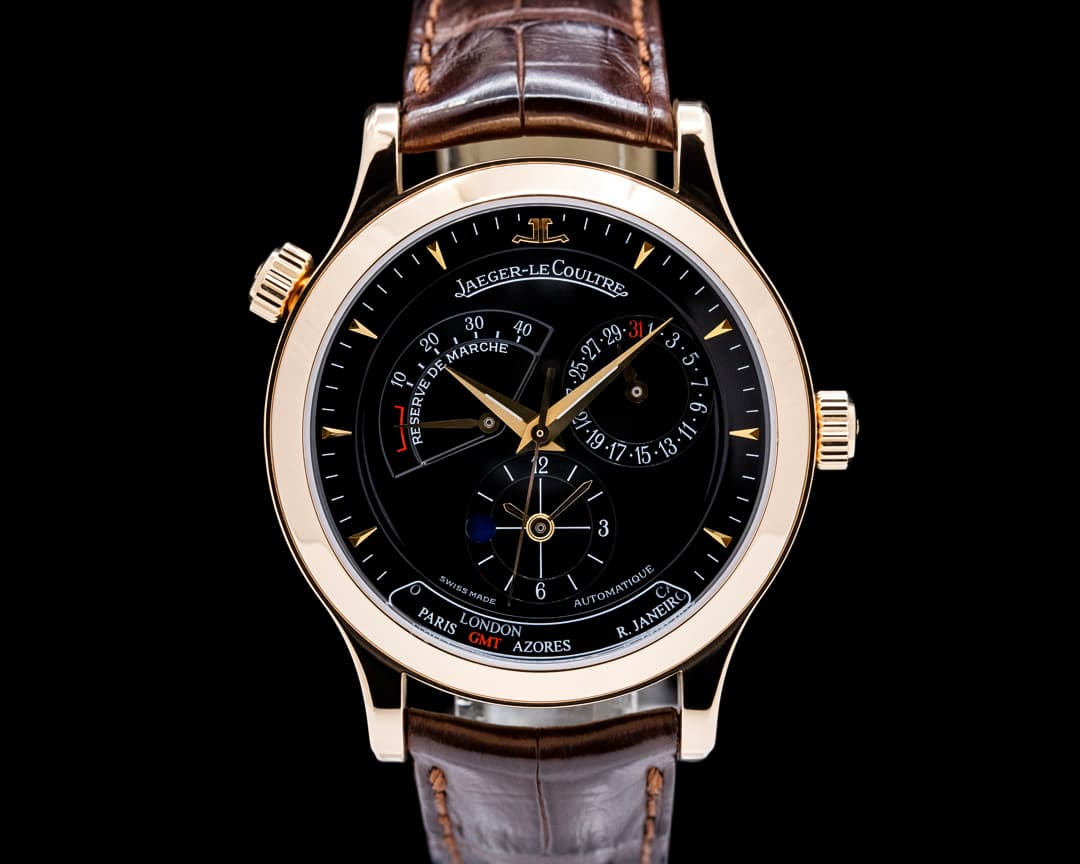
Master Geographic 18K Rose Gold Black Dial
$15,900
View Watch
Shop New Arrivals
Chronographe Telemetre "Bronze Rose" SS Salmon Dial LIMITED 2026
$18,900
View WatchL'Heure Du Diamant 18K Rose Gold Diamond Bezel Mother of Pearl Dial
$23,900
View Watch1665 Vintage Sea Dweller "Great White" SS Black Dial
$23,500
View WatchMaster Geographic 18K Rose Gold Black Dial
$15,900
View Watch
More Content