Ask most people about Patek Philippe's sports catalog and they will likely go straight to the Nautilus. Press them on the Aquanaut and you will hear it called the affordable entry point, the younger sibling, the rubber-strap alternative. None of that is wrong, exactly, but none of it is useful, not if you are trying to decide which reference to buy, what you should pay for it pre-owned, and whether the premium commanded by certain variants reflects genuine desirability or just market inertia. Today we are taking a closer look at the collection to help you decide the best piece for you.
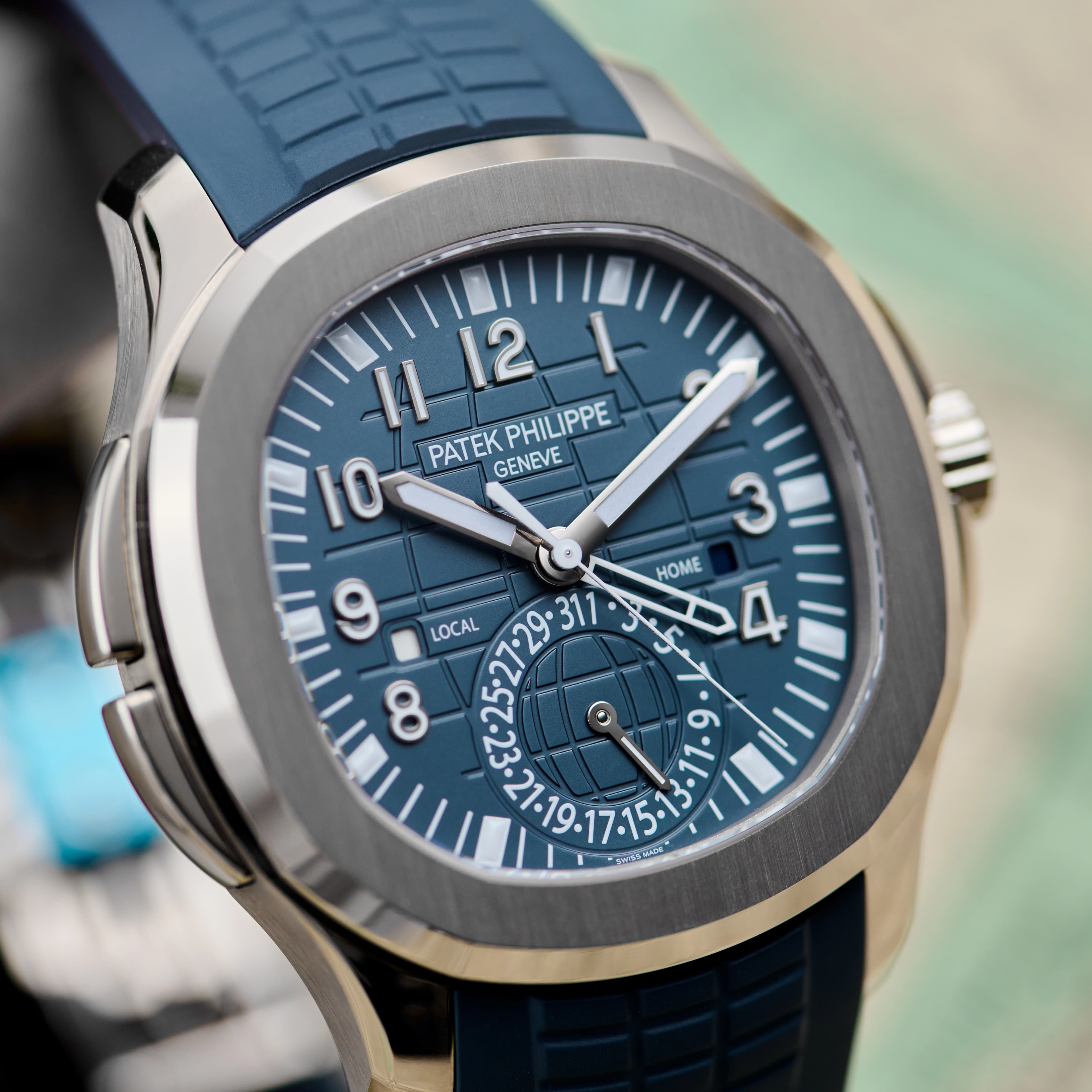
Patek 5164
The secondary market for Aquanauts has moved significantly over the past four years. Pre-owned prices ran hard through 2021 and 2022, pulled back through 2024, and have since recovered unevenly: some references back near or past their bubble peaks, others sitting at levels any serious buyer can justify. The buyers who understand where the line has landed are positioned to buy well. The ones working from a general sense that "Aquanauts are expensive" are not.
The Watch That Had to Prove Itself
The Aquanaut arrived in 1997 as ref. 5060A, the first Patek Philippe fitted with a rubber strap. The brand's clientele in the 1990s skewed heavily toward dress watches, complicated pieces, and the established sports pedigree of the Nautilus. A rounded octagonal case on a composite strap read as a novelty, and Patek treated it as one: production of the 5060A was limited to approximately 1,000 pieces. Whether that cap reflected market caution or deliberate scarcity strategy, the result was the same. The model launched with more question marks than the Nautilus ever carried. Designed to target a younger customer with a casual use-case, it wasn't clear if the model would be a success.
What the Aquanaut did have was coherent design logic. The case shape echoed the Nautilus without copying it, rounder, less angular, lighter in personality. The embossed grenade dial pattern gave it visual texture that held up at distance and up close. The rubber composite strap was genuinely different from anything else Patek was producing. By the time the transitional references arrived in the late 1990s and the model hit its modern configuration in 2007, the Aquanaut had found its audience. It just took longer than it should have. Prices bloomed and collector enthusiasm has never been hotter.
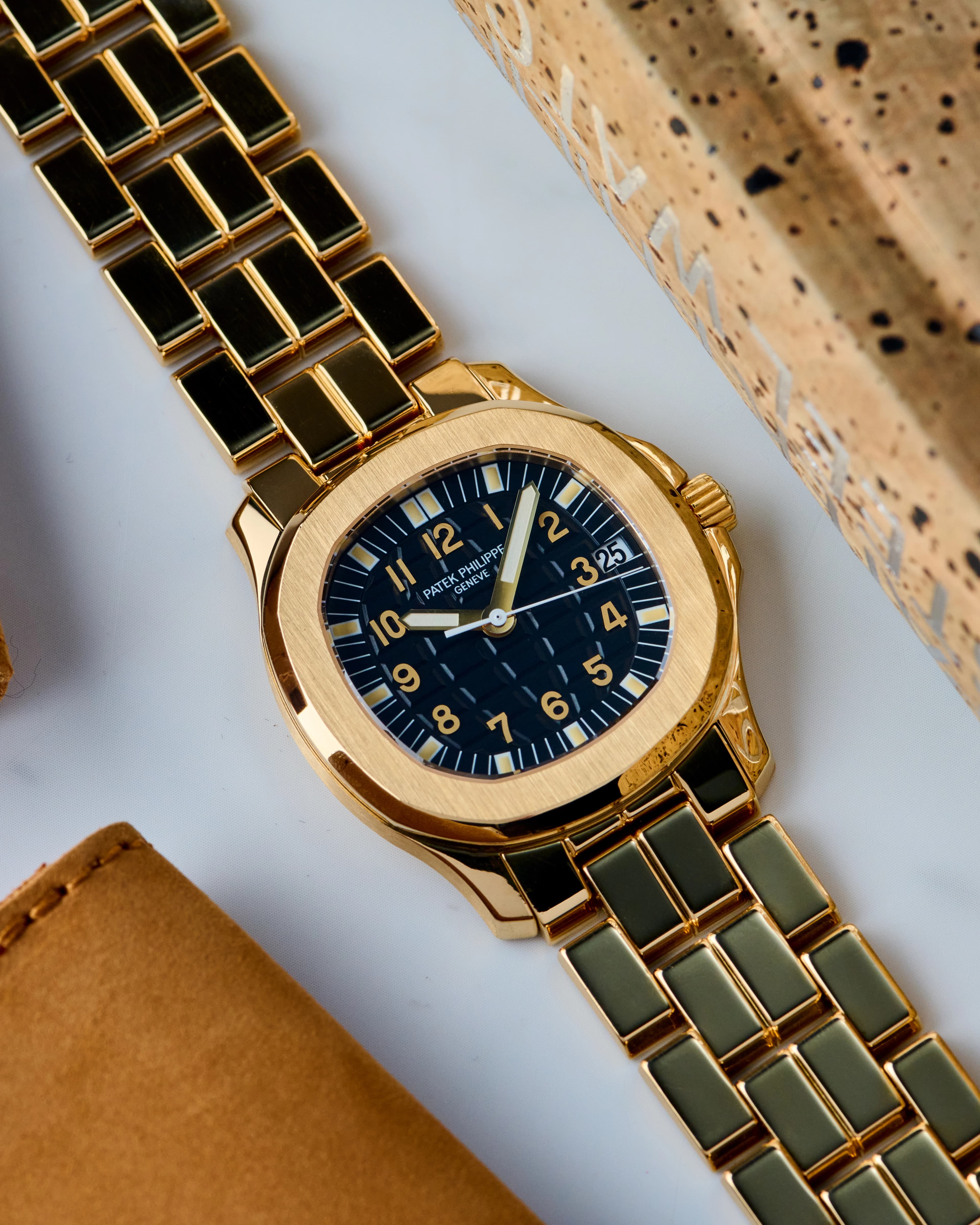
Patek 5066/1J
The tension now is this: the Aquanaut's secondary market demand is real, but it is not evenly distributed. The 5167A in steel anchors the lineup and drives most of the volume. Complications-driven references like the 5968A and 5164A serve a narrower buyer but occupy their own market logic. Several variants carry premiums the secondary market has been slowly, unevenly, repricing. Knowing which is which is the entire point of what follows.
How the Aquanaut Is Built: What You're Actually Buying
The case shape is easy to describe and harder to photograph accurately. It reads as a rounded octagon from above: eight sides, but the curves are generous enough that it registers as nearly circular at a glance. The lugs are integrated, extending from the case in a way that distributes the watch across the wrist rather than sitting on top of it. The result is a watch that wears smaller than its stated dimensions suggest. The 5167A at 40.8mm sits more comfortably than a conventional 40mm piece on a traditional lug structure.
Compared to the Nautilus 5711, the Aquanaut is lighter in both visual weight and physical presence. The Nautilus reads as a dressy instrument; the Aquanaut reads as a casual piece. That distinction is not a flaw, but it is a real difference in wrist personality that buyers should account for before deciding which line suits them. The rubber strap lightens the full wrist experience considerably.
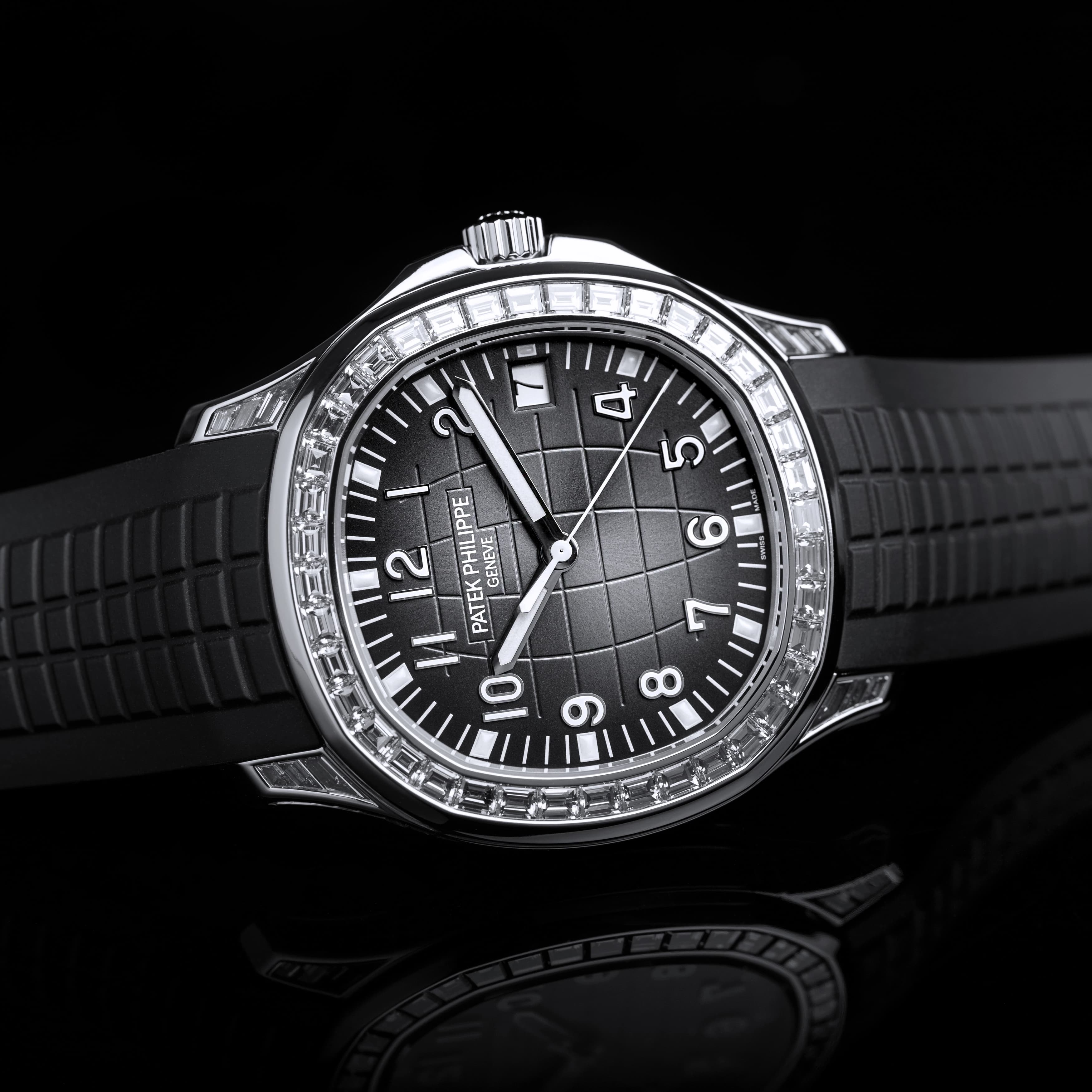
5167/300G
The dial's embossed checkerboard pattern is one of those details that divides opinion. At arm's length it reads as texture, a subtle visual relief that distinguishes the Aquanaut from a flat-dialed sports watch. Up close, especially in direct light, the pattern becomes more assertive. It is a design choice that rewards casual observation and slightly overpowers close scrutiny, neither good nor bad, just a character trait you will either make peace with or not.
The Tropical composite strap is Patek's proprietary material, a composite construction the brand describes as resistant to seawater, UV, and perspiration. In practice, after regular wear, a Tropical strap develops a slight patina that looks lived-in rather than worn out. Replacement straps from Patek run into the hundreds of dollars, and pre-owned buyers should factor strap condition and size into their assessment, particularly on older references where the composite may have stiffened or cracked. A good strap on a pre-owned Aquanaut is not a small detail.
The 5060: Where It Started
The 5060A is the original: 35.6mm, steel case, caliber 330 S C, black embossed dial. Those dimensions look small by current standards, and they are. At 35.6mm, the watch falls into territory that many wrists will find undersized for a sports piece today, and the case is noticeably thinner and lighter than the modern lineup, which gives it a different quality of presence, more restrained, more compressed.
Caliber 330 S C is the movement you get, and it is honest but not remarkable. It is an automatic with a central rotor, a date complication, and the Patek standard of finishing that makes any movement in the lineup feel considered. But it is not the updated 324 S C that powers the modern generation, and buyers should know that going in.
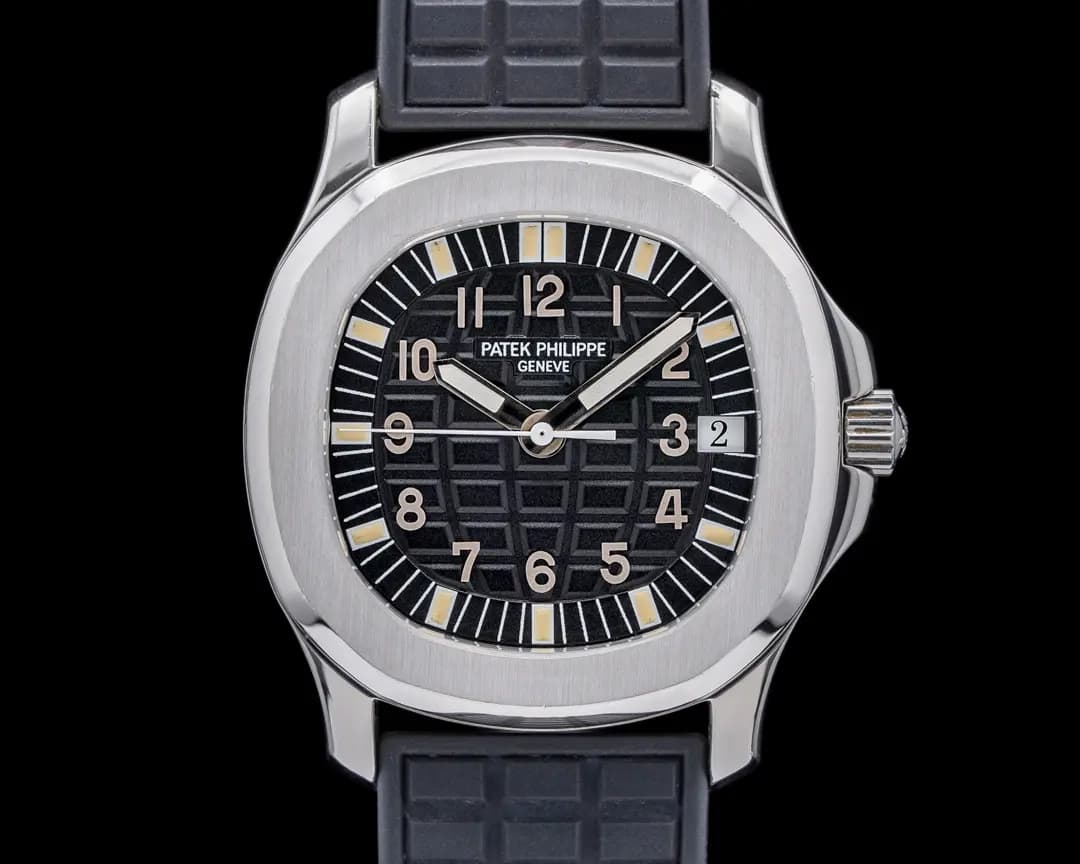
Patek 5060A
In the pre-owned market, the 5060A occupies collector territory rather than daily-wear territory, though there are definitely exceptions to that. Production was limited to approximately 1,000 pieces, and the watches that surface tend to arrive with the patina and wear of pieces that have been handled by enthusiasts rather than kept as safe queens. Prices reflect the combination of genuine scarcity and collector appetite for origin pieces. While there's not a ton of trade volume, most recently prices have risen to the high $40,000s and into the $50,000s. For a buyer who wants to wear an Aquanaut regularly, the 5060A is probably not the natural choice. For a buyer building a historical account of the line, it is the only place to start.
The Transitional Generation: 5064, 5066, 5065 and the Years Between
The 5066A arrived in 1997 and ran alongside the 5065 (starting in 98) until 2006. The 5066 kept the 5060's 35.6mm case diameter and relied on caliber 330 S C. The distinguishing addition in the 5066 was a sapphire caseback, a meaningful upgrade for a collector who wants to see the movement, and a minor one for a buyer who will never flip the watch over. Early production examples (roughly 1998 through 2004) used tritium lume plots; later pieces transitioned to SuperLuminova. The two materials age quite differently. the 5065 was the first midsize iteration coming in at a larger 38mm. The reference 5064 is the less covered reference, bearing essentially the same package as the 5060 but with a quartz movement within.
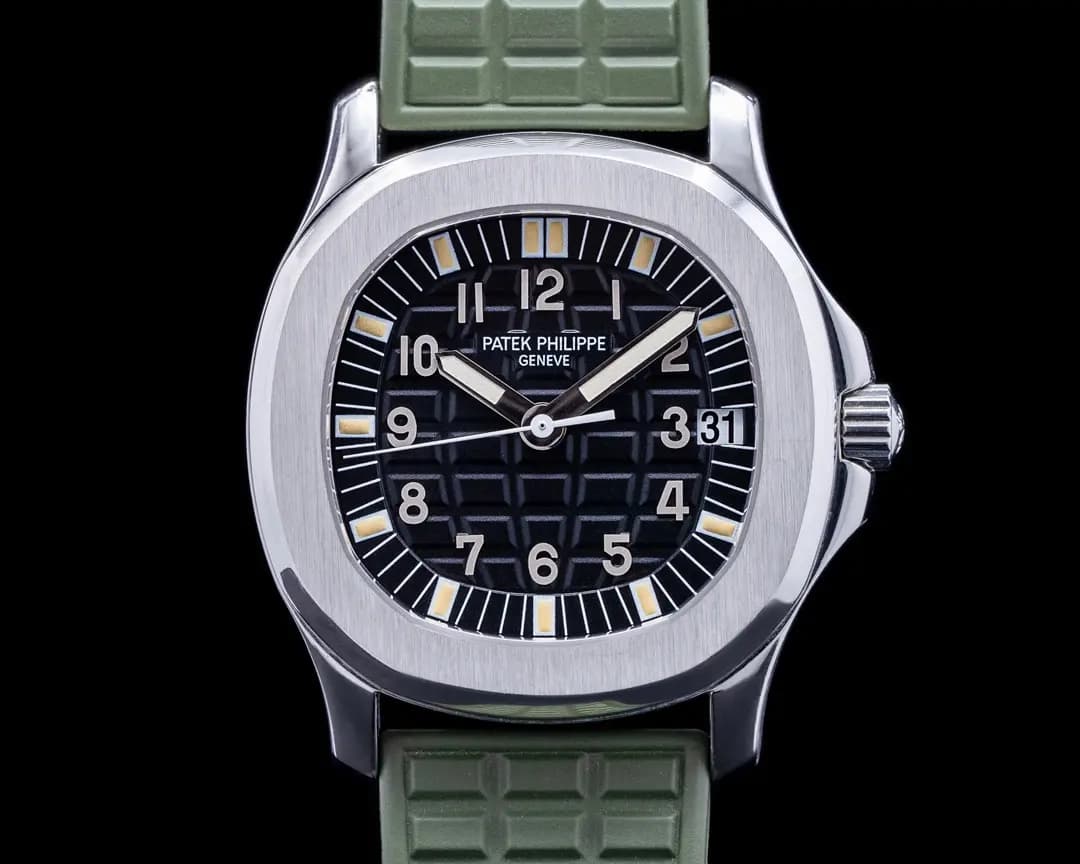
Patek 5066A
The honest read on the transitional generation is that these are fine watches from an awkward period. The 5066 does not bring anything to the table that the original 5060 does not, except slightly improved finishing details and the caseback window. The case dimensions remain constrained by modern standards. The movement predates the 324 S C that would define the modern Aquanaut. For some buyers, that won't be enough, these are not the references that made the Aquanaut what it became. That said in retrospect, they have become far more collectable thanks to their historical significance. For those that appreciate smaller case diameters, these now seem like bargain options.
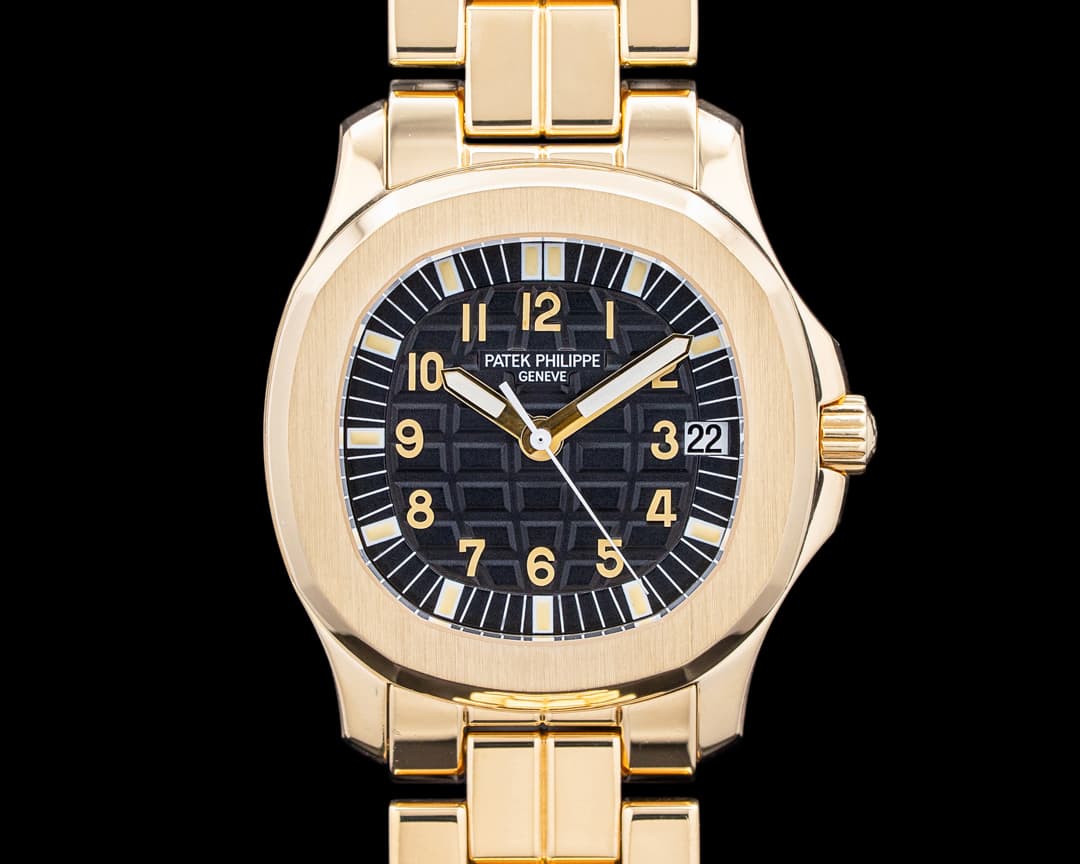
Pre-owned examples surface occasionally, prices are lower than the modern lineup, and originality matters here. A 5066 on a strap now costs about $50,000 which is a number nobody could have fathomed upon launch. The 5065 trades for $7,000-$10,000 more than the 5066 depending on kit and condition. The 5064, with its quartz caliber, offers its own pocket of value with a sub $30,000 transaction price. Early Tropical straps in good condition are increasingly rare on these pieces, and if the strap has been replaced with a generic aftermarket rubber band, the watch's coherence as a period piece is partly lost.
The Modern Lineup: 5167, 5165, and Their Variants
The 5165: The Case for Smaller
Before the 5167 became the Aquanaut's spine, the 5165 appeared in 2007 as the model's tenth-anniversary refinement. It brought the updated caliber 324 S C into the line for the first time and added a redesigned deployant clasp. What it kept was the 38mm case diameter, larger than the 5060-generation pieces, smaller than the 5167 that would come. Patek discontinued the 5165 in 2012.
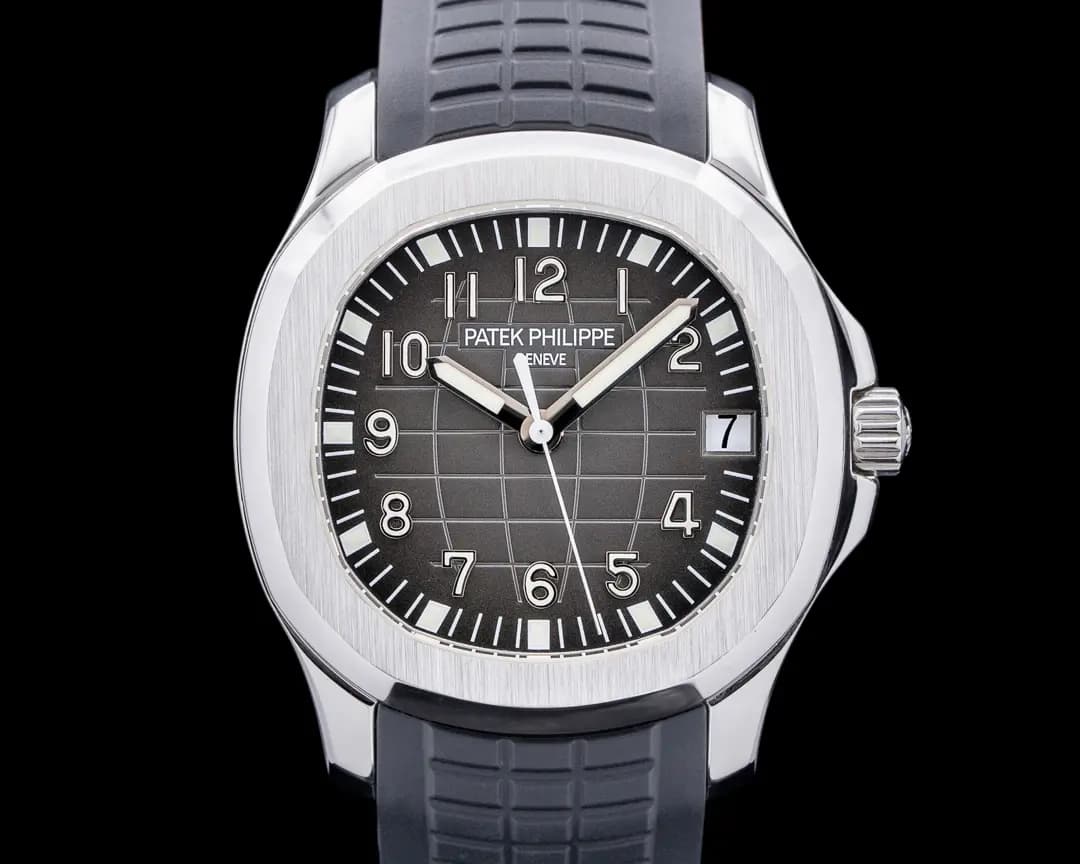
Patek 5165A
That discontinued status, combined with the 38mm case, has made the 5165 a secondary market reference worth watching. The 5167's 40.8mm is not uncomfortable for most wrists, but it is genuinely large. On a smaller wrist, the Aquanaut's integrated case structure can push the watch slightly past the ideal proportion. The 5165 solves that problem. It runs the same movement, reads the same on the dial, and has the benefit of being a watch that not everyone recognizes. Pre-owned availability is limited; the 5165 never had the production volume of the 5167, and collectors who own them tend to keep them. The prices are extremely reasonable though, typically trading around $60,000-$65,000.
For buyers who find the 5167 slightly too large, the 5165 is not a compromise. It is a considered choice, and one with a rational price relative to its rarity.
The 5167A: Steel, and Why It Matters
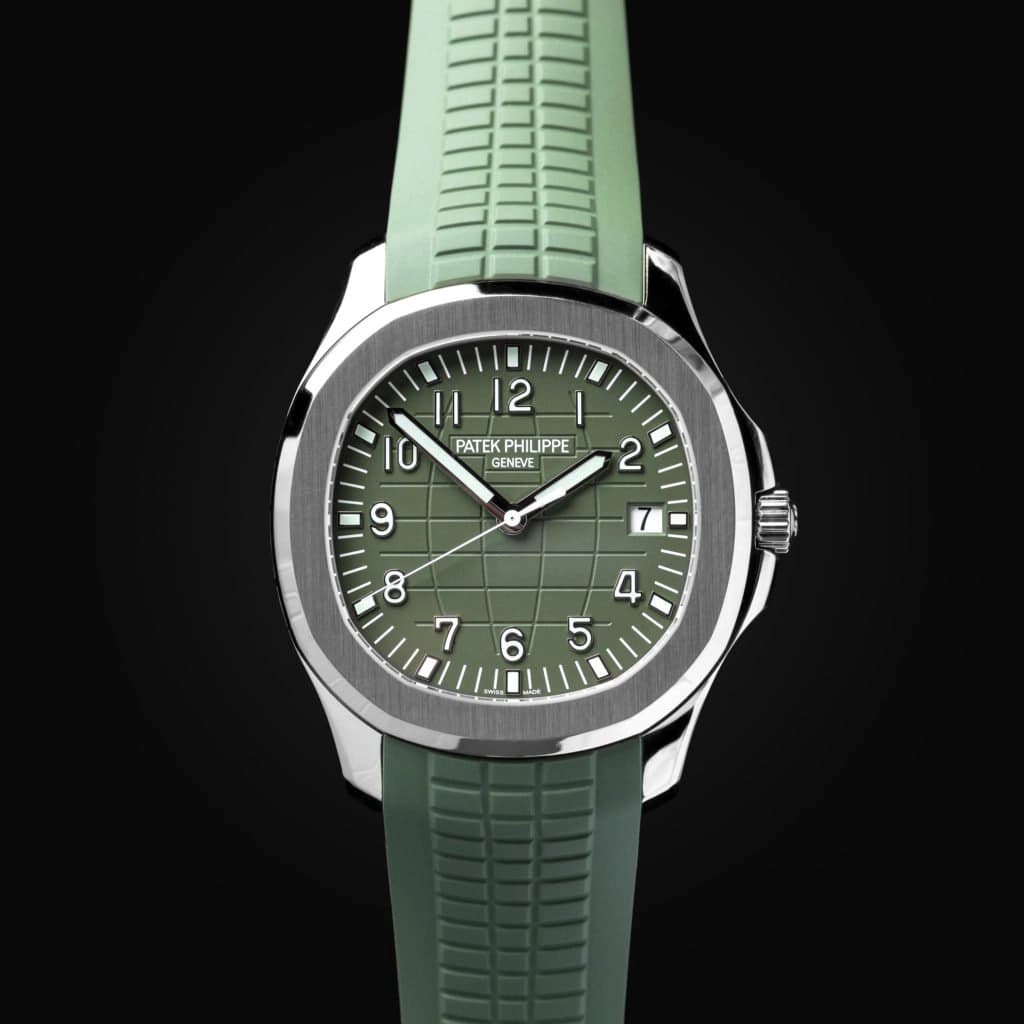
The 5167A is the reference. Not because it is the most complicated or the most exclusive, but because it is the watch that made the Aquanaut what it became, in the secondary market and in public consciousness. Steel, 40.8mm, caliber 324 S C, 45 hours of power reserve, beating at 28,800 vibrations per hour. Date at three o'clock. Tropical composite strap in black or khaki green. It is currently in production.
On the wrist, the 5167A wears with the particular confidence of a watch that knows what it is. The case sits flush because of those integrated lugs. The dial, in crisp black, reads cleanly at a distance and gains texture as you look closer. The bracelet version (5167/1A) distributes the watch further across the wrist and shifts the presentation.
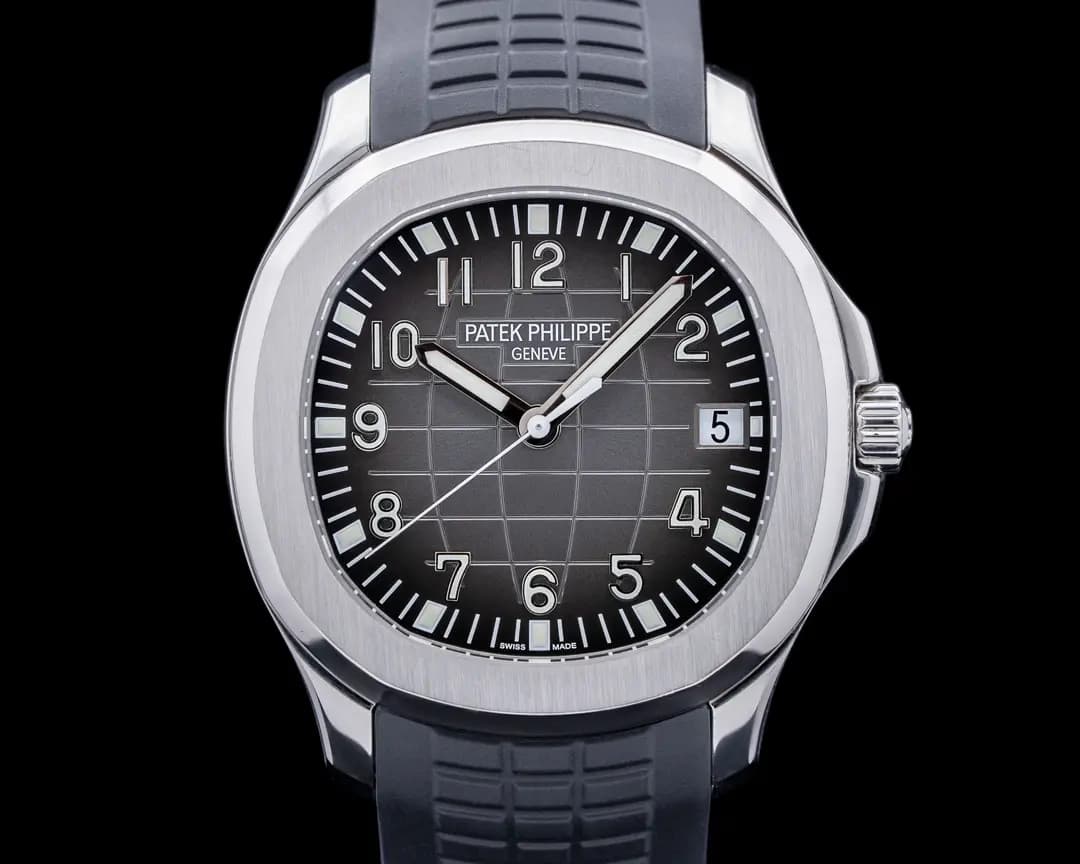
Patek 5167 Steel
Secondary market behavior on the 5167A has been the single most-discussed data point in grey-market watch coverage for four years. Pre-2021, the reference traded at secondary averages of roughly $30,000–$35,000. By 2022, with the combination of broader Patek market heat and surplus liquidity, prices reached $55,000–$65,000. A 2024 correction pulled the reference back. It has since recovered: as of mid-2026, the 5167A's secondary market sits around $70,200 and more, with listings ranging from $65,000 to $90,000 depending on condition, provenance, and completeness. That is significantly above the 2022 peak in nominal terms, and well above any pre-bubble reference point.
Retail for the 5167A runs around $28,000. The spread between retail and secondary market is real, and a significant portion of that premium reflects the difficulty of acquiring one at retail rather than the watch's intrinsic value over and above other $28,000 Pateks. That is a useful thing to know before paying secondary market prices.
The standard 5167A in steel is the rational anchor buy for a serious Aquanaut collector. The premium is not small, but it is coherent. None of this means buying at $70,000 is easy, or obviously correct for every buyer's situation, but the reference earns its position in the line.
The 5167R: Precious Metal Variants
The 5167R in rose gold serves a different buyer. The precious metal cases change the watch's personality in ways that go beyond material value: the Aquanaut in gold reads as a dress-adjacent sports piece rather than a sports watch that happens to cost a lot. On some wrists and in some wardrobes, that is exactly right. On others, it undercuts the watch's casual logic.
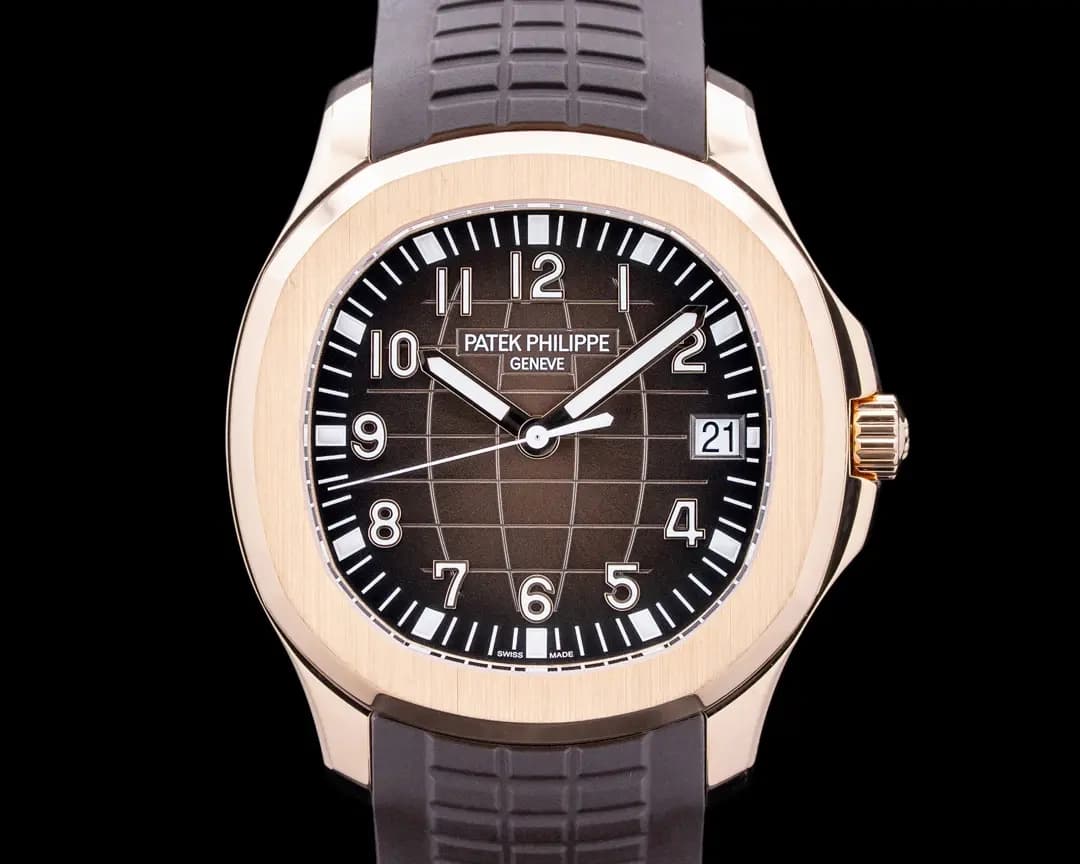
Patek 5167R
Secondary market premiums on the rose gold variant is substantial but have been more volatile than the steel. Gold Aquanauts were swept up in the 2021–2022 mania and corrected harder than the steel during the pullback. For a buyer whose goal is an Aquanaut they will wear regularly, the steel case is the argument. For a buyer who wears a lot of gold and wants coherence across their wrist, the 5167R holds up at its current trading value around $100,000-$120,000.
The 5168: Bigger, Bolder, More Divisive
The 5168G sits at 42.2mm, 1.4mm more than the 5167A, in white gold. That sounds like a minor dimensional change and it is, on paper. On the wrist, the added diameter combined with a precious metal case creates a watch with noticeably more presence. It announces itself, and that is either the point or the problem depending on the buyer. The watch definitely has a larger presence than you might expect. If you're used to wearing 42mm watches, you likely will gravitate more towards the 5167. If you like 43+mm watches the 5168 is the better option.
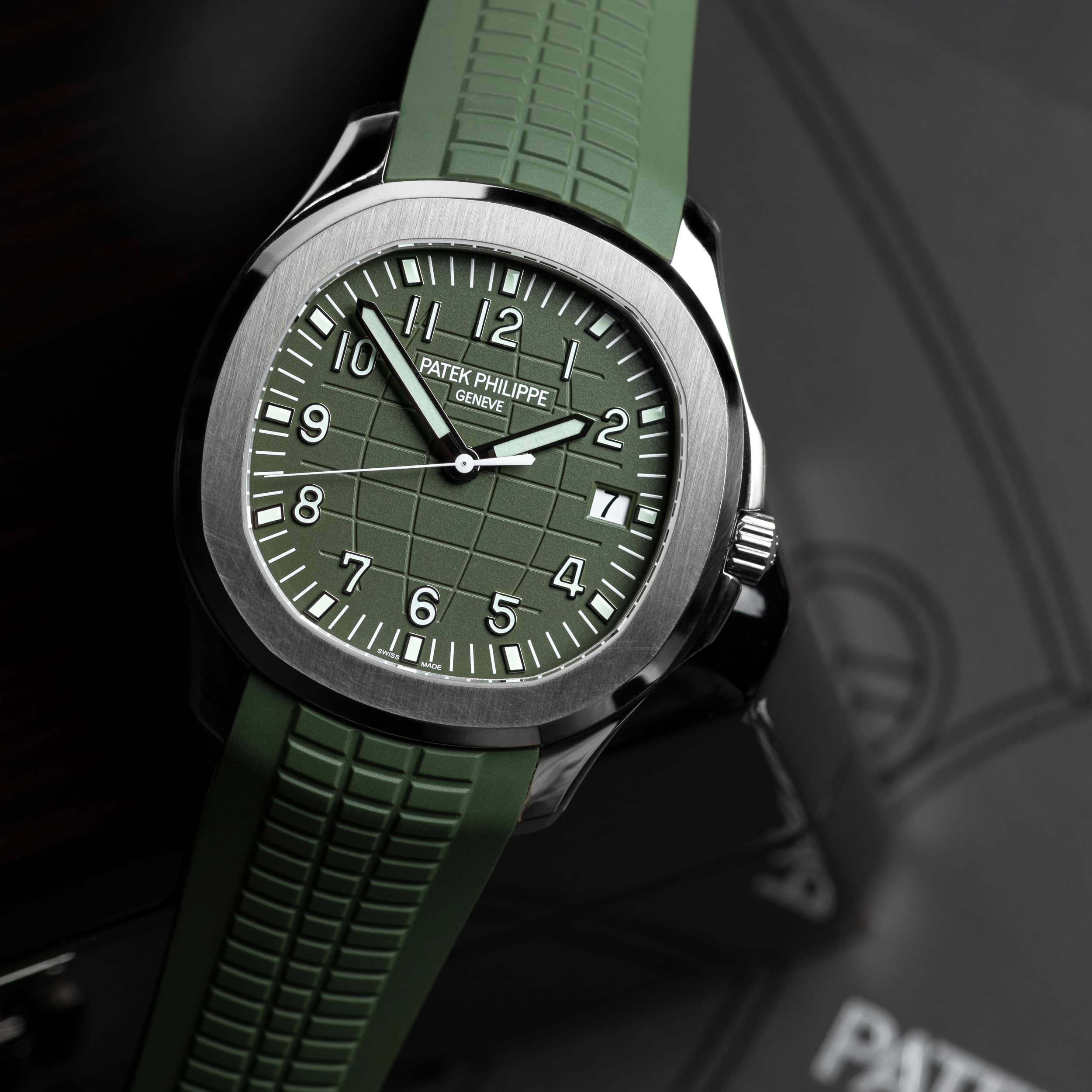
Patek 5168G Green "Khaki"
The 5168G is aimed at a collector who wants the Aquanaut's design language scaled to statement-watch territory. The black-to-midnight-blue gradient dial on white gold reads exceptionally well; this is one of the better-looking pieces in the current lineup on pure aesthetics. But the size limits its versatility. A 42.2mm precious metal Aquanaut is not a casual everyday piece. It is a deliberate choice, and it works best worn as one. The 5168 is also made with. green dial and this is its own personality. Consider both before purchase.
The secondary market for 5168 variants has been less predictable than the 5167A, which reflects the narrower buyer pool at the larger size and higher price. Most blue dial variants trade at just north of $100,000. The green iteration is modestly cheaper.
The Complications: Travel Time, Chronograph, and Beyond
The Aquanaut complications deserve to be evaluated as independent watches rather than accessories to the core line.
The 5164 Travel Time houses caliber 26-330 S C FUS, a self-winding movement with a second time zone display. The travel time complication serves a genuine function that the base Aquanaut does not: adjustable local time via the crown, with a home time display that lets you read both zones without calculation. For a buyer who travels frequently and wants a sports-adjacent Patek that earns its complications, the 5164 makes a coherent argument. The case grows to accommodate the additional dial architecture; it is not a small watch. Secondary market positioning for the 5164 reflects the combination of functional desirability and lower production relative to the 5167A. At current market, the 5164 in steel trades for $95,000-$100,000. There are also a number of gold iterations of the model.
Patek 516
The 5968 chronograph came in steel (5968A) at 42.2mm, 11.9mm thick, with 120m water resistance and caliber CH 28-520 C, a self-winding flyback movement with a vertical clutch. It arrived as interest in steel Patek sports watches was at maximum intensity, and what it offered was something the Aquanaut catalog had never provided: a working chronograph in a case that maintained the line's identity. The 5968A is a meaningful piece, a daily-wear Patek chronograph that functions as a tool watch rather than a complications exercise. Secondary market pricing ran aggressively during the 2021–2022 period and has corrected somewhat since, but the reference retains genuine desirability among buyers who actually use the chronograph function. The model trades for $140,000-$150,000 in steel and surprisingly towards the bottom end of that distribution for the blue dial white gold iteration. The white gold provides a great value in relative terms.
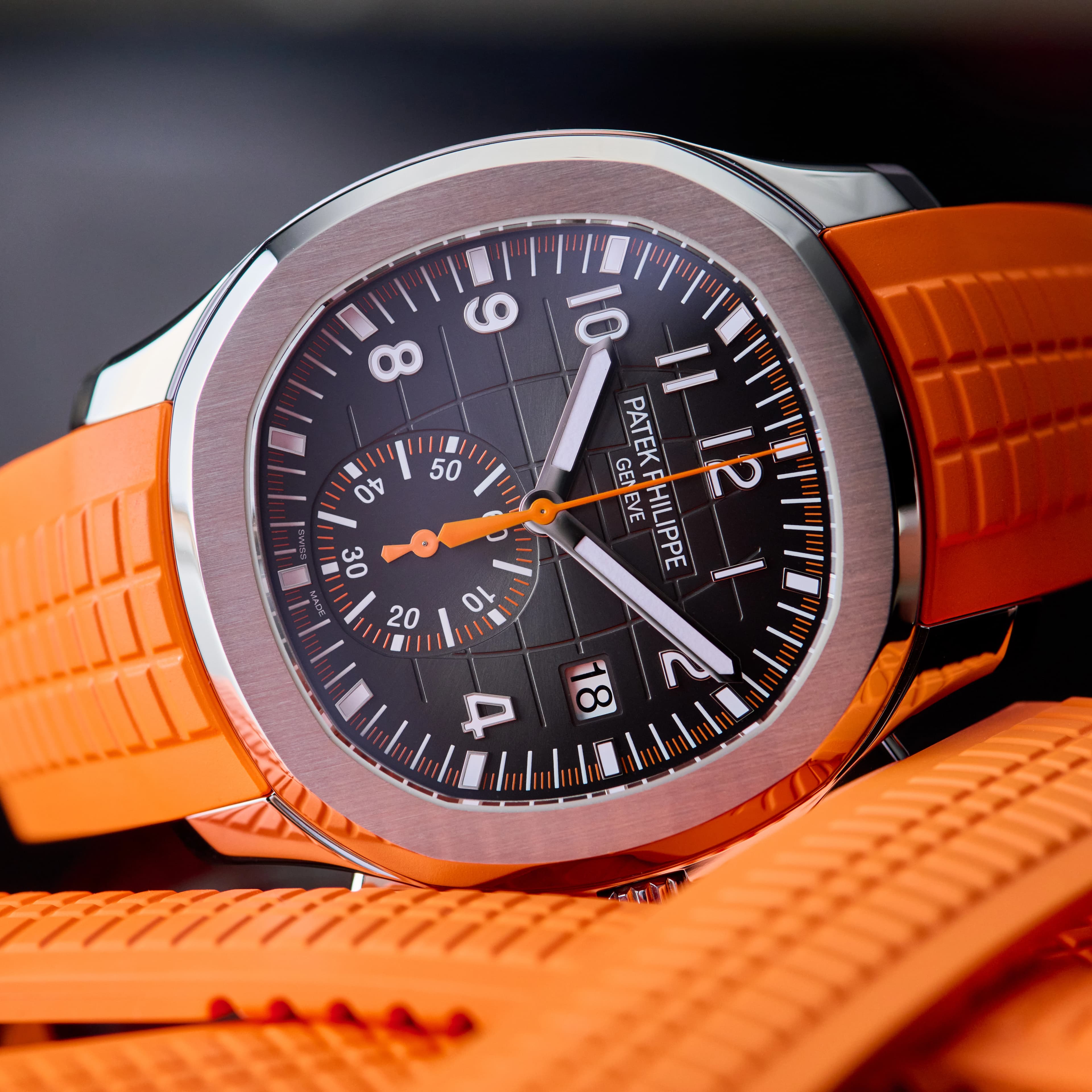
Patek 5968 Steel
None of this means the complications are better purchases than the base line. They are different purchases, for different use cases and different buyers.
Where the Value Actually Is
The secondary market in mid-2026 places the 5167A at roughly $70,000, more than double its pre-bubble secondary average and significantly above retail. The question for a serious buyer is not whether that is expensive, which it obviously is, but whether it is expensive relative to what you are getting.
The value case for the 5167A is structural. It is a watch in current production from a brand with no meaningful overcapacity, in a material (steel) that Patek explicitly manages at low volume. Secondary market premiums on steel Pateks generally reflect not hype but genuine scarcity at retail; the wait lists at authorized dealers are not fabricated. For buyers who can acquire at or near retail through an authorized dealer relationship, the 5167A is straightforwardly the right Aquanaut for most use cases. For buyers entering the secondary market today at $70,000, the calculus is harder and more personal.
The references that represent better-than-average pre-owned value right now are the 5165 and the vintage references. The 5165 is a discontinued midsize with the modern movement, limited supply, and pricing that has not run as hard as the 5167A. A buyer who genuinely finds 40.8mm too large has an alternative that is not overpriced relative to its quality. The 5968A offers a genuine flyback chronograph in the Aquanaut case, and while it will never match the liquidity of the base reference, it is a watch that earns its cost in function rather than just in name.
The Tiffany-signed 5167A at secondary market prices above $100,000 is a collector bet, not a value play. If you are not buying it specifically for the double-signed provenance, you should not be paying the provenance premium.
The Aquanaut has spent nearly three decades proving itself. In most respects, it has succeeded. What it has not done is distribute that success evenly across its own catalog, and understanding that distinction is what separates a considered purchase from an expensive guess. If you have further questions abut navigating our selection of Patek models, please do not hesitate to reach out to us!
Shop New Arrivals
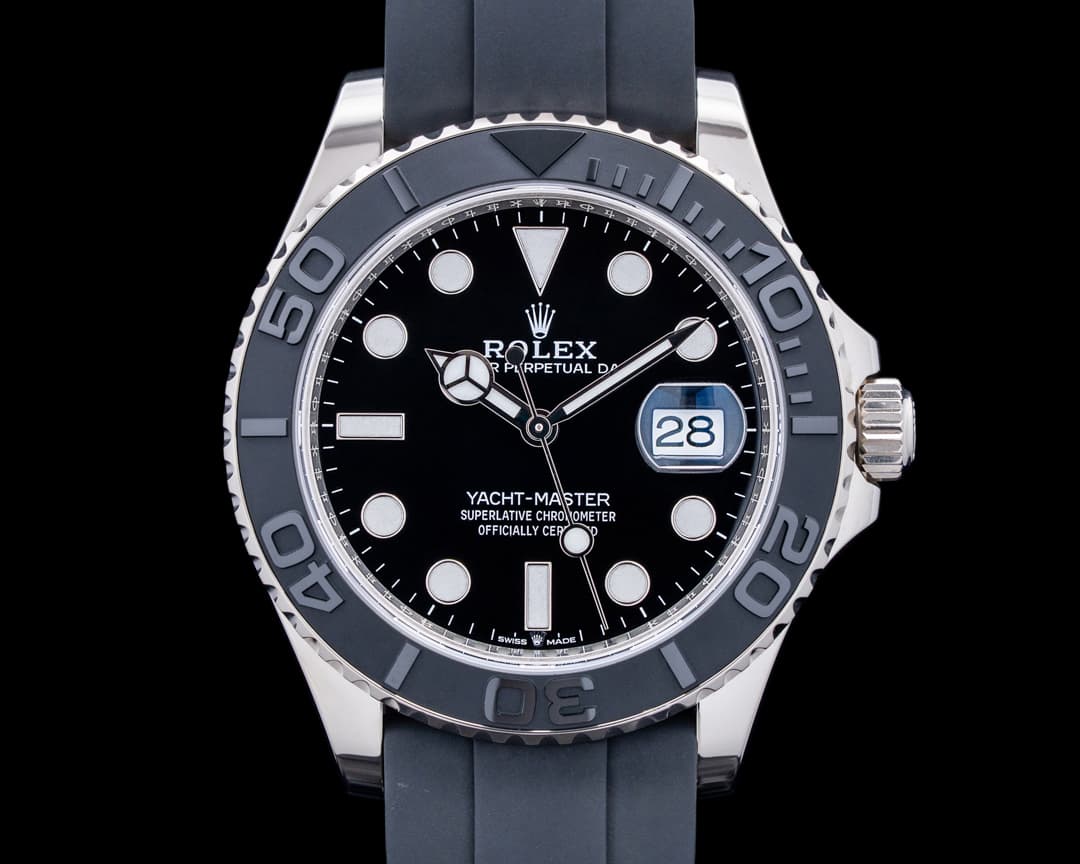
226659 Yacht-Master 18K White Gold Black Dial
$31,900
View Watch
216570 Explorer II SS Black Dial
$10,900
View Watch
Defy El Primero 21 Chronograph Black Ceramic Skeleton Dial
$9,900
View Watch
124060 Submariner No Date 41MM SS Black Dial
$13,900
View Watch
Shop New Arrivals
226659 Yacht-Master 18K White Gold Black Dial
$31,900
View Watch216570 Explorer II SS Black Dial
$10,900
View WatchDefy El Primero 21 Chronograph Black Ceramic Skeleton Dial
$9,900
View Watch124060 Submariner No Date 41MM SS Black Dial
$13,900
View Watch
More Content