A Buyer's Guide to the Rainbow Daytona: Generations, Pricing, and What to Check Before You Buy
Published on 10/7/2026
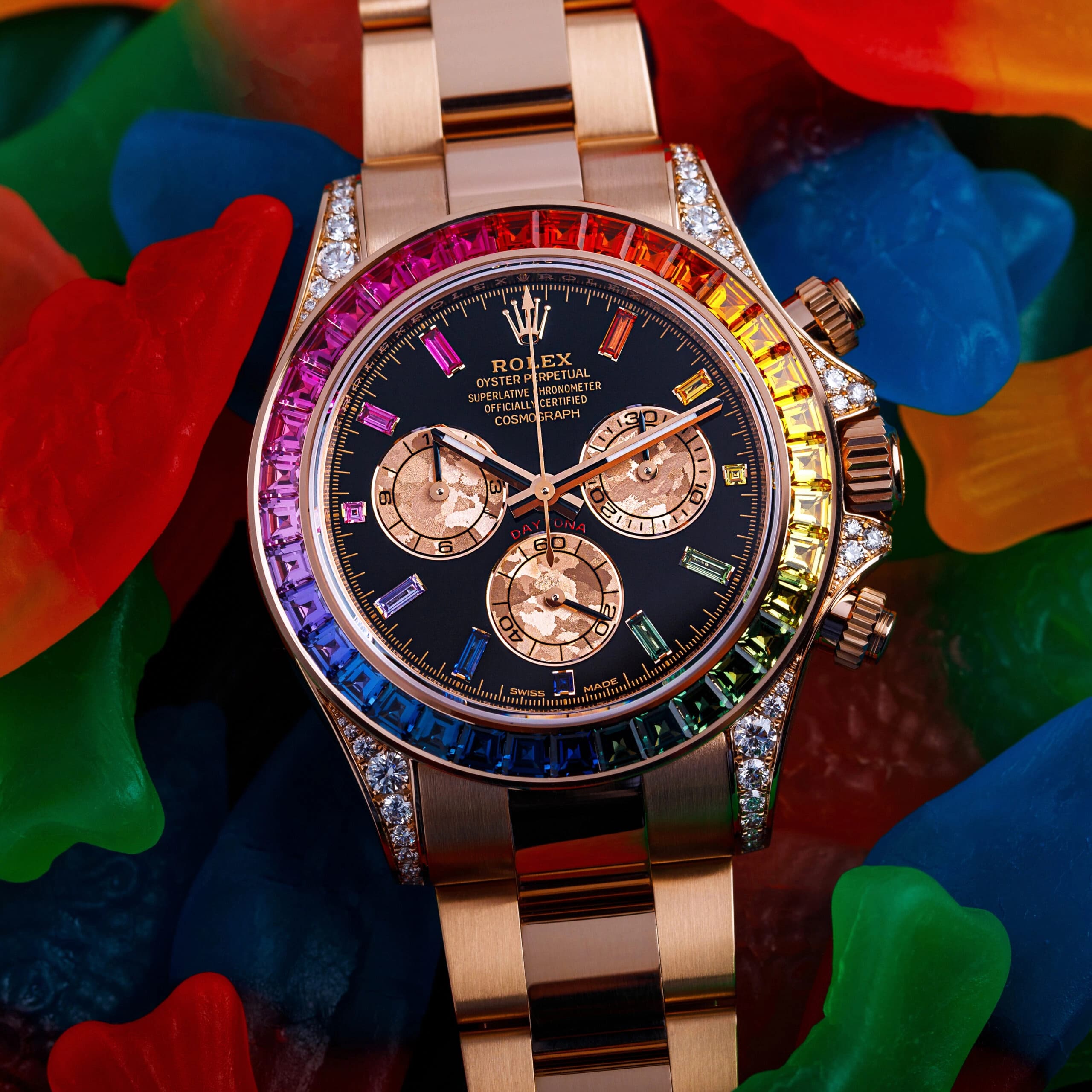
The Rainbow Daytona is one of the most mysterious and obsessed-over watches in the Rolex catalog, or rather, just outside it. It is built on the same case, the same caliber, and the same bracelet design as a production Daytona. It is also covered in 92 gemstones, trades at multiples of retail, and has never once appeared in a Rolex advertisement. That combination of sports-watch bones and haute joaillerie execution is what makes it genuinely interesting in the modern Rolex market.
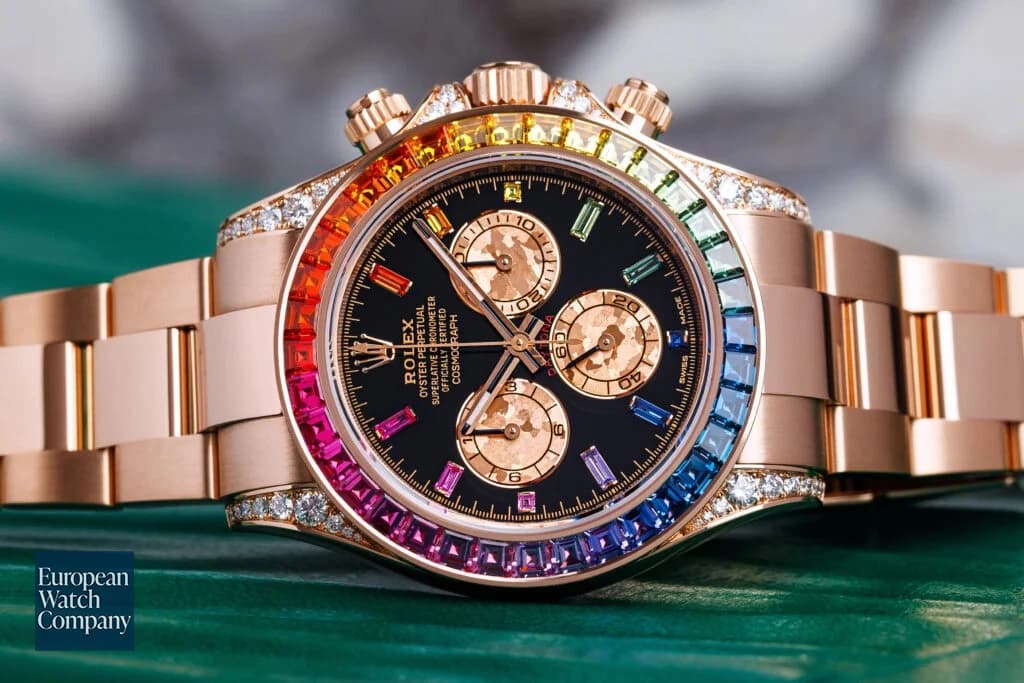
Rainbow Daytona
The Rainbow Daytona market has cooled from its 2024-2025 peak, documented pricing for current-generation Everose references reached roughly $580,000 before settling to around $460,000 by mid-2026, which means buyers now have room to deliberate in a way they did not two years ago. That deliberation is worth doing carefully.
What the Rainbow Daytona Actually Is
Rolex does not sell the Rainbow Daytona publicly. No boutique allocation, no waitlist, no authorized dealer stock. The watch is off-catalog: produced in limited quantities and distributed exclusively to the brand's highest-tier VIP clients, never formally offered to the general public. This is not a special edition in the conventional sense. It is a recurring production piece that Rolex has introduced, discontinued, and reintroduced across three generations since 2012, maintaining a coherent identity each time while updating the specification.
That identity rests on a structural tension. The Daytona is a chronograph built around motorsport: a tachymeter bezel, three sub-registers, a case designed for legibility at speed. The Rainbow version replaces the tachymeter with 36 baguette-cut sapphires graduating through the full visible spectrum, adds 56 diamonds set into the case flanks, and fits the dial with either diamond or color-matched sapphire hour markers depending on the reference. The result is a watch that uses professional-sport architecture as the vehicle for brilliant gem-setting. Whether that combination works aesthetically is a matter of taste. That it is technically demanding is not in question: Rolex specifies internally flawless (IF) grade gemstones throughout, and matching 36 baguette sapphires in spectral sequence, red, orange, yellow, green, blue, indigo, violet, requires consistent color saturation and uniform cut across stones sourced from different origins.
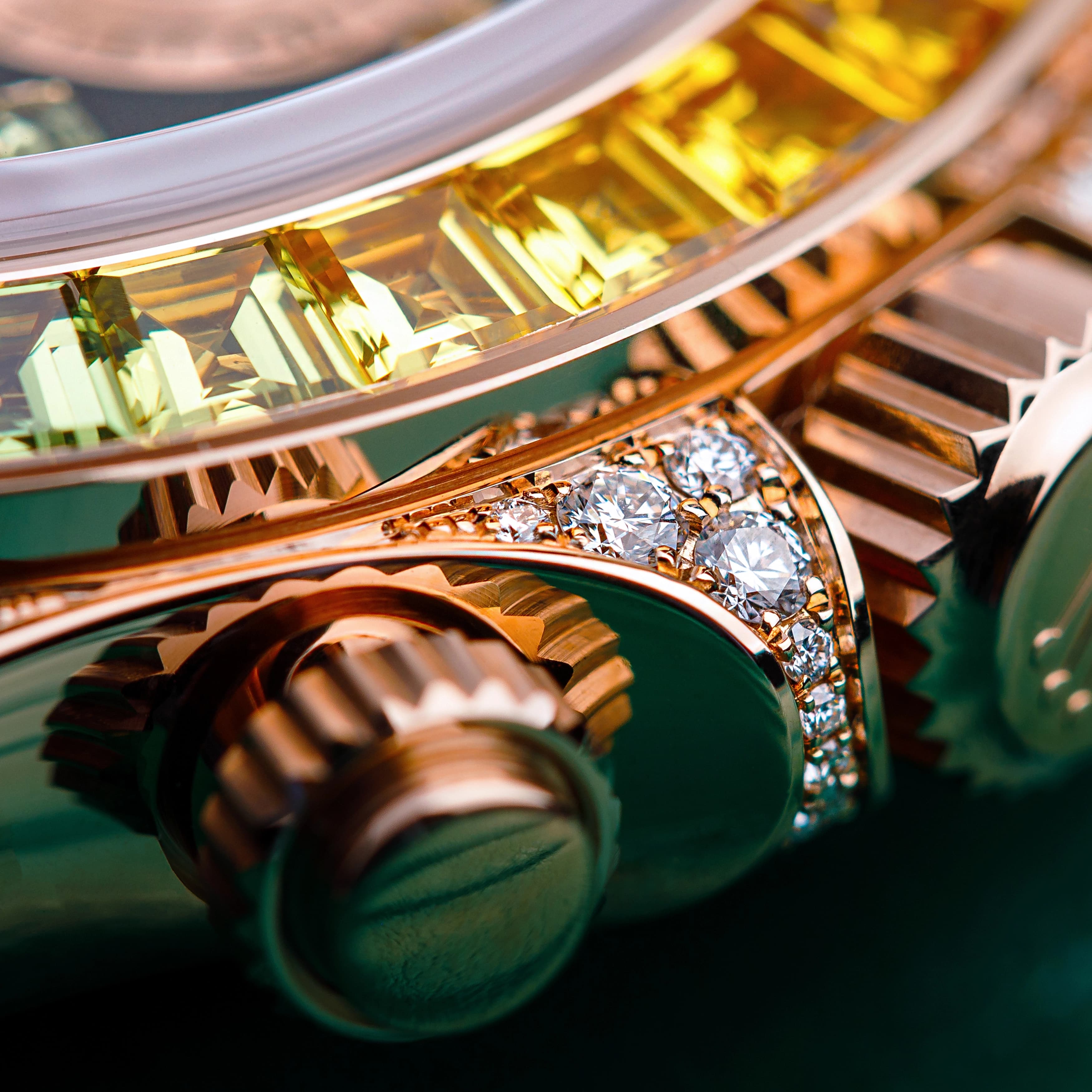
Rainbow Daytona Crown
Most recent Rainbows run on the caliber 4130, Rolex's in-house chronograph caliber introduced at Baselworld 2000 to replace the Zenith-sourced caliber 4030. The 4130 is a column-wheel, vertical-clutch movement with a 72-hour power reserve and 44 jewels. It is a robust workhorse movement easily serviced, but a watch of this kind rarely is purchased with the movement as primary consideration. This is a watch that's about fine jewelry more than about movement ingenuity, technical mechanical sophistication, or elegant movement finishing.
The Key References, Explained
Ref. 116598 RBOW, Yellow Gold, 2012-2023
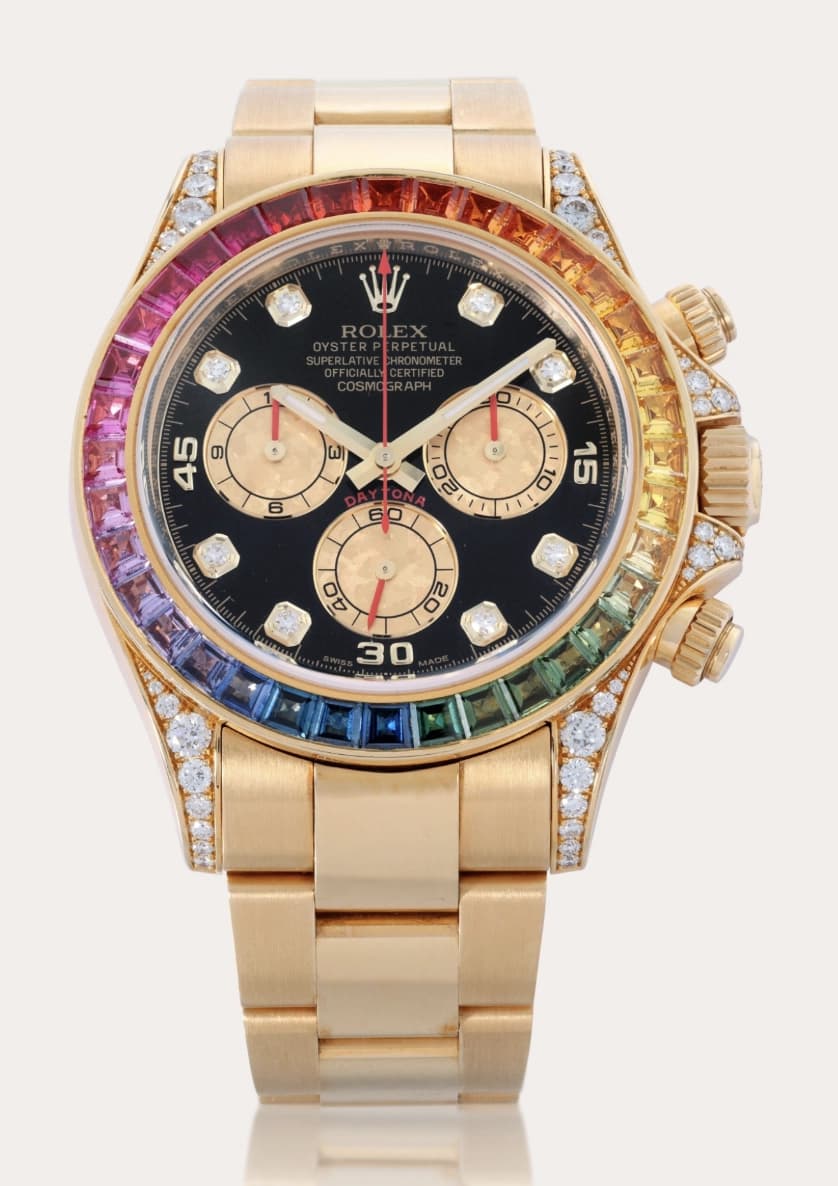
116598RBOW Yellow Gold- Sotheby's
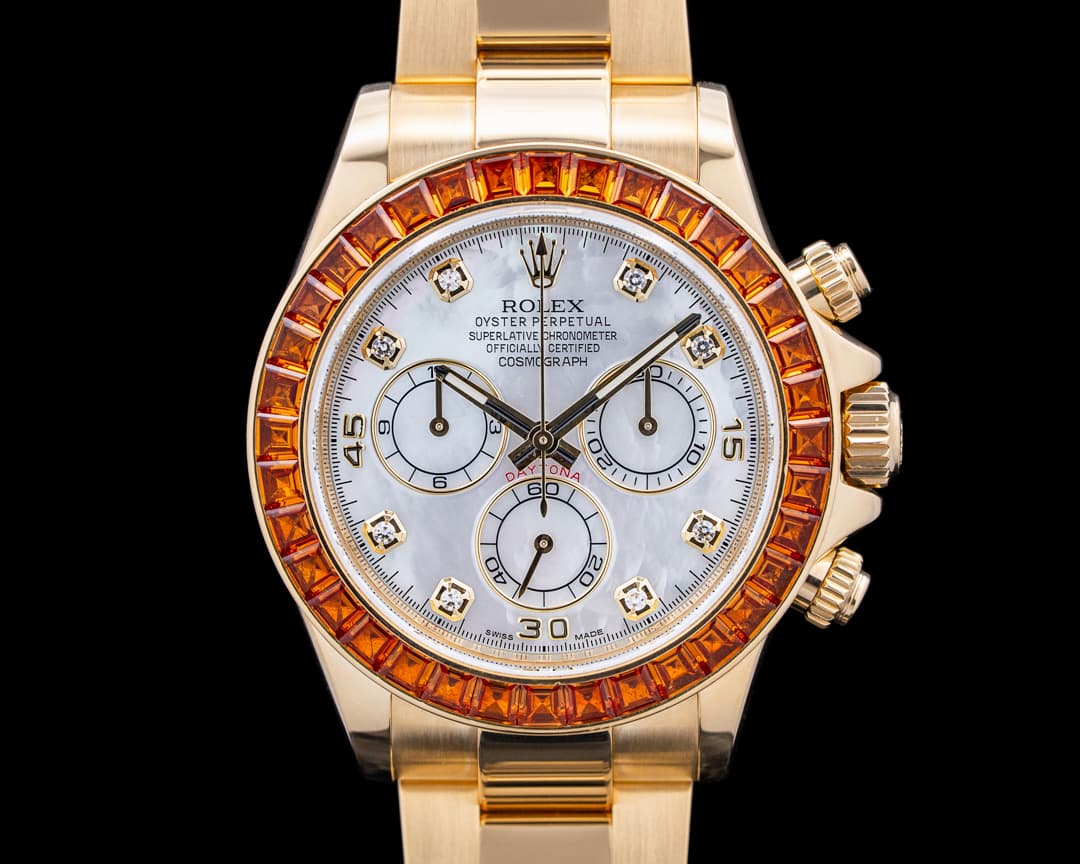
Rolex introduced the 116598 RBOW at Baselworld 2012 at a retail price of approximately $89,100. The case and bracelet were executed in 18k yellow gold. The bezel carried 36 baguette-cut sapphires in the spectral graduation that defines the Rainbow identity. The dial, in the most commonly traded configuration, is black lacquer with diamond-set hour markers.
In yellow gold, the warm case metal picks up the orange and yellow bands of the bezel graduation and reads in a brilliant way in the light. Indoors, the sapphires deepen and the dial reads more quietly than you might expect from a watch with this much going on. On the wrist, the 40mm Daytona case wears close to the usual Daytona proportion, but the gem-set case flanks add visual mass even if they do not add much physical weight. The oyster bracelet in yellow gold sits well and narrows appropriately at the clasp, making this watch shockingly comfortable to wear.
Production of the 116598 RBOW was intermittent and sporadic: introduced in 2012, discontinued after a few years, briefly reintroduced and discontinued again in the 2020s. Pre-owned examples with box and papers in excellent condition have traded in a range of roughly $250,000-$350,000 in recent years, but substantially below the Everose reference at current pricing.
Ref. 116599 RBOW, White Gold, 2012-2023
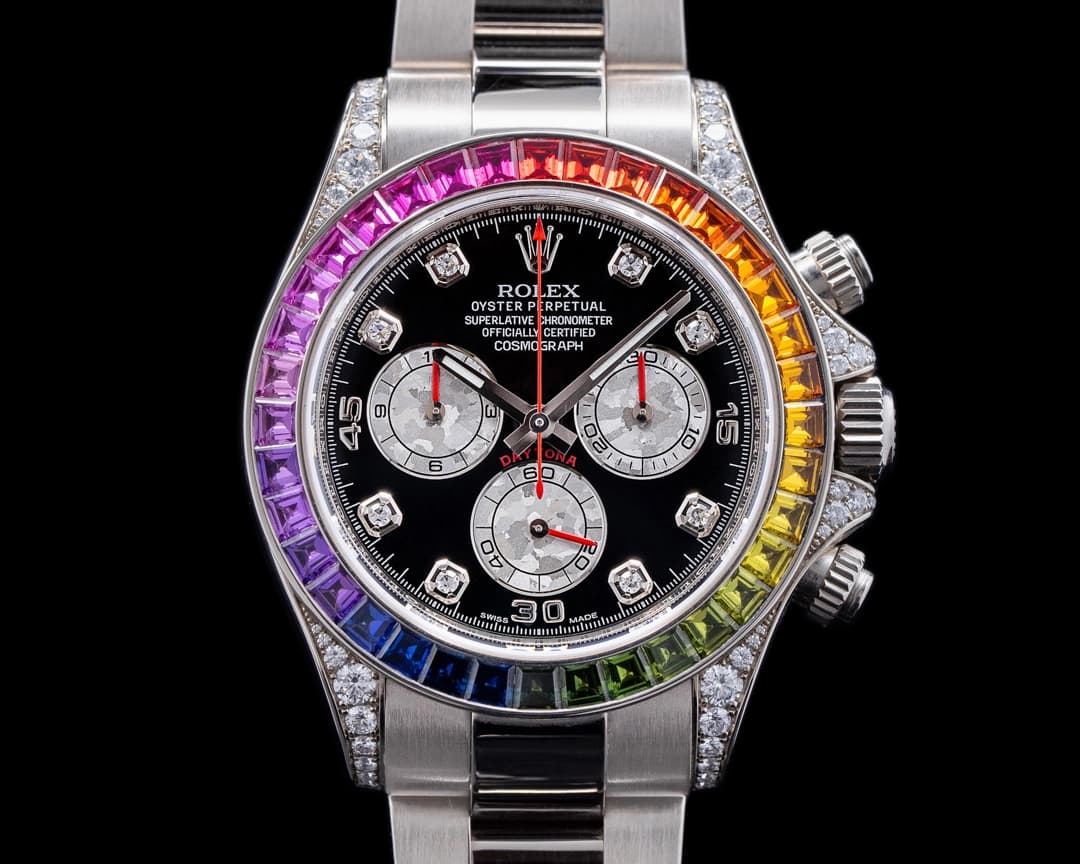
116599RBOW White Gold
The 116599 RBOW shares its generation and launch date with the yellow gold reference. The case and bracelet are 18k white gold, with diamond hour markers and the same bezel specification. The white gold case is a cooler, more neutral vehicle for the bezel's color graduation, the sapphires read more distinctly against white gold than against yellow, which gives the bezel greater visual autonomy. These white gold iterations have become extremely popular more recently.
Pre-owned dealer pricing for the 116599 RBOW in excellent condition with box and papers has tracked slightly above the yellow gold: roughly $260,000-$370,000, consistent with white gold's general premium in the gem-set market. Production history mirrors the yellow gold reference.
Ref. 116595 RBOW, Everose Gold, 2018-2023
116595RBOW Rose Gold
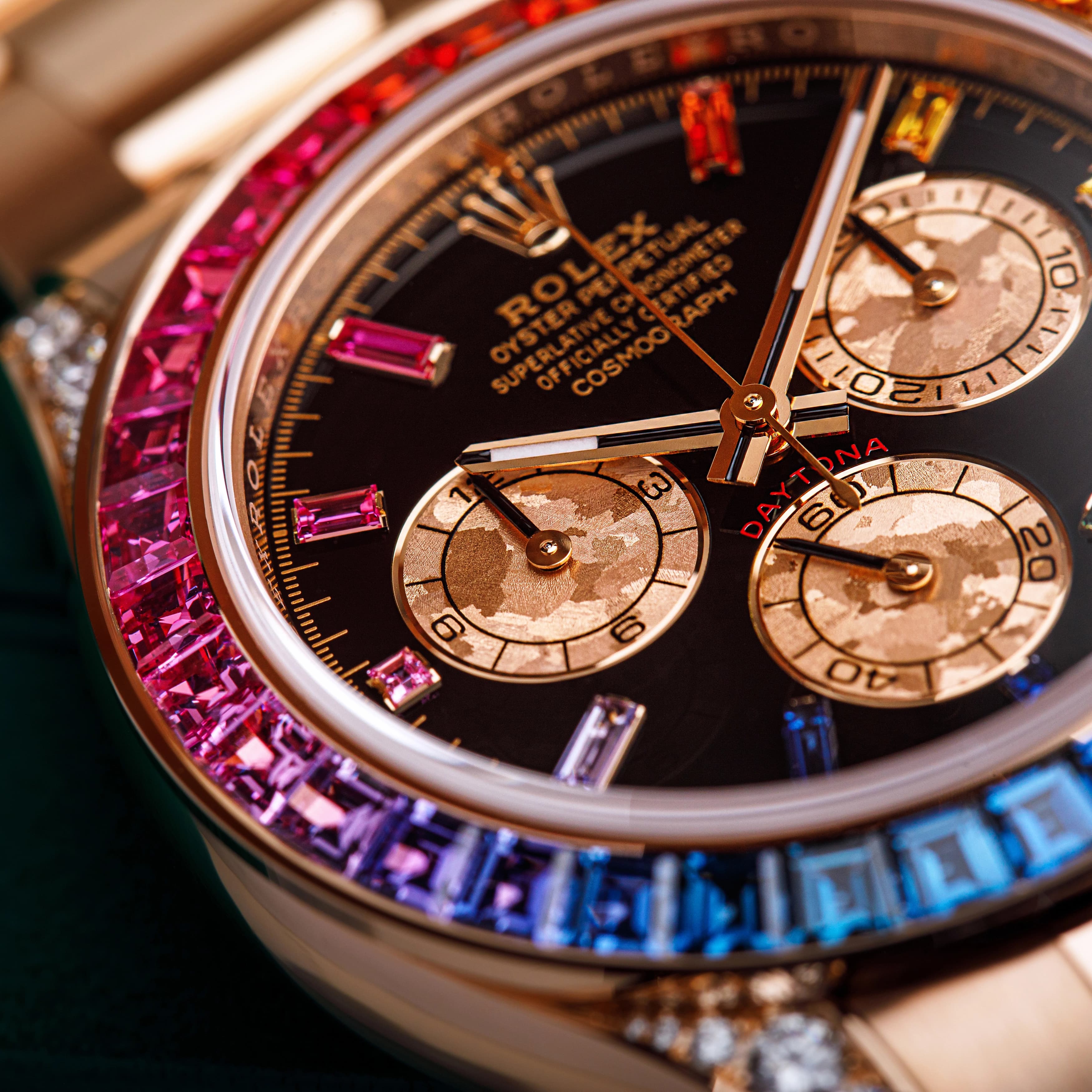
The Everose reference is the most speculated-upon of the three, and for buyers entering the market today, also the most scrutinized. Rolex introduced the 116595 RBOW in 2018 at approximately $97,500 retail. The key design difference from some of the earlier yellow and white gold references is the dial: instead of diamond hour markers, the 116595 uses 11 baguette-cut sapphires in colors that match and extend the bezel's spectral graduation. The case is Rolex's proprietary Everose gold alloy, which holds its rose color better than standard rose gold over time.
The effect of the color-matched sapphire markers is substantially different from diamond markers. Where the 116598 and 116599 read well, the 116595 pops in a unique way, the sapphires refract and shift in a way that no photograph fully captures. In low or artificial light, the watch becomes more muted, the color graduation less obvious, the case just a well-proportioned 40mm chronograph in rose gold.
This is the reference that drew speculative attention during the 2024-2025 run-up. Documented secondary market peak pricing reached approximately $580,000 before correcting to around $460,000 by mid-2026. A 2024 Australian auction set a new national record when a yellow gold example sold for $612,000.
Refs. 126595 / 126598 / 126599 RBOW, Third Generation, 2024-Present
The current generation was introduced in 2024 with updated case proportions and the caliber 4131. Third-generation pieces are the rarest in the secondary market simply because they are newest; pre-owned examples do appear but represent a small share of available inventory.
For most buyers evaluating the Rainbow Daytona today, the choice is between second-generation references in excellent pre-owned condition or a third-generation piece at close to or above its now elevated and undisclosed retail. The second-generation references are the established market and the focus of the practical guidance below.
What the Price History Reflects, and What It Doesn't
The Rainbow Daytona did not have a liquid secondary market for most of its first generation. When the 116598 and 116599 launched in 2012 at around $89,000 retail, they attracted attention within Rolex's VIP distribution network and among gem-set Daytona collectors, but they were not widely traded or widely discussed outside that circle. The introduction of the Everose reference in 2018 brought the watch to broader attention because the market for high-end pre-owned Rolex was by then much more developed.
The period of elevated demand that peaked in 2024-2025 was driven by several overlapping factors: a broader speculative wave in the pre-owned Rolex market, the Everose reference's relative scarcity on the secondary market, and a pattern common to off-catalog gem-set pieces where restricted supply and visible desirability compound each other. A series of record auction results also pushed collectors into a frenzie to get their hands on the limited examples available.
For buyers who purchased during the period of broader Rolex market enthusiasm, some of whom paid elevated prices for pre-owned second-generation references, the current market is uncomfortable. For buyers who did not own one and are evaluating an entry now, current pricing is at least more deliberate than what was available twelve months ago.
Price by configuration varies significantly. Pavé diamond dials command a premium over black lacquer within the same reference. Box and papers can mean a $30,000-$50,000 difference at this price level. Condition of the gem-set, discussed below, is the single largest variable, since one missing stones is rendered extremely flawed and far less desirable.
How to Evaluate a Specific Piece
Evaluating a Rainbow Daytona before transacting is meaningfully different from evaluating a steel sports model. The gem-set introduces failure points that a standard Daytona does not have, and the secondary market includes pieces that have been modified, repaired, or misrepresented in ways that are not always obvious at first glance.
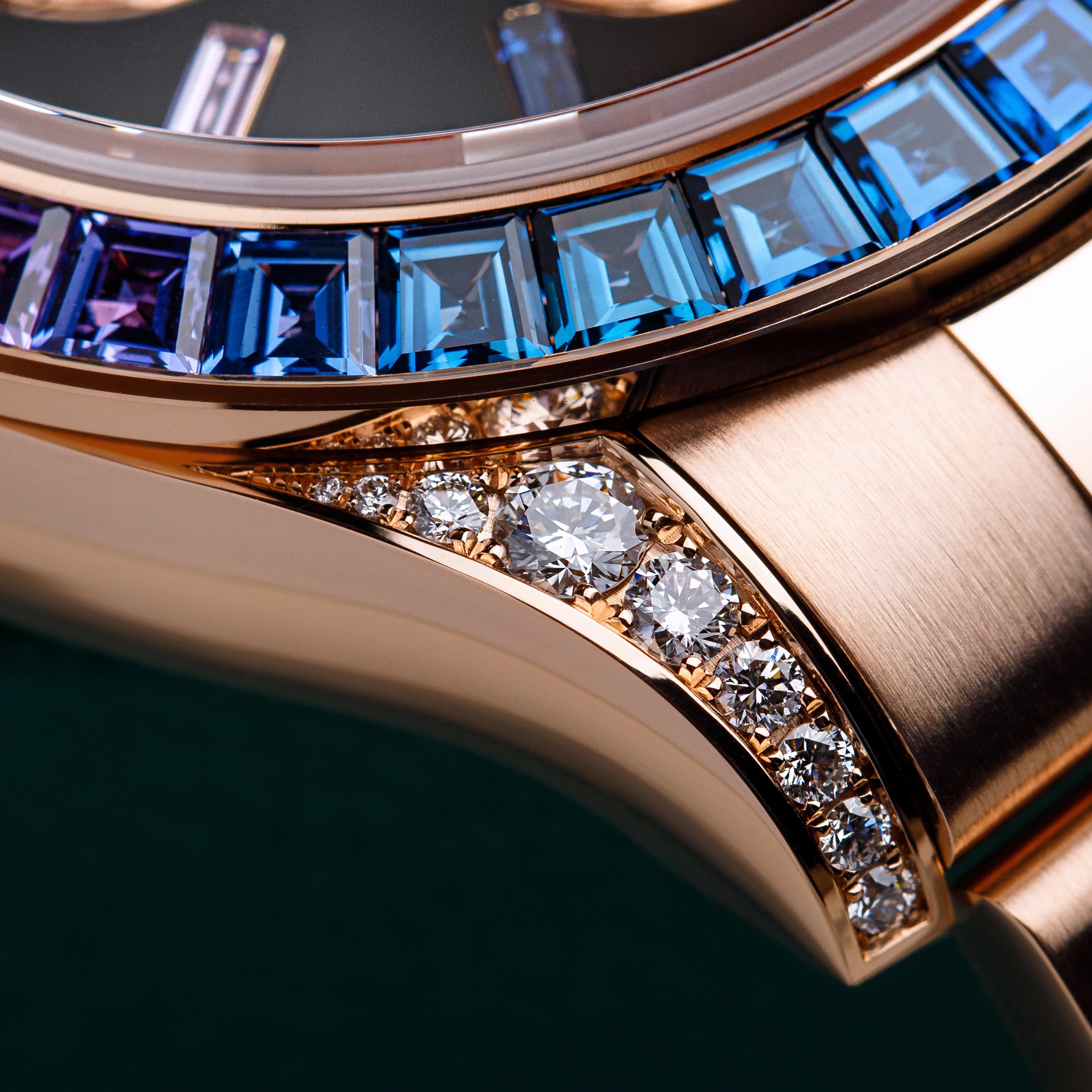
The bezel sapphires. The 36 baguette-cut sapphires should sit flush, uniform, and in uninterrupted spectral sequence. Missing stones are the most obvious problem. Replaced stones are harder to spot: a replacement sapphire may have a slightly different color saturation, a different surface finish, or a marginally different cut than the original. Under a loupe, look for differences in table size and facet angles between adjacent stones. The color graduation should flow continuously, any step or interruption is worth investigating. A re-polished bezel will often show under raking light as a surface texture inconsistency between the metal and the stone settings.
The case flanks. The roughly 56 diamonds set into the case should be examined with the same care as the bezel sapphires. Case diamonds are more vulnerable to impact than bezel stones, and chips or missing stones are not uncommon in pieces that have been worn regularly. Re-setting a single stone is possible; a case that has had multiple stones replaced is a different resale proposition from one with original stones throughout.
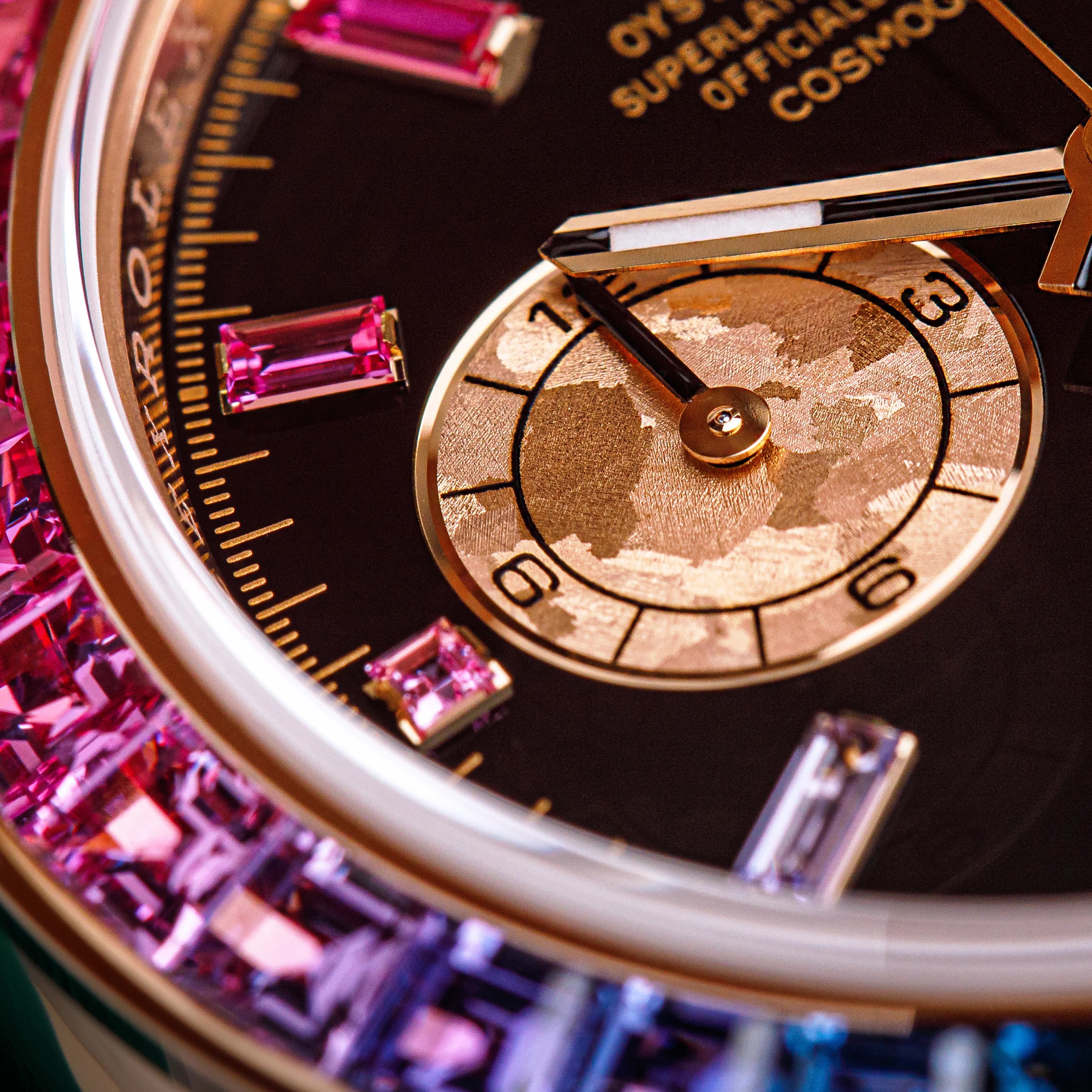
The dial. On Everose references, the 11 sapphire hour markers should match the color gradient of the bezel. Any marker that reads as a different shade, or that sits at a different height than its neighbors, may have been replaced. On yellow and white gold references, the diamond markers are less obviously differentiated but should be examined for chips, loose settings, and consistent brilliance. A dull or cloudy marker is either dirty or has a surface defect.
Box and papers. Provenance documentation matters more for gem-set references than for standard sports models for several reasons: the off-catalog distribution means fewer pieces circulate with complete provenance, which makes complete-set examples more valuable; and the papers provide a reference number and date that can be cross-checked against the case back. A Rainbow Daytona with box, papers, and a traceable ownership history is a safer bet than a watch that arrives naked.
Collector Piece or Trade Vehicle: A Framework for Deciding
The Rainbow Daytona is a genuinely unusual secondary market object, and buyers approach it in at least two different modes that deserve separate frameworks.
For the buyer who wants to hold the watch and wear it, who is drawn to what it actually is rather than what it might sell for, the relevant questions are about the watch itself. Is the gem-set execution worth $460,000 to you? Are you prepared for a watch that requires careful wear given the vulnerability of baguette-cut sapphires in a bracelet-integrated setting? Do you want an Everose reference with its continuous color program, or a yellow or white gold reference where the bezel and dial are in more deliberate contrast? None of these questions have universal answers, but they should precede any discussion of market dynamics.
For the buyer approaching this as a trade, buying to hold for a defined period and exit at a premium, the recent price history is instructive but not comforting. The move from $444,000 in 2022 to a 2025 peak near $580,000 and back to $460,000 by mid-2026 is not a pattern that supports confident return assumptions for a two- or three-year hold.
The Everose reference (116595 RBOW) is the most liquid of the second-generation pieces, attracting the most buyer attention and carrying the most comparable transaction data. Yellow and white gold references trade less frequently but still attract serious collector buyers. Third-generation references (126595, 126598, 126599) have the highest retail baseline and the least price discovery history, it is still quite early to make assessments about where that market sits.
For a buyer with a five-year-plus horizon who intends to wear the watch regularly and is not dependent on a specific exit price, the Rainbow Daytona is a defensible long-term hold. The off-catalog distribution, IF-grade gem quality, and Daytona platform liquidity are real structural supports.
That said, putting all speculation aside, what this watch truly represents is the intersection of an iconic design with some of the nicest precious stone settings in the world. These are genuinely beautiful watches, and they deserve attention for what they are as genuinely beautiful creations unlike anything else on the market. Many brands have attempted to replicate the mystique of the beautiful Rainbow Daytona, but there is and always will be only one rainbow Daytona.
Shop New Arrivals
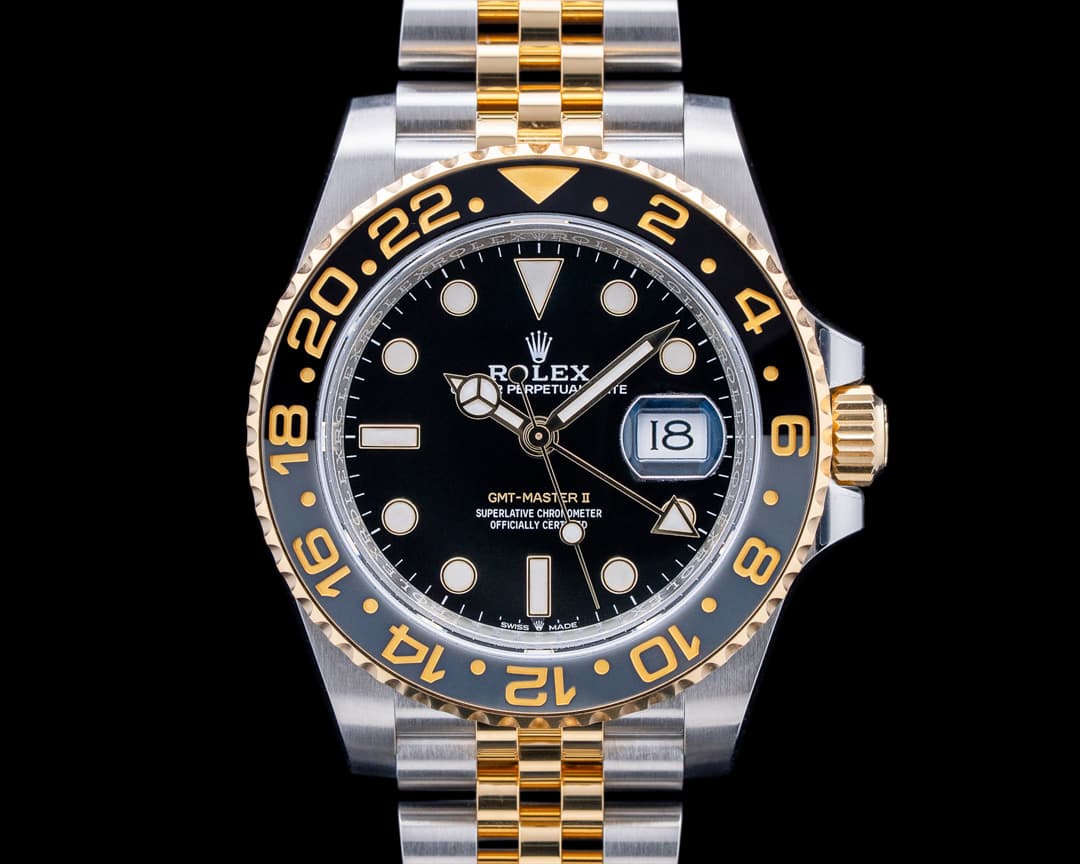
126713GRNR GMT Master II SS / 18K YG Black Dial 2026
$22,900
View Watch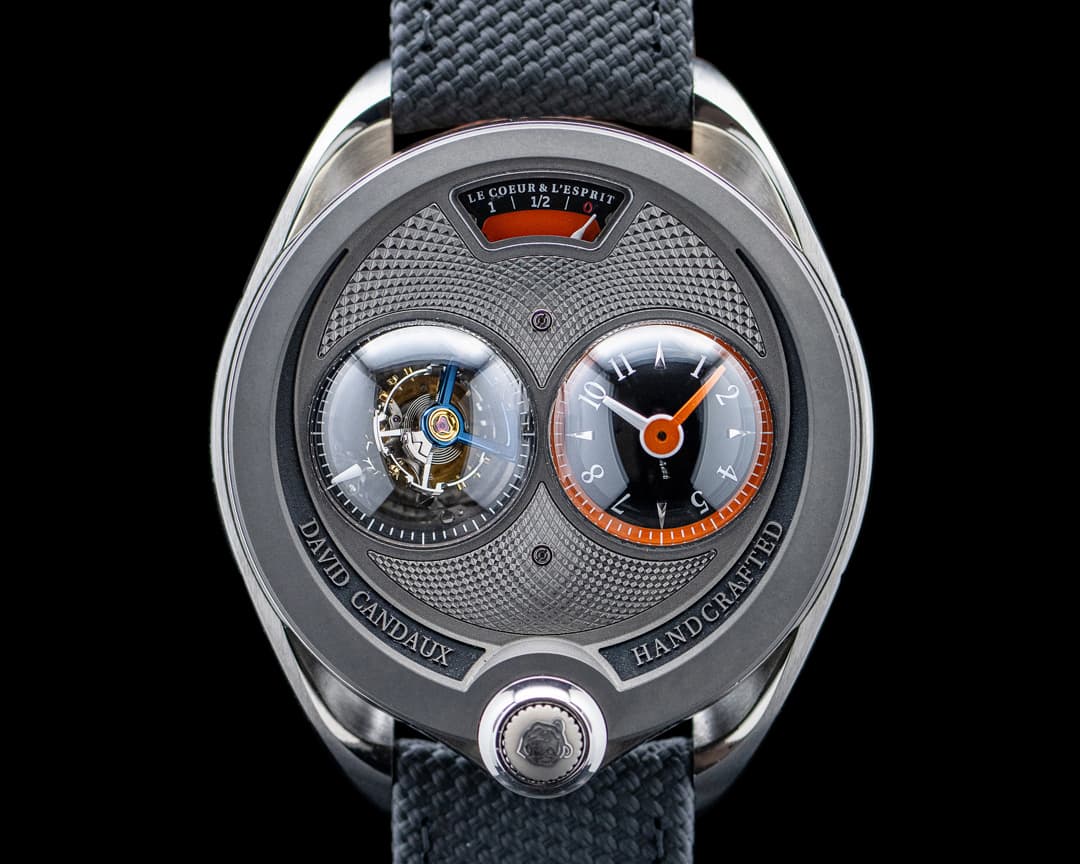
DC6 Solstice Tourbillon Titanium Gray Dial PIECE UNIQUE
$295,000
View Watch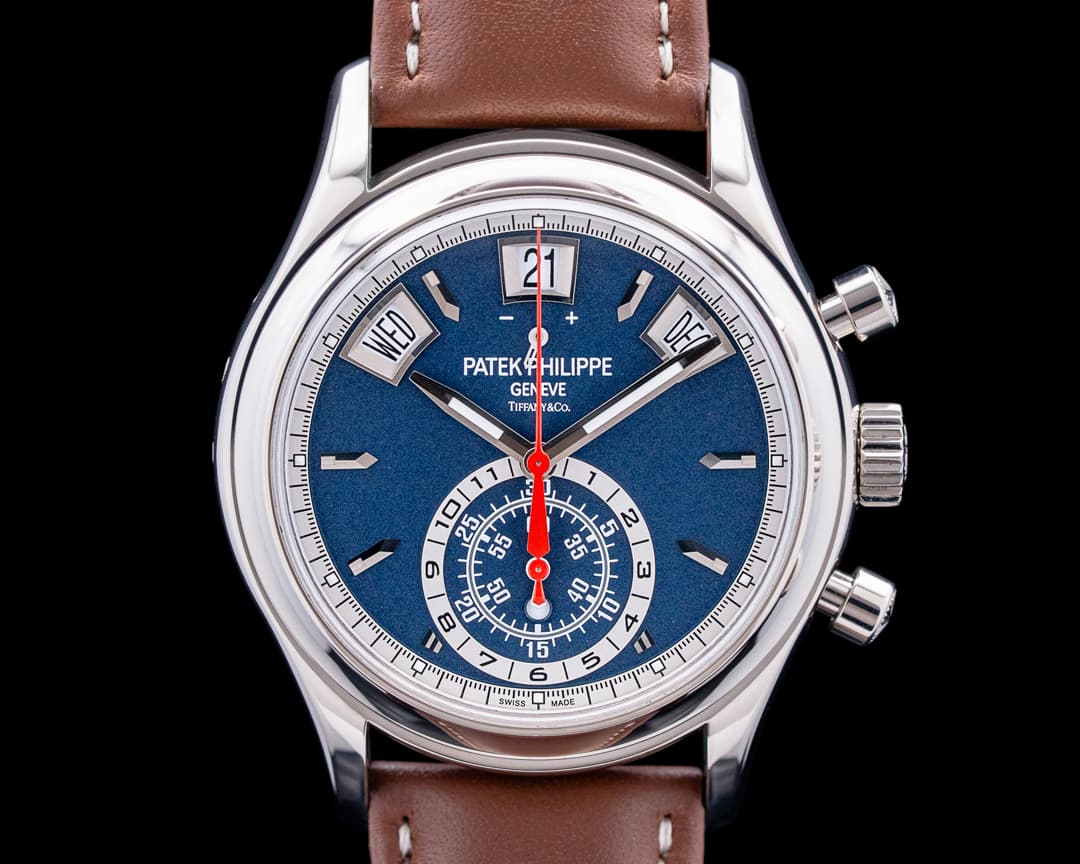
5960/01G Annual Calendar Chronograph "Tiffany & Co" 18K WG Blue Dial
$89,500
View Watch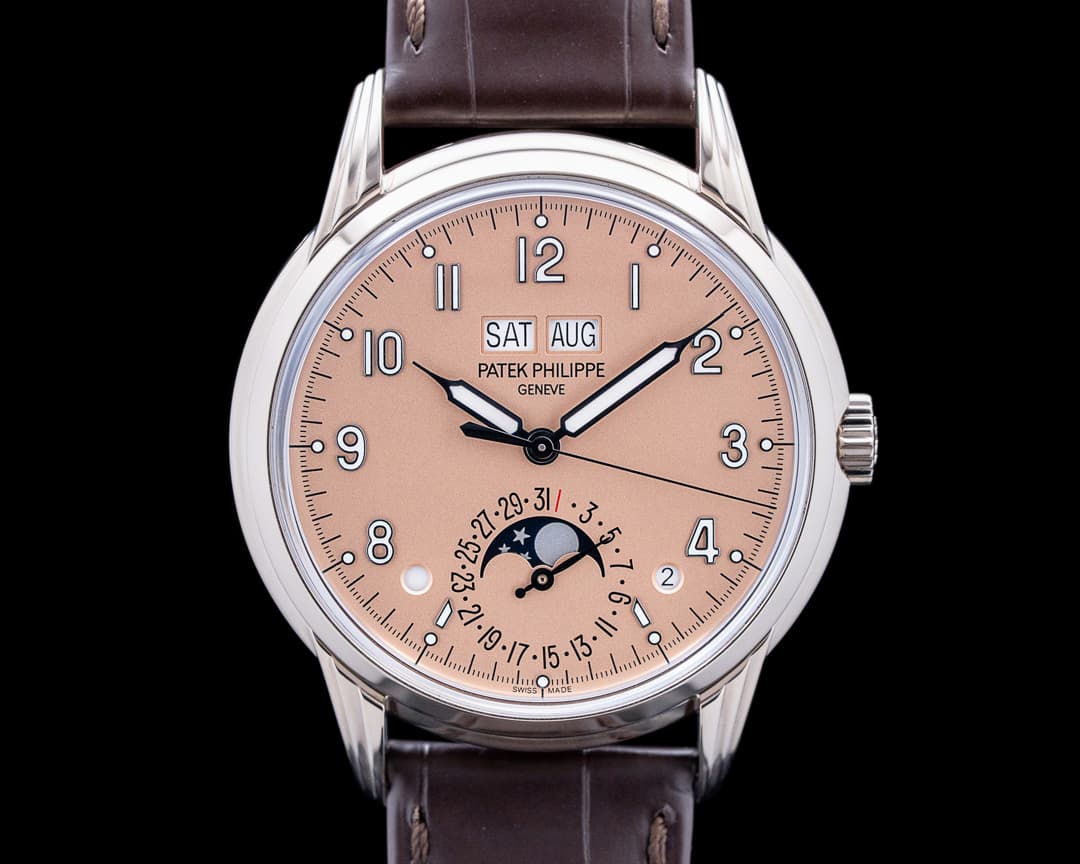
5320G Grand Complications Perpetual Calendar 18K WG Salmon Dial
$75,900
View Watch
Shop New Arrivals
126713GRNR GMT Master II SS / 18K YG Black Dial 2026
$22,900
View WatchDC6 Solstice Tourbillon Titanium Gray Dial PIECE UNIQUE
$295,000
View Watch5960/01G Annual Calendar Chronograph "Tiffany & Co" 18K WG Blue Dial
$89,500
View Watch5320G Grand Complications Perpetual Calendar 18K WG Salmon Dial
$75,900
View Watch
More Content