A Buyer's Guide to Voutilainen: Reference by Reference
Published on 10/20/2026

Fifty to seventy watches a year. That is the entire output of Kari Voutilainen's atelier in Val-de-Travers, Switzerland, across every reference, every dial variant, every case metal. F.P. Journe, the benchmark for serious independent watchmaking at scale, produces roughly a thousand mechanical pieces annually. The gap between those two numbers is not a brand-positioning story. It is a supply reality, and it changes everything about how you approach buying one of these watches.
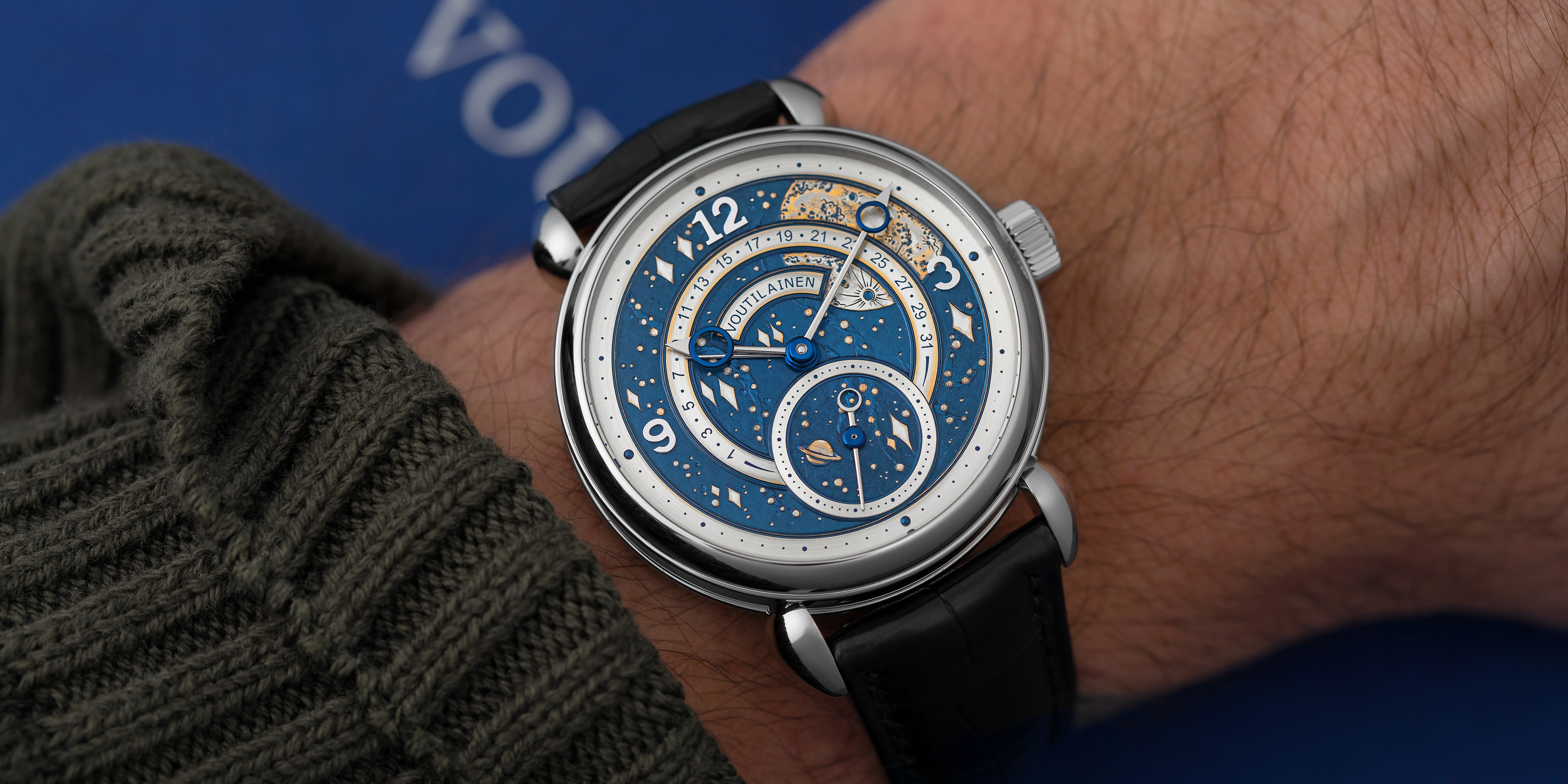
Voutilainen established his workshop in Môtiers in 2002, having worked at Parmigiani for nearly a decade, and worked on restoration projects of significant complexity before deciding to build movements from scratch. The atelier produces cases, dials, and hands in-house, sourcing only mainsprings, hairsprings, and jewels externally. Kari personally supervises finishing. There is no outside investment, no scale ambition, and as of December 31, 2025, no open order book. The supply that exists is the supply that will ever exist, at least until the terms change, and nothing in the atelier's history suggests they will.
This guide is a reference-by-reference account of what each watch is, what each trades for, and what the buying process actually requires when supply is this thin.
What Makes Voutilainen Different from Other Independents
The phrase "limited production" gets used so broadly in independent watchmaking that it has lost most of its meaning. Or more specifically, it lacks the context specific numbers provide. A brand can produce five hundred watches a year and still call its output limited, and it would be limited. At fifty to seventy pieces across all references, Voutilainen is operating at a different scale entirely. Some individual references surface at auction only a handful of times annually. Others go years between appearances at major houses.
For a buyer accustomed to dealer allocations or waiting-list management, that frame does not apply here. There is no allocation. There is no live list. Voutilainen closed its order book at the end of 2025, meaning all future acquisition is secondary market or private sale. What you are navigating is not access to a brand. It is access to a specific physical object that may not surface again for months or longer.
The comparison to Journe is useful but requires precision. Journe produces roughly a thousand mechanical pieces a year, which means even its scarcer references appear with some regularity. De Bethune sits somewhere between 160 and 200 pieces annually. Dufour, now retired, produced in smaller numbers but over a compressed window. Voutilainen's output, sustained at this level since 2002, means that even accounting for two decades of production, the total number of Voutilainen watches in existence is not large. The appreciation visible in the 2025-2026 auction cycle reflects that reality catching up with price.
The atelier's structure also matters for condition. Because Kari supervises finishing personally and the team is small, there is no variation in execution quality across the range, but there is also no mechanism for replacing damaged components at scale. A scratched dial on a Vingt-8 is not a dial you can source from stock. That has direct implications for what condition tolerance means when you are evaluating a piece.
The Vingt-8: The Reference That Defines the House
The Vingt-8 was introduced at Baselworld in 2011. The name references Caliber 28, Voutilainen's first in-house caliber, developed in 2008 and debuted in the watch that would become the house signature. It is a manual-winding time-only watch, hours, minutes, power reserve, in a 39mm three-body case, and it is the clearest entry point into the range.
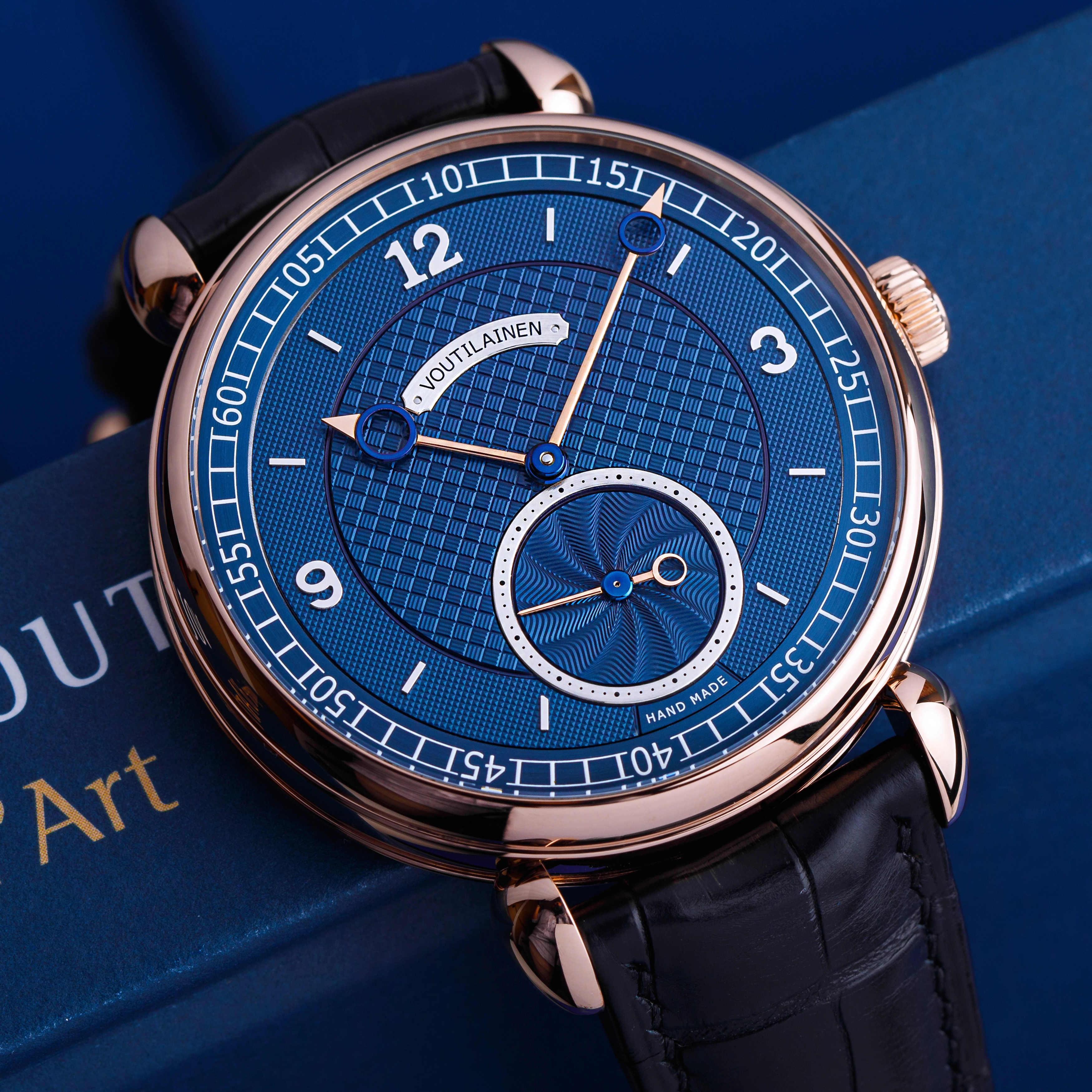
The case wears smaller than the 39mm suggests. The proportions are tight and classical: a high-polished bezel, polished middle band, and lugs that curve down in their teardrop pattern. On the wrist it sits flat and close. This is not a watch that announces itself across a room. In white gold it reads cool and precise; in rose gold it softens slightly, though without becoming warm in any obvious way.
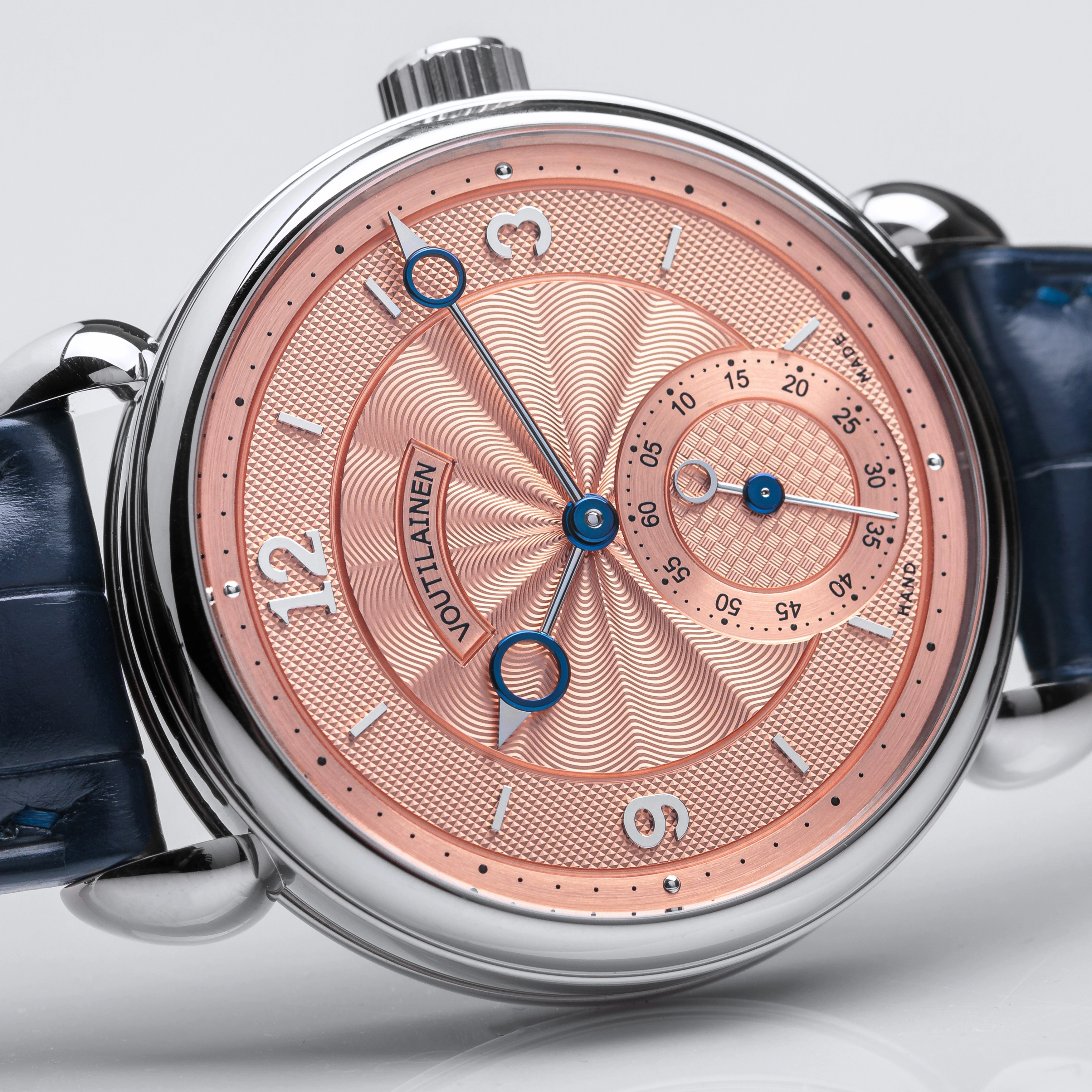
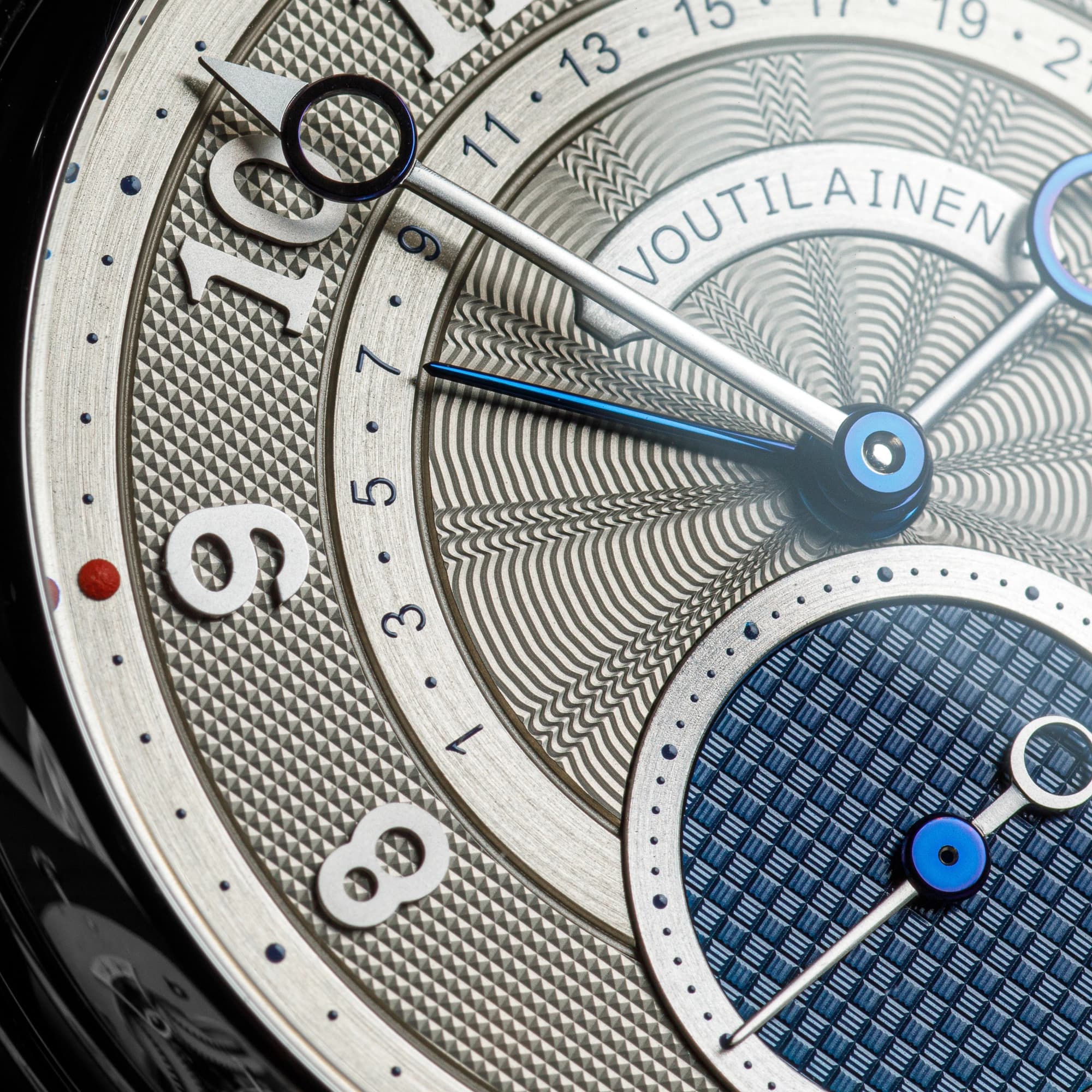
The dials are where the Vingt-8 separates itself. The guilloché executions, engine-turned by hand on a rose engine and producing patterns that shift with the light, are among the most technically demanding dials in independent watchmaking. Under direct light, the texture reads as geometric and almost graphic; in diffuse light, it settles into something quieter. Enamel variants, trade at the high end of the range. Sector dials, which organize the dial face into radiating zones, give the watch a more architectural reading.
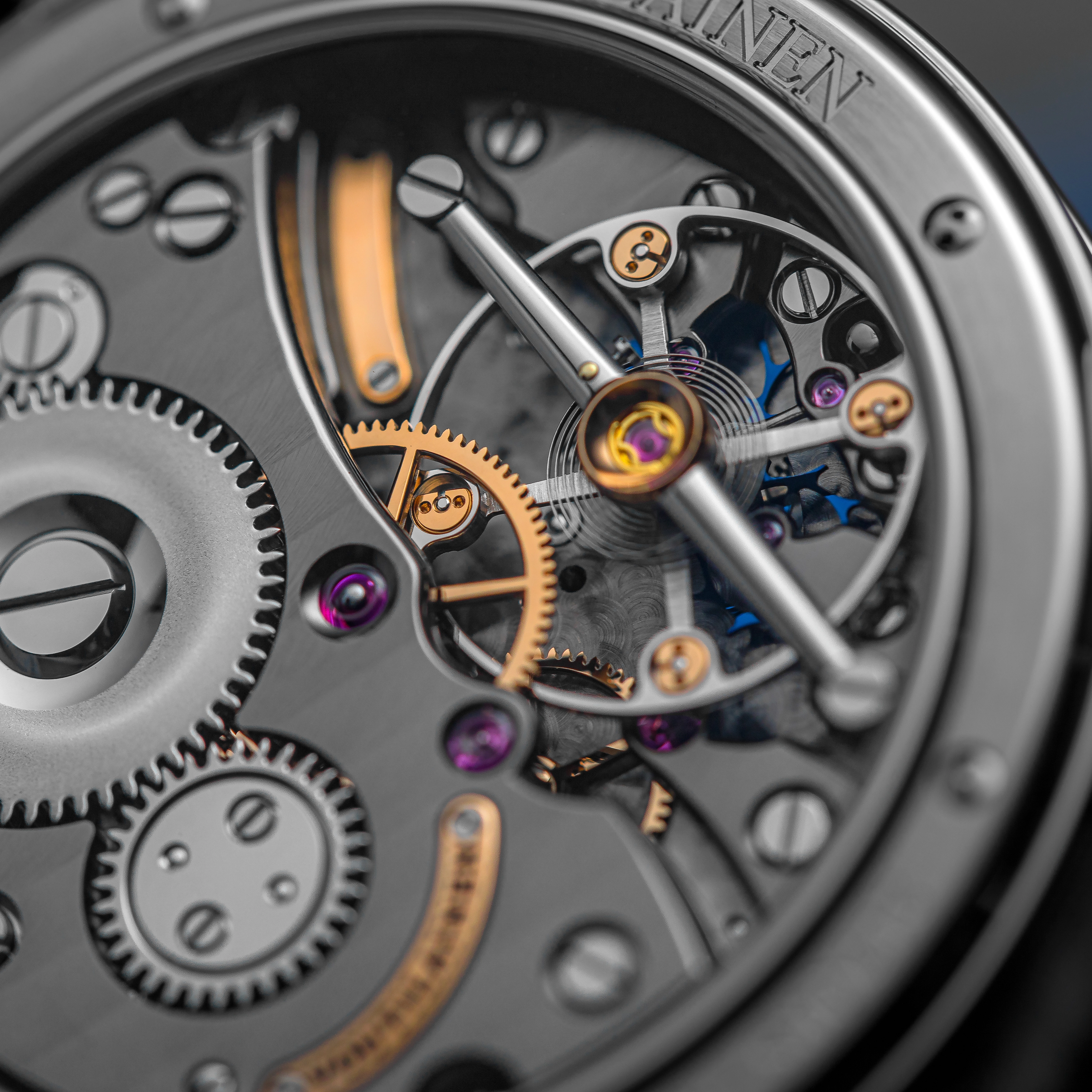
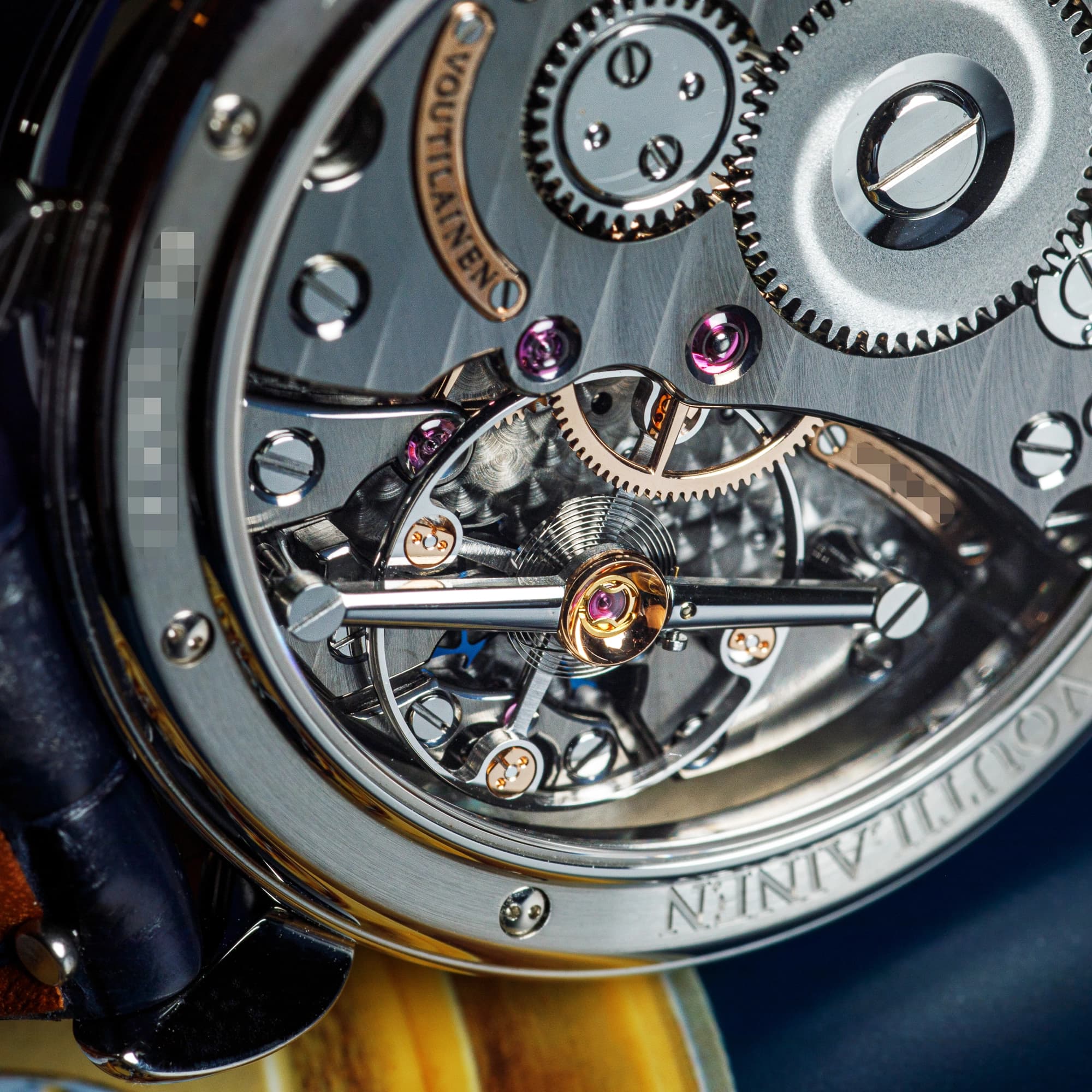
Through the sapphire caseback, Caliber 28 is finished to a standard that rewards attention: beveled bridges with hand-polished anglage, côtes de Genève on the plates, polished and frosted surfaces alternating in a way that photographs poorly and reads beautifully in hand. The movement architecture is traditional Geneva, which is the point. Voutilainen trained in the classical tradition and Caliber 28 shows it. It's truly magnificent in execution, with some of the most elaborate hand finishing available anywhere on the market.
Retail pricing before the order book closed ranged from approximately CHF 75,000 for steel-cased guilloché executions to CHF 98,000 or above for enamel dials in precious metal. Those figures are now historical. On the secondary market, standard Vingt-8 examples have been selling in the CHF 139,700-CHF 165,100 range at Phillips Geneva across the 2025-2026 cycle. In New York, a 2015 example brought $234,950 at Phillips in June 2025. The premium over original retail has steepened as recent auction cycles have confirmed collector demand. Rare variants tell a different story entirely: at Phillips New York in June 2026, four exceptional Voutilainen lots brought between $1.04 million and $1.84 million. The Masterpiece Chronograph II hit $1.84 million. An Inversé and an ISO variant were in the $1.1-1.2 million range.
For a buyer entering at the standard Vingt-8 level, dial execution is the primary value driver. A guilloché steel example and a grand feu enamel gold example are both Vingt-8s, but they are not priced equivalently and should not be evaluated as though they are. Do significant due diligence into the pricing history of the closest comparisons before making any decisions.
The Observatoire: The Complications Case
The name requires a clarification upfront. The Observatoire is not a complicated watch in the conventional sense. No perpetual calendar, no repeater, no tourbillon. What it has is time displayed at observatory precision, hours, minutes via a single-hand sweep, and sub-seconds, using a movement Voutilainen did not design but did transform.
The movement is based on the Peseux 260, a manual-winding ebauche produced to observatory-grade tolerances but never commercially cased. Voutilainen sourced new-old-stock examples, then subjected each to extensive reworking: regulation, decoration, and finishing to a standard the base movement was not originally built for. The result competed against, and beat, considerably more elaborate pieces, winning the Grand Prix d'Horlogerie de Genève Best Men's Watch category in 2007.
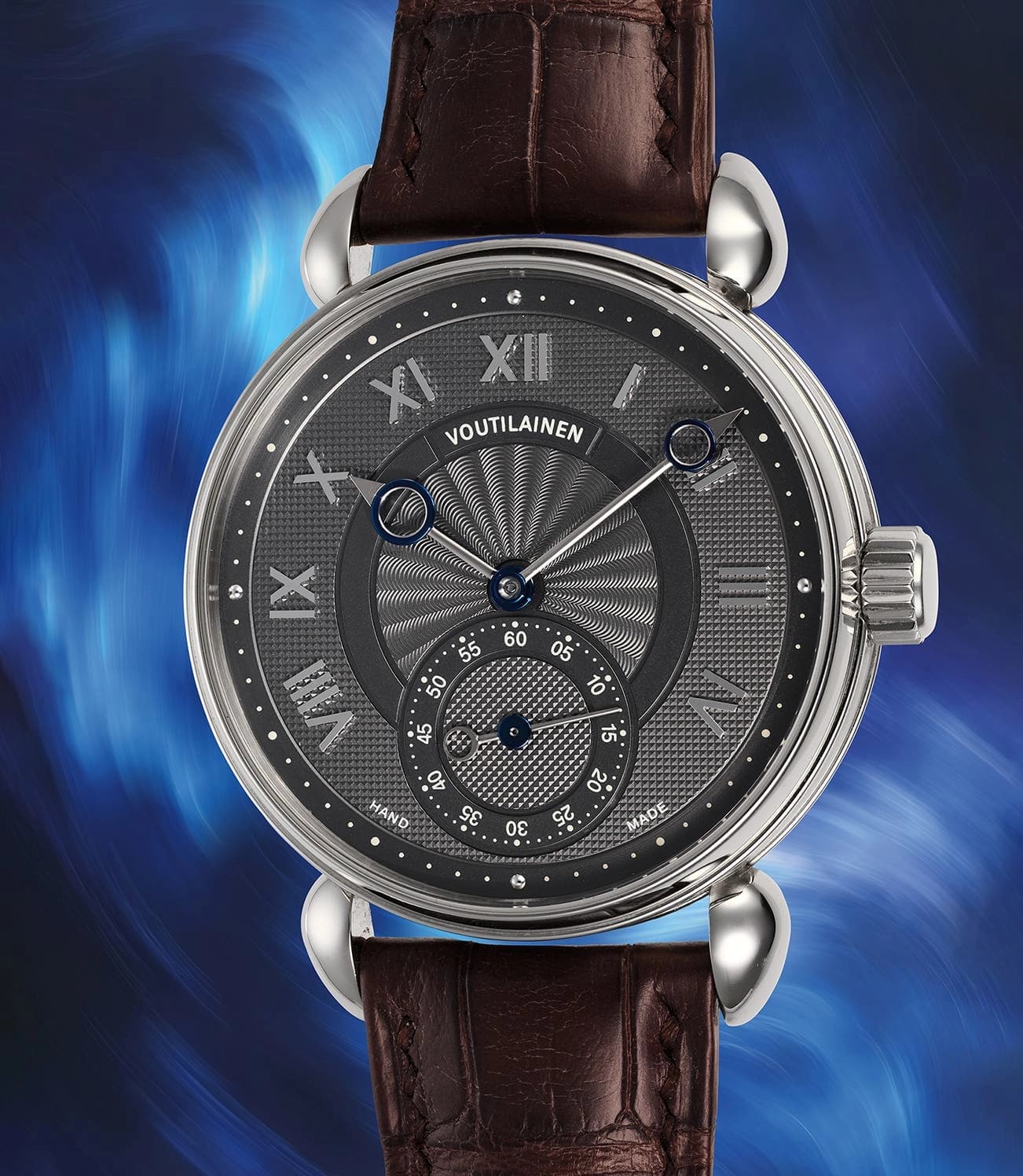
Observatoire- Phillips
The case is 38mm, and approximately fifty pieces were produced in total. The Observatoire predates the Vingt-8 as the house's defining early statement.
On the secondary market, the Observatoire is among the rarest pieces in the range. Appearances at major auction houses are genuinely infrequent, a few times a year across Christie's, Phillips, and Sotheby's combined, in good years. Standard examples have ranged between $403,000 and $533,000 at Christie's and Phillips in 2025-2026. A single white gold 2009 example at Phillips in June 2026 brought $1,041,400. That last result should be read carefully: it reflects both the exceptional state of that particular piece and the broader appreciation event of the 2026 cycle, not a new floor for all Observatoire examples.
What the Observatoire demands from a buyer is patience calibrated to something closer to a museum acquisition than a collector transaction. If you are willing to wait, the watch will surface. The condition premium is severe: at fifty examples total, there is no comparable piece to reference if the dial or hands are compromised.
The GMT-6: The Practical Watch in an Impractical Range
Released around 2016 and produced in limited numbers since, the GMT-6 is Voutilainen's functional concession to the modern collector's life. It shares the Vingt-8's case and Caliber 28 base, but adds a GMT module comprising over seventy new components: a rotating disc at six o'clock showing a second time zone and a day/night indicator, adjusted via the crown in one-hour increments.
The dial reads differently from the rest of the range. The secondary time zone display introduces additional visual interest that the Vingt-8's streamlined, balanced layout deliberately avoids. It is a more complex dial face, and the GMT function adds visual information that Voutilainen's other references withhold as a matter of principle. This is one of Voutilainen's most complex watches. Most of Voutilainen's pieces have the finishing and dial execution take center stage, but this piece provides just minimal additional functionality within the same framework.
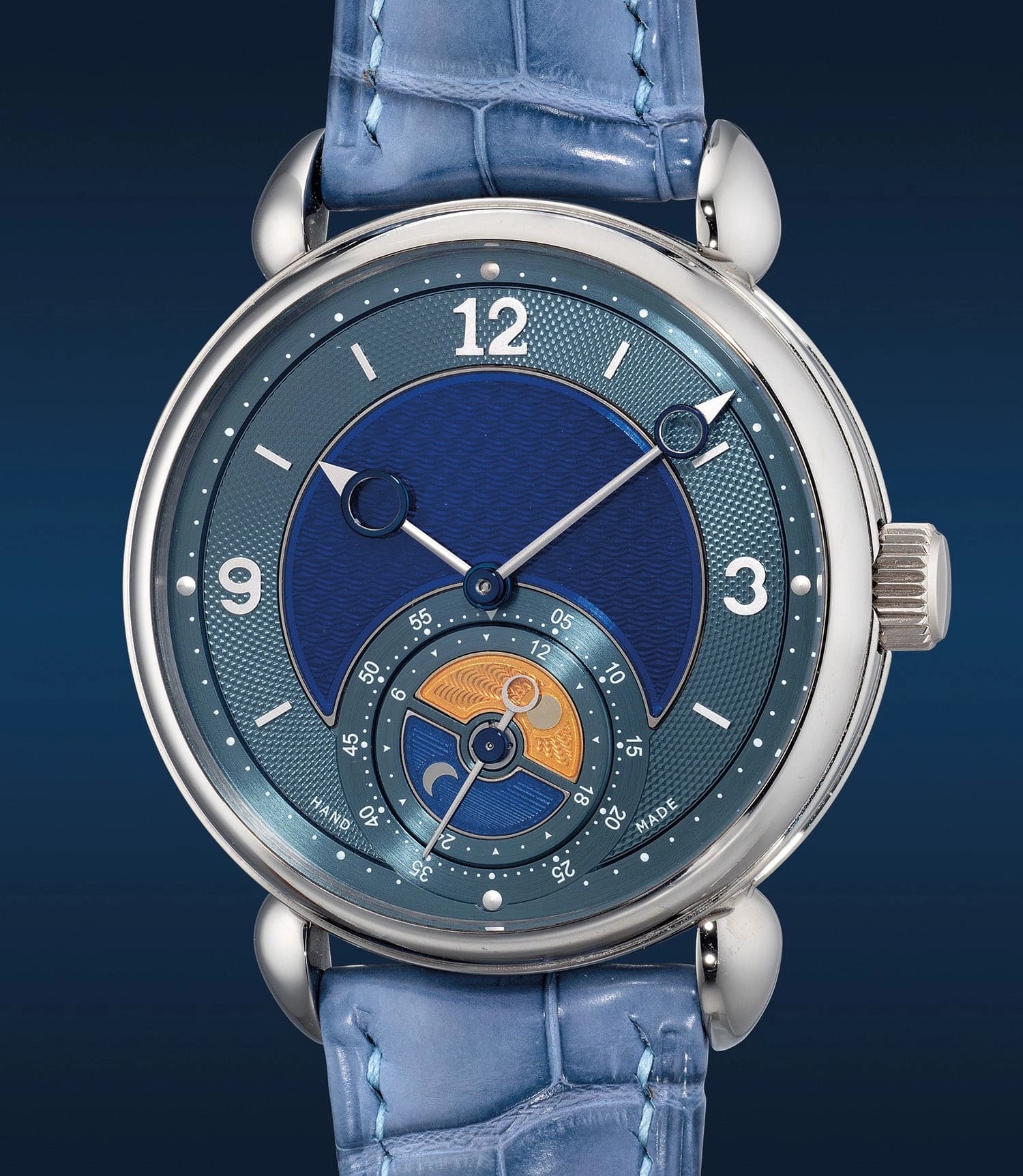
GMT 6 Phillips
The GMT-6 is not primarily about the GMT function. It is about owning a watch from this atelier, with this level of hand-finishing, that also happens to tell you what time it is in Tokyo. If the GMT function is genuinely important to how you use a watch, there are more legible options at significantly lower prices. If you are buying a Voutilainen and prefer to have a second time zone, the GMT-6 is the reference that gives you both.
Production on the GMT-6, like the Vingt-8, is now closed with the order book. Examples surface rarely. Auction data for the GMT-6 is thinner than for the Vingt-8 or Observatoire, which itself signals something about market frequency. Pricing when pieces do appear reflects the Voutilainen market broadly: secondary premiums at multiples over original retail are the standard across the board, reflecting the scarcity of the pieces across the market as a whole.
Secondary Market Reality: Scarcity, Condition, and Price
The 2025-2026 auction cycle has been the clearest public demonstration yet of where Voutilainen sits in the market. Beginning in mid 2025, a substantial surge in Voutilainen sales began, with five Voutilainen watches crossing $1 million at Phillips New York in June 2026 alone. In October 2026, a 28Sport brought $1,016,000 at Phillips.
For buyers evaluating standard references, the Vingt-8 or GMT-6 at non-exceptional specification, the market looks different but follows the same structural logic. Supply is thin. When a piece surfaces in the right condition, it moves fast and high. Time-on-market at fair value is short; time-on-market at an optimistic price can be indefinite, because there is no urgency-from-competition pressing a buyer to act. The universe of Voutilainen buyers is not large. But the market of sellers is even smaller.
Condition operates differently here than it does in a market with regular supply. For a reference produced at a few dozen examples total, condition is everything. Our experience handling these pieces directly confirms that condition variance drives pricing shifts that would look aggressive by any other standard in the independent space. The spread between an exceptional example and a worn one is not 10-15%; it can reach 20-40% or more, reflecting the structural impossibility of restoring the watch to its original state without damaging its integrity. Regardless, a Voutilainen will sell.
What to Know Before You Buy
Documentation. Original box, papers, certificate of authenticity, and any service records are ideal. With production volumes this low and the order book now permanently closed, provenance documentation anchors the piece's history in a way that matters to future buyers as much as it does to you.
Case condition. Light wear on the case middle is acceptable and, on pieces more than a decade old, expected. Polished-over cases are a serious problem. Voutilainen's hand-finishing, cannot be restored without losing the original geometry. Any piece showing signs of unauthorized polishing should be evaluated as structurally compromised, regardless of how it reads in photographs.
Dial condition. This is the hardest line. Voutilainen's guilloché and enamel dials are irreplaceable. Marks, fading, or damage reduce the watch to a movement in a case, which is not what you are paying for. On a reference where fifty or seventy examples exist, a compromised dial is a long-term problem with no obvious solution. Walk away unless the discount is severe enough to compensate for permanent impairment.
Movement service. Caliber 28 is a robust manual movement, but the finishing is part of its value. Any service should have been performed by the atelier or an authorized hand. Service records matter. An unserviced watch that runs correctly is preferable to one that has been opened by an unqualified hand.
None of this means buying a Voutilainen is easy. It means the window between the right piece appearing and the decision to act is shorter than most buyers expect. Trying to compress the search window by accepting a compromised example is the mistake this market punishes most consistently. The pieces that surface in good condition, with documentation, from motivated sellers represent the best opportunity.
Voutilainen watches represent some of the most beautiful and well-finished watches available on the market. Careful study of the brand's cardinal models, philosophies, and guiding principles are essential to gain insight into the creative genius that is Kari Voutilainen.
Shop New Arrivals
5124J Gondolo 18K Yellow Gold Silver Dial
$18,900
View Watch
126200 Datejust 36 SS Silver Dial
$9,350
View Watch
126610LV Submariner Date "Starbucks" SS Black Dial
$15,500
View Watch
Octa Sport ARS2 Titanium Gray Dial
$159,000
View Watch
Shop New Arrivals
5124J Gondolo 18K Yellow Gold Silver Dial
$18,900
View Watch126200 Datejust 36 SS Silver Dial
$9,350
View Watch126610LV Submariner Date "Starbucks" SS Black Dial
$15,500
View WatchOcta Sport ARS2 Titanium Gray Dial
$159,000
View Watch
More Content