The Case for the Hand-Wound Chronograph: Patek Philippe's 5070, 5170, and 5172
Published on 10/16/2026
The Case for the Hand-Wound Chronograph
A manually wound chronograph is one of the great pleasures of fine watch collecting. The ritual of winding the watch each day is the point. In a world where automatic movements and quartz watches have made the hand-wind essentially optional, choosing one signals that a collector wants the direct interaction with their watch that makes manual watch collecting so incredibly personal. Patek's sustained investment in the format, across three distinct references spanning more than two decades, reflects the brand's recognition of the timeless beauty and enduring appeal of the manually-wound chronograph.
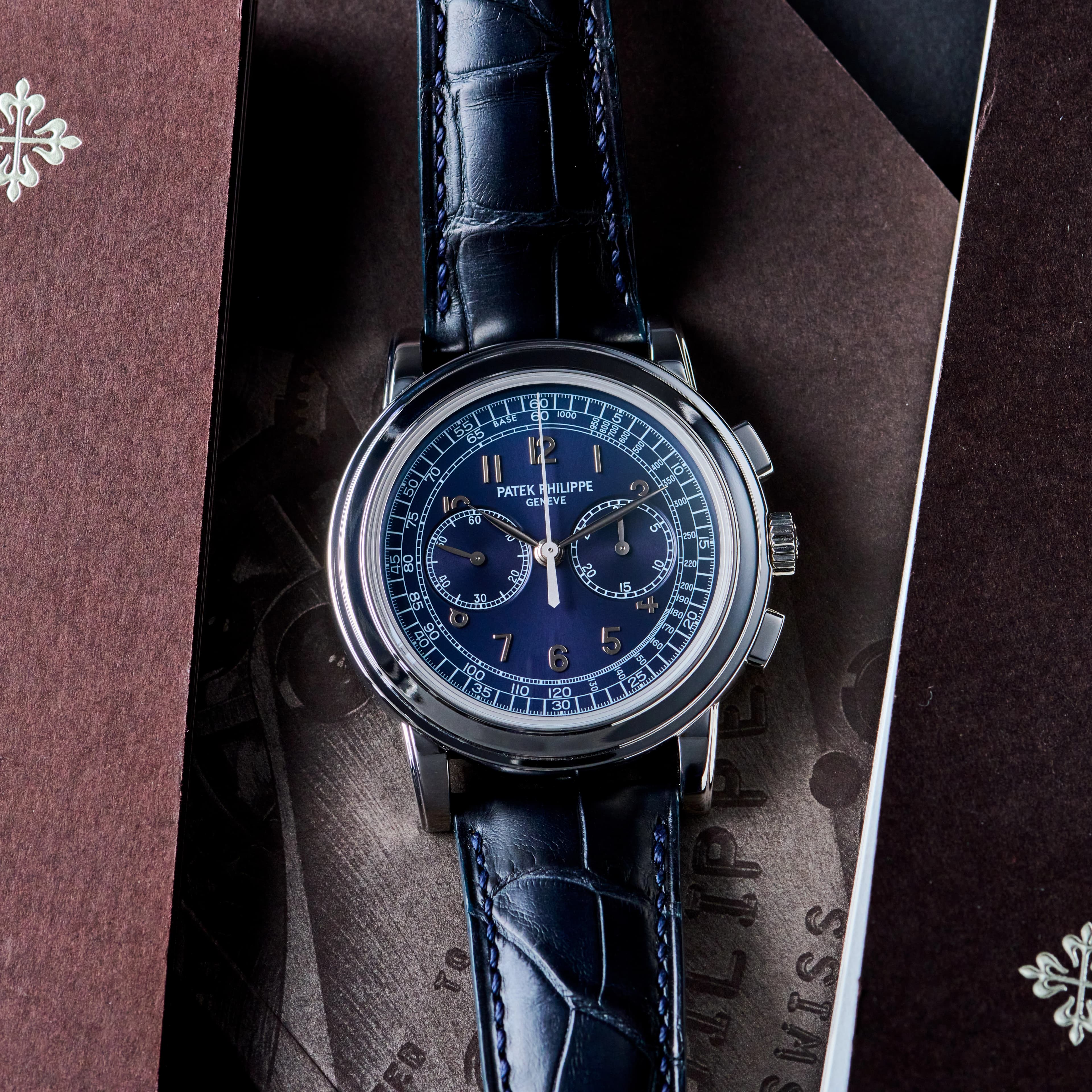
Patek 5070P
The 5070: A 42mm Statement in Its Era
At its Basel debut in 1998, the 5070 was immediately unusual. Its 42mm case diameter made it, as Phillips has noted, "the single largest wristwatch created by Patek Philippe since 1950." For a house that had spent decades in the 36-38mm range, this was a statement. The proportions read large even today; on the wrist, the case carries weight and presence that the brand's dress pieces do not.
The movement inside is the caliber CH 27-70, which Patek adapted in 1986 and which traces its base to the Lemania 2310. The CH 27-70 was a proven, robust platform that Patek refined over decades and utilized to outfit some of their most famous references in history. It is not in-house, which matters to some buyers and not at all to others.
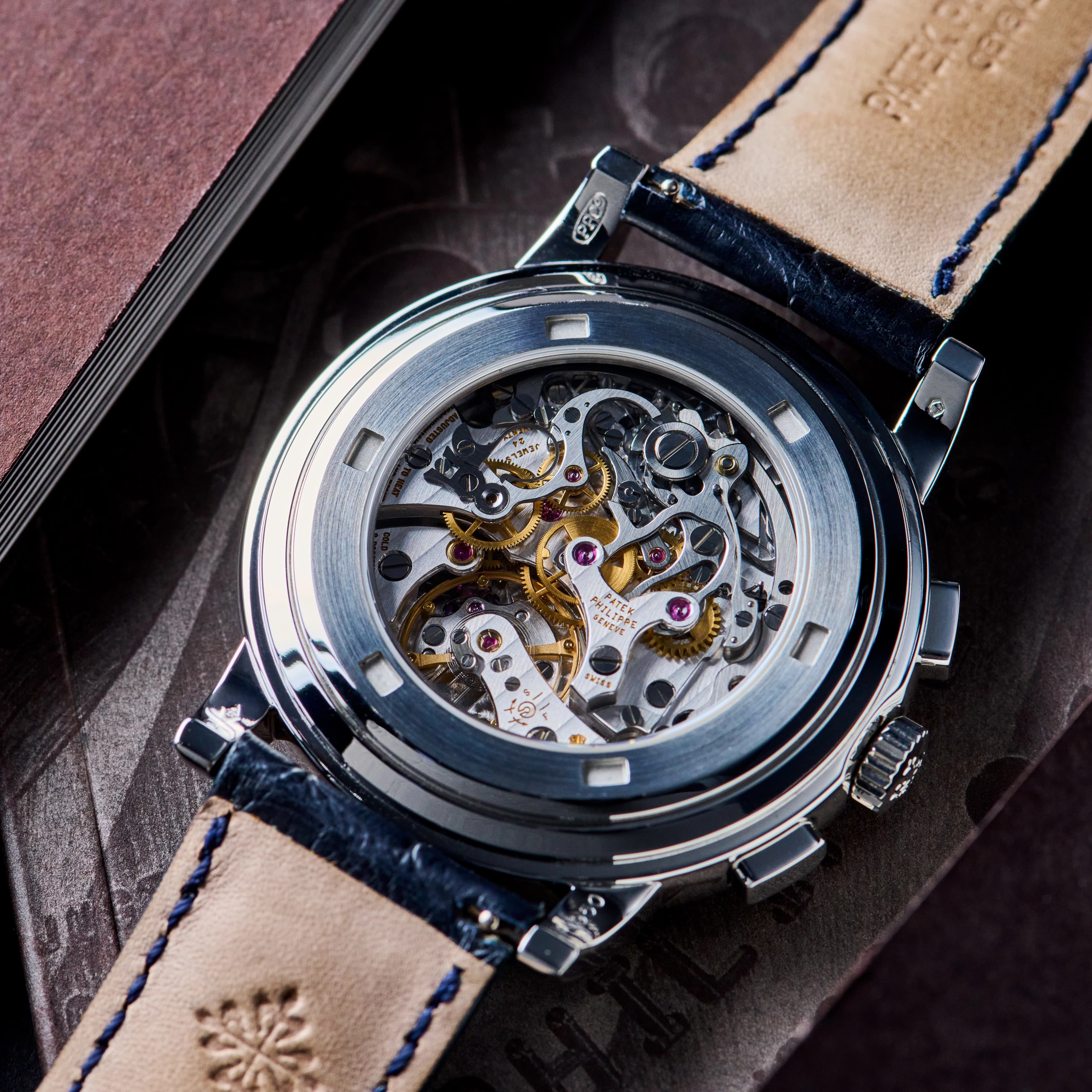
Patek 5070
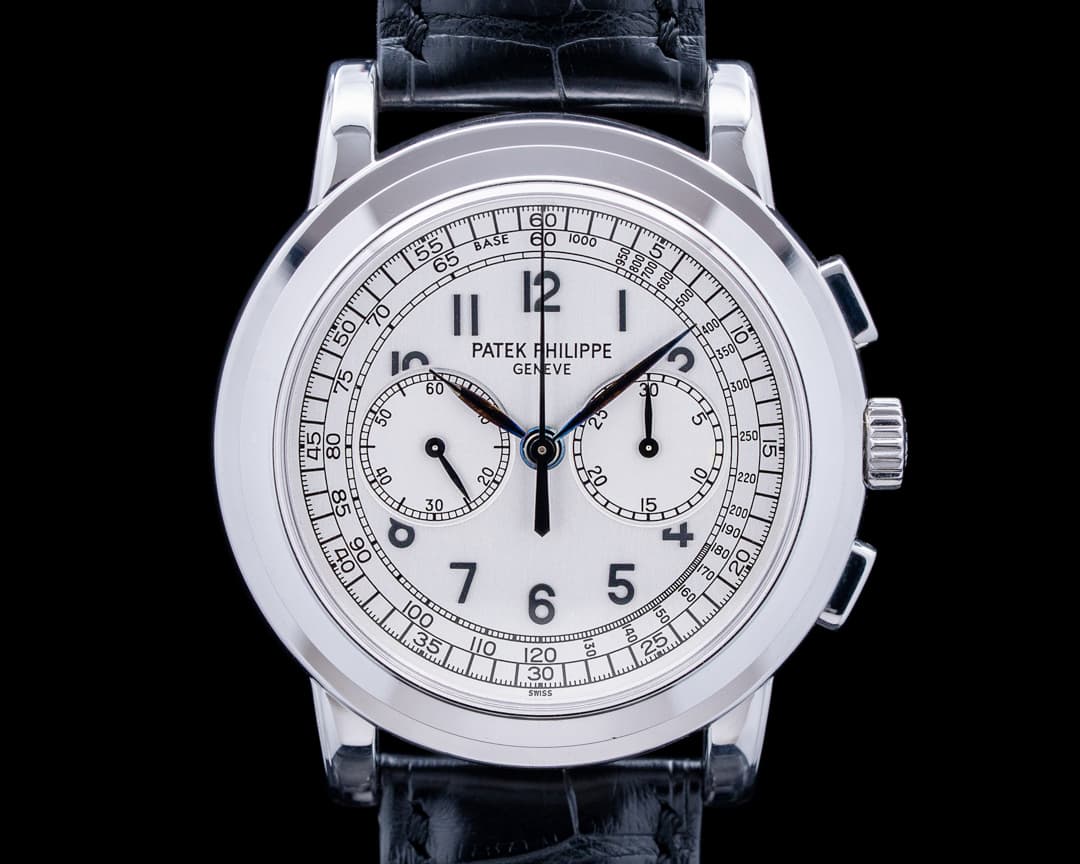
The 5070 came in four material variants. Yellow gold ran from approximately 1998 to 2001. White gold and rose gold followed from roughly 2001 to 2007 (rose joining in 2003). The platinum version closed out production from 2008 to 2009, when the reference was discontinued after an eleven-year run. On the dial, the layout is twin-register: subsidiary seconds at nine, elapsed minutes at three, applied indexes, and a clean face that reads as classic and beatuiful. The case is cushion-adjacent in feel, with a profile that wears closer to a sport watch than anything else in Patek's catalog of that era.
Pre-owned pricing across materials reflects both rarity and preference. Platinum commands a premium at auction; yellow gold sits at the lower end of the range but remains substantial. The 5070 has appreciated meaningfully since discontinuation, and examples in strong condition with box and papers trade at figures that reflect both its historical position and its genuine scarcity. There has been an arc in appreciation for these models which has swollen substantially in the last ten years.
The Move In-House: What the CH 29-535 PS Changed
In 2009, Patek introduced the CH 29-535 PS, its first Manufacture-made manual-wind chronograph caliber. The timing was not incidental: it arrived as the 5070 closed out its production run, and it signaled a clear change in direction.
What the CH 29-535 PS brought technically was a traditional column-wheel architecture paired with a horizontal clutch. The column wheel governs the precision and feel of the start-stop-reset sequence; anyone who has operated a column-wheel chronograph against a simpler cam-lever alternative will notice the difference in snap and smoothness. The horizontal clutch reduces the risk of the seconds hand jumping at start, a detail that matters when the movement is visible through a display back and when the finishing standards are what Patek claims. Power reserve runs to about 65 hours. The movement is decorated to Geneva Seal standards, which means the anglage, the côtes de Genève, and the beveling are beautiful.
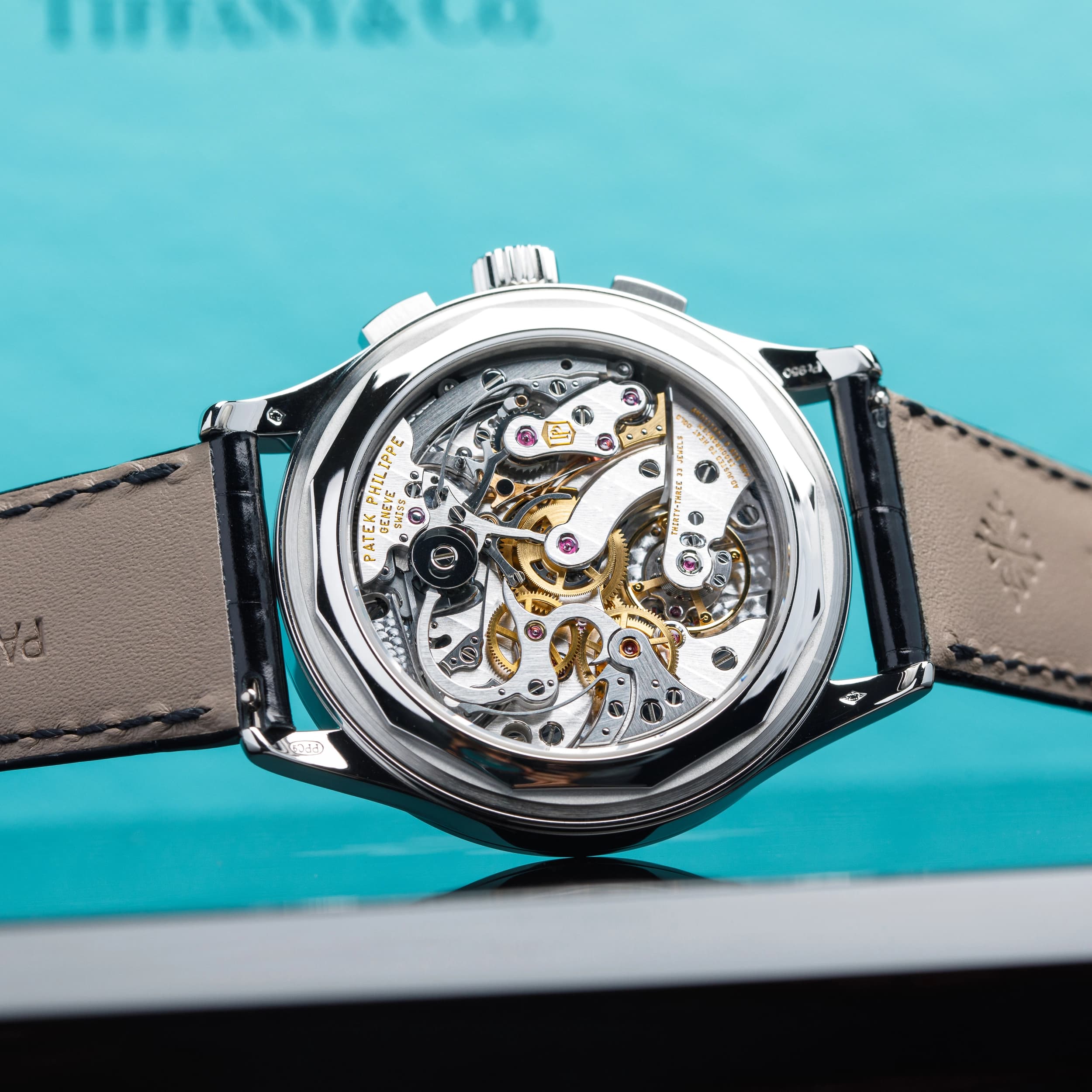
The commercial significance was equally clear. An in-house caliber lets Patek control the entire production chain, protect the movement's identity, and position the watch differently against competitors whose chronographs also carried Lemania or Valjoux roots. For buyers who weight provenance heavily, the CH 29-535 PS resolved the one objection the 5070 left open.
The 5170: Dressier, Smaller, In-House
The 5170 entered production at Baselworld 2010, wearing the CH 29-535 PS from the outset. Its proportions are a deliberate contrast to the 5070: the 5170 measures 39.0mm, comfortable on wrist of a variety of sizes and sitting below the modern sportier dress chronographs commonplace across the industry, while still wearing contemporarily.
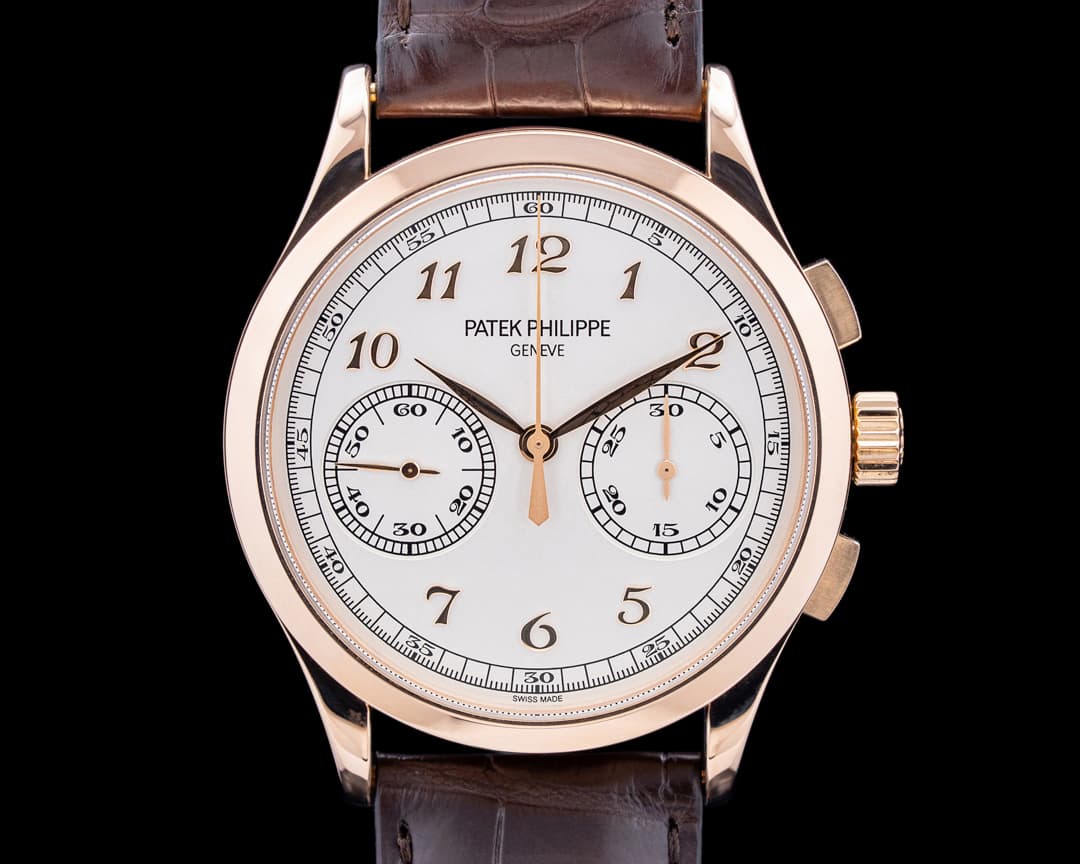
On the wrist, the 5170 sits close to Calatrava territory. The case is thin, the profile low, and the lugs curve in a way that keeps the watch from reading as a tool instrument. This is a dress chronograph in the clearest sense, the kind of watch that disappears under a shirt cuff without forcing itself overly assertively. The dial in yellow gold is a warm cream, sometimes with applied Breguet numerals or Romans; in rose gold and platinum, the tone shifts accordingly. The overall effect is restrained in a way the 5070, with its scale and sport-adjacent energy, was never meant to be.
The 5170 has since been discontinued. Pre-owned examples have benefited from that status: a discontinued in-house reference from Patek's dress-chronograph line, in a size that suits the contemporary preference for something under 40mm, is a perfect combination for thsoe looking for an everyday dress watch with a beautiful movement and some visual interest.
The 5172: Modern Proportions, Heritage Details
The 5172 debuted at Baselworld 2019 in white gold and expanded from there. The case measures 41mm, larger than the 5170 by roughly two millimeters, but it wears differently from the 5070 despite comparable sizing. The 5172's geometry is more contemporary: thinner proportionally, with lugs that taper toward the strap in a way the 5070's chunkier profile did not. Side by side, the two watches wear similarly large, though the 5172 is a bit more balanced.
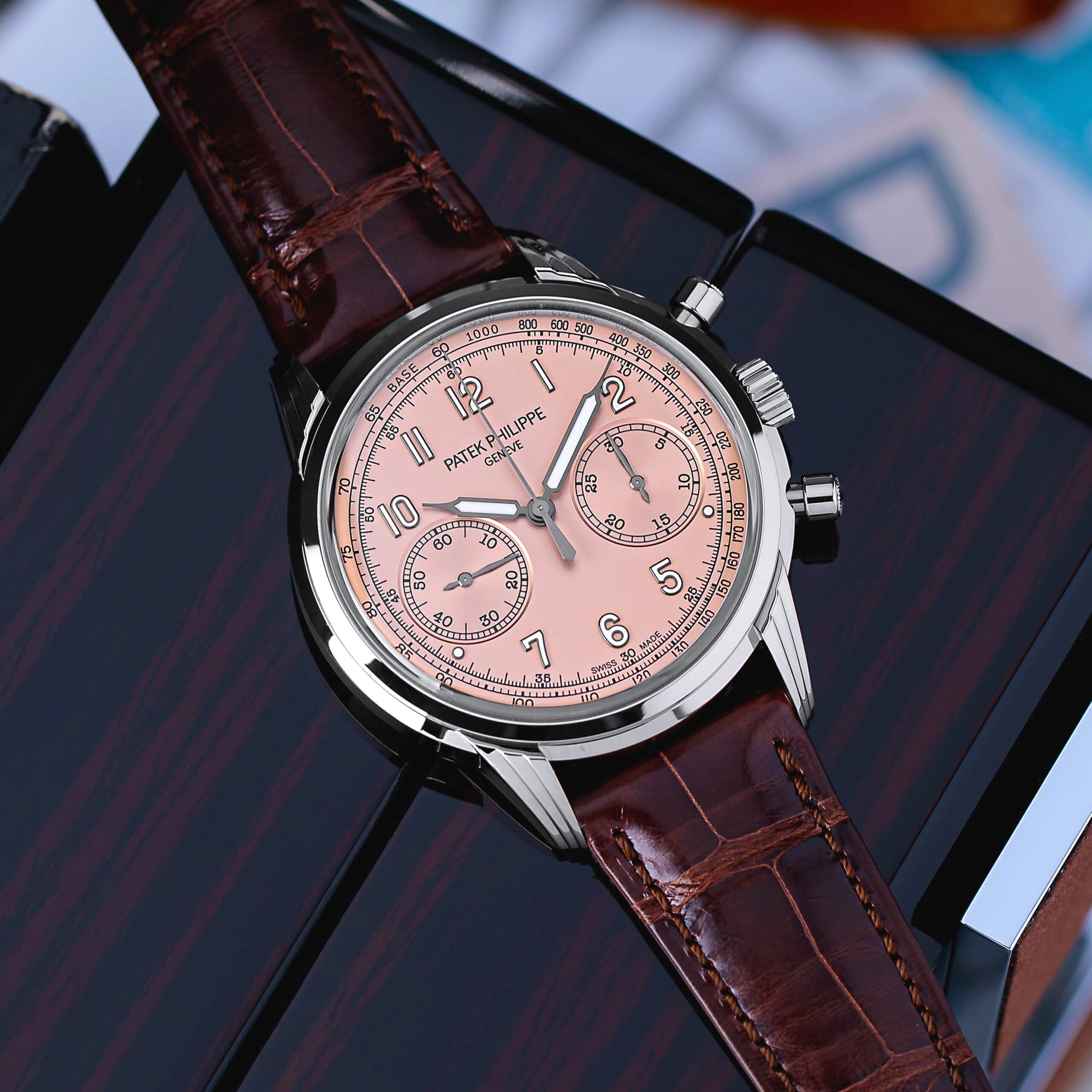
Patek 5172G
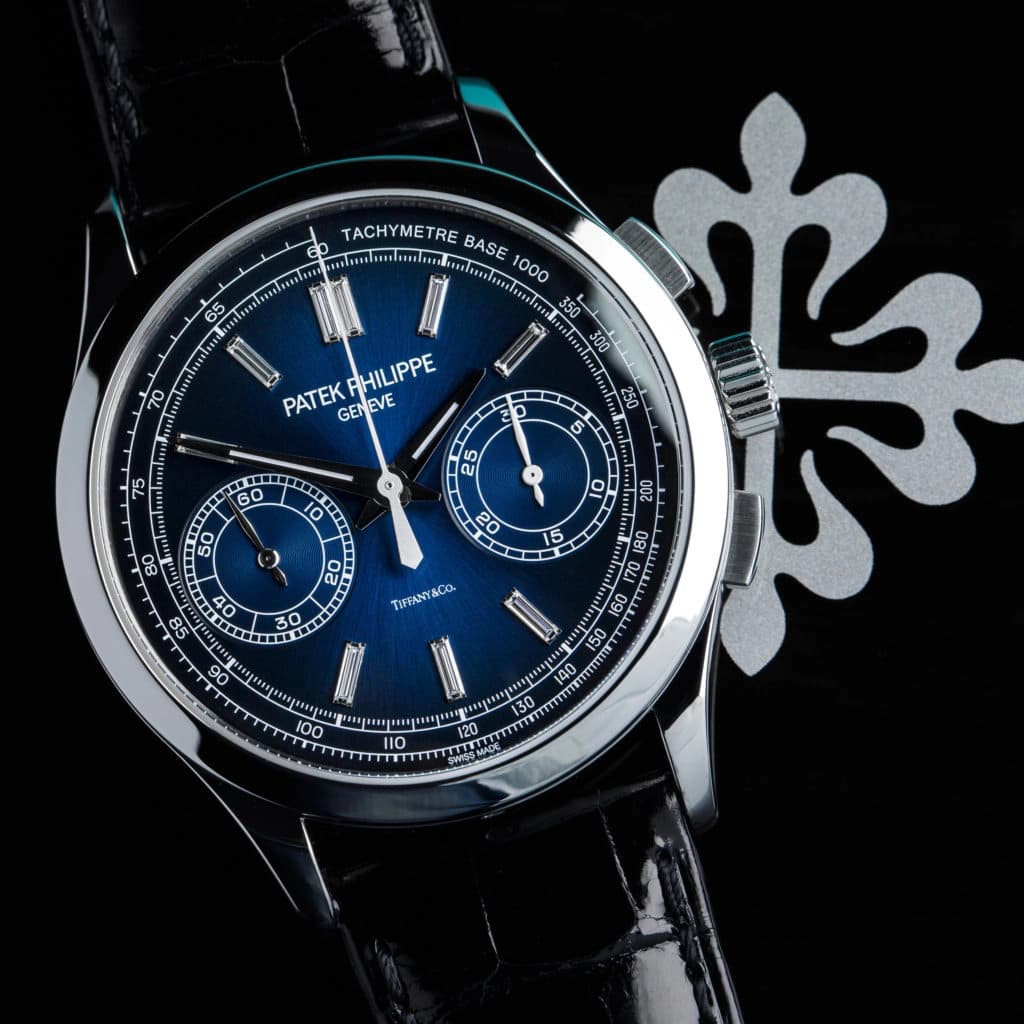
The dial is the 5172's most discussed feature, and the most deliberate departure from the 5170's classicism. Arabic numerals replace the Breguet indexes. A tachymeter scale runs along the outer chapter ring. The overall composition incorporates design cues historically associated with mid-century Patek references, among them the ref. 1463, though Patek stops short of naming specific references. The ref. 5320G perpetual calendar is a clear aesthetic sibling with similar stepped lugs and dial treatments; the 5172's debut drew direct comparisons to that reference's vintage-inflected approach. Confirmed dial variants include a blue varnished option and, from 2022, a rose-gilt opaline with charcoal accents.
This piece is a unique mix of modern sizing and execution, and heritage detailing found on vintage pieces. The result is a really cool reference unlike most other pieces in the Patek collections. The 5172 is the only hand-wound chronograph in Patek's active catalog.
Which Reference and Why
These are not interchangeable watches that differ only in production year. Each reference reflects a distinct set of priorities, and the right one depends on what a buyer is actually optimizing for.
The 5070 is the choice for scale, presence, and a specific chapter in Patek's history. The Lemania-based CH 27-70 is the movement Patek used and sold for eleven years in the 5070, and the collector market has long since made its peace with the provenance. What the 5070 offers that neither successor does is sheer physical authority. At 42mm on the wrist, it reads as a chronograph first and a Patek second, which is not a description that applies to much in this catalog. For buyers who want that, there is no substitute. It is rare, beautiful, and eccentric.
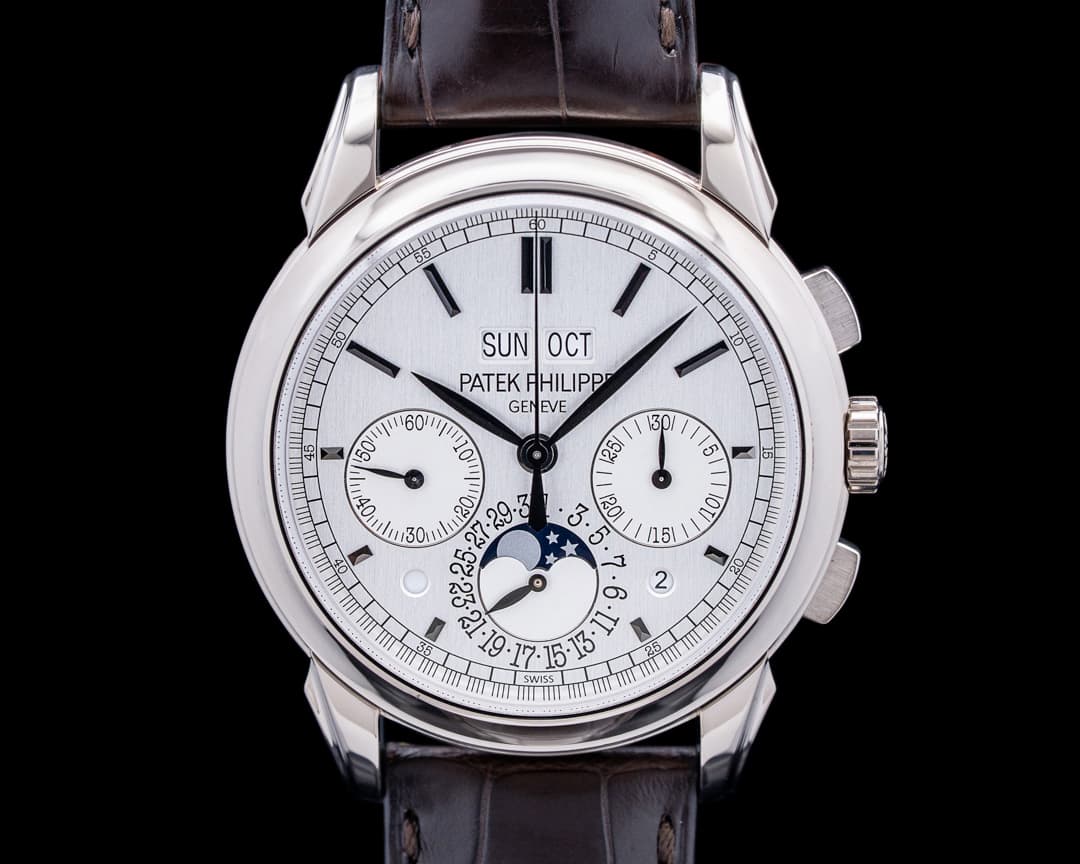
The 5170 is the in-house argument in a dress-watch body. If the question is where the CH 29-535 PS sits at its most restrained, in a size that suits a smaller wrist or a more formal context, the 5170 is the answer. Discontinued and not especially easy to find in clean condition, it occupies a position the 5172 did not simply replace. The 5172's aesthetic is different enough that a buyer looking for the 5170's Calatrava-adjacent minimalism will not find an equivalent in current production.
The 5172 is for the buyer who wants something Patek makes today, in a size that wears well across contexts, with a dial that takes the chronograph to a completely different direction. The vintage coding is brilliant and unique; the design references are coherent, the Arabic numerals are functional and lumed rather than decorative, and the tachymeter gives the dial architecture without filling it with noise. For some buyers, the 41mm size will feel like the right middle ground between the 5170's formality and the 5070's bulk.
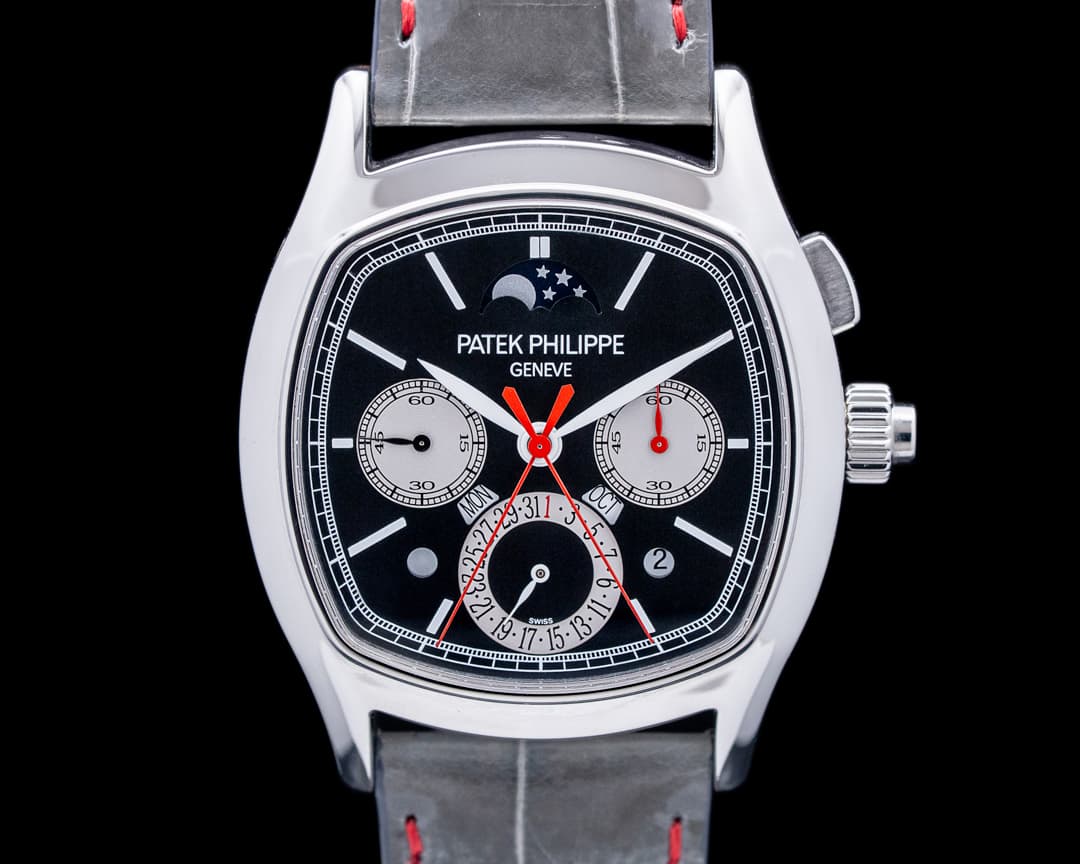
Patek Philippe
5951P Perpetual Calendar Split-Seconds Chronograph Platinum Black Dial
$475,000
All three references use or used the same disciplined hand-wound architecture that most brands have abandoned. That alignment of purpose across three distinct watches is what makes this a lineage worth collecting as some of the greatest watches in the industry.
Shop New Arrivals
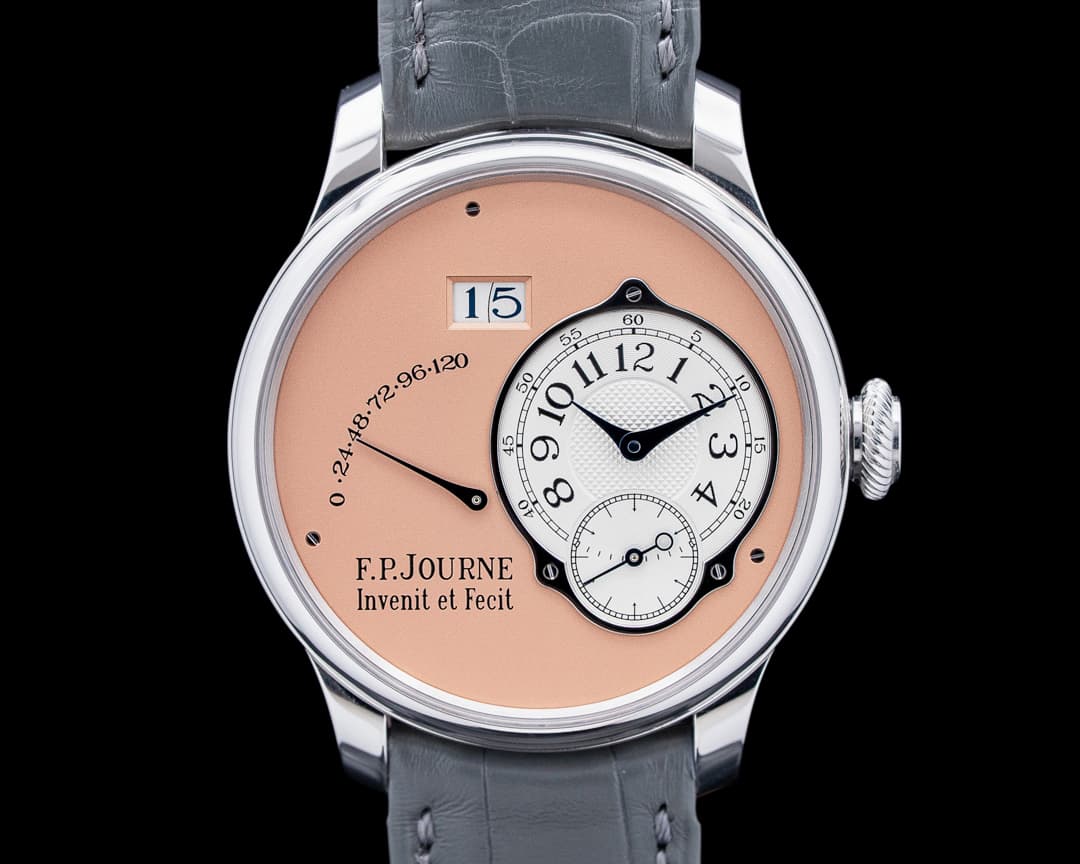
Octa Automatique Reserve De Marche Platinum Salmon Dial 2026 UNWORN
$295,000
View Watch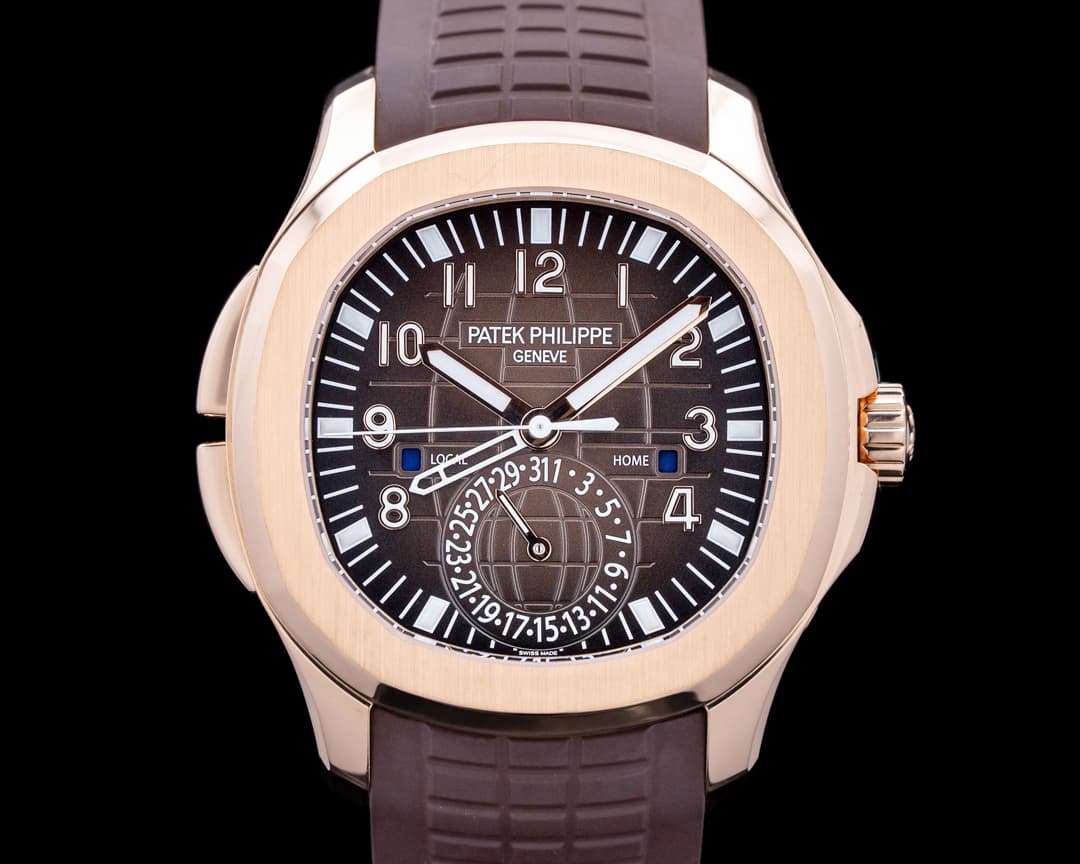
5164R Aquanaut Travel Time 18K Rose Gold Brown Dial
$132,500
View Watch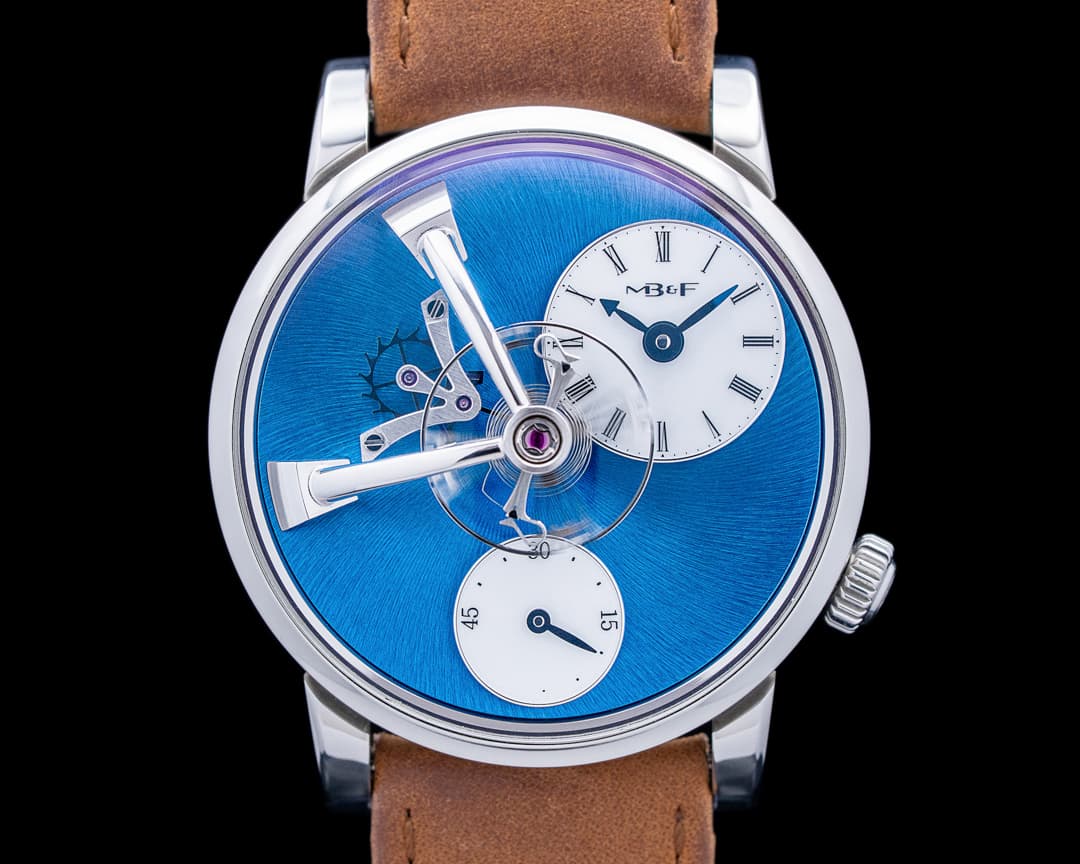
LM101 Legacy Machine SS Blue Dial
$89,500
View Watch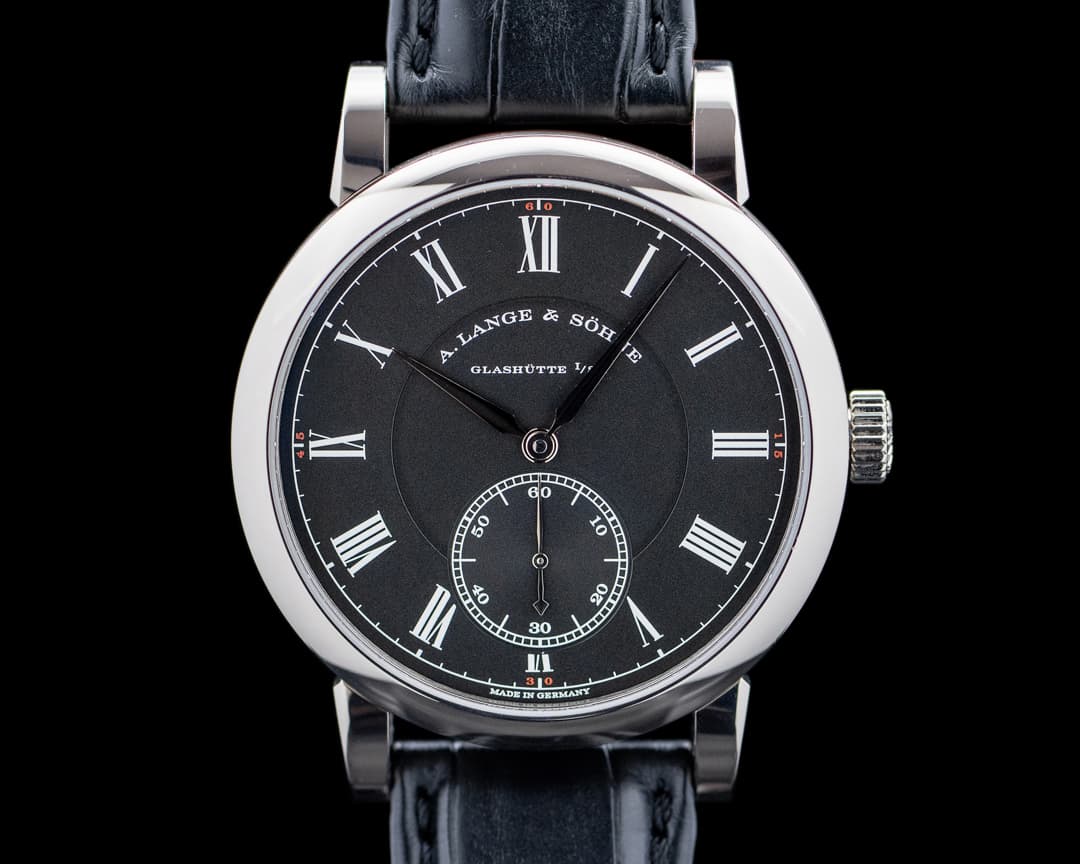
Richard Lange Pour Le Merite 18K White Gold Black Dial LIMITED
$86,500
View Watch
Shop New Arrivals
Octa Automatique Reserve De Marche Platinum Salmon Dial 2026 UNWORN
$295,000
View Watch5164R Aquanaut Travel Time 18K Rose Gold Brown Dial
$132,500
View WatchLM101 Legacy Machine SS Blue Dial
$89,500
View WatchRichard Lange Pour Le Merite 18K White Gold Black Dial LIMITED
$86,500
View Watch
More Content