Jump-hour watches feel suddenly omnipresent with new offerings cropping up from microbrands, independents, and heritage houses seemingly all at once. The unusual complication has always been here, they just used to live behind the velvet ropes of top manufacturers.
So let’s rewind and talk about why this once-elite complication is suddenly everywhere, and why brands are suddenly having so much fun with it.
When Digital Was the Future
The jump-hour complication can be traced back to the late 19th century, most notably to Austrian engineer Josef Pallweber, who patented a digital time display in 1883. His system used rotating discs for the hours and minutes that advanced incrementally rather than continuously. It was such a radical departure from traditional hands that it caught the attention of major manufacturers almost immediately. IWC, among others, adopted Pallweber’s system, producing pocket watches that must have looked borderline alien to anyone used to Roman numerals and blued steel hands.
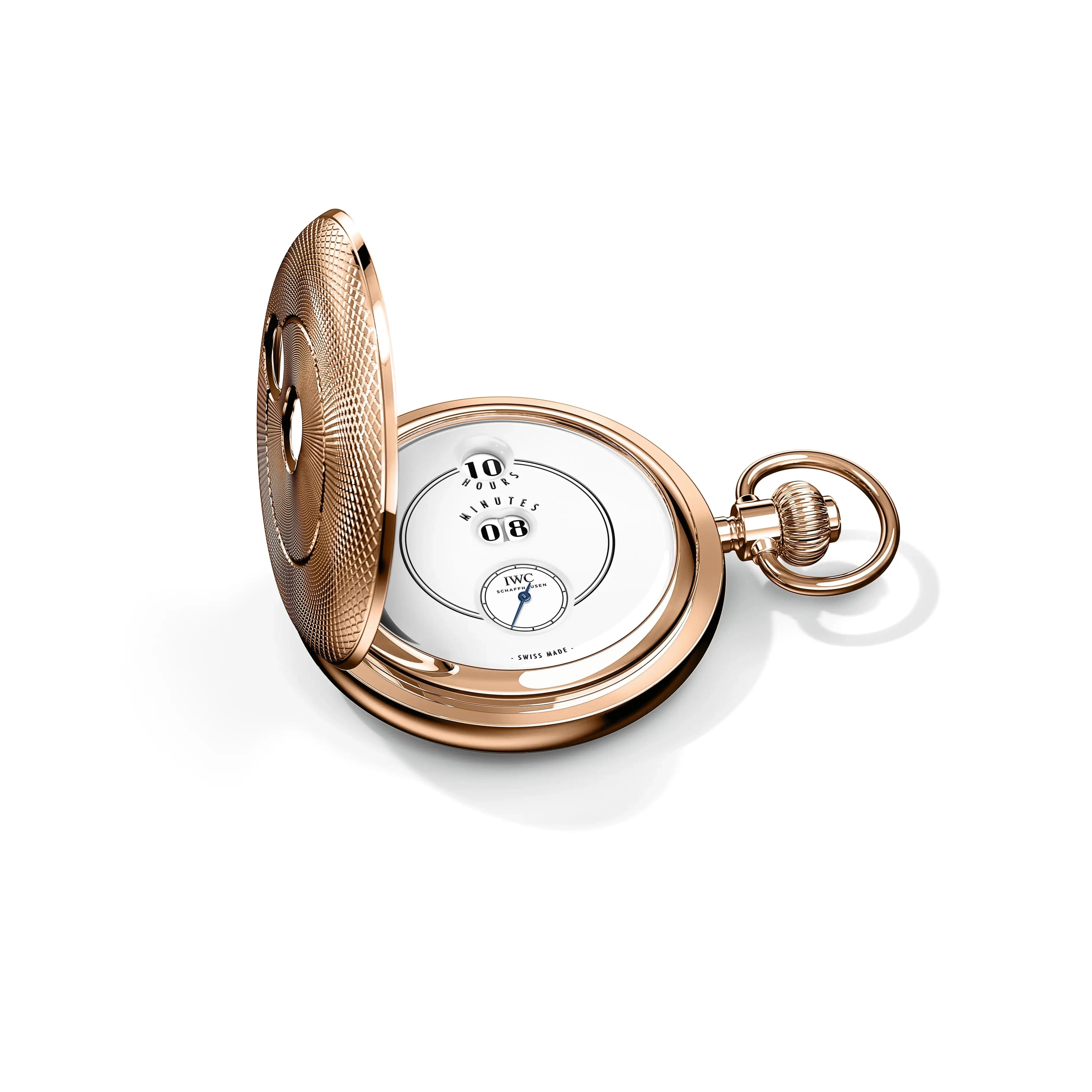
IWC's "Tribute to Pallweber" timepieces
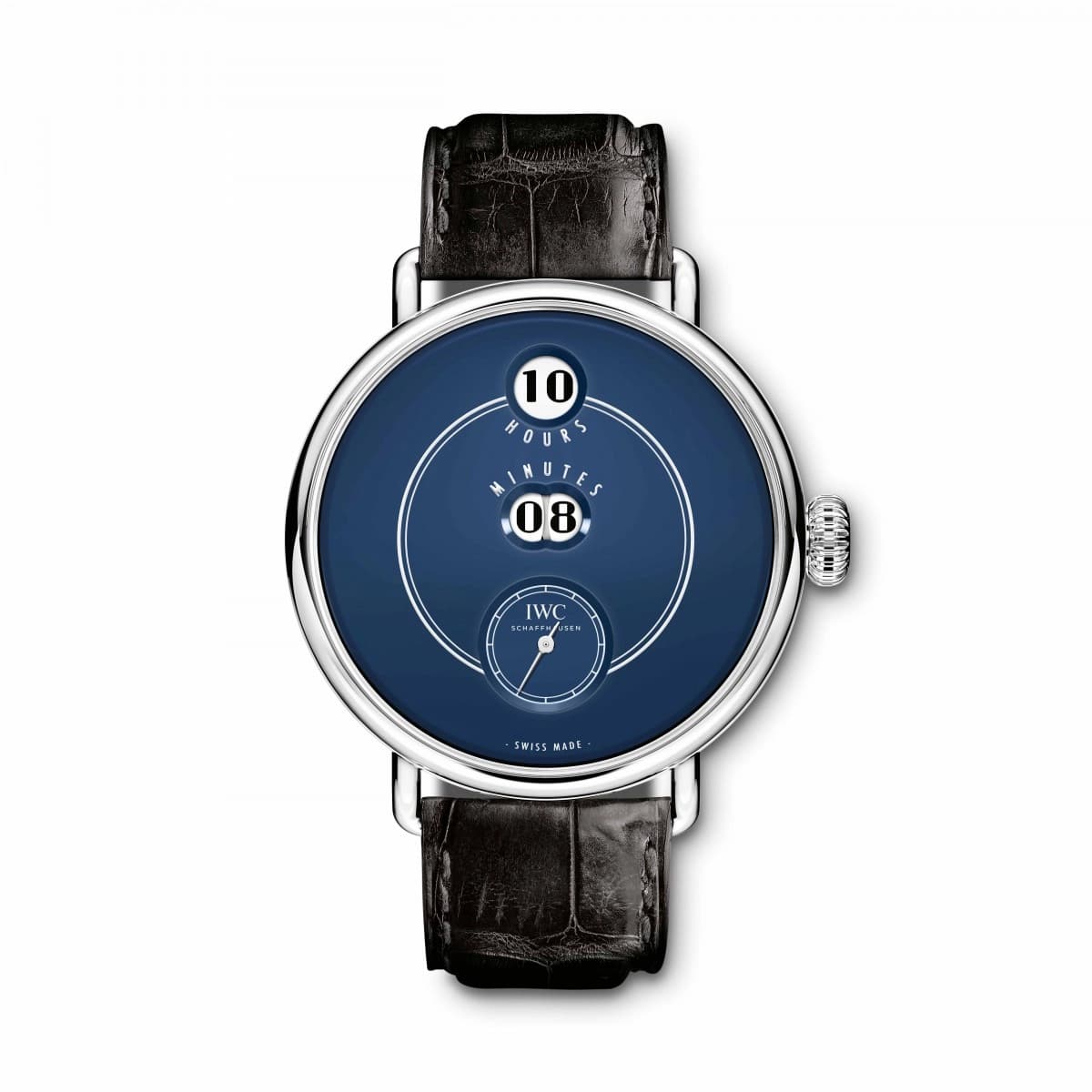
The idea was simple but technically demanding: instead of time creeping along, it would declare itself. At the precise moment the hour changed, the mechanism would snap the hour disc forward in an instantaneous jump. That snap, now beloved by collectors and enthusiasts, wasn’t just theatrical; it was a demonstration of mechanical confidence. Pull it off poorly, and you’d sap power, lose accuracy, or break the illusion entirely.
As wristwatches became more common in the early 20th century, jump-hours migrated from pockets to wrists, finding a natural home in the geometric language of Art Deco. Rectangular cases, sharp lines, and industrial optimism made guichet-style displays (the apertures, or windows revealing the digital time) feel not just modern, but inevitable.
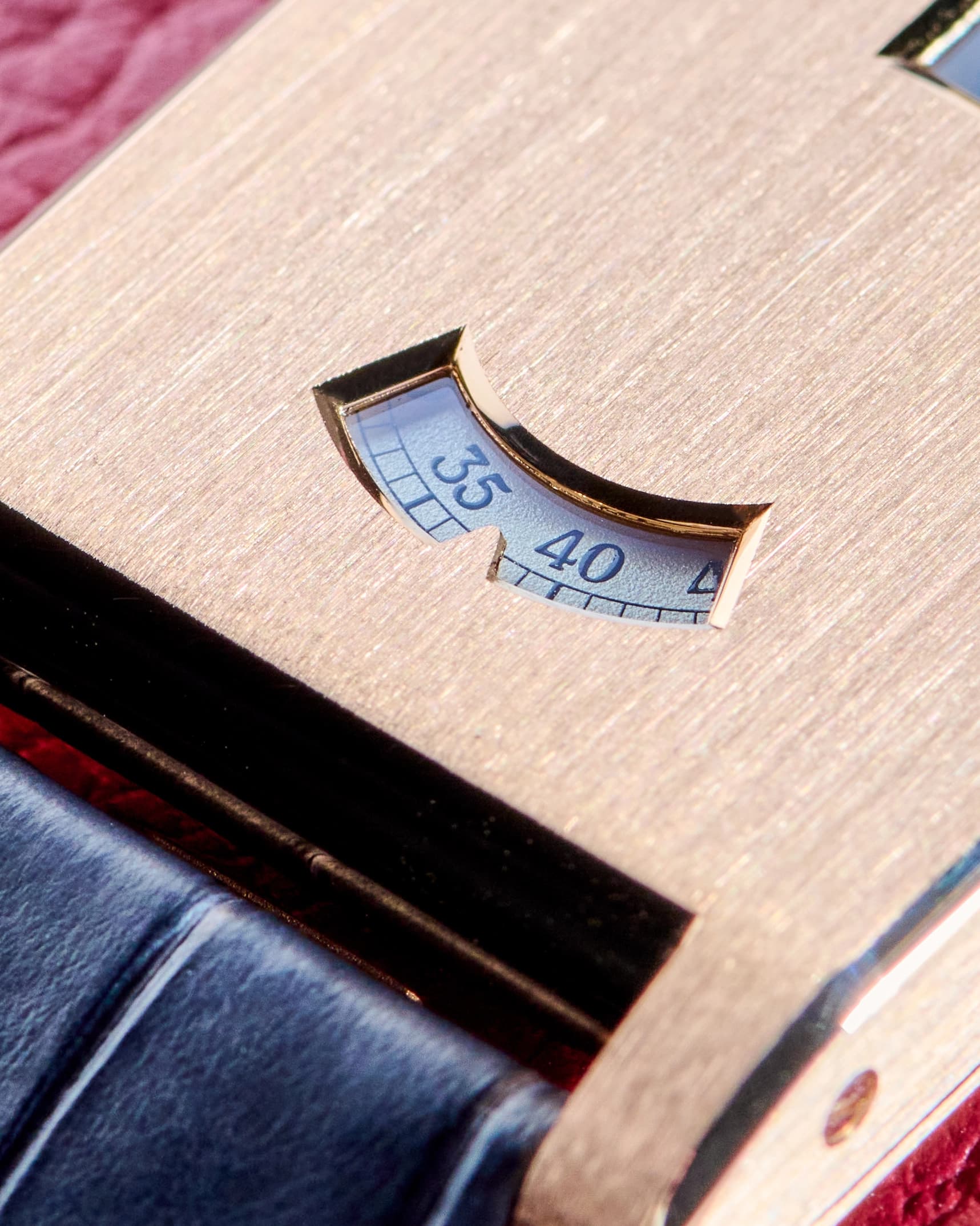
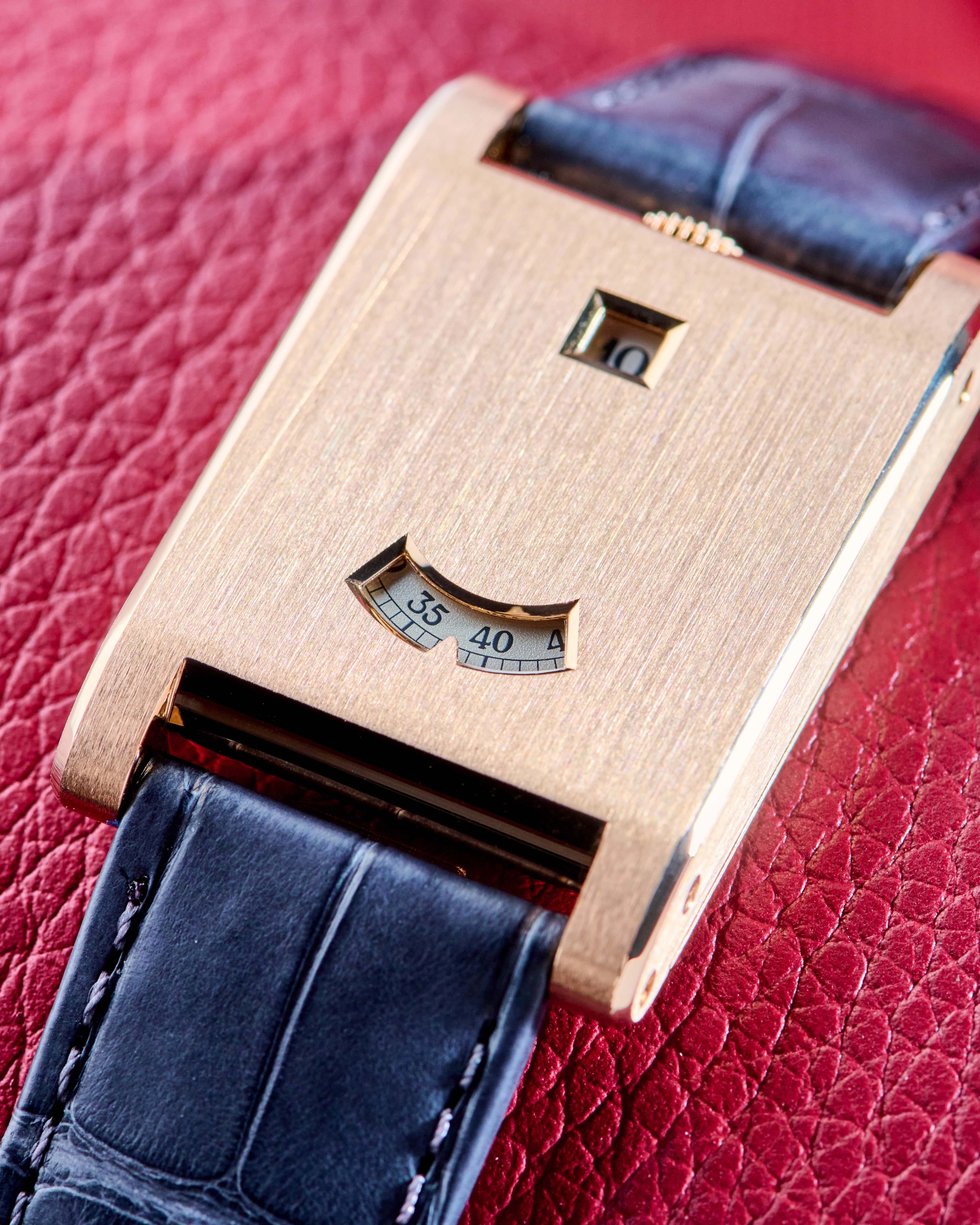
Perhaps the most famous early wrist-worn expression came in 1928, when Cartier introduced the Tank à Guichets. Designed with drivers in mind, the Tank à Guichets replaced hands entirely with two small guichets, or counters: one for hours, and one for minutes. It was bold, minimal, and unapologetically expensive. This wasn’t a novelty. It was a statement piece for people who wanted their modernity worn plainly on the wrist.
But jump-hours never became ubiquitous. They were complicated to produce, costly to regulate, and offered no real functional advantage over watches with hands. As the mid-century rolled on and simplicity became king, jump hours receded into the background, kept alive mostly by high-end maisons and the occasional avant-garde experiment.
For decades, that experience was locked behind haute horology pricing. Jump-hours were for collectors who already owned everything else. Until recently.
Modules, Madness, and the Democratization of Time
Independents Change the Game
Roughly a decade ago, independent brands began asking an uncomfortable question: Why should jump hours be rare?
Brands like Christopher Ward and Isotope started experimenting with modular approaches, adding jumping-hour mechanisms atop reliable base movements. This wasn’t about dumbing the complication down; it was about making it accessible without stripping it of its magic.
And then something unexpected happened. People realized they could experience a jump-hour complication without mortgaging their future. More recently, Chinese movement manufacturers, most notably Peacock, pushed affordability even further. Suddenly, a jump-hour watch wasn’t a $30,000 conversation piece. It was a $300 curiosity. And once a complication becomes common, brands have to answer a new question: How do we make ours interesting?
Fears x Christopher Ward Alliance 01
The Christopher Ward x Fears Alliance 01 is a perfect example of what happens when heritage meets accessibility without flinching. This watch whispers in immaculate British tailoring. The jump-hour sits comfortably within a classical design language that feels deliberate rather than nostalgic. It respects the past without cosplay.
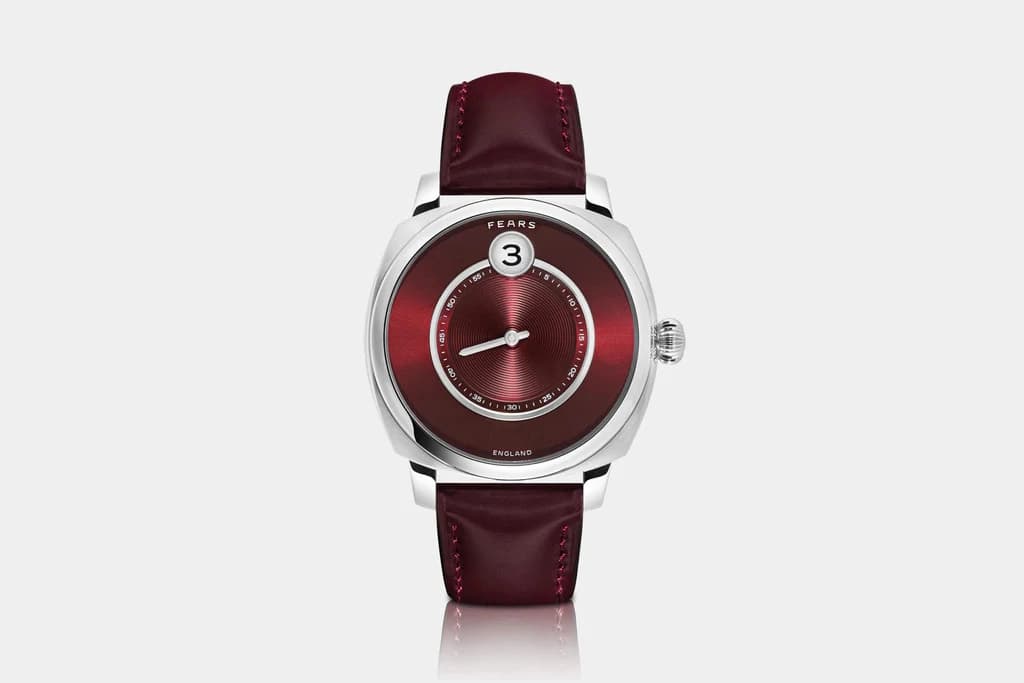
What makes the Alliance 01 important isn’t just that it’s a jump-hour; it’s that it reframes the complication as elegant rather than eccentric. This isn’t a novelty watch. It’s a reminder that jump-hours don’t need to be loud to be compelling.
Bremont’s Terra Nova Jumping Hour
Then there’s Bremont, who looked at the jump-hour complication and said, metaphorically, what if we took this into the dirt?
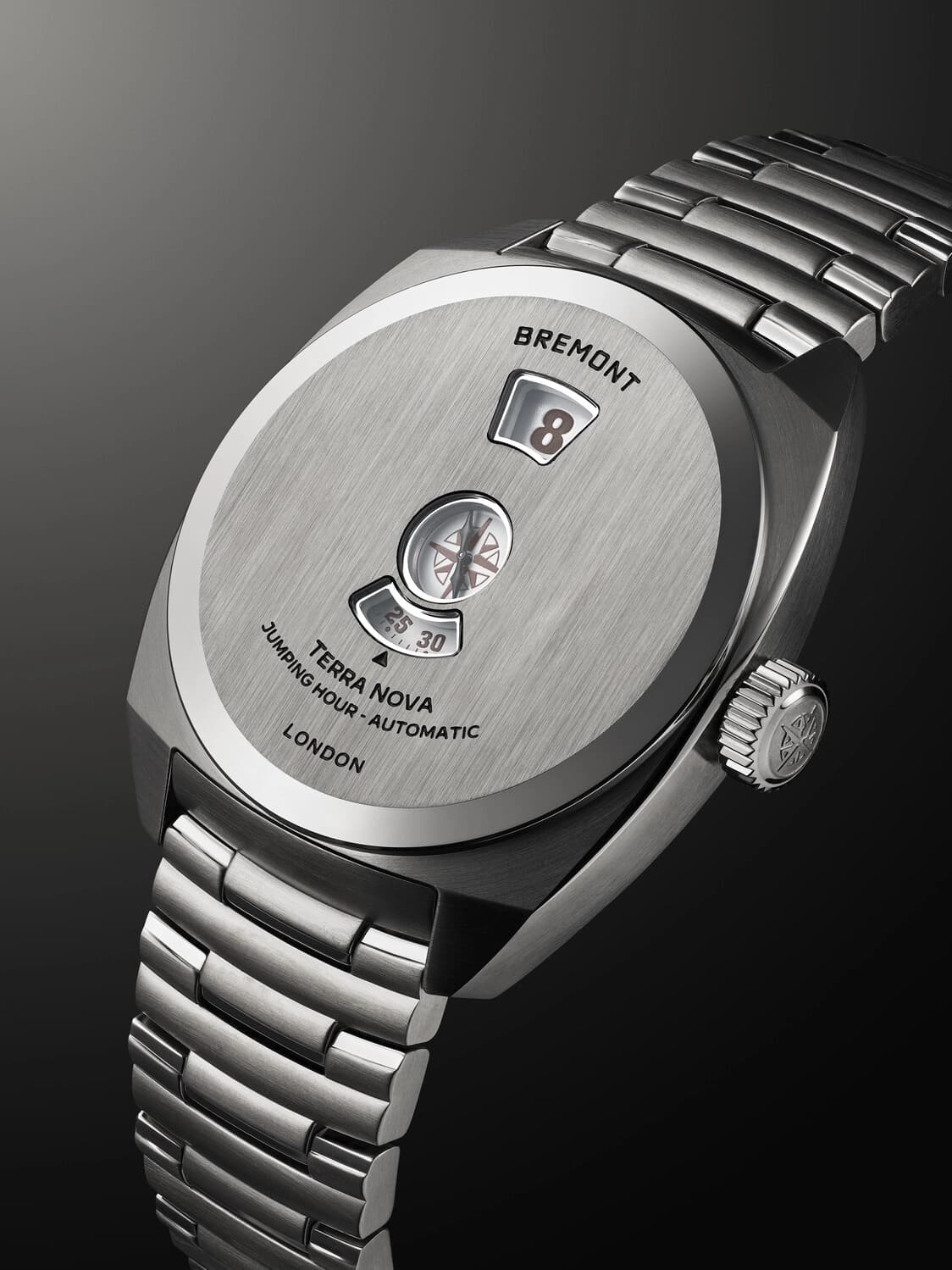
The Terra Nova Jumping Hour feels almost defiant. Closed dial. Military cues. Tool-watch posture. And yet, guichets. Digital time. Mechanical snap. It started off as a limited-edition bronze, but was recently reintroduced in steel. Safe to say this piece has been popular, and it couldn’t come at a better time for Bremont.
It works because it shouldn’t. Bremont proves that jump-hours aren’t confined to dressy rectangles or avant-garde showcases. They can live inside rugged, modern designs without apology. And suddenly, the complication feels versatile in a way it never quite did before.
The Tank à Guichets Returns
If this were a movie, this would be the moment when a sick beat drops and the original gangster walks back into frame. It’s Michael Corleone walking back to the table from the washroom, but with some bling rather than a weapon.
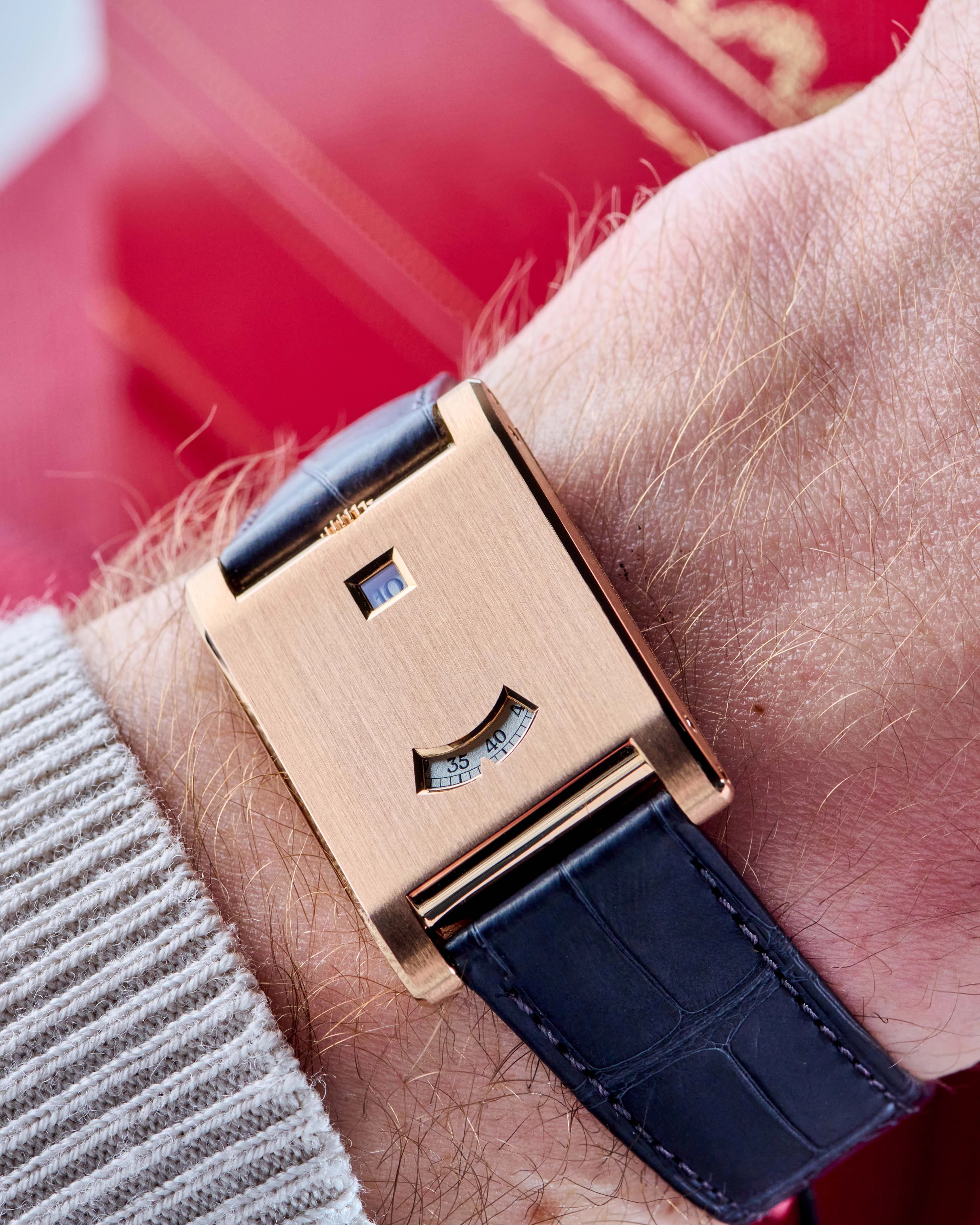
The Cartier Tank à Guichets doesn’t reinvent the jump-hour; it reclaims it. This is Cartier reminding the industry that digital time was theirs long before it was cool again. The design is minimal, deeply historical, and impossibly confident.
"Based on a rare vintage model that debuted back in 1928, the Tank a Guichets utilizes a jumping hour and dragging minute display instead of a traditional dial and handset. As unusual as it is, the model's aesthetic is actually incredibly simple with no ornamentation beyond the subtly beveled edges of the apertures," said Justin MacDowell, Watch Specialist at European Watch Company. "There are few new watches that really stop me in my tracks these days, but the Tank a Guichets has my full attention. It’s a piece of 1920s industrial design that feels more modern than most watches made today."
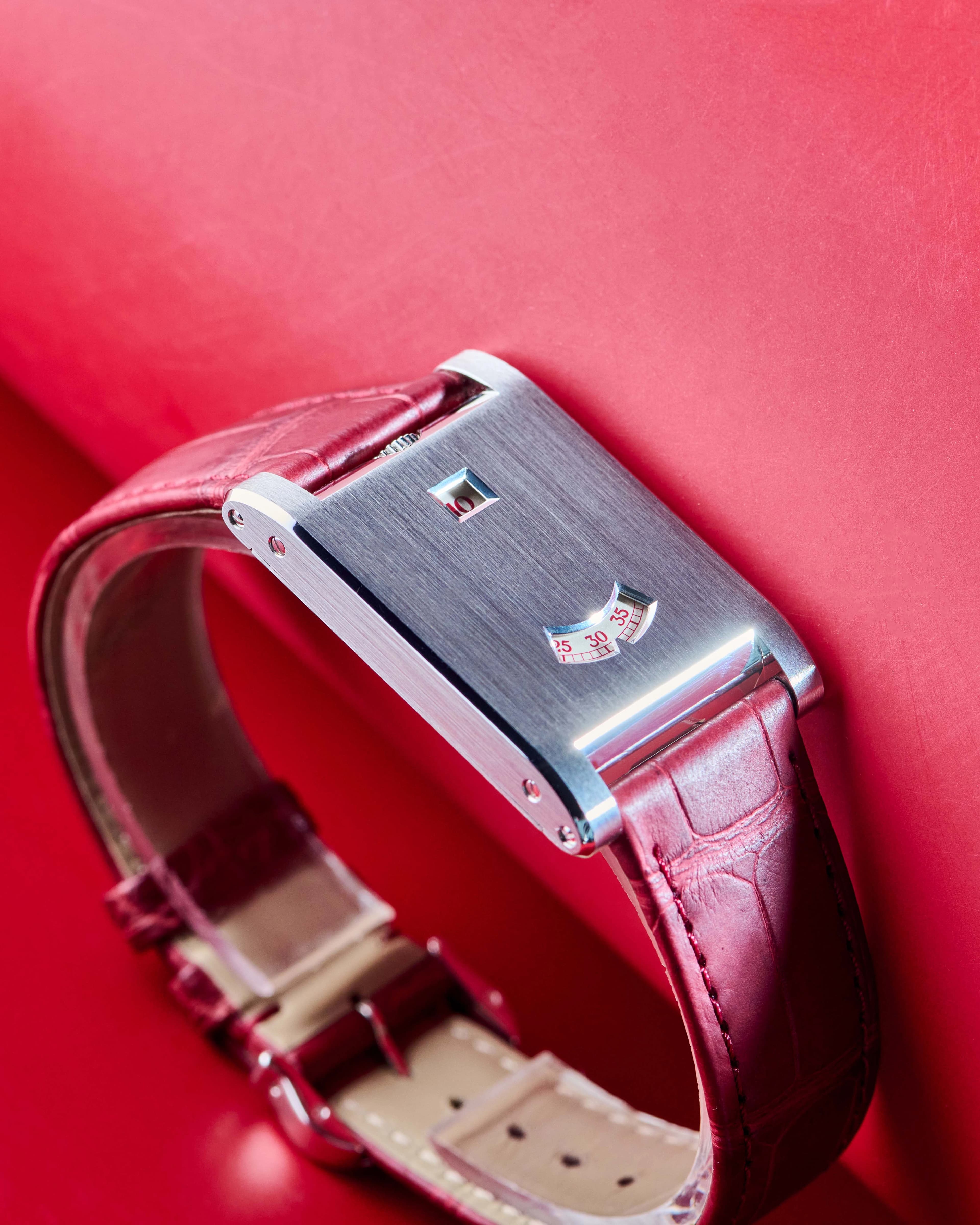
In a market flooded with experimentation, the Tank à Guichets stands as proof that sometimes the boldest move is simply doing it right again, and with the price tag to match.
Christopher Ward Bel Canto - When the Jump-Hour Started Singing
Then there’s the Bel Canto. The watch that made the entire industry sit up straight. Following Christopher Ward’s acquisition of Synergies Horlogères in Biel, the brand didn’t just gain manufacturing capability; it gained freedom. Freedom to experiment, to ask bigger questions, and to rethink how complications are meant to feel.
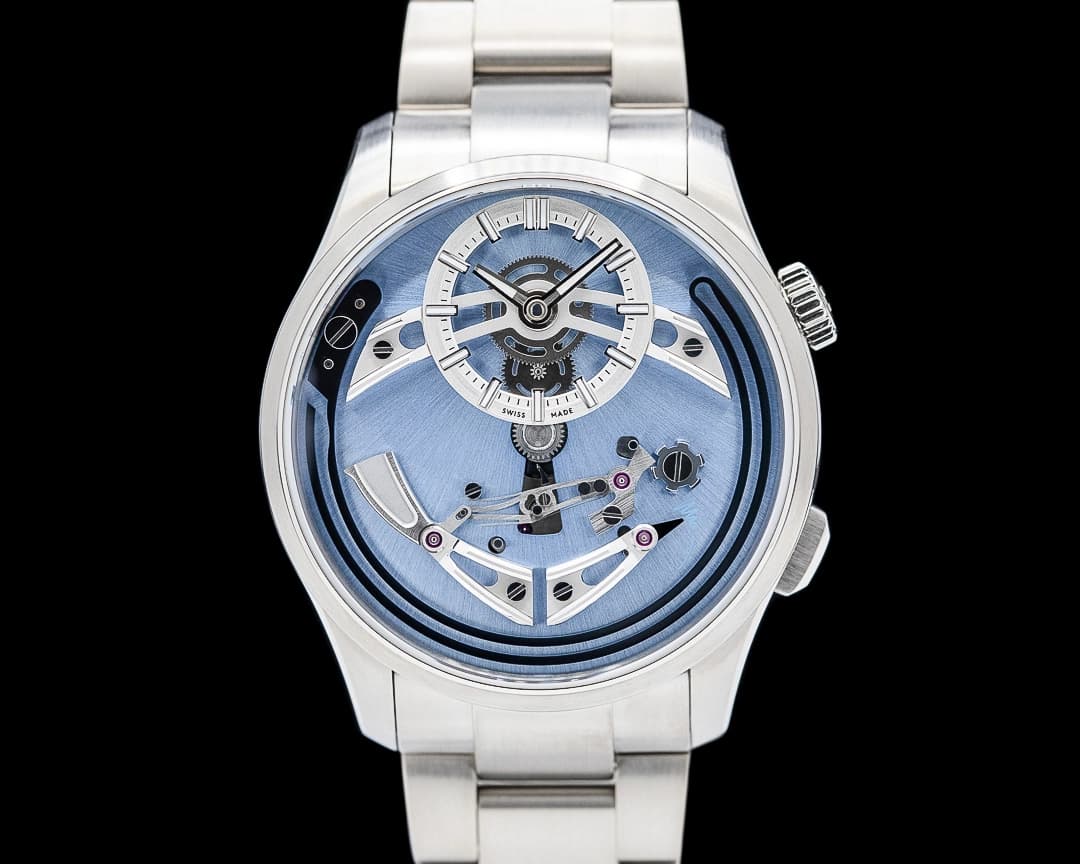
The Bel Canto began as a thought experiment rather than a traditional chiming watch. The goal was to “rethink how a sonnerie could be experienced and engineered, without defaulting to the traditional, and often complex, solutions found in haute horology,” explains Mike Pearson, North American Brand Director for Christopher Ward. Instead, the team looked to Christopher Ward’s existing jump-hour architecture, recognizing its ability to store and release energy in precise, instantaneous intervals.
That insight became the breakthrough. The jump hour wasn’t just a display; it became the trigger. Each hour is announced by a clean, deliberate chime that lands like a mechanical punctuation mark.
The result reflects Christopher Ward’s philosophy of “innovation through intelligent engineering rather than ornamentation,” delivering a genuinely emotional complication without the traditional financial barriers. That thinking is given visual form in the Bel Canto’s songbird, which, in Pearson’s words, “gives form to the sound itself,” turning engineering into spectacle.
Isotope’s OVNI Changes the Rules
If the Bel Canto asked what else can it do, the Isotope OVNI asked: what else can it be?
The Isotope OVNI doesn’t so much display the time as abduct you with it, and that’s entirely the point. The project began with a simple enough thought: “The OVNI came from questioning why jump hours always look the same. I wanted to rethink the grammar, not decorate the sentence,” said José Miranda, co-founder of Isotope Watches.
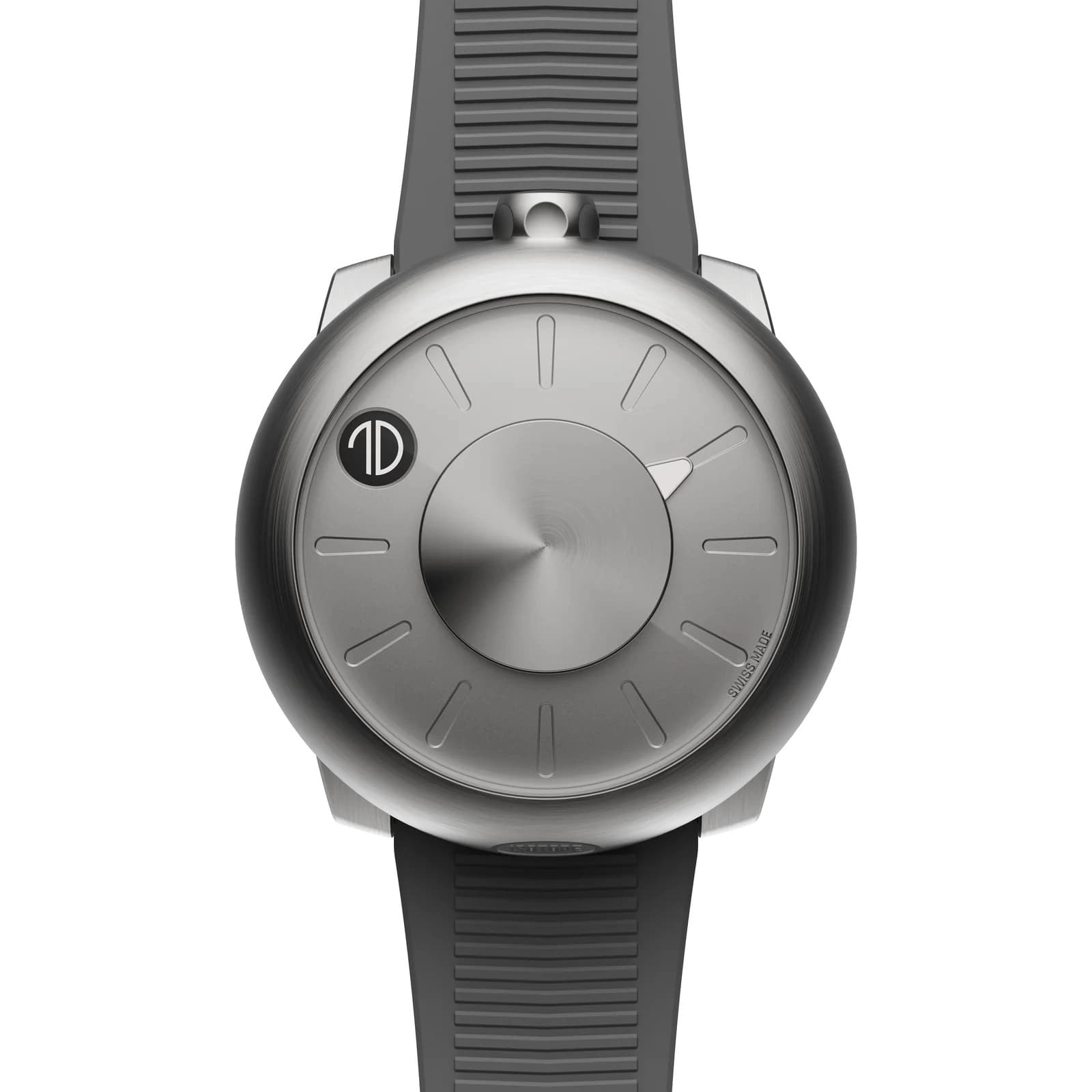
That distinction matters, as the OVNI rewrites the rules altogether. Instead of hiding rotating numerical discs beneath a static dial, Isotope flips the script: the dial itself rotates, whirring around to reveal the hour underneath. It’s less about reading time traditionally and more about experiencing it kinetically, almost ceremonially.
The design leap came from Miranda’s long-running fascination with science fiction, which is baked directly into the OVNI’s DNA. “Once I connected it with the Jupiter II from Lost in Space, the UFO (OVNI) shape felt natural,” he explains. And suddenly, the watch makes perfect sense. The OVNI is proudly weird, joyfully referential, and unmistakably Isotope.
When a complication becomes affordable, creativity becomes the new luxury. The OVNI proves that independent brands can move faster, take bigger risks, and redefine expectations in real time.
So… Why Now?
The reason we’re seeing so many jump-hour watches right now isn’t a single factor. They’ve always existed. Enthusiasts have always loved them. But now they’re attainable. And once something becomes attainable, brands can’t rely on novelty alone. They have to innovate.
Jump hours have moved from being rare to being expressive. They’re no longer just about telling time differently; they’re about saying something. And maybe that’s why the question finally answers itself. We’re seeing so many jump-hour watches right now because the industry finally has room to play. And when watchmakers get to play, that’s when things get interesting.
Shop New Arrivals

5140BA Classique 18K Yellow Gold White Enamel Dial
$15,900
View Watch
887968 Panthere 18K Yellow Gold Ivory Roman Dial
$19,900
View Watch
6661 Villeret Demi-Fuseau Horaire 8 Jours 18K WG White Dial
$20,900
View Watch
Q3022420 Grande Reverso GMT 18K Rose Gold Silver Dial
$24,900
View Watch
Shop New Arrivals
5140BA Classique 18K Yellow Gold White Enamel Dial
$15,900
View Watch887968 Panthere 18K Yellow Gold Ivory Roman Dial
$19,900
View Watch6661 Villeret Demi-Fuseau Horaire 8 Jours 18K WG White Dial
$20,900
View WatchQ3022420 Grande Reverso GMT 18K Rose Gold Silver Dial
$24,900
View Watch
More Content