The Breguet Tradition as an Everyday Watch: Three Incredible References
Published on 9/13/2026
What the Tradition Collection Actually Is
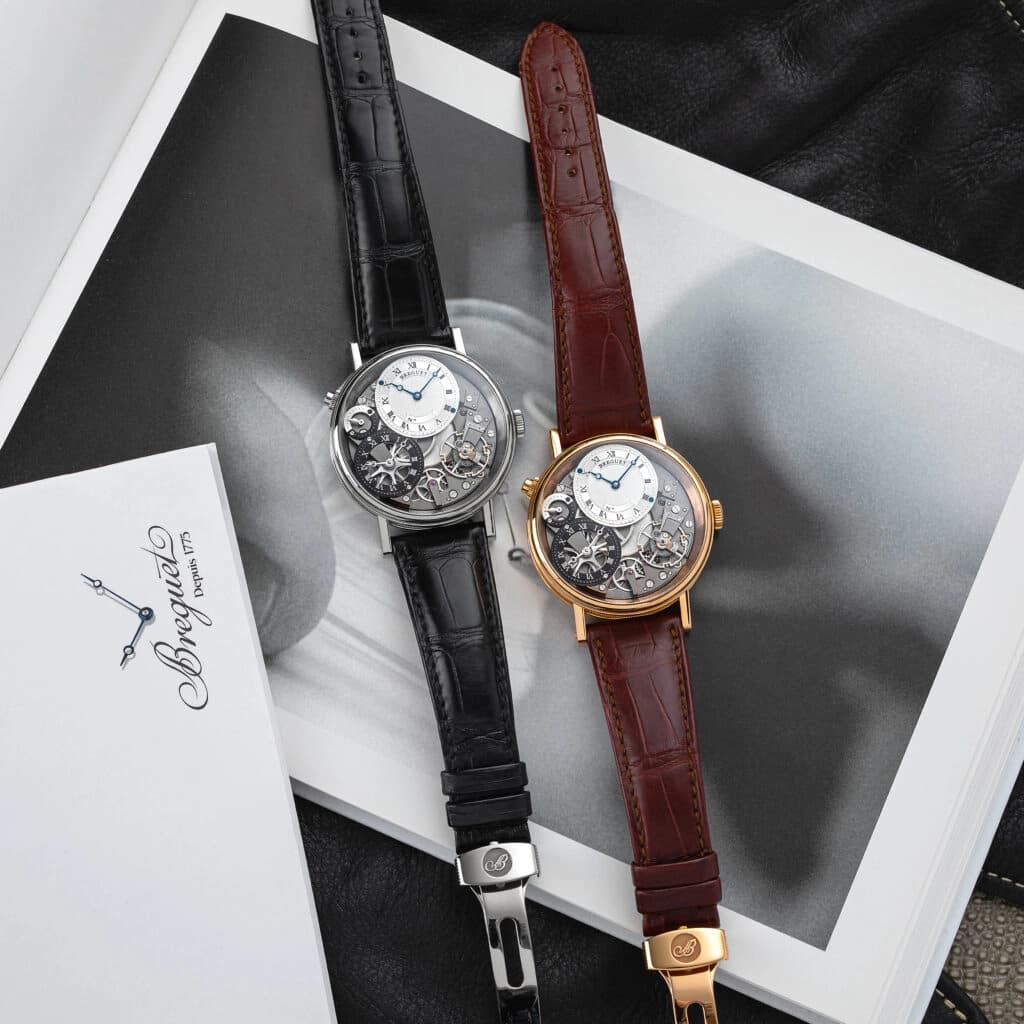
Breguet launched the Tradition collection in 2005 as one of the most unique watches on the modern market, but the inspiration for the piece reaches back to the souscription watches Abraham-Louis Breguet began producing in the 1790s. Those pieces were sold on a subscription basis: buyers paid a deposit upfront and received the watch later. To keep costs manageable, the souscription watches were deliberately simplified, with large one-hand displays and movements built around legibility rather than elaboration. They were not skeleton watches. But they were built on a function first thesis that carried through every aspect of the simple piece's presentation.
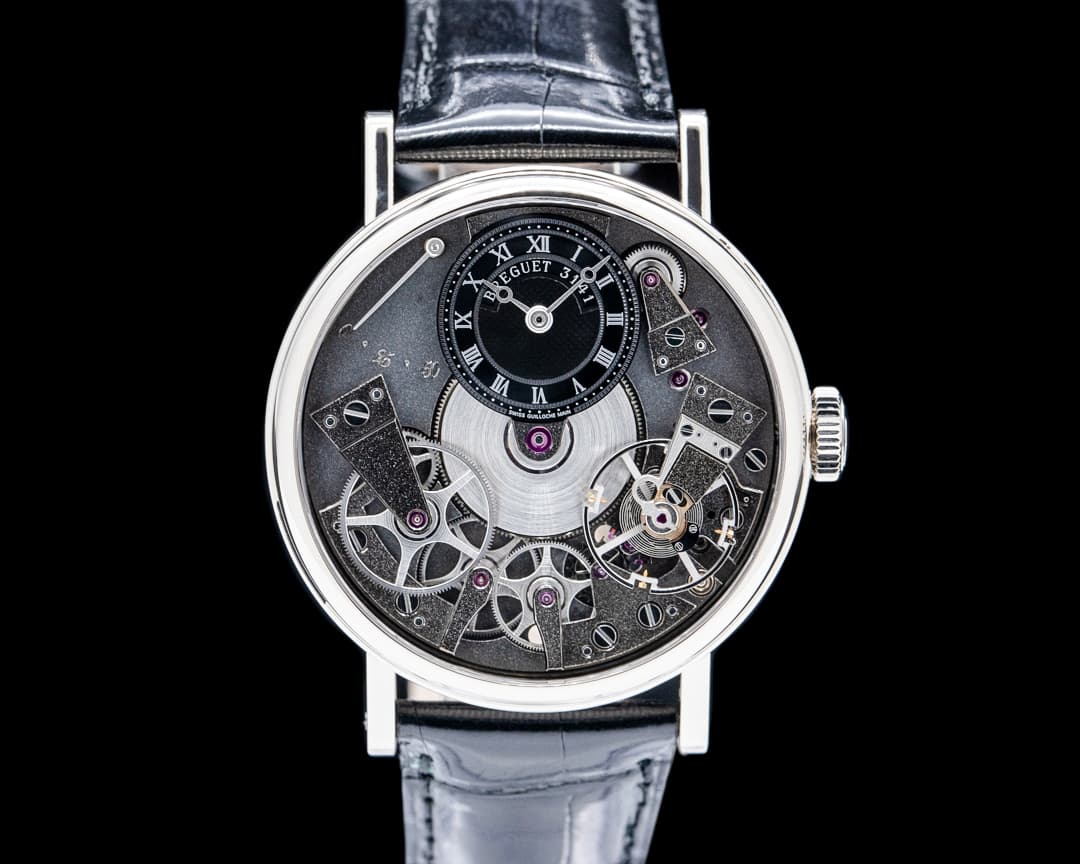
The Tradition collection took that premise and pushed it toward the architectural. The movement is displayed on the dial side, bridges, balance wheel, gear train, with the case acting more as a frame than an enclosure. This is not skeletonization in the conventional sense. It is a deliberate choice to make the movement the primary visual surface. Where a Classique presents a finished dial with a movement underneath, the Tradition is the movement, shaped into something you wear on your wrist. It is truly one of the coolest presentations on the market.
The result is a watch that reads as technical before it reads as formal. That distinction matters for everything that follows.
Why Openwork Dials Change the Calculus
A conventional dress watch signals occasion through surface. Enamel, guilloché, applied indices, these are materials and techniques that say "not for everyday." They reward close inspection and value simplicity over flashy presentation.
The Tradition's dial doesn't do that. There is no finished surface to misread. What you see is the exposed caliber, the balance wheel oscillating, the bridgework above and below. It reads the same at arm's length in a conference room as it does across a dinner table. The watch is visually distinct and one of those pieces you find yourself staring at in all different lighting, watching the exposed mechanics delightfully. It is clearly expensive, clearly complicated, and clearly high quality, but its idiom is mechanical and architectural rather than decorative and formal.
Compare it briefly to the Classique line, which sits at the other end of Breguet's internal logic. A Classique 5177 in 18k yellow gold with an engine-turned guilloché dial is a beautiful watch and an unambiguous dress piece. It dresses up the wearer. The Tradition dresses alongside the wearer, it has its own visual argument, which means it is less dependent on the outfit completing it. Often the Tradition collection is paired with a small timekeeping dial that is a miniature dress watch display at the top of the dial. This serves as just a slight reminder that the brand behind the watches knows what they are doing with dress pieces.
This is the core of the everyday case. An openwork watch is not dressy in the same register as a finished-dial watch. It can absorb more contexts without reading as mismatched.
The 7097: Retrograde Seconds as Daily Complication
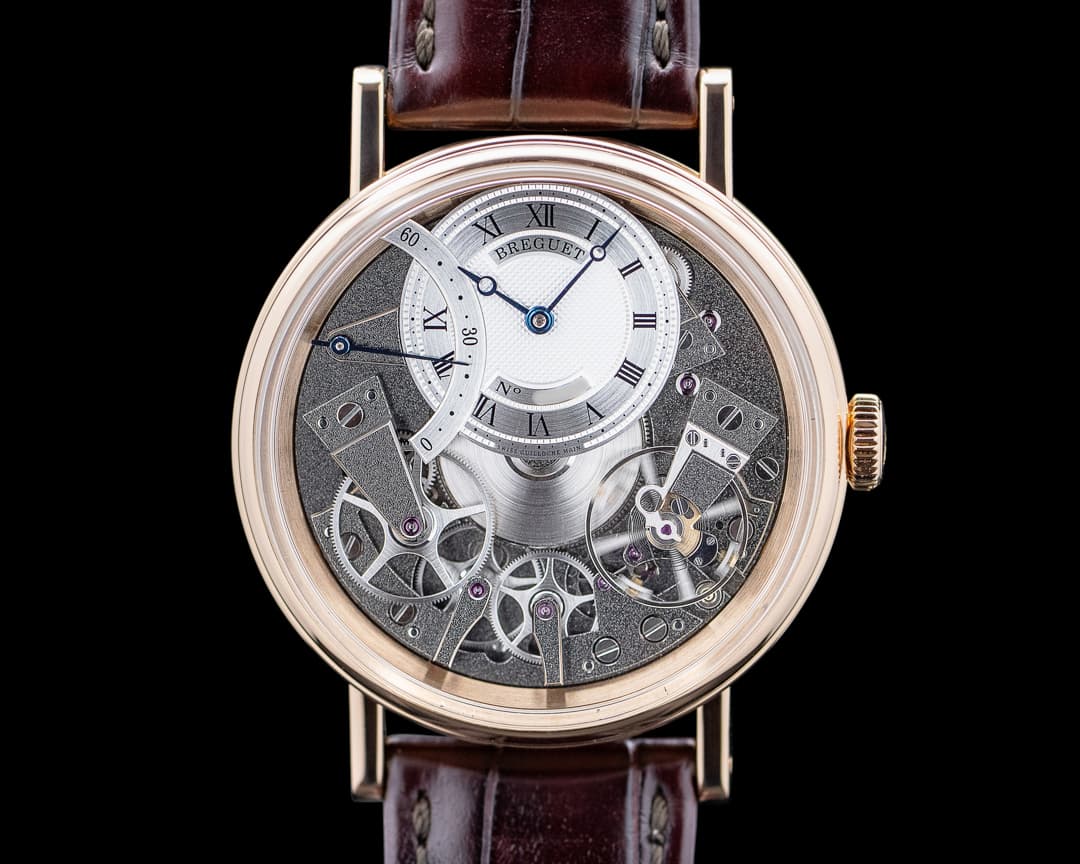
The ref. 7097 is a great entry point into the Tradition collection in practical terms, and it is where the everyday argument is combined with another exciting complication: the retrograde seconds.
The case is 40mm and sits close to the wrist, dimensions that work on a wide range of builds without the watch pulling focus. In rose gold on a leather strap, it carries just enough warmth to feel considered without reading as overly formal or losing its versatility. The coin-edged finishing on the case band is typical Breguet; it sits quietly on a medium wrist without looking oversized.
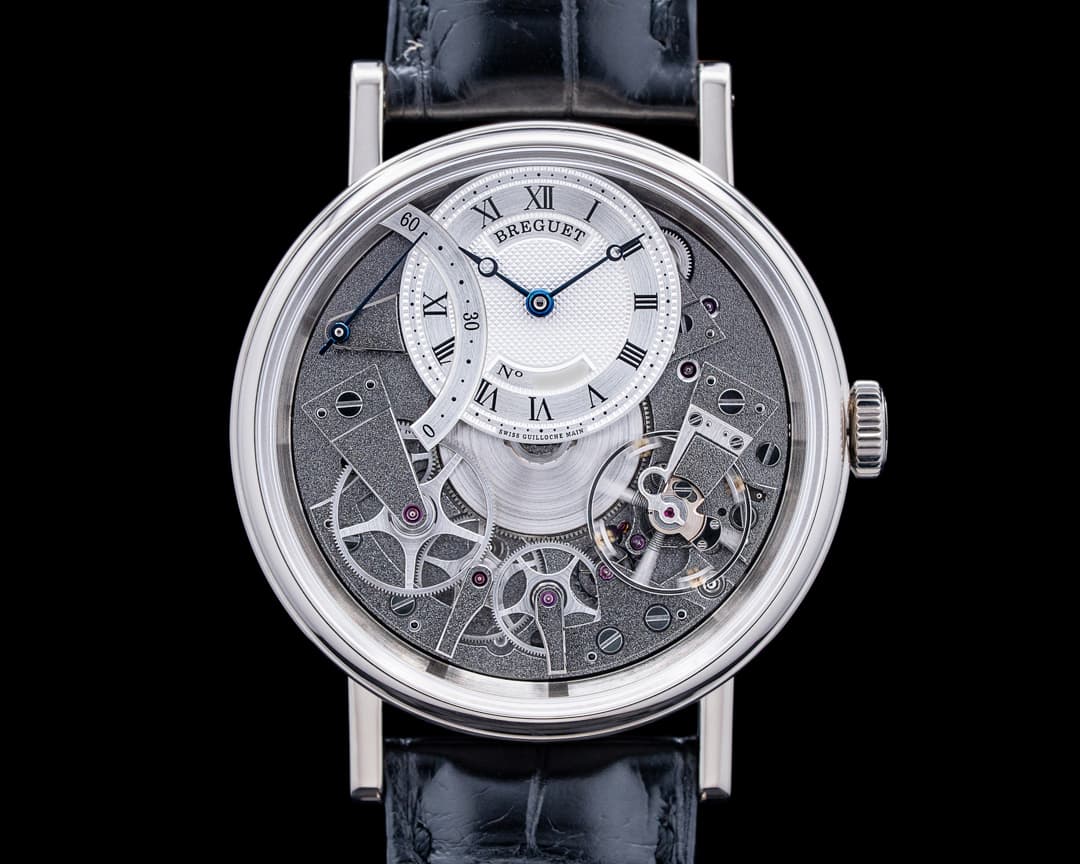
The dial layout is organized around a central axis, with movement bridges running symmetrically across the open space. A large balance wheel counterbalances an exposed gear in the gear train; hours and minutes occupy the top side of the dial. At the left, the retrograde seconds hand sweeps up toward sixty and snaps back to zero. The full travel takes sixty seconds. The reset is instantaneous. At arm's length, the retrograde hand reads cleanly against the open movement, and that is the key practical point: the 7097 is legible at a glance in a way that many open-dial watches are not. The retrograde seconds is not a complication that clutters or complicates reading the watch. It adds animation to what would otherwise be a static mechanical scene.
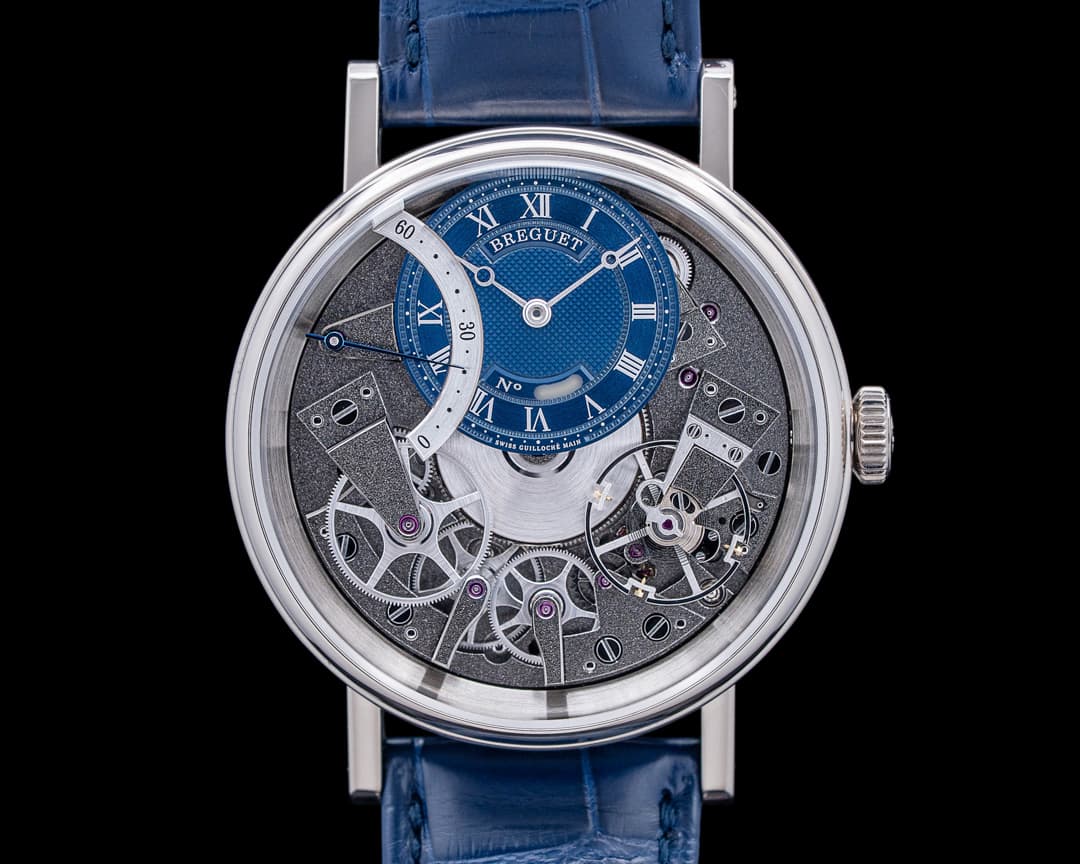
The caliber is the 505SR1, Breguet's in-house automatic with 249 components and 50 hours of power reserve. Pre-owned examples of the 7097BR/G1/9WU, the rose gold version, are available in the range of $25,000 on the secondary market as of mid-2026. At that price, the complication level and execution hold up against most available alternatives. But truly this is a watch unlike any other.
The 7597: Retrograde Date and the Case for a Second Tradition
The ref. 7597 occupies almost identical physical ground, 40mm case, the same broad dial architecture, but replaces the retrograde seconds on the side of the dial with a retrograde date at 6. The movement behind it is the 505Q, 269 components, the same 50-hour automatic power reserve.
The practical difference is in what you interact with. The 7097 displays retrograde seconds continuously; the retrograde date on the 7597 moves once per day and snaps back at midnight. This is a quieter complication to live with on the wrist. The dial reads with slightly more visual weight as a result, since the date arc takes up real estate, but the overall layout stays legible, and the date function makes the 7597 easier to justify as a single-watch solution for someone who needs that reference point daily. For those looking for an everyday variant, the 7597 is a popular favorite.
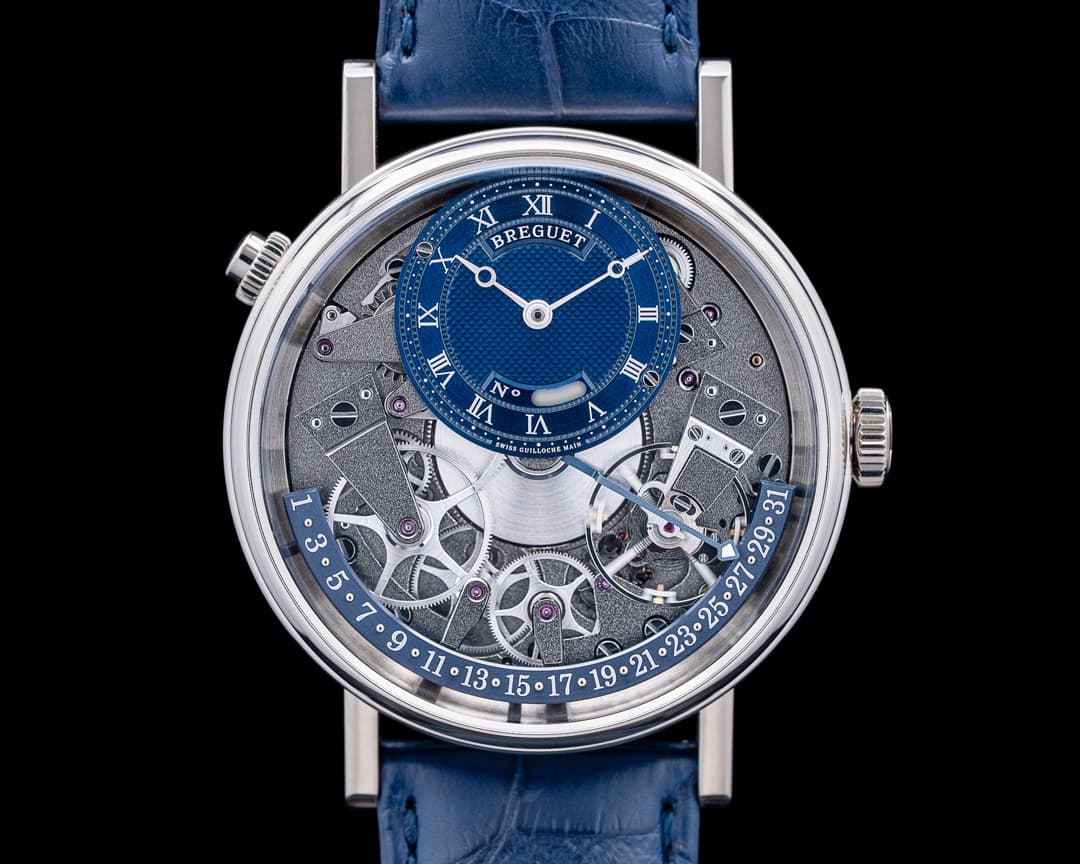
The 7597 suits the buyer who finds the 7097's retrograde seconds more theatrical than useful, and who would reach for this watch more often with a date display present. It remains in active production as of 2026 and is available in multiple metal and dial configurations. Pre-owned pricing ranges from approximately $32,000 to $50,000 depending on metal, reflecting the step up in mechanical complexity and, in some executions, material cost. These are also slightly less common than their simpler alternatives.
The 7597 doesn't make a dramatically different case for everyday wear than the 7097. It makes the same case with a different emphasis. If anything, the date function makes it easier to commit to as a one-watch collection.
The 7047: When the Everyday Watch Has a Tourbillon
The ref. 7047, launched in 2007, complicates the everyday argument, deliberately. This is the Tradition with a tourbillon at 6 o'clock, and everything about it signals that more is at stake.
The case is 41mm. The 7047 does not disappear under a cuff the way the 7097 does. The movement, caliber 569, is manual-winding, 499 components with a 55-hour power reserve, and it is a more elaborate visual landscape than the 7097's, with the tourbillon cage rotating at as the focal point of the top dial half. Below that, the fusee and chain assembly for constant force is visible near the mainspring.
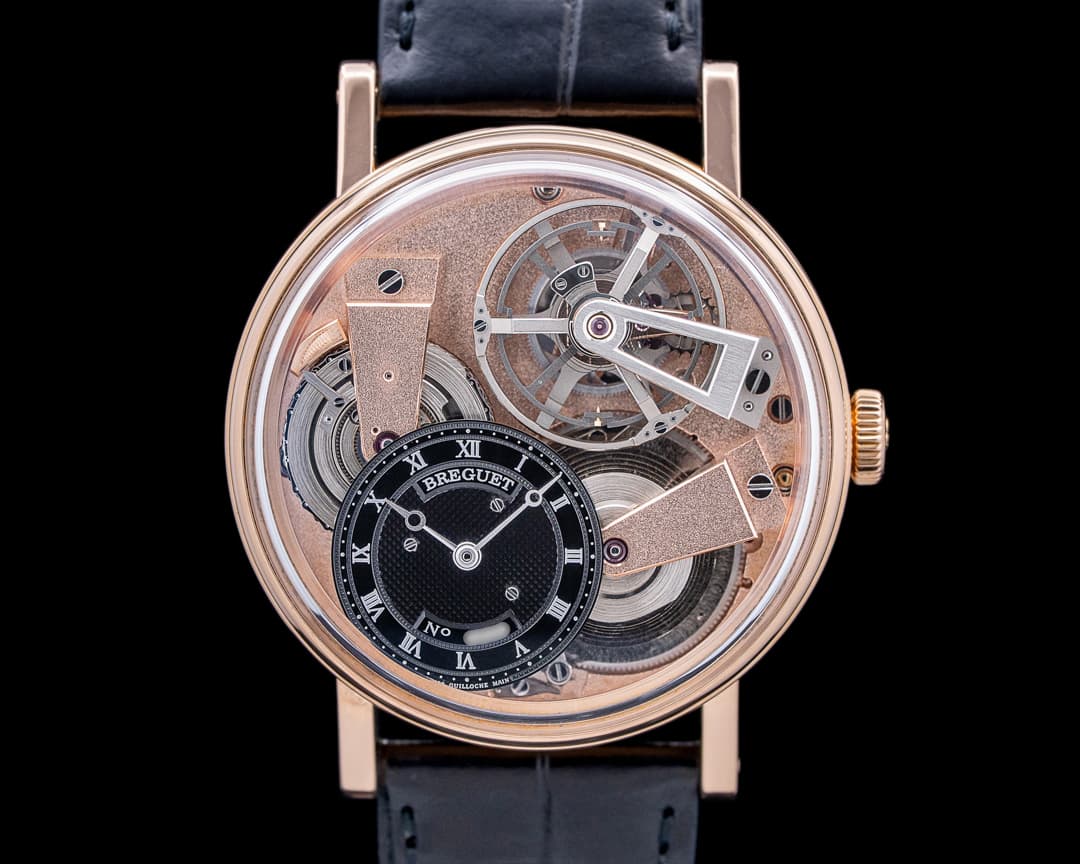
None of this means the 7047 is impossible to wear daily. Manual winding is a mild discipline to build into a morning routine, and at 41mm it is not a large watch by contemporary standards. But there's no doubt this watch is a definitive statement. Built on the same heritage centric formatting that makes this collection so popular, this piece takes that thesis to its logical extension with the pinnacle of complications, and a signature for Breguet.
If you care a lot about high complications, and you want a good grasp on what the pinnacle of classy high watchmaking registers at with a tasteful design-forward architecture, this is a fantastic watch that pushes the limits of watchmaking capabilities.
The Honest Case For and Against
The Tradition collection has real trade-offs, and ignoring them would undermine the argument.
Legibility is mostly fine across these three references, but those purchasing the Tradition are looking more for an artistic take on timekeeping than on legibility. If you need the time quickly in a dark room, a clean dial with luminous indices is the better tool. The Tradition rewards a moment of attention, not a hasty glance.
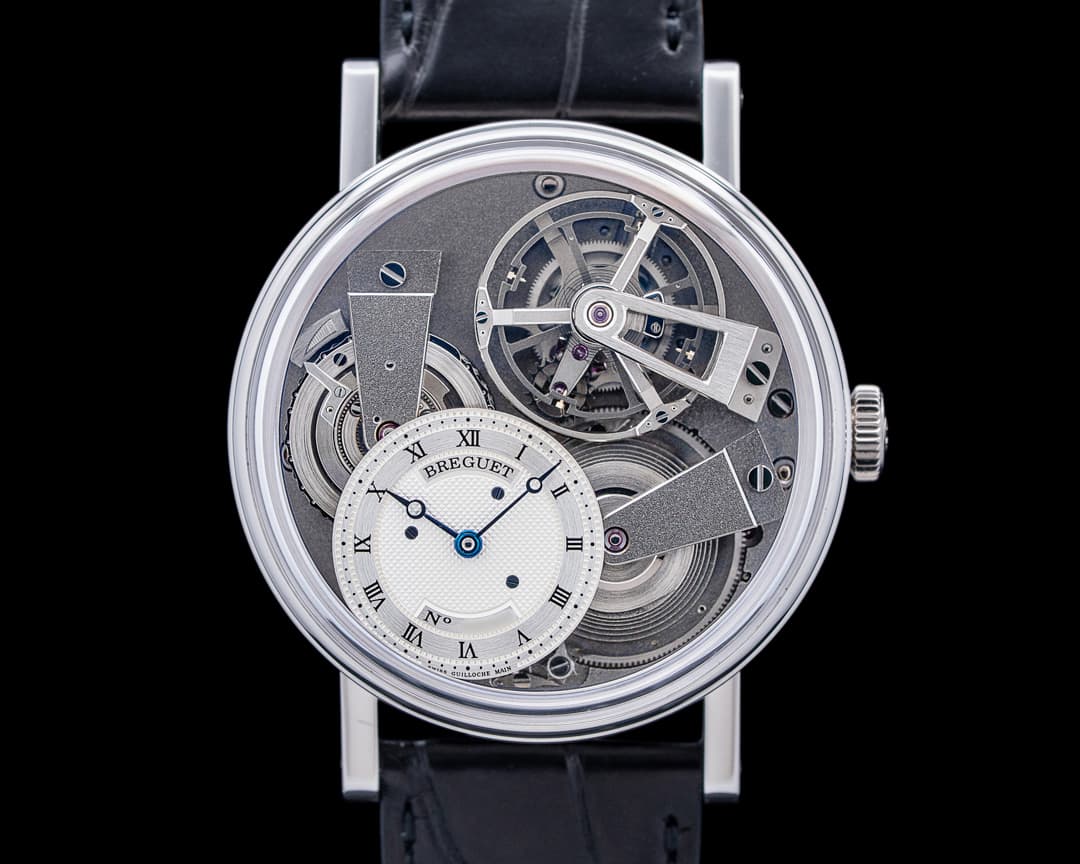
The "everyday" framing also means different things at different price points. The 7097 at $20,000's pre-owned sits in a range where daily wear is a reasonable expectation for most serious collectors. The 7047 in platinum or rose gold is a different calculus entirely, and the everyday argument there requires a different kind of collector to make it honestly.
These pieces represent the Tradition at its most versatile: technical enough to satisfy the complication collector, proportioned well enough to wear without occasion, and interesting on a level that never feels boring for everyday wear.
If you have loved high horology and searched for something truly unique and tasteful, there is arguably no collection to compete with the Tradition. It is forward looking and heritage grounded at the same time, and we are all here for it.
Shop New Arrivals

5140BA Classique 18K Yellow Gold White Enamel Dial
$15,900
View Watch
887968 Panthere 18K Yellow Gold Ivory Roman Dial
$19,900
View Watch
6661 Villeret Demi-Fuseau Horaire 8 Jours 18K WG White Dial
$20,900
View Watch
Q3022420 Grande Reverso GMT 18K Rose Gold Silver Dial
$24,900
View Watch
Shop New Arrivals
5140BA Classique 18K Yellow Gold White Enamel Dial
$15,900
View Watch887968 Panthere 18K Yellow Gold Ivory Roman Dial
$19,900
View Watch6661 Villeret Demi-Fuseau Horaire 8 Jours 18K WG White Dial
$20,900
View WatchQ3022420 Grande Reverso GMT 18K Rose Gold Silver Dial
$24,900
View Watch
More Content