A Buyer's Guide to the Patek Philippe Perpetual Calendar
Published on 6/1/2026
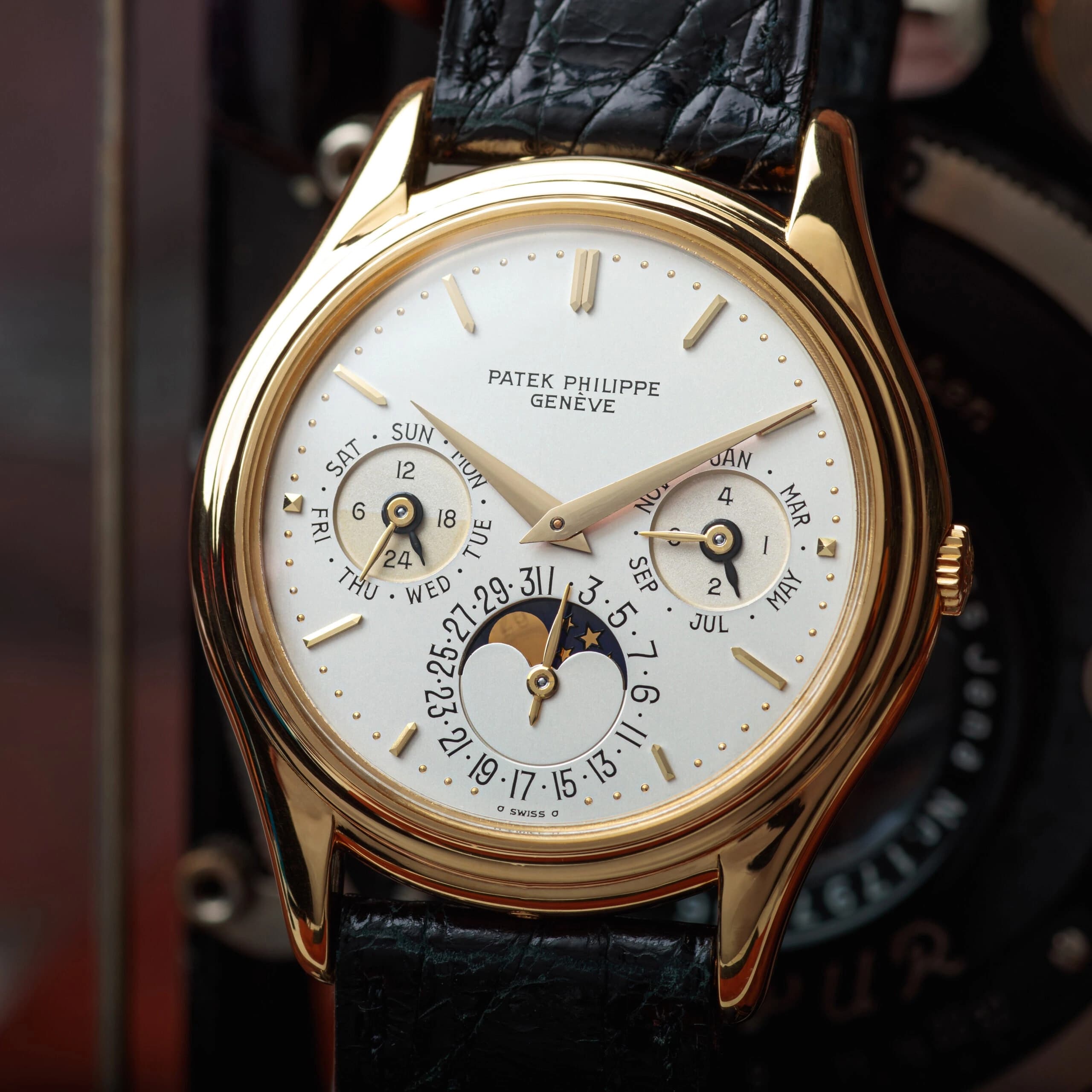
No manufacture has played a larger role in solidifying the identity of the perpetual calendar than Patek Philippe.
What a Perpetual Calendar Means in the Patek Context
Patek made the first perpetual calendar wristwatch in 1925, ref. 97975, and the first serially produced perpetual calendar in 1941, ref. 1526. That's eighty-plus years of continuous production in a complication most manufactures treat as an occasional statement piece. The institutional knowledge that accumulates over that span, in how the movement is sized, how the correction pushers are positioned, how the display architecture evolves, is genuinely difficult to replicate. When Patek introduced Caliber 240Q in 1977 and built the 3940 around it eight years later, the brand continued their innovating legacy with the perpetual calendar.
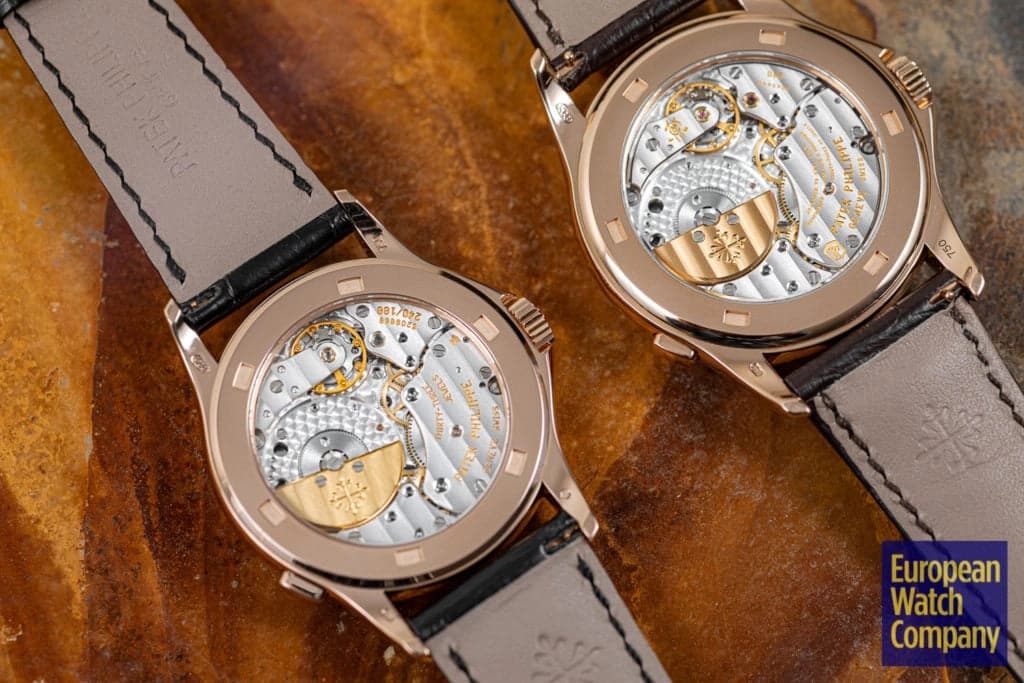
Patek Philippe Caliber 240
The high-water mark of that argument is the Caliber 89, the pocket watch movement Patek completed in 1989 for its 150th anniversary. Thirty-three complications. 1,728 parts. Four examples made. It held the title of most complicated mechanical pocket watch ever made from 1989 until 2015. The Caliber 89 isn't directly relevant to buying a 5327, but it sets the institutional context: perpetual calendars and complications at Patek aren't a segment of the catalog: they're close to the core of what the manufacture believes it exists to create.
How to Think About the Choice: The Four Variables
Before running through the significant references, it helps to name the variables that actually drive the decision. There are four:
Case size and wearability. Patek's perpetual calendars cluster around 37-40mm, which is smaller than most contemporary watches but larger than the dress-watch minimalism of a Calatrava. The 3940 sits at 36mm; the 5140 at 37.2mm; the 5327 at 39mm. These numbers compress what is, on the wrist, a meaningful difference in presence. A 36mm case with a convex bezel and no lug overhang wears like a dress watch. A 39mm case with a slightly taller dial architecture and longer lugs wears like a statement. Neither is wrong; they suit different wrists and different wardrobes.
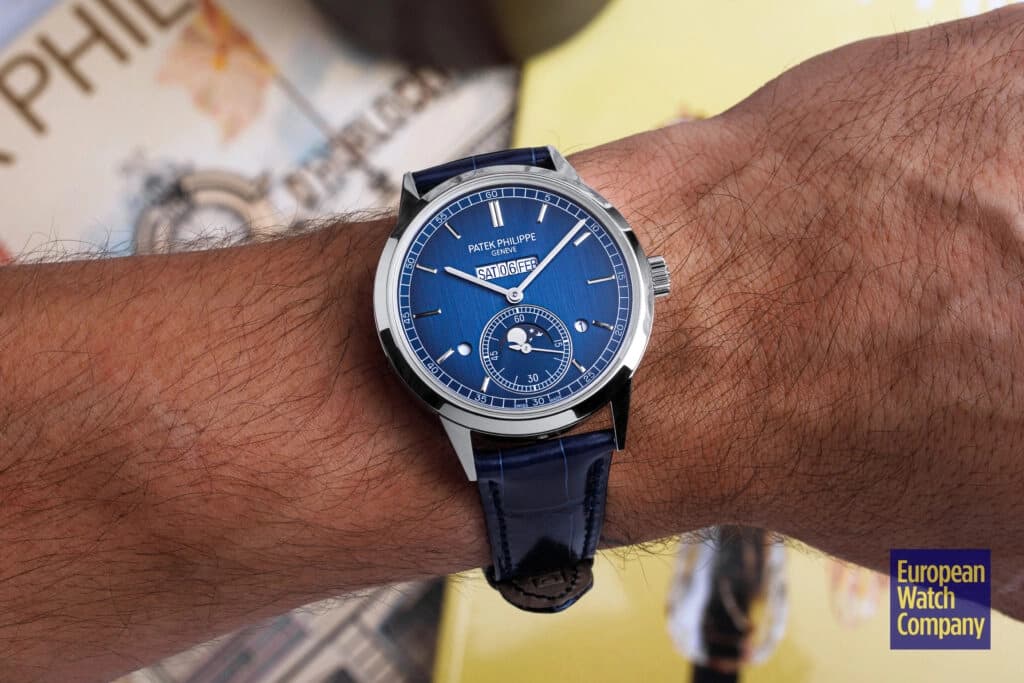
Patek Philippe Ref. 5236P-001 On the Wrist
Dial architecture and legibility. The perpetual calendar has a lot of information to display, date, day, month, leap year, moon phase, and different references arrange it very differently. The classical approach (3940, 5140, 5327) distributes the information across four sub-dials in a symmetrical layout that reads clearly at a glance. The retrograde approach (5496) uses fan-shaped displays and jumping hands to compress the information into a more dramatic visual arrangement that some buyers find more interesting and others find harder to read quickly. The aperture display layout of the 5236 simplifies the dial layout, but results in a lot more negative space. There isn't a clear answer. The question is what you want the dial to do.
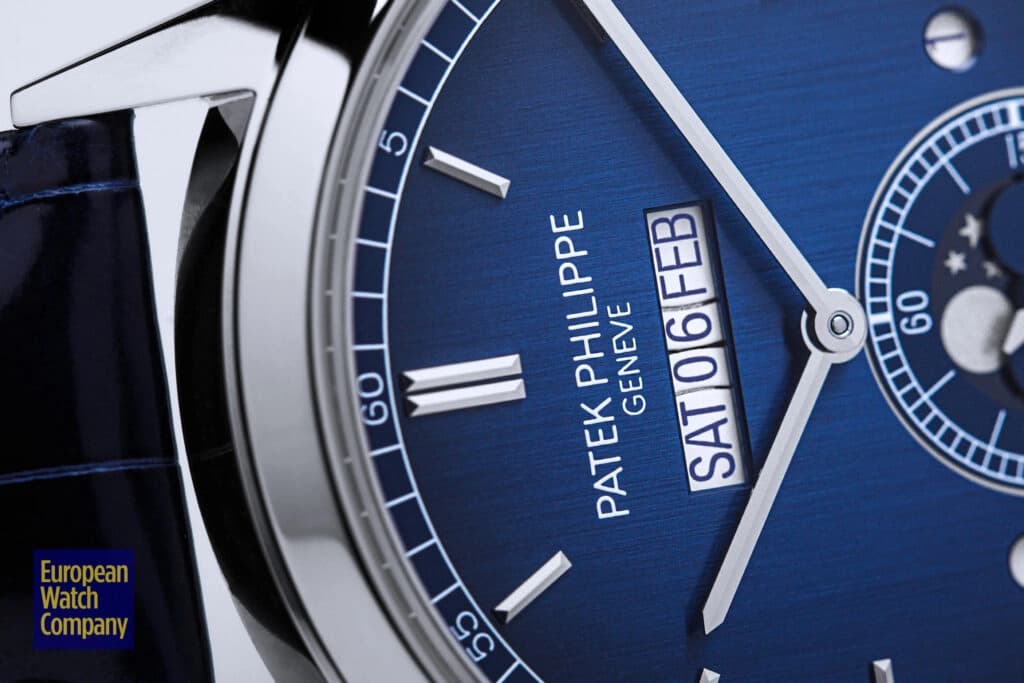
Patek Philippe Ref. 5236 In Line Perpetual Display
Caliber generation. Caliber 240 Q and Caliber 324 S Q are the two movements you'll encounter most often in this segment, and they represent genuinely different philosophies. More on this below; for now, note that the caliber generation roughly tracks the era of production and the design idiom of the case. Buying a 240 Q watch means buying into Patek's thin, micro-rotor tradition. Buying a 324 SQ watch means buying into something more contemporary.
New vs. pre-owned pricing. Most serious buyers in this segment will transact pre-owned, and the price gap between a current-production reference at retail and a comparable pre-owned piece has widened enough that it materially changes what's available at a given budget. A collector who would rule out a 5327 on price grounds at retail may find it well within reach on the secondary market. That asymmetry is worth building into the framework before you decide what you're looking for.
The References, One by One
Ref. 3940
The 3940 was made from 1985 to 2007, a twenty-two-year production span that is, in the context of modern watchmaking, much longer than most references. That longevity itself speaks to the success of the model line across decades. Throughout the 3940 production, there were three series, with first series examples commanding a significant premium for their rare numbers and unique stepped dial. Prices for the 3940 across the board have risen steeply recently. Expect to pay over $180,000 for a clean yellow gold 3940 first series example. Otherwise, yellow gold examples tend to command $80,000-$90,000 dollars depending on kit, condition, and specific dial configuration. White gold and platinum examples are the most expensive, typically trading at a $20,000-$30,000 premium over yellow gold. Rose gold comes in right down the middle with a slight bump over yellow gold pricing.
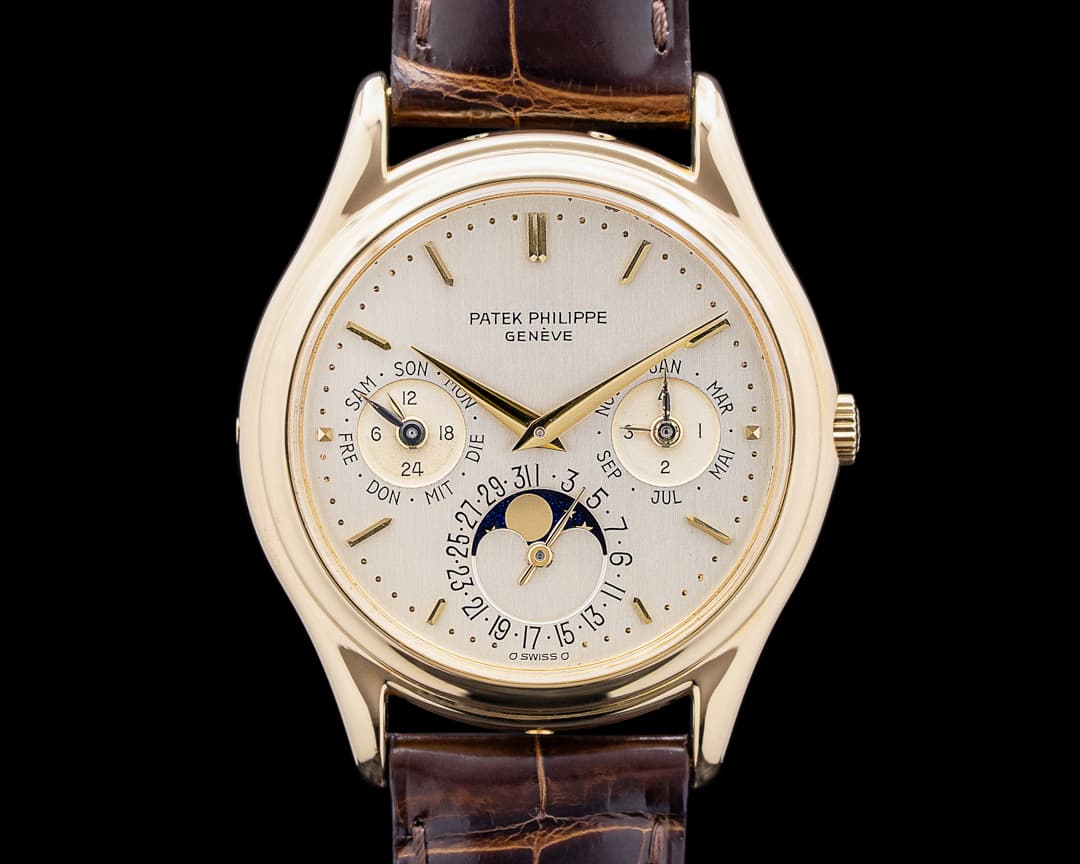
The case of the 3940 is 36mm, with the scalloped bezel and stepped-down dial architecture that defines Patek's classical complicated dress watch design language. On the wrist, 36mm with a short lug to lug sits quietly under a shirt cuff and wears comfortably on a range of wrist sizes. It doesn't announce itself. The dial carries three symmetrical sub-dials, day and 24hr at nine, month and leap year at three, date and moon phase at six, with thin applied gold indices and matching handset for the time. The overall effect is disciplined: a lot of information arranged coherently. Patek presented this layout with the 3940 and fundamentally changed the aesthetic of the perpetual calendar for the industry.
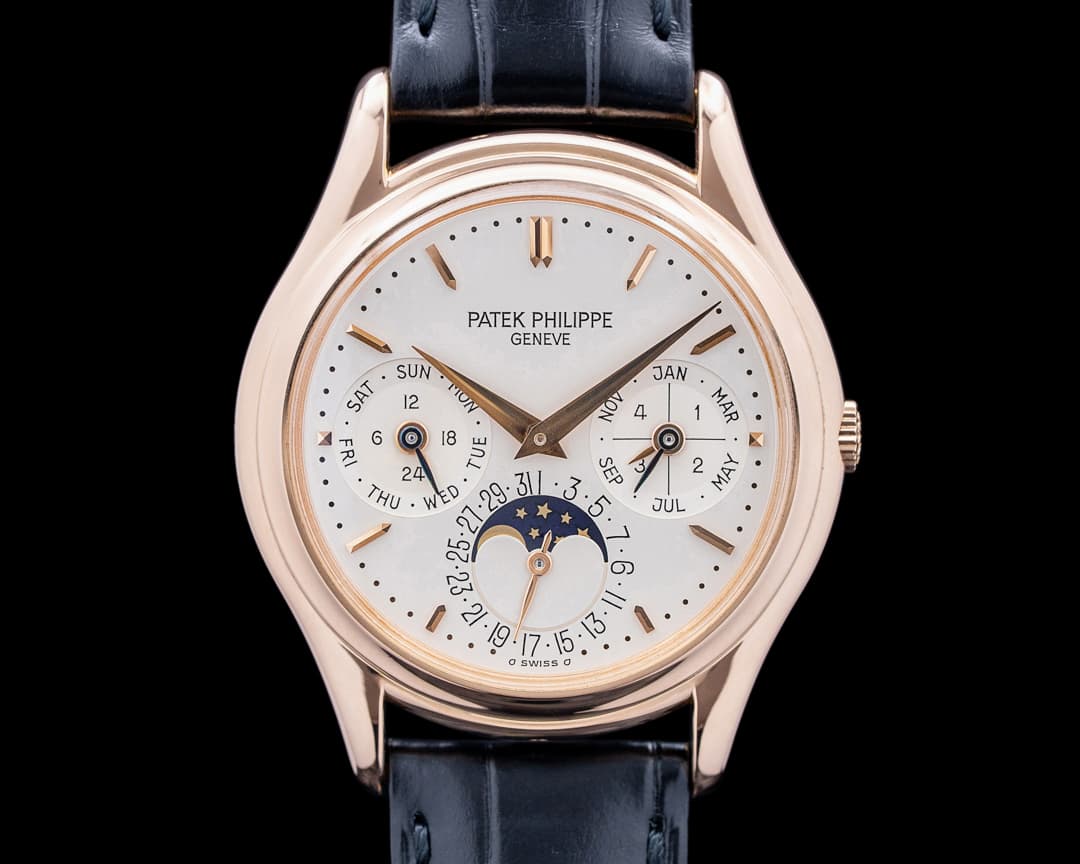
The 3940 runs on Caliber 240 Q, the thin micro-rotor movement Patek launched in 1977. At 3.88mm thick, it keeps the case slender and comfortable. The trade is a 38-48 hour power reserve, which is modest by today's standards but has never been a serious practical problem for daily wearers, especially considering the automatic winding utility of the 240.
For collectors interested in the 240 Q era at a point of entry that leaves room in the budget for service and contingency, the 3940 is the reference to start with.
Ref. 5140
The 5140 arrived in 2006 as the direct successor to the 3940. White gold came first, then yellow gold in 2007, then rose gold and platinum in 2010. Most variants were largely superseded by the 5327 in 2016, with the platinum 5140P-013 (black dial) produced until approximately 2018.
With the 5140, the case grows to 37.2mm and the profile is roughly the same thickness but feels slightly thinner because of the proportions. The dial layout is recognizable from the 3940: essentially a scaled up version of the same architecture. The difference is in proportion and finish. The 5140 has a flatter, bolder feel; the numerals and text are larger and a bit more prominent than the subtlety of the 3940. Place a 5140 next to a 3940 and the 5140 reads as more contemporary without abandoning the classical arrangement. That extra 1.2mm in diameter matters more than the number suggests; it brings the watch closer to the center of the wrist on a medium-sized wrist and reads much larger to the onlooker.
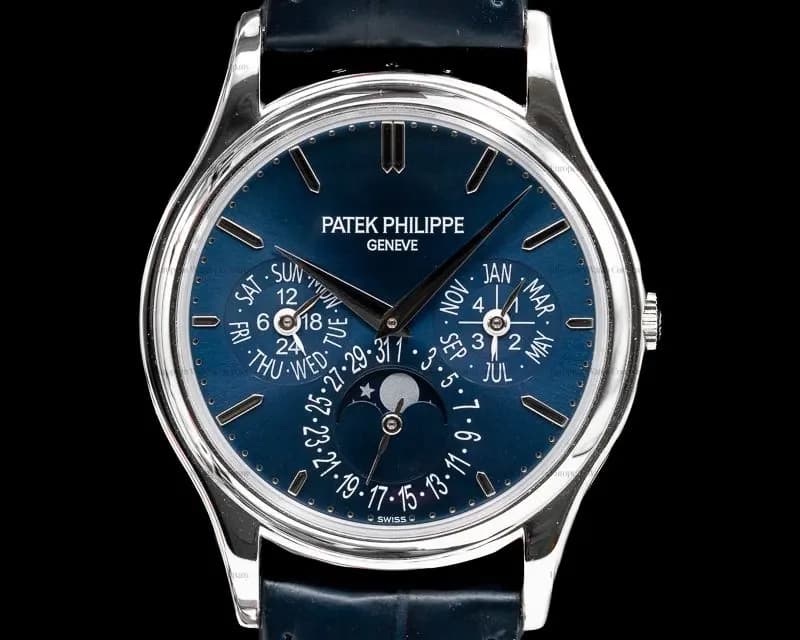
Patek Ref. 5140P-001
The 5140 is still powered by Caliber 240 Q, which means the movement story is essentially the same as the 3940.
Pre-owned 5140 prices previously sat above 3940 comparables, but with the rapid appreciation of the 3940, the 5140 is now generally more accessible, priced at around $55,000-$60,000 . For buyers who want the 240Q in a more contemporary shell, or who have slightly larger wrists, the 5140 is the cleaner choice. Growingly, as the rest of the perpetual calendar market from Patek appreciates, the 5140 is becoming a value in the collection. Some criticize the proportionality of the 5140 as feeling a bit less balanced than a 3940, but this is a matter of preference.
Ref. 5327
Introduced at BaselWorld 2016, the 5327 is the current face of Patek's classical perpetual calendar line. It comes in yellow gold (5327J, discontinued 2020), rose gold (5327R), and white gold (5327G), with the latter two remaining in the current catalogue.
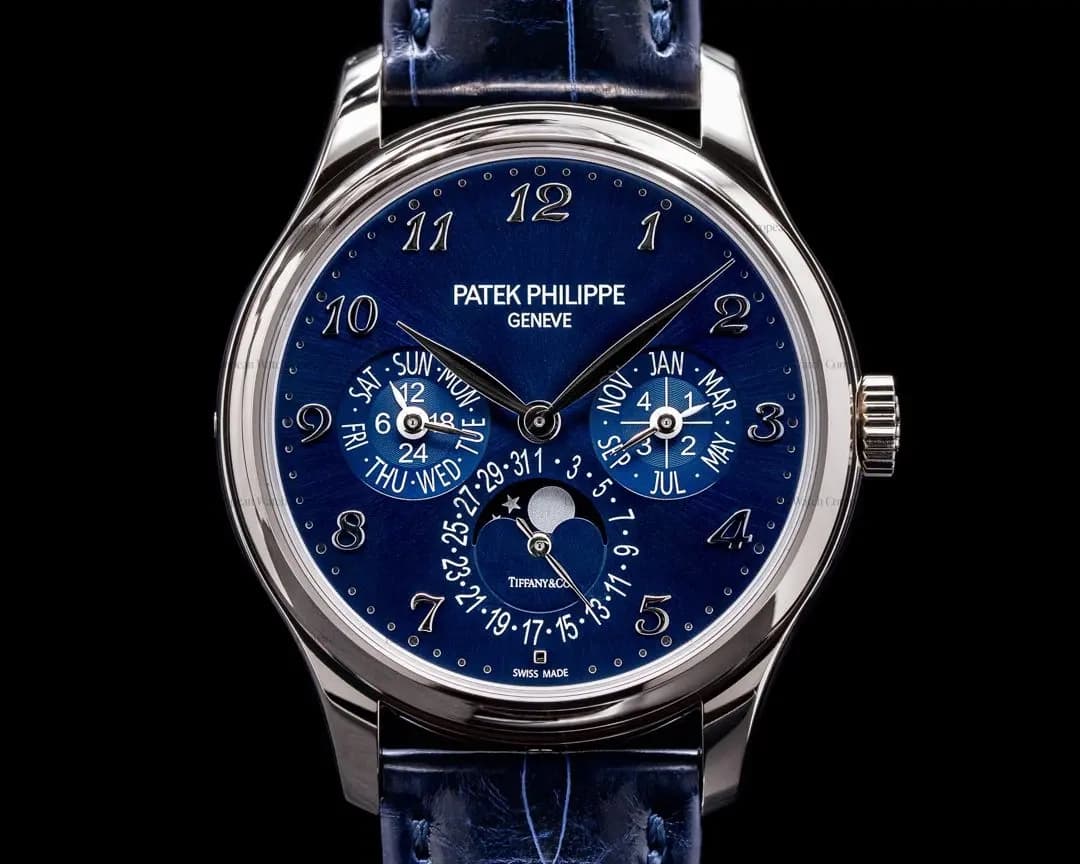
Patek Philippe Ref. 5327G Tiffany & Co.
The case moves to 39mm, which sounds trivial and isn't. The 5327 wears with more presence on the wrist. The dial architecture retains the sub-dial layout, but the proportions are recalibrated: the sub-dials are slightly larger relative to the dial surface, and the numerals are now Breguet, which clutters the larger dial a bit more. The piece is starting to lean into a sportier dress watch position than its smaller alternatives.
The 5327 is still built on the 240 base, but now the caseback isn't as filled by the movement as the case diameter has grown.
Current-production 5327G and 5327R examples trade considerably below retail, with white gold and rose gold retailing over $120,000 and selling preowned for $65,000- $70,000 at EWC.
Ref. 5496
The 5496 takes a different position. Introduced in 2011 with Caliber 324 S QR, the retrograde variant of Patek's larger central-rotor movement, it is a more visually assertive watch than anything in the 3940/5140/5327 line.
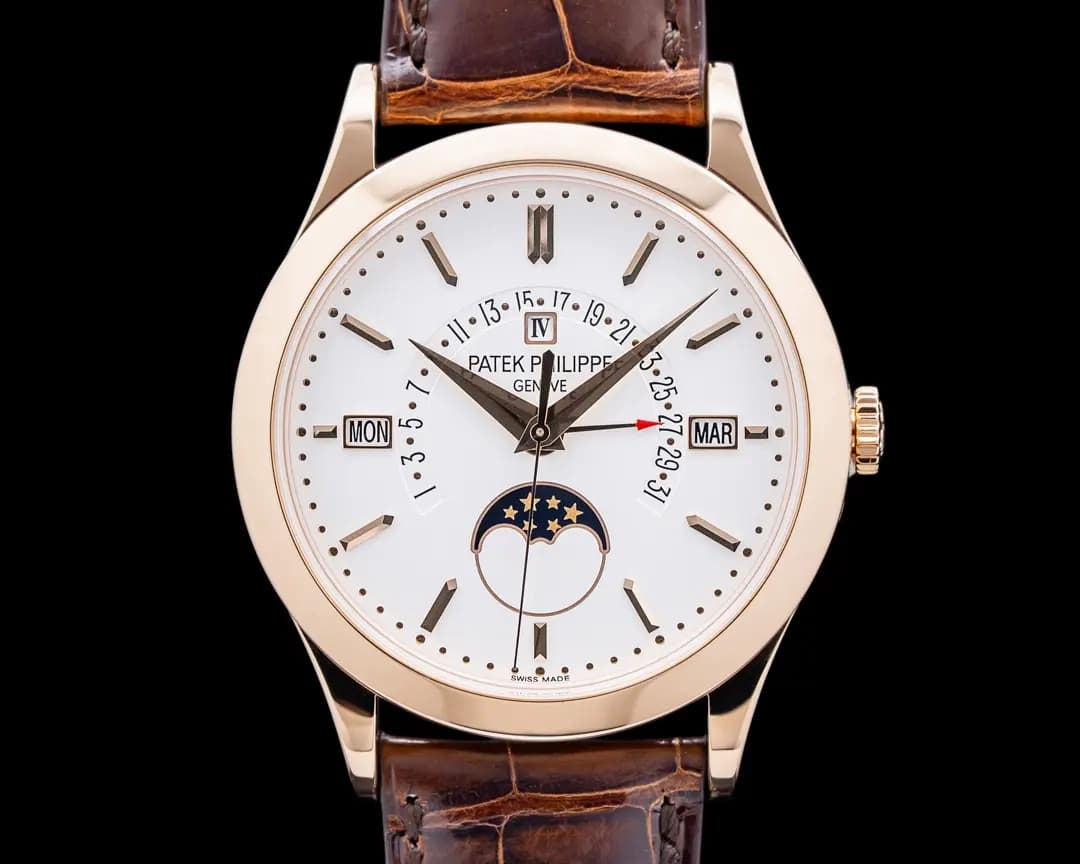
Patek Philippe Ref. 5496r
The retrograde date hand sweeps across a fan-shaped arc at the top of the dial and snaps back at midnight. Day and month read in apertures rather than sub-dials. Moon phase sits at six. The overall effect is more dynamic, and depending on your preferences, either more interesting or busier than the symmetrical sub-dial layout. It's a legitimate aesthetic choice, not a complication for its own sake; the retrograde mechanism requires more engineering than a standard jumping date.
The 5496 trades between $60,000 and $70,000 depending on metals, reflecting its lower production volume and niche market positioning.
Ref. 5320G and 5236
Introduced in 2017, the 5320G is Patek's more recent thinking about what a perpetual calendar should look like. White gold only; the "G" suffix confirms it. The case profile is stepped and carries straight through to the lugs, a deliberate nod to mid-century Patek case design, and the dial layout uses twin apertures at the top for the day and month display alongside sub-indicators for day/ night and leap year flanking the moonphase and date at six.
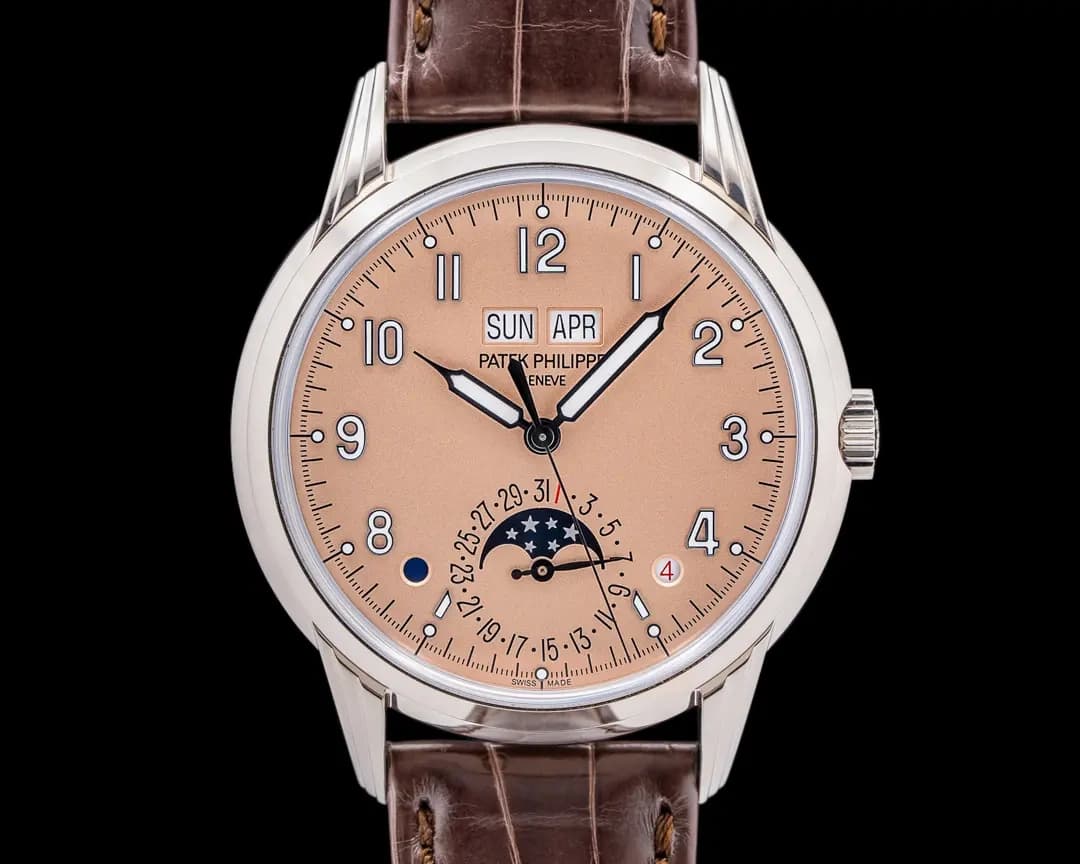
Patek Philippe Ref. 5320G-011
The 5320G runs on Caliber 26 330SQ, which is the key technical departure. Where the 3940 through 5327 line is built on the 240 Q's ultra-thin micro-rotor architecture, the 5320G uses a larger, central-rotor movement with a 28,800 vph beat rate and 45-hour power reserve. The case is correspondingly less slim than a 5140, and the wearing experience is more substantial.
Priced $114,279 retail with a salmon face, the 5320 now trades at about $70,000 at EWC, while earlier cream dials hover closer to $60,000.
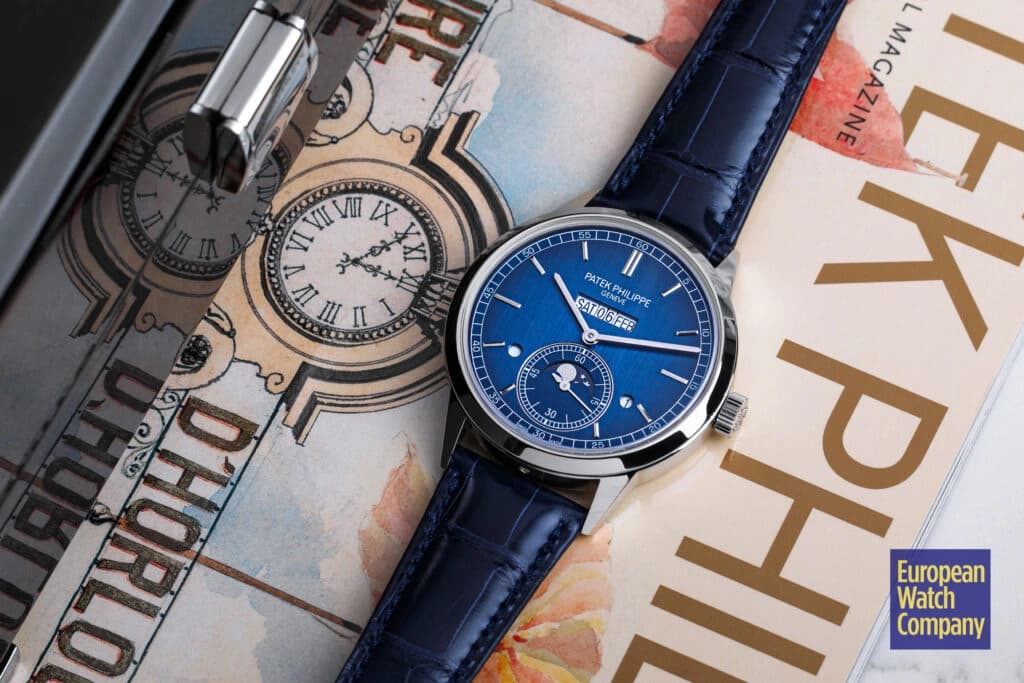
Patek Philippe 5236P-001
As an outgrowth of the same philosophy as the 5320, Patek presented the 5236 in line perpetual in 2021. This is a slightly more mature version of the 5320, with an updated micro-rotor movement and the date also moved to 12 o'clock, leaving just the moonphase and indicators at 6 and adding subsidiary seconds. Of the modern pieces, this is definitely the most well-developed in the collections. The 5236 typically trades for between $100,000 and $110,000 at EWC depending on dial configuration and kit.
The Caliber Question: 240 Q vs. 324 S Q
Caliber 240 launched in 1977, during the Quartz Crisis, as Patek's response to a market asking whether mechanical watches had a future at all. The answer Patek gave was: ultra-thin, micro-rotor, beautifully finished. The 240 Q, the perpetual calendar variant, carries that philosophy forward. At 3.88mm thick, 21,600 vph, and 27 jewels, it keeps the case profile extraordinarily slim. The trade is a power reserve of 38-48 hours, honest rather than impressive by modern standards.
For buyers, the caliber question tracks the case question. If you want a slim, classical dress watch in the Patek tradition, the 240 Q is the answer and the 3940, 5140, and 5327 are your references. If you want more reserve, more wrist presence, and a more modern movement architecture, the 324 S Q watches, the 5496 is worth the trade.
There is no wrong answer here. The 240 Q's modest power reserve has never been a functional problem for daily wearers; it becomes a consideration only if you're rotating among several watches and can't be certain which one is running on a given morning.
New vs. Pre-Owned: Where the Real Decisions Happen
Most serious perpetual calendar buyers will end up transacting pre-owned, and the experience is meaningfully different from buying a Nautilus or an Aquanaut on the secondary market.
Patek's sports watches have traded at or above retail for years, with thin secondary supply and an established collector base that prices accordingly. The perpetual calendar market is different. Several references in this guide trade at genuine discounts to what their technical complexity and manufacture would imply.
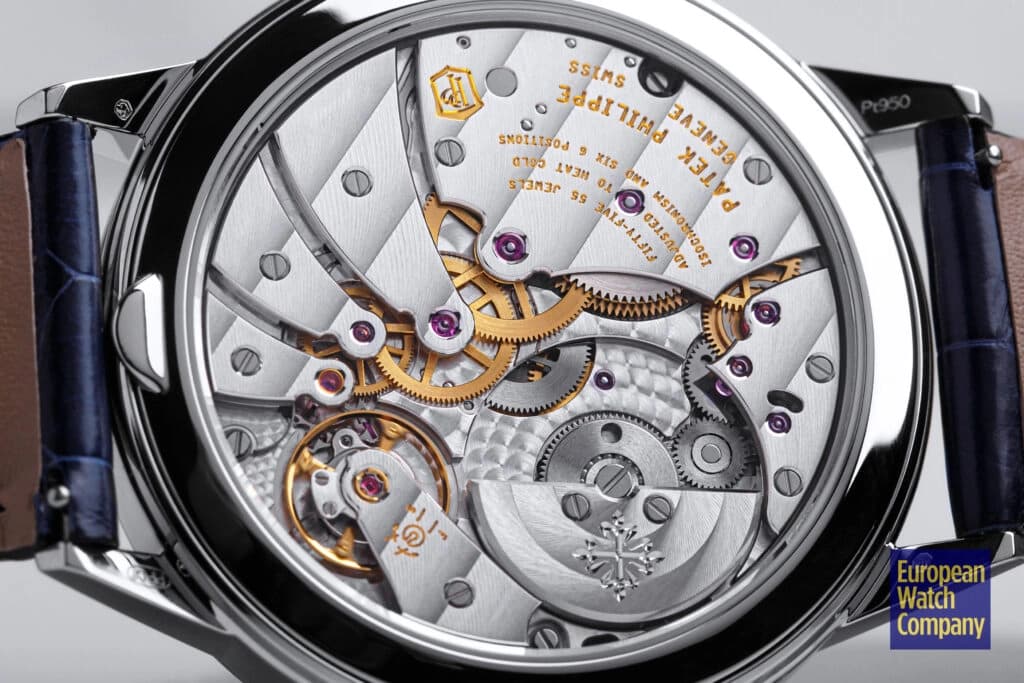
Patek Philippe Ref. 5236 Caseback
What to look for, from a dealer's perspective:
Documentation matters more here than in most Patek categories. Original box and papers drive a meaningful premium on perpetual calendars, not because the movement is somehow different without them, but because the complication's service history is harder to trace without a paper trail, and buyers who may eventually sell will face the same documentation question from the next buyer. An undocumented 5140 is not a trap, but the discount it trades at should reflect the gap.
Service history is the second question. Perpetual calendar movements are not inherently fragile, but they are not simple. A 3940 that has never been serviced and shows 25 years of wear is not a bargain at any price. A recently serviced example with records is worth a premium over an unserviced one regardless of cosmetic condition.
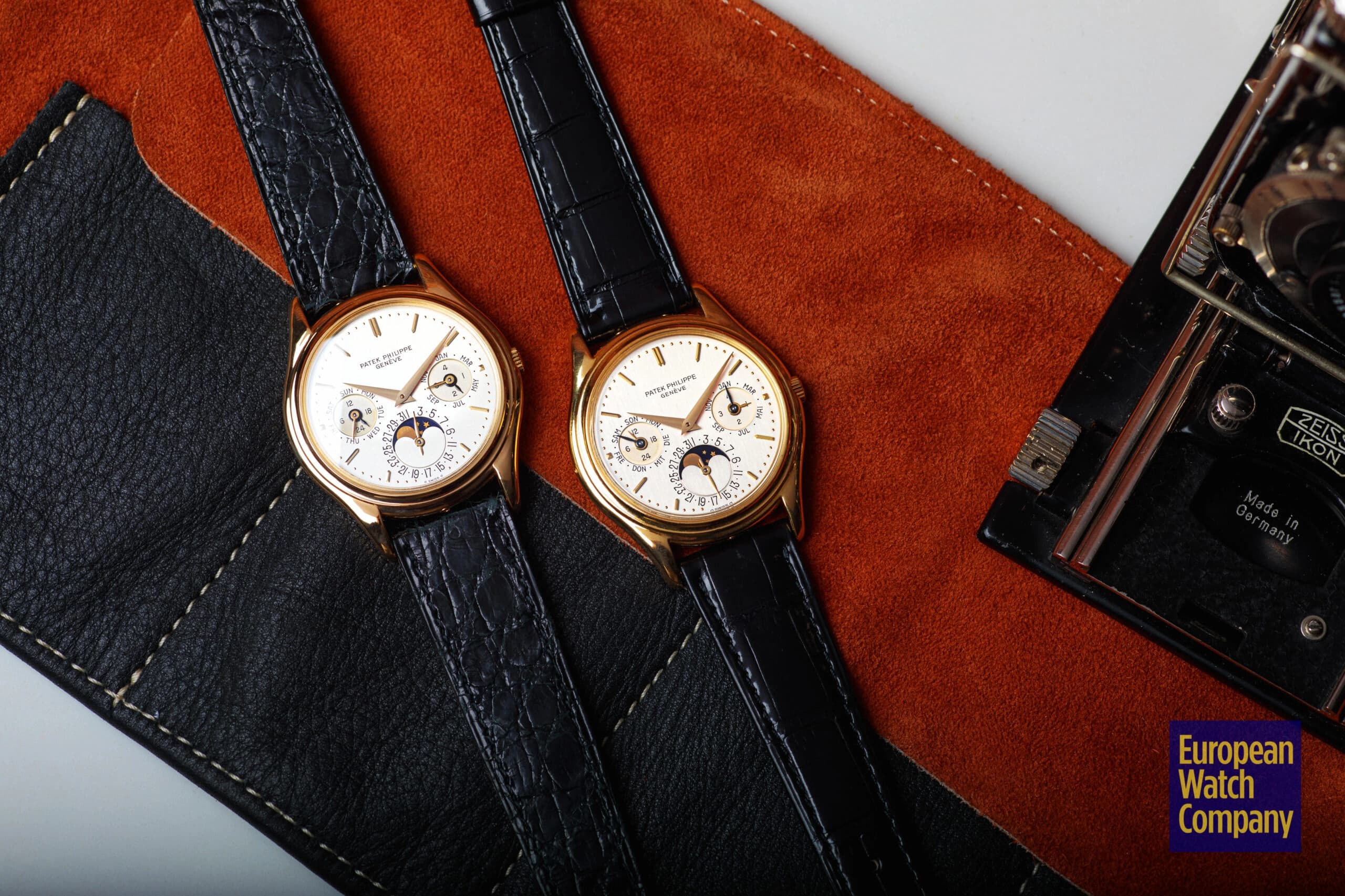
Patek Philippe 3940 First Series
The movement itself. Any pre-owned perpetual calendar purchase from a reputable dealer should include verification that the mechanism advances correctly, day, date, month, moon phase, and that the pushers engage cleanly. A sticky corrector pusher on a 3940 is a service indicator, not a dealbreaker, but it should be reflected in pricing.
Where the price gaps are sharpest: the 3940 in yellow gold, the 5140 in white gold (non-platinum variants), and the 5320G in early secondary supply. These three represent meaningful opportunity for collectors who are not anchored to current-catalogue status and care more about what the watch is than whether it's still listed on Patek's website.
Which One Is Right for You
If you want a first perpetual calendar and the cleanest possible brief, buy a 5140. It's the 240 Q in its most refined form before the 5327 added size. The case wears slim and serious. The dial reads clearly. The pre-owned market offers genuine value on non-platinum variants. It's the clearest answer for a buyer who knows they want Patek's classical perpetual calendar idiom and doesn't need the watch to be currently in production.
If you want something more architecturally distinctive, a perpetual calendar that reads differently from across a table, the 5320G or 5236 are the most interesting current options. The unique profile and aperture-based display distinguish it from everything in the 240 Q line. It's not a bargain, but it's genuinely different, and early secondary supply may offer limited opportunity before the reference matures.
If you're drawn to the retrograde display and find the standard four-sub-dial layout too conventional, the 5496 is the answer. The retrograde date is not a gimmick, it's a legitimate mechanism, beautifully executed, and the 5496 occupies a distinct position in the perpetual calendar line that the 5327 and 5320G don't overlap. Pre-owned availability is more limited than the larger-production references, so patience matters here.
If you care about history and want the watch that started it all, the 3940 is the clear choice. Twenty-two years of production means secondary supply, and yellow gold 3940 examples trade at prices that would have been considered remarkable some years ago. The case is 36mm, which either suits you or doesn't. If it does, the 3940 is not a consolation choice. It's the reference that defined the modern Patek perpetual calendar, and it has never stopped being that. The proportions are perfect, the movement fits beautifully in the case, and the watch has a historical significance unmatched in this guide.
For a collector who is genuinely undecided and doesn't want to overthink it: the 5140 in white gold, fully documented, recently serviced, with original case surfaces. Buy it, wear it, and let the complications earn your attention over time. That's a good start.
Shop New Arrivals
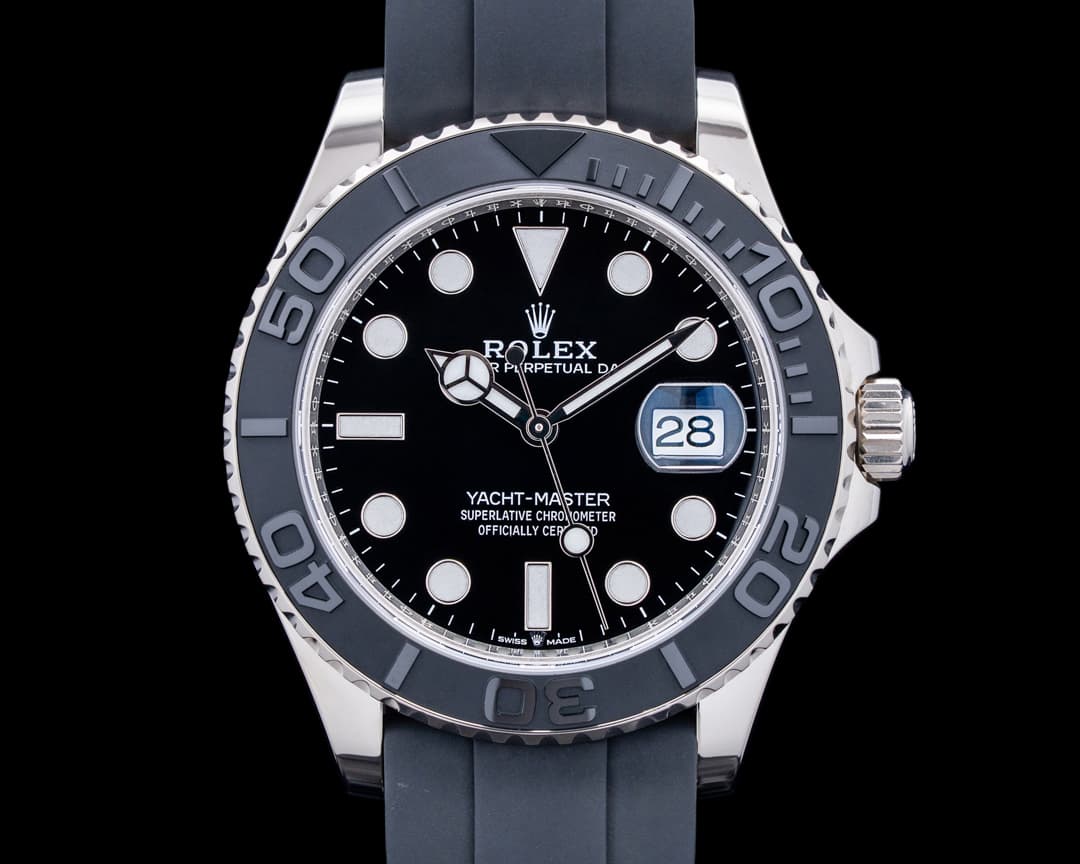
226659 Yacht-Master 18K White Gold Black Dial
$31,900
View Watch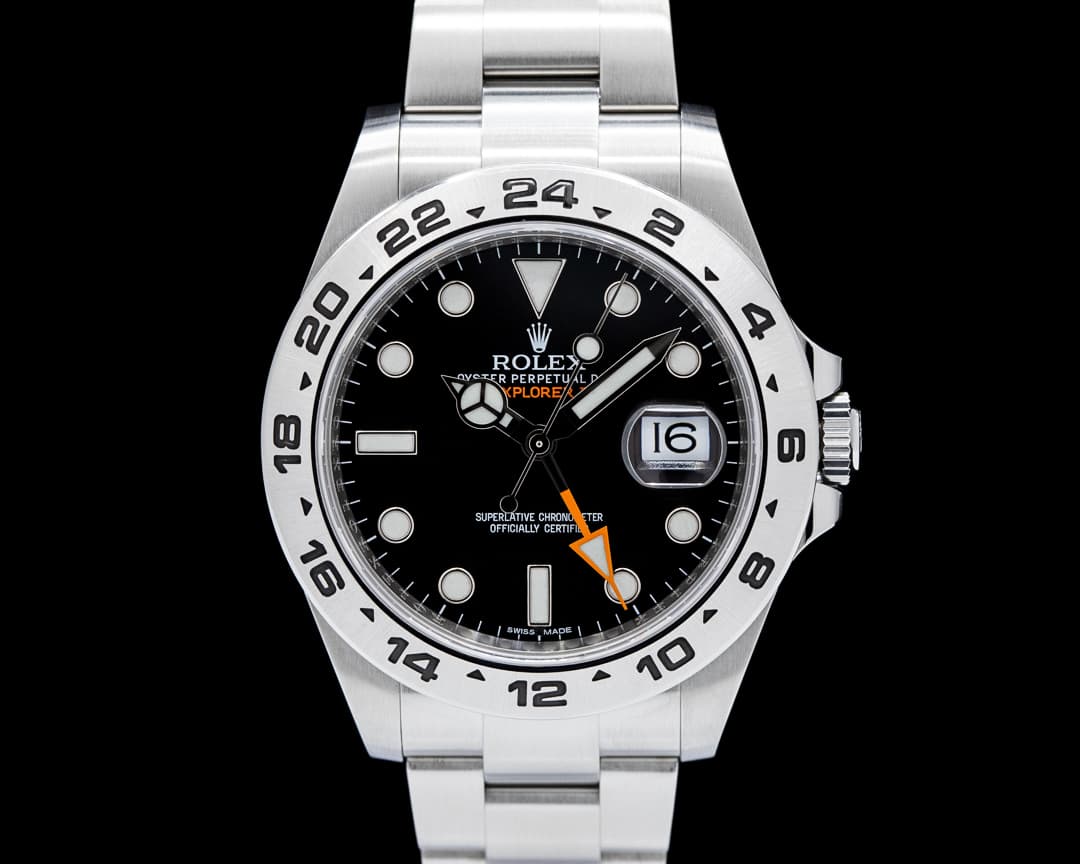
216570 Explorer II SS Black Dial
$10,900
View Watch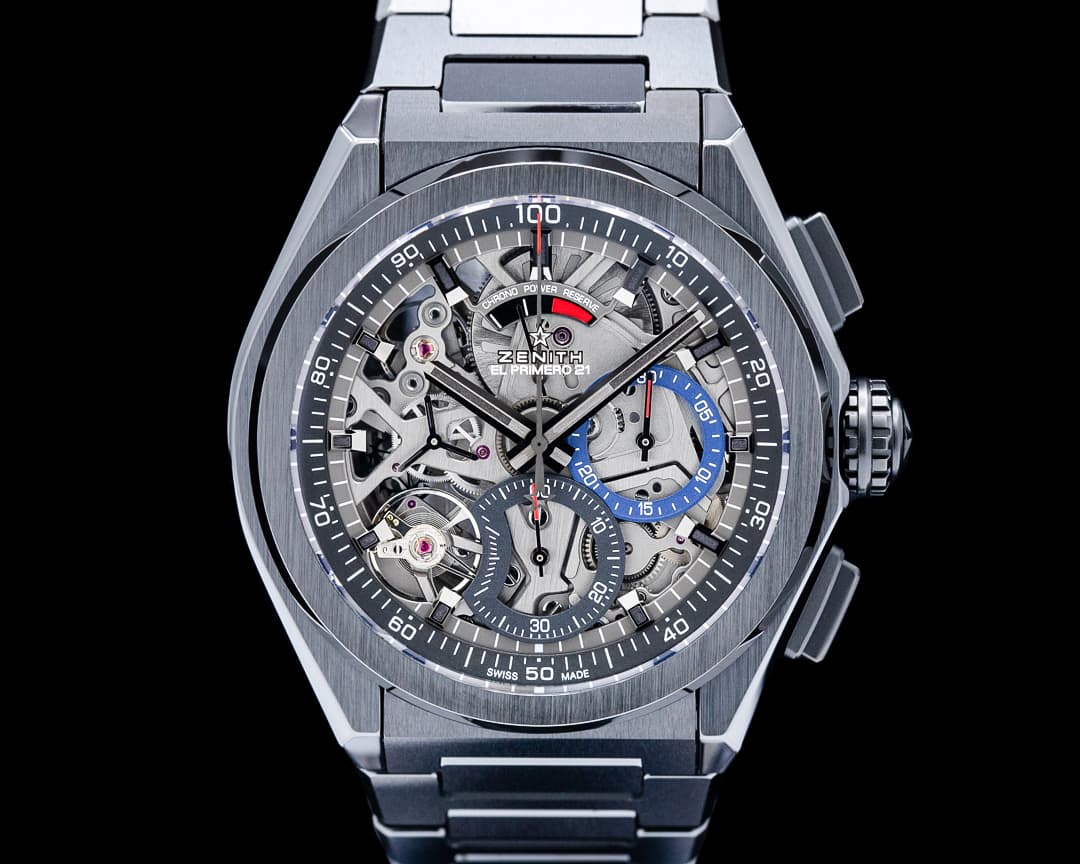
Defy El Primero 21 Chronograph Black Ceramic Skeleton Dial
$9,900
View Watch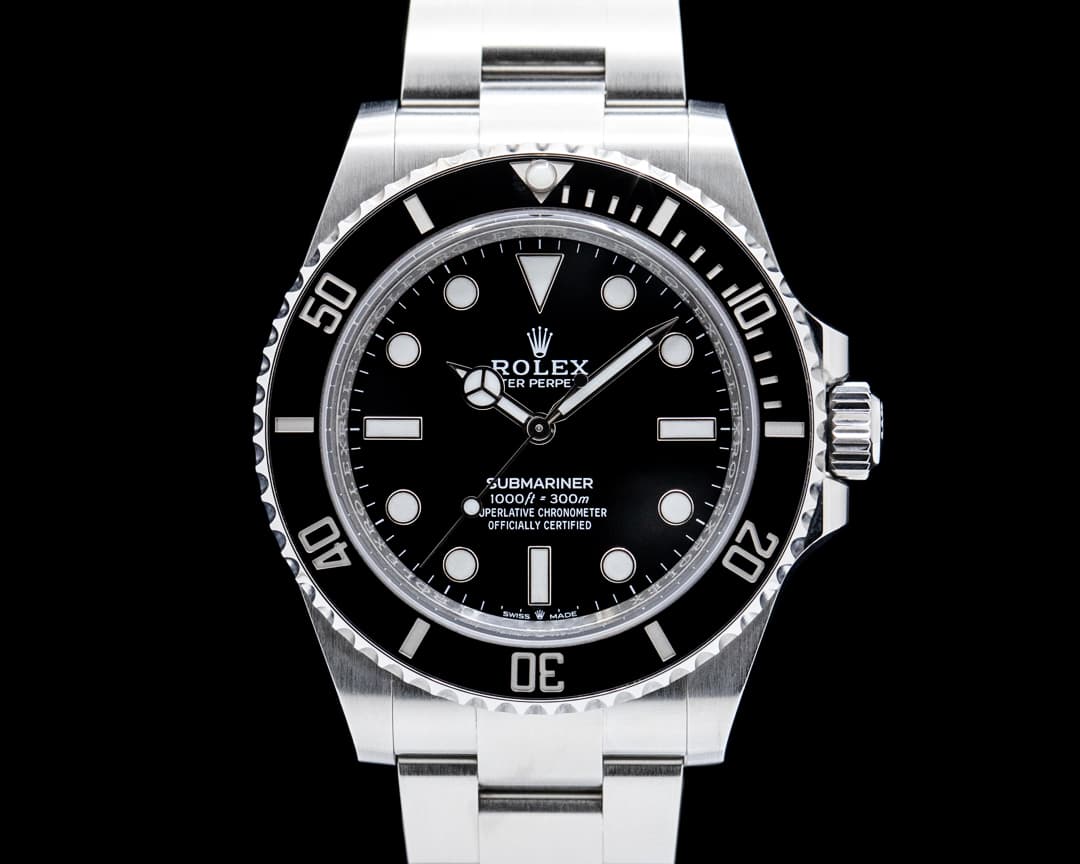
124060 Submariner No Date 41MM SS Black Dial
$13,900
View Watch
Shop New Arrivals
226659 Yacht-Master 18K White Gold Black Dial
$31,900
View Watch216570 Explorer II SS Black Dial
$10,900
View WatchDefy El Primero 21 Chronograph Black Ceramic Skeleton Dial
$9,900
View Watch124060 Submariner No Date 41MM SS Black Dial
$13,900
View Watch
More Content