A Guide to Czapek & Cie: The Brand, the Watches, and the Case for Buying One
Published on 11/8/2026

A Name Before Patek Philippe
On May 1, 1839, Antoni Patek and François Czapek established a partnership in Geneva to manufacture pocket watches. Czapek ran the watchmaking as head watchmaker, and Patek ran the sales and operations. For six years, this was the partnership that helped solidify the early success of Patek. When the partnership dissolved in 1845, Patek went on to co-found what became Patek Philippe with Adrien Philippe. Czapek, for his part, founded Czapek & Cie with a new partner, Juliusz Gruzewski, and continued working as a watchmaker.
What matters to the modern story is not the drama of the split, which appears to have been contractual rather than but the history it sheds on Patek, and in turn, on Czapek. François Czapek played an instrumental role in the Patek we know today. He was a trained watchmaker who co-built one of the most important maisons in the history of the craft. That the firm he founded afterward was never remembered the way Patek Philippe was is partly circumstance and partly the fact that Adrien Philippe's lever escapement gave Patek a competitive edge that helped the brand explode.
Today, however, Czapek is one of the most under-appreciated quiet innovators in the independent space. The modern brand is careful not to oversell this history. It doesn't claim to be the legitimate heir to some interrupted dynasty. Instead, Czapek today builds its own legacy, and a truly compelling one at that, that deserves considerable collector attention in the contemporary market.
The Revival and What It Takes to Restart a Maison
The company that became Czapek & Cie SA was registered in October 2011 under a temporary name and formally renamed in December 2012. The revival was led by Xavier de Roquemaurel and Harry Guhl, with watchmaker Sébastien Follonier as the third founding visionary. De Roquemaurel brought brand and commercial expertise; Follonier brought the movement expertise the brand needed to be taken seriously as a watchmaker rather than simply a heritage-label play.
Funding the launch was the most unconventional part. In November 2015, when the brand presented its first collection, the Quai des Bergues, it ran an equity crowdfunding campaign. Not a Kickstarter-style product presale, but a genuine equity stake: investors acquired shares in the brand itself. The campaign raised CHF 1.1 million in three months. For haute horlogerie, where capital typically flows through either family ownership or group acquisition, this was genuinely unusual, and it created a shareholder base with a direct interest in the brand's success, a truly unconventional approach in the industry.
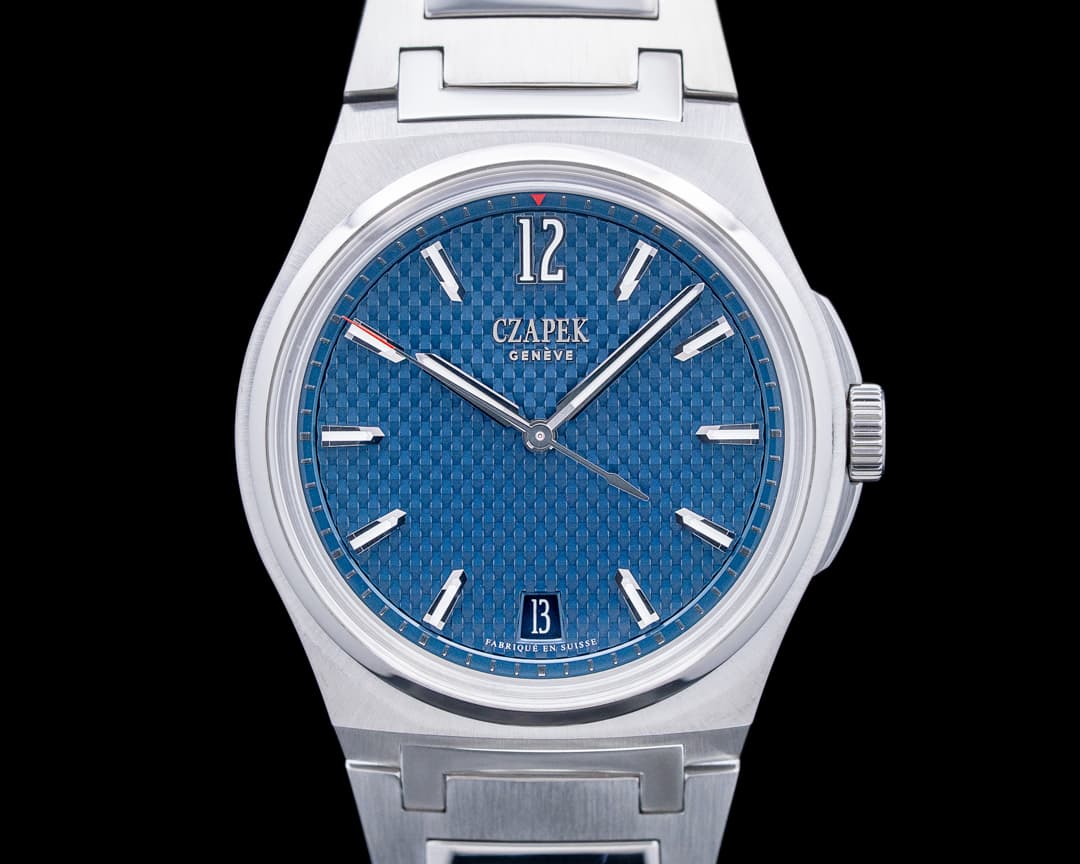
What the founders had to build from scratch was most of what makes a watch brand credible: manufacturing relationships, a movement architecture, a design language, a distribution strategy, and an identity legible enough to attract a buyer who already has options. Most revival projects lean heavily on heritage and outsource the hard parts. Czapek chose a harder path, developing in-house caliber capability over time, opening its own manufacture in La Chaux-de-Fonds in 2022, and building a catalog that now spans multiple collections and complications.
Let's take a look at the headlines:
The Antarctique: The Watch That Defined the Brand
The Antarctique is where Czapek found its voice. Introduced after the Quai des Bergues, it became the collection that gave the brand shape in the market: sportier than a dress watch, more refined than a sports watch, with a case architecture that is immediately legible and genuinely hard to place.
The case is round, cushion-inflected at the lugs, and sits lower on the wrist than its typical 42.5mm diameter suggests (it's also made in smaller dimensions). The lugs curve down toward the wrist rather than projecting outward, which is what keeps the watch from reading large in wear. The finishing mixes brushed and polished surfaces without being fussy about it. In stainless steel, the proportions are considered, not accidental, and the case holds up under close inspection.
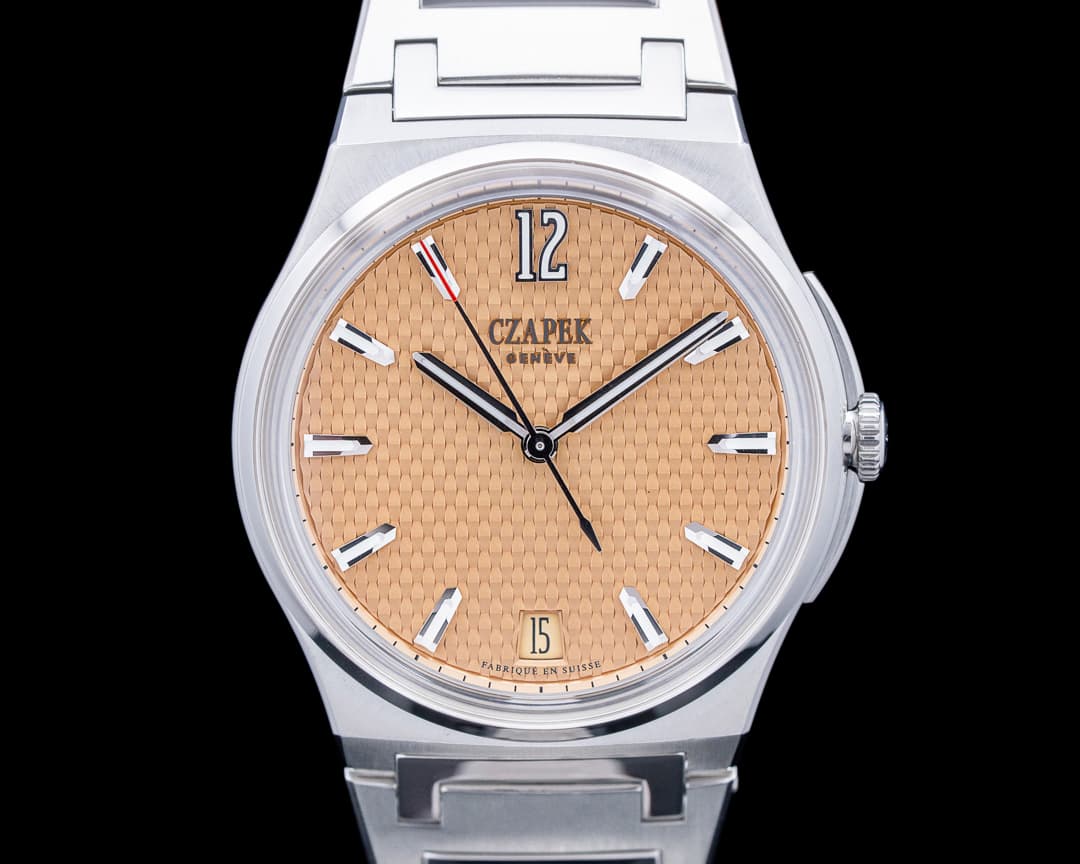
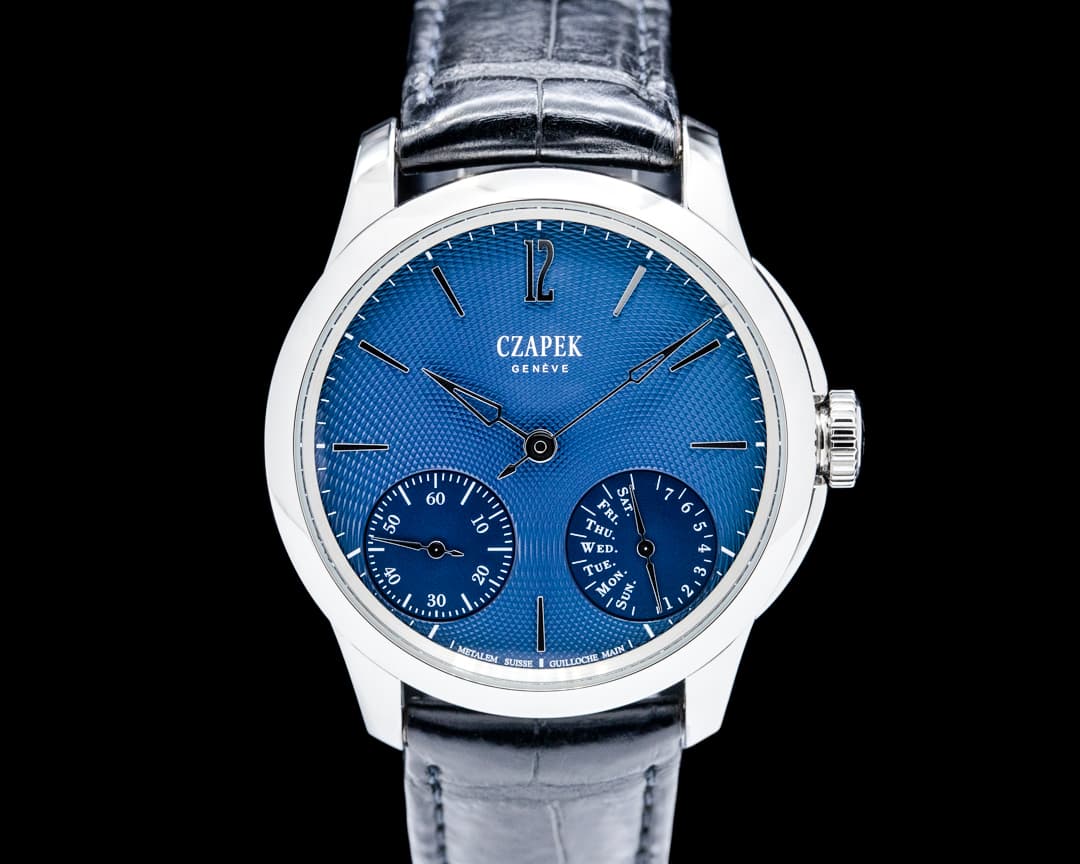
The dial is the real argument. Czapek uses beautiful textured finishes across much of the Antarctique line, which means the colors read differently at different angles and in different light. A blue dial catches the spectrum in a way that photography doesn't capture well; in person, it shifts between a dense midnight and something almost luminous depending on the angle. The applied hour markers are slim and positioned with enough breathing room that the dial never crowds itself. The date display, trapezoidal at 6, integrates without dominating.
The SXH5 caliber is Czapek's first movement conceived entirely in-house. Most independent brands at this price tier run modified Sellita or ETA bases, or use well-regarded movement suppliers like Vaucher or Chronode without full ownership of the architecture. The SXH5 is different: Czapek designed it from a blank page, which means the rotor geometry, the finishing specifications, and the decoration scheme are theirs. Through the exhibition caseback, the movement holds its own against what you'd see at two or three times the retail price.
Antarctique S (stainless steel): The entry point into the collection, is arguably the best way to access Czapek for the first time. The standard models come with a range of dial options, deep ocean blues, greens, and warmer tones have all appeared, and the bracelet option integrates cleanly with the case rather than feeling like an afterthought. This is the version that competes most directly with the Aquanaut, the Overseas, and the Laureato in terms of market positioning, and it competes well. The difference is that Czapek doesn't have that level of brand recognition yet, which cuts both ways: the watch is less of a status signal and more of a considered choice.
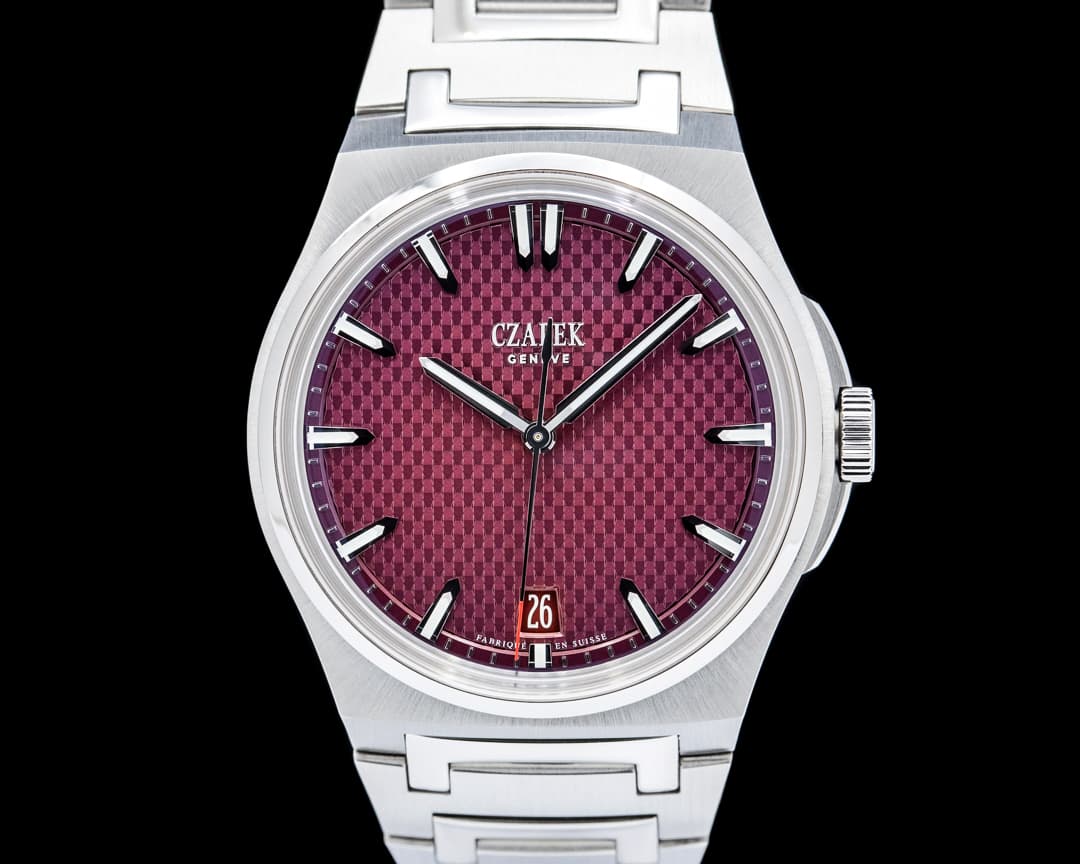
Antarctique Titanium: The titanium variants, including the Dark Sector edition, retail at above the S. Titanium changes the wear experience considerably, a 42.5mm watch in titanium sits almost weightlessly on the wrist, and the matte finishing on some of these references gives the collection a more technical edge. The color scheme is far more muted, and a host of more exciting dial iterations including skeletonized, steal the center of the show. The Dark Sector in particular has a coherence between material and aesthetic that the steel models don't attempt.
Antarctique Tourbillon: Sitting between 80,000 and 100,000 dollars in stainless steel, this is a different conversation, one where the complication is the argument. For a brand still building its name, offering a tourbillon at this price in steel rather than precious metal only is a deliberate choice. Often it's complications like the tourbillon that really demonstrate the quality and mechanical mastery of a brand, allowing the rest of the collections to maintain their respect across the board. The tourbillon establishes the reputation of the brand and helps to round out the picture of Czapek as a full brand.
The Antarctique Rattrapante: What a Complication Looks Like Here
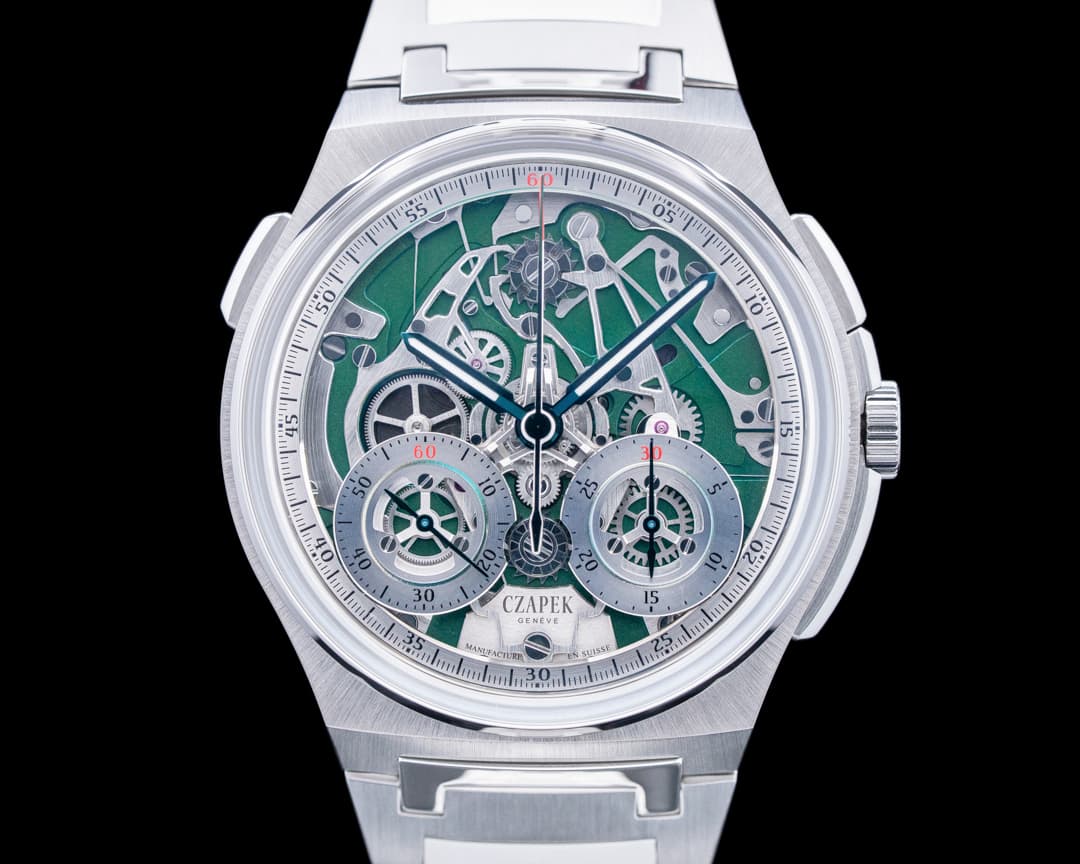
The Antarctique Rattrapante is one of Czapek's most technically serious statements, and the one that most clearly signals what the brand is building toward. A split-seconds chronograph, rattrapante, is among the harder complications to execute well: two superimposed chronograph hands that can be captured and released independently, with the mechanism to stop, catch, and restart them without disrupting the base timekeeping. It's one of the most notoriously difficult complications to get right, and Czapek has hit it out of the park on this one.
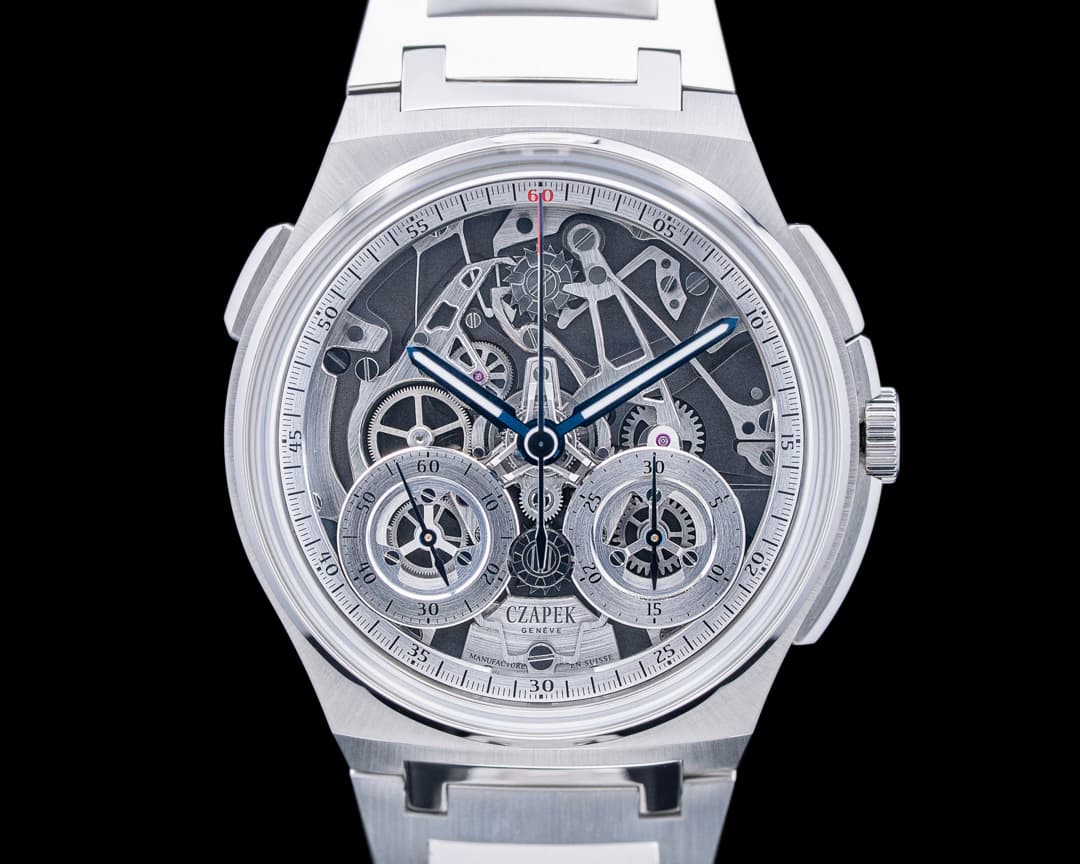
Czapek's version runs the SXH6, developed and manufactured in collaboration with Chronode. At CHF 58,000 (excluding taxes), the complication is actually a great value. Chronode has a serious reputation in this space, the caliber architecture is solid, and Czapek's finishing on the Rattrapante is consistent with what the brand does elsewhere. The bracelet and case maintain the same fundamental architecture that defines the Antarctique collection. Adding a rattrapante doesn't require adding visual noise, and this watch demonstrates that.
For a brand thirteen years into its revival, offering a split-seconds chronograph with a credible movement architecture, finished to this standard, is not a modest achievement. It belongs in a conversation with complications from established independents at significantly higher prices.
Faubourg de Cracovie and the Rest of the Catalog
If the Antarctique is Czapek's sports-inflected proposition, the Faubourg de Cracovie is its dress-sport fusion. The case is more classically round, the proportions slightly smaller and more formal, and the overall feeling closer to what you'd expect from a Geneva atelier reaching back toward the nineteenth century rather than out toward the sports market. The name refers to the street in Kraków associated with Polish watchmaking history, a nod to Czapek's Polish origins.

The Faubourg de Cracovie Crossroads chronograph runs the SXH3 caliber, developed in 2018 on a Vaucher base and adapted to Czapek's specifications. It retails at CHF 32,000-36,000. The movement is not in-house in the same sense as the SXH5, the Vaucher architecture is well-established, and Czapek's contribution here is more in calibration, finishing, and integration than in fundamental design. The watch itself is formally elegant in a way the Antarctique isn't aiming for, with a chronograph layout that is supremely legible and quite beautiful. The dial features gorgeous guilloche adding substantial texture to the design architecture and dressing up the execution.
The Quai des Bergues was the brand's founding collection and remains in the catalog, positioned as the most classically expressed of the lines. The Place Vendôme rounds out the dress end of the range. Neither has the market traction of the Antarctique, and neither is trying to. They exist for the buyer who wants Czapek's watchmaking in a more conventional package.
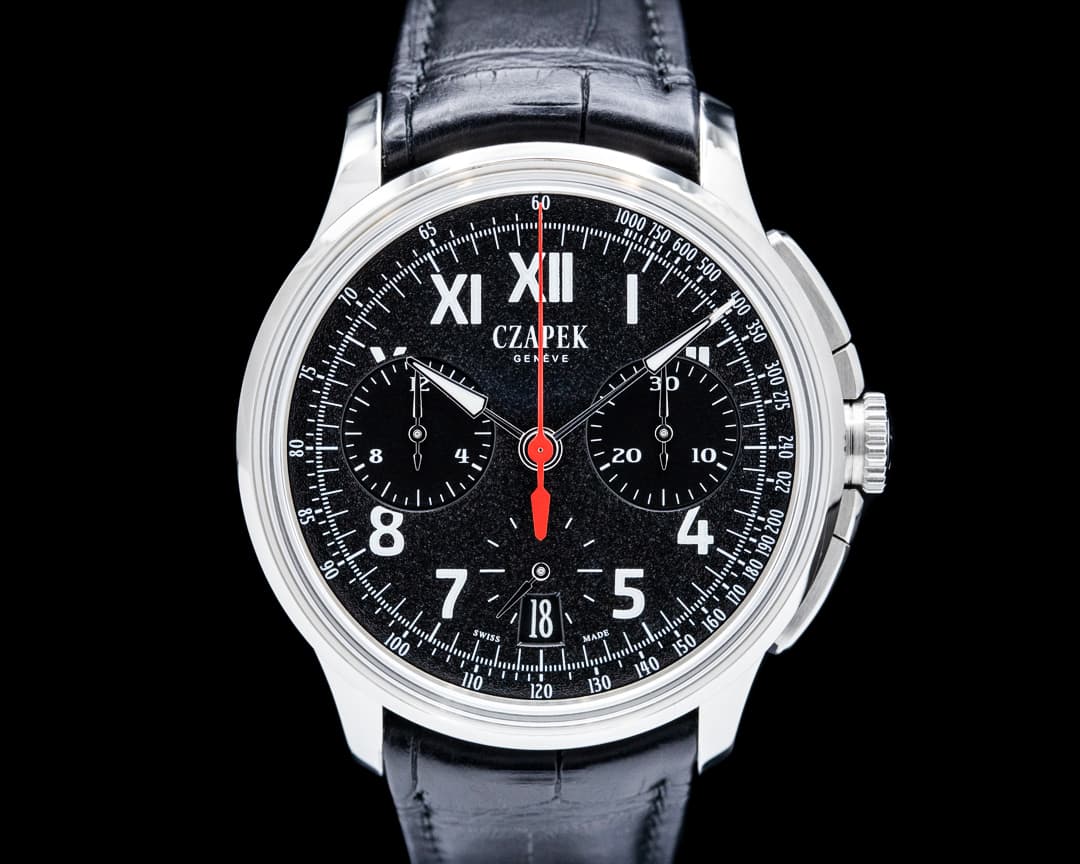
For most buyers entering the brand, the question is Antarctique or Faubourg de Cracovie, and the answer comes down to how you wear watches. The Antarctique is the one you reach for in more situations. The Faubourg de Cracovie tells its own distinct story.
Why Czapek Now
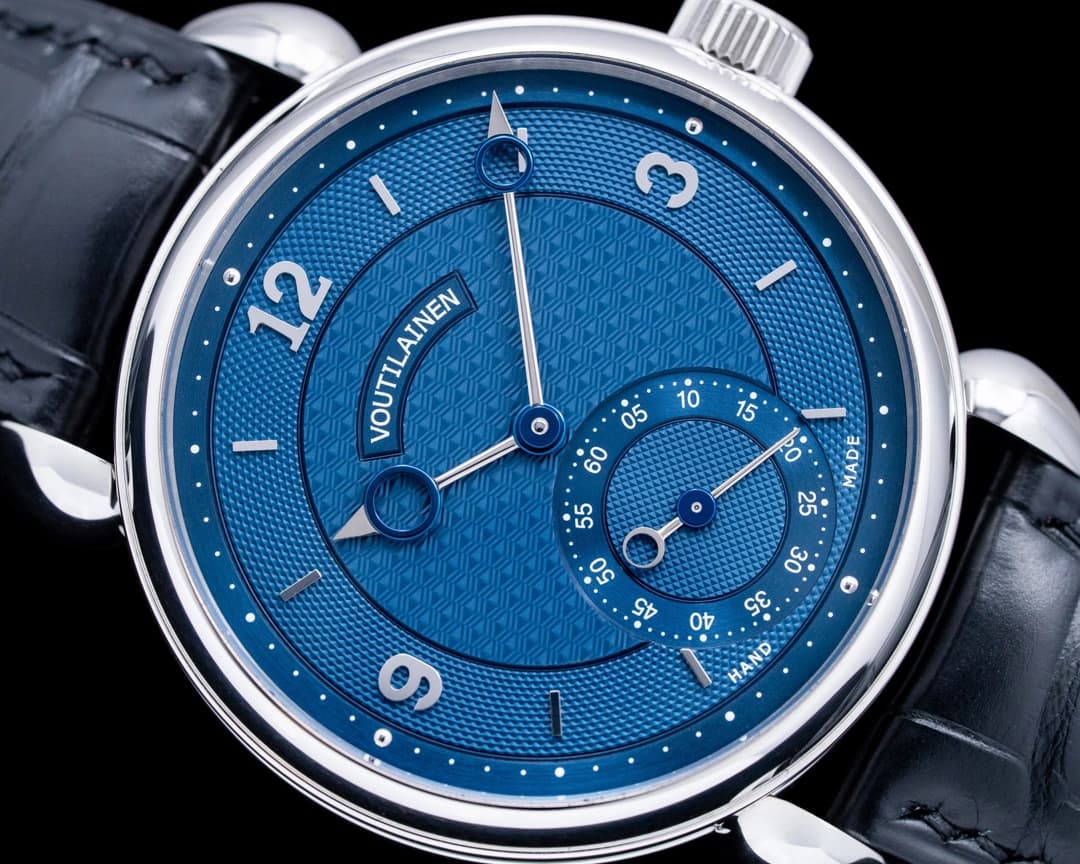
The independent watch market in 2026 is more crowded than it was when Czapek launched, and that crowding has raised the bar for what earns attention. Voutilainen, F.P. Journe, and Laurent Ferrier are well-established; a buyer walking into that tier has done the reading and formed their own opinions. Czapek operates one step below that name recognition, which means the watches have to carry more weight than the brand alone.
They do. The Antarctique at CHF 24,000 in steel is one of the stronger value propositions in its price range for a buyer who cares about movement quality, dial execution, and case design. As alternatives to mainstream Rolexes and other more mass produced pieces, these are truly an excellent value. And the overall aesthetic is considered in a way that brands spending far more on marketing rarely manage.
The honest limitations: Czapek's brand recognition is still limited relative to the names above it, which matters if you plan to sell. Secondary-market data on Czapek is thin, the brand doesn't have the auction track record of Journe or the collector demand of Voutilainen, and any statement about value retention should carry that caveat clearly. Distribution is selective, which some buyers will experience as exclusivity and others as inconvenience. And the catalog, while maturing, is still a young brand's catalog: coherent, but not yet as diverse as an older brand.
Regardless, in the world of maturing independents, Czapek exists as one of the up and coming brands to watch. High quality and providing something truly unqiue, this is some of the best out there in the independent space. Give one of these a try over a more common brand, and you may find yourself one of your new favorite brands.
Shop New Arrivals
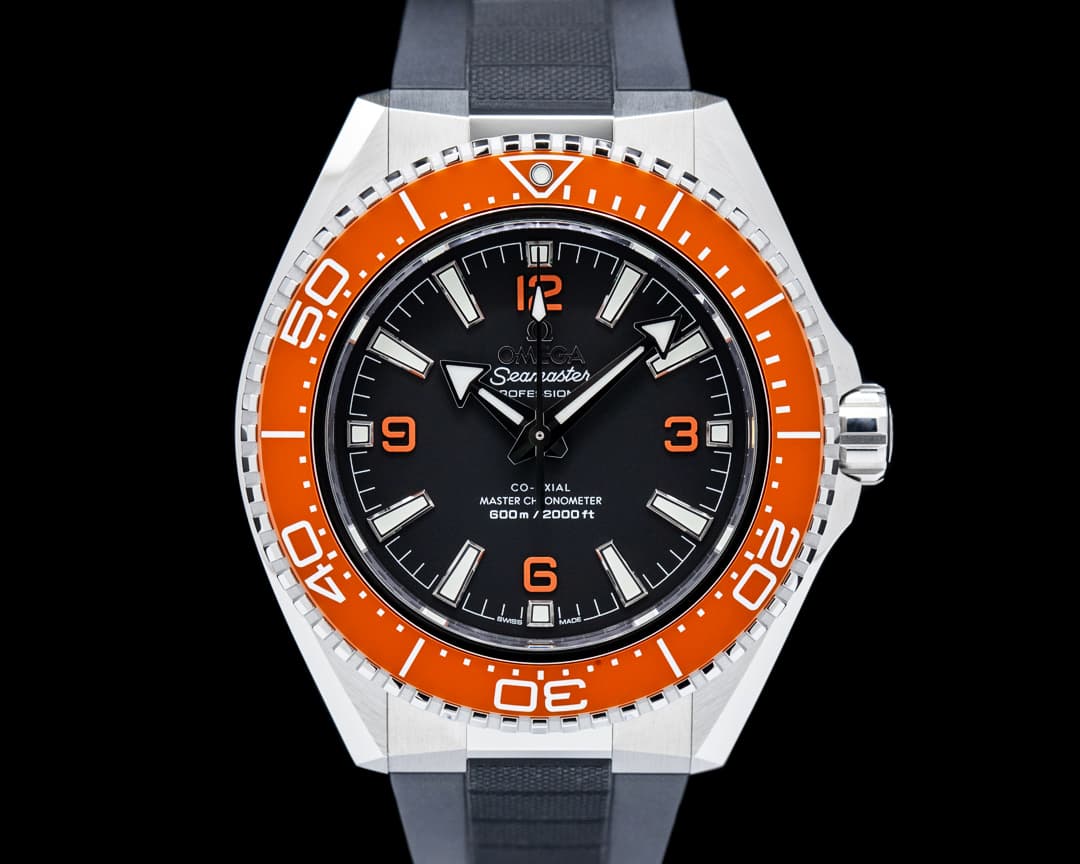
Seamaster Planet Ocean 600M SS Black Dial
$5,900
View Watch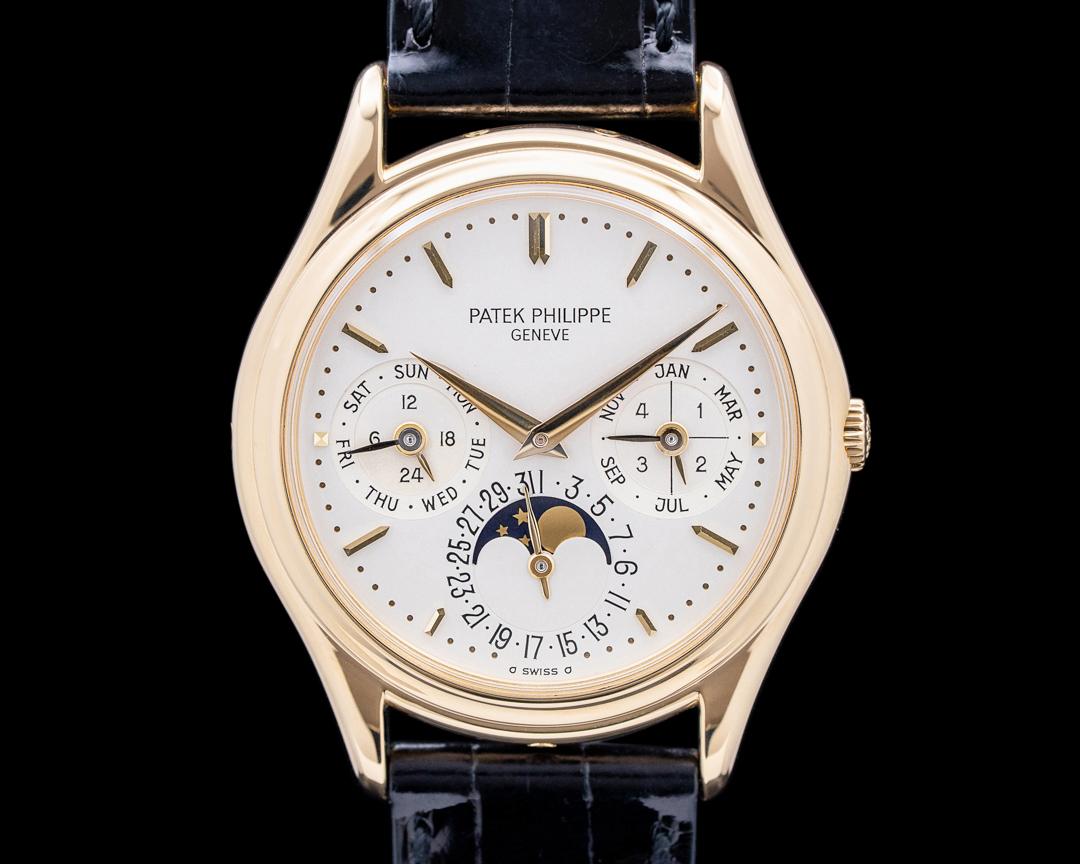
3940R Perpetual Calendar 18K Rose Gold Silver Dial
$99,500
View Watch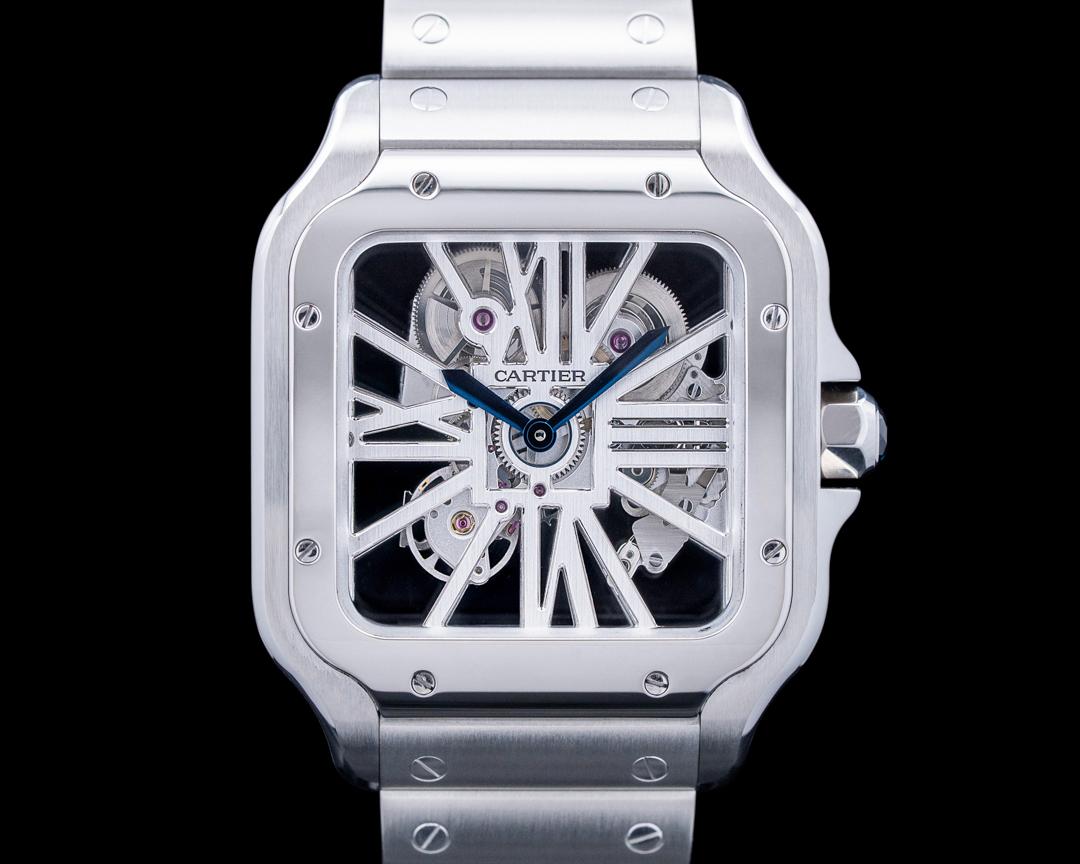
WHSA0015 Santos de Cartier Skeleton SS Skeleton Dial
$21,900
View Watch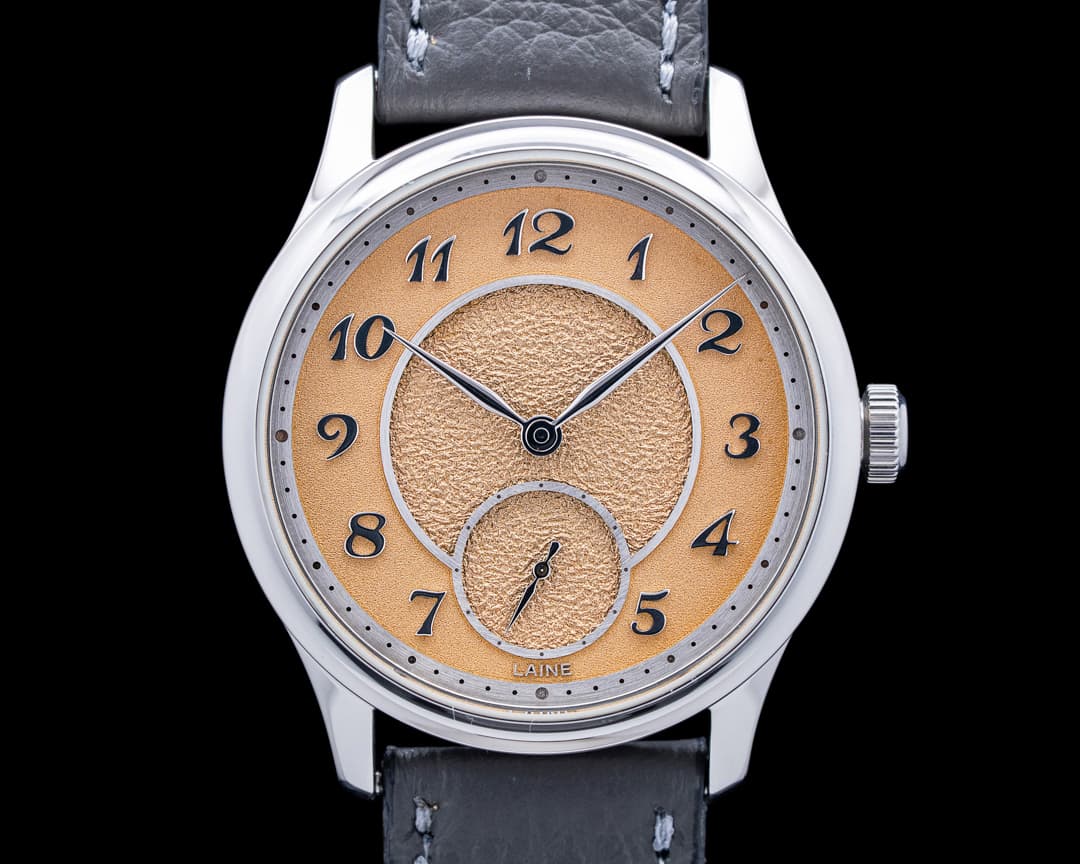
Laine V38 SS Salmon Guilloche Dial
$15,390
View Watch
Shop New Arrivals
Seamaster Planet Ocean 600M SS Black Dial
$5,900
View Watch3940R Perpetual Calendar 18K Rose Gold Silver Dial
$99,500
View WatchWHSA0015 Santos de Cartier Skeleton SS Skeleton Dial
$21,900
View WatchLaine V38 SS Salmon Guilloche Dial
$15,390
View Watch
More Content