Few watch collections have garnered the reputation and legacy of the Nautilus. Fifty years of continuous production, a design that has remained unchanged in its distinctive silhouette and proportions, and a secondary market that — even after a dramatic correction from its 2021 peak — hovers at multiples of retail. The Nautilus's status is not manufactured. It is the result of a design so unique it has inspired dozens of other pieces across the global watch market.
The Nautilus family spans three-hand automatics, moonphase complications, annual and perpetual calendars, varied case sizes, and materials from steel to white and rose gold. It spans five decades of production history and a vintage market with its own personality.
Today we are delving into the Nautilus in a reference-by-reference review of what each piece provides, how it wears, and what a serious buyer should know before purchase. Let's get into it.
Patek Philippe Ref. 5811/1G-001
History
In 1976, Patek Philippe introduced the Nautilus, designed by brilliant watch designer Gerald Genta. The design came from Genta's porthole sketch: a distinctive octagonal case with rounded edges, an integrated bracelet, and a horizontally engraved dial that caught light differently depending on angle. The launch price, reportedly around $3,150, was high enough that retailers initially doubted the market would ever exist for the piece.
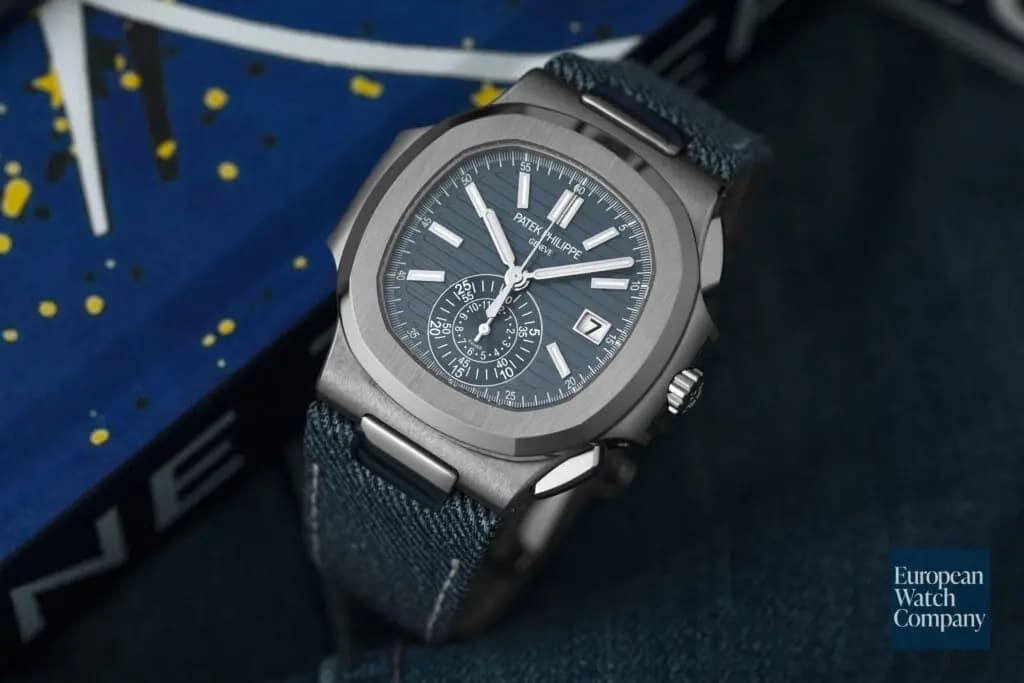
Patek Philippe Ref. 5980
Five decades of evolution later, the Nautilus has blossomed into a collection of references. The brand extended the Nautilus from a single steel sports watch into a family spanning three-hand automatics, moonphase complications, annual and perpetual calendars, and a range of case materials from steel to white and rose gold. The 3700 led to the 3710 and the midsize 3800. The modern 5711 arrived in 2006, updating the case to 40mm, and became the reference point by which every subsequent Nautilus — and arguably every competing luxury sports watch — has been judged.
Design
The Nautilus design is established by its three defining attributes: an octagonal bezel with its distinctive horizontal ear extensions, an integrated bracelet with its unique rounded link profile, and a horizontally striped dial made to reflect the aesthetics of the teak decks of fine yachts. Together they produce a watch that is sporty yet wearable with a slender case profile and an emphasis placed on a comfortable wearing experience.
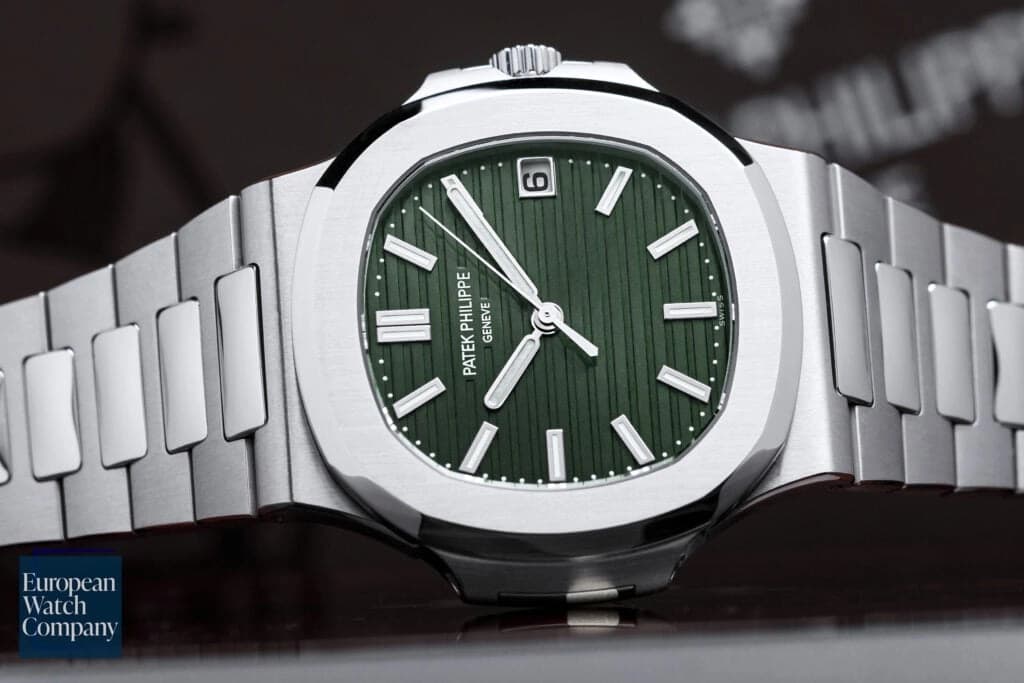
Patek Philippe 5711
The case construction combines brushed and polished surfaces that Patek has refined across iterations — contrasting finishes help to underscore Patek's command of the art of fine finishing: the bezel edges carry a mirror polish while the flanks and the bracelet links are brushed to help the watch read differently in different lighting environments.
Genta's porthole design was a redefinition of the same underlying thesis that led to the Royal Oak in 1972. The lines flow but maintain their geometric identity, playing into a broader theme of what a sports watch represents: a utilitarian tool that nonetheless owns its luxury status and wears its Patek identity proudly.
The References
5711/1A-010: The Benchmark
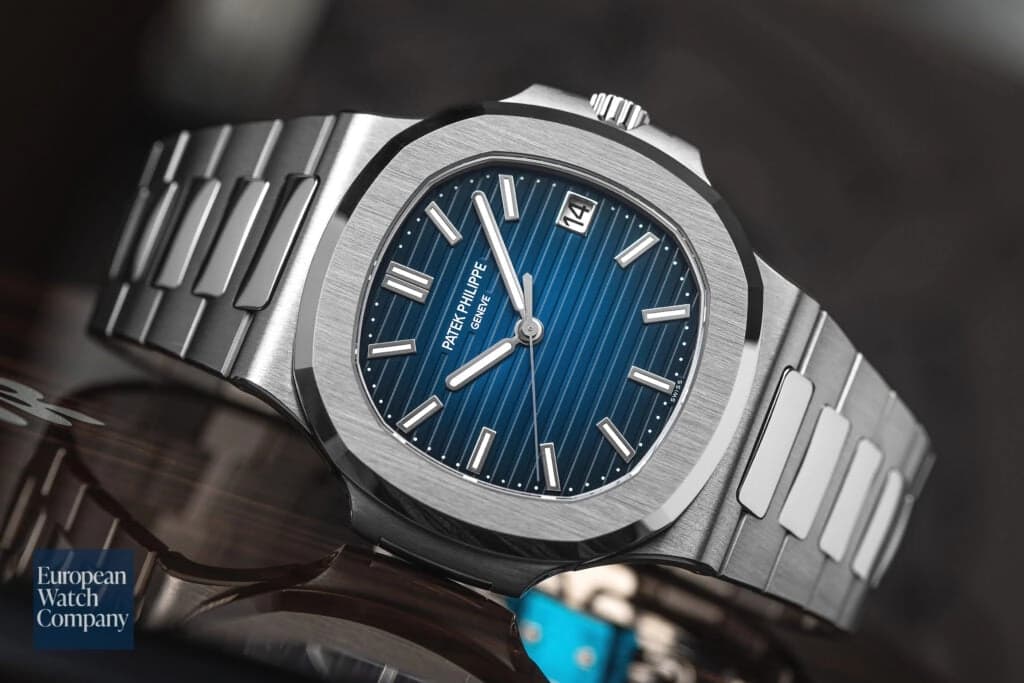
The 5711 is the Nautilus design language distilled: a 40mm case, a three-hand display with date, and caliber 26-330 S C, a thin automatic with a 45-hour power reserve. The blue-gradient sunburst dial reads cleanly and simply with applied indices that catch the light beautifully. At 8.3mm thick, the watch disappears under a shirt cuff while remaining substantial enough to read as a sports watch on a larger wrist. Sized at 40mm, it sits comfortably on most wrists without the heft that pushes some comparable sports watches into a louder, flashy presence.
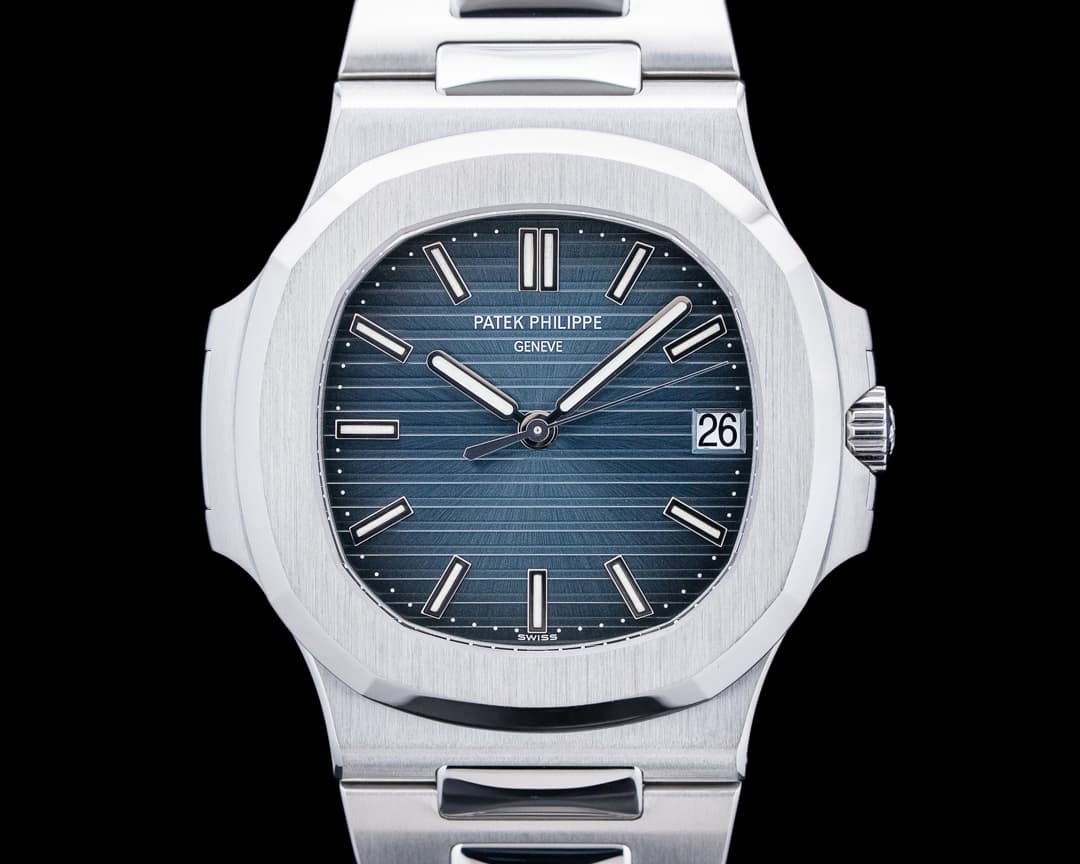
Steel 5711/1A-010 examples now trade at a meaningful premium over what Patek's retail pricing was — approximately $34,890 before discontinuation — though pricing varies by condition, production year, and kit. The 5711's liquidity remains unmatched in the Nautilus family. It is the most recognized reference, the most traded, and the most straightforwardly sellable to preowned dealers.
It is also worth being clear about what you are buying: a discontinued three-hander at a significant premium over what it retailed for, in a watch that does not complicate the dial in any way. For collectors seeking the most modern extension of the classic Nautilus design language, this piece is the benchmark against which all else is measured. Collectors should expect to spend $135,000 - $145,000 for a 5711/1A in good shape with its factory materials.
The 3712 and 5712: The Case for the Complication
The 5712 adds a moonphase display, power reserve indicator, and subsidiary seconds display to the 5711 template, running on caliber 240 PS IRM C LU. The dial is busier, but the layout manages the additional information without feeling cluttered. Additionally, to many, the added complications add a whimsical personality to what would otherwise be a relatively austere watch. The moonphase sits between six and eight o'clock with date outbound, the power reserve indicator runs retrograde on the left side of the dial, and the sub-seconds occupies the right bottom below 3 o'clock.
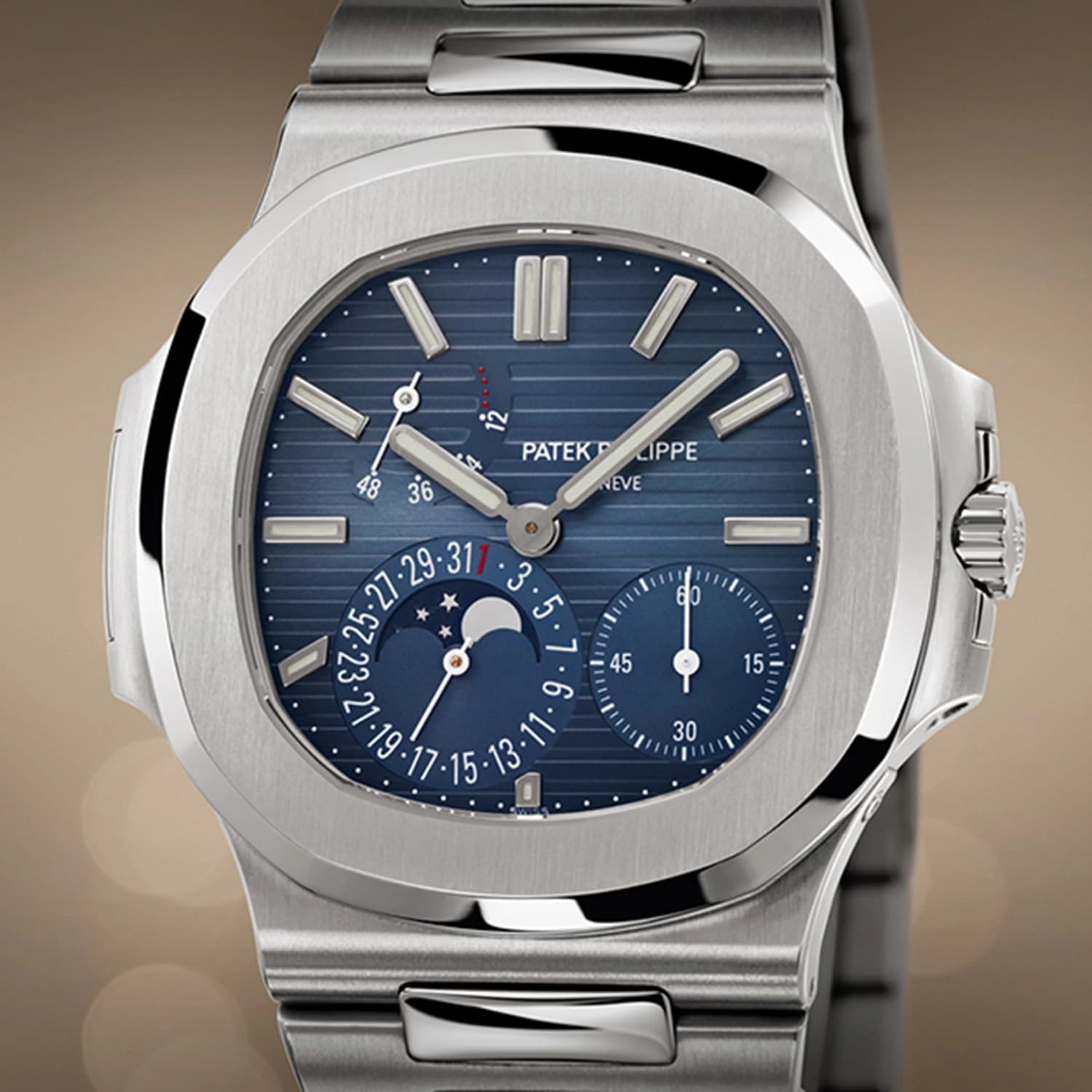
Patek Philippe 5712
The 5712 shares the 5711's 40mm case diameter; the added movement height is modest, and the watch wears close to identically on the wrist. For buyers who found the 5711 comfortable from a size standpoint, the wearing experience here is familiar.
The 5712 is available in steel (5712/1A-001), white gold (5712G-001), and rose gold (5712R-001). Current secondary market pricing varies enough by condition and production year that buyers should verify against live dealer data before forming a view, but the directional argument is clear: the 5712 in steel has historically traded below or around the 5711/1A-010 despite offering considerably more mechanical content. That pricing play is a major consideration in favor of the 5712 over other references in the collection.
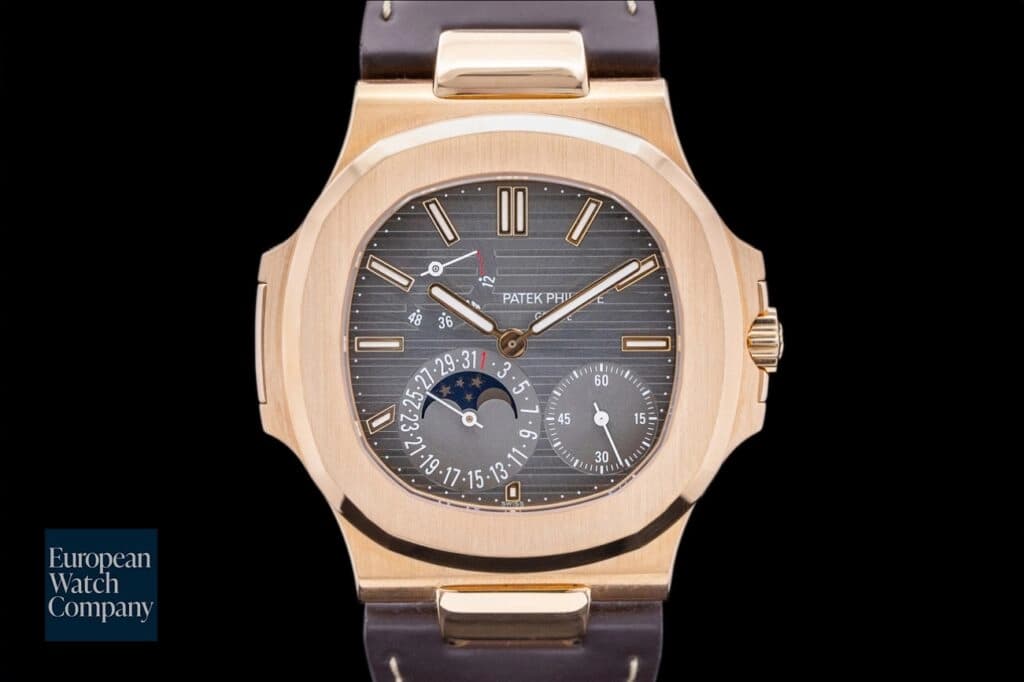
Patek Philippe 5712R-001
For a buyer who wears the watch rather than trades it, the 5712 makes a strong case over its simpler alternatives. The movement within the 5712 is on another level of sophistication, and it's really with the 5712 that collectors get to see Patek's command of movement finishing. None of this means the 5712 is easy to find at retail — Patek's allocation practices apply across the family — but on the secondary market it represents real value relative to alternatives within the collection. Recently, stainless steel 5712s have traded around $135,000.
Prior to the 5712, for less than one year, Patek sold the coveted reference 3712. Distinguished from the 5712 by only fine differentiating details, the 3712 is highly collectable within the complicated Nautilus hierarchy. A number of little tweaks were made to the dial when Patek transitioned from the 3712 to the 5712, including alterations to the moonphase, pointer date, index layouts, and more. To the untrained eye, there is almost no difference between the references, but to the discerning collector, the 3712 stands on its own as a connoisseurs pick for under the radar charm.
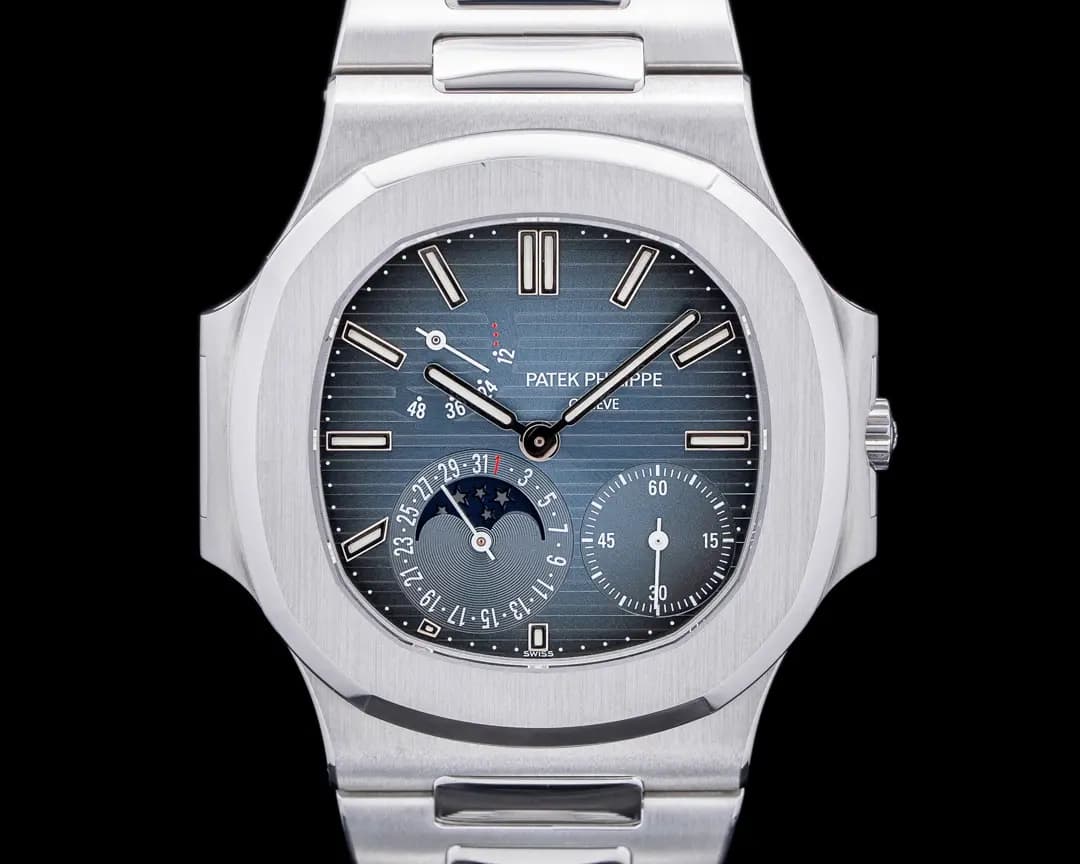
Patek Philippe Reference 3712
The 5726 Annual Calendar
The annual calendar 5726, built on caliber 26-330 S QA LU 24H, displays the date, day, month, and a 24-hour indicator, requiring a single manual correction once per year at the end of February. It is a genuinely practical complication for daily wear, and the aperture displays of the 5726 streamline the dial without the visual weight that annual calendars sometimes carry with traditional subsidiary registers.
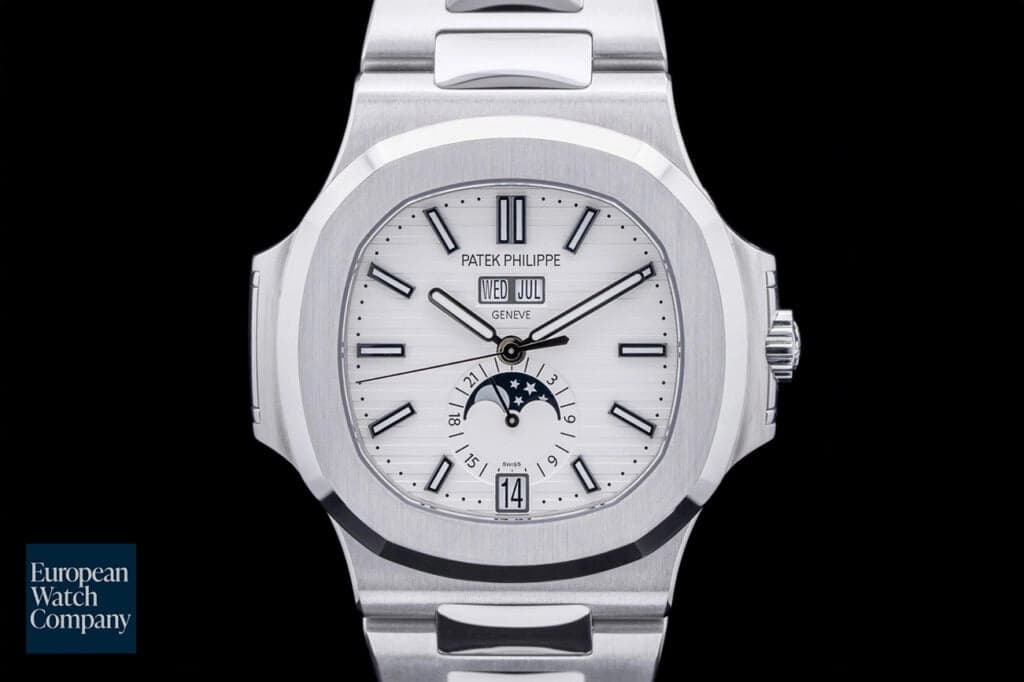
Patek Philippe 5726/1A-010
Once more, the 5726 shares the 40mm case diameter and sits fractionally thicker than the 5711 under the cuff — it wears with more presence than the alternatives, but for the collector seeking complication, this is to be expected, and also adds to the personality. For buyers on the smaller side of the wrist spectrum who find the 5711 already at the edge of comfortable, the 5726 may cause challenges.
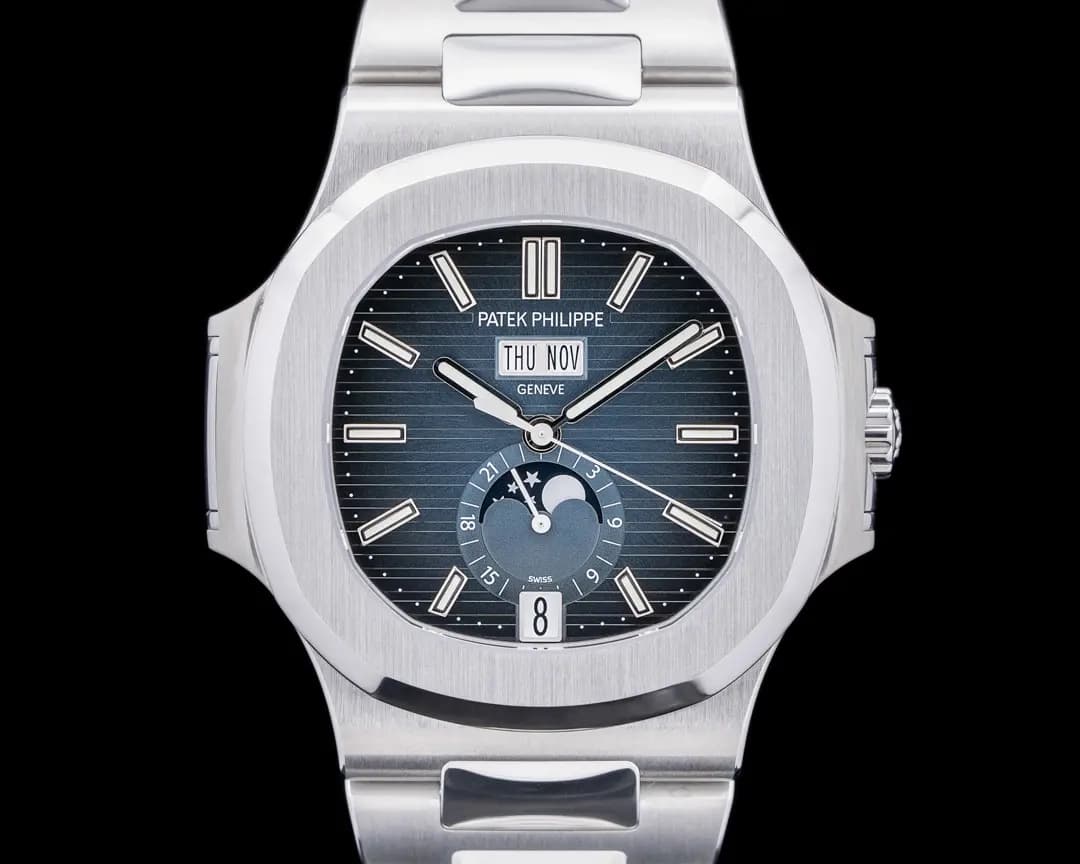
Patek Philippe 5726/1A-014
The 5726 is one of the stronger value propositions in the current Nautilus family. Relative to the 5711 and 5712, far fewer 5726's are available on the market, yet the trading values in relative terms are extremely fair. These models typically command $120,000s depending on the condition and kit. Additionally, for those looking for a more complicated Nautilus but who don't enjoy the look of the 5712 dial, the 5726 is far more visually balanced. Extremely symmetrical and simple, the dial reads coherently and simply in a unique way.
5740: Grand Complications Territory
The 5740 steps the complication up another notch, placing a perpetual calendar neatly into the Nautilus case — a meaningful engineering achievement, since perpetual calendar movements are considerably more complex than annual calendar mechanisms. Patek's caliber 240 Q is a thin automatic perpetual caliber that manages the constraint well, made famous in the 3940 perpetual calendar in the mid 1980s.
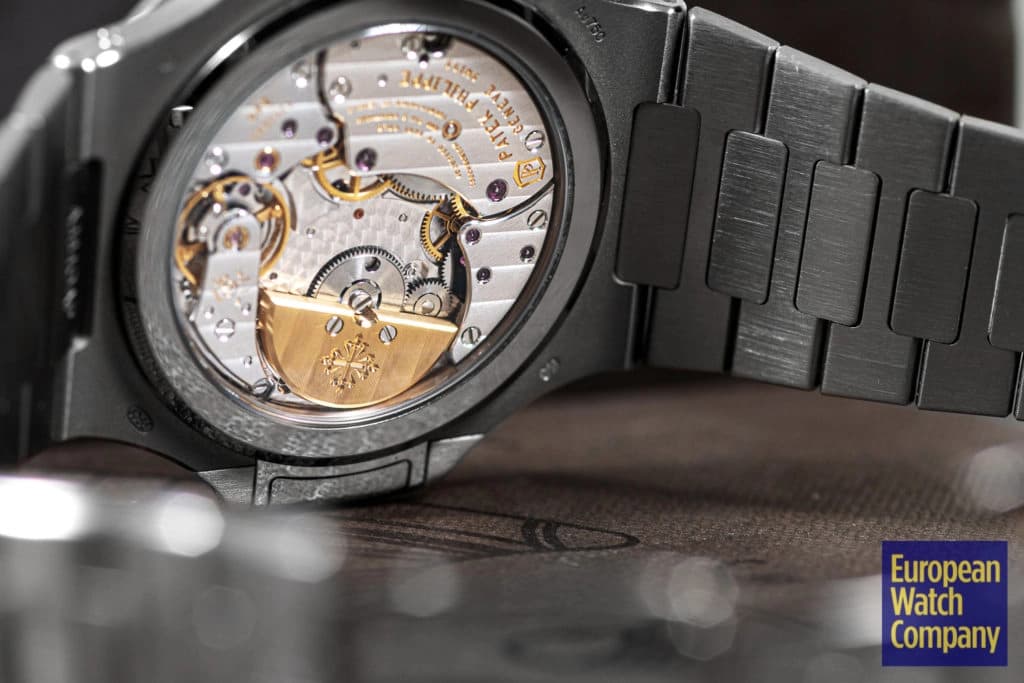
Patek Philippe 5740 Caliber 240Q
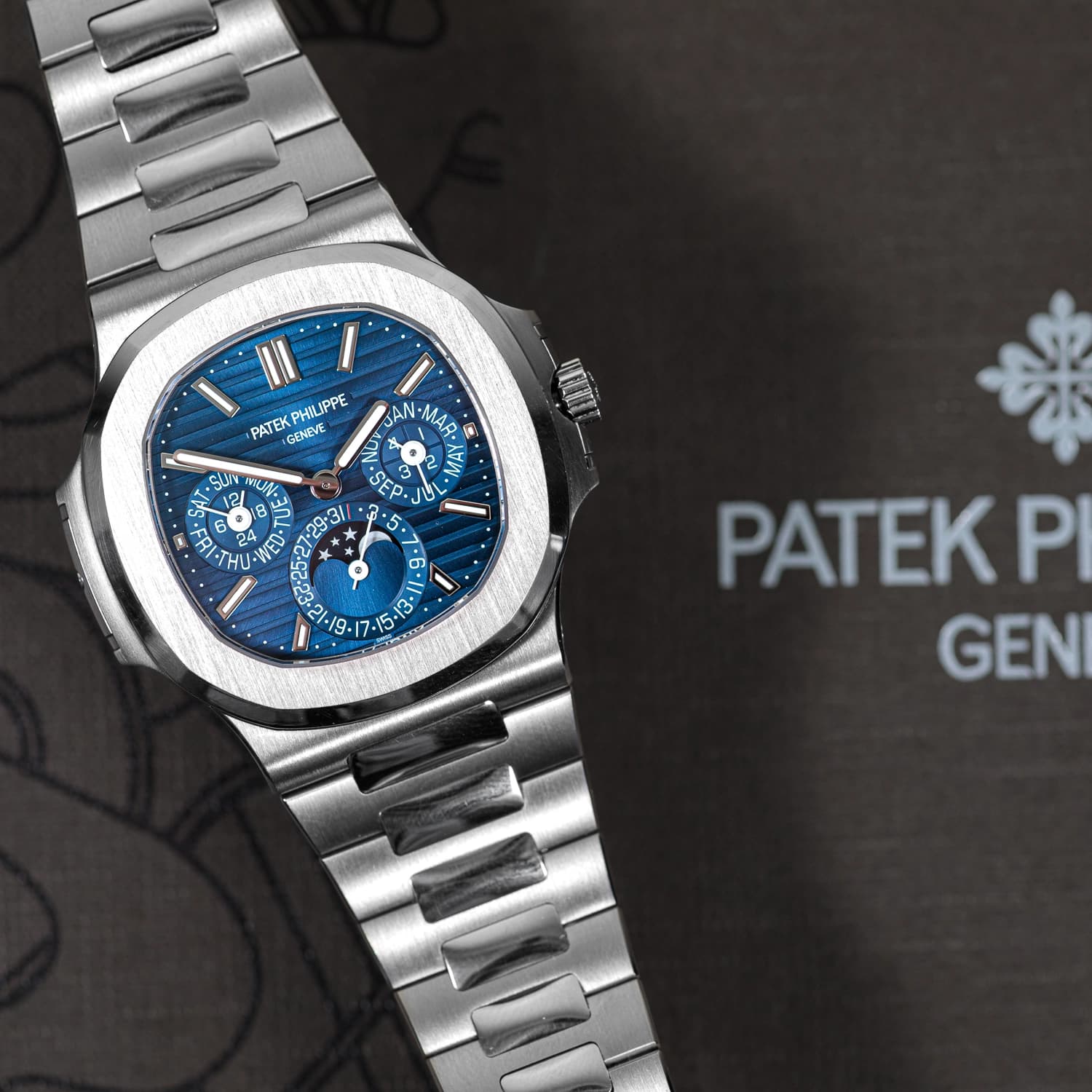
The 5740/1G-001 in white gold is the primary reference. The perpetual calendar display — date, day, month, leap year indicator, and moonphase — reads across the dial like Patek's dress layouts with traditional sub-registers. This will be a familiar feeling for those that love Patek's traditional complicated watches like the 3940, 5140, and perpetual calendar chronographs 3970, 5970, 5270, and more.
Secondary market pricing for the 5740 has corrected from its 2021 peak along with the rest of the family, but it remains in a different tier over $250,000. For a buyer drawn specifically to the perpetual calendar, the 5740 matches Patek's complicated watchmaking history with their modern iconic sports watch.
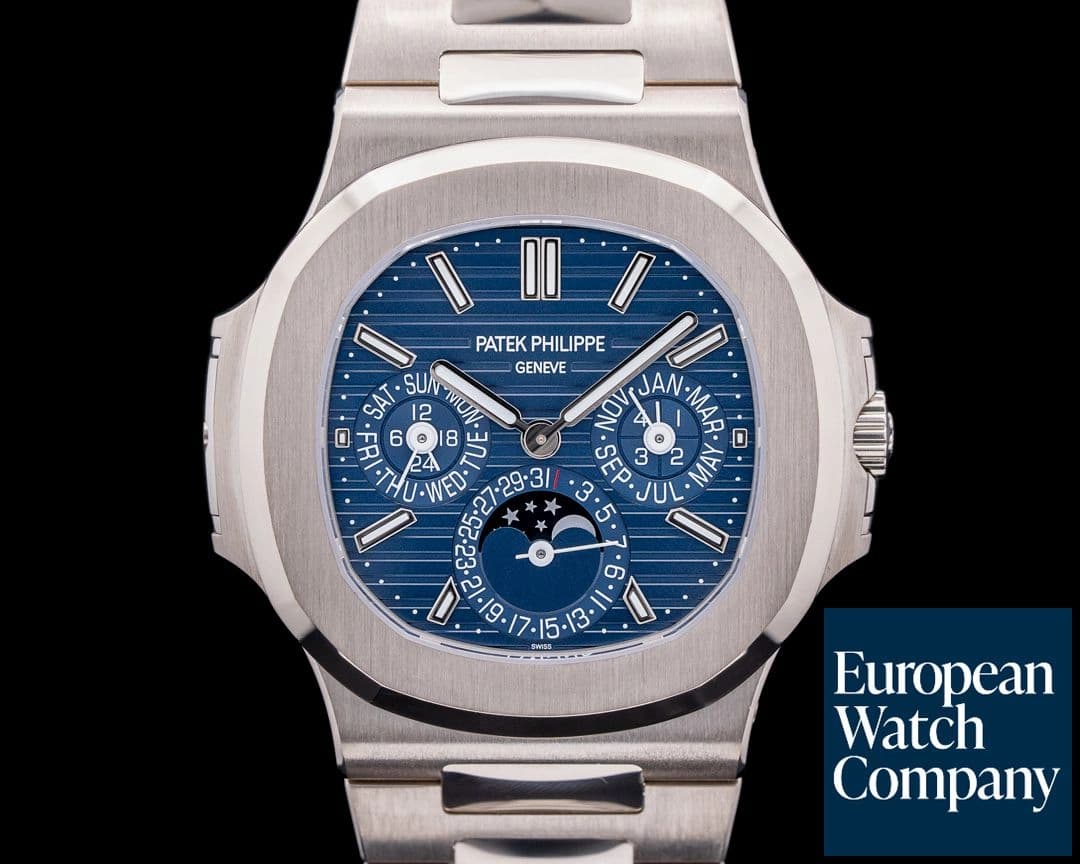
Patek Philippe Reference 5740
5980 and 5990: The Chronograph Case
The chronograph references occupy a distinct corner of the Nautilus family — functionally and aesthetically different enough from the calendar and three-hand lineup that they attract a different kind of buyer. The 5980, offered in steel (5980/1A-001), rose gold (5980R-001), and white gold (5980/60G-001) is the flyback chronograph variant built on caliber CH 28-520 C, a column-wheel movement with a vertical clutch and a 45-hour power reserve. The dial layout places the chronograph subdial at six o'clock and adds a date window at 3, all within the 40mm Nautilus case. In steel and white gold, the 5980 wears with the same sportiness as the rest of the steel family; in rose gold, the register shifts into warmer, louder territory. The 5980 in its standard steel and blue dial configuration trades for roughly $120,000
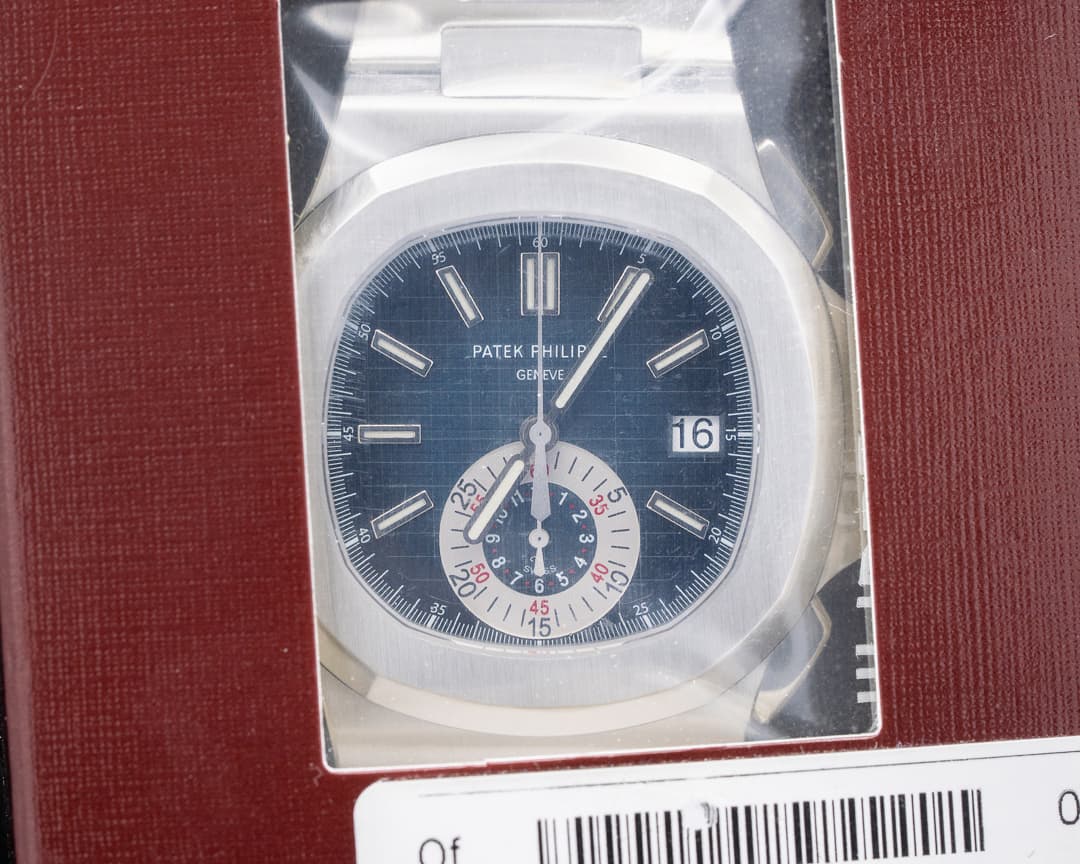
The 5990/1A-001 takes the complication further with a travel time function added to the flyback chronograph — a genuinely practical pairing for a buyer who travels frequently and wants that utility on the wrist rather than in a second watch. Both references sit much thicker than the 5711, as the chronograph mechanism demands. For collectors that want to pair the sporty case with a sporty complication, these are the references to consider. Expect to spend between $150,000 and $160,000 for a 5990 in steel with blue dial.
Vintage: The 3700 and the 3800
The modern Nautilus references all sit at roughly 40mm and share a family resemblance that make it easy to forget how nice the vintage references can be. For buyers open to older pieces — or simply interested in a different wearing experience — the vintage market offers references worth serious attention.
The 3700/1A is the original: the Genta design as it arrived in 1976, in steel, with a fractionally smaller case. Production ran through the early 1990s in various iterations, including the 3710, which introduced an updated case and movement. The 3700 is a jumbo reference, and while on paper it is roughly the same size as the 5711, it wears a bit smaller. The real value with the 3700 is that it is the reference that set the category.
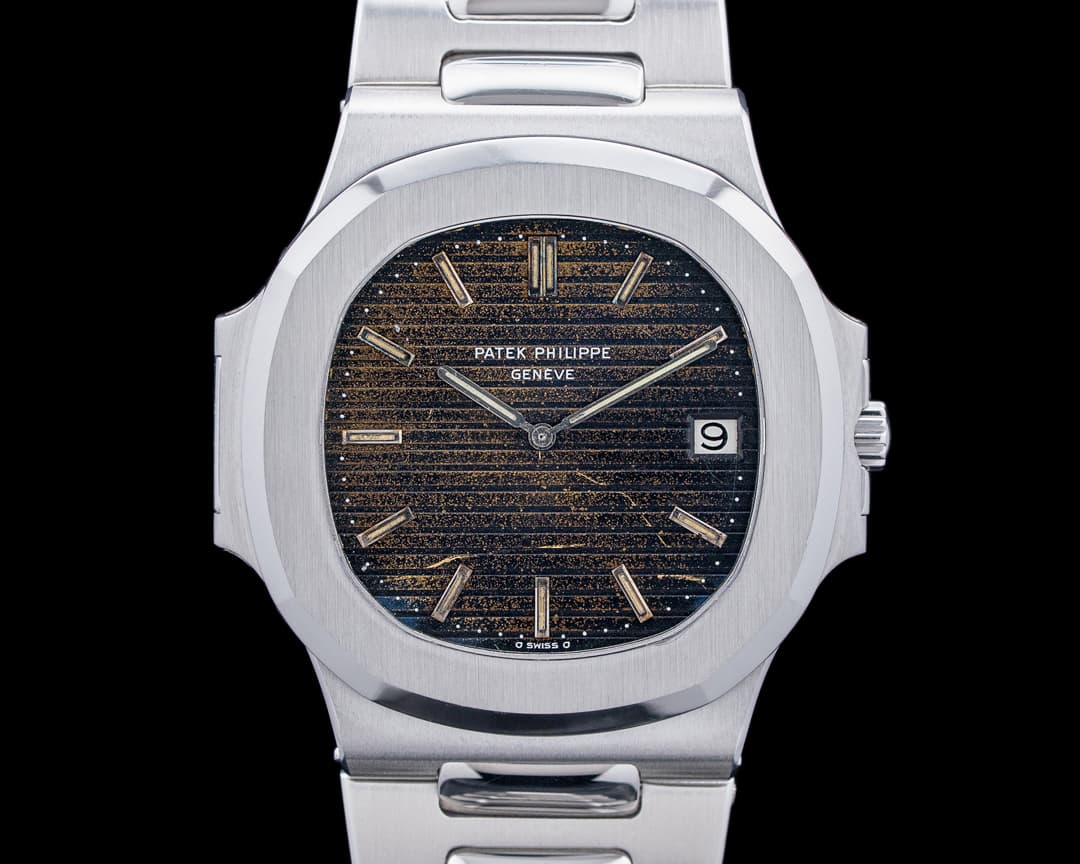
The 3800 occupies its own category. Released in 1980 at 37mm, it offered a more compact alternative to the full-size reference and has historically attracted less collector attention than the 3700. That relative obscurity has not been fully corrected by the broader Nautilus market surge, which makes it worth a serious look. The 3800 wears genuinely differently from the modern 40mm references: lighter, less assertive on the wrist, more versatile across formal and casual contexts. For buyers who find the contemporary family slightly imposing — and the 40mm case, while wearable on most wrists, is not for everyone — the 3800 is an under-appreciated option . Secondary pricing is softer than the 3700 on average, and relative to what a steel 5711 costs today, the value proposition is real. Many collectors who do not appreciate the modern lineup love the 3800's more under-the-radar aesthetic and personality.
Neither vintage reference offers the movement refinement of the modern calibers, but the wearing experience of a well-preserved 3700 or 3800 is distinct enough from the modern family to constitute a different conversation altogether for collectors that appreciate the history of the Nautilus's evolution.
Conclusion
Fifty years of continuous production is a rare thing in any industry. The Nautilus has fundamentally changed the watch industry and earned its status as one of the premier integrated bracelet sports watches of the era. From the vintage references 3700 and 3800 to the modern 5711 and more complicated 5726, 5712, and 5740, there's a diverse range of options for sports watch lovers to enjoy. As a whole, the Nautilus suggests that stainless steel sports watches and luxury aren't a contradiction— in fact, they work together to create a unique design that has stood the test of time.
To shop our full selection of Nautilus watches, head over to europeanwatch.com.
Shop New Arrivals

5140BA Classique 18K Yellow Gold White Enamel Dial
$15,900
View Watch
887968 Panthere 18K Yellow Gold Ivory Roman Dial
$19,900
View Watch
6661 Villeret Demi-Fuseau Horaire 8 Jours 18K WG White Dial
$20,900
View Watch
Q3022420 Grande Reverso GMT 18K Rose Gold Silver Dial
$24,900
View Watch
Shop New Arrivals
5140BA Classique 18K Yellow Gold White Enamel Dial
$15,900
View Watch887968 Panthere 18K Yellow Gold Ivory Roman Dial
$19,900
View Watch6661 Villeret Demi-Fuseau Horaire 8 Jours 18K WG White Dial
$20,900
View WatchQ3022420 Grande Reverso GMT 18K Rose Gold Silver Dial
$24,900
View Watch
More Content