How to Read an Auction Result: A Dealer's Five-Step Framework
Published on 11/16/2026

In the auction world, the number that makes the headline is rarely the number that matters. A hammer price tells you what the winning bidder called out in the room, or clicked online. It doesn't tell you what the buyer paid, what the seller cleared, what the estimate was designed to accomplish, or whether that result has any bearing on what your piece is worth today. Auction houses publish results. They don't publish the interpretive layer that makes those results useful for everyday collectors.

Patek Philippe
5970 "SPECIAL ORDER" Perpetual Chronograph 18K Rose Gold Black Dial RARE
Inquire for pricing
Today we are uncovering that layer, step by step, using the same analytical sequence all collectors should apply when a result comes through.
Step 1: Convert the Hammer Price to What the Buyer Actually Paid
The hammer price is the number that gets reported. Total cost is the number that matters for understanding a watch purchase.
Every major auction house charges a buyer's premium, a fee layered on top of the hammer price, calculated in declining tiers. As of late 2026, the rates at the four houses most active in watches are:
Christie's: 27% on the first $1.5M of hammer price, 22% from $1.5M to $8M, 15% above $8M.
Sotheby's: 28% up to $2M, 22% from $2M to $8M, 15% above $8M.
Phillips: 27% (standard) up to $2M, 21% from $2M to $8M and 14.5% above that.
These rates shift. Before bidding, or before treating a published result as a data point, confirm the applicable rate card. These numbers are just a rough snapshot of the current landscape.
The math is straightforward, and the gap it reveals is not small. A watch that hammers at $20,000 at auction can cost the buyer over $25,000 all-in before shipping, insurance, or import duties. This is an important factor to consider when analyzing and interpreting auction results.
Rule: Always convert. Hammer price plus buyer's premium is the minimum floor for comparison. Anything below that number in the dealer or private market is cheaper than the auction result, not equivalent to it.
Step 2: Understand What the Estimate Was Actually Doing
The pre-sale estimate is set by the auction house. It is not set by the market. An estimate is built from two inputs: comparable sales and in-house specialist judgment. What auctions don't publish is how they position the estimate relative to their internal fair-value view, and that positioning is deliberate. A low estimate generates bidder interest, creates the conditions for a "sold above estimate" headline, and helps the consignor feel that the piece is desirable.
The reserve, the minimum price below which a lot won't sell, is confidential and must be set at or below the low estimate. That means the low estimate is the visible proxy for the floor, and bidding typically opens below it. Sotheby's reported that in 2025, lots sold for substantially more than their low estimate, the third consecutive year that ratio increased. That figure doesn't reflect rising demand across the board necessarily. It can reflect estimates set conservatively, by design, to produce exactly that result. This isn't necessarily a good or bad thing, it's simply important to situate these statements within their proper context.
"Sold above estimate" tells you that the lot exceeded a number the auction house chose. It does not tell you the market was surprised, that demand is strong, or that the result establishes a new benchmark. It may mean any of those things. It may mean the estimate was set low to guarantee a clean sale. Without knowing the internal fair-value view, which is never published, you cannot distinguish between the two.
Rule: "Above estimate" is not a signal. It's a description of the relationship between the result and a number the house set for strategic reasons.

Step 3: Situate the Result in Its Sale Context
Not all results are equal, even at the same house. Where and how a lot is sold shapes the result, sometimes substantially.
A marquee evening sale during Geneva Watch Week draws specialized collectors, strong international bidder composition, and significant press attention. An online-only timed sale at the same house draws a different room, often thinner, often with less competitive bidding on mid-range lots. The same watch, the same condition, can land differently in those two environments. The result is real either way, but it doesn't mean the same thing.
Lot positioning matters too. Lots that anchor an evening sale, the cover lot, the finale piece, benefit from curatorial context that standalone lots in an online session don't get. Marketing spend, catalog essay quality, estimate positioning relative to surrounding lots: all of it affects where the room is primed to go. A result in that environment reflects the full auction house apparatus, not just bidder demand for the watch.
Bidder composition is harder to track but worth considering when you can. A result driven by a single motivated buyer, say, a collector with a known focus on a specific maker or complication, may reflect that buyer's private calculus more than it reflects broad demand. If the same lot had appeared in a different sale, without that buyer in the room, the result might have been materially different.

Rule: Note the sale format and date before recording a result. An evening sale result and an online-only result are not the same data point for the same reference. Weight them accordingly.
Step 4: Check the Result Against a Broader Dataset
One result is not a trend. It's a single transaction between two parties under specific conditions.
Building a meaningful comp set for a given reference requires pulling multiple results across a reasonable time window. No published standard defines exactly how many results constitute a sound sample; the answer varies by how actively a reference trades. For a commonly transacted modern reference, three to five results within the past twelve months give a working picture. Thin-trading references may require a longer window, three to five years, to assemble enough data to be useful. The thinner the sample, the more each individual result gets weighted by its own idiosyncratic conditions rather than by genuine market consensus.
When you have a dataset, look for the range before you look for the average. A reference that hammered at $8,000, $12,000, and $22,000 in three successive sales has an average around $14,000, but that average obscures more than it reveals. The $22,000 result probably had a story that changed its price result. Often references at auction have further prominence that can skew a reference result heavily to an extreme.

Rule: Identify outliers before calculating any central tendency. If one result sits more than 30 to 40% above or below the cluster, treat it as a separate case study before it enters your comp set.
Step 5: Know When Auction Comps Don't Apply
Auction results and dealer prices are not interchangeable. They measure adjacent but structurally different markets, and using one to anchor the other introduces predictable distortions.
The clearest structural difference is selection bias. Auction houses curate their consignments. The watches that reach the saleroom, especially in important sales, are typically exceptional by condition, provenance, or both. They often come with original boxes, papers, service records, and documented ownership histories. The average pre-owned example of the same reference, in average condition with an average paper trail, is not what auction results price. Using an auction comp for an average specimen will tell a buyer they underpaid or a seller they're underpriced. Neither is necessarily true.

Condition standards compound this. A watch that a reputable dealer lists as "excellent" may be in meaningfully better condition than the minimum threshold for saleroom inclusion, or meaningfully worse than the exceptional examples that drive strong results.
Then there's the absence of recourse. A watch purchased at auction is sold "as described." Major houses publish condition reports, but those reports vary in depth, and the buyer assumes substantially more risk than in a dealer transaction with a return policy and warranty. Some buyers will discount for that risk; others won't, particularly in a competitive bidding environment where the heat of the room can override cold-eyed analysis.
Rule: Auction comps are most reliable when you're evaluating a piece that is explicitly auction-grade: exceptional condition, documented provenance, complete set. For average examples, take auction results with a grain of salt.
Putting It Together: What a Dealer Actually Does With a Result
Every auction result needs the same sequence applied before it becomes a useful data point. Convert the hammer price to what the buyer actually paid. Understand what the estimate was doing before reading "sold above estimate" as a signal — estimates are set strategically, and exceeding one tells you less about demand than it appears to. Situate the result in its sale context, because an evening sale in Geneva and a mid-week online session at the same house are not equivalent environments. Check the result against a broader dataset, and identify outliers before you calculate any central tendency, understanding that a single result is a transaction, not a trend. And know when auction comps don't apply at all: results from the saleroom reflect a curated, exceptional slice of the market, not the average pre-owned example sitting across the desk.

Audemars Piguet
26399CR Code 11.59 Flying Tourbillon Chronograph Skeleton Dial LIMITED
$149,900
The number that makes the headline is where you start. It's not where you stop.
Shop New Arrivals

Speedmaster Speedy Tuesday Ultraman SS Black Dial LIMITED
$12,500
View Watch
403.035F Datograph Flyback Platinum Black Dial
$165,000
View Watch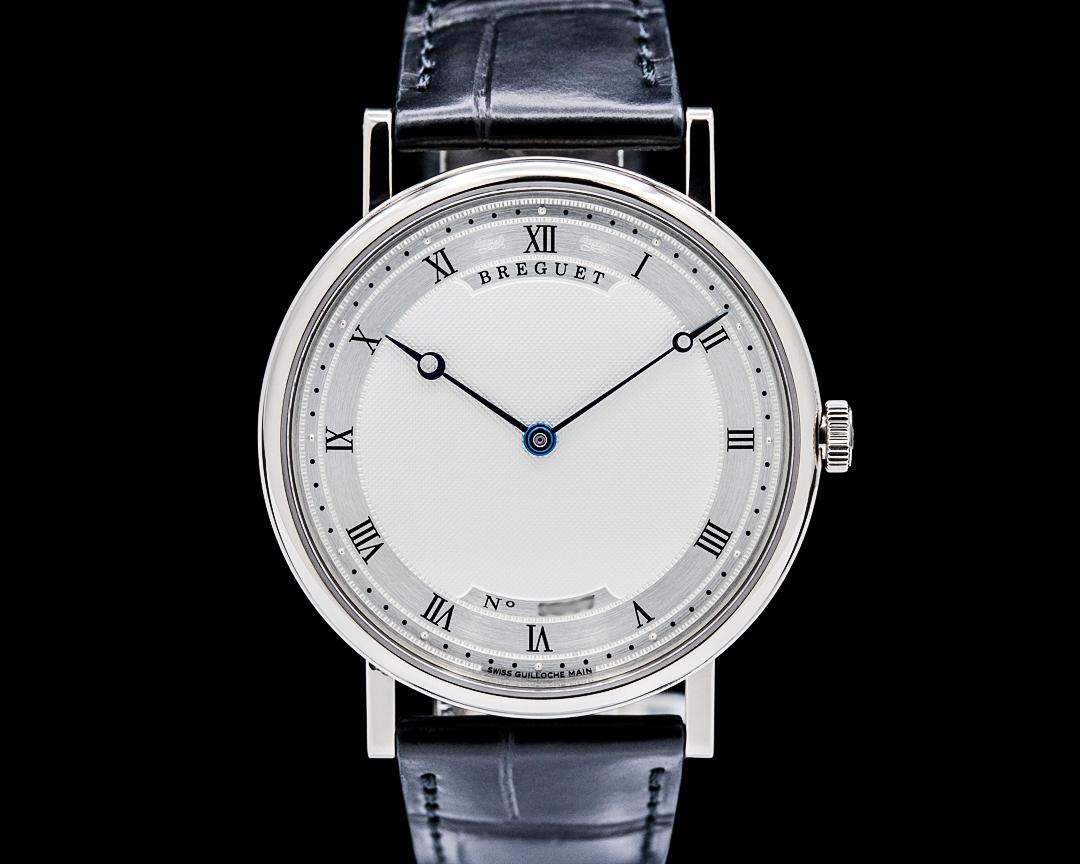
5157BB Classique 18K White Gold Silver Dial
$16,670
View Watch
Astrale Majestic Beijing Time 18K Rose Gold Gray Dial
$14,970
View Watch
Shop New Arrivals
Speedmaster Speedy Tuesday Ultraman SS Black Dial LIMITED
$12,500
View Watch403.035F Datograph Flyback Platinum Black Dial
$165,000
View Watch5157BB Classique 18K White Gold Silver Dial
$16,670
View WatchAstrale Majestic Beijing Time 18K Rose Gold Gray Dial
$14,970
View Watch
More Content