The Design Logic of the Saxonia Family
The Saxonia family has been part of Lange's lineup since 1994, when Walter Lange reestablished the company four years after reunification. It is one of the founding models used to relaunch the Lange brand identity.
The design logic starts with the dial. Every core Saxonia variant uses a three-part argenté silver dial: a main plate, a subsidiary seconds register, and applique index level. The construction is visible rather than concealed — the dial has physical depth, not just printed layers. In direct light it reads flat and clean; at an angle the registers catch the light differently and the three-dimensionality becomes apparent.
First generation iterations featured a very Germanic diamond index set. Next, Lange transitioned to a dot index variation that was more streamlined. After the 2015 revision, the dot indices that had been present on earlier dials were removed. What remained were applied baton indices and a subsidiary seconds at six o'clock. Nothing else. The negative space that results is part of the efficiency of the German design ethos. A dress watch at this level that is still visually busy is a watch that doesn't quite believe in itself. The Saxonia has no such problem.
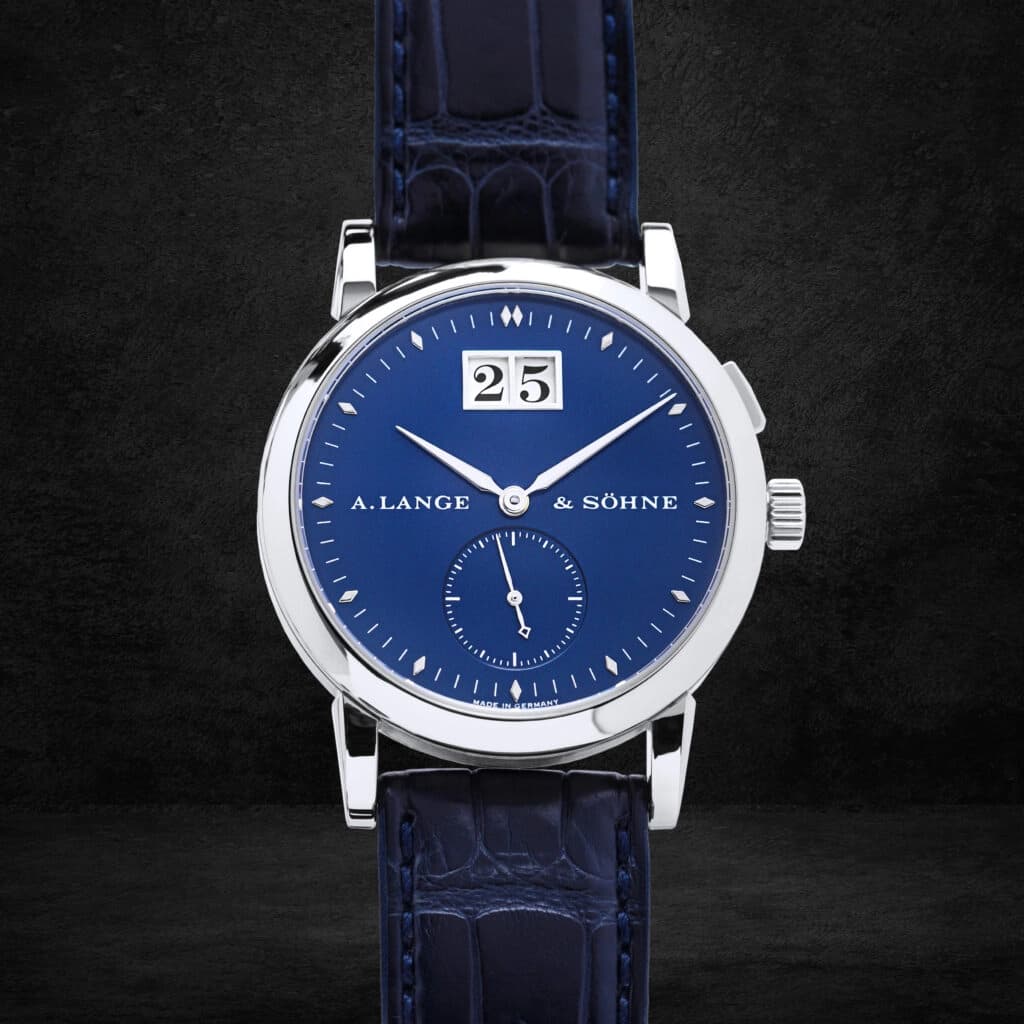
Lange Saxonia 105.027
The case is polished on its bezel and brushed on the midcase. The lugs are curved and swept in a manner that distributes the case across the wrist rather than sitting on top of it. On the wrist, all models disappear under a shirt cuff the way a dress watch should. Lange calls the Saxonia family "discreet elegance" and that largely captures the ethos of the models. They occupy the specific register of a watch worn seriously by someone who does not need to announce their watch.
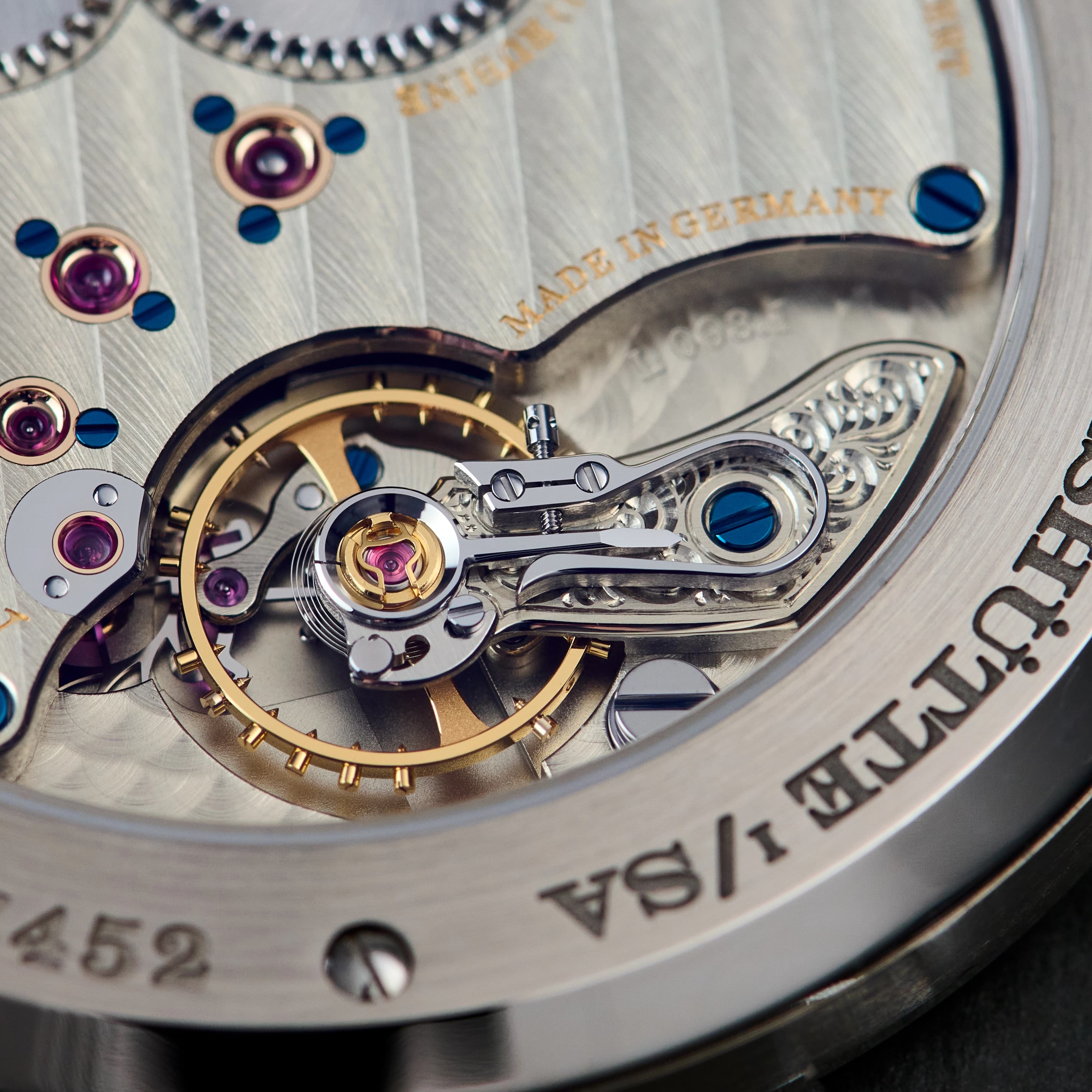
Through the display caseback, the movements tell a different story, one that requires closer attention. The three-quarter plate in German silver, the Glashütte stripes (like côtes de Genève running across the full plate surface), the gold chatons pressed around the jewels, set with fire blued screws, the hand-engraved balance cock: these are the features that place Lange in a specific tradition, the Saxon school, with its emphasis on visible architecture and hand finishing as a must priority.
Lange Saxonia Thin
The anglage, the chamfering and polishing of every edge on every plate, bridge, and lever, is done by hand. That includes the inner corners, which can't be reached by machine, and the outer bevels, which are polished to a mirror state entirely manually. Up to two hours of precision work go into flat-polishing the surfaces of a single component like a whiplash spring. These figures are the consequence of a finishing standard that has no shortcut.
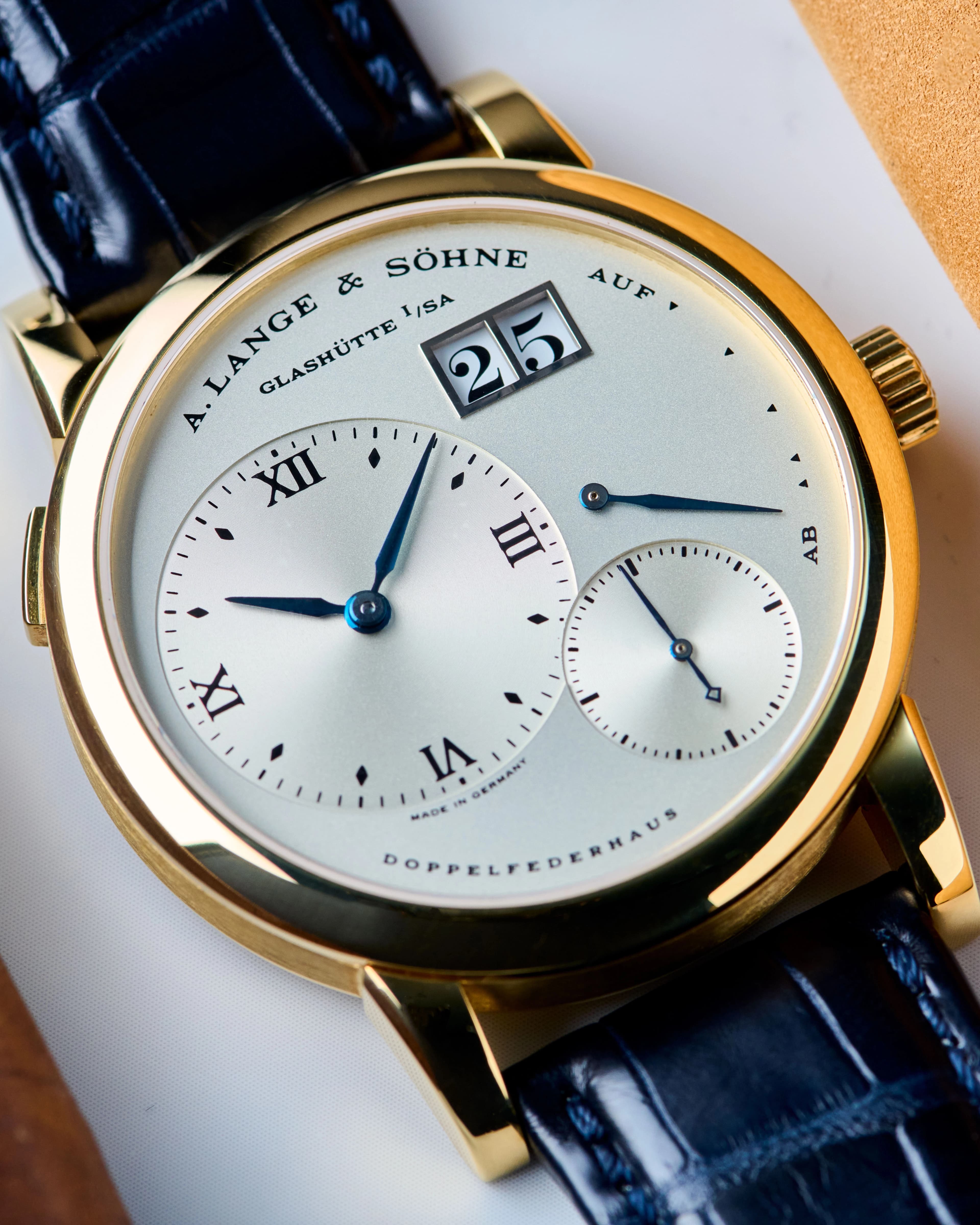
The Lange 1 is more complex, more immediately distinctive, more recognizable across a room. But the Saxonia is not making an argument about complexity. It is making an argument about discipline. The Saxonia is the most distilled traditional dress watch design in the German tradition. It is not an alternative to the Lange 1, it sits in its own distinct vertical.
Reference by Reference: The Core Models
The Saxonia Thin
The Saxonia Thin was introduced in 2011. The original 40mm format used caliber L093.1, at 2.9mm the thinnest movement Lange had produced to that point, and one that enabled a total case height of 5.9mm. For a watch that lives in a bold design tradition under Germany, this is an incredibly thin and elegant dimension set.
The 40mm variants (ref. 211.033, ref. 211.027, and early references)
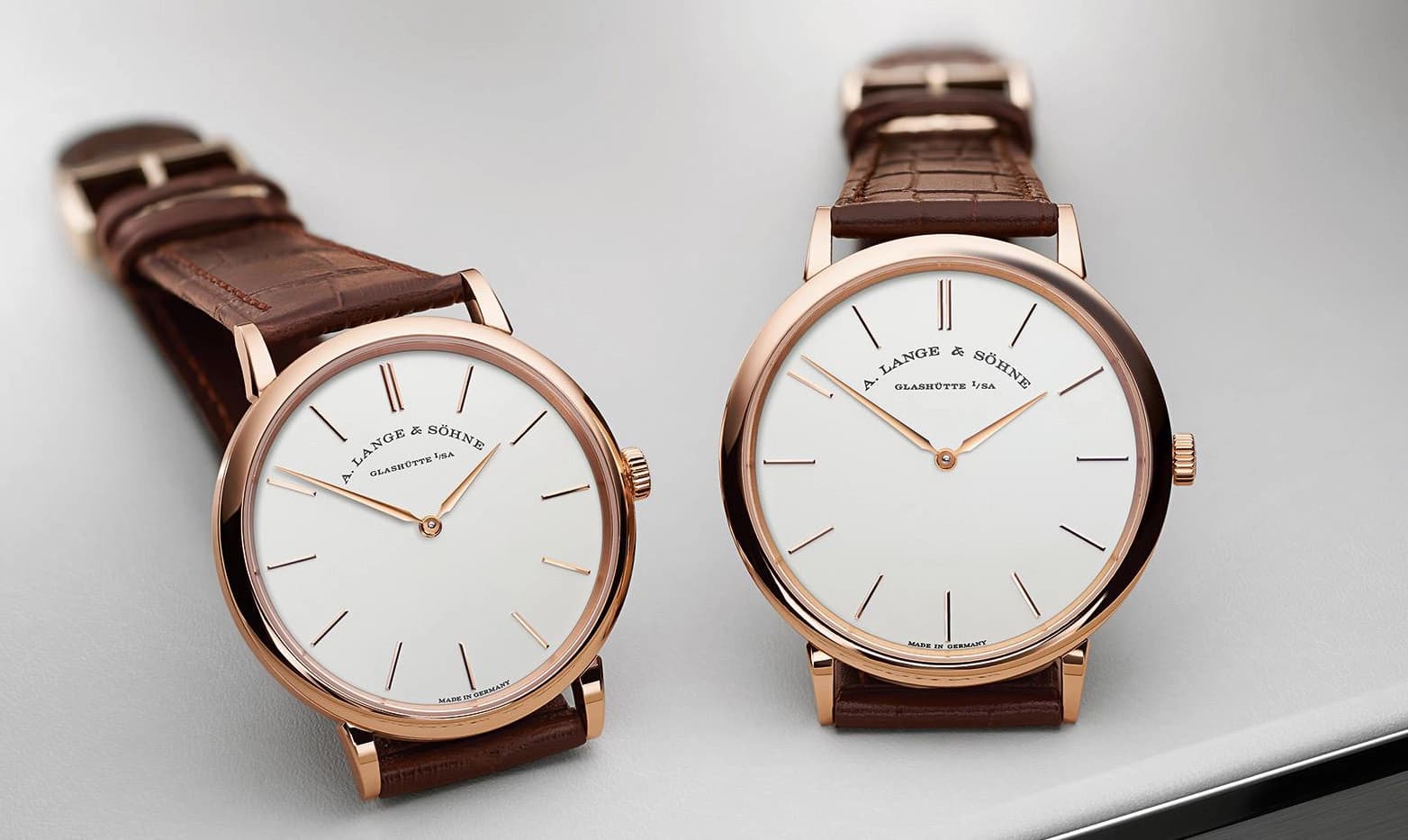
Saxonia Thin 40mm and 37mm
The original 2011 launch references arrived in a 40mm case at 6.2mm thick. The movement is L093.1: 167 parts, 72-hour power reserve, manual winding. On the wrist, the 40mm reads larger than its dimensions suggest because the case is so flat. There is no height to absorb into the eye. It wears large and looks almost like a coin.
Early 40mm examples (pre-2015) had dot indices on the dial. These were removed in the 2015 revision, which simplified the dial further toward the clean batons-only design that defines the current aesthetic. Neither generation is better in any technical sense; the caliber did not change. But the post-2015 dials are closer to the pure expression of what the watch is trying to be. Pre-owned buyers who prefer the earlier look can find those references at modest discounts. Buyers who want the current aesthetic should look for 2015 or later production.
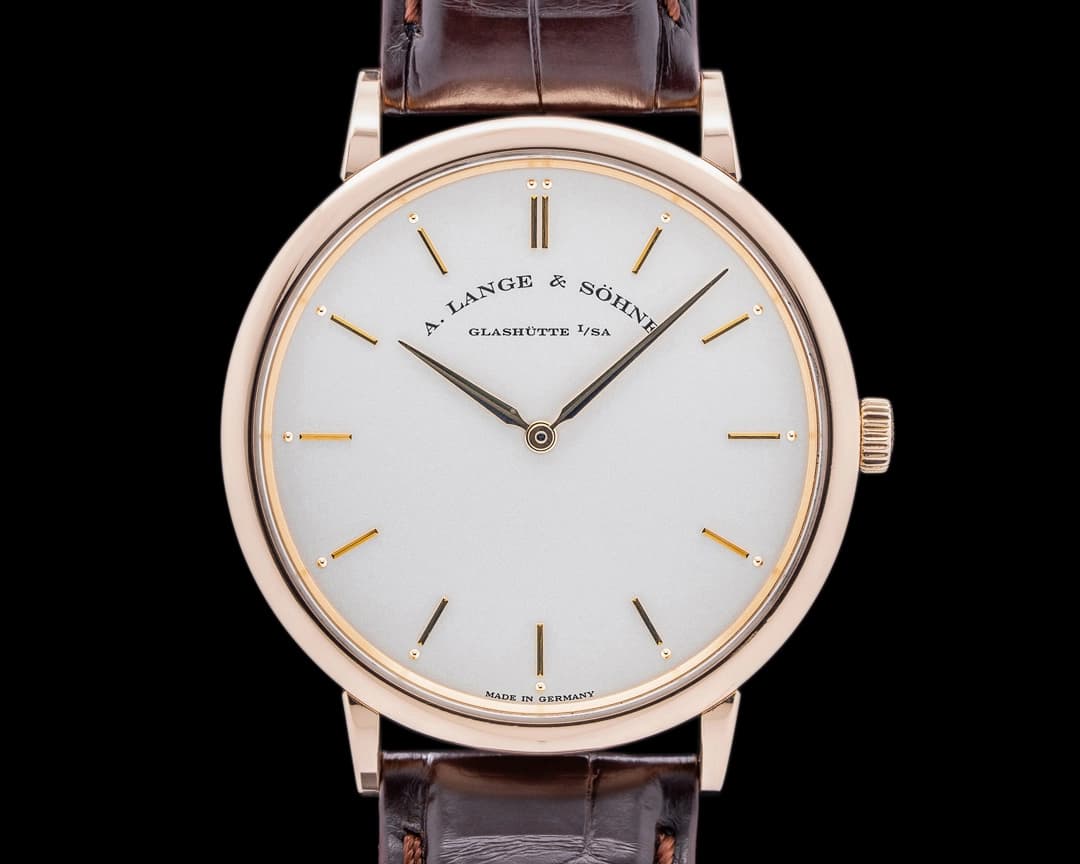
Lange Saxonia Thin 40mm 211.032
The 40mm variants are more common on the secondary market than the 37mm. That availability hasn't hurt their desirability; it has made them more accessible.
The 37mm variants
The 37mm case arrived in 2015, the same year as the dial revision. Case height is 5.9mm. Same caliber, same architecture, smaller footprint. The retail entry at launch was in the $15,000 range. By mid-2026, the 37mm retails at approximately $27,000 new.
On the secondary market, 37mm examples are notably rarer than 40mm, and a shorter production window explains most of that gap. Contrary to what scarcity usually does, there is no significant secondary price premium between the two sizes. A pre-owned 37mm Saxonia Thin in excellent condition trades in roughly the same band as its 40mm counterpart. For buyers who want the smaller case, this is the moment to act.
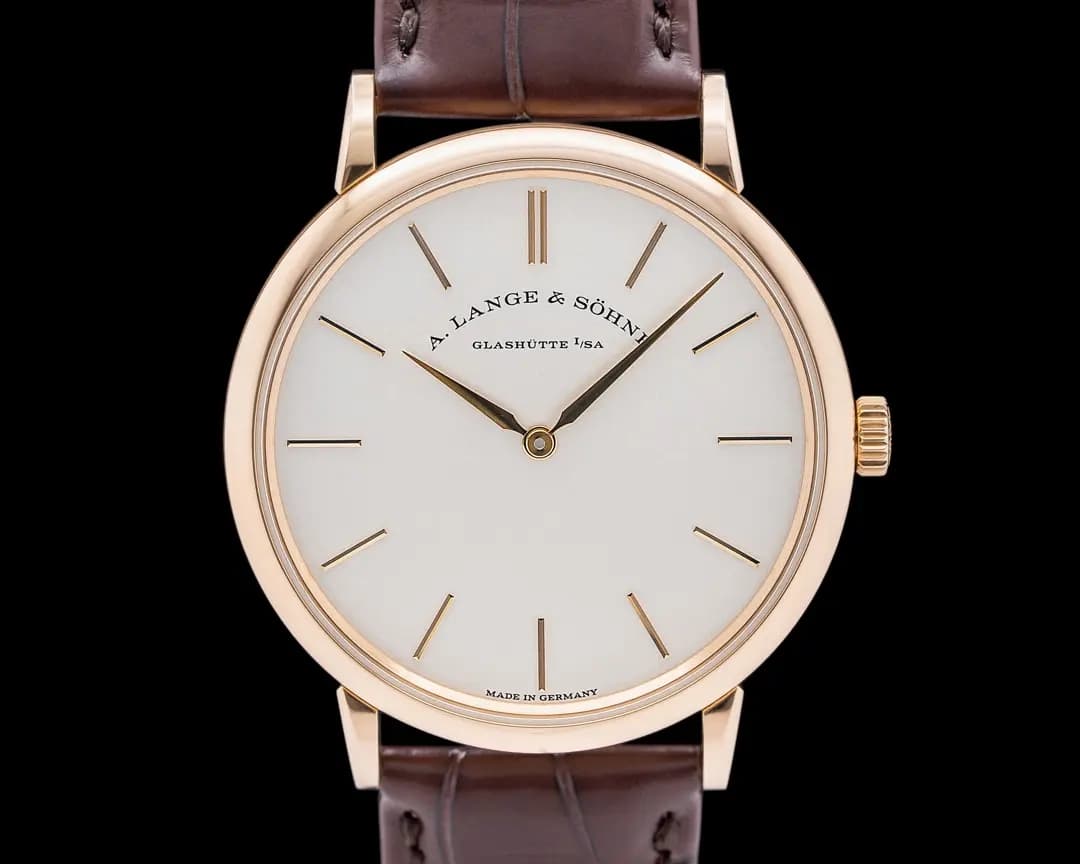
Lange Saxonia Thin 201.033
The 37mm on the wrist is definitive: this is the better dress watch unless you have very large wrists. At 5.9mm thick it disappears under a cuff. The case diameter is close enough to a historical dress norm that it reads as considered rather than retro. The dial's negative space looks even more deliberate at this scale. There is simply less room to fill, and Lange filled none of it. On the secondary market, standard 37mm Saxonia thin iterations trade around $20,000 slightly above and below are common depending on year, kit, and condition.
The Aventurine variants (ref. 205.086, ref. 205.087)
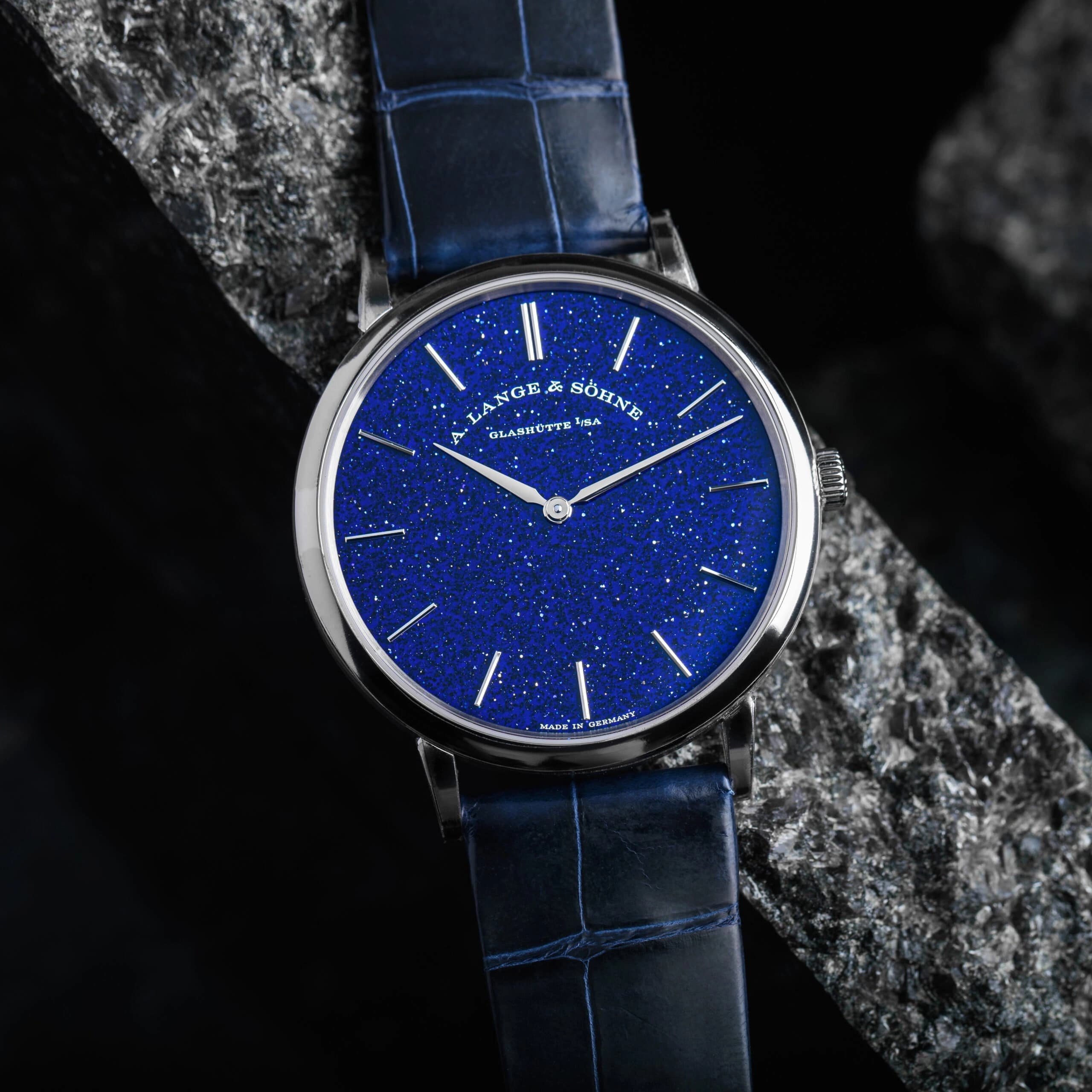
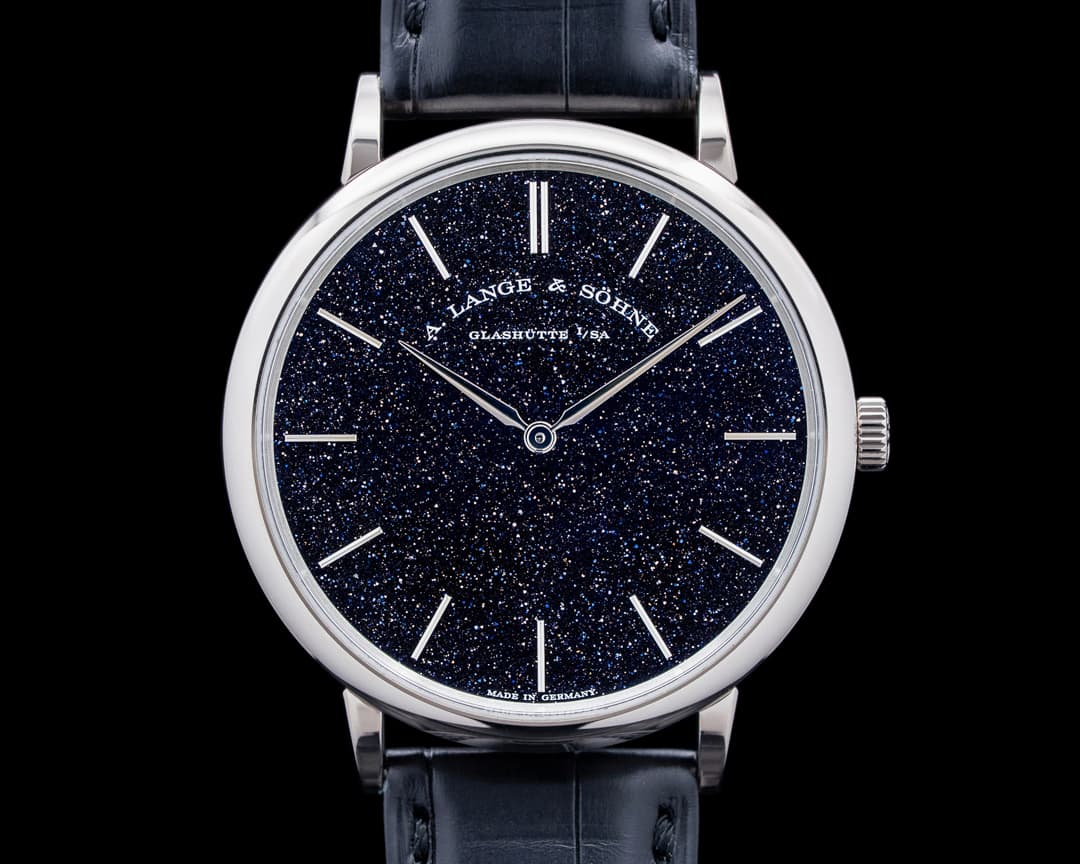
The blue Aventurine dial variant (ref. 205.086) is not limited but commands a premium preowned ($31,000 as of early 2026), driven by its visual distinction and secondary market momentum: the reference has appreciated 10.7% over the prior year. The model is sized 39mm, but the dark aventurine look makes the watch read smaller than the older 40mm iterations. The dark Aventurine particles suspended in the dial catch light differently at every angle. It is the one Saxonia Thin variant that makes a visual argument on the Lange 1's terms while still sitting firmly inside the restraint family. It's truly a stunning piece.
Saxonia Thin Aventurine
The Onyx variants (ref. 211.052, ref. 211.062)
Limited to 200 pieces each, these command a $47,900 entry pre-owned and sit outside the primary recommendation band for most buyers. They confirm the pattern: limited Saxonia Thin dials carry real premiums. The standard silver dial references are where most buyers should focus if theyre looking for a great everyday dress watch. These Onyx pieces do provide an opportunity to access precious limited pieces without spending hundreds of thousands of dollars as is typically the case.
What to inspect on a Saxonia Thin pre-owned
The finishing is the first thing to check, and the hardest to fake. On a properly maintained example, the anglage on the movement's plates and bridges will be uniform in width and mirror-polished. Any haze on the flat surfaces or uneven chamfer widths indicates either heavy use or improper service.
On the case: the high-polish surfaces will show wear first on the flanks and lugs. Light scratches from normal wear are expected; deep gouges or signs of re-polishing (look for flattened lug profiles) are a concern, because re-polishing removes metal and can alter the geometry that makes these cases so precise. The dial's argenté surface is very exposed. Check for any radial marks near the indices that suggest improper cleaning.
The Standard Saxonia
The standard Saxonia is a 35mm round case, 7.3mm thick, using caliber L941.1: 164 parts, 45-hour power reserve, manual winding. At 35mm it is the smallest of the family by case diameter, and at 7.3mm it is the thickest relative to its size. The additional height accommodates a date display and a slightly more complex movement architecture. This model was discontinued from the standard collections, but still provides a great preowned option for buyers who want to access the Lange aesthetic for accessible prices.
The 35mm wears with a quiet formality that the Thin's ultra-flat profile doesn't quite replicate. It is rounder, slightly more traditional in proportion, and the 7.3mm height gives it a presence that rewards a wrist of moderate size. On smaller wrists it is the most balanced of the family; on larger wrists the Thin's 40mm variant is the stronger choice.
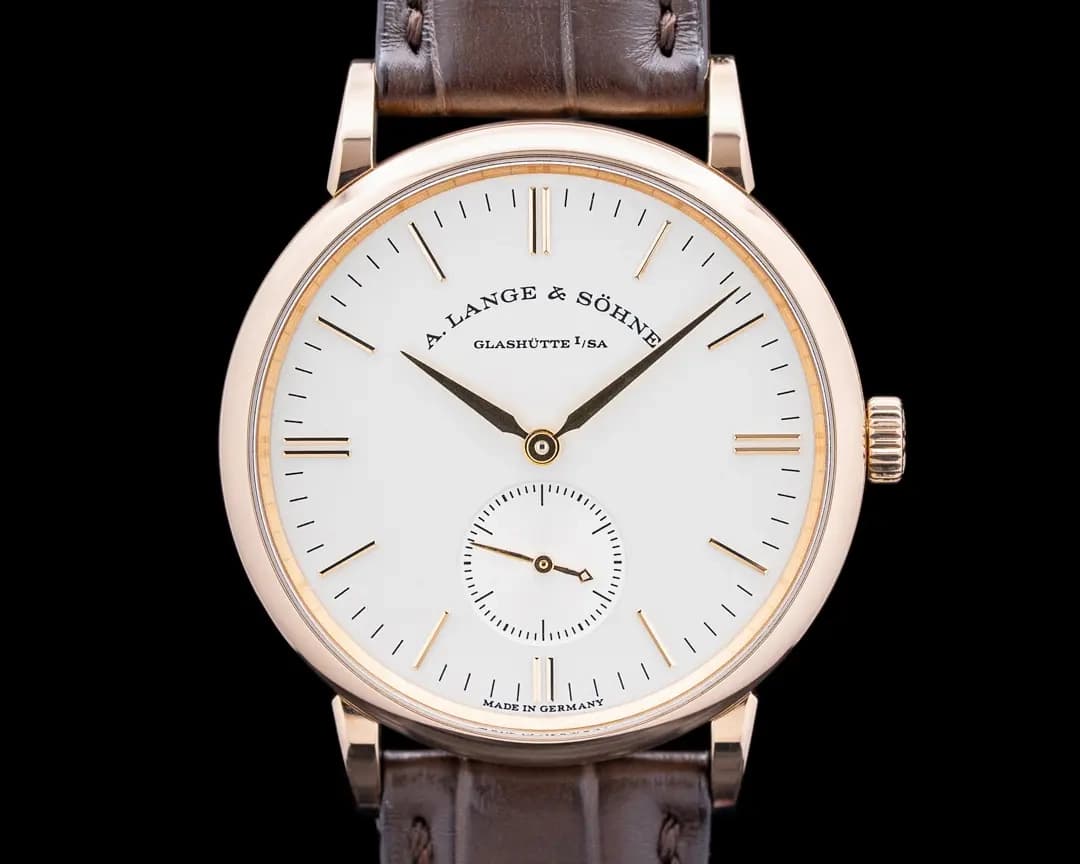
Saxonia Manual Wind 219.032
Pre-owned pricing on the 35mm Saxonia runs between $12,500 and $14,000 for mint-condition examples. That band puts it below the entry point of most Lange 1 pre-owned examples and makes it one of the more accessible routes into the brand. The lower power reserve (45 hours versus 72 hours in the Thin) is a practical consideration for buyers who rotate their watches. This one needs winding more often.
Lange also offers two striking Saxonia big date variants refs. 381.029 and 381.031 in white and pink gold with deep black dials. These are automatic watches, wear larger at the standard Lange 38.5mm sizing and feature the beautiful big date that is classically Lange. these are really well done everyday dress pieces to consider as well.
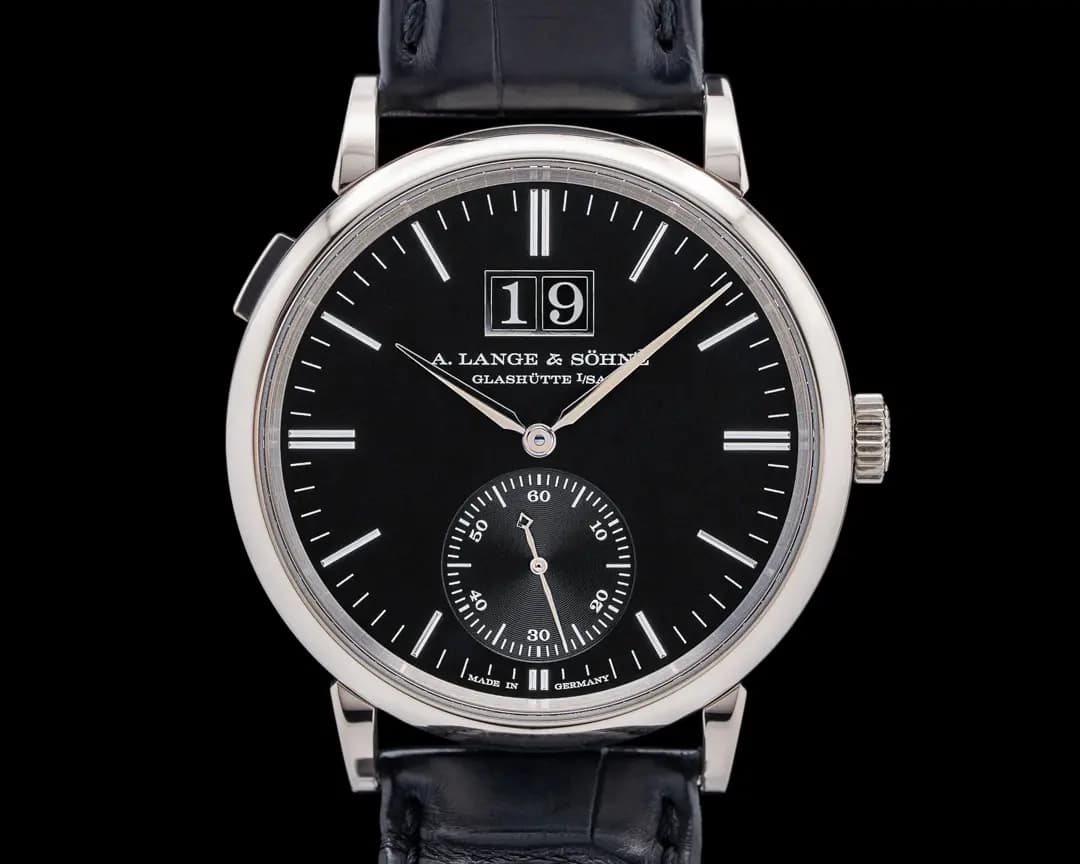
Lange 381.029 Saxonia Big Date
What to inspect on these models is similar to the Thin: movement finishing, case polish integrity, dial condition. The 35mm's longer production run means pre-owned examples may have more years on them. Prioritize examples with documented service history.
The Saxonia Moon Phase (ref. 384.026 in white gold, ref. 384.032 in rose gold)
The Saxonia Moon Phase was introduced in 2016. The case is 40mm, 9.8mm thick, the most substantial in the family, and the only one that reads as anything more than a dress watch when you're looking at it directly. The movement is caliber L086.5, self-winding, with a 72-hour power reserve.
The moon phase display sits at six o'clock. It is a retrograde display rather than a traditional aperture: the disc rotates beneath a sapphire arch, and the moon's illuminated portion tracks slowly across the dial. A moon phase at this level is beautiful decoration, and the question is whether it earns its place.
In the Saxonia Moon Phase, it does. The display integrates into the dial without demanding that the dial reorganize around it. The dial structure and aesthetic is preserved. The argenté registers read as clearly as they do in the Thin. The additional 3.9mm of height over the Thin is significant. This is not a flat watch. But the 40mm footprint distributes the presence well, and on the wrist it reads as a complete, settled object rather than a stack of functions. This is a more complicated watch, so noone expects the razor thin feel of the Saxonia Thin, and if you do, you just buy the Thin.
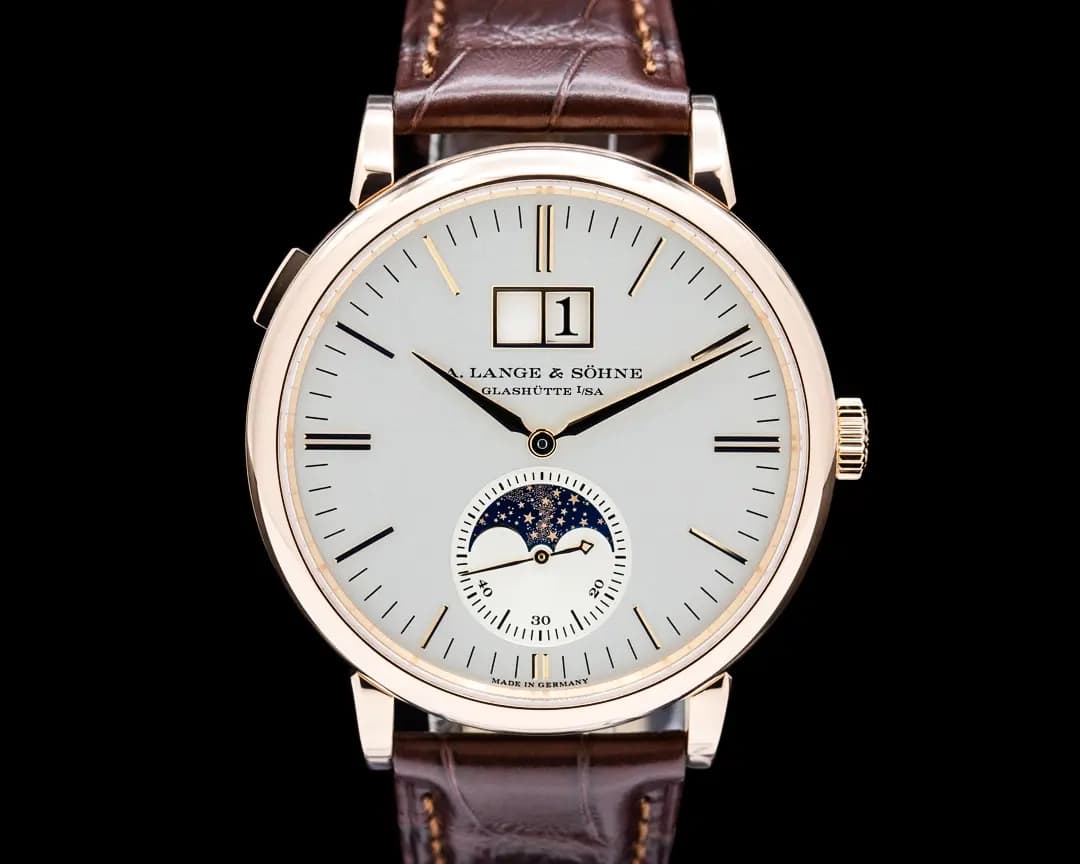
Lange 384.032
The moon phase does change the watch's character. This is not quite the rigorous minimalist argument of the Thin; the Saxonia Moon Phase has a romantic dimension that the Thin resists. Whether that is a departure from the family's thesis or an extension of it is a question each buyer will answer for themselves. What it is not: a cluttered watch. The restraint is still there. The dial still has room to breathe. The moon just fills some of that room.
Secondary market pricing sits at approximately $27,000, trading below its retail. That gap is consistent with a reference that hasn't developed the same secondary market momentum as the Thin's most desirable variants. For buyers who want the complication, pre-owned is the logical entry. The discount is real, the reference is available, and the value case is clear.
The same inspection priorities apply: movement finishing, case condition, dial surface. The self-winding rotor on the L086.5 is an additional wear surface; check for any debris or roughness in the winding action.
Saxonia vs. Lange 1: Two Different Arguments
Every buyer researching the Saxonia will compare it to the Lange 1. That comparison is worth making directly.
The Lange 1 is a more complex watch by every objective measure. The off-center dial, the outsize date, the power reserve indicator, the asymmetric layout: it makes strong formal choices and then refuses to apologize for them. It is immediately recognizable. It commands a presence in conversation that the Saxonia does not seek. Pre-owned Lange 1 examples in standard references typically enter the market above the Saxonia's price bands, and the most desirable variants trade significantly higher.
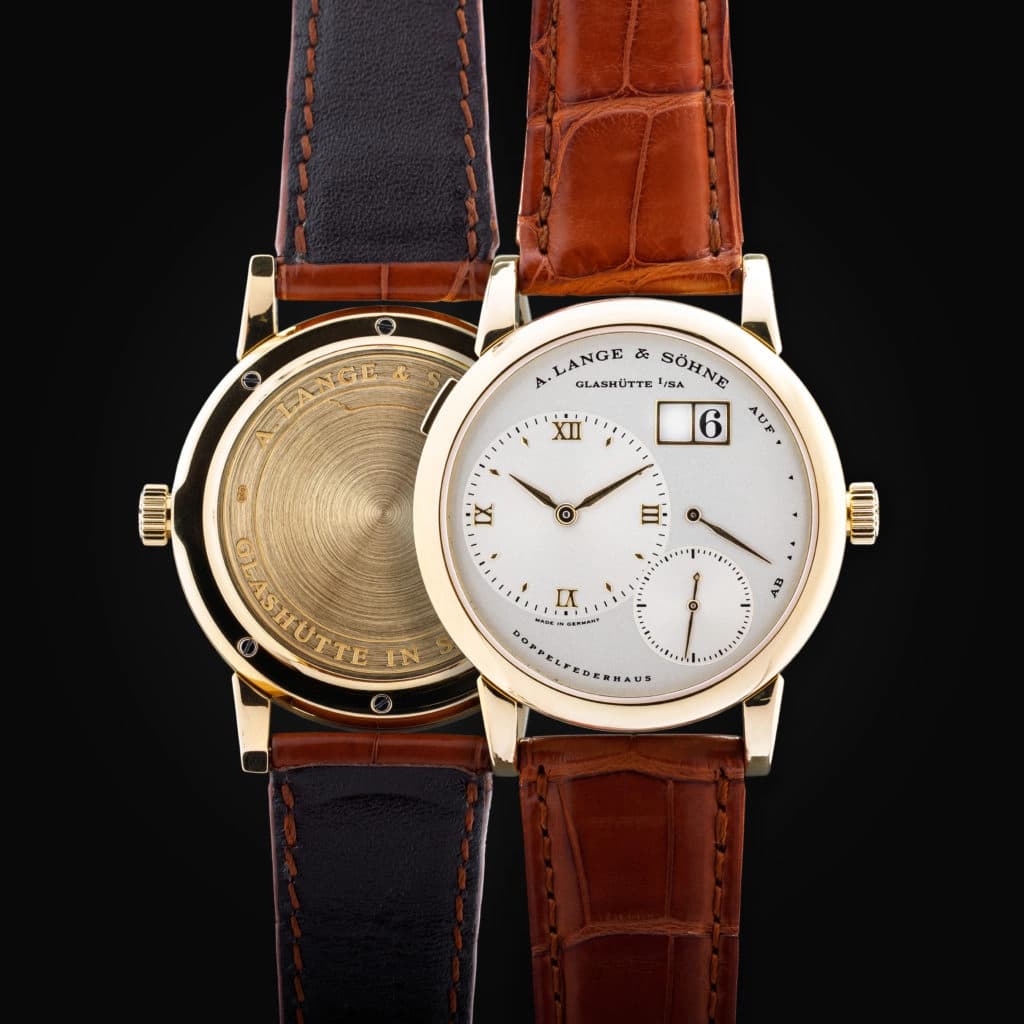
Lange 1 101.003
The Saxonia Thin makes no comparable formal drama. It is symmetric. The dial is nearly empty. The case is flat and unobtrusive. At a glance, someone who doesn't know watches may not know what they're looking at. That is entirely deliberate, and it is not a disadvantage. It is a different kind of confidence.
The buyer suited to the Lange 1 wants a different kind of presence. The buyer suited to the Saxonia Thin wants a watch that withholds declaration and lets the finishing do the speaking. Both are valid. Neither is the consolation prize for the other.
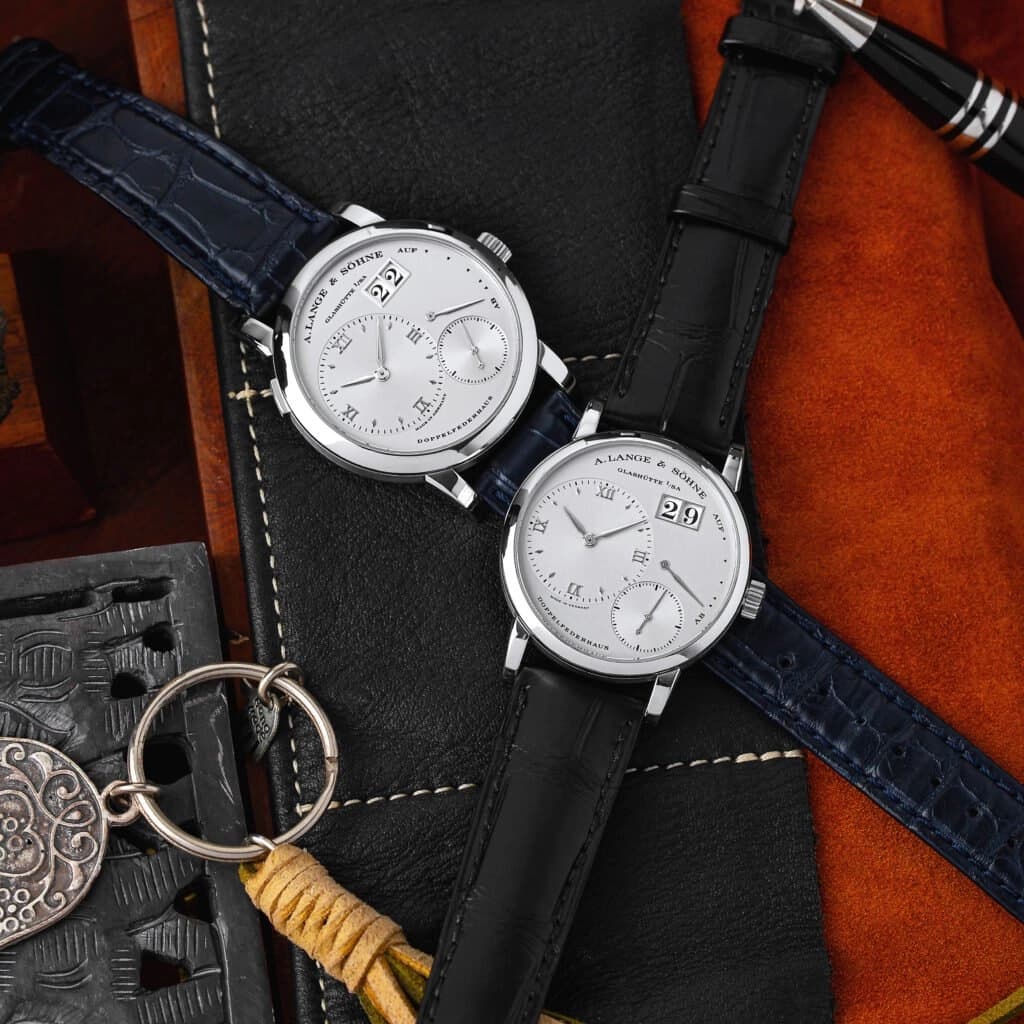
Lange 101.025
One practical distinction is worth naming: the Saxonia Thin's flat profile and 37mm case make it genuinely able to disappear in a way that the striking aesthetic of the Lange 1 doesn't. For buyers who need their serious watch to be invisible in a formal context and visible only on inspection, that calculus matters. For buyers who want to be seen wearing a Lange, the Lange 1 is the more obvious choice.
The Saxonia's argument is tighter and quieter. For some buyers, that won't be enough. For others, it is precisely what they were looking for.
Buying Pre-Owned: Where the Saxonia Sits in the Market
Lange pre-owned is a market with real depth and relatively consistent demand. The brand's production volumes are low, and buyers generally treat Lange acquisitions as long-term holds rather than quick flips. That combination keeps secondary market pricing reasonably stable. There are fewer distressed sellers and fewer speculative buyers than in more liquid watch categories.
The Saxonia Thin is the most available of the family pre-owned. The 40mm format has been in production longest and appears regularly across grey market platforms, authorized pre-owned dealers, and the major auction houses. The 37mm is less common; expect to wait a couple months, or to act quickly when the right example surfaces. The standard Saxonia (35mm) is available and priced accessibly, and its lower profile among collectors means examples sometimes sit longer than they should.
The Moon Phase is available at a meaningful discount to retail. It is arguably the most compelling value in the family for buyers who want the complication. The reference isn't generating the kind of auction competition that the most desirable Lange 1 variants attract. For buyers, that is good news.
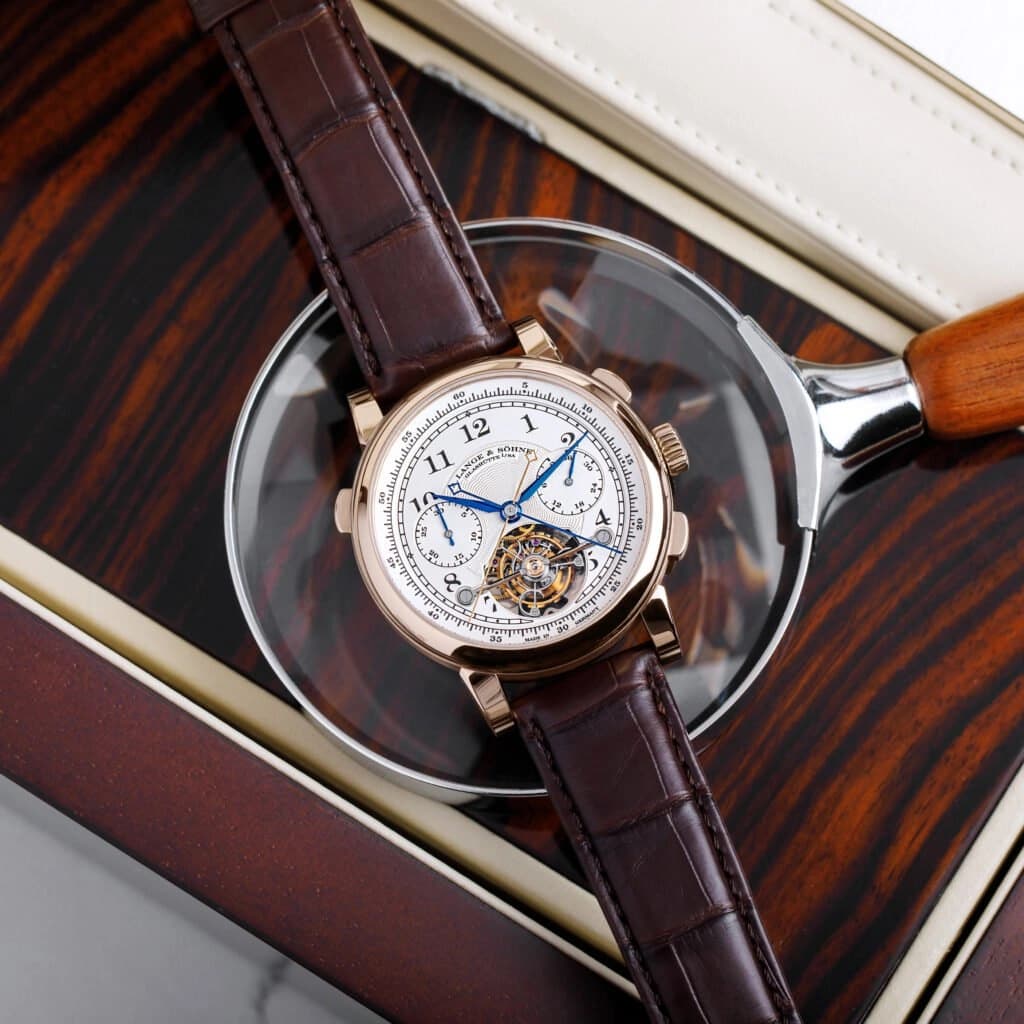
Service history and value retention
Lange's service intervals are approximately five to seven years under normal use. A pre-owned example with documented factory or authorized service history will retain more value and provide better evidence of movement condition than one without. For a watch whose entire case for buying is grounded in finishing quality, "unserviced, unclear history" is a more meaningful red flag than it would be for a Rolex sports reference.
The cost of a Lange service is not trivial, typically several thousand dollars depending on the reference and condition. Price that in when evaluating grey market examples at apparent discounts.
Conclusion
Regardless the Saxonia family provides one of the most compelling cases for a great dress watch priced below anything that comes close to its level of quality and complication. These watches are truly fantastic works of finishing and design, and there's nothing quite like it on the market. In the coming years, we expect collector enthusiasm for the Saxonia and Lange in general to build. It's only a matter of time before the market catches up and we can't wait!
Shop New Arrivals
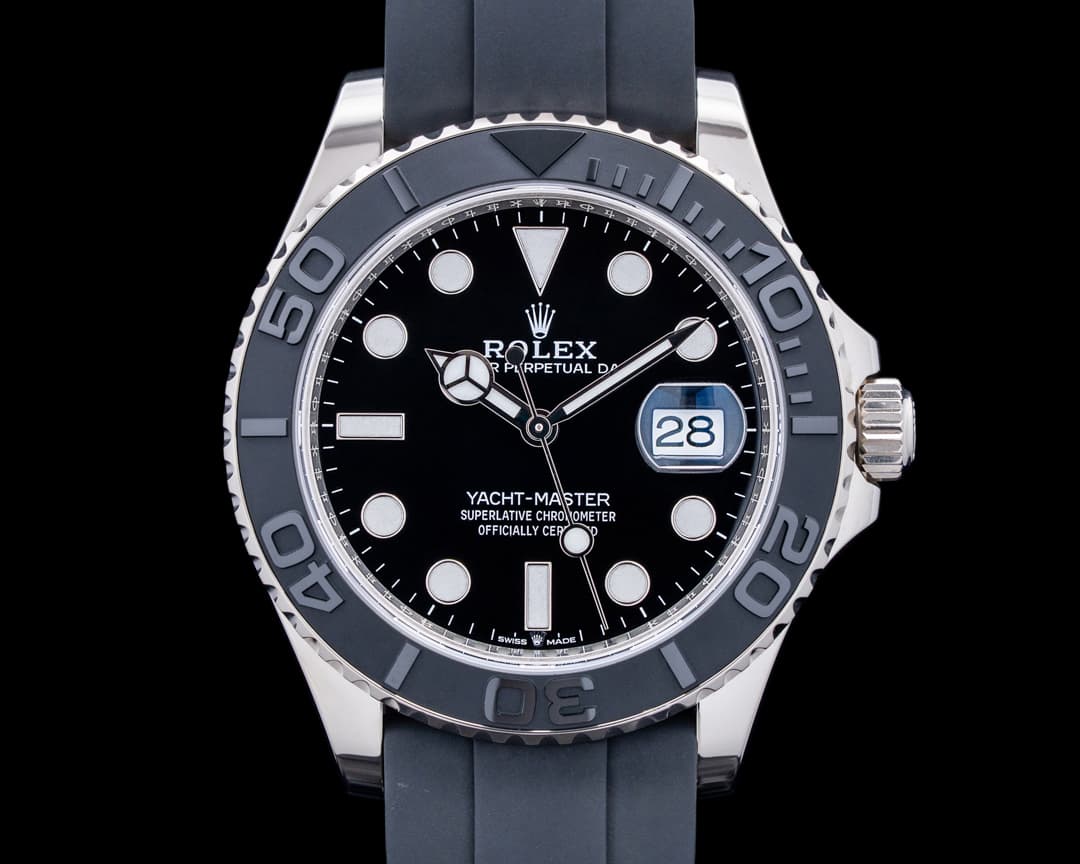
226659 Yacht-Master 18K White Gold Black Dial
$31,900
View Watch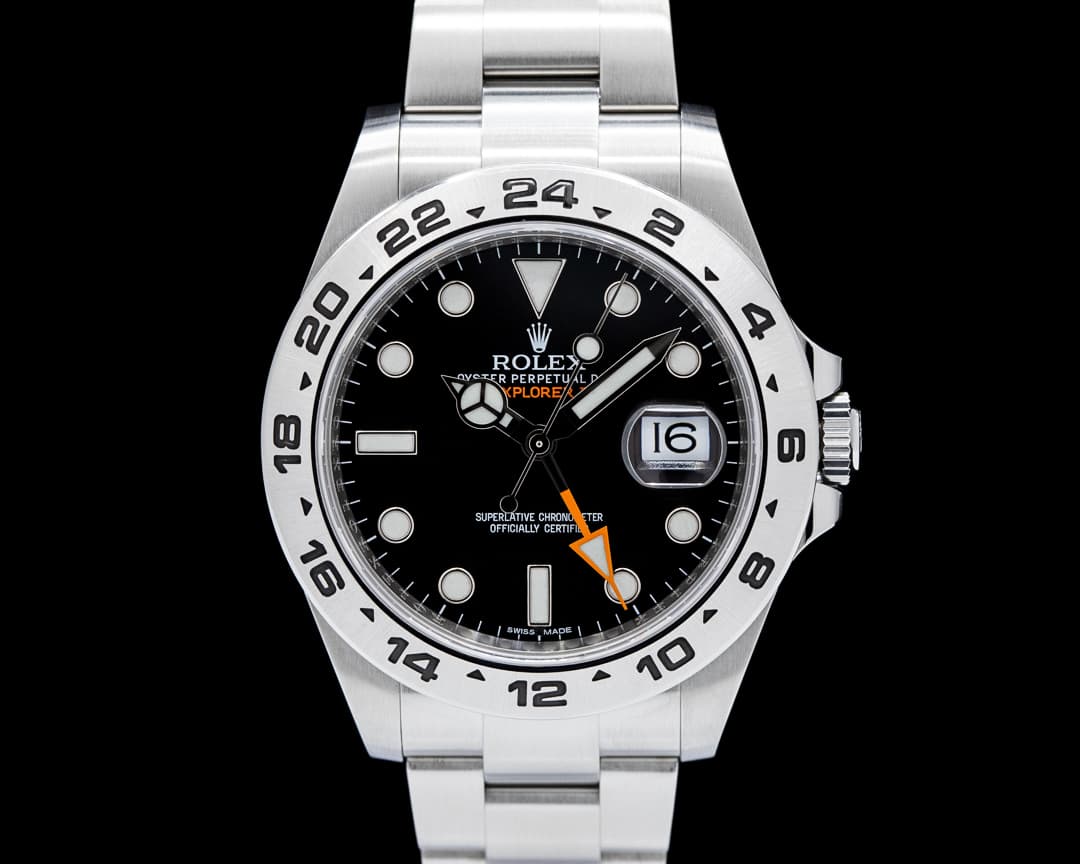
216570 Explorer II SS Black Dial
$10,900
View Watch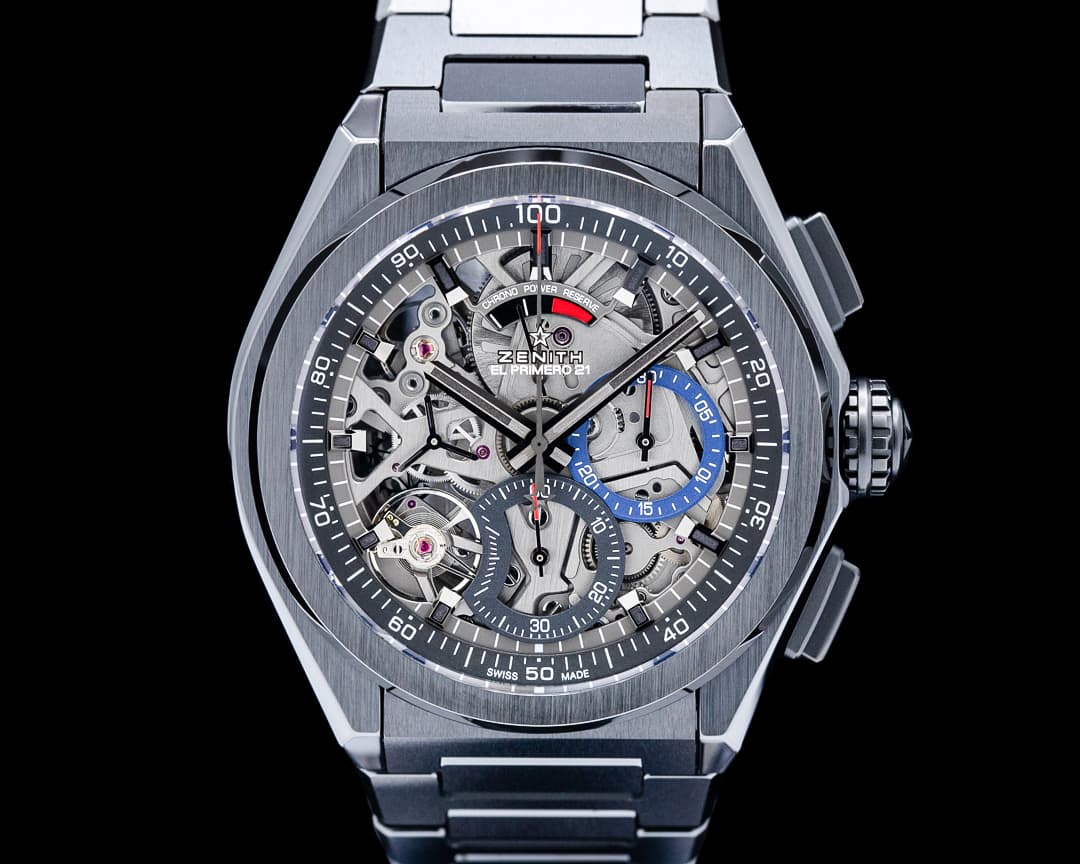
Defy El Primero 21 Chronograph Black Ceramic Skeleton Dial
$9,900
View Watch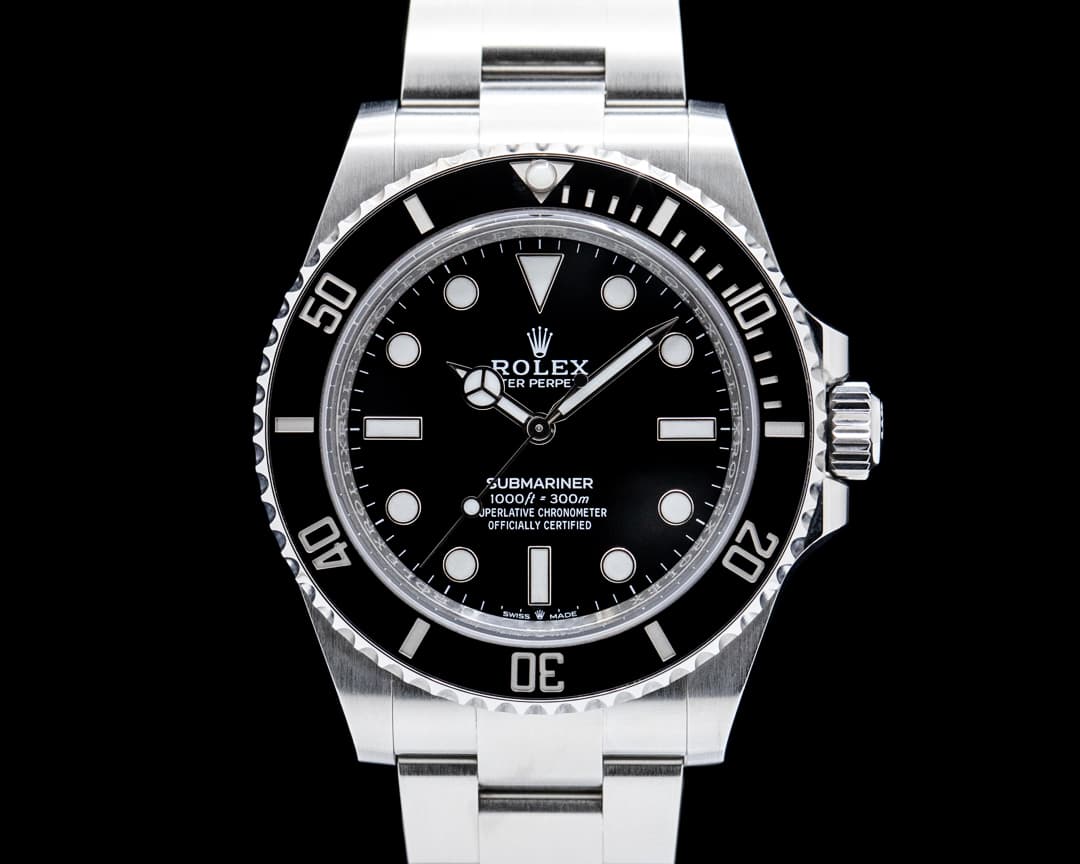
124060 Submariner No Date 41MM SS Black Dial
$13,900
View Watch
Shop New Arrivals
226659 Yacht-Master 18K White Gold Black Dial
$31,900
View Watch216570 Explorer II SS Black Dial
$10,900
View WatchDefy El Primero 21 Chronograph Black Ceramic Skeleton Dial
$9,900
View Watch124060 Submariner No Date 41MM SS Black Dial
$13,900
View Watch
More Content