History
The Nautilus arrived in 1976 at a strange moment for the industry. Luxury watchmaking was still absorbing the shock of the quartz crisis, and Gérald Genta handed Patek Philippe something that had barely existed before: an expensive steel sports watch. The original ref. 3700 came with an geometric bezel, a horizontally embossed dial, and a porthole-inspired case shape that referenced the windows of ocean liners. Everything the line still trades on was established in that first reference — the case silhouette, the integrated bracelet, the horizontally striped dial. Patek has updated the movement and dimensions several times since, but the design logic has stayed intact for nearly five decades.
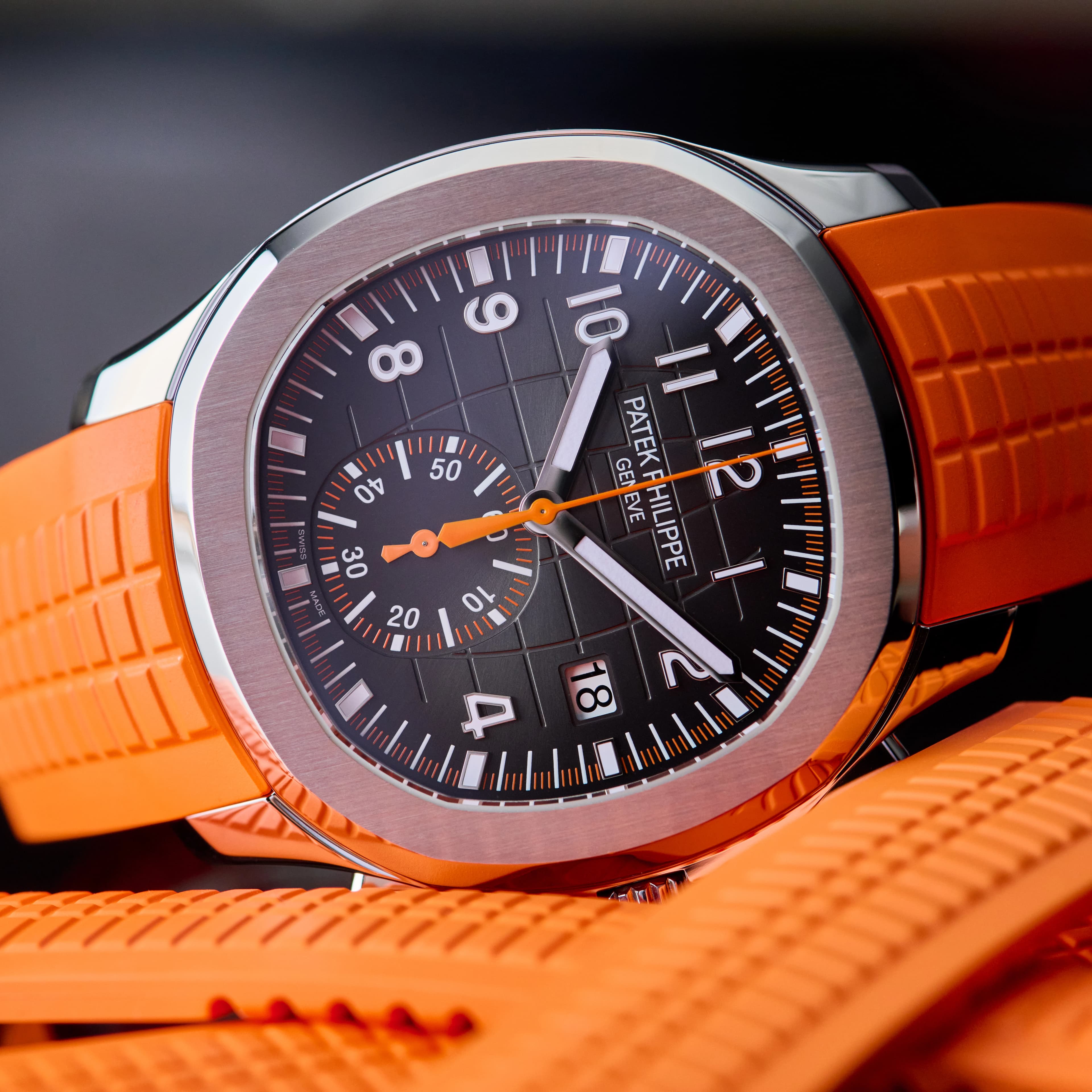
The Aquanaut arrived in 1997, also in steel, also as a sports watch. It was younger in feeling, deliberately so. The case is rounder. The dial uses a textured "tropical" pattern rather than the Nautilus's linear embossing. The strap is rubber rather than metal. Where the Nautilus was positioned as a dressed-up sports watch from the start, the Aquanaut aimed at a buyer who wanted something more casual and contemporary, and at the time, more accessible.
Design
The Nautilus case is immediately distinctive: the octagonal bezel with rounded sides, the horizontally integrated lugs, the way the bracelet flows out of the case without a visible seam. The ref. 5711, the generation most buyers encounter on the pre-owned market, measures 40mm and wears closer to a 38mm on the wrist because of how flat and low-profile the case sits. The dial is blue-grey on the flagship examples, with horizontal embossing that shifts in texture depending on the light. Applied gold hour markers and hands. The overall effect is formal enough to wear with a suit and understated enough that it doesn't announce itself across the room.

Patek 5711/1A-014
The Aquanaut is rounder and softer in outline. The ref. 5167, the standard reference for most pre-owned buyers, also runs 40mm, but reads differently on the wrist. The case has more presence because the rubber strap adds visual mass around it in a way a metal bracelet doesn't. The dial uses a raised square pattern, what Patek calls "tropical," which reads as a grid in direct light and flattens out in shadow. Color options have included khaki, black, green and blue across the family. The rubber strap integrates cleanly with the case; Patek designed them together, and it shows.
Both dials are well-proportioned. Neither one is busy. The difference is in what each watch says at a glance: the Nautilus reads as refined, the Aquanaut reads as relaxed. Both these pieces are often chosen as everyday pieces, but they wear that title differently.
On the Wrist
The Nautilus bracelet is one of the most comfortable bracelets in watchmaking. The links are rounded on top, the clasp integrates seamlessly, and the whole assembly moves with the wrist rather than against it. Over the course of a day, most wearers stop noticing it's there, which is the highest compliment you can give a bracelet. The aesthetic is extremely slick and discreet. The bracelet is an icon of the industry, and it wears as close to a leather strap as any bracelet. Patek has stripped almost all structure from the bracelet, allowing the piece to sit comfortably and compactly on almost any wrist.
The Aquanaut rubber strap solves for different problems. It's lighter, it doesn't retain heat, and it's indifferent to water. For someone who swims, travels in warm climates, or simply prefers not to think about their watch during physical activity, the Aquanaut strap is arguably a genuinely better daily proposition. The tradeoff is formality: rubber limits where the watch reads as appropriate. It's comfortable in a business-casual setting and unambiguous at a weekend lunch, but it doesn't thrive with a suit the way the Nautilus does.

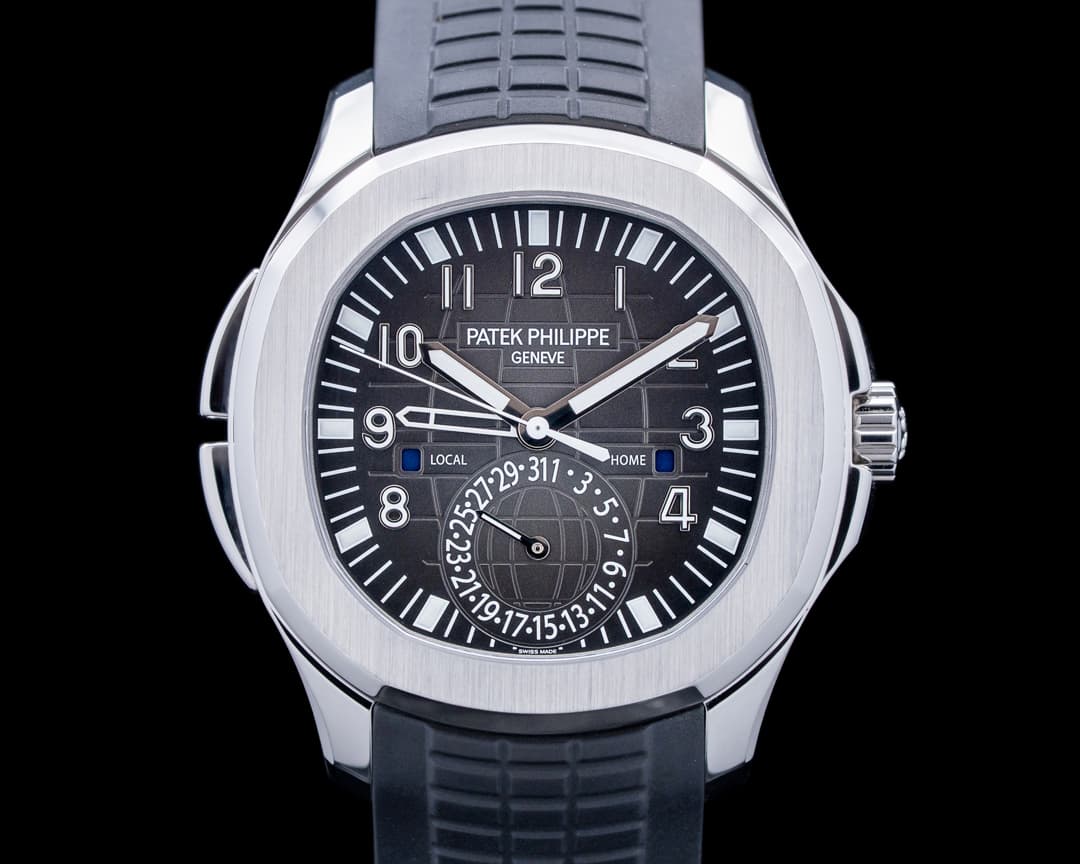
5650 Aquanaut Travel Time Advanced Research
Day to day, these two watches attract different wearers for legible reasons. The Nautilus tends to appeal to buyers who want one watch that travels across contexts, from the office to the weekend without a strap change. The Aquanaut tends to appeal to buyers who have other watches for formal settings, or who simply prefer lighter, lower-maintenance wristwear and don't need to dress the watch up. It also tends to attract a younger buyer, or at least a buyer with a younger aesthetic sensibility. Neither is a wrong read of a very good watch.
Major Variations
Nautilus ref. 3700 (1976-about 1990)The original. Powered by Jaeger-LeCoultre's caliber 920 ebauche. The 3700 is the collector's reference, bought for history rather than daily wearing. Cases show age, bracelets stretch, crystals scratch. That's part of the appeal for some buyers and a dealbreaker for others. Prices vary widely based on condition and provenance. This is a collector's pick for those looking for the watch that plays a role in the broader history of the model line.
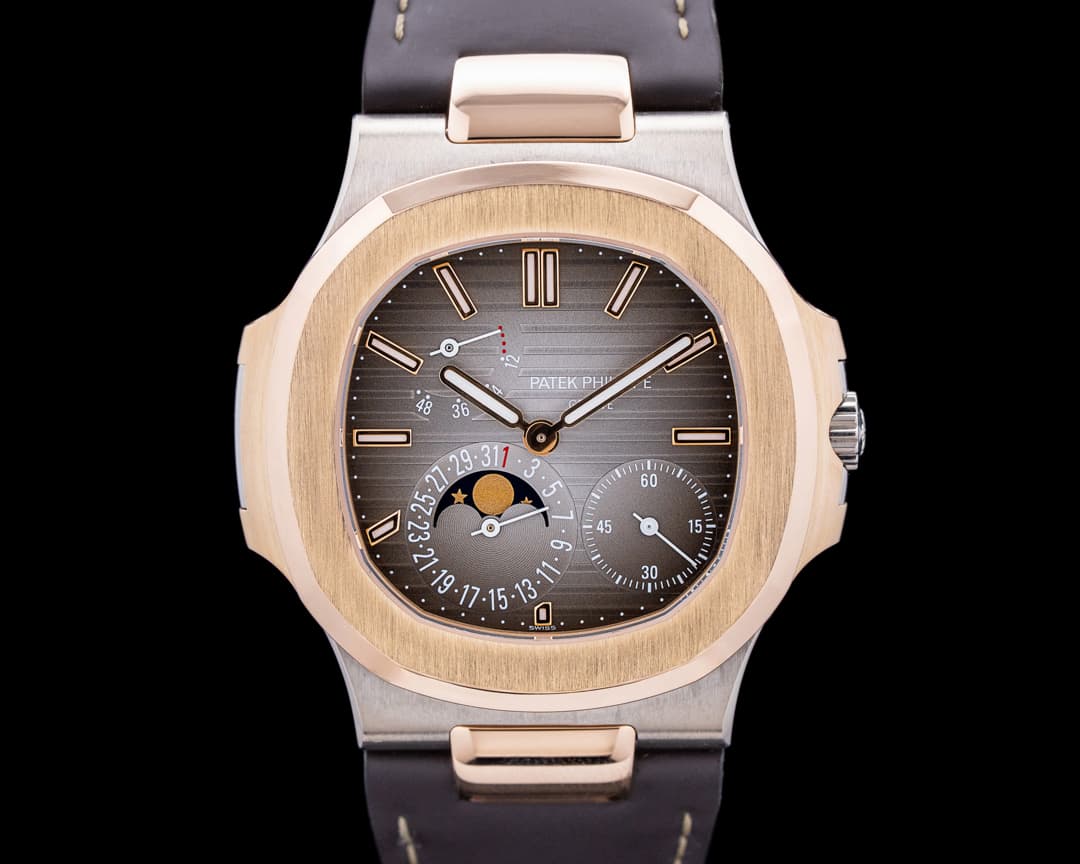
Nautilus ref. 5711 (2006-2021)The reference most pre-owned buyers mean when they say "Nautilus." 40mm, automatic, with Patek's caliber 324 SC in earlier production and the 26-330 SC in later examples. The blue dial 5711 is the benchmark. It was discontinued in 2021, which pushed secondary-market prices dramatically; at peak, examples were trading at many multiples above retail. The market has since cooled from those highs, but the 5711 remains a multiple of its original retail: expensive and in demand consistently.
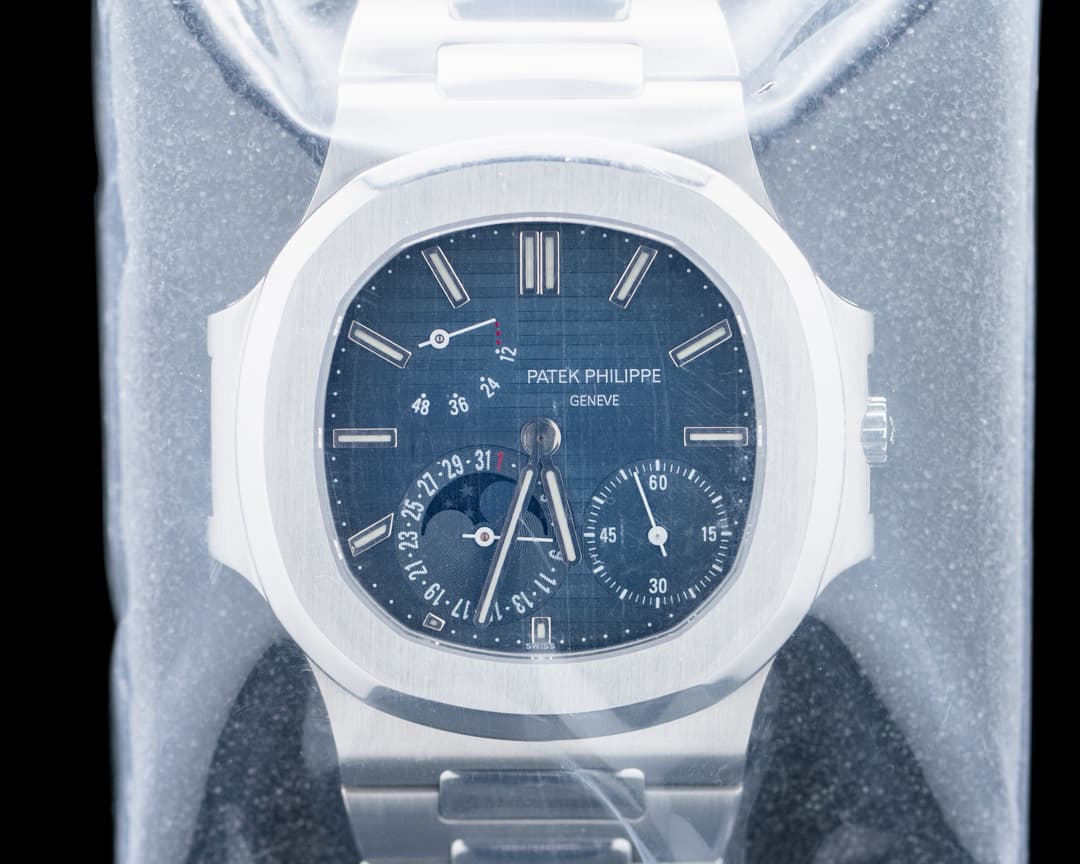
Nautilus ref. 5712 (2006-present)The 5711's complications-equipped sibling, with a moon phase and power reserve display added to the dial. 40mm, same case, busier face. Buyers who want the Nautilus silhouette with more mechanical interest gravitate here. The steel variant was discontinued, but the 5712 remains in the line in its rose gold iteration. Trades at a premium to the 5711 in most conditions.
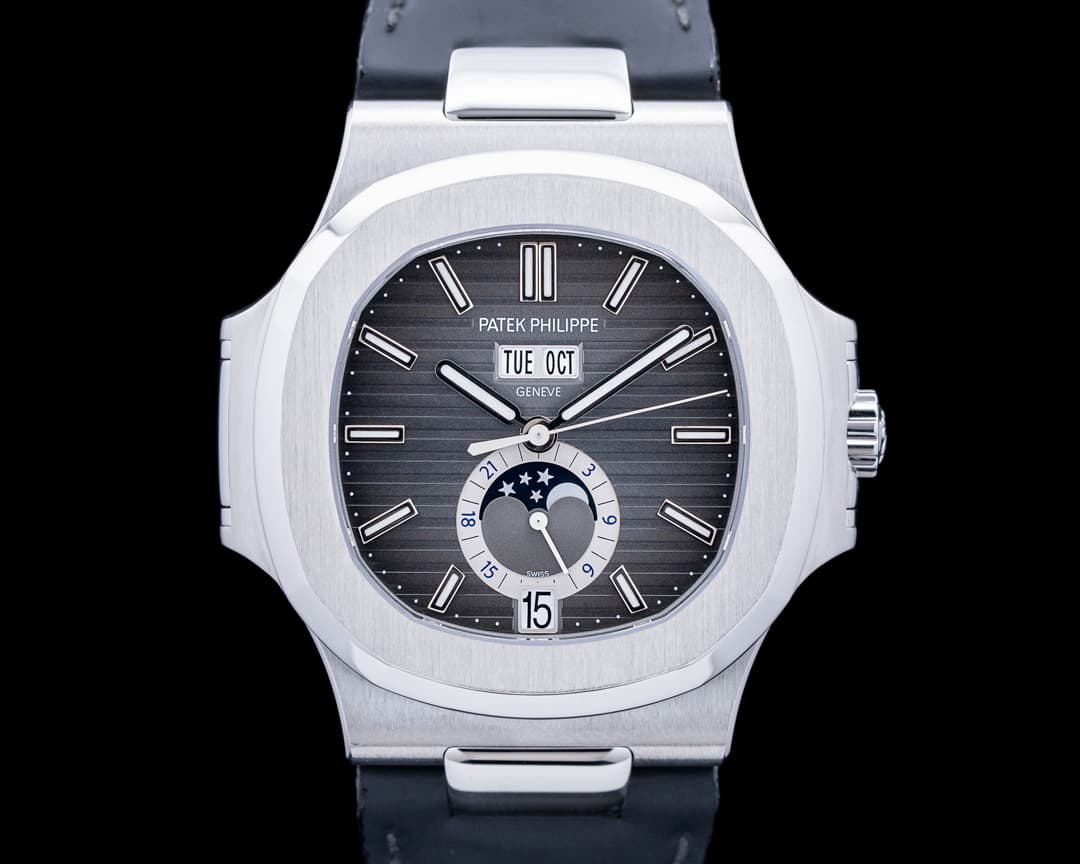
Nautilus ref. 5726 (2012-present)The annual calendar reference. 40mm, with day, date, and month displayed across the dial. The complication adds legibility at the cost of some dial simplicity. Serious buyers; serious prices. For those who like complications, this is a great option, and still far less expensive than the 5740 perpetual calendar iteration.
Aquanaut ref. 5065 (1998-2006) One of the first Aquanauts, running 38mm, this piece services wrists that may prefer a larger diameter than the earlier 5066 or 5060 references. Pre-owned examples are well-priced relative to the 5167, which makes them attractive to buyers who want Aquanaut ownership without the current-reference premium.
Aquanaut ref. 5167 (2007-present)The reference that defines the Aquanaut market. 40mm, automatic, with caliber 324 SC in earlier production and the 26-330 SC in later examples. Available in stainless steel with a black dial. Like the 5711, it was supply-constrained at retail, which inflated secondary-market prices. Pre-owned availability has improved; prices are firm but no longer irrational.
Aquanaut ref. 5168 (2017-present) The 5167 in 18k white gold sized up slightly. The rubber strap paired with white gold is a specific aesthetic: casual in construction, expensive in material. It reads differently than the steel version and attracts a different buyer, someone who wants the Aquanaut's relaxed wearability without the steel market's volatility. Pre-owned examples trade at significant premiums to steel. The 5168 flaunts a blue or green dial and remains a popular favorite for those with larger wrists.
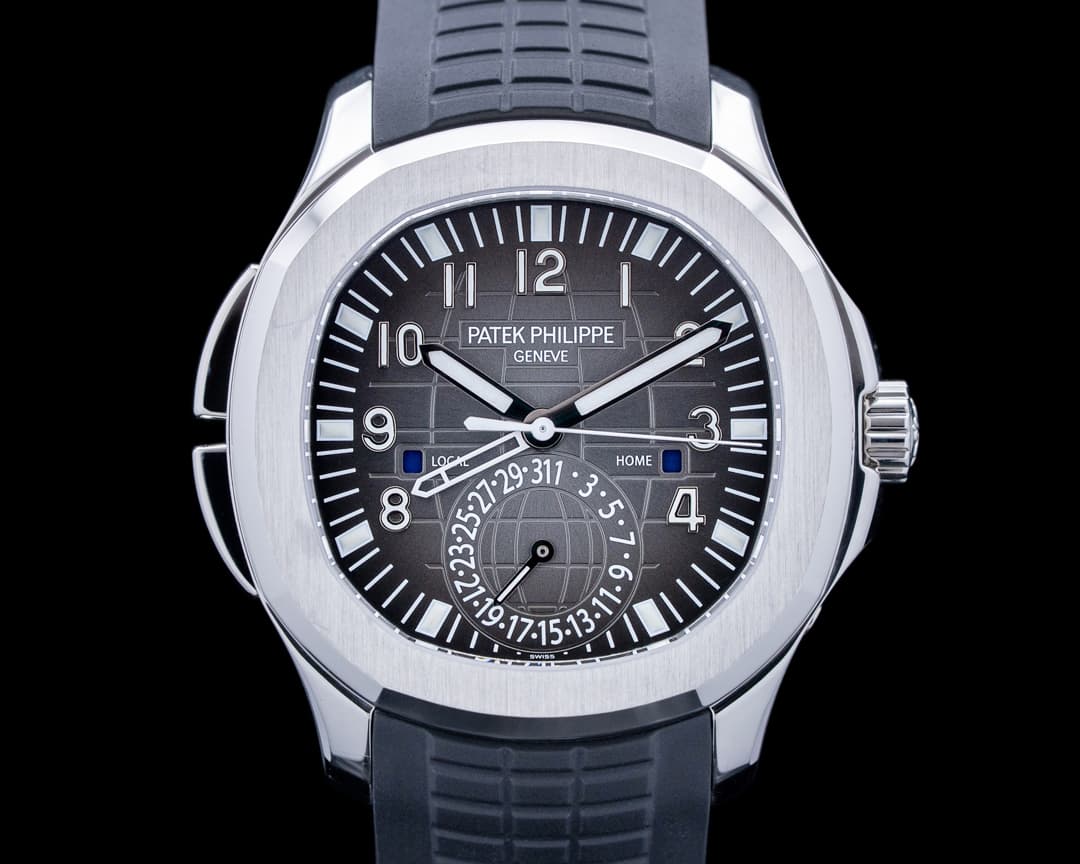
Aquanaut Travel Time ref. 5164 (2011-present)The dual-time-zone Aquanaut, with a second time zone indicated via a pusher-operated hand and day/night indicator. 40.8mm, slightly larger than the 5167. For buyers who travel frequently and want function alongside form, this is the Aquanaut reference with the most day-to-day utility. The stainless steel iteration was discontinued, but it remains in the contemporary collections in precious metal.
Which One
There is no wrong answer here, but there is a right question. The Nautilus is the better watch for someone who needs one piece to cover the range, formal enough for the office, capable enough for the weekend, coherent across both. The Aquanaut is the better watch for someone who prioritizes comfort and ease over versatility, or who already has pieces that handle the formal end of their collection and wants something genuinely relaxed.
Both are mature, well-supported references with active pre-owned markets and decades of manufacturing behind them. Both will hold value better than almost anything else you could buy in this price range. And both work for sporty-dress applications. The question isn't which watch is better. The question is which watch is better for the life you're actually going to put it through.
Shop New Arrivals
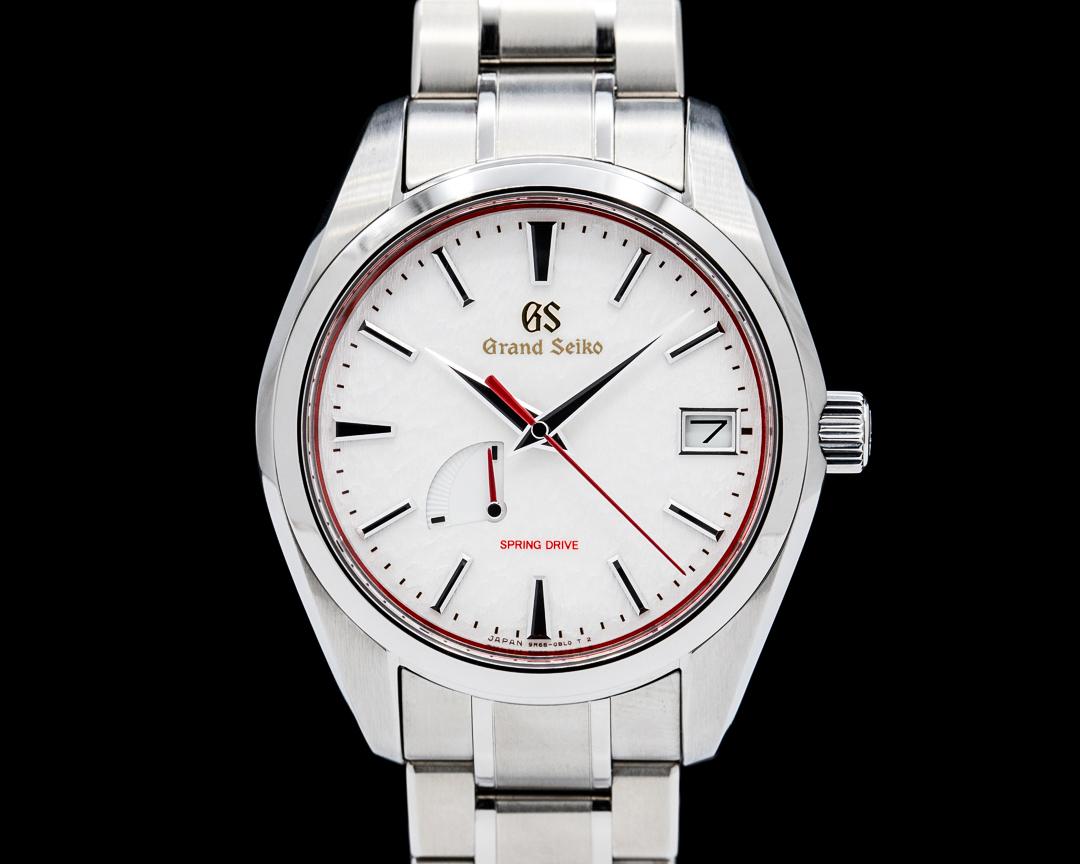
SBGA421 Spring Drive "Red Snowflake" Titanium White Dial LIMITED
$7,900
View Watch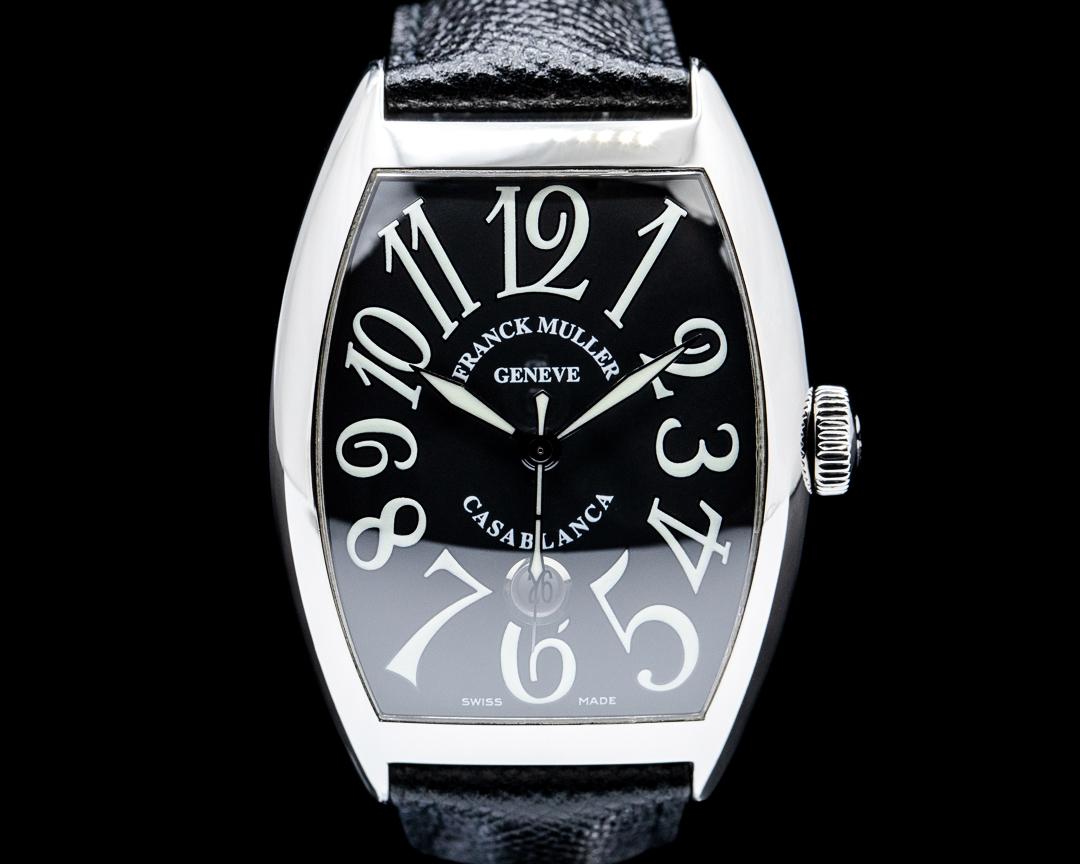
8880 C DT Casablanca Cintree Curvex SS Black Dial
$6,900
View Watch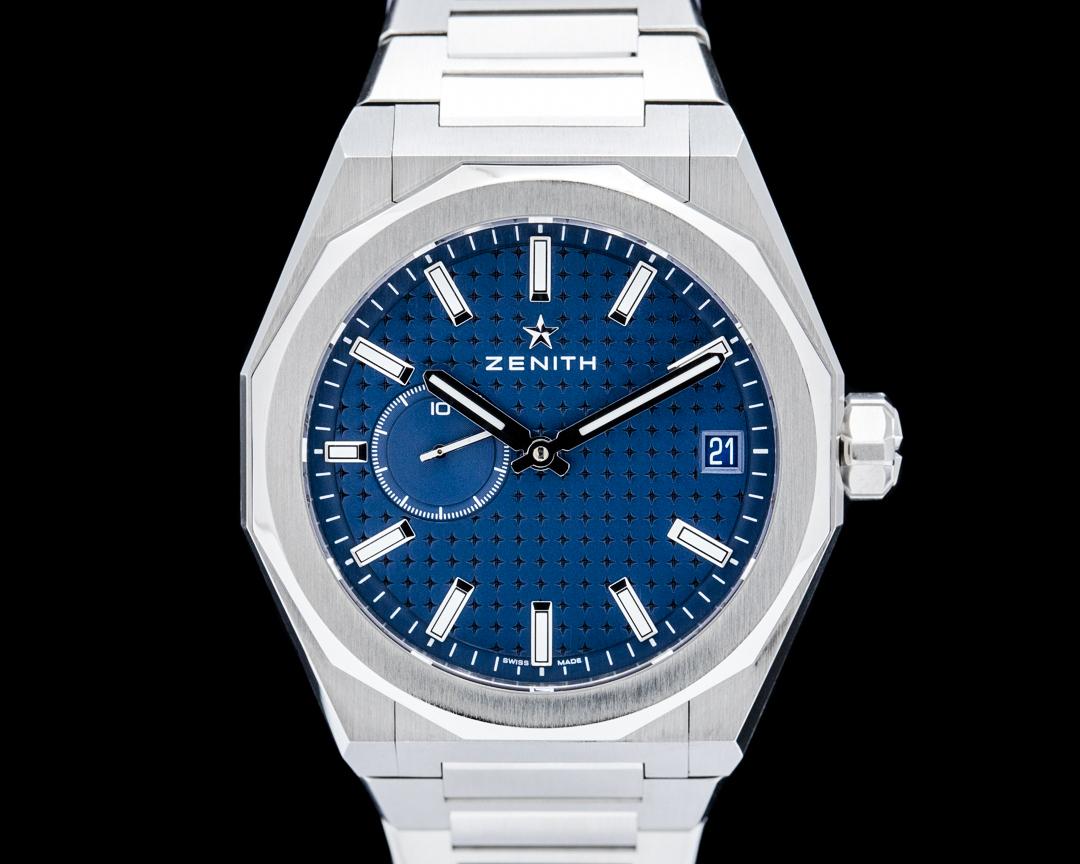
Defy Skyline SS Blue Dial
$7,350
View Watch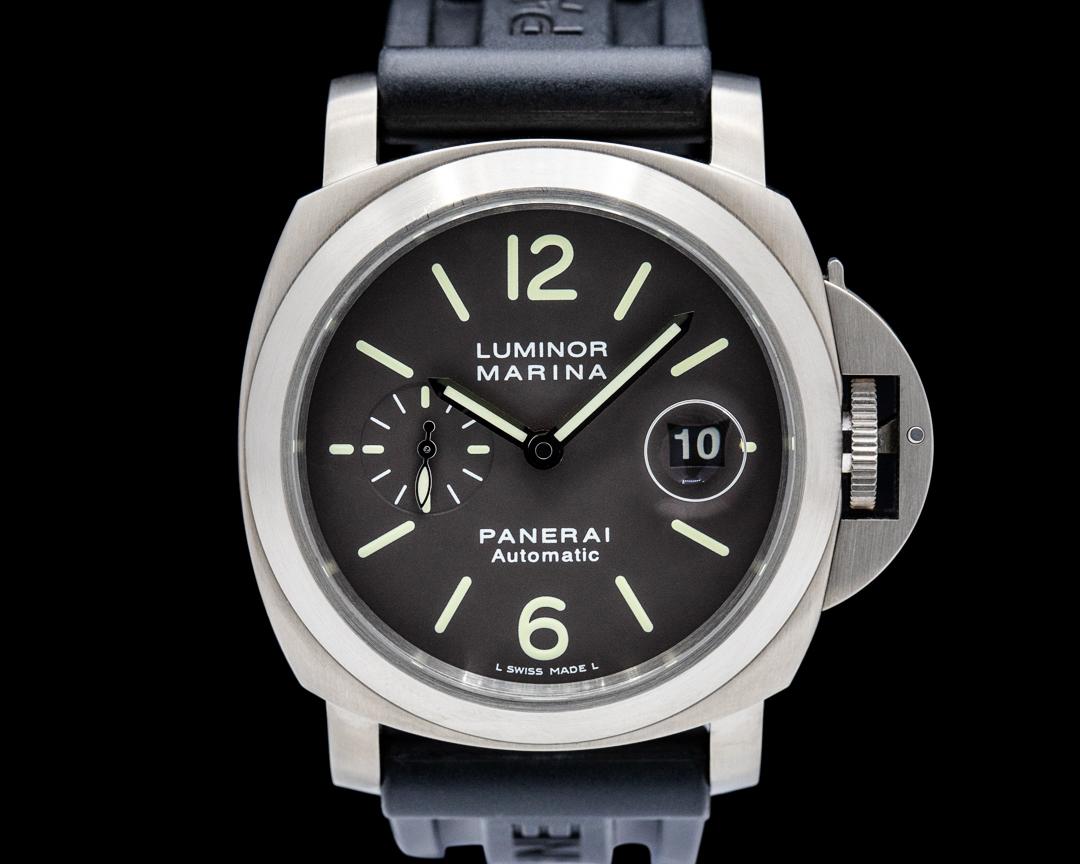
PAM00240 Luminor Marina Automatic Titanium Gray Dial
$6,490
View Watch
Shop New Arrivals
SBGA421 Spring Drive "Red Snowflake" Titanium White Dial LIMITED
$7,900
View Watch8880 C DT Casablanca Cintree Curvex SS Black Dial
$6,900
View WatchDefy Skyline SS Blue Dial
$7,350
View WatchPAM00240 Luminor Marina Automatic Titanium Gray Dial
$6,490
View Watch
More Content