The Patek Perpetual Calendar vs. Annual Calendar
Published on 7/1/2026
What Each Complication Actually Does
The annual calendar was Patek Philippe's invention in 1996. It uses a mechanism that distinguishes between 30- and 31-day months but treats February like any other short month. With the annual calendar, you have one correction per year, at the end of February. For most owners, this is a small concession for a great value.
The perpetual calendar goes further. It carries a mechanical model of the Gregorian calendar, including the four-year leap year cycle, and adjusts itself without input. Under normal wear, it never needs a date correction. The catch is what happens when it stops. A perpetual that runs down or sits in a drawer requires a careful reset with the crown and correctors in the right sequence. Force the hands at the wrong calendar position, particularly between 8 PM and 3 AM, when the mechanism is mid-change, and you risk damaging the gears and levers responsible for the calendar advance.
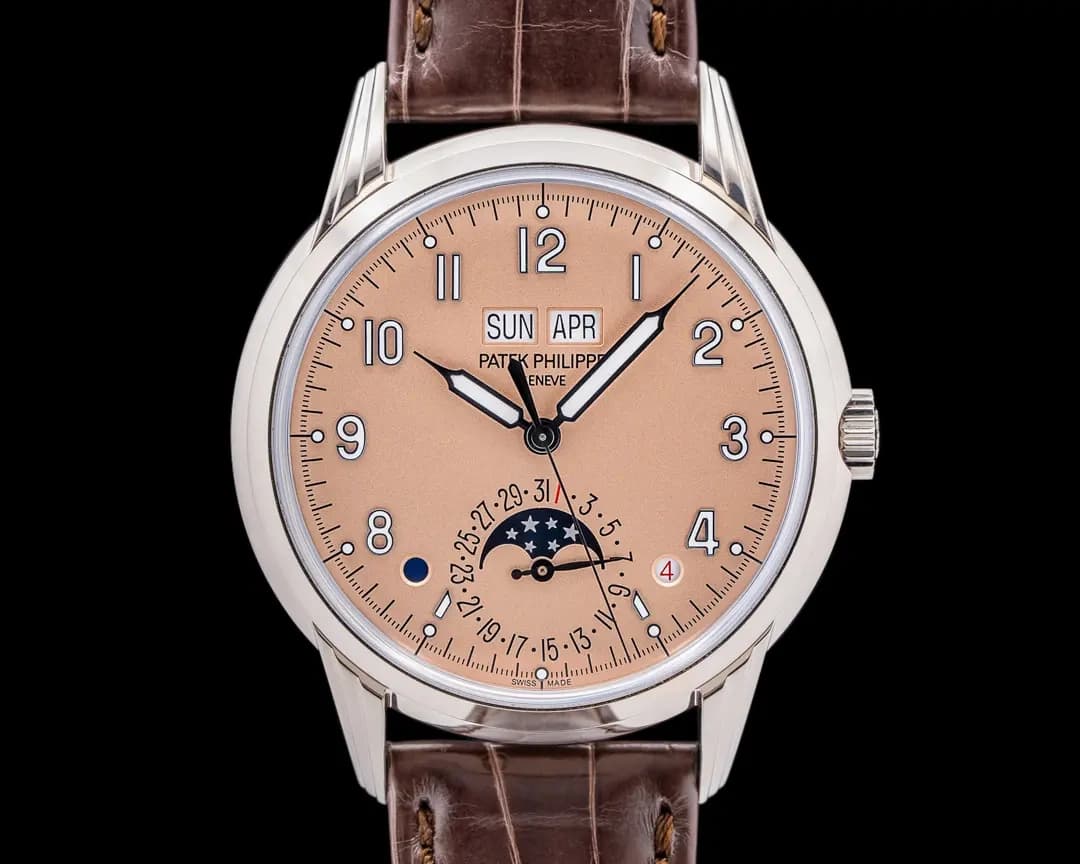
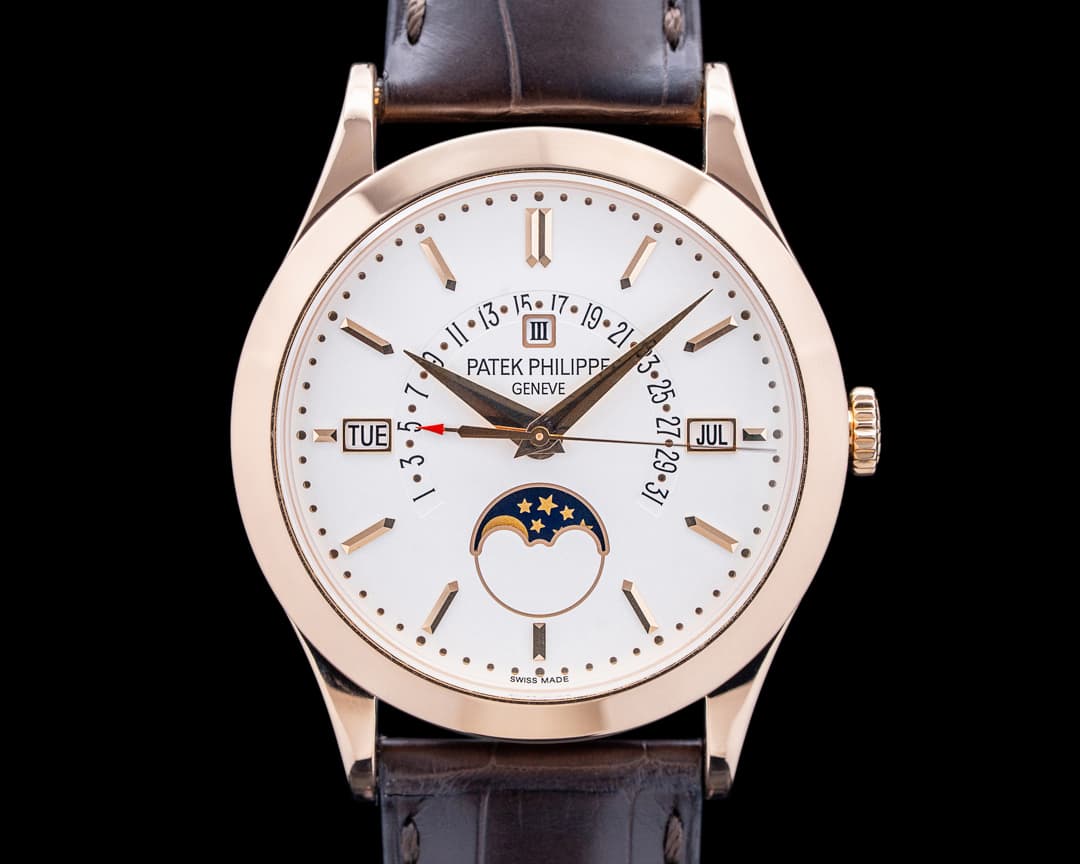
Patek 5320G Perpetual Calendar
The annual calendar is more forgiving in this respect. Reset after stopping is simpler, and the mechanism is less sensitive to user error.
Both are purely mechanical timepieces. The question isn't which is more mechanically impressive, the perpetual clearly is, it's which matches how you actually wear watches and your personal tastes and preferences.
The Annual Calendar References
Ref. 5035 (1996–2005)
The original annual calendar. Patek introduced it in yellow gold and white gold, with the caliber 315 S QA driving a three-register dial layout that became the template for everything that followed. The 5035 is the entry point into Patek's annual calendar family on the pre-owned market: prices have stayed accessible relative to newer references, making it the natural starting point for buyers who want the complication without the premium of more recent production. The case is 37mm, which reads small by current standards but wears cleanly on wrists of a variety of sizes. The 5035 trades in the low $30,000 range.
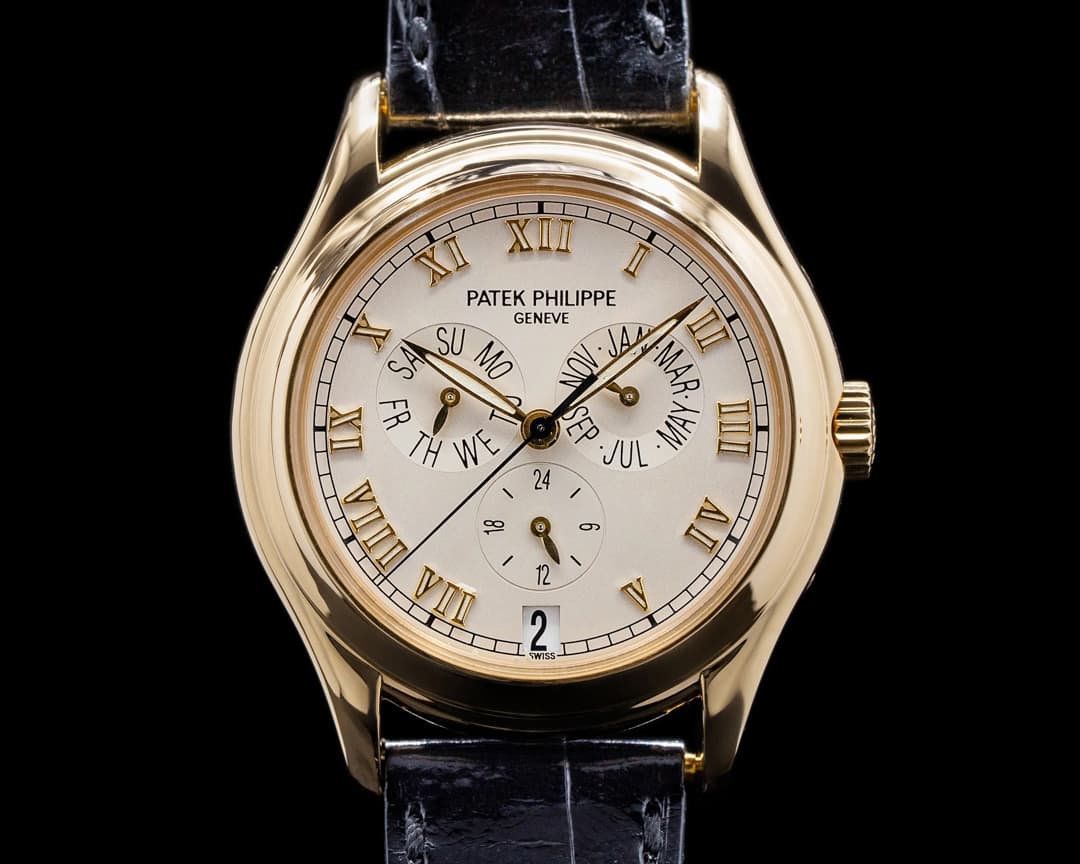
Patek 5035J
Ref. 5146 (2005–2021)
The 5146 is the 5035's direct successor and one of the definitive modern production annual calendars in Patek's lineup. It runs on the caliber 324 S QA and gained a power reserve indicator that the 5035 lacked, a practical addition for a watch that rewards consistent wear but occasionally sits. Case diameter was updated to 39mm. The 5146 is available in yellow gold, rose gold, and white gold, with several dial variants across its production run. On the pre-owned market, it sits above the 5035 but below the 5205, which is exactly where it belongs: the bridge between the original reference and the complication's more contemporary presentation. These models trade for mid $30,000s in standard interations.
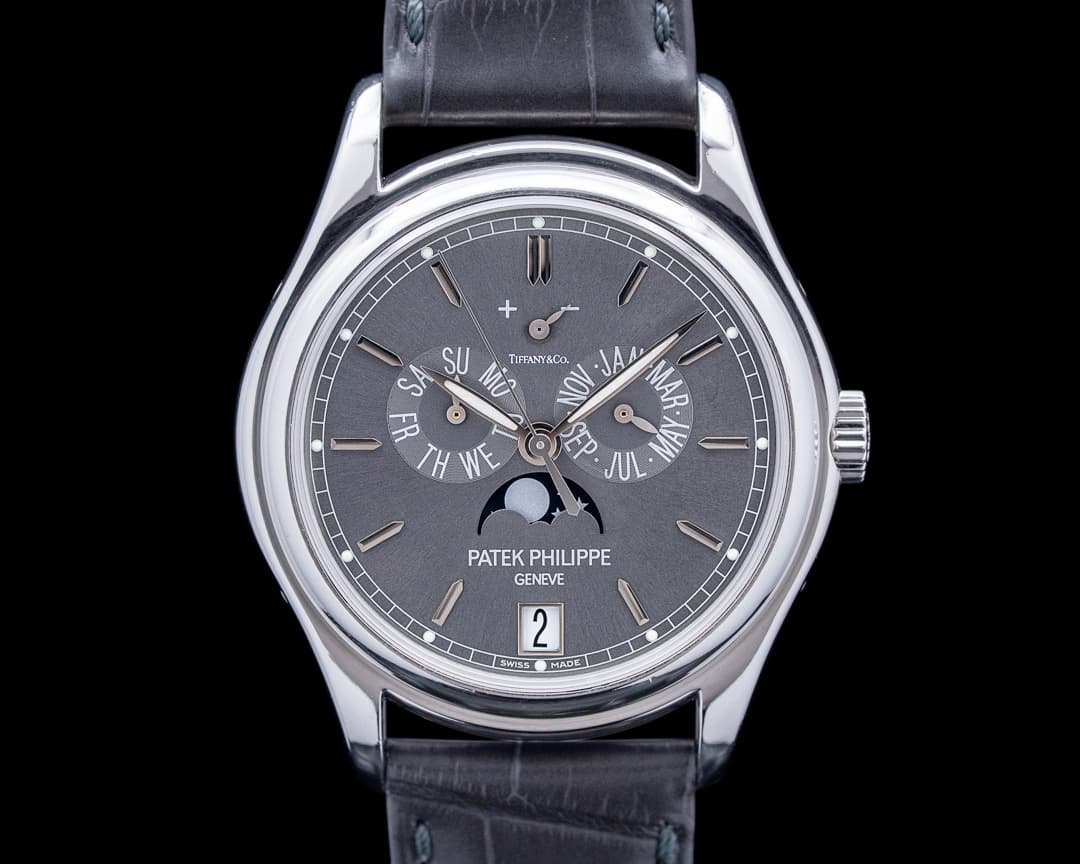
Ref. 5205 (2010–present)
The 5205 moved the annual calendar's display to a more integrated layout, calendar information presented through apertures rather than the three-register arrangement of its predecessors. It's the reference that brought the complication into line with Patek's broader contemporary aesthetic: cleaner, less busy, better suited to the direction dial design has moved over the past fifteen years. The caliber 324 drives all of it, and the presentation is meaningfully different from the 5146. Pre-owned prices reflect its desirability: the 5205 is the annual calendar reference most buyers are targeting right now, and the market prices it accordingly. These models differ by specific configuration, but trade in the $50,000s depending on iteration and condition grade.
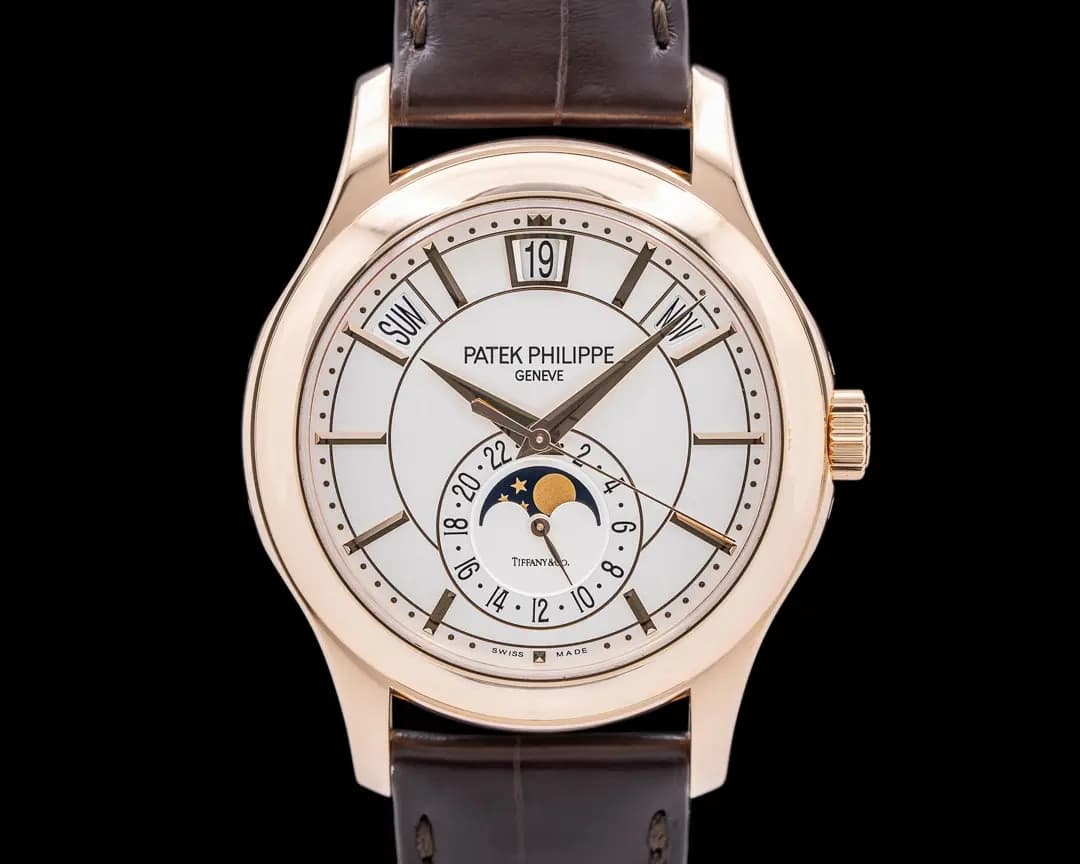
Patek Philippe 5205R Annual Calendar
The Perpetual Calendar References
Ref. 3940 (1985–2007)
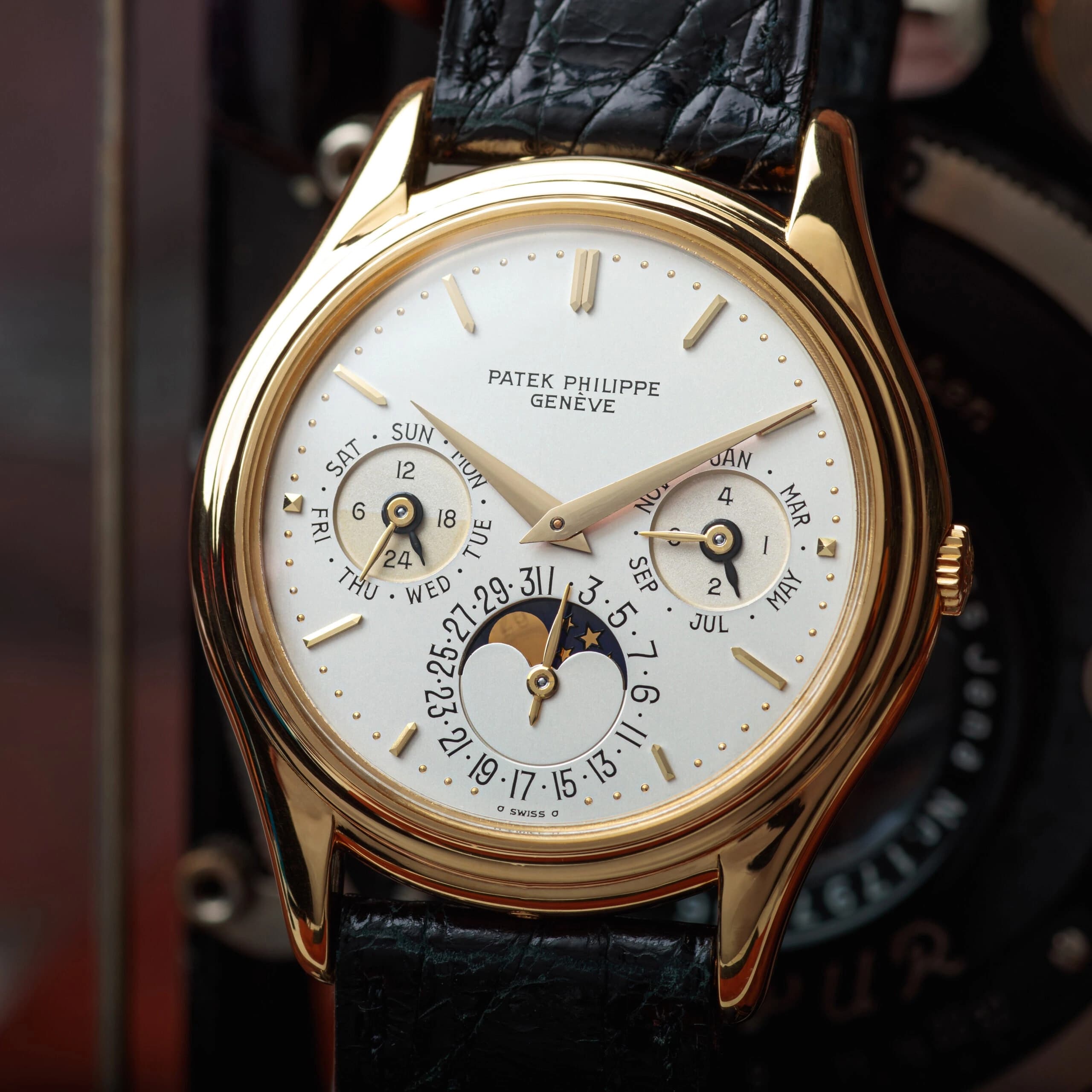
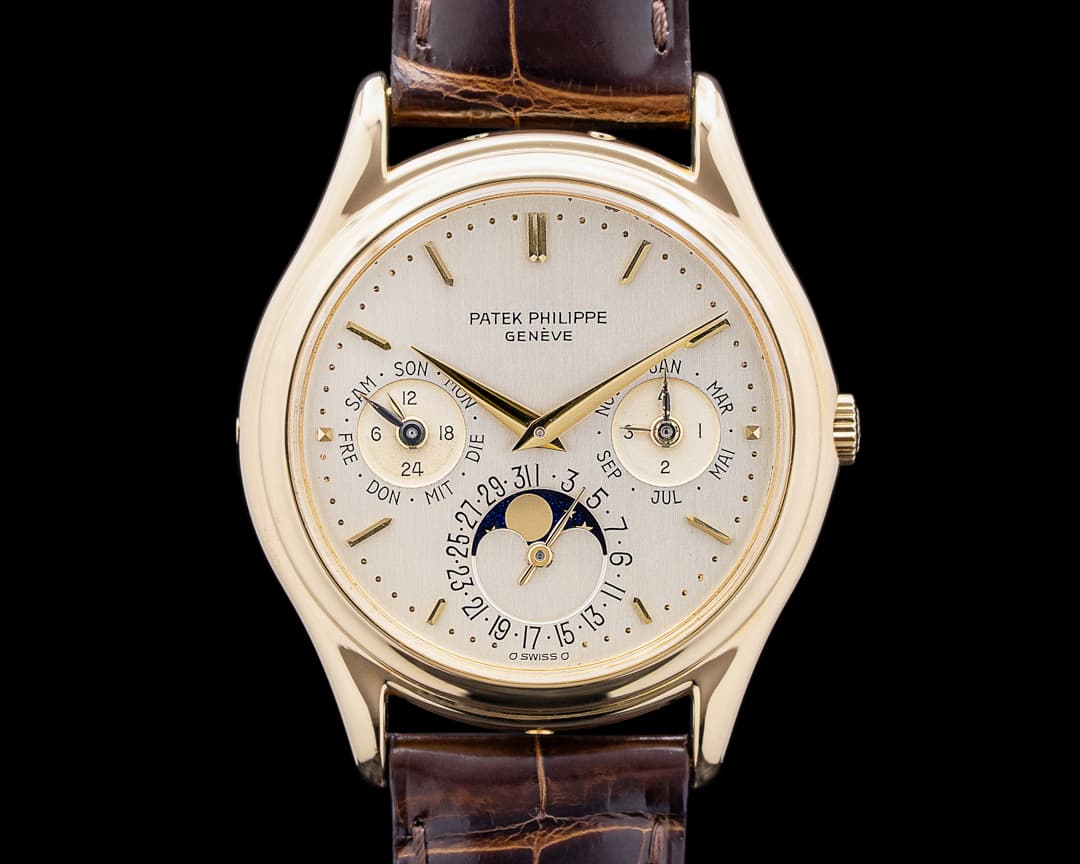
The 3940 is the foundational modern perpetual calendar from Patek. A 36mm case in yellow or white gold, or in platinum, the caliber 240 Q inside, and the traditional 3 register layout that is now the traditional aesthetic of the perpetual calendar complication. It was in production for over two decades starting in 1985 and was the reference that established Patek's perpetual calendar as the default serious dress watch for a generation of collectors. The dial reads as a classic: it looks like what a perpetual calendar is supposed to look like, it set that aesthetic.
On the pre-owned market, recently the 3940 has appreciated heavily, which changes the calculus for buyers who assume older means cheaper. It doesn't, here. A well-preserved example in yellow gold now sits in the $70,000s or more: at a level that reinforces rather than undercuts the argument that perpetual calendars carry a price premium over annuals.
Ref. 5140 (2001–2018)
The 5140 updated the 3940's formula with a larger 37.2mm case, the same caliber 240 Q inside, and proportions suited to a market that had moved toward larger references. Dial configurations followed the same logic as the 3940, but the watch wears slightly bolder without abandoning the dress character that defines the line. Discontinued in 2018, it has settled into a clear pre-owned position: above the 3940 in case size, below the 5320 in complexity and current-generation appeal, well-suited to buyers who want the traditional perpetual layout in a more contemporary package.
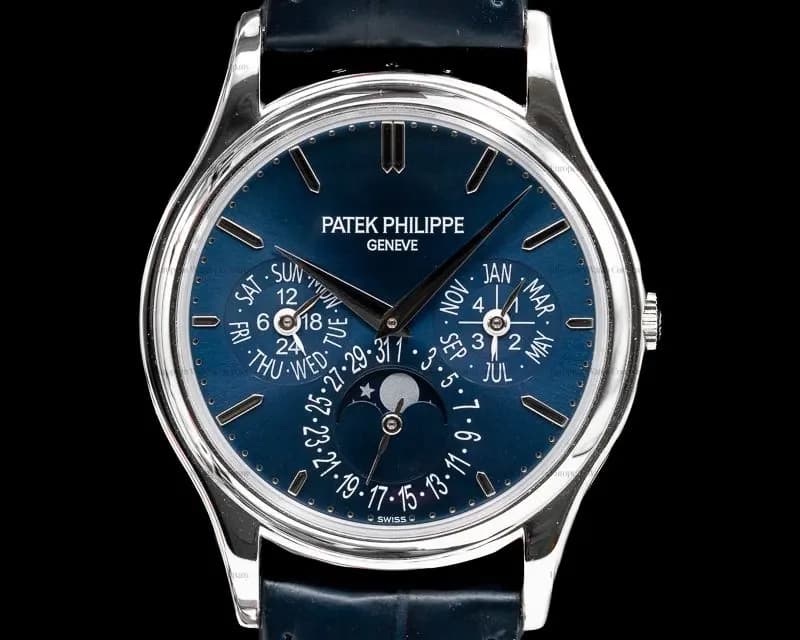
Patek Philippe Reference 5140P
Ref. 5320 (2017–present)
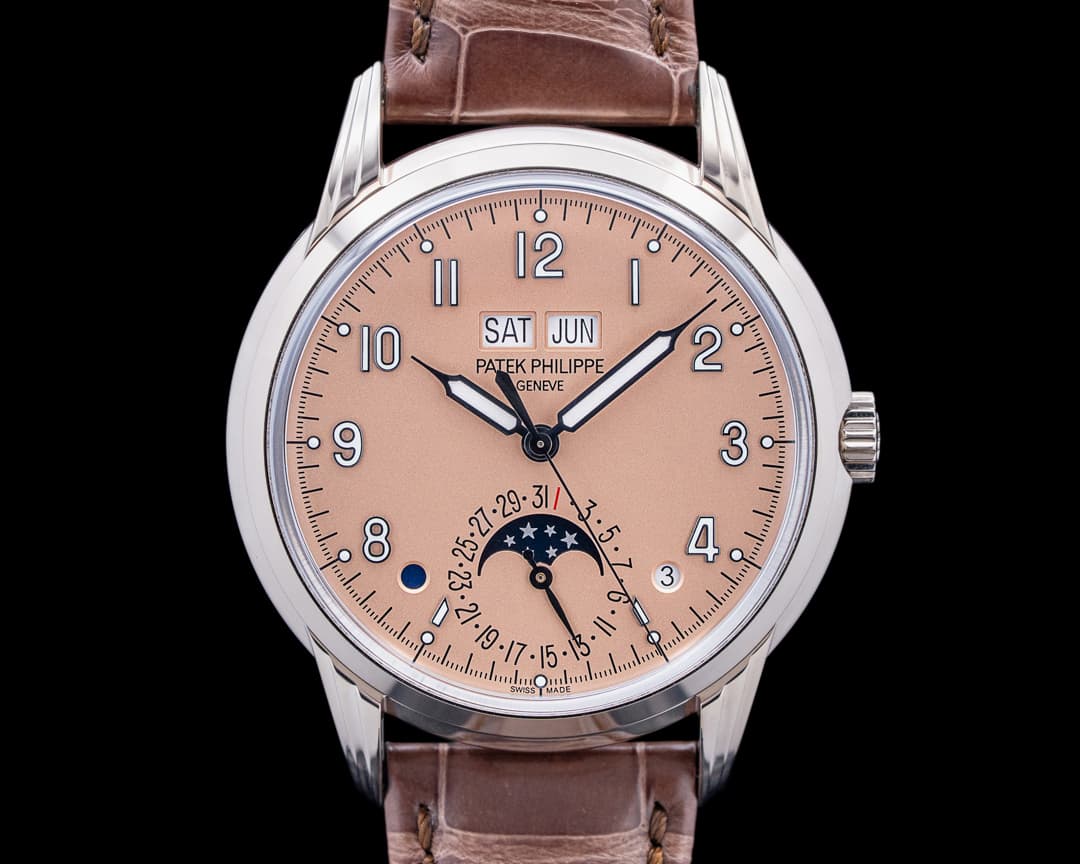
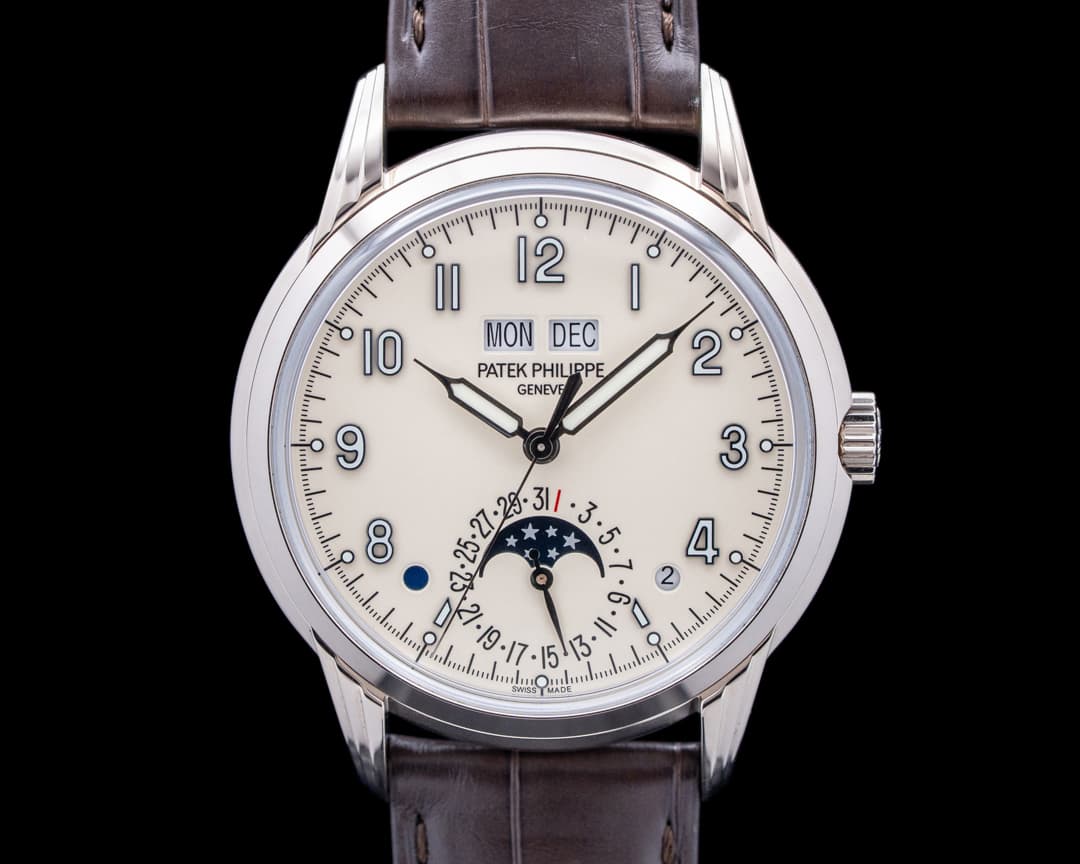
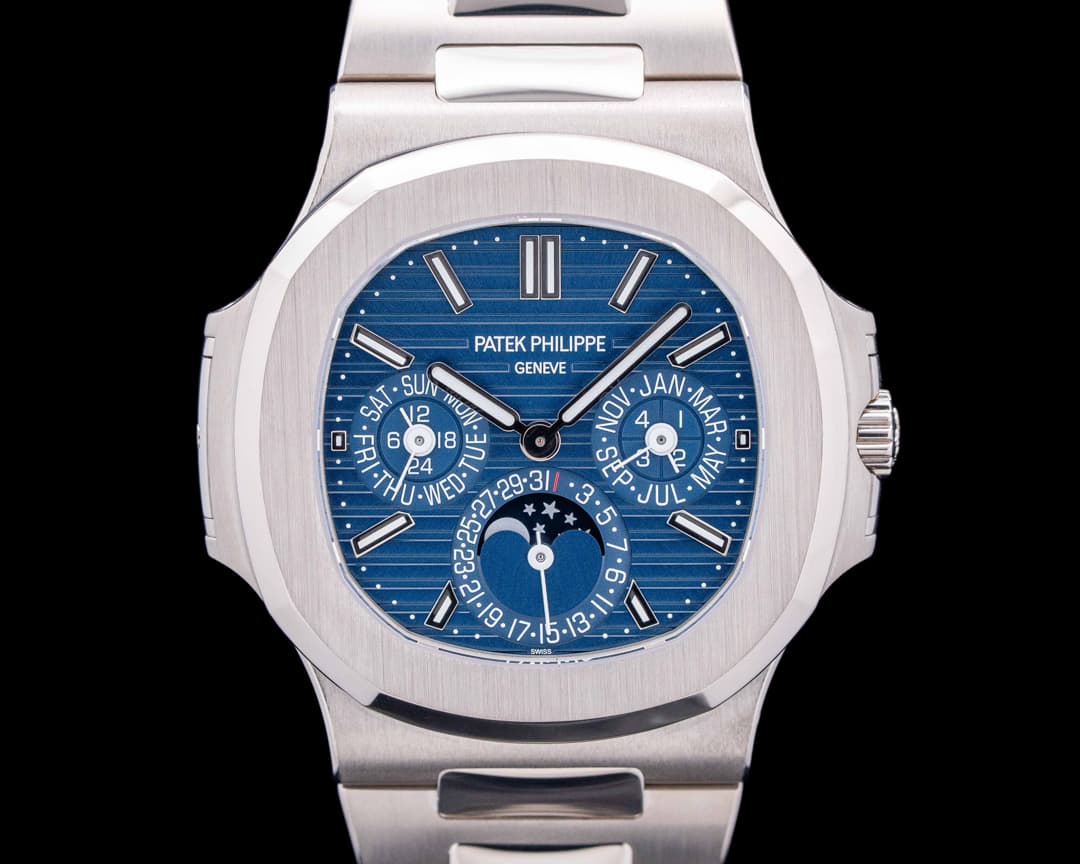
The 5320 is a different kind of perpetual calendar. Where the 3940 and 5140 display the calendar in registers across the dial, the 5320 uses apertures. The moon phase sits at six o'clock, the day and month appear in apertures, and the caliber 324 S Q drives all of it. The dial is much simpler, and deliberately so. This is the perpetual calendar Patek designed for a buyer who wants the complication to be less cluttered than the busier subregister layout of the earlier iterations. Pre-owned prices sit around $65,000 with a white dial, or $73,000 with a salmon dial, consistent with its position as the current-generation perpetual in active production.
The Price Gap and What It Buys
The perpetual calendar sits substantially above the annual calendar in pricepoint, often costing twice as much for a perpetual as an annual model. That is certainly a relevant consideration, allowing more collectors to access the world of Patek Philippe complications at a more approachable pricepoint.
What the perpetual premium buys is specific: a mechanism that never asks anything of the owner in a normal year, a higher degree of technical achievement, and a stronger position in collector conversations. None of that is trivial. The perpetual calendar's prestige is a legitimate input, not something to reason around.
The annual calendar's counterargument is just as honest. It handles roughly 364 days of the year identically to the perpetual. The one correction it requires takes thirty seconds. If the watch runs down, resetting it is easy.
For a buyer who wears watches daily and rarely lets one sit, the annual calendar's single concession may genuinely not matter. For a buyer who rotates across a collection and occasionally loses track of what's wound, the perpetual's reliability becomes more concrete. Both are real scenarios. The right answer depends on which one describes you. Further, for the collector that is seeking the most mechanically significant timepiece available, the perpetual calendar is the only option to consider as the definitive more complicated piece.
Which One to Buy
The perpetual calendar is the more complex mechanism. If that's where you're drawn, and the budget accommodates the 3940, the 5140, or the 5320, any of the three is a serious watch with a clear place in the market. The 3940 rewards buyers who value classical presentation and are comfortable with more traditional proportions. The 5140 is the pragmatic middle: updated proportions, same core character, lower pricepoint. The 5320 is for the buyer who wants a modern execution with a streamlined dial aesthetic.
The annual calendar is for the buyer who isn't looking for the added complexity the perpetual affords. The 5035 is the entry point. The 5146 adds a power reserve and a cleaner movement specification. The 5205 is where current demand concentrates, for reasons that are mostly aesthetic and partly about being in active production. The annual provides an opportunity to experience the wonder of Patek complications at a far more approachable price level. Perhaps you have a Calatrava or another time only model, and are looking to add a piece that incorporates more complication but aren't quite yet ready to commit to a perpetual.
Both families reward patient buying on the pre-owned market. Neither is a compromise, it's simply important to understand what you're getting with which complication and to recognize what type of collector you are to make the right choice.
Shop New Arrivals
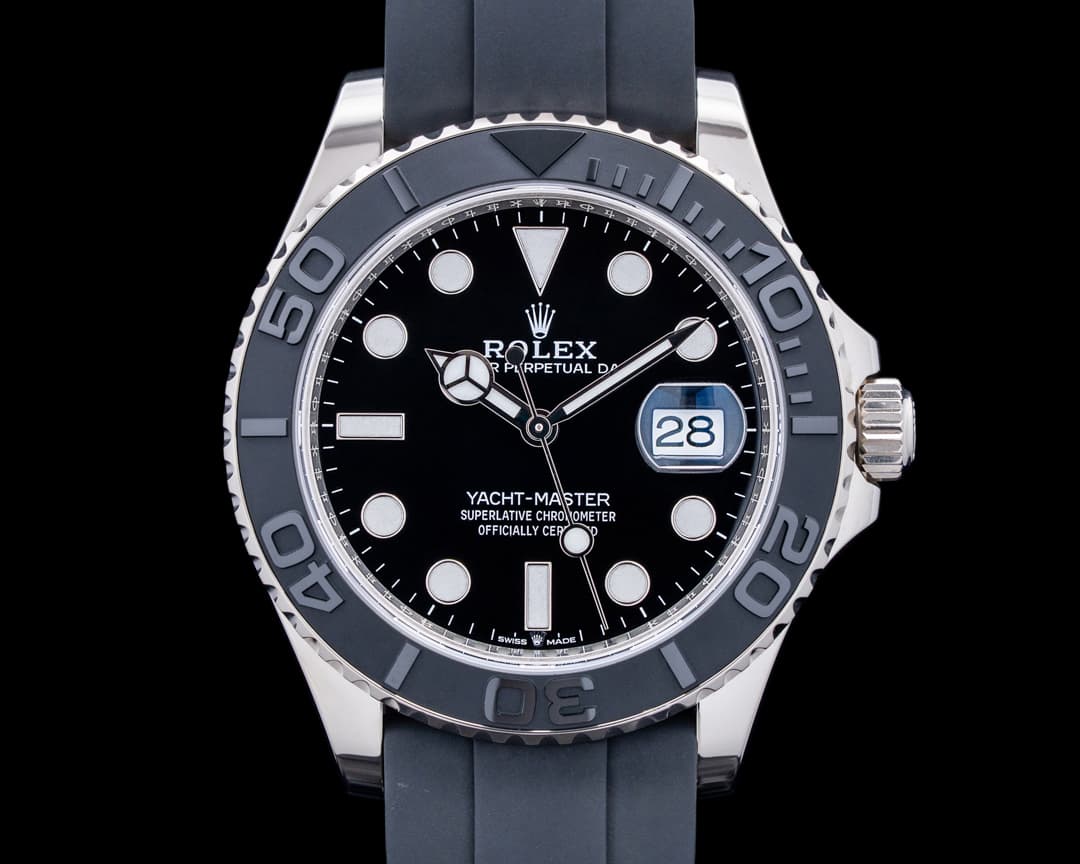
226659 Yacht-Master 18K White Gold Black Dial
$31,900
View Watch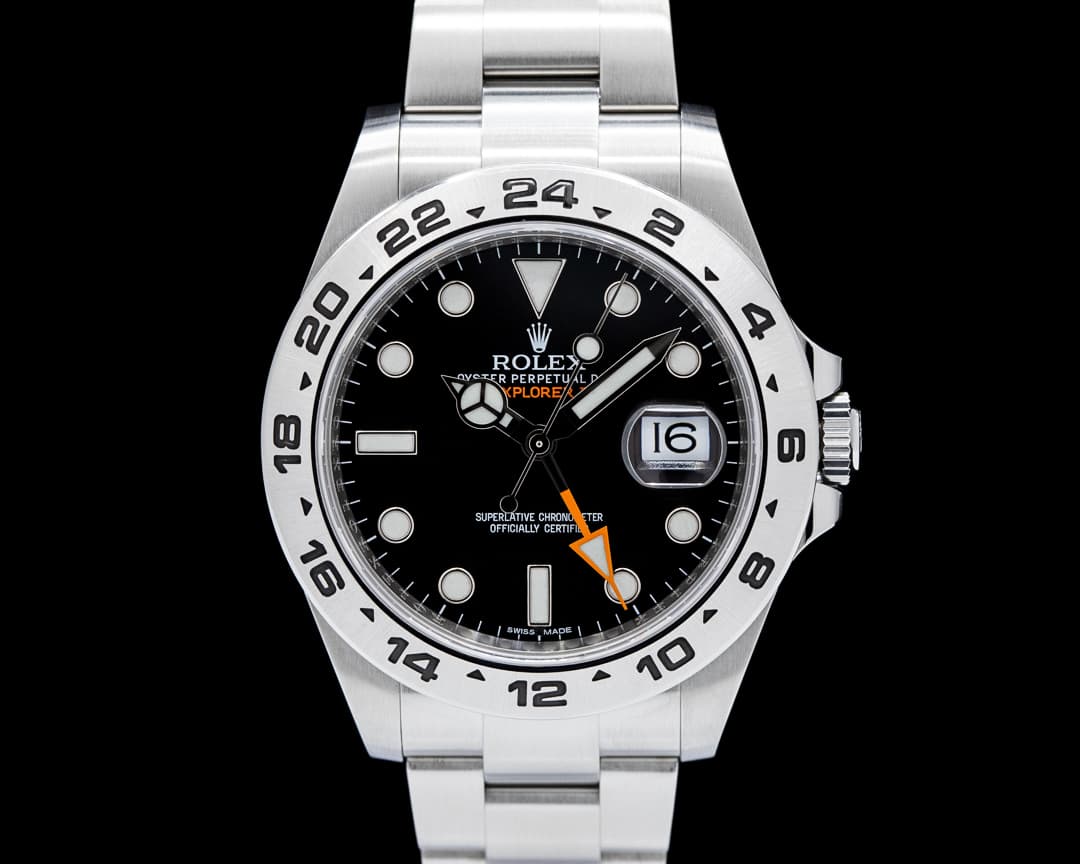
216570 Explorer II SS Black Dial
$10,900
View Watch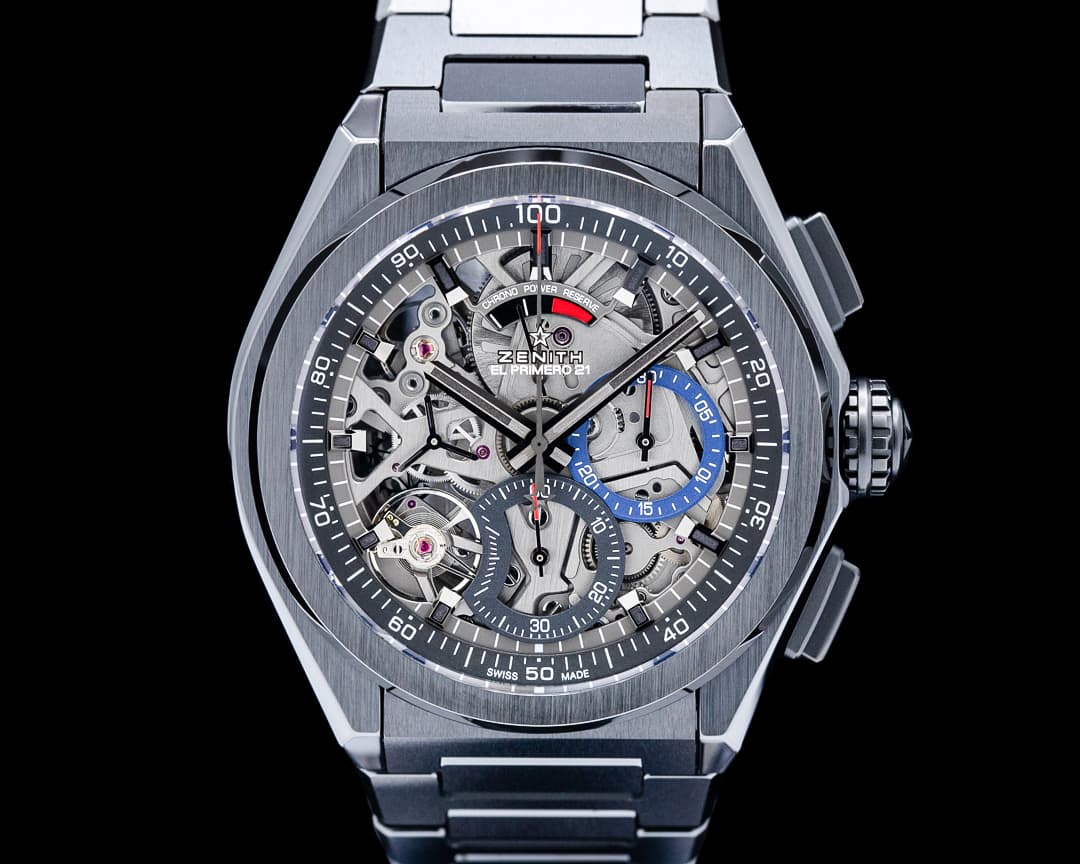
Defy El Primero 21 Chronograph Black Ceramic Skeleton Dial
$9,900
View Watch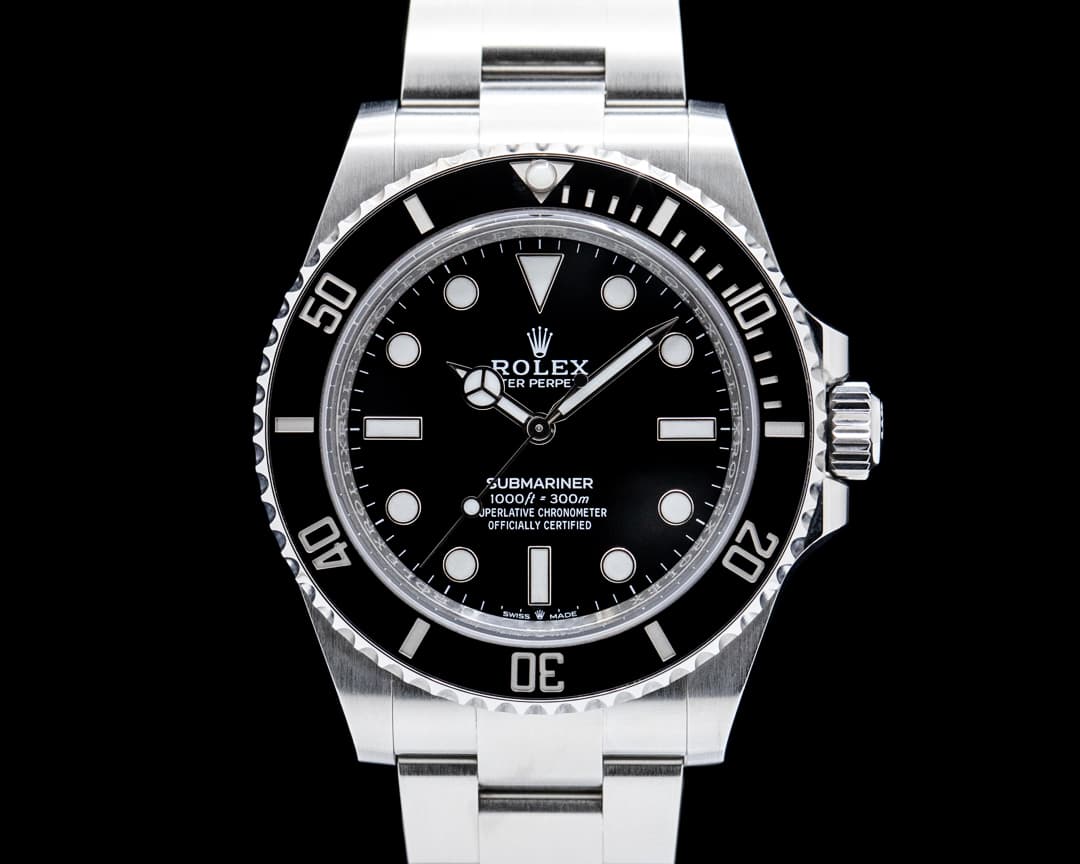
124060 Submariner No Date 41MM SS Black Dial
$13,900
View Watch
Shop New Arrivals
226659 Yacht-Master 18K White Gold Black Dial
$31,900
View Watch216570 Explorer II SS Black Dial
$10,900
View WatchDefy El Primero 21 Chronograph Black Ceramic Skeleton Dial
$9,900
View Watch124060 Submariner No Date 41MM SS Black Dial
$13,900
View Watch
More Content