What is the Zeitwerk and Why Does it Exist
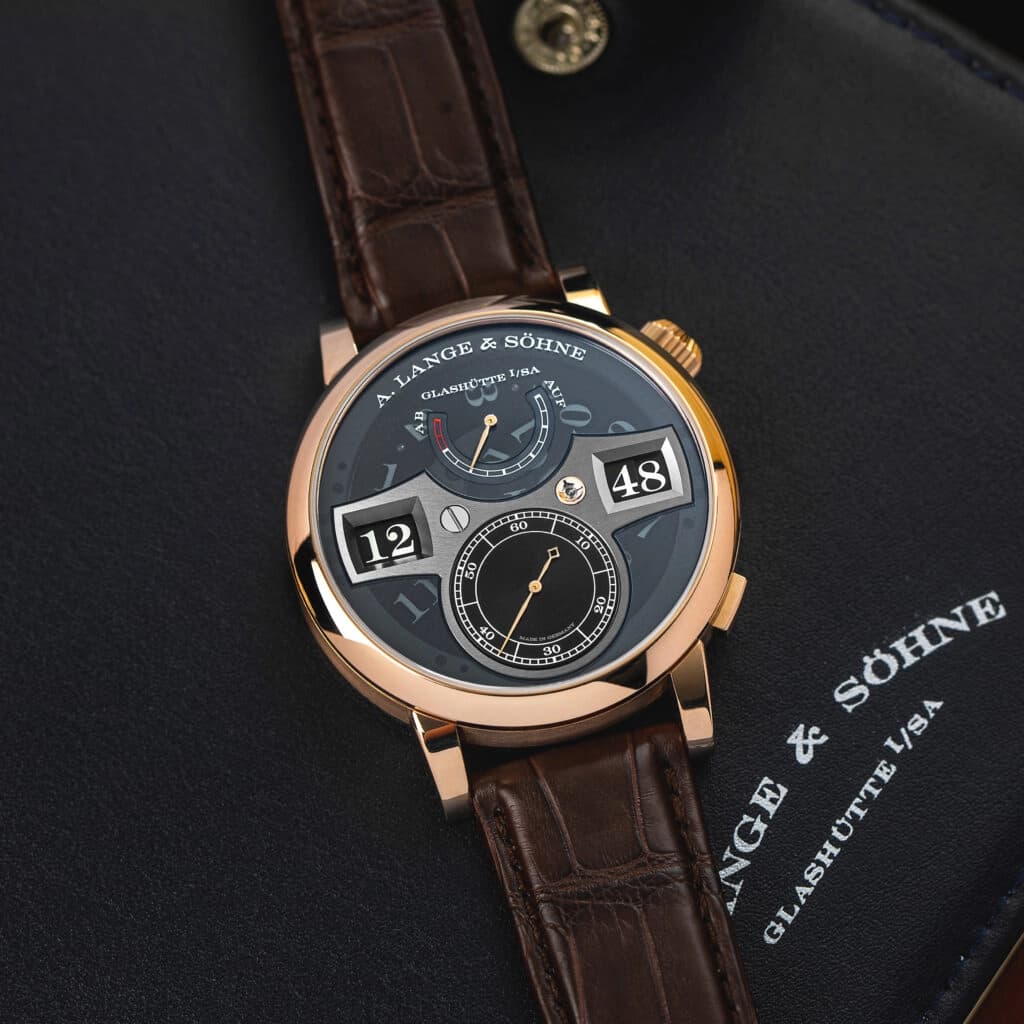
A. Lange & Söhne built its post-reunification identity on a specific formal language: asymmetric dials, radial layouts, three-quarter plates in German silver, outsize date windows positioned with architectural deliberateness. The Lange 1, the Datograph, the Saxonia, each one legible as a Lange from across a room. The Zeitwerk, introduced at SIHH 2009, reads completely different: massive numerals in jumping-disc windows, a subsidiary seconds register, and a dial architecture unlike anything every seen before. It is the brand's most formally radical modern watch and, not coincidentally, perhaps its most technically demanding. Understanding why Lange built it, and why it works the way it does, makes the reference-by-reference differences legible in a way that spec comparisons alone cannot.
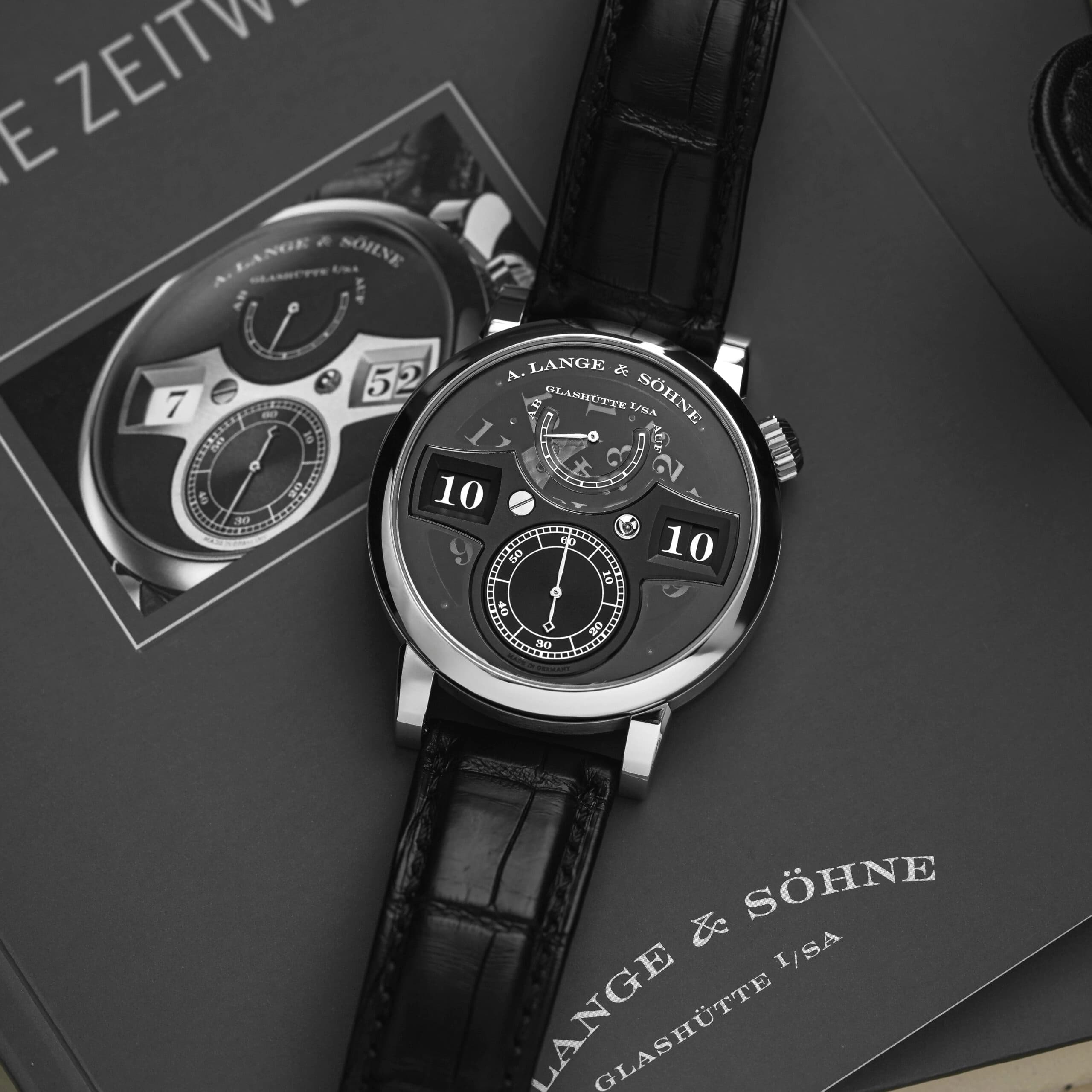
Lange Zeitwerk Lumen 140.035
The story begins with Günter Blümlein, the executive who oversaw Lange's resurrection alongside Ferdinand Adolf Lange after reunification and who, before his death in 2001, had already pushed the brand toward complications that no German watchmaker had attempted in the modern era. According to documented accounts of the project's origins, Blümlein posed the challenge around 2005: build a mechanical watch with the immediate legibility of a digital display. Development work began in about 2004. The watch did not appear publicly until 2009.
The reference point Lange's designers returned to was the five-minute clock of the Dresden Opera House, a public timepiece built for fast, unambiguous reading at a distance. That is the design problem the Zeitwerk addresses. A conventional dial with hands requires translation: you read the position of the hour hand, estimate the minutes, reconcile the two. A jumping-numeral display eliminates that step. The hours, tens of minutes, and single minutes each read as a number. Legible, simple, and easy.
.jpg%2F5ed861ece60cca01f58a237b0359218a%2Fa-lange-%26-sohne-zeitwerk-striking-time_insta-shots_05-(1).webp&w=3840&q=75)
Lange Zeitwerk Striking Time Movement
As simple as the display looks, the mechanics are a different story. Every previous attempt at a mechanical digital display in fine watchmaking had run into the same problem: advancing a numeral disc requires a brief burst of energy, and that burst, delivered unevenly from a mainspring that is gradually losing tension, produces a display that advances haltingly or, in the worst cases, partially advances and hangs between numerals. Quartz movements sidestep this entirely. Mechanical solutions had existed, jumping-hour watches from Audemars Piguet, from various independents, but the energy delivery problem meant that most used simplified single-disc architectures or accepted some degree of display imprecision.
Lange's answer was to build a constant-force mechanism into the watch's fundamental architecture.
How the Jumping Display Actually Works
Lange's patented constant-force escapement, used alongside the term "remontoir", is the engineering core of every Zeitwerk. The mainspring drives energy into a remontoir spring. Every 60 seconds, the tension stored in that remontoir spring releases in a single controlled burst, advancing the numeral discs. The energy reaching the display is therefore constant regardless of where the mainspring sits in its power reserve: the discs always receive exactly the same impulse, at exactly the same moment.
This is why the minute hand, in most Lange watches a continuous-sweep marker, does not appear on the Zeitwerk at all. The single-minutes disc advances in one clean jump at the top of each minute. The tens-of-minutes disc jumps every ten minutes. The hours disc jumps at the top of each hour. The jump at 12:59 to 1:00, when all three discs advance simultaneously, is the most mechanically demanding moment in the cycle, and the constant-force architecture is specifically designed to handle it without hesitation.
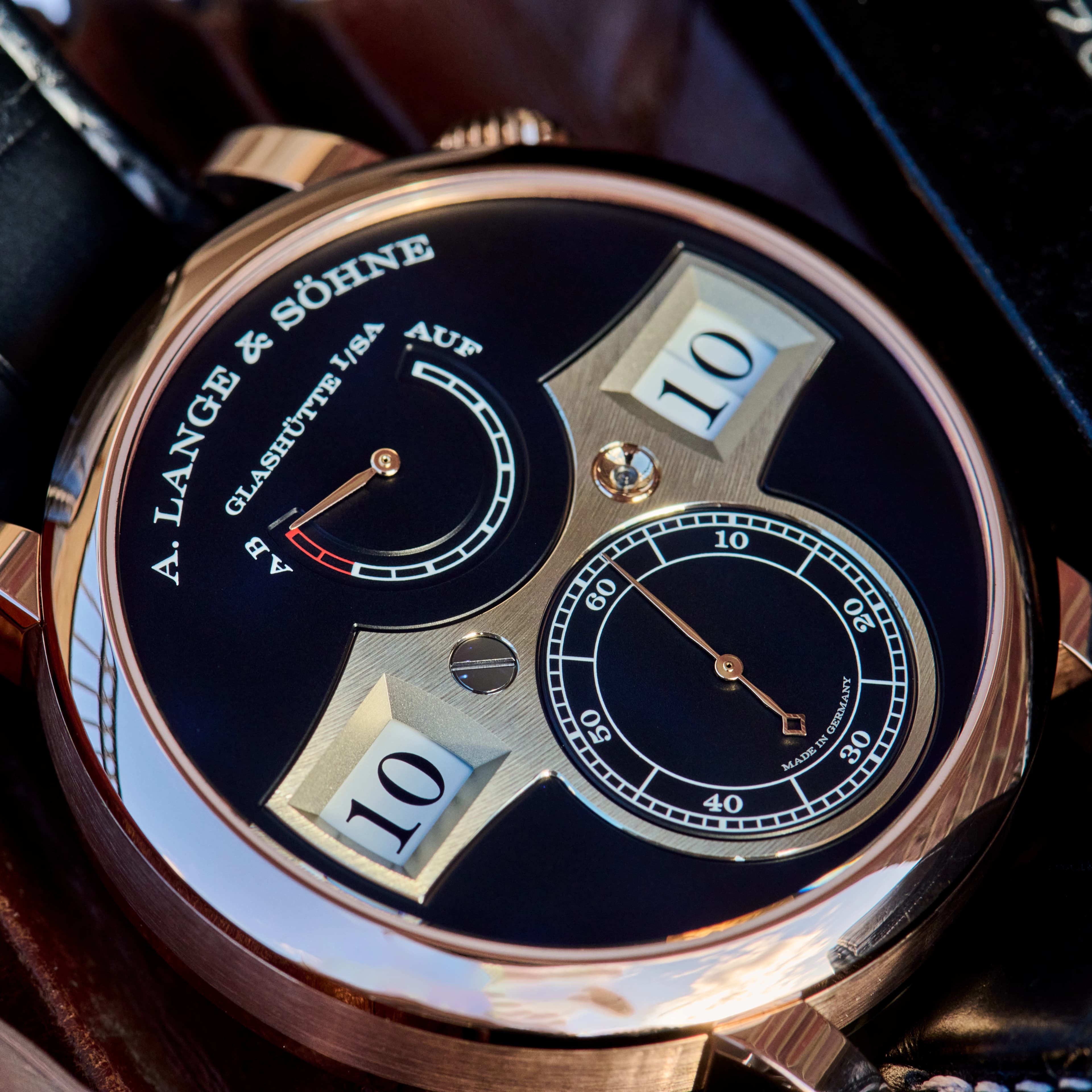
Zeitwerk Rose Gold
None of this is visible in normal use. What you see is a disc that moves, cleanly, once per minute. The sophistication is in what you do not see: the energy accumulation, the controlled release, the dissipation of any excess. It is a deeply Lange approach to a problem, solve it completely, then present the solution as if it were obvious.
The References, One by One
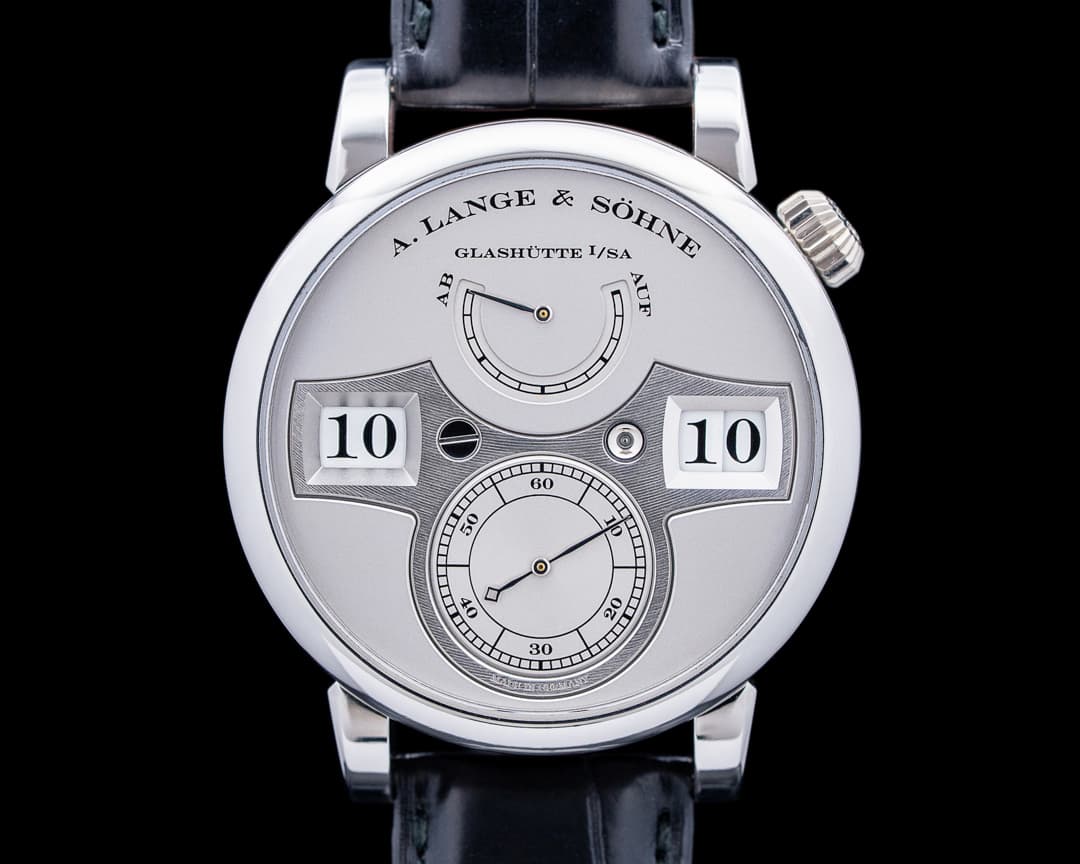
Ref. 140.025, Platinum (2009, Limited to 200 Pieces)
The inaugural Zeitwerk was the one Lange was least sure the market would accept, so they made it in platinum and limited it to 200 pieces. This is a recognizable Lange move: introduce a technically significant watch in a precious metal at a defined run, gauge the response, and give early adopters a clear position.
The platinum case runs 41.9mm in diameter and about 12.6mm thick, substantial, but not aggressive. On a medium wrist it carries the weight that platinum demands, which works in the Zeitwerk's favor. The display reads as a clock, and a heavy case reinforces that reference. The dial is a matte argenté field with numerals set in polished chapter-ring frames, and the contrast between the large jumping figures and the subsidiary seconds reads cleanly across most light conditions. There is no ambiguity about what time it is.
Secondary market pricing for the 140.025 reflects its rarity and its position as the series opener. Recently, pricing has climbed into the $120,000-$130,000 range.
Ref. 140.021, Yellow Gold (2009)
The yellow gold reference entered regular production alongside the platinum in 2009 and was discontinued in around 2013. It is one of the references most frequently encountered on the secondary market from the earliest production years, and its discontinuation means supply is fixed and not growing.
The yellow gold case shifts the dial's character. Where the platinum variant reads cool and architectural, the yellow gold reads warmer and, perhaps unexpectedly, arguably slightly more legible. The combination of a yellow gold case with the Zeitwerk's silvered time bridge and black numerals resolves with more contrast than you might expect. The case sits on the wrist with less presence than platinum at the same dimensions; 41.9mm in yellow gold wears closer to a conventional dress watch than to a statement piece.
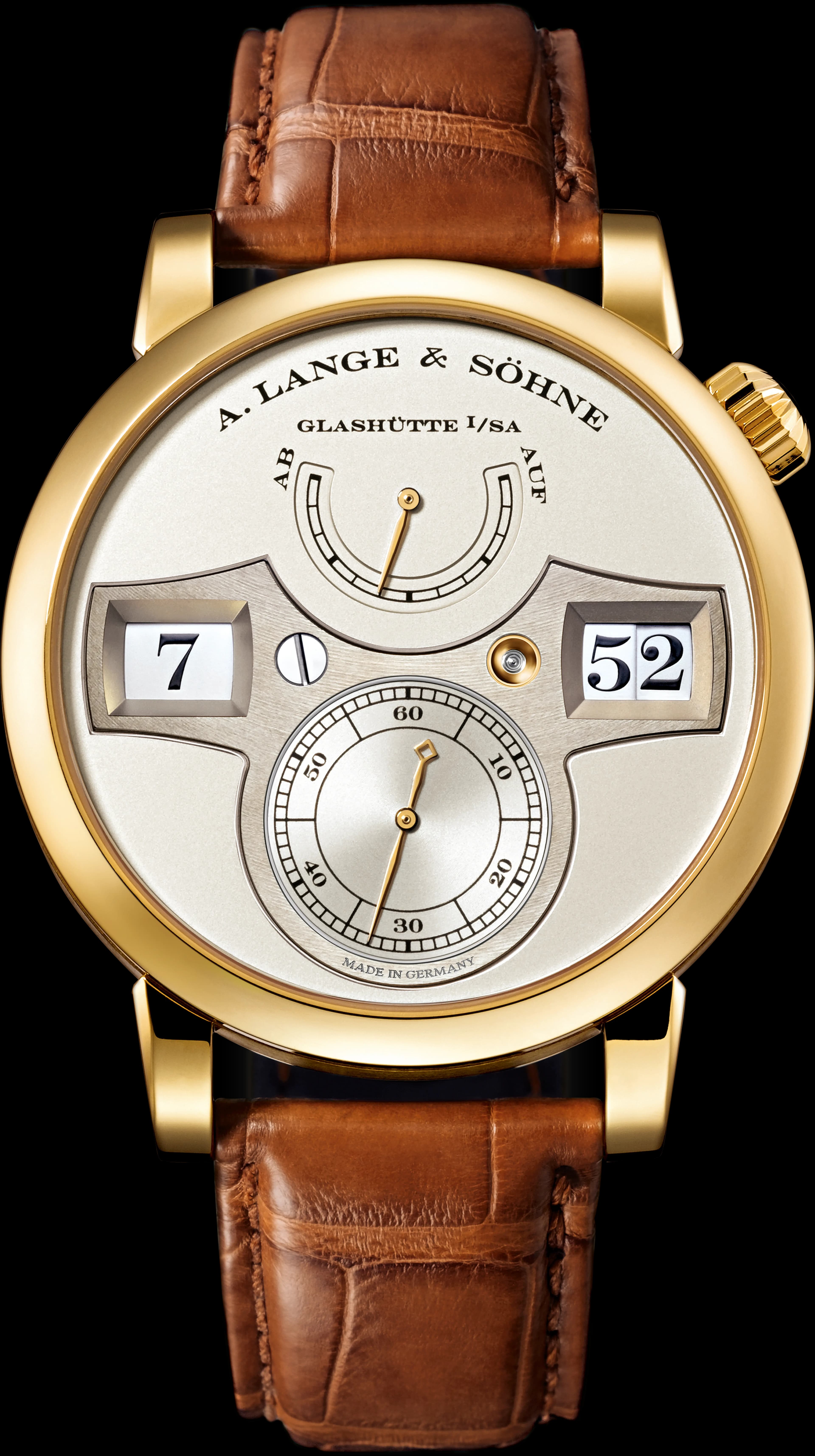
Lange 140.021 Yellow Gold
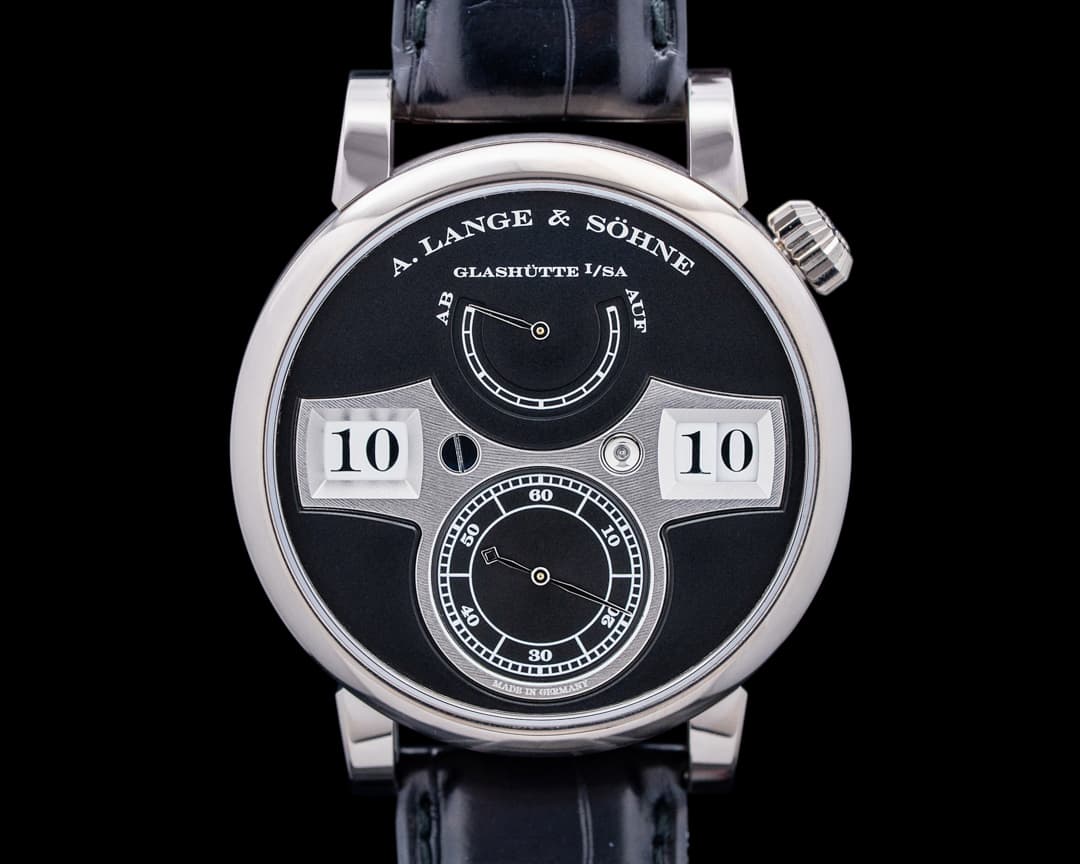
Ref. 140.029, White Gold, Black Dial (2009)
The white gold Zeitwerk with a black dial is the reference that has most consistently attracted secondary market attention. Today, these pieces trade in the mid $70,000s. Striking and legible, this is one of the quintessential looks for the model family.
On a black dial, the framed jumping numerals carry yet higher contrast. In low light, the display remains readable where an argenté dial loses some of its definition. The white gold case holds the visual weight of the dial without competing with it. This is the variant that functions most effectively as a daily wearer, if you are looking for something that works a bit more casually than the alternatives.
The 140.029 was discontinued, along with the pink and white gold references, in 2022, at which point the secondary market pricing bumped considerably.
Ref. 140.032, Pink Gold (2009)
The pink gold reference followed the architecture of the other early Zeitwerk variants and entered regular production. Its dial is the argenté field shared with the yellow and platinum references, which reads differently against rose gold than it does against platinum or the older yellow. The warmth of the case and the warmth of the dial reinforce each other; the result is softer than the white gold variant and produces a beautiful effect alongside a brown strap.
Like the white gold, the 140.032 was discontinued in 2022. Secondary market availability is reasonable relative to the more limited references.
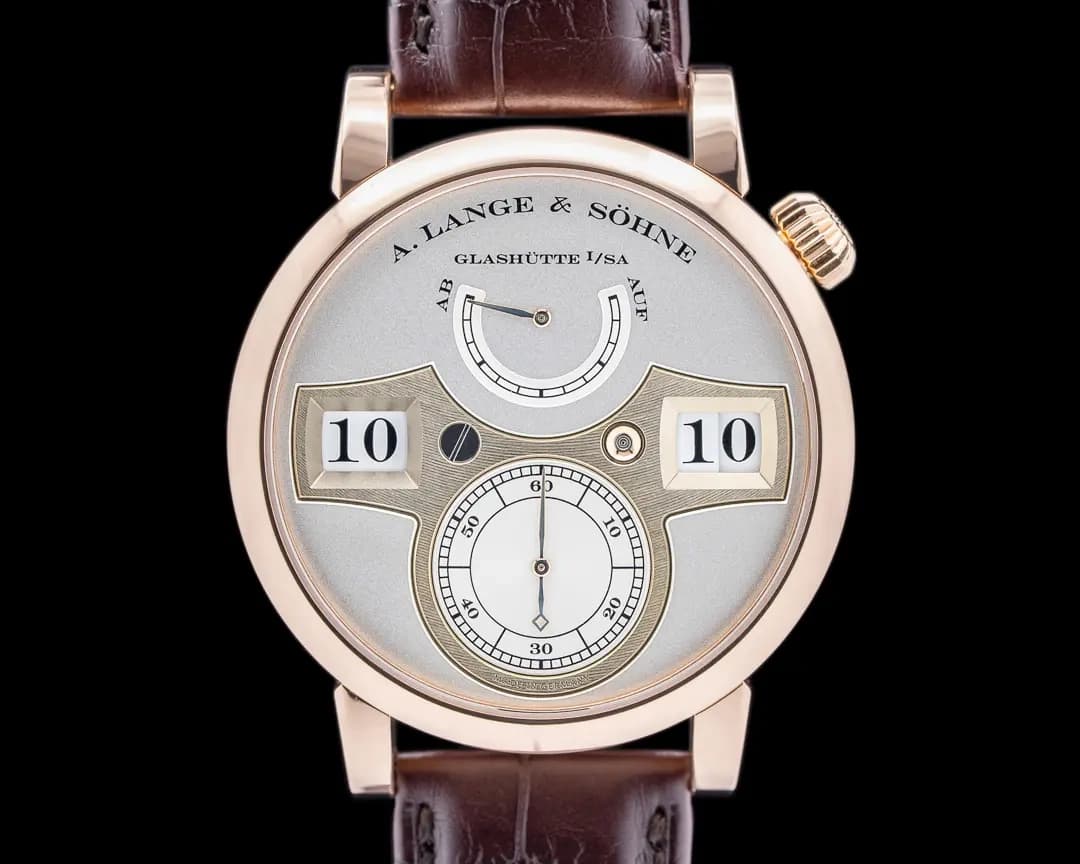
Lange 140.032
Ref. 140.035, Lumen (2010)
The Lumen edition was announced in late 2009 and officially unveiled at SIHH 2010, making it the first significant variation on the original Zeitwerk architecture. The distinguishing feature is a sapphire dial in a smoked finish, a color that reads as amber in daylight and as something more intensely luminous in low-light conditions, though "luminous" here is an aesthetic quality, not a photoluminescent coating.
The Lumen dial reads as intentionally unusual, and it is. Lange was demonstrating that the Zeitwerk's architecture could carry a degree of color play that would overwhelm a more conventional dial design. The result is a really unique piece that is at the same time sophisticated and extremely casual. This piece in its earlier configurations is decidedly dressy, while in its Lumen variant, it takes on a completely different personality--- a personality you will either love or not depending on your taste. Regardless, it is one of the most incredible watches Lange has ever made.
Production numbers for the 140.035 was limited to just 100 pieces.
140.035 Phantom Lumen
Ref. 145.025, 145.029 Striking Time (2011)
Two Striking Time references debuted at SIHH 2011: the platinum 145.025, limited to 100 pieces, and the white gold 145.029 in regular production. The Striking Time is a fundamentally different object from the standard Zeitwerk, not because the jumping-numeral display changed, but because Lange built a complete acoustic complication into the same case architecture.
The Striking Time is an hour striker. It chimes a single low note at the top of each hour and a single high note at each quarter. To be precise: it is not a minute repeater. The distinction matters both mechanically and in terms of how the complication behaves in use. A minute repeater chimes on demand; the Striking Time chimes on schedule, automatically, every time the relevant threshold passes. The hammers and gongs are visible on the dial, which required Lange to reconfigure the display layout and to expand the case to 44.2mm to accommodate the physical mechanism.
That 44.2mm figure is a serious factor in the wearing experience. The standard Zeitwerk at 41.9mm wears close to a conventional dress watch size (perhaps a little big). The Striking Time at 44.2mm is unambiguously a statement piece; the larger case exposes the hammers, the gongs, and the architectural shift the acoustic complication required. The subsidiary seconds migrates to accommodate the acoustic components, and the numeral discs remain dominant.
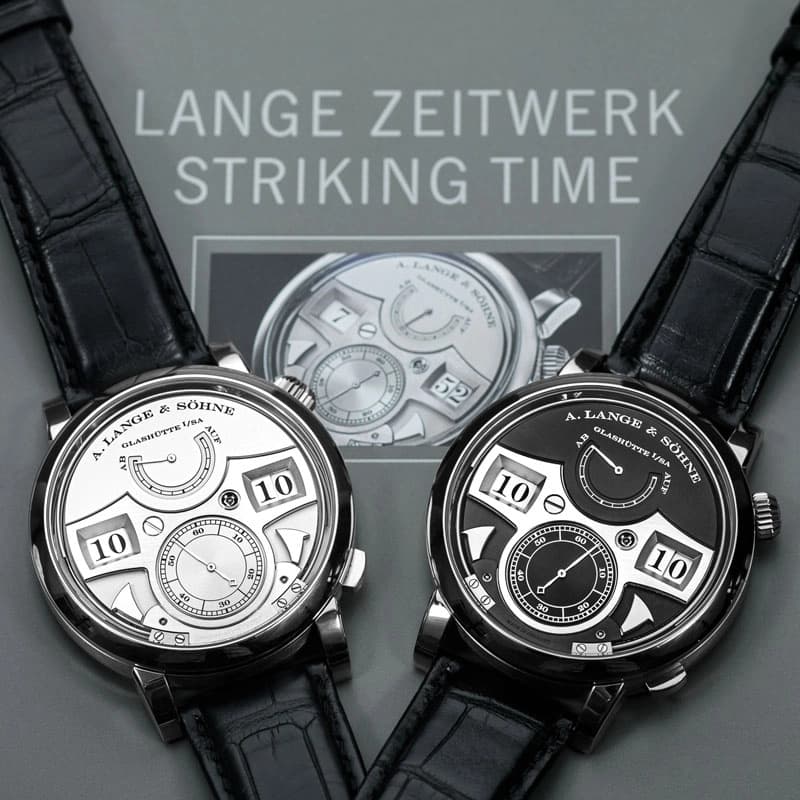
Zeitwerk Striking Time
At launch in 2011, the Striking Time was reported at approximately $90,000 in gold and $110,000 in platinum. Current secondary market data is sparse and volatile; low transaction frequency and the discontinued status of several variants makes a pegged pricing more difficult. Pre-owned asking prices have been cited in the $118,000–$150,000 range for 145.029 examples, but that spread reflects limited sales data rather than an established market.
The Zeitwerk Today (2021- Present)
Following an updated Zeitwerk Lumen in honeygold in 2021, Lange overhauled the Zeitwerk family in 2022 with the launch of a new Zeitwerk. The updated Zeitwerk came with a quickset hour pusher, updated larger subsidiary seconds display, redesigned power reserve indicator, and most importantly an updated movement with improved power reserve and tighter accuracy tolerances.
The model initially launched in plaitnum and rose gold, with the platinum 142.025 coming with a silver dial, and the rose gold 142.031 paired with a stark black dial. This architecture is both beautiful and striking. The result is a piece that has been redesigned with collector needs in mind (easy setting of the hour display), and in new configurations for modern tastes.
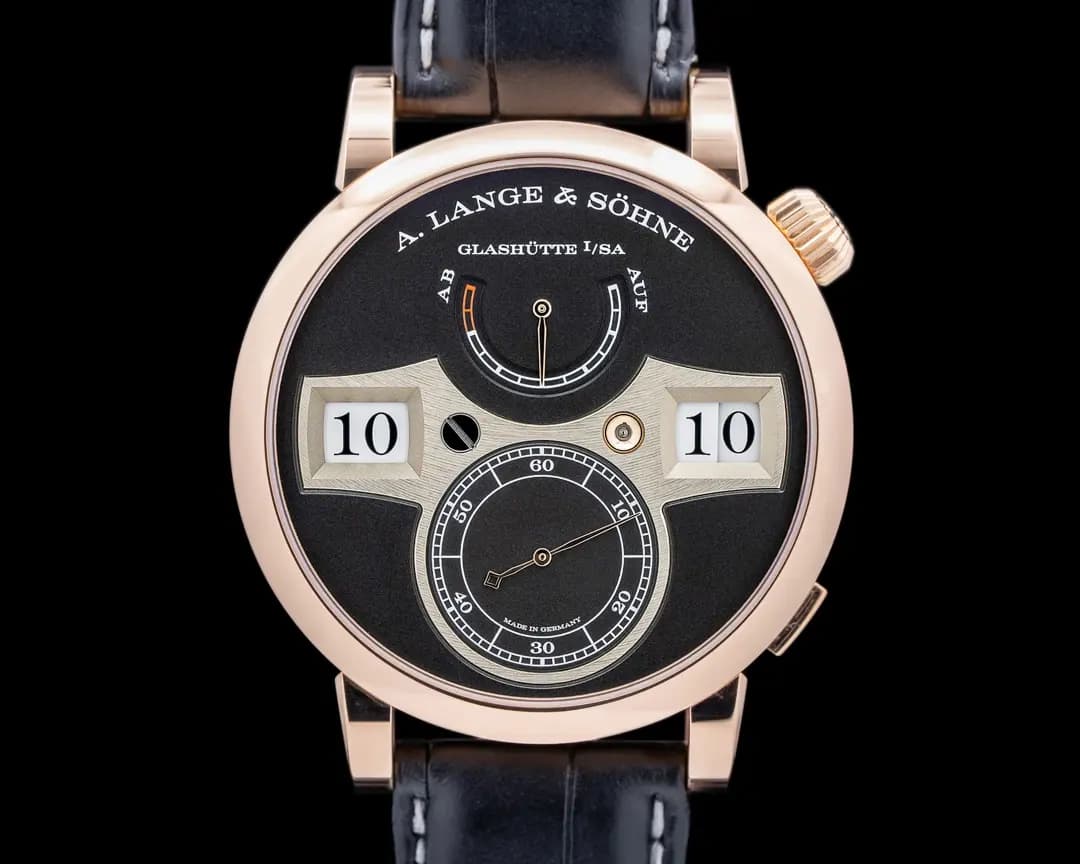
Lange 142.031 Zeitwerk
While the Zeitwerk's look remains unchanged fundamentally, Lange never stops in its quest to innovate and iterate over its own designs in the pursuit of an ever more perfect timepiece.
The Zeitwerk's Place in Lange's Catalog
The Zeitwerk is now fifteen years into production, long enough to have moved from provocation to institution. The question it posed in 2009, can Lange's movement-first philosophy produce a watch that looks nothing like a Lange, has been answered. The answer is yes, and the answer is the Zeitwerk.
What the watch proved was not that Lange could break its own rules. Every serious manufacture can issue a departure. What the Zeitwerk proved was that the principles underlying Lange's house style can be bent just a little to do something truly different and unique.
Collectors who have taken the Zeitwerk seriously over time have generally done so for mechanical rather than aesthetic reasons. The watch is admired in the same circles that follow the Datograph and the Tourbograph, complications that reward understanding how they work, not just how they look.
There is truly no watch quite like the Zeitwerk, and in the modern market, it has established itself as one of the definitive pillars of Lange's collections. Where the Zeitwerk goes next, we will have to wait to see, but we can be sure it will continue to innovate, pushing the limits of what is considered mechanically possible.
Shop New Arrivals
Speedmaster Moonwatch 18K Sedna Gold Black Dial
$29,900
View Watch
26170ST Royal Oak Offshore Chronograph SS Silver Dial
$22,900
View Watch
6606A Villeret Ultraplate 18K Rose Gold Opaline Dial
$20,900
View Watch
5055G Complications 18K White Gold Black Dial
$29,500
View Watch
Shop New Arrivals
Speedmaster Moonwatch 18K Sedna Gold Black Dial
$29,900
View Watch26170ST Royal Oak Offshore Chronograph SS Silver Dial
$22,900
View Watch6606A Villeret Ultraplate 18K Rose Gold Opaline Dial
$20,900
View Watch5055G Complications 18K White Gold Black Dial
$29,500
View Watch
More Content