Guilloché, grand feu enamel, fumé, meteorite, champlevé: each belongs to a different tradition, requires different tools and specialized training, and fails in different ways at different rates. A watch dial is a small surface, rarely more than 30mm across, but the number of distinct crafts that can be applied to it is remarkable. They are not points on a single scale of refinement. Each explores a different vertical of craftsmanship and specialty.
What follows is an account of what each technique is, how it's made, and what makes it difficult.
Guilloché
Guilloché is engine turning: the engraving of repeating geometric patterns into a metal surface traditionally using a rose engine lathe. The machine is mechanical, controlled by a system of cams and guides that determine the path of a cutting tool across the dial blank. The operator adjusts pressure, speed, and the angle of each pass. The pattern that results, whether clous de Paris, barleycorn, soleil, or wave, depends on the combination of the cam profile and how the operator runs the machine.
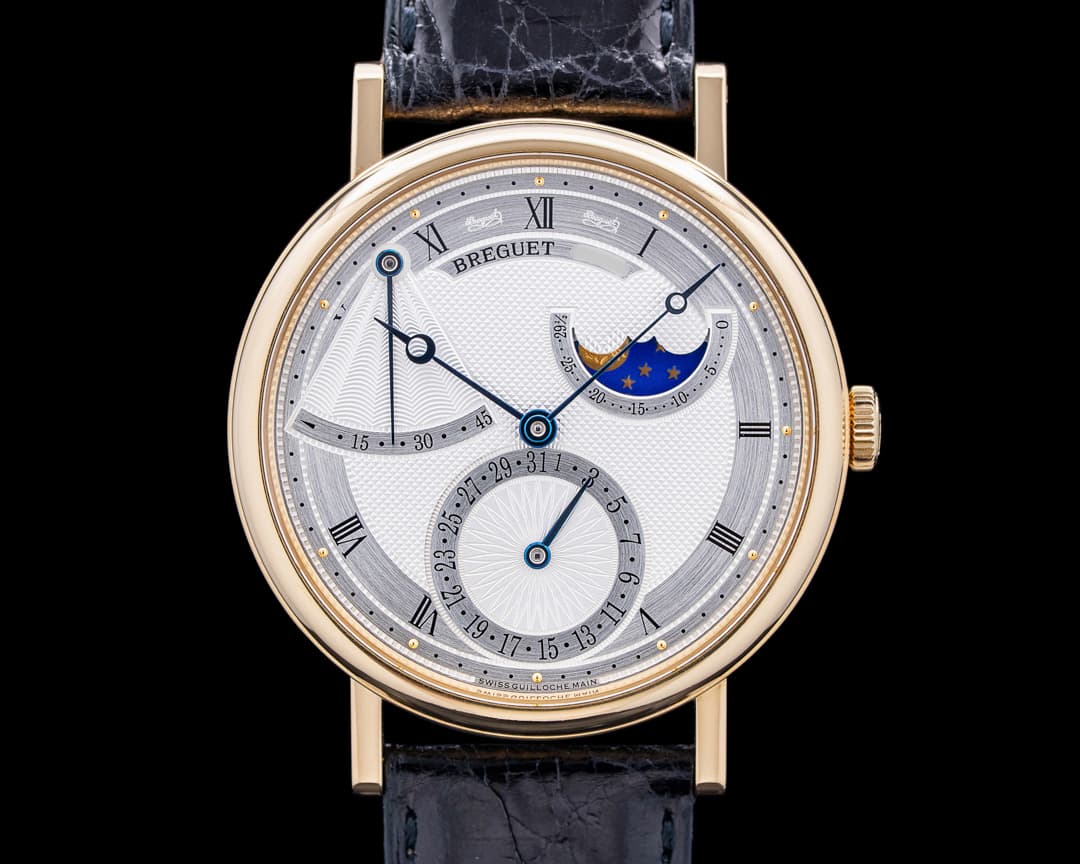
The rose engine lathe itself is the primary constraint. These machines are no longer manufactured in quantity; the ones in active use are often nineteenth-century instruments, maintained and calibrated by the workshops that own them. Learning to run one takes years. The cutting tool is a diamond or hardened steel burin, and the depth of each pass must be consistent across the entire surface. A single pass that goes too deep, or catches at the wrong angle, ruins the blank.
What guilloché produces is optical. The faceted surface catches and scatters light differently depending on viewing angle: a soleil pattern radiates from the center, a wave pattern shifts as the wrist moves. Under lacquer or translucent enamel, the texture reads through the surface layer. This is why guilloché is so often paired with enamel; the combination uses both crafts.
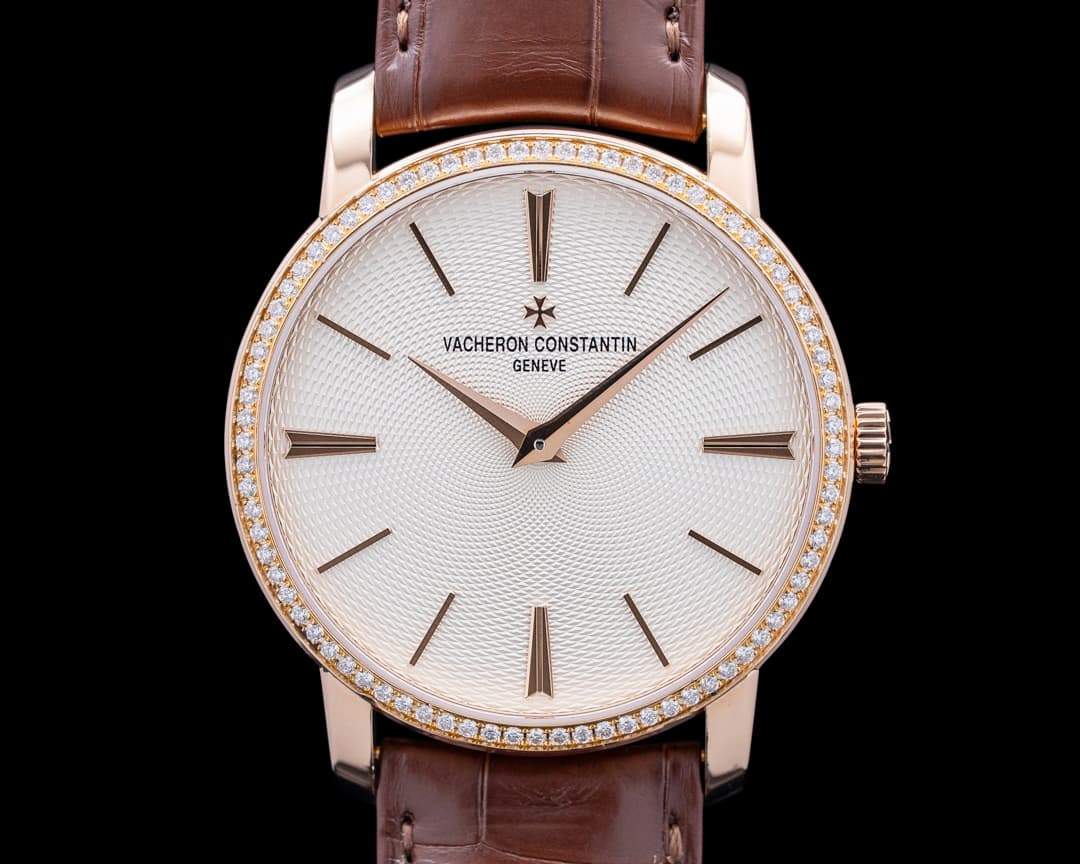
Hand guilloché is distinguished from machine guilloché, meaning CNC-engraved patterns that replicate the geometry without the mechanical process. The visual difference is real but subtle. Hand-crafted engine turning results in sharp grooves at the bottom of each cut, while CNC machining leaves distinct milling marks; the two surfaces behave differently under light even when the geometry is nominally identical. Whether that variation matters to a given buyer is a question the craft doesn't answer.
Grand Feu Enamel
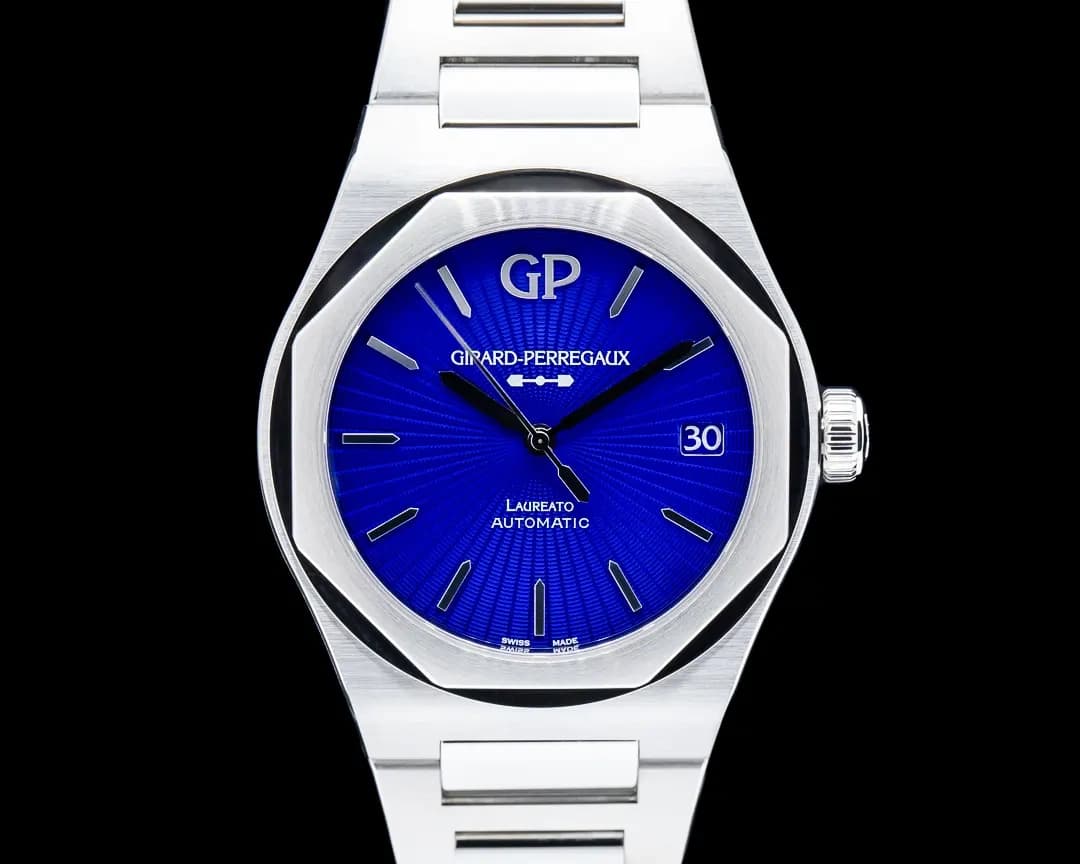
Grand feu means "great fire." The process involves applying powdered glass, enamel, to a metal base and firing it in a kiln at temperatures between roughly 800°C and 900°C. The enamel melts, fuses to the base, and cools into a glassy surface. Multiple layers are applied and fired in sequence, with each layer ground flat before the next is added. A finished dial may have gone through the kiln eight to twelve times.
The difficulty is in the firing. Enamel and metal expand at different rates when heated, and if the expansion rates are mismatched, the enamel cracks or chips on cooling. Workshops control for this by choosing base metals, typically copper or gold, with expansion rates close to the enamel's, and by building up layers gradually rather than applying thick coats. Even so, losses are significant. A workshop producing enamel dials at volume will reject around half its output, sometimes more, depending on the complexity of the color being fired.
Grand Feu Enamel
Color in grand feu enamel is achieved by adding metallic oxides to the base glass before grinding. Cobalt produces blue; iron produces green; gold produces red and pink. The color shifts during firing, and the enameler must account for what the finished piece will look like, not what the unfired powder looks like. Experience is the only reliable guide.
The surface of a well-executed grand feu enamel dial has depth that photography does not capture. The glassy finish is not flat; it has a slight convexity and a translucency that makes the color appear to come from within the surface rather than sit on top of it. Champlevé and cloisonné are related enamel techniques with their own distinct processes; grand feu as used in the watch context typically refers to the layered, kiln-fired approach applied to the full dial face.
Fumé
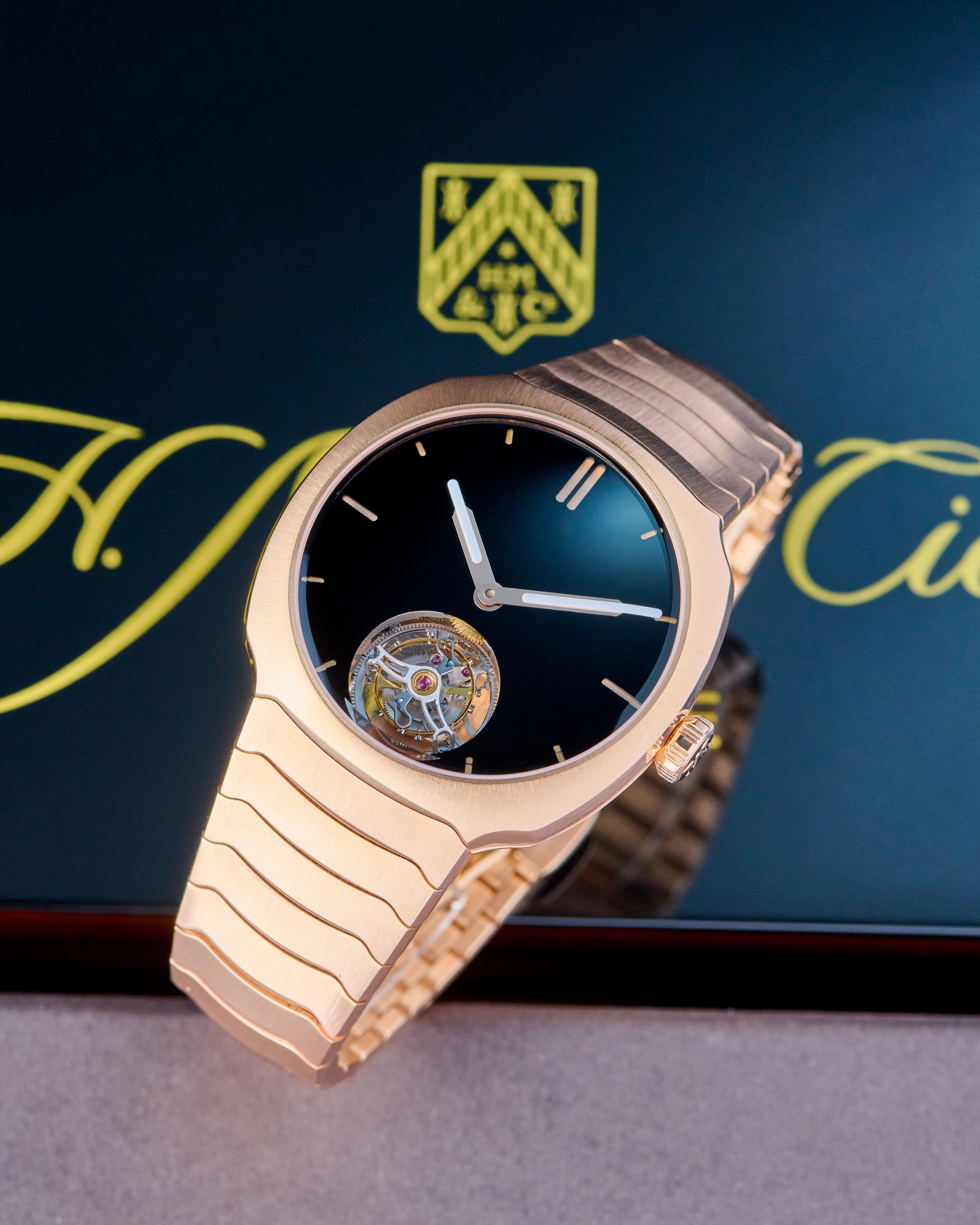
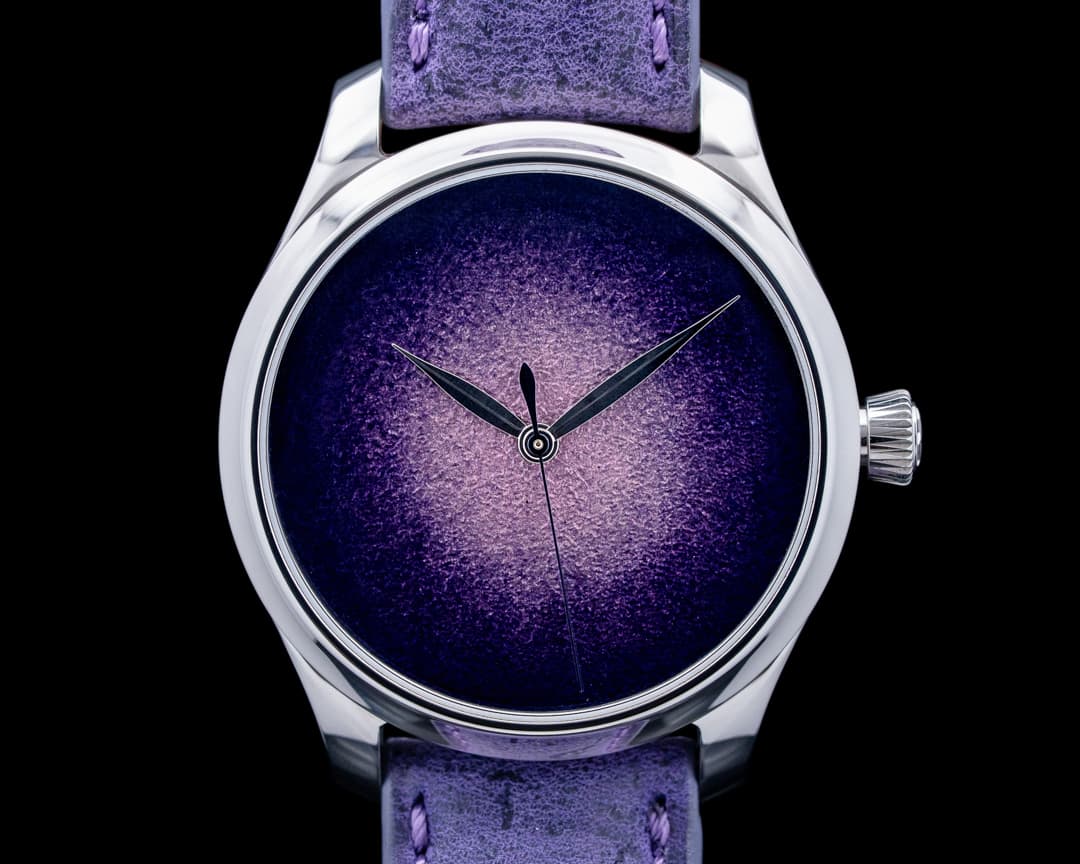
Fumé is a graduated tone, typically darkest at the outer edge of the dial and lighter toward the center, or the reverse. The name comes from the French for "smoky," and the effect, in execution, resembles the way smoke diffuses through air.
The technique involves applying a translucent coating, lacquer, enamel, or a chemical treatment depending on the workshop, unevenly across the dial surface. In practice, a common approach is to apply the brighter central color first, then spray a darker hue onto the dial while it spins, producing a smooth graduation from center to edge. Achieving an even gradient without hard edges or streaks is harder than it looks. A fumé dial that reveals its application method, where you can see the direction of a spray or a brushstroke, has failed.
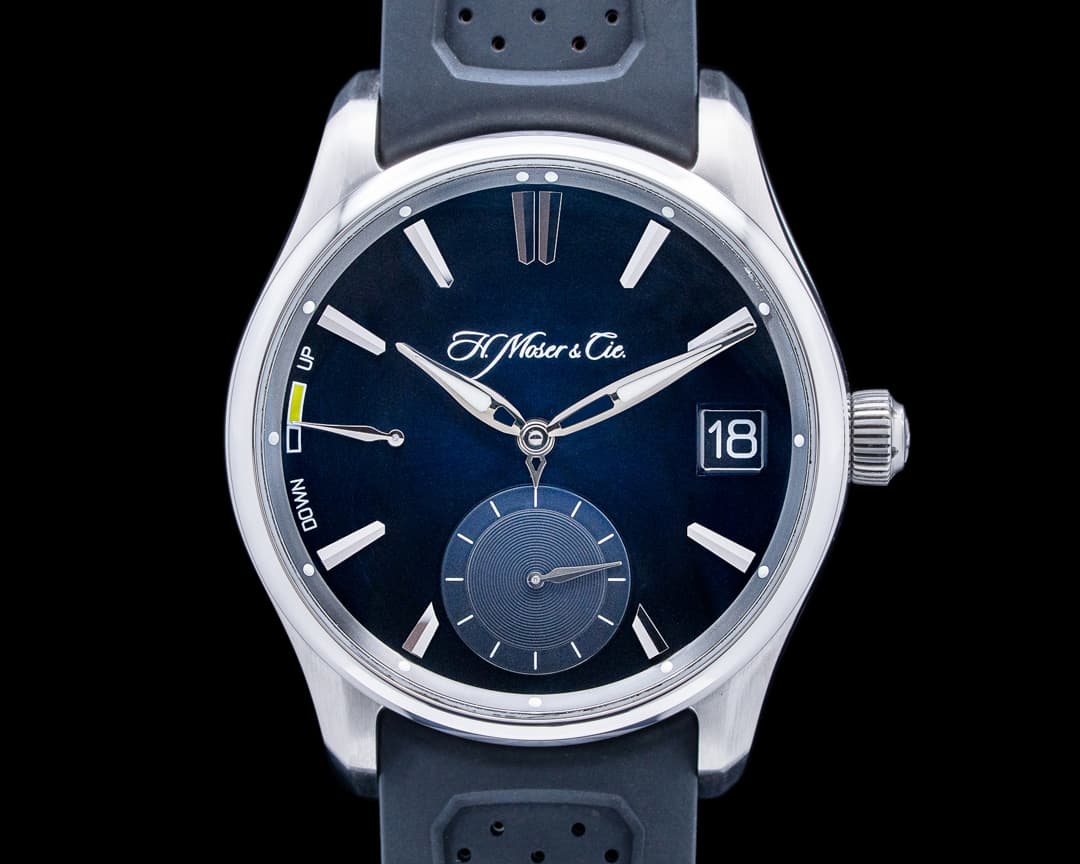
Fumé dials are often applied over guilloché or over plain metal; the underlying surface affects the final result. A fumé over guilloché produces a surface where the pattern is visible in the lighter area and disappears into the deeper tone at the edge. The layering effect depends on both techniques working together.
The color range is wide: blue, green, grey, burgundy, and neutral brown are all current. What they share is the gradient logic. A fumé dial in sunlight reads differently from one under artificial light; the gradient's depth and color shift depending on the source. This is part of the appeal and, for some dials, the only interesting thing about them.
Meteorite
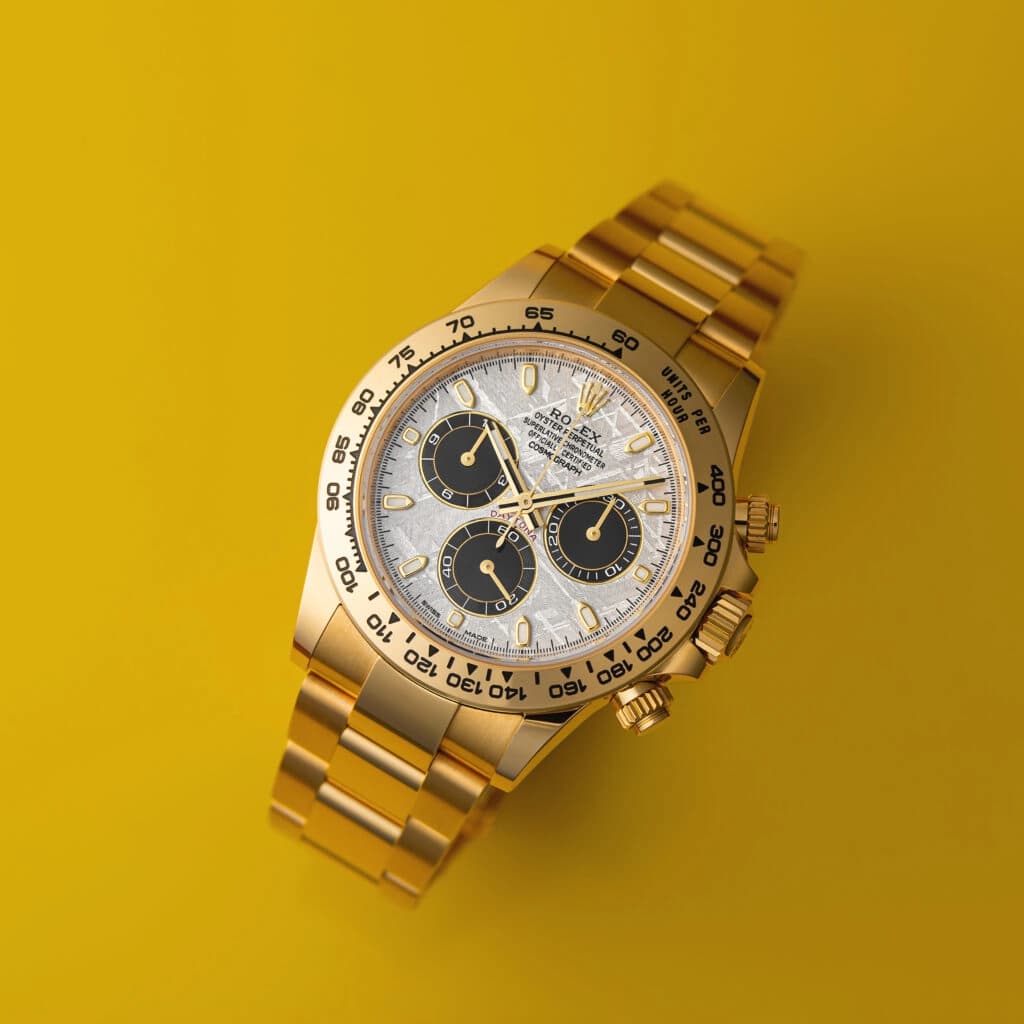
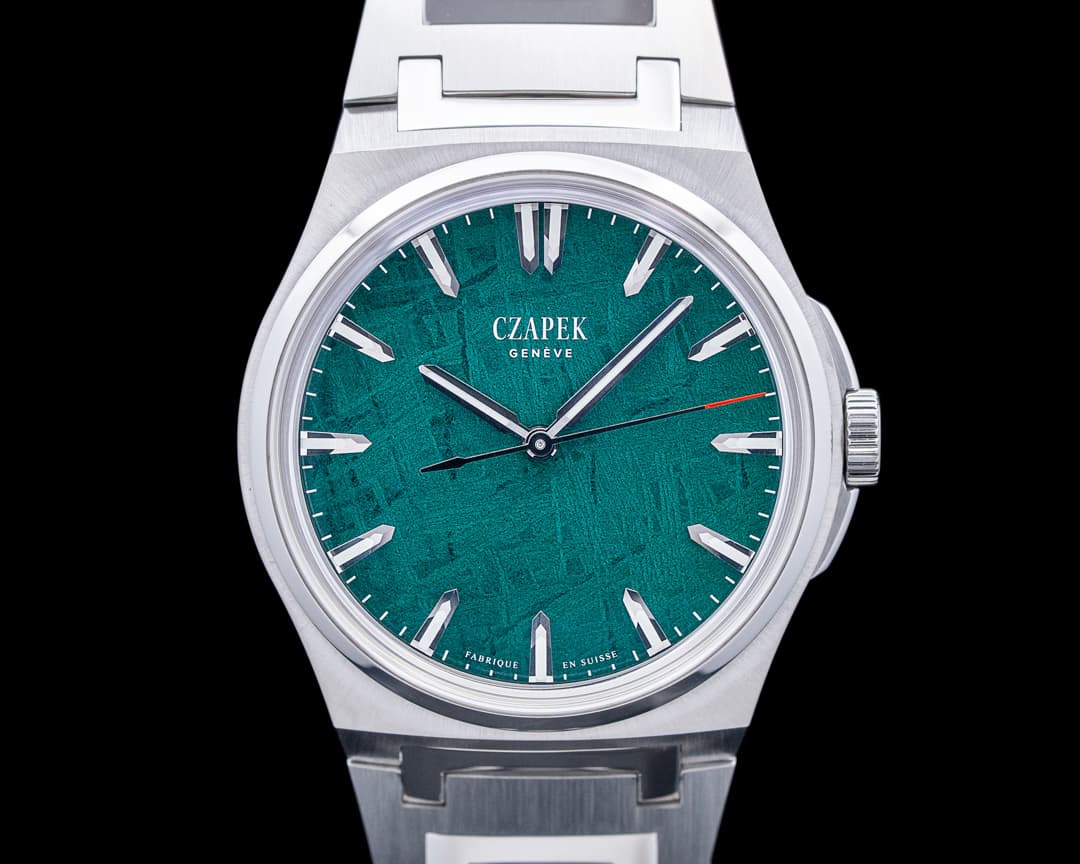
Meteorite dials are cut from the Widmanstätten pattern, the crystalline structure visible in iron-nickel meteorites when they are sliced and acid-etched. The pattern, a grid of interlocking crystals at varying angles, formed over millions of years as the meteorite cooled slowly in space. It cannot be synthesized or replicated. Each slice is unique.
Turning meteorite into a dial requires cutting and polishing a slice thin enough to be practical, typically 0.5mm to 0.8mm, without fracturing it. Iron-nickel meteorite is brittle in thin cross-section, and the cutting and polishing process produces losses. The slice is then treated to bring out the Widmanstätten pattern, usually through acid etching. Applied indexes and text must be attached to a surface that is not flat at the microscopic level and that is slightly porous by nature.
The material is also reactive. Meteorite contains iron, which rusts. Dials that are not properly sealed, or that are exposed to moisture repeatedly over time, can develop surface oxidation. This is not universal, and many meteorite dials age without visible change, but it is a known risk that varies by the specific meteorite alloy. The most commonly used material, Gibeon meteorite from Namibia, has been subject to an export ban under Namibian law since 2004; dials produced today use material that was legally recovered and exported before those restrictions took effect, or that has been in trade collections for decades.
The visual effect is genuinely unlike any manufactured material. The Widmanstätten pattern has a directionality and scale that change with viewing angle; at certain angles the crystal boundaries read as lines, at others as a textured surface. The color in natural light is a cool grey-silver. Some dials are produced with additional finishing, often a black or colored coating, but the uncoated, natural grey is the version most associated with the technique.
Champlevé
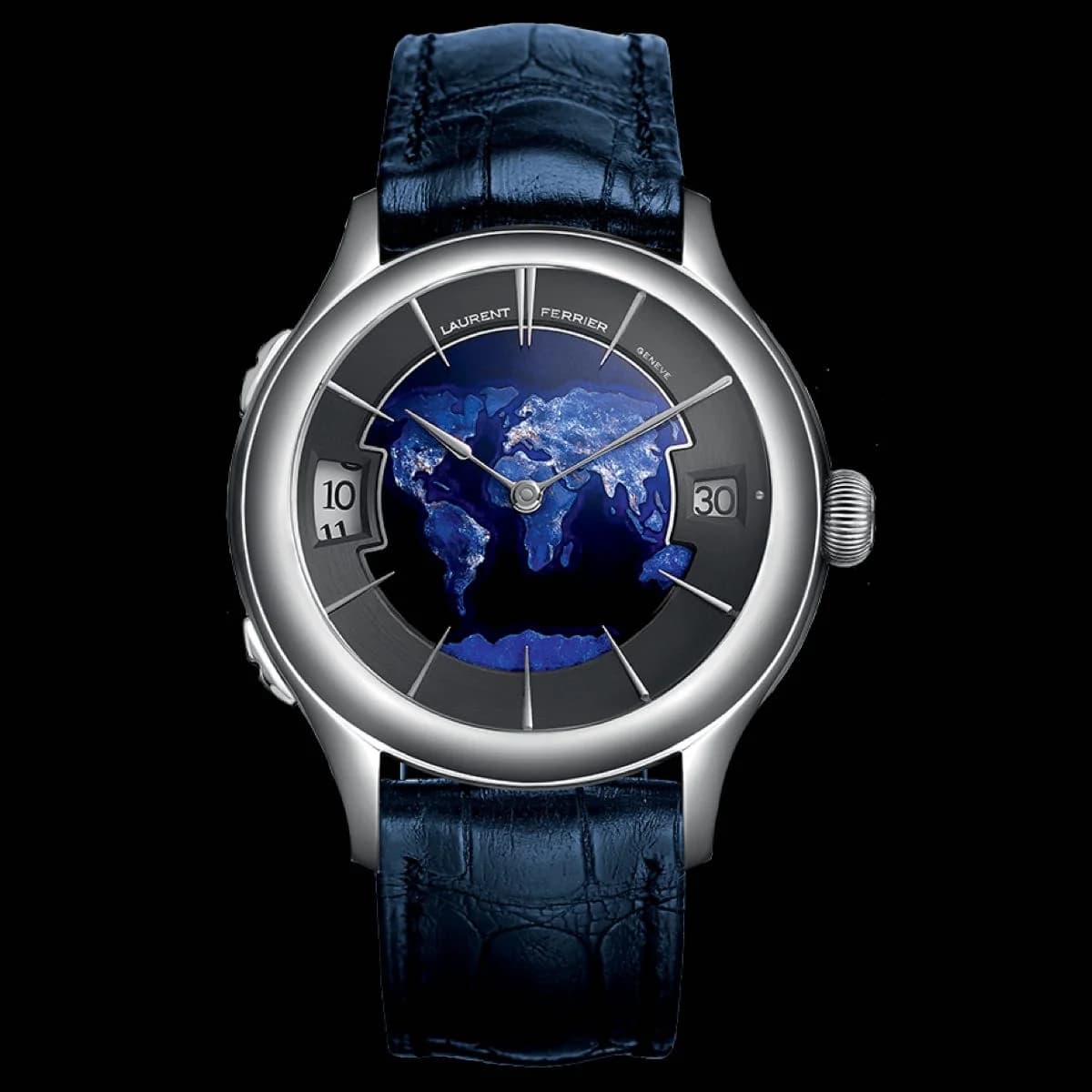
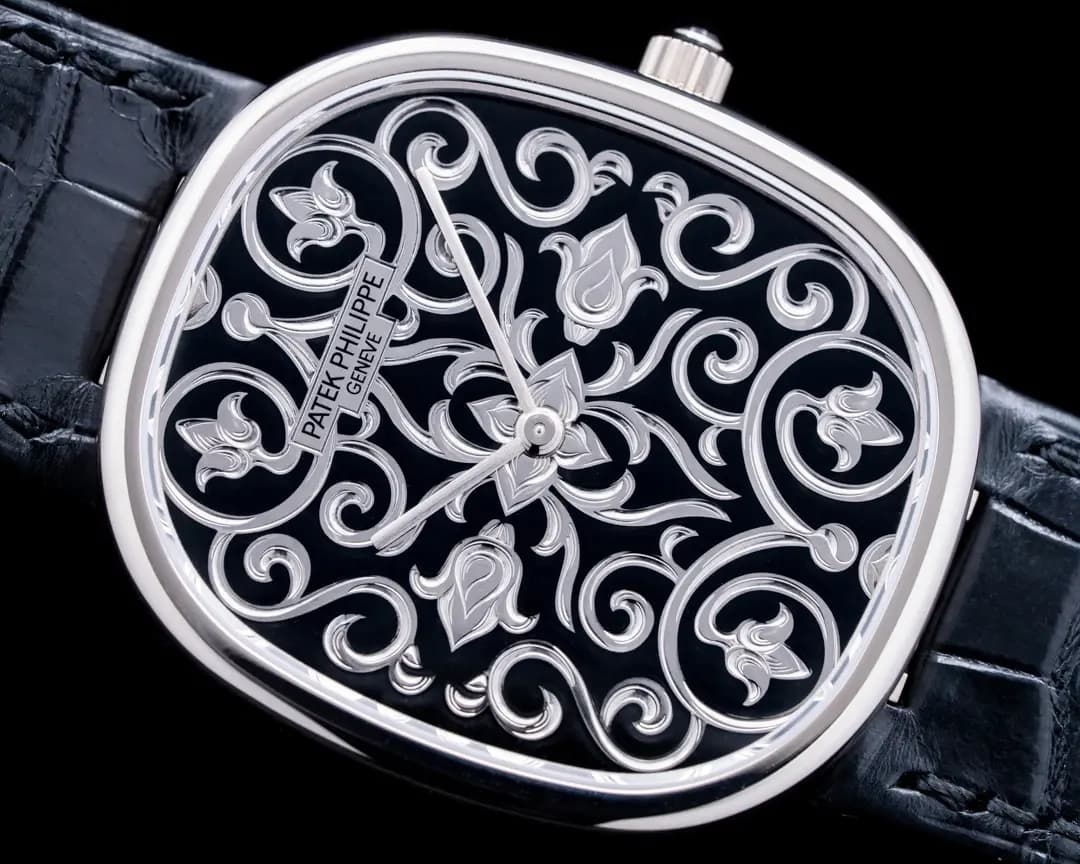
Champlevé is an enamel technique in which recesses are carved or etched into the base metal and enamel is applied to fill those recesses. The metal between the recesses remains exposed, forming the lines and borders of the design. The finished surface is ground and polished flat so that metal and enamel sit at the same level.
The process starts with the base, typically gold or silver, and requires either hand engraving or chemical etching to create the recesses that will hold the enamel. Hand-engraved champlevé, where the recess boundaries are cut by a skilled engraver, is slower and more demanding than etched champlevé, and the results are distinct: engraved recesses have crisp, precise walls, while etched recesses can exhibit slight undercutting at the edges.
Champleve Enamel Dial
Enamel is applied to the recesses in powder form and fired, as in grand feu. Because the recesses constrain the enamel, the design logic is different; the craftsperson works within a predetermined geometry rather than applying a field coating. Multiple colors can appear in a single champlevé dial if the recesses are designed to hold them separately. Firing and filling may be repeated several times per recess to achieve the required depth without overfilling.
After firing, the surface is ground flat using progressively finer abrasives, then polished. The polishing step determines whether the final surface reads as truly flat and continuous, metal and enamel at the same plane, or whether the transitions show slight unevenness. A finished champlevé dial reads as an inlaid surface rather than a painted one; the metal structure is integral, not decorative.
Champleve Dial on Patek
Champlevé appears in both high watchmaking and in mass-market applications. The technique does not inherently signal a level of execution. The quality range within champlevé is wide, and what separates good examples from poor ones is mostly invisible in photographs.
Conclusion
These five techniques share almost nothing in process or tooling. They come from different craft traditions, metalwork, glass, surface chemistry, geology, and engraving, and they fail in different ways. Understanding each on its own terms is the starting point for understanding what you're looking at on a dial. Across the board, these represent some of the most beautiful watches on the market-- dial craft to match mechanical craft.
Shop New Arrivals
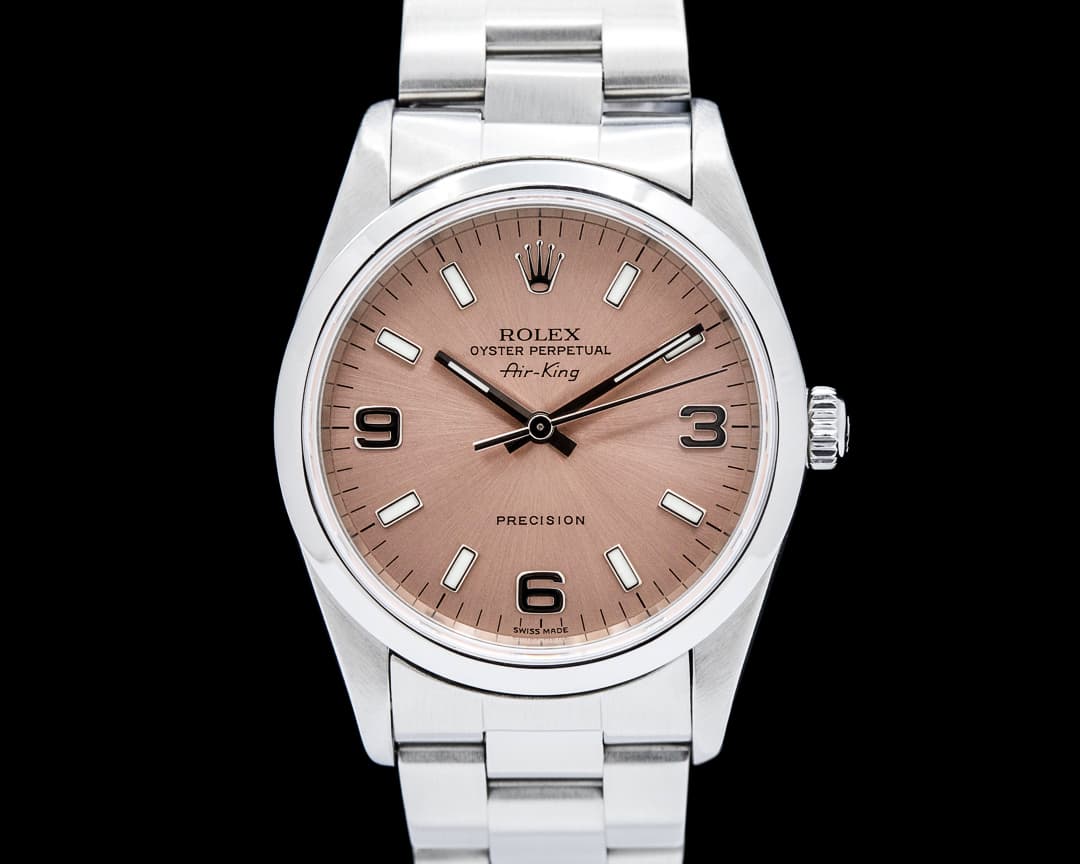
14000 Air King SS Salmon Dial
$5,750
View Watch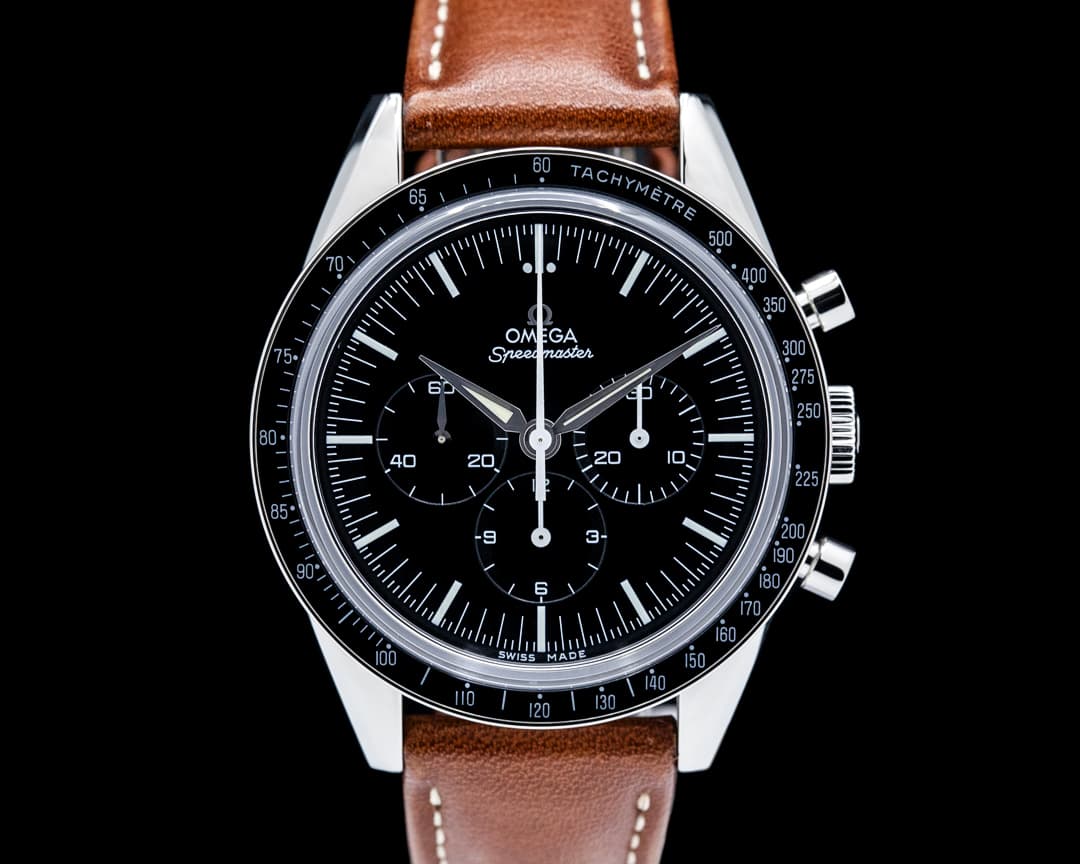
Speedmaster First Omega in Space SS Black Dial
$6,500
View Watch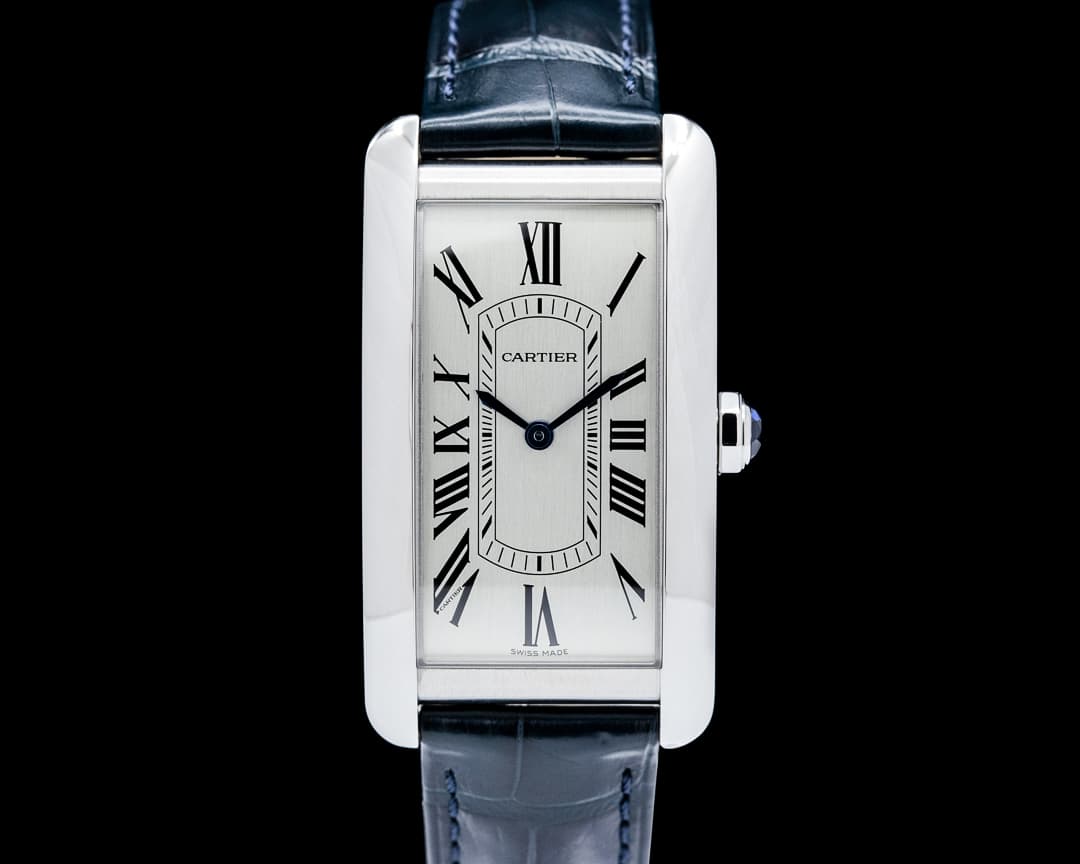
WSTA0083 Tank Americaine Large SS Silver Dial 2026
$6,350
View Watch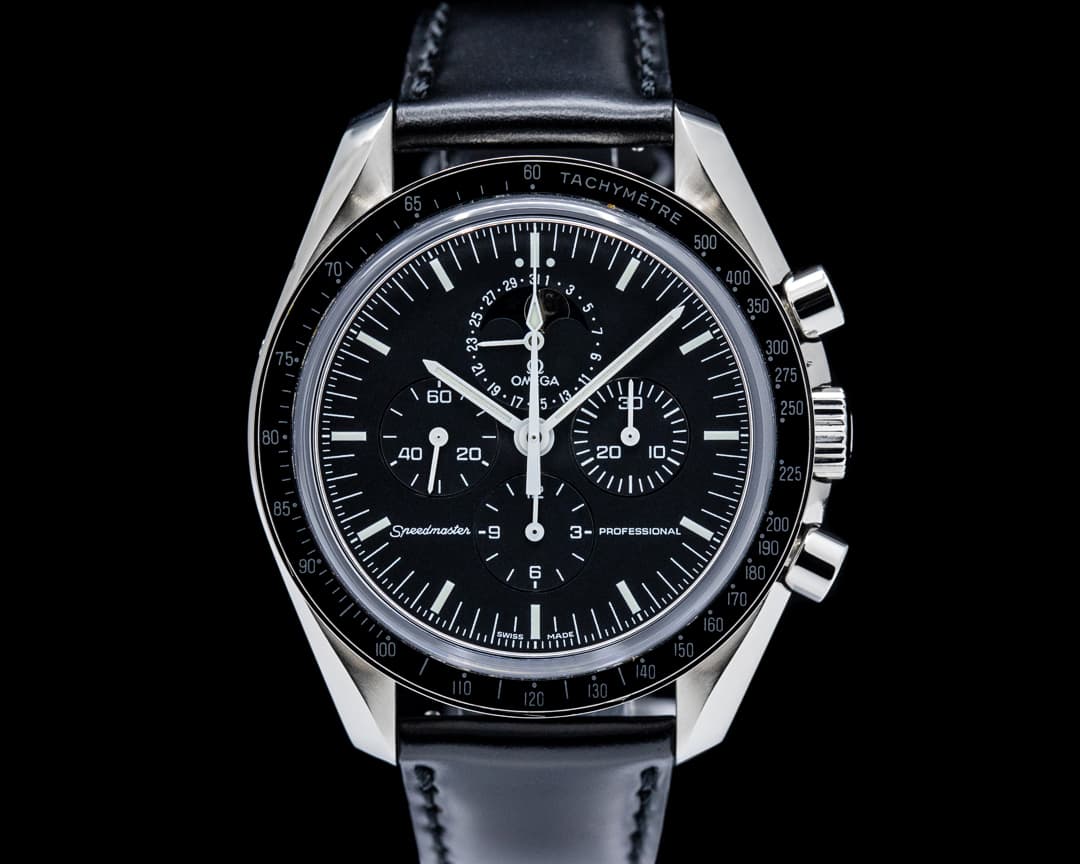
3876.50.31 Speedmaster Professional Moonphase SS Black Dial
$7,350
View Watch
Shop New Arrivals
14000 Air King SS Salmon Dial
$5,750
View WatchSpeedmaster First Omega in Space SS Black Dial
$6,500
View WatchWSTA0083 Tank Americaine Large SS Silver Dial 2026
$6,350
View Watch3876.50.31 Speedmaster Professional Moonphase SS Black Dial
$7,350
View Watch
More Content