Why the Octa Is Journe's Most Important Commercial Line
The Octa is the foundation of Journe's production volume and the center of gravity for secondary market supply. The Automatique, Réserve, Calendrier, Divine, and Lune collectively represent the widest production run in the brand's history and account for the majority of the pieces you are likely to see in circulation. If you are looking to buy a Journe, you will almost certainly consider an Octa.
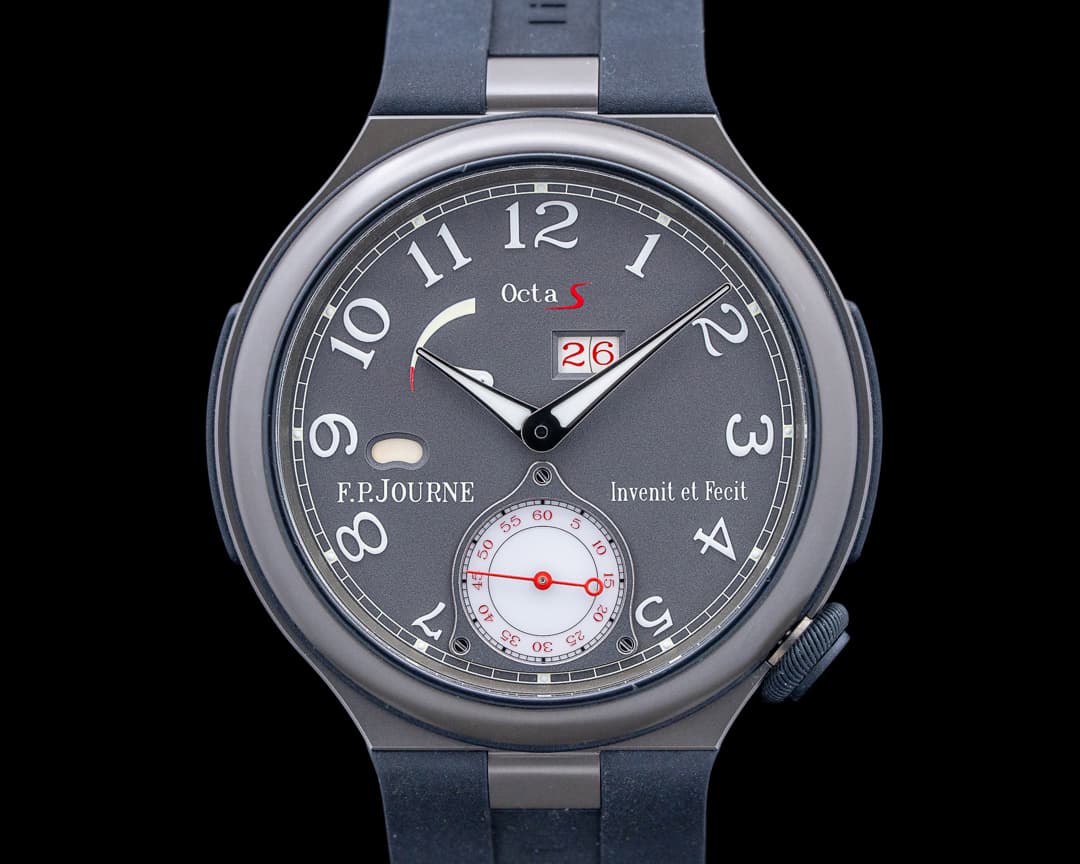
The inflection point that defines today's market is 2015. That year, Journe announced the discontinuation of the 38mm case in favor of 40mm and 42mm sizes, and that transition matters because it created two distinct eras of Octa: the original 38mm watches, which ran from 2001 through the mid-2010s, and the current 40mm generation. The 38mm references are increasingly sought after by collectors who find the 40mm case too large for their wrist or their taste, and they often trade at a significant premium over the 40mm iterations. Getting allocated a core Octa model today is near impossible. Practically, every Octa you can buy today is pre-owned. The supply is what it is, and it is not growing by much.
The Architecture: What All Octas Share
Every core Octa reference runs on the caliber 1300, an automatic movement that Journe presented in 2001. In the twenty-plus years since, it has gone through only three major evolutions, a figure that reflects either admirable restraint or a movement that was right to begin with, and probably a bit of both. The caliber houses a free-sprung balance, delivers a 120-hour power reserve from a long mainspring supplying an average 850 grams of torque, and limits the loss in balance amplitude to 25% over five days.
One clarification worth making early: the remontoir d'égalité, Journe's constant-force mechanism and a signature of his tourbillon and chronometer work, is not present on the Octa automatic line. The Octa achieves its regulation through other means: the free-sprung balance, the compact architecture, the large mainspring.
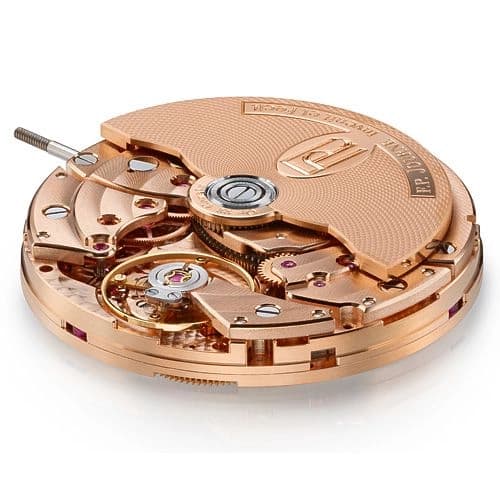
Journe Caliber 1300
The physical language of the Octa is consistent across references. The round case, with its Calatrava flowing profile, derived from Journe's early Tourbillon Souverain, carries a beautiful bezel that sits against the wrist with a welcome contour that makes it profoundly comfortable to wear all day long. The case is relatively thin for an automatic with this power reserve. On the wrist, the 38mm version reads smaller than its diameter suggests, since the combination of the geometry and the downturned lugs keeps it compact visually. The 40mm is fuller, more assertive, closer to contemporary sizing. They wear similarly on the wrist, but the visual presentation is a little more lug heavy on the 40mm variant and the result is a much more sporty presence.
The dial layout across the family is Journe's standard: off-center time display, subdial at the lower half of the dial face, and enough open guilloché ground to reward attention in different light environments. A guilloché silver dial shifts between warm and cool depending on the angle. The frames that surround the timekeeping displays are fully polished and provide lovely contrast against the solid gold dial substrates.
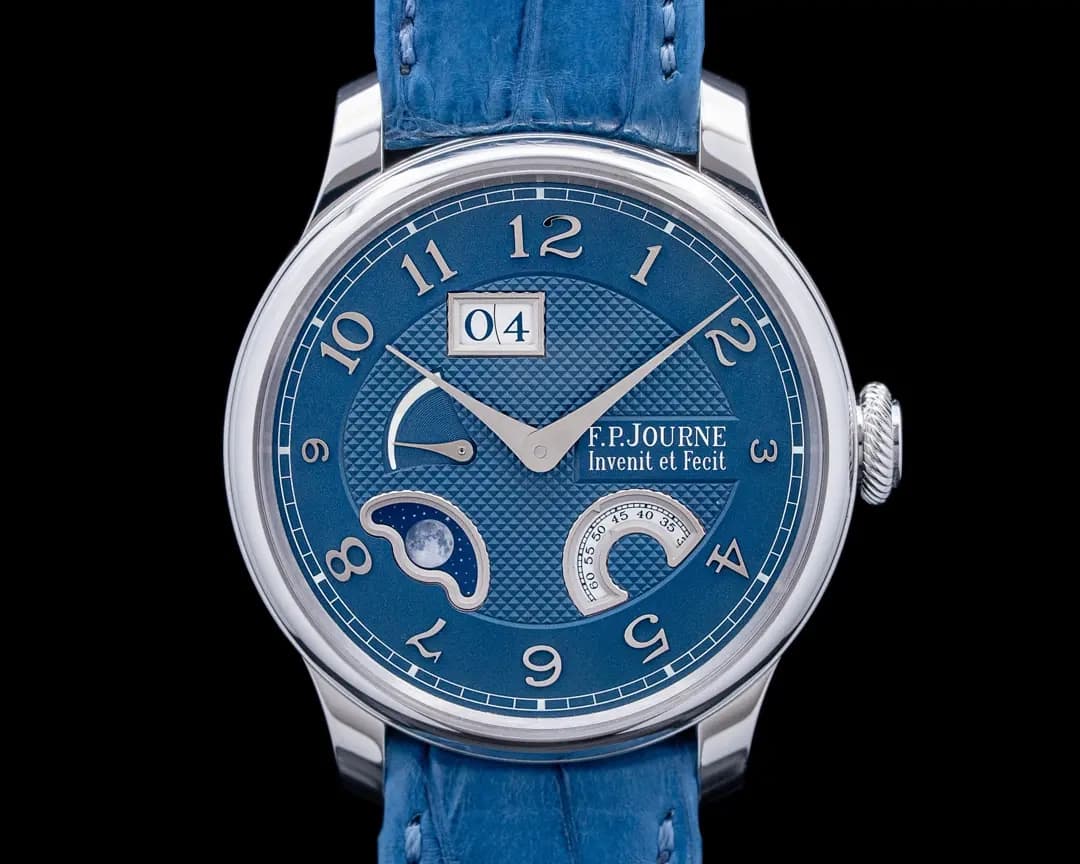
Journe Octa Divine
Case metals across the core Octa family are broadly platinum and rose gold. Aluminum exists on the Octa Sport, a line produced between roughly 2011 and 2014, but was never offered on the Automatique, Réserve, Calendrier, Divine, or Lune.
Octa Automatique and Réserve de Marche: The Entry Point, Priced Honestly
The Automatique and the Réserve de Marche are often treated as the same watch. They share the same case, the same caliber architecture, and mostly the same dial layout. Both feature the outsized power reserve and date window. The Automatique is still part of the collections. What it does to the price is minor; the Réserve typically trades at a modest premium to a comparable Automatique in the same metal and dial, but the gap is not that substantial. The earlier Reserve models can be way more expensive when collected in 38mm with a brass movement.
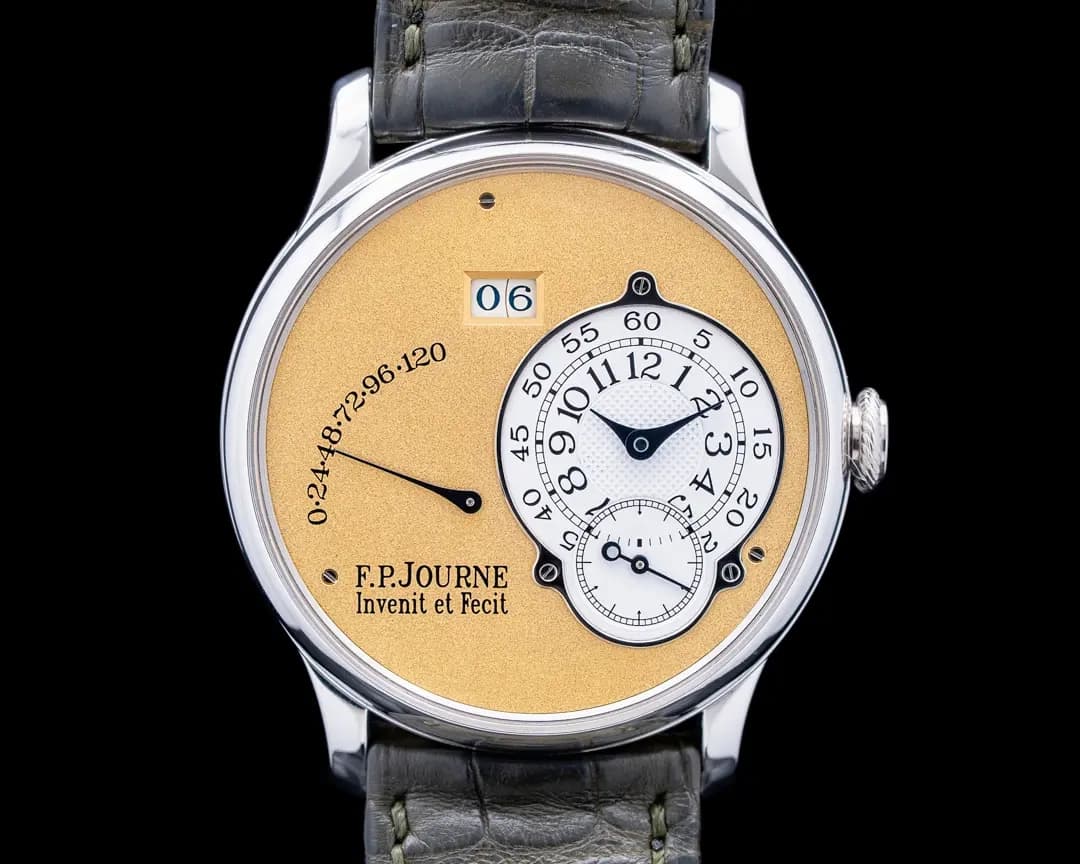
Octa Reserve de Marche Brass Movement
Secondary market supply is reasonably healthy, with rose gold examples appearing most frequently. Platinum is arguably slightly rarer and commands a slight premium over rose gold in the same dial and condition. Recent dealer inventory for Octa Automatique and Reserve models has climbed from high 5 figures to well into the 6 figures.
For buyers seeking the most straightforward entry into the Octa family, the rose gold Automatique or Réserve in 38mm is one of the greatest manifestations of the Journe philosophy available on the market.
Octa Calendrier: The Quiet Sweet Spot
The Calendrier was Journe's own characterization of his automatic bestseller. Produced from 2002 to the 2010s, it added an annual calendar to the Octa's base movement. An annual calendar requires a single manual correction per year, at the end of February; every other month, the calendar advances itself correctly. For buyers who want more than the time without the commitment and complexity cost of a perpetual calendar, this is the logical answer. The Octa Calendrier was the first annual calendar to feature a retrograde date.
The complication presents differently in photographs than on the wrist. Images tend to make the dial look busy. In hand, the layout resolves into a coherent hierarchy: the time display reads first, the date reads second, and the apertures for the rest of the calendar organize themselves around a guilloché field that gives the whole composition enough texture to stay interesting at rest. A silver guilloché Calendrier in good light rewards attention in a way that a photograph does not fully capture.
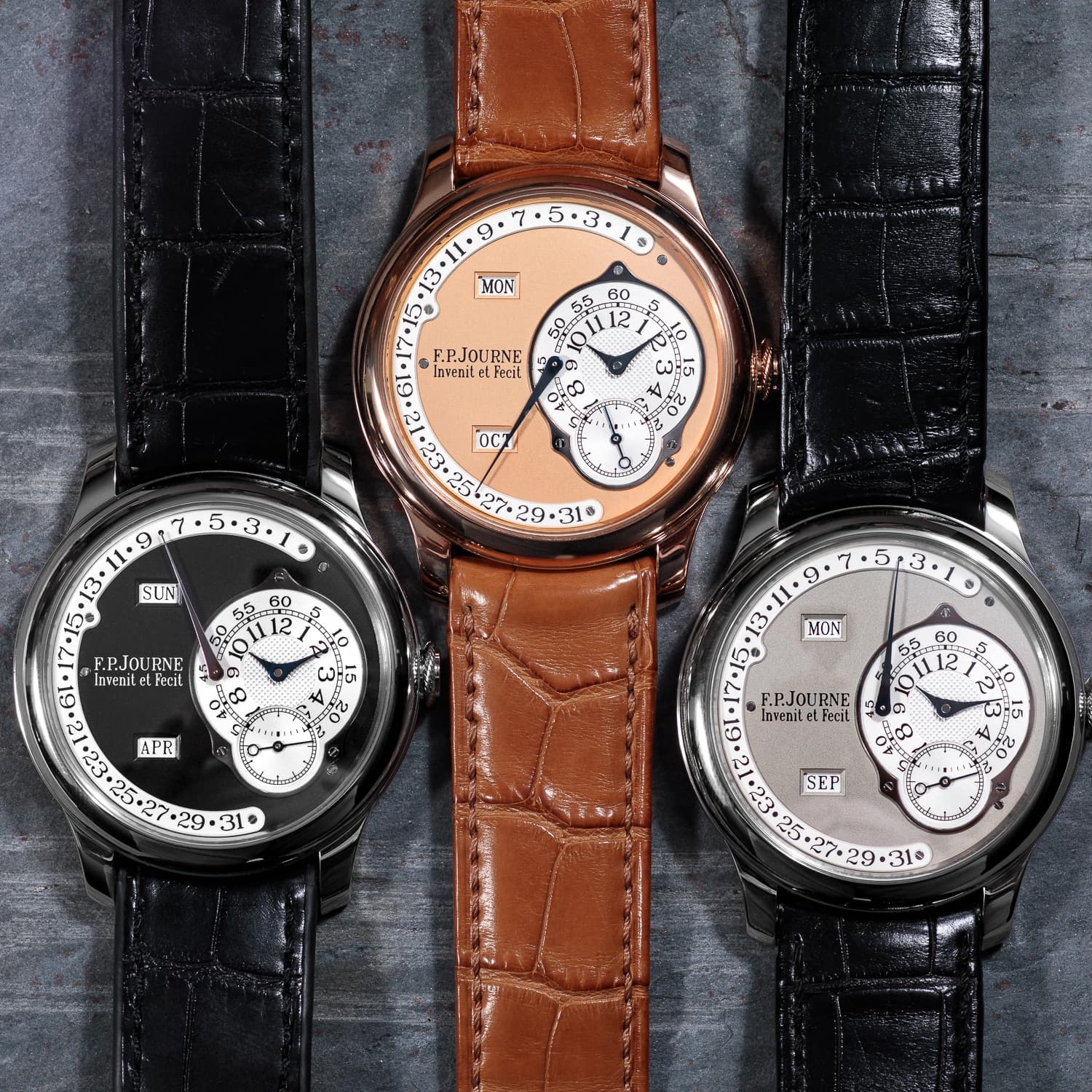
F.P Journe Octa Calendrier
The Calendrier was produced in both 38mm and 40mm, in rose gold and platinum. These models weren't as common as many of the other Octa variants, and as a complicated Journe, this piece is certainly priced a tier above the core models. If you're searching for the Octa framework and want something rarer with a practical everyday complication, this is often the go to answer.
Relative to the Automatique and Réserve, the Calendrier commands a meaningful premium that the market has consistently supported. The annual calendar is genuinely useful, the reference had a long and well-documented production run, and supply is present but not excessive. Among buyers balancing complication interest against budget, this is where most Octa conversations end up. It is also, in our view, where they should: the Calendrier offers more function than the base references, greater secondary market liquidity than the Lune, and a value proposition that is easier to defend compared the high end models from the brand like the Resonance and Tourbillon.
Octa Divine: The Outlier Worth Understanding
The Divine is the Octa the secondary market rarely covers. It is a ladies' watch by design, originally produced in 36mm starting in 2003, later in 38mm, then updated in 2016 to 40mm and 42mm cases. Auction buyers who approach it with the same mental model as the Calendrier or Lune will sometimes misprice it in both directions.
The Divine displays the time with date and moon phase, proportioned initially for a smaller wrist and later available in sizes that compete with the standard Octa footprint. Perhaps the most distinctive feature was the running seconds disk replacing a conventional subsidiary seconds display. The 36mm version covers a market segment that often is left out of the Journe conversation, bringing smaller wrists into flagship Journe territory. The 38mm, 40mm and 42mm versions are a different watch experientially, more assertive, more directly comparable to the Lune in wearability, and priced closer to it as a result.
Octa Divine
The Divine was made for a relatively short window in a lot of iterations, meaning that any given combination of elements isn't particularly common. These make for some of the rarer Journe core models out there. A patient buyer who understands what the Divine is, a refined piece with complications that sits slightly out of the market's main sightline, can occasionally find value that a more popular reference wouldn't offer.
Octa Lune: The One That Holds Its Value
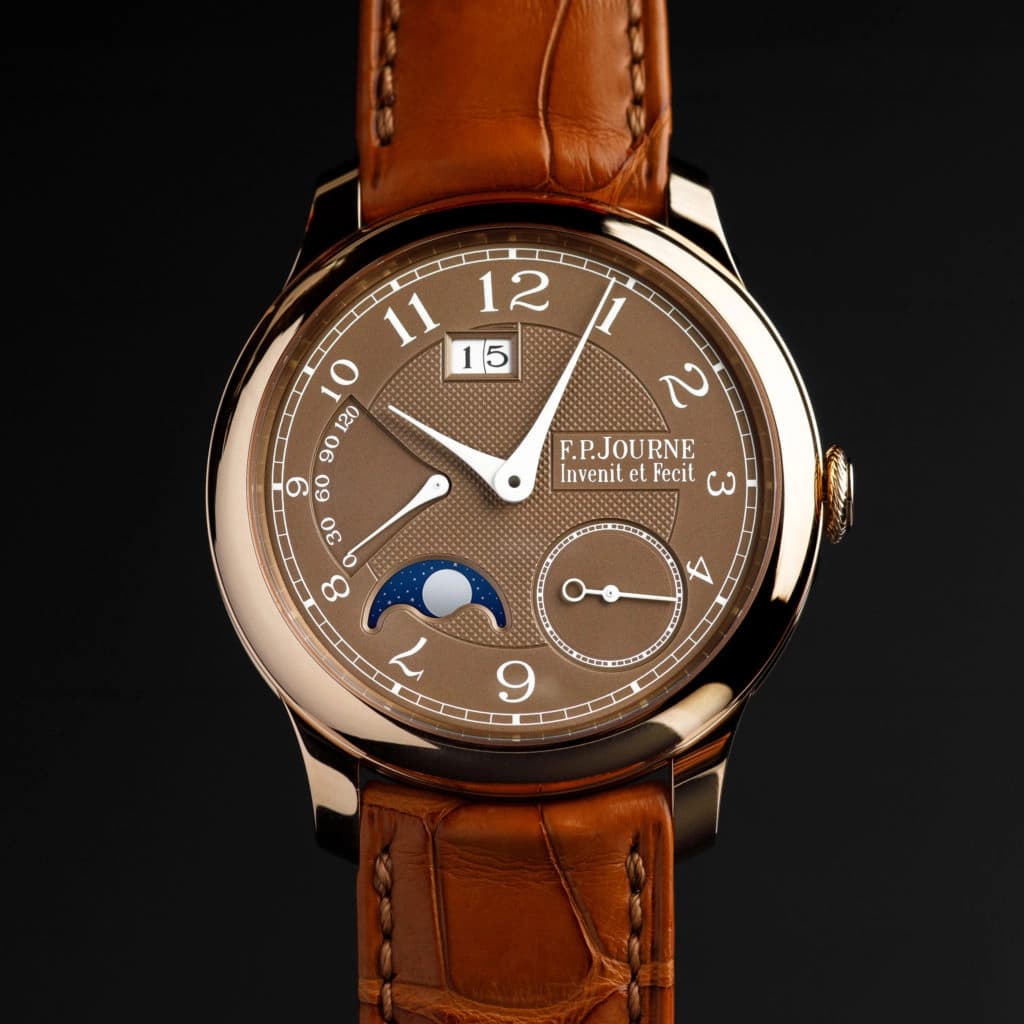
The Lune is the most commonly sought-after reference in the Octa family and arguably the simplest manifestation of what the collection is all about. It combines the Automatique's base with a large date display and a moon phase, a combination that reads with unusual clarity on the dial and that the secondary market has decided it wants.
The secondary market for the Lune is active across its iterations. An Octa Lune sold at Sotheby's in December 2025 for $254,000, beating its estimate by 330%. The Lune's desirability is real.
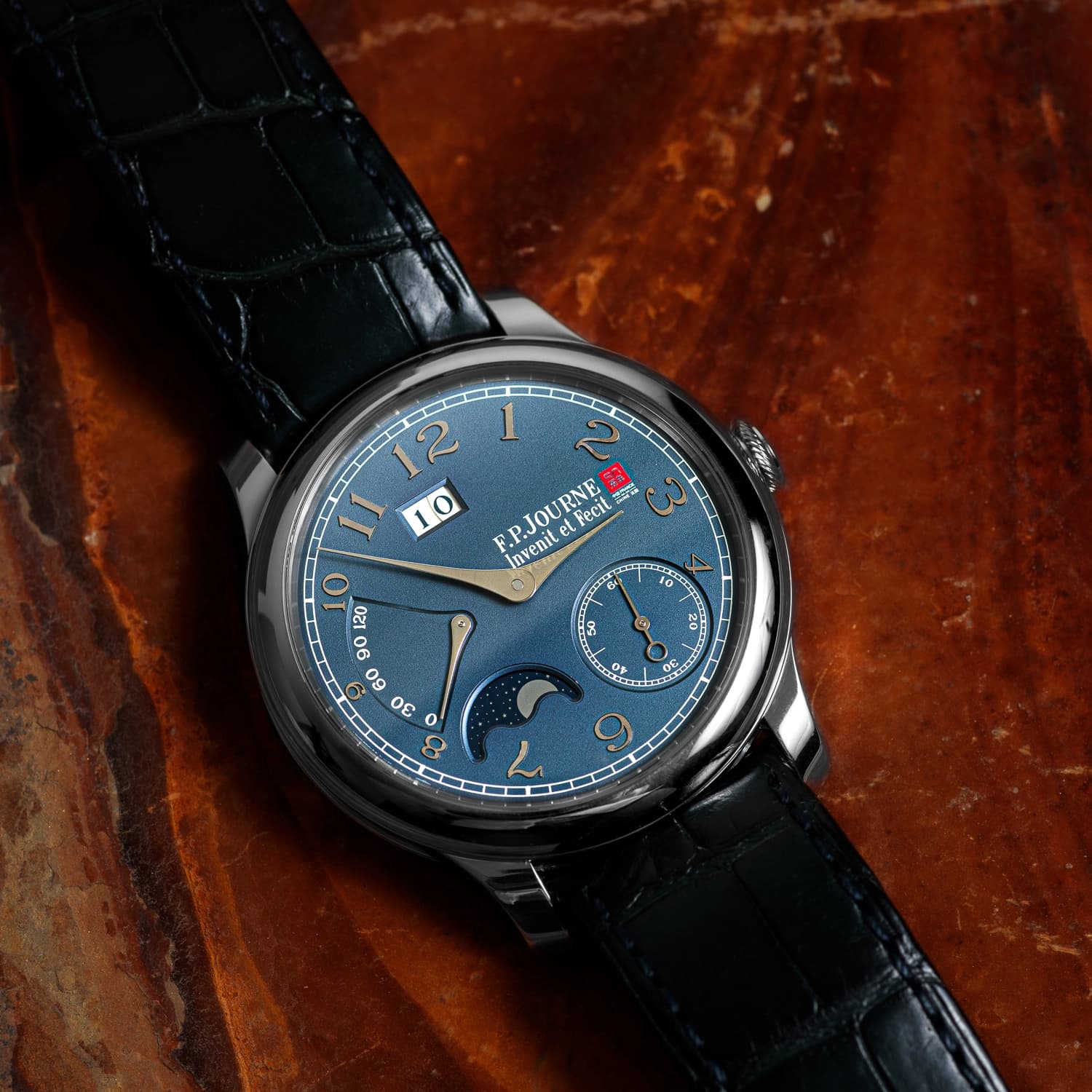
Journe Octa Lune Limited Edition
The model is made in two broad categories: those with guilloche dials and those without. The guilloche display sets the complications in a bit more of a whimsical arrangmenet, with most variants trading in the $140,000+ pricepoint. The non-guilloche gold dial iterations are a bit more balanced and trade at a premium over the guilloche iterations.
Dial variants matter here as much as anywhere in the Octa family. The guilloché silver dial reads with particular depth given the moon phase disc's integration into the overall layout; the gold reads warmer and more streamlined. As across the Octa family generally, dial variants influence value meaningfully even when no one has put a percentage to it.
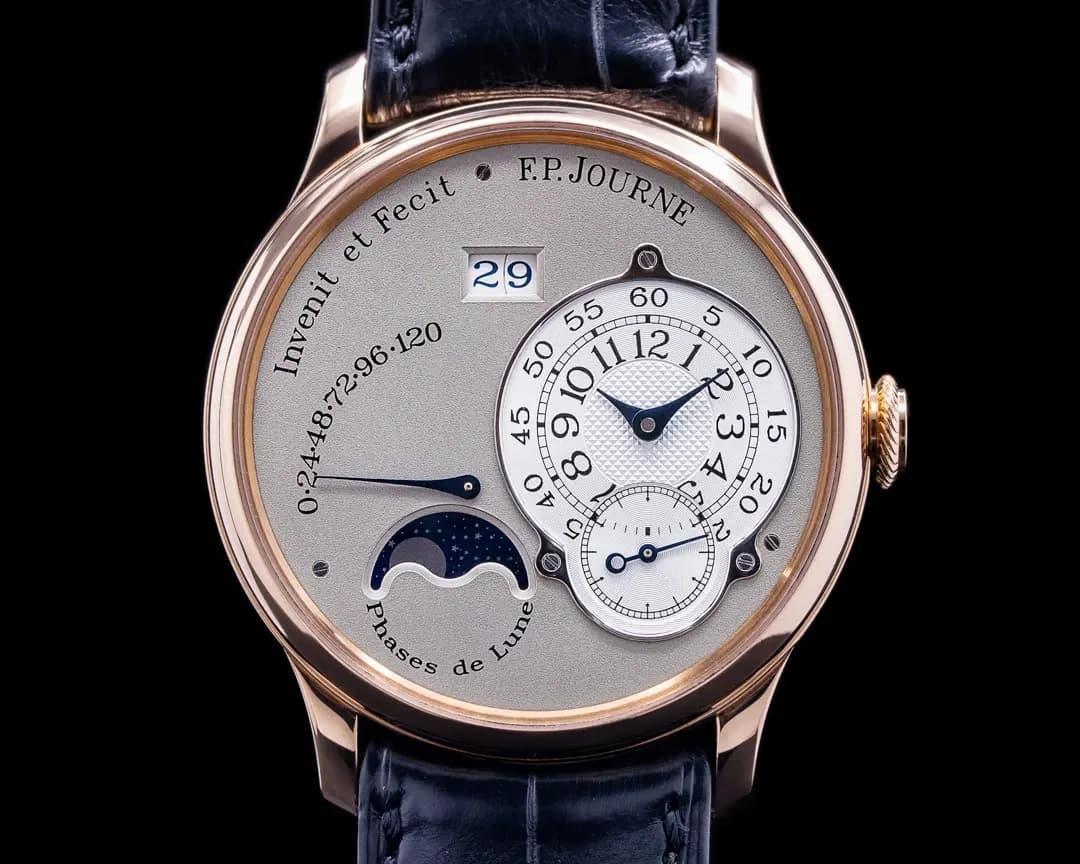
Octa Lune 38mm
For buyers: the Lune is the right reference if the complication genuinely appeals and you are prepared to pay for what the market deems the best Octa. It is not the right reference if you are hoping to find a bargain in the most-watched corner of the family.
Buying an Octa: What to Check, What to Pay, What to Avoid
The Octa caliber is a well-built automatic movement that has shown durability over two-plus decades of production and collecting. The movement is built in such a way that the complications integrate with one another cohesively, maintaining a slender case profile while adopting to suit new designs and fucntions.
Case condition. The sharp-edge bezel visible on the transition between bezel and midcase on an Octa wears with use, the facets flatten, particularly on high points, and this is difficult to reverse without professional refinishing that alters the character of the case. Check the lugs: the geometry should be symmetrical and balanced, and polished-out lugs on a watch described as "lightly worn" should prompt a closer look at the entire case.
Crown wear. The crown on the Octa is relatively low-profile but not recessed; it takes contact in daily wear. Check for rounding at the crown edges and smooth operation through winding and setting positions. Any resistance or roughness in the crown mechanism warrants a service inquiry before purchase.
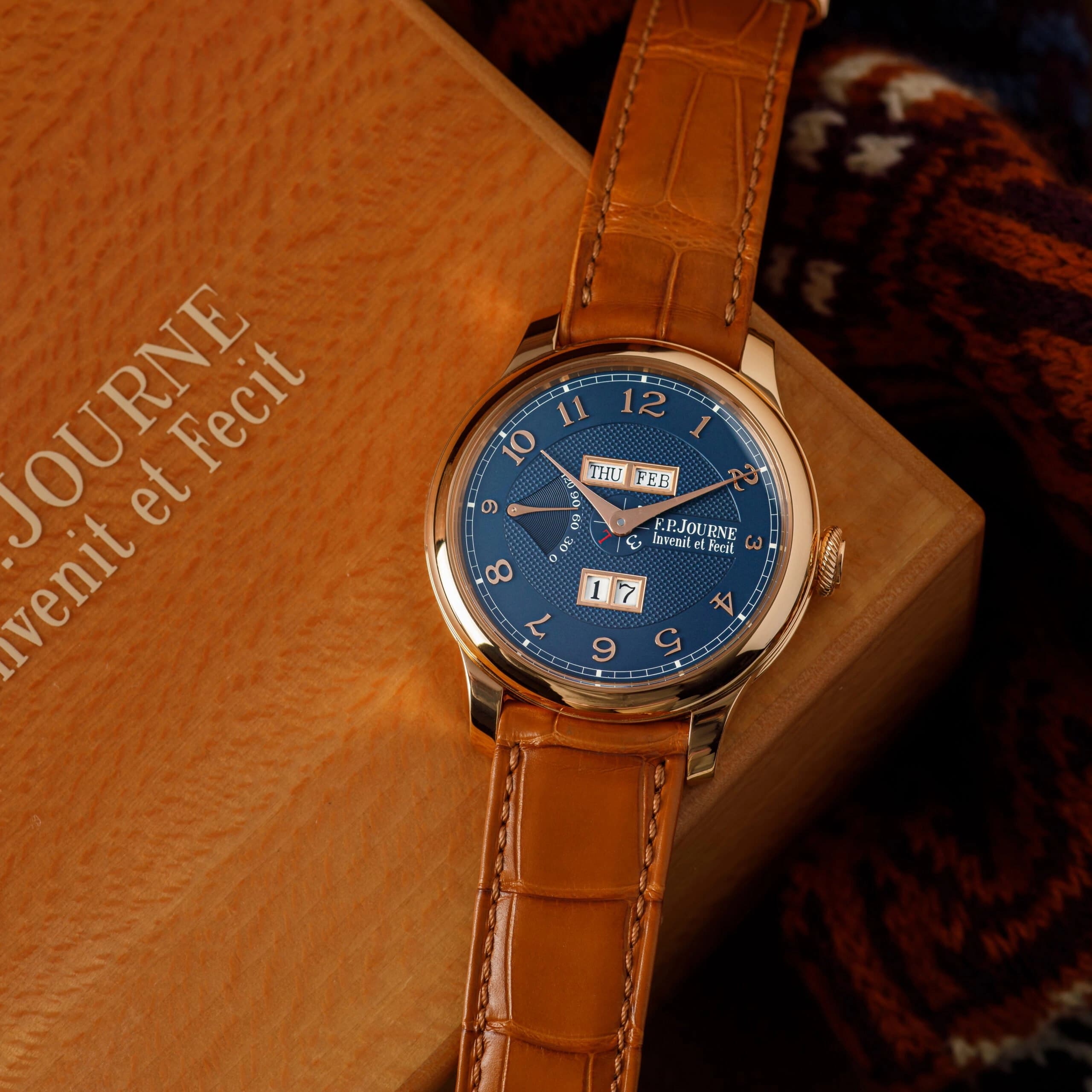
Journe Octa Quantieme Perpetual
Dial integrity. This detail matters significantly for value. On guilloché dials, look for moisture intrusion, which leaves a haze in the guilloché pattern that is effectively irreversible, along with print degradation on older applied elements and any variation in the blued uniformity of the hands. Moon phase discs on the Lune should be examined under light for fading or surface irregularity. A dial with a problem is a different purchase than a dial without one, and the price should reflect that.
Which references represent the strongest value at current levels. The Calendrier is the clearest answer: deep secondary market supply, a complication that is genuinely functional, and pricing that has been consistently supported without the volatility that attaches to the Lune. The base Automatique and Réserve in rose gold are accessible entry points to the collection. If you want one watch to characterize the collection, opt for a Lune.
Across all references: a 38mm example in excellent unpolished condition with service history and original papers in rose gold is a cleaner purchase than a 40mm example with a refinished case and no documentation, regardless of what either seller is asking. The market knows this. Price accordingly.rel
Shop New Arrivals
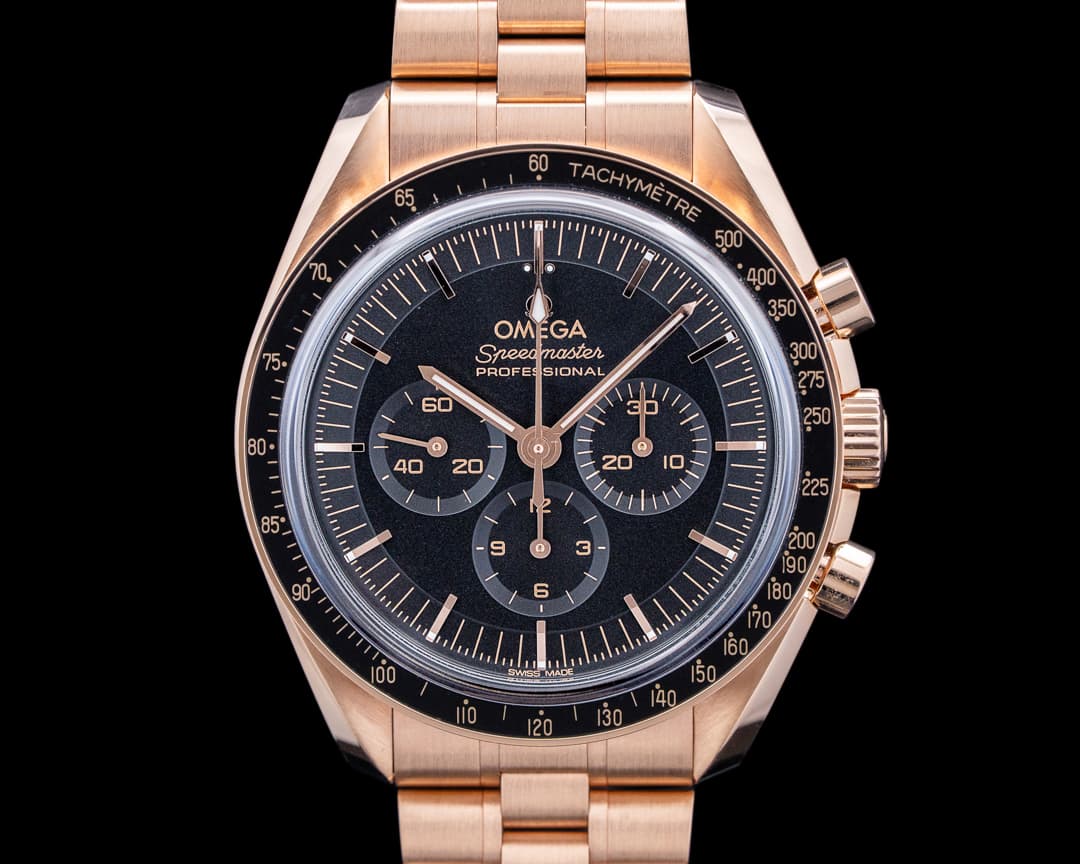
Speedmaster Moonwatch 18K Sedna Gold Black Dial
$29,900
View Watch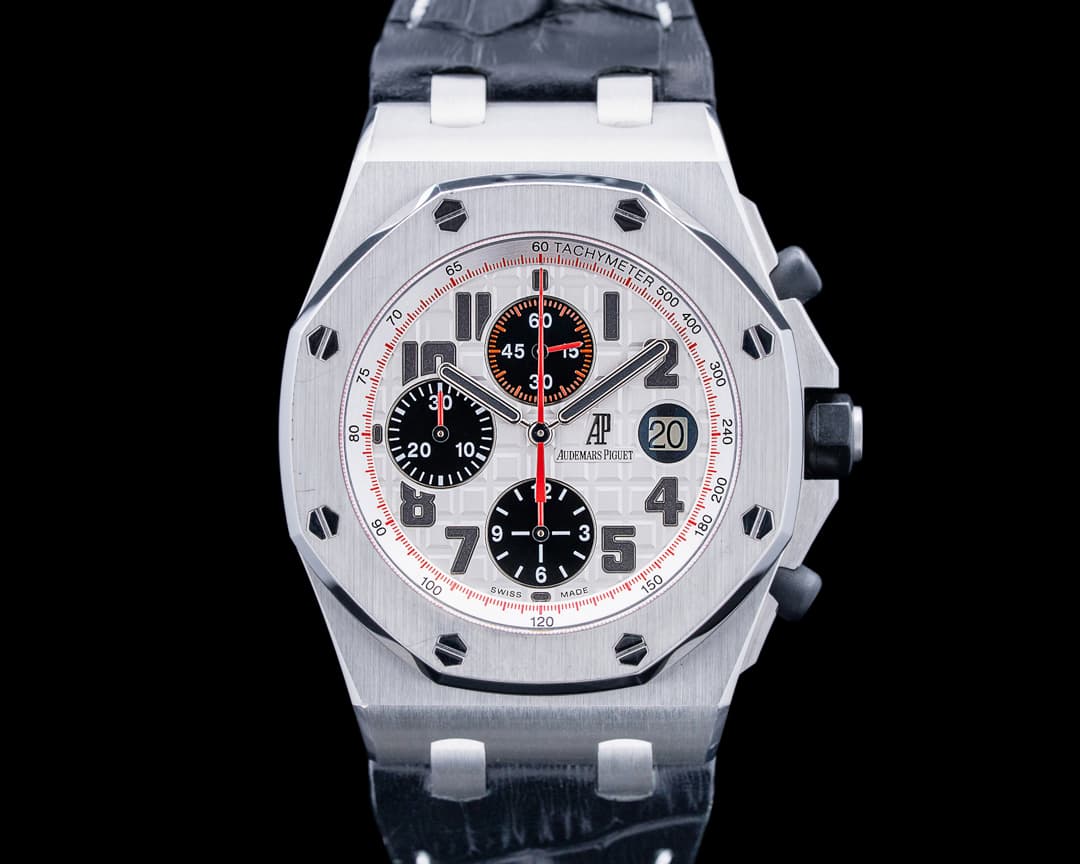
26170ST Royal Oak Offshore Chronograph SS Silver Dial
$22,900
View Watch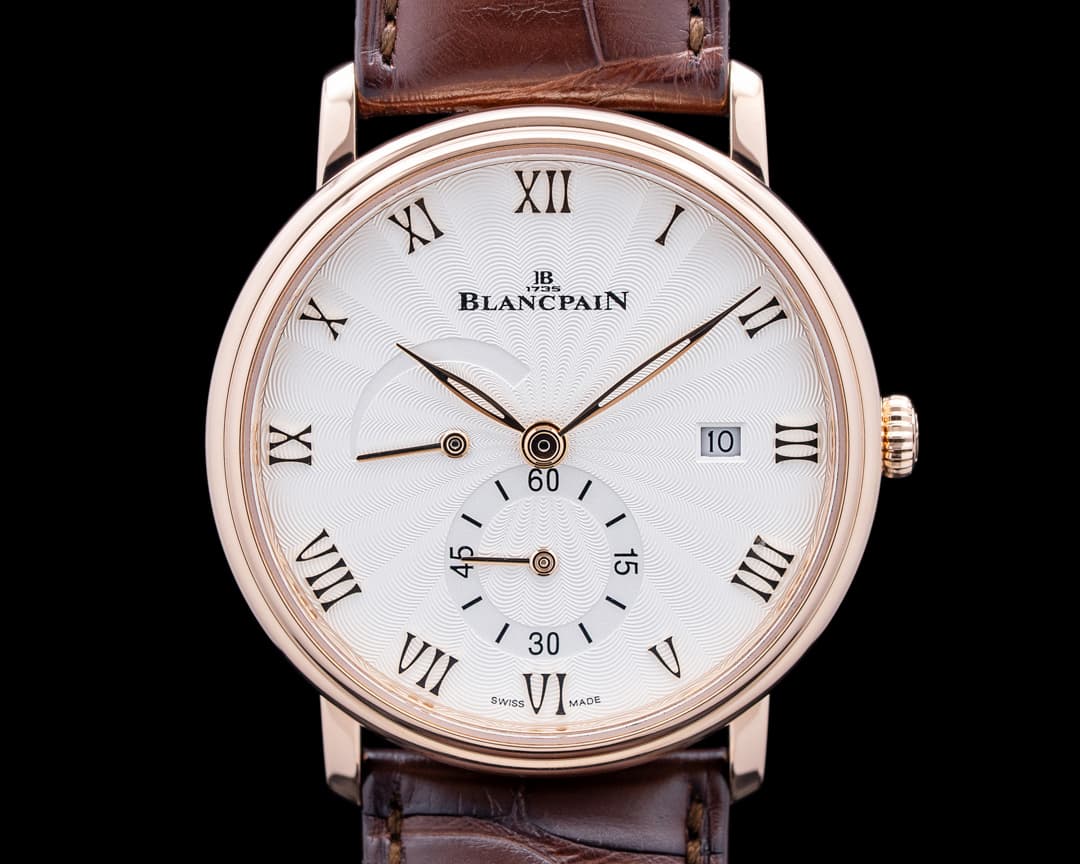
6606A Villeret Ultraplate 18K Rose Gold Opaline Dial
$20,900
View Watch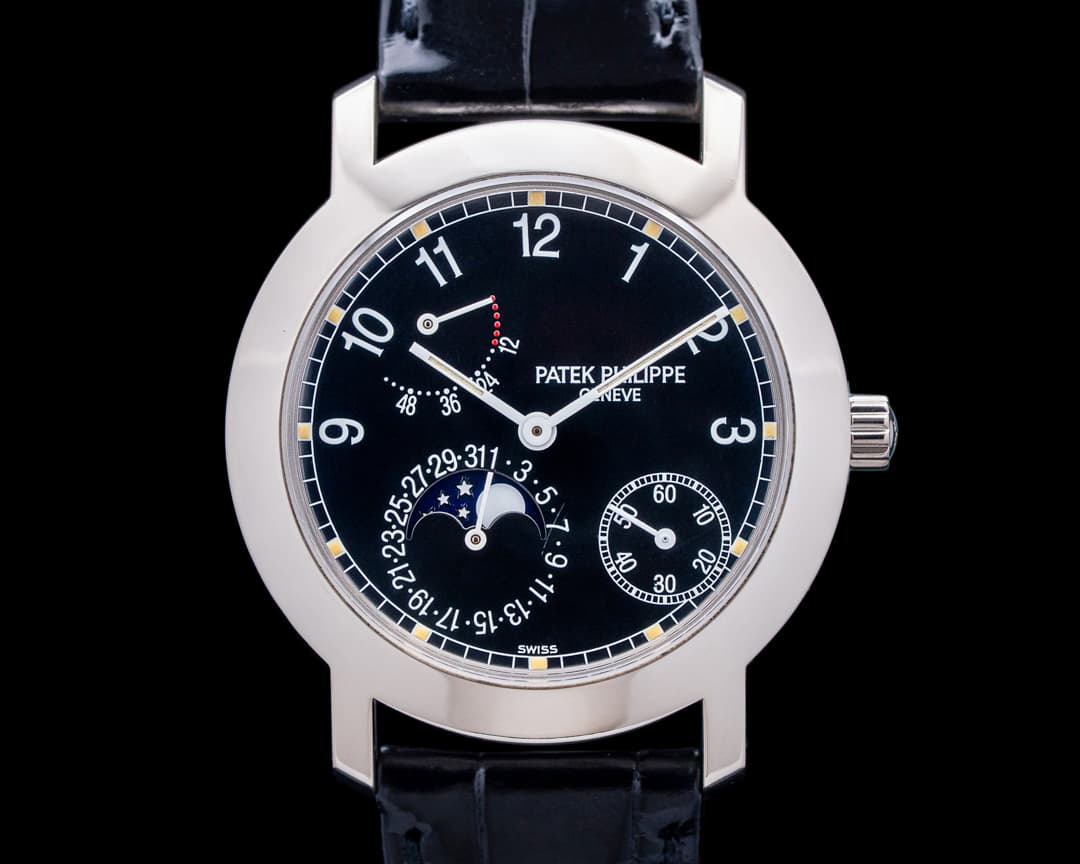
5055G Complications 18K White Gold Black Dial
$29,500
View Watch
Shop New Arrivals
Speedmaster Moonwatch 18K Sedna Gold Black Dial
$29,900
View Watch26170ST Royal Oak Offshore Chronograph SS Silver Dial
$22,900
View Watch6606A Villeret Ultraplate 18K Rose Gold Opaline Dial
$20,900
View Watch5055G Complications 18K White Gold Black Dial
$29,500
View Watch
More Content