Why the GMT-Master Still Makes the Case
The goal was simple: give pilots a way to read two time zones simultaneously. The result was a 24-hour rotating bezel, color-coded in two blocks so the wearer could distinguish AM from PM at a glance, paired with an additional GMT hand that completed one rotation every 24 hours. Rolex developed the concept in collaboration with Pan American World Airways, which needed something pragmatic for its transatlantic crews flying long distances for the first time. The watch launched in 1955 and became the official watch of Pan Am.
That functional premise is largely obsolete. Few, if any, are navigating by wristwatch in the cockpit of a modern airliner, and a smartphone handles dual time-zone reading without asking you to understand bezel mechanics. None of that has slowed the GMT-Master's market at all. In fact, quite the opposite! The GMT has been one of the best performing sports models in the Rolex catalog in the 21st century.
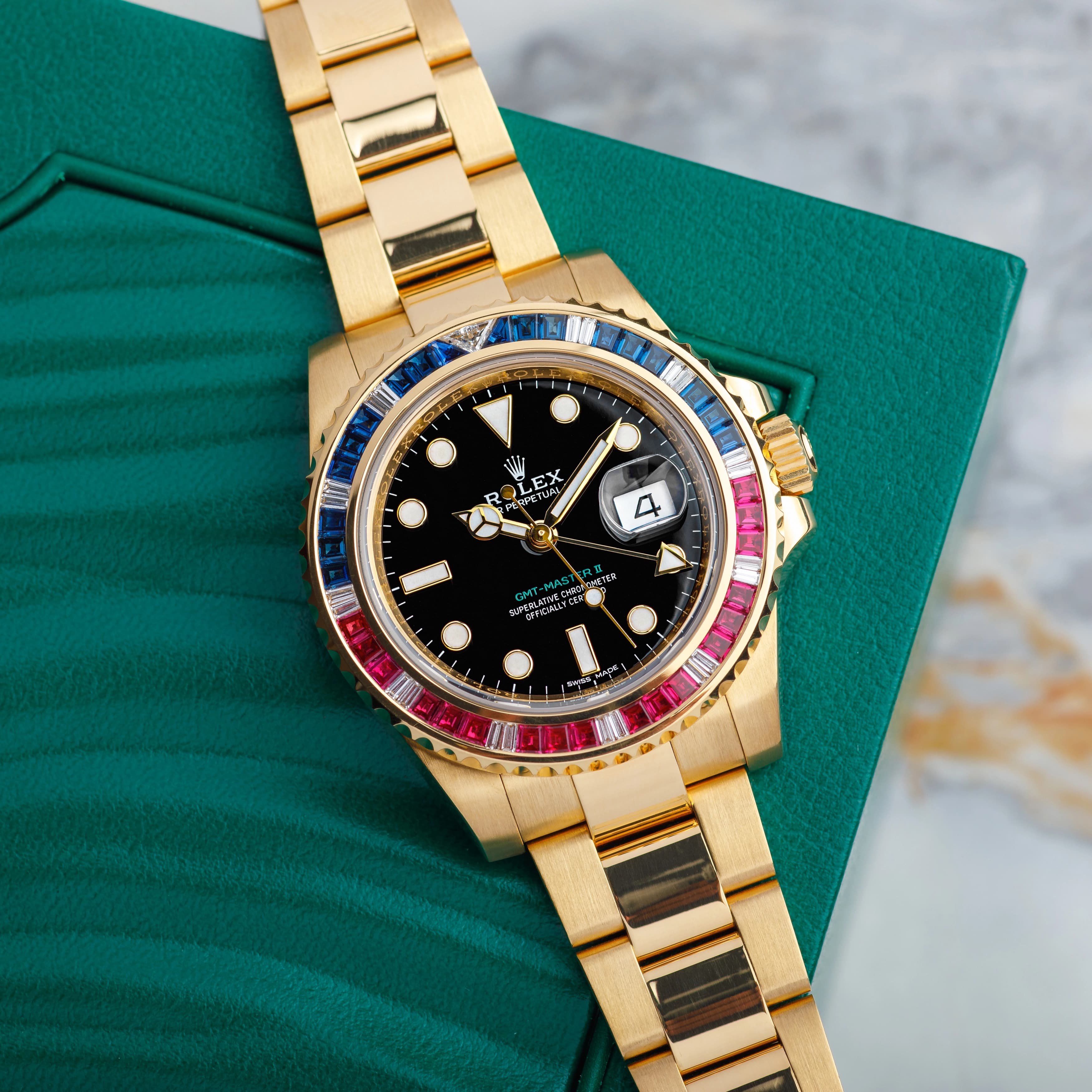
Rolex 116748SARU
What keeps it relevant is a combination of things that don't often appear in the same watch: a case size and profile that wears well on a wide range of wrists, a complication that is genuinely practical rather than decorative, and a production history long enough to support a serious collector market across multiple generations and configurations. The bezel color combinations, "Pepsi" (red and blue), "Batman" (black and blue), "Coke" (black and red), "Root Beer" (brown and black, or in vintage iterations, brown and gold), have acquired the kind of nickname-level shorthand that only happens when a watch earns real cultural traction. Add to that the pop culture appeal of the Rolex name and what you have is one of the most successful mass-appealing watches available.
The secondary market has also normalized after the speculative spike of 2021 and 2022. That correction, has made the current environment cleaner for buyers with genuine collecting intent. Premiums still exist on desirable configurations, but the panic-buying dynamic is largely gone (with small exceptions we'll cover soon).
The Reference Evolution: First Generation (ref. 6542 and ref. 1675)
Ref. 6542 (1954-1959)
The 6542 is the very first reference, the progenitor to the modern Pepsi. The case is 38mm, smaller than what the market gravitates toward today, and the overall proportions feel compact in a way that vintage sports pieces feel. This was a tool watch, not a statement piece. It wasn't designed as a luxury timepiece, but rather as a practical tool for a clearly specified use case. The dial on early examples is glossy black with gilt printing and luminous plots that age to a warm, uneven cream. Under direct light, a well-preserved original dial has a depth that later production can't replicate. The case is crown-guard-less as is consistent with Rolex's earliest Submariners as well.
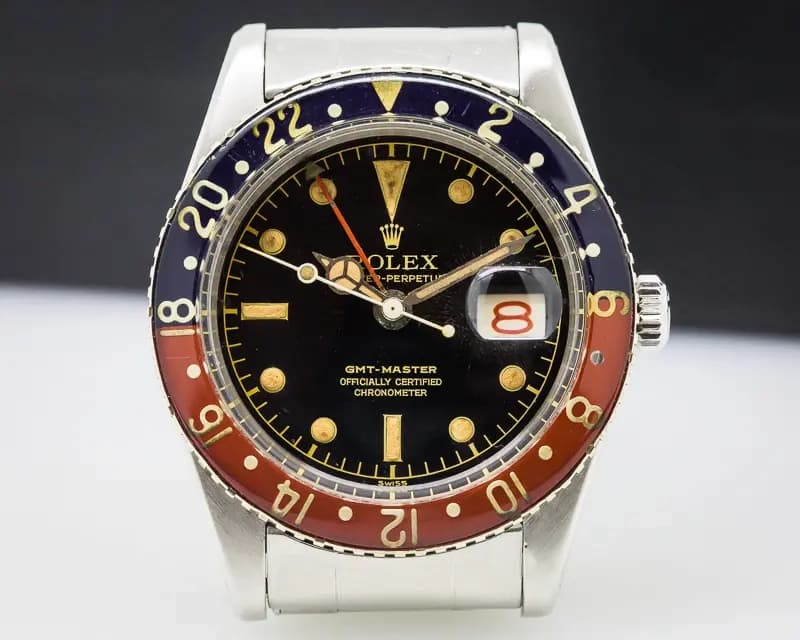
Rolex 6542 'Bakelite'
The defining feature of early 6542s is the bezel insert material: bakelite, a brittle, radio-luminous compound that gave the two-tone bezel a distinctive translucency. Rolex recalled the bakelite bezels in 1959 due to their radioactivity. Original examples are rare and fragile; most have been replaced or remain in cracked condition. In 1956, Rolex transitioned to aluminum inserts mid-production, so 6542s fall into two camps: the early bakelite examples (1954-1956) and the later aluminum versions (1956-1959). There are also those that were serviced and replaced with aluminum inserts. The bakelite bezels are the collector obsession. The aluminum versions are still historically significant and collectable (especially in great condition) but considerably more available in comparative terms.
Market: Original bakelite-bezel 6542s are genuinely scarce and price accordingly. Pricing fluctuates wildly depending on the condition of the bakelite, and honestly can fetch almost any price if in near perfect condition. Aluminum-bezel examples in honest condition are more findable but still uncommon and extremely expensive. What matters most here is the dial, a replaced or touched-up dial on a 6542 removes most of the value rationale for owning one. Be wary of over-restored examples and painted lume.
Ref. 1675 (1959-1980)
The 1675 ran for more than twenty years, which says something about how successful the design was. Rolex saw no reason to fix something that wasn't broken. The case grew slightly and crown guards were added, giving the 1675 a more substantial look than the 6542. Case diameter stayed at 40mm for most of the run, manageable by any modern standard.
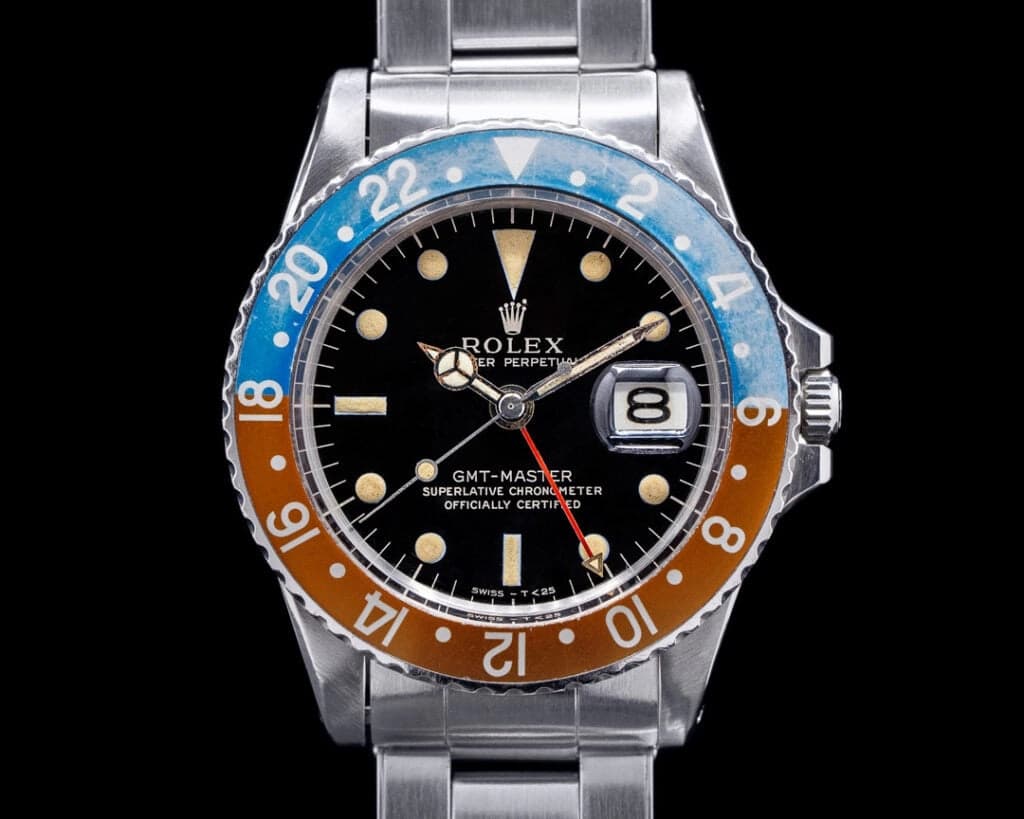
Rolex 1675 Pepsi
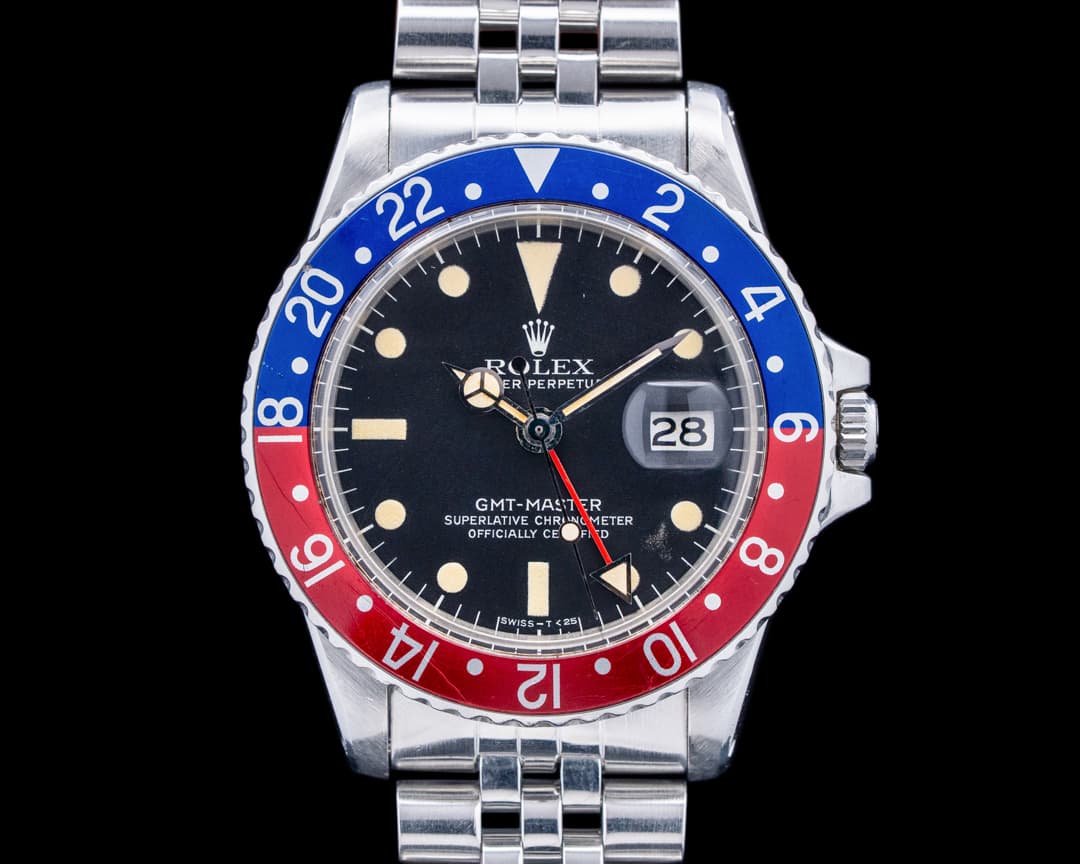
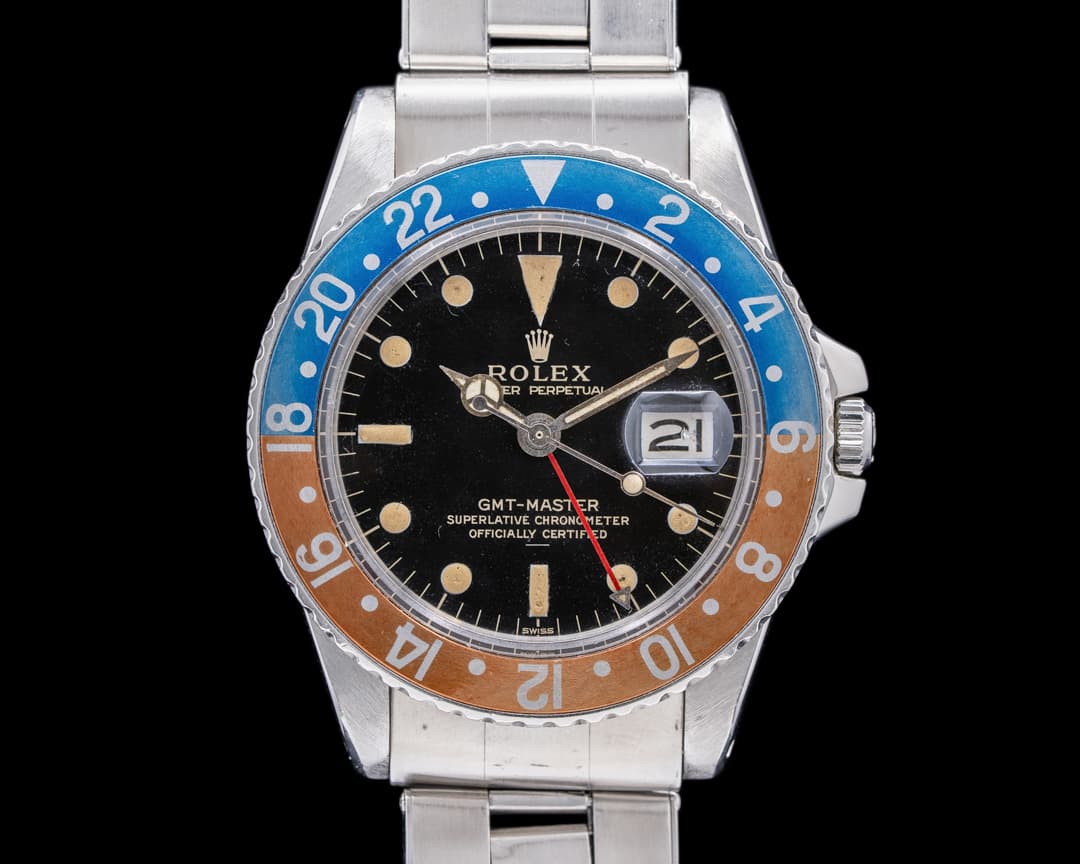
The 1675 went through meaningful dial evolution over two decades. Early examples have the glossy gilt dial with pointed crown guard profiles; later examples (1966 on) feature a matte dial. The luminous material shifted from radium to tritium during the run, which matters for condition assessment, tritium plots age to a warm brown-gold that collectors associate with character. Matte-dial examples with original, unpolished cases and intact tritium lume are the reference point for collector-grade 1675s.
Bezel inserts on the 1675 are aluminum. The red-and-blue Pepsi combination was standard; black-and-red Coke bezels appeared later in the run and are less common. Replacement bezels are everywhere in the secondary market. Always be wary of the history of your piece and what should match.
A subset of 1675 production carries co-branded dials for airlines, militaries, and corporate clients. These are desirable where documented and command premiums over standard dials. Provenance matters more than usual here, since co-branded dials have been faked historically.
Market: A clean 1675 with matching-number components, honest dial, and unpolished case is a serious purchase, expect to pay $16,000-$20,000 or more for a standard Pepsi. Budget examples with polished cases or replaced bezels exist at lower prices, but the 1675's appeal is almost entirely condition-dependent. For some buyers, a presentable but imperfect 1675 at a lower price is the right call.
The Reference Evolution: Second Generation (ref. 16750 and ref. 16760)
Ref. 16750 (1980-1988)
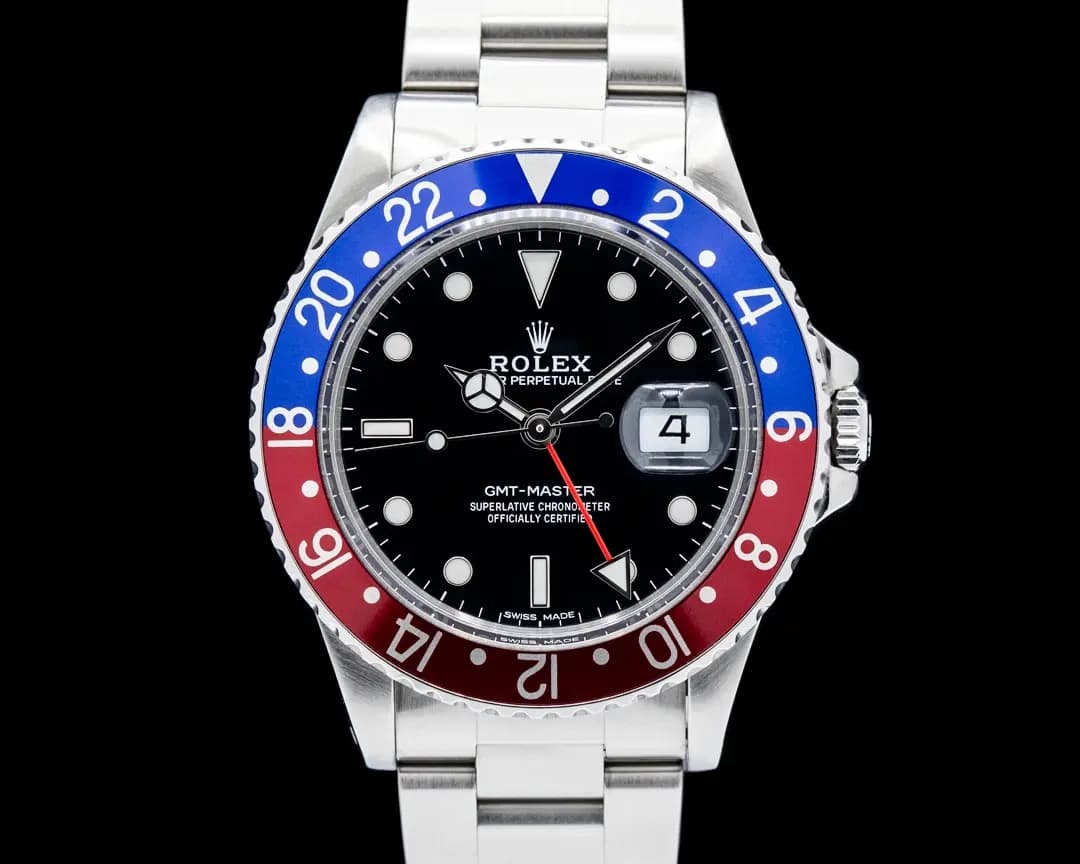
The 16750 is the quiet middle reference. It doesn't get the collector obsession of the 1675 or the novelty factor of the 16760, which makes it genuinely underappreciated as a buying proposition. The movement was overhauled and improved with a quickset date function. For a watch you intend to wear, that's not a small thing. The 16750 also doubled the water resistance of the earlier references to 100m. For practical wear, this reference has a strong case to be made in its favor.
Rolex 16750
The dial is clean and readable. Case dimensions stay close to the 1675, and the overall profile feels coherent with the earlier generation, this is a transition piece, not a reinvention. Aluminum bezel inserts continue; Pepsi configuration is most common.
Market: The 16750 has historically traded at a discount to equivalent-condition 1675s because it lacks the full vintage cachet of the earlier reference but is also too recent to claim a transition-era premium. That discount is real, and depending on what you want from the watch, it can work in your favor. If wearability and practical functionality matter, a well-preserved 16750 offers most of the 1675's character at a more accessible price (typically around $15,000).
Ref. 16760 (1982-1988)
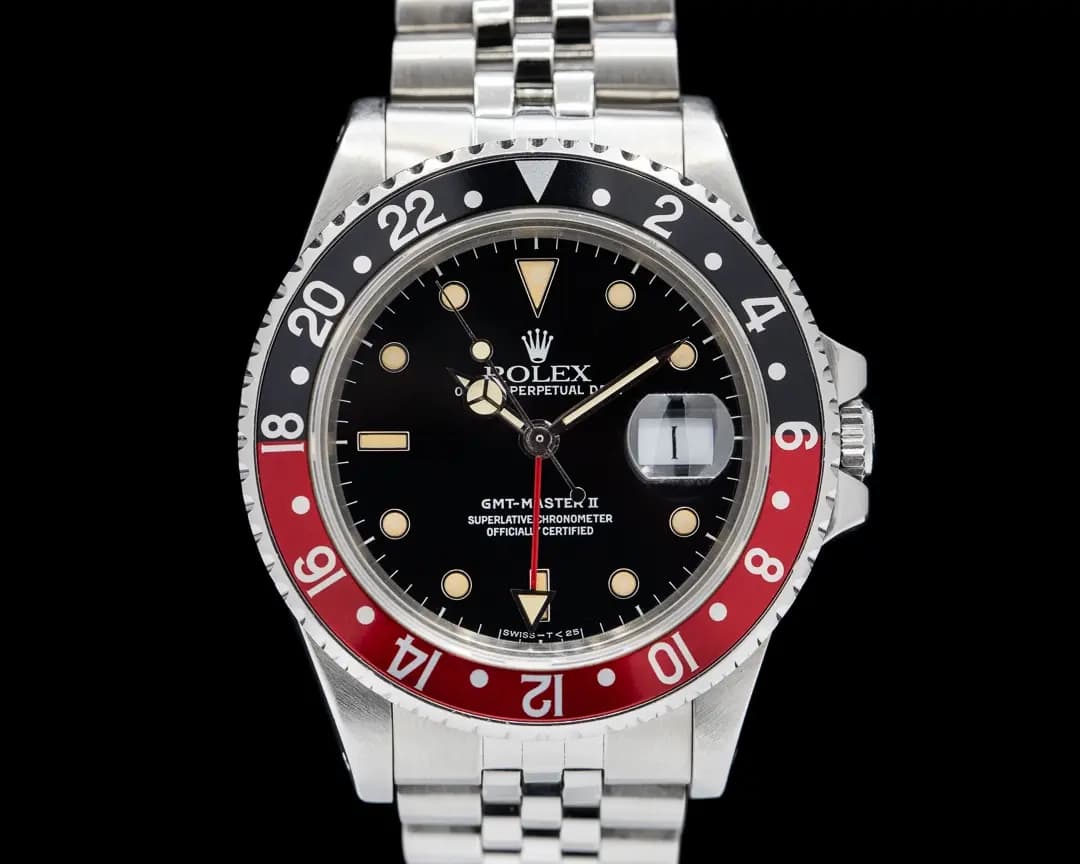
Rolex introduced the GMT-Master II designation with the ref. 16760, and the key mechanical change was significant: the GMT hand became independently settable, meaning the wearer could adjust the local time hour hand in one-hour increments without stopping the watch or disturbing the GMT hand. On the GMT-Master I, adjusting local time required pulling the crown and resetting the main hands, a minor inconvenience in practice, but a real functional distinction. Whereas the GMT Master could only track 2 timezones, the GMT Master II allows up to 3 in tandem with the bezel.
Rolex 16760
The 16760 also gained a noticeably thicker case to accommodate the larger movement. It earned the "Fat Lady" nickname from collectors, affectionately and a little cruelly, and the silhouette does look thick against the more elegant profile of earlier references. The case is 40mm in diameter with a distinctive case back that accommodates the movement's depth. Sapphire crystal is standard.
This was also the reference that presented the Coke iteration for the first time.
Market: The 16760 occupies an interesting position. Mechanically it is superior to the 16750 (independent GMT hand); historically it is the first GMT-Master II, with the shortest production run in the lineage; aesthetically, it divides opinion. The thick case is not universally flattering. Collectors drawn to the mechanical distinction and the short run find these compelling. Buyers who prioritize wrist presence find the proportions awkward. Prices reflect the rarity without fully reflecting the collector enthusiasm that drives 1675 premiums, which creates a case for the 16760 as a relative value in the second-generation tier. Expect to pay around $15,000 for a good example.
The Reference Evolution: Third Generation (ref. 16710 and the Steel-and-Gold Era)
Ref. 16710 (1989-2007)
The 16710 ran for eighteen years and produced more GMT-Masters than any previous reference. That long production run, combined with significant mechanical refinement and bezel variety, makes the 16710 the most complex reference family to navigate as a buyer, and arguably the most rewarding.
The case returns to a slimmer profile relative to the 16760, closer to the proportions of the 1675 family, and it wears well for it. The movement is robust and well-documented for service. The sapphire crystal is standard. The bracelet is the Oyster, with clasp variations across the production run that serve as dating aids for knowledgeable buyers.
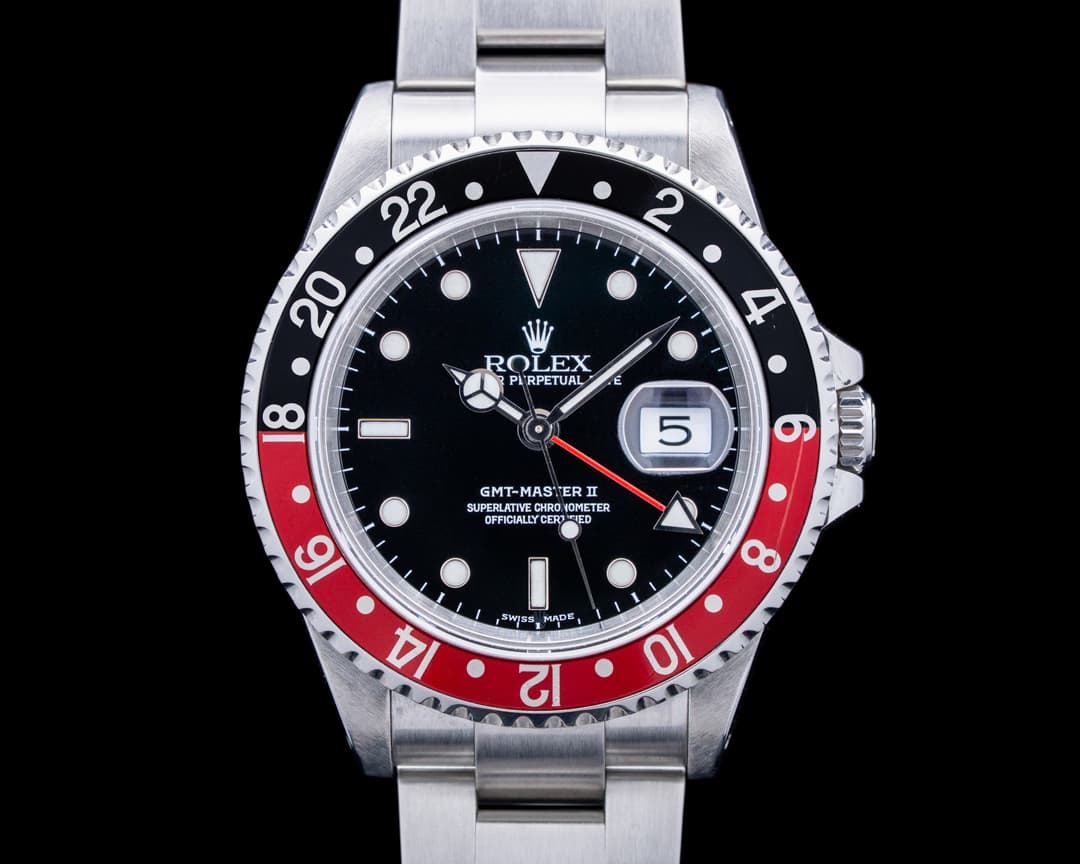
What makes the 16710 market genuinely interesting is bezel variety. Three major configurations were produced: the Pepsi red-and-blue (16710BLRO), the Coke black-and-red, and an all-black configuration that precedes the modern "Batman." The Pepsi combination on a 16710 is the most sought-after, particularly on early examples with tritium dials produced through approximately 1997. Those early-run tritium-dial 16710s, warm lume aging on a clean dial, are where serious collector interest concentrates. Later luminova-dial examples were made from 1998-1999 and super luminova was standard from 2000-2007.
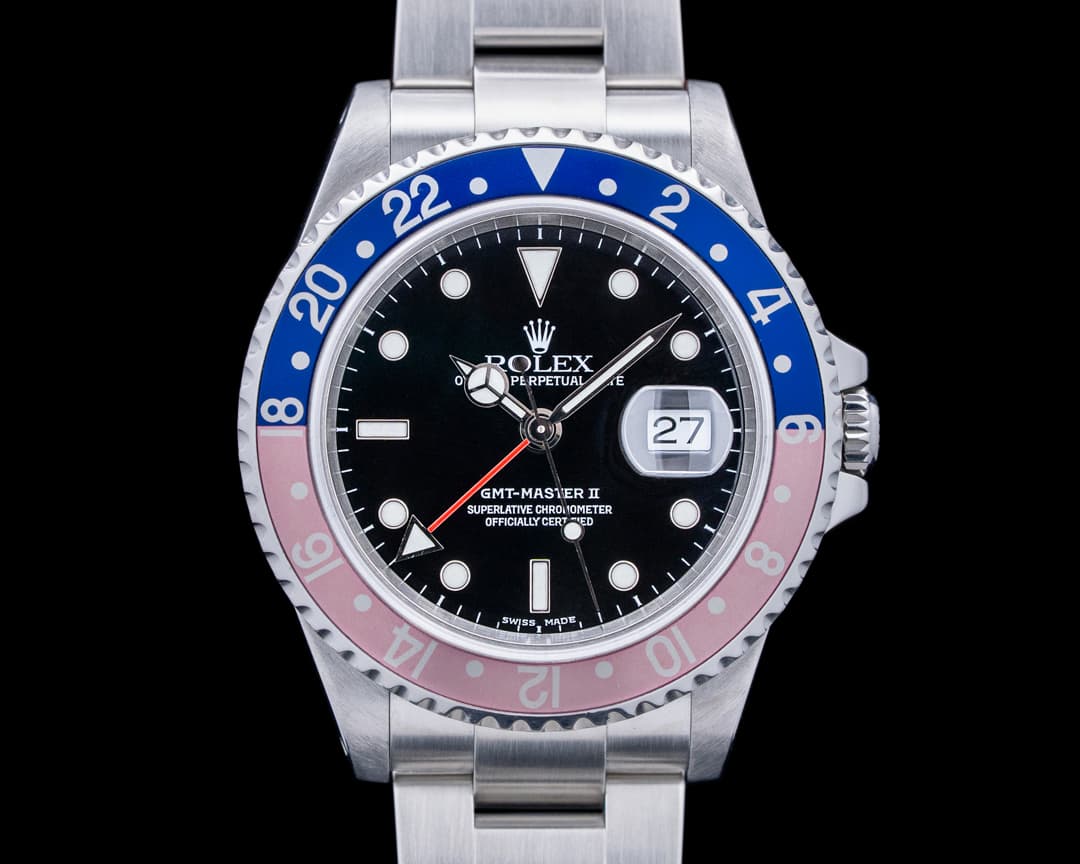
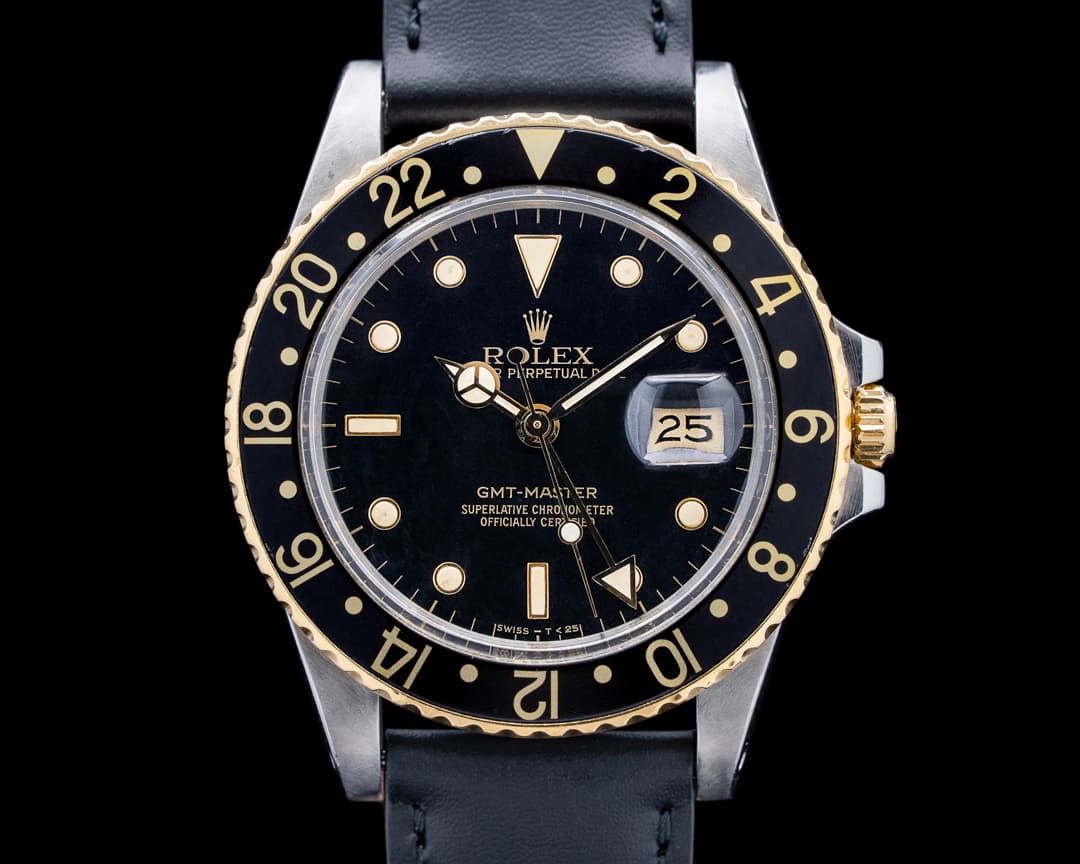
The steel-and-gold GMT-Masters that ran alongside the 16710-series include 18k yellow gold and Oystersteel two-tone configurations with their own market. The two-tone references are divisive among collectors: some read them as quintessentially 1980s, which is either an appeal or a problem depending on your taste. They are generally less expensive than equivalent all-steel versions at comparable condition, which can make them a great value for those that like the aesthetic.
Market: The 16710 is where most active buyers end up, and for good reason. It is the most available vintage GMT reference, offers genuine mechanical competence, and exists at price points across a wide range depending on configuration and condition. Early tritium-dial Pepsi examples at the high end trade significantly above later luminova versions. All-black bezel configurations are less common and less expensive. The steel-and-gold variants sit below all-steel at comparable condition grades. Most variations sit from $15,000-$20,000 with Pepsi models at the top of the distribution and coke below.
The GMT-Master II: Cerachrom, Jubilee, and the Current Production Landscape
Ref. 116710 (2007-2019)
The 116710 arrived in 2007 and introduced the most durable change to the GMT-Master's design in fifty years: the Cerachrom ceramic bezel. The aluminum inserts of every previous generation scratch, fade, and age, qualities that are features in a vintage context and liabilities in a modern wearing context. Cerachrom is virtually scratch-proof and color-stable; the bezel on a ten-year-old 116710 looks essentially identical to a new one.
The reference launched with the 116710LN, an all-black ceramic bezel and the first ceramic bezel in the GMT-Master's history. The 116710BLNR, pairing the black-and-blue ceramic bezel with the Oyster bracelet, followed in 2013 and immediately became the most sought-after configuration in the modern production line. The case is 40mm, the movement is in-house Caliber 3186, and the finishing is the full modern Rolex standard: brushed and polished surfaces, closely fitted bracelet links, solid-end-link bracelet construction. These wear beautifully and feel like current Rolexes.
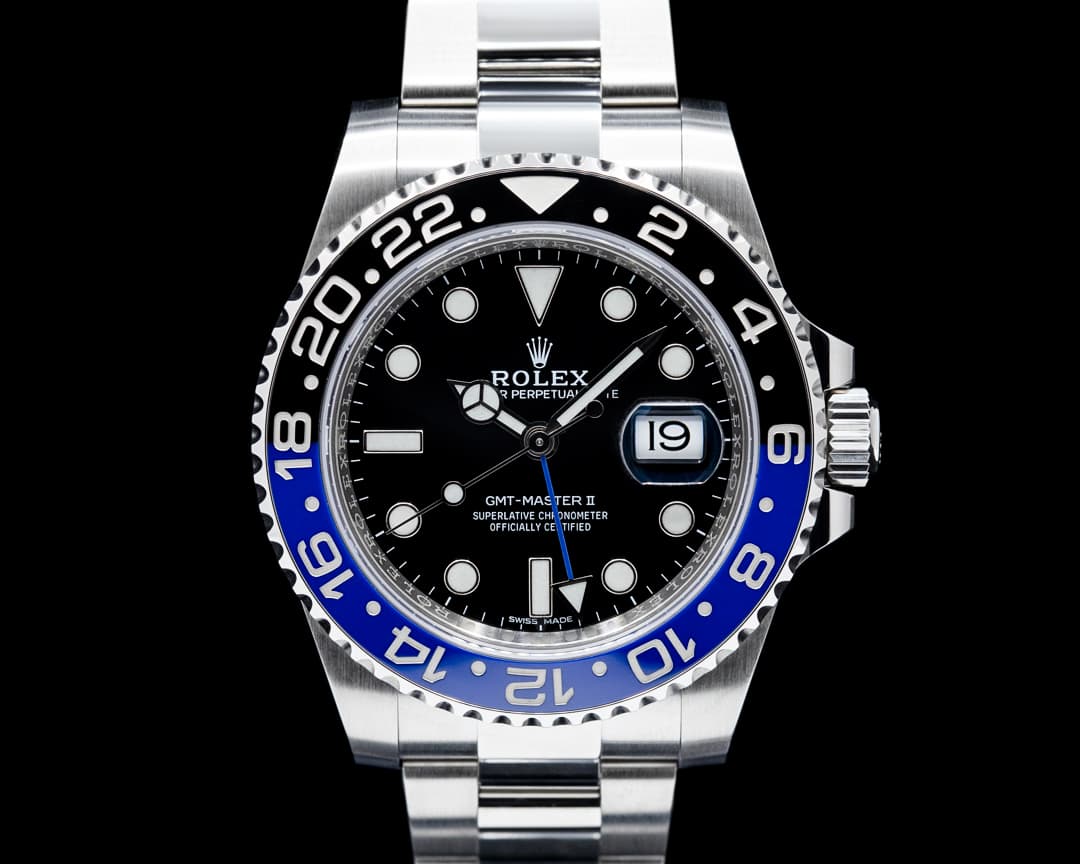
Market: The 116710 series has a more condensed pricing spectrum. The all black variants usually can be had for less than $15,000 and the blue iterations at about $17,000. Both see genuine secondary market activity, buyers who want a reference from this generation without the wait associated with new Rolex allocation will pay for it but not much of a premium over vintage offerings in great shape.
Ref. 126710 and ref. 126711 (2018-2026)
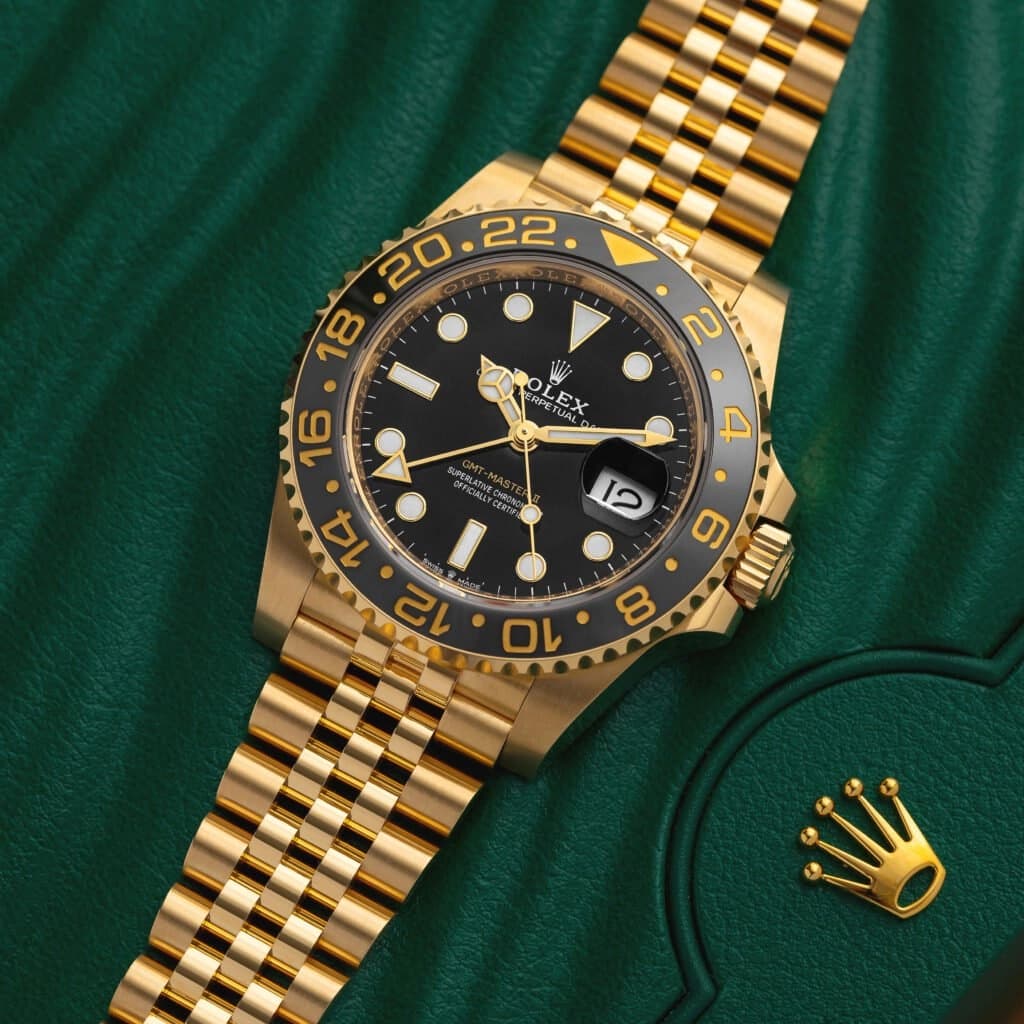
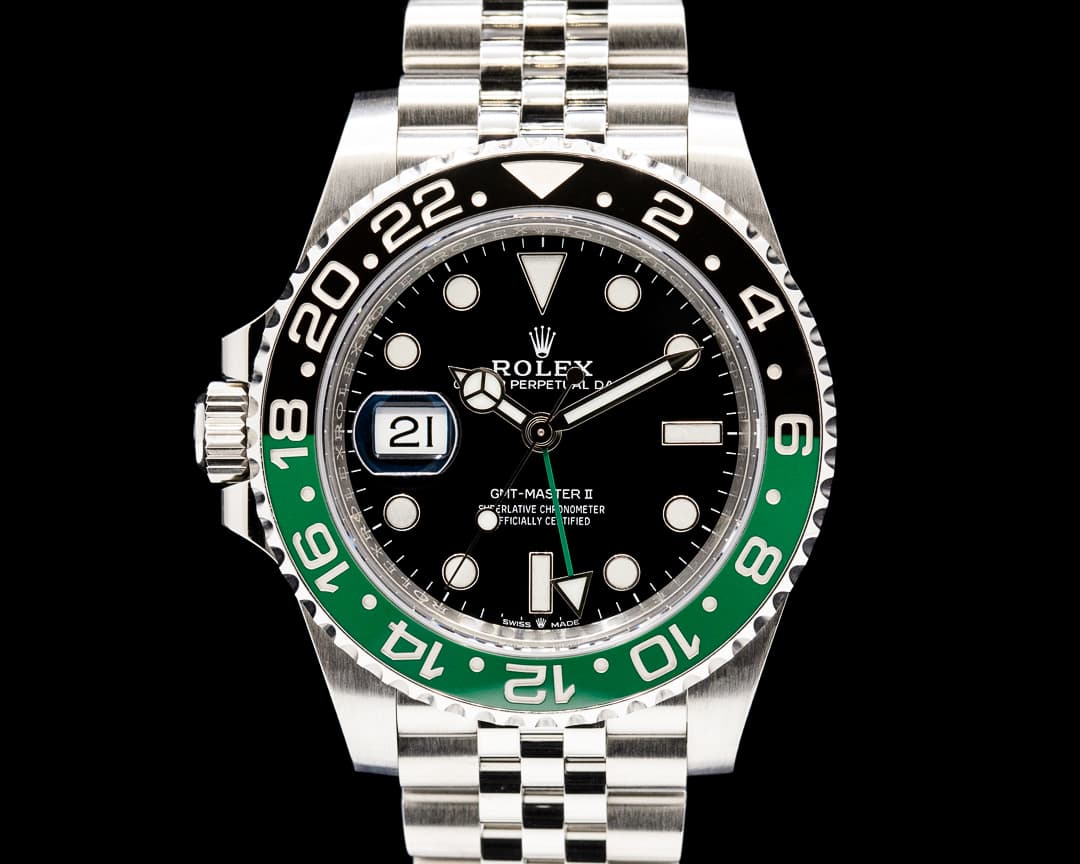
The 126710BLRO, unveiled at Baselworld 2018, brought the Jubilee bracelet back to the GMT-Master line for the first time in decades. The effect on the watch's character is significant: the Jubilee sits differently on the wrist, more flexible and contoured, and the overall impression is dressier than the Oyster-bracelet configurations. The bezel is the Pepsi red-and-blue ceramic, the most historically resonant configuration in the line, and the combination of Jubilee bracelet and Pepsi bezel gives the 126710BLRO a character that the 116710 generation, for all its engineering improvement, didn't quite capture. Following its discontinuation this year, prices have jumped to over $30,000 in some cases.
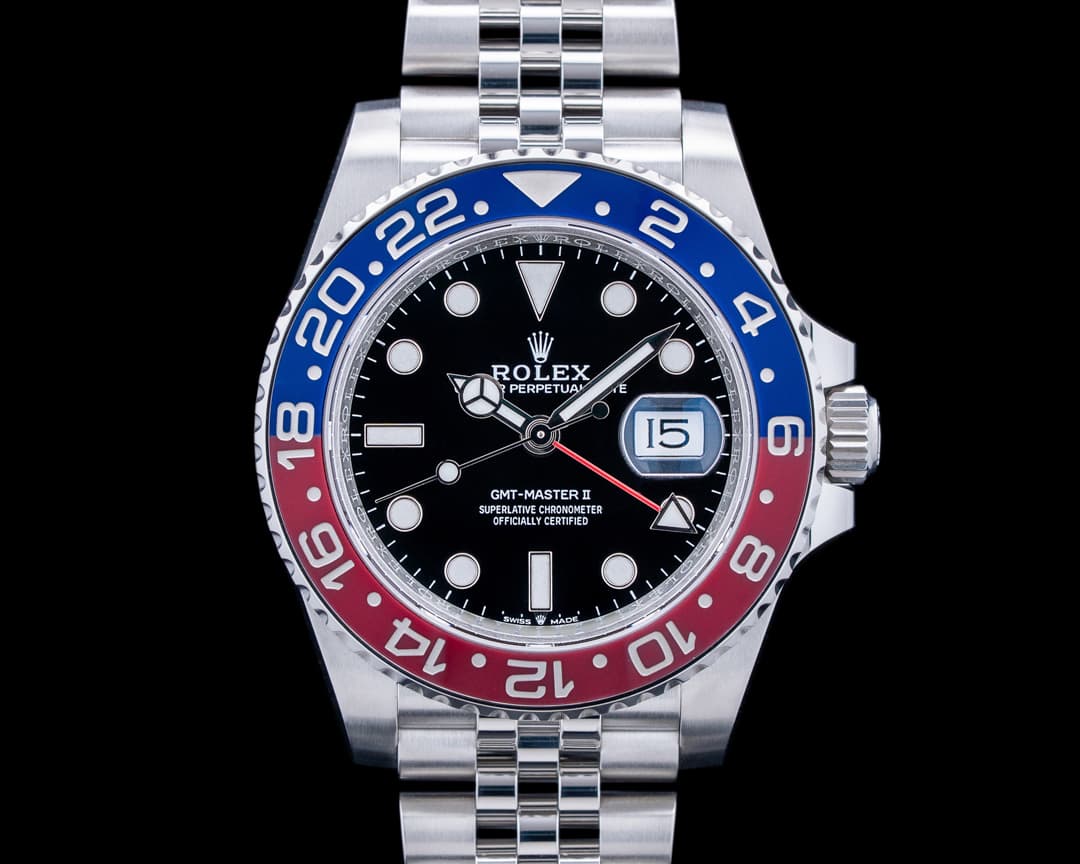
The 126710BLNR pairs the black-and-blue Batman ceramic bezel with the Oyster bracelet. It competes directly with the 116710BLNR in the secondary market; the newer reference carries movement improvements via Caliber 3285, which offers better power reserve and a more robust escapement, along with new-generation case finishing. This reference trades for about $20,000.
The 126711CHNR is the current two-tone offering: Oystersteel case paired with Everose gold, Rolex's proprietary rose gold alloy, and a two-color brown-and-black Cerachrom bezel. This is the contemporary "Root Beer," though the material distinction from vintage two-tone references matters, Everose gold, not yellow gold. The overall effect is warmer than the all-steel references and considerably more dressy. The dial reads differently in different light: the rose gold reads strongly warm in direct sun, more subtle indoors.
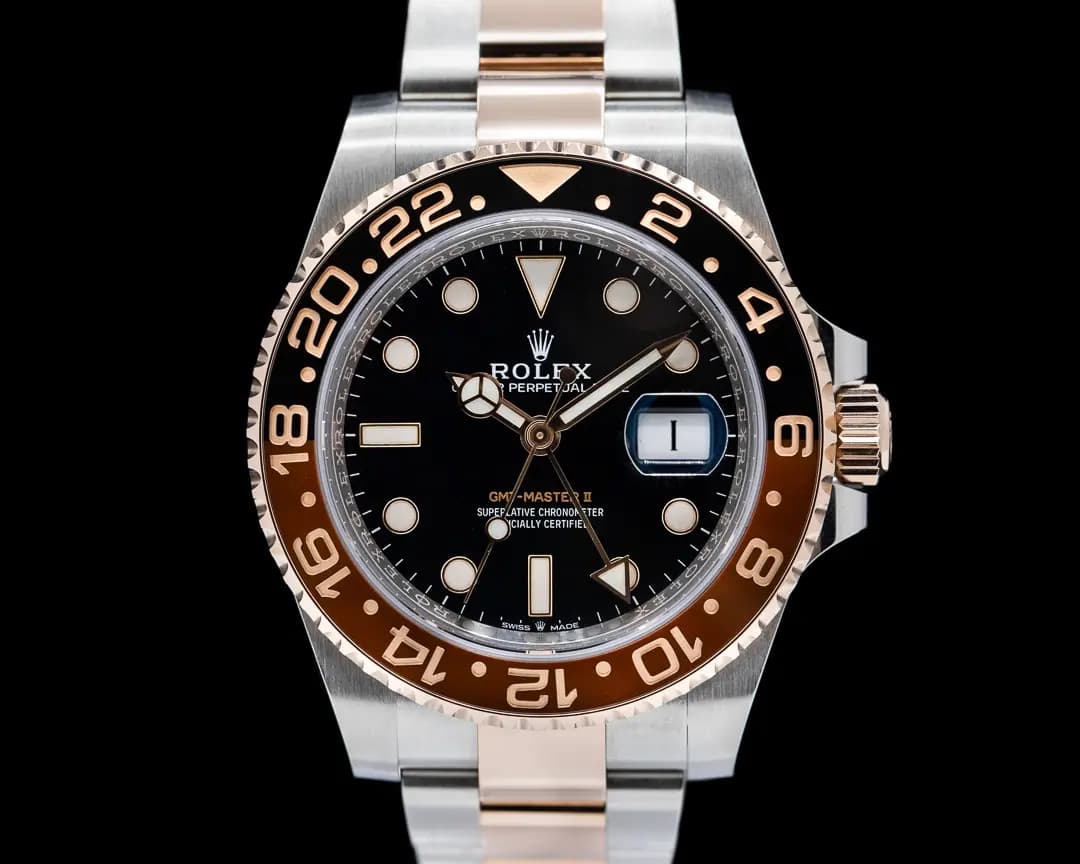
Rolex 126711
Market: Each of these models trades at its own pricing. The Pepsi's discontinuation has propped up the full market to over $30,000, though it remains to be seen whether these changes will persist or whether Rolex will present a new Pepsi in its place. The Root Beer trades for about $23,000 and may serve as a value relative to the Pepsi these days.
How to Buy: Condition, Papers, and What Actually Moves the Price
A "full set", watch, box, papers, all original packaging and documentation, commands a premium on every generation of GMT-Master. For modern references (16710 onward), the premium is meaningful on desirable configurations. For early references (1675, 6542), the presence of original papers is significant, but dial and case condition often carry more weight in setting the ceiling. Truly collectible vintage rare pieces will often command extremely strong premiums with full kit and good condition standards.
Papers matter most where authentication is complex or where the buyer intends to resell. For a buyer who wants to wear the watch and hold it indefinitely, honest condition without papers often represents better value per dollar than a paper-complete example.
Bracelet stretch is the first thing to inspect on any pre-owned GMT-Master. The Oyster bracelet (or jubilee), through years of wear, develops slack in the links, the watch moves on the wrist in a way that a tight bracelet doesn't. Severe stretch is expensive to correct and often signals general wear on the rest of the watch.
Dial condition is generally the single most value-relevant factor on vintage references. On a 1675 or early 16710, look at the lume plots: are they original? Have they been repainted or touched up? Original tritium plots have a natural, uneven aging that refinished plots don't convincingly replicate under magnification. A re-lumed dial on a 1675 is worth substantially less than an honest original, even if the original is more faded. On modern references, dial condition matters for cosmetic reasons. Moisture intrusion, surface scratches, or printing imperfections are red flags.
Case condition, specifically polishing, is the other key signal. Rolex's original case finishing combines brushed surfaces on the flanks and top of the lugs with polished bevels. A heavily polished case loses those crisp edges; the lugs soften and the case looks rounded and often asymmetrical. This is difficult to reverse. On vintage references, an unpolished case with honest wear marks is almost always preferable to a polished case with fewer visible scratches.
Making the Call: Which GMT-Master Is Right for You
The vintage collector, someone drawn to the history of the object, who finds meaning in original dials and honest case wear, belongs in the 1675 or early 16710 market. The 1675 at its best is one of the finest pre-owned Rolex propositions available: a watch with real visual character, genuine historical provenance, and a market that rewards knowledge rather than just spending. The cost of entry for a genuinely good 1675 is real, and condition risk is high. None of this means the 1675 is a difficult watch to own, it means the buyer needs to know what they're looking at, or work with someone who does.
The daily wearer who wants a GMT they'll put on most mornings belongs in the 16710 or the current generations. The 16710 offers the vintage aesthetic in a package that has been fully sorted by decades of service documentation; a properly serviced example is a reliable watch. The 126710 generation adds Cerachrom durability and modern movement engineering, the bezel won't fade, the rotor won't rattle, and the power reserve is longer. For some buyers, the fact that a 126710BLRO looks essentially identical at ten years old as it did when new is exactly the point.
The investment-minded buyer needs to understand that the GMT-Master has historically rewarded patience and condition more than configuration chasing. The references that have held and grown value are those with honest originality, correct dials, unpolished cases, matching bracelets. Chasing the current hot configuration (today, the Pepsi Jubilee and the Root Beer) at secondary market premiums is a different bet than buying a well-preserved 16710 Pepsi at a fair price and holding it. Both are defensible.
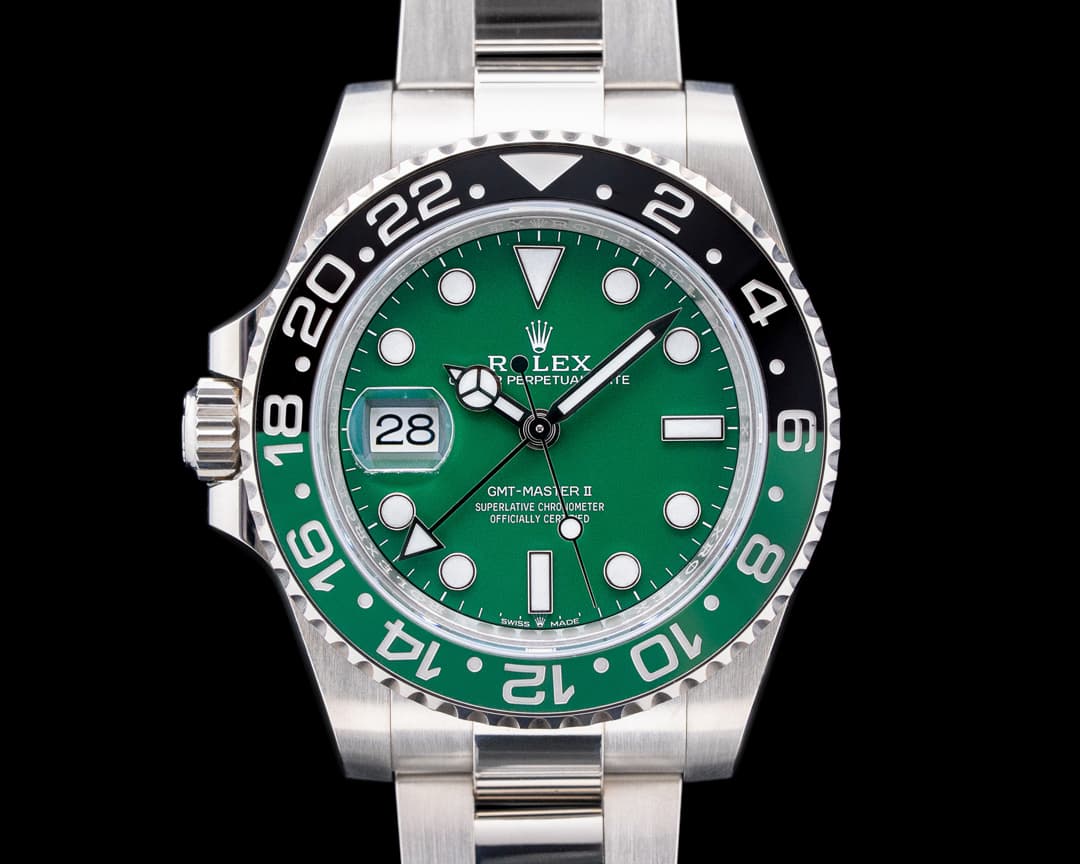
Whatever tier you're in, the GMT-Master earns its position. It was a serious tool watch that became a serious collector's watch without losing the functional premise that made it worth building in the first place. As one longtime dealer put it: "The GMT is the one Rolex that people buy for a reason and keep for a different one, and somehow both reasons turn out to be valid."
Shop New Arrivals
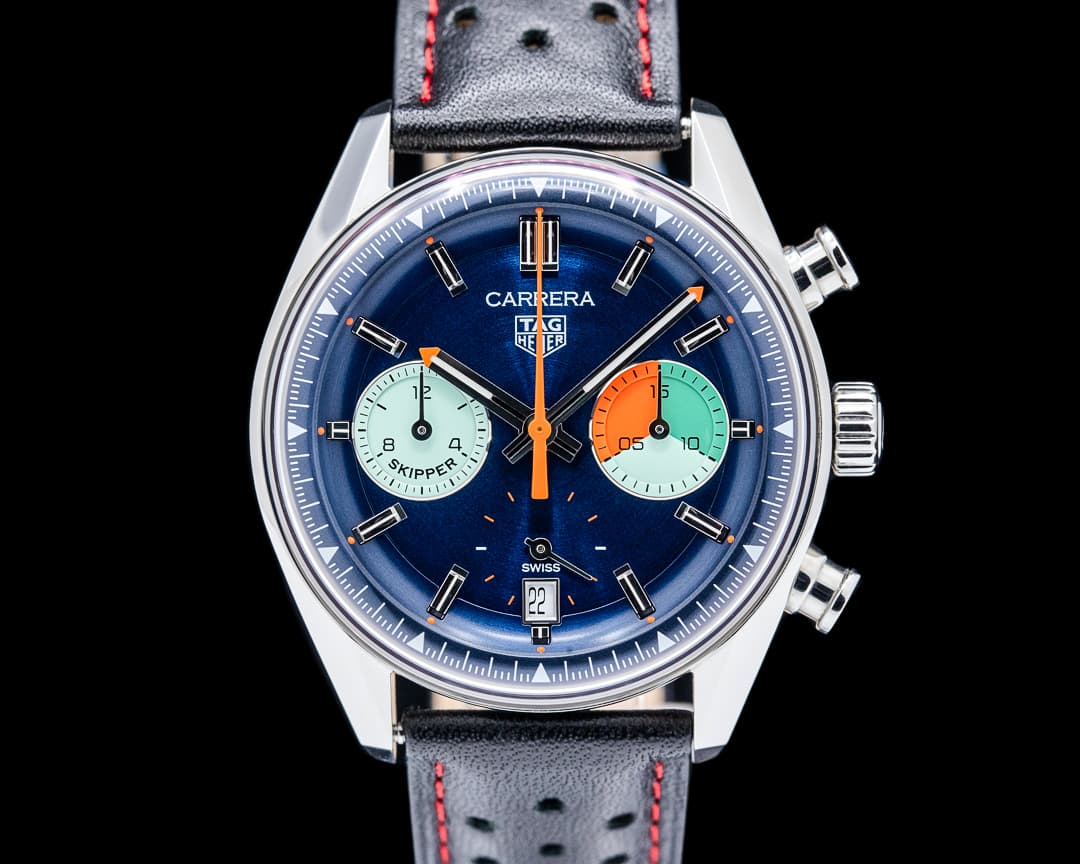
CBS2213 Carrera Skipper Chronograph SS Blue Dial
$5,450
View Watch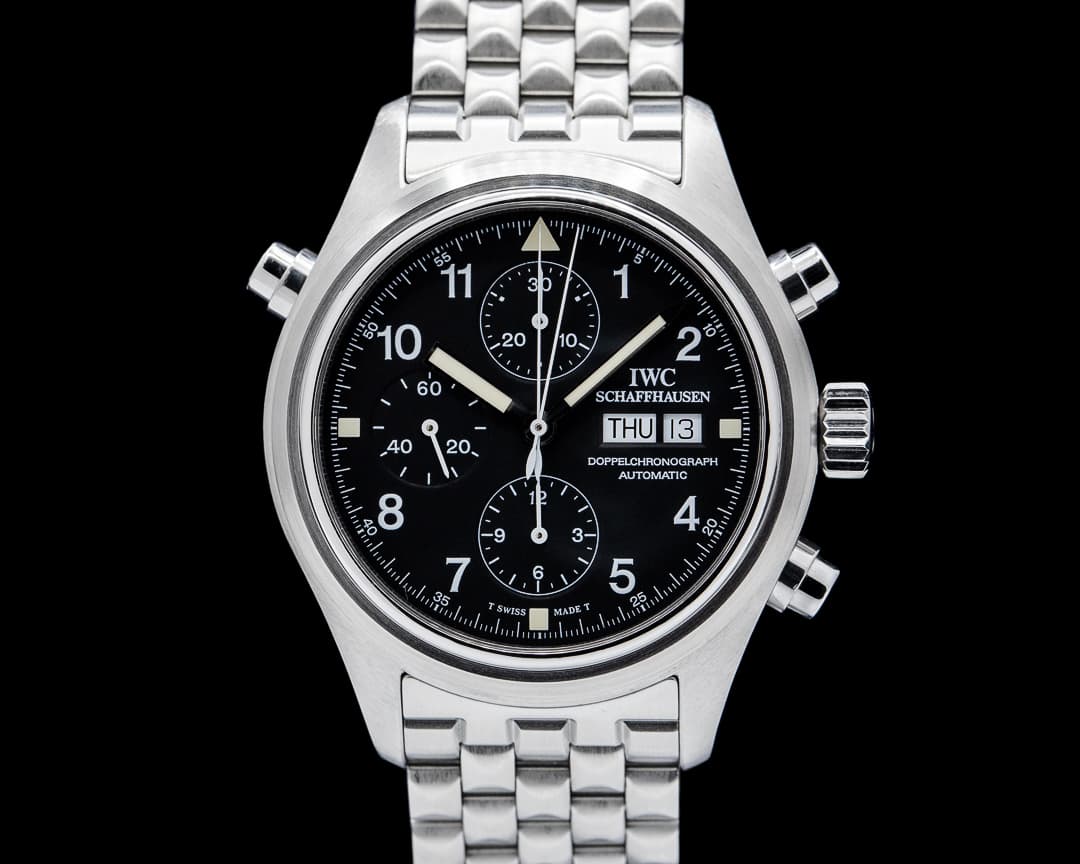
IW3713 Pilot Doppelchronograph Automatic SS Black Dial
$7,650
View Watch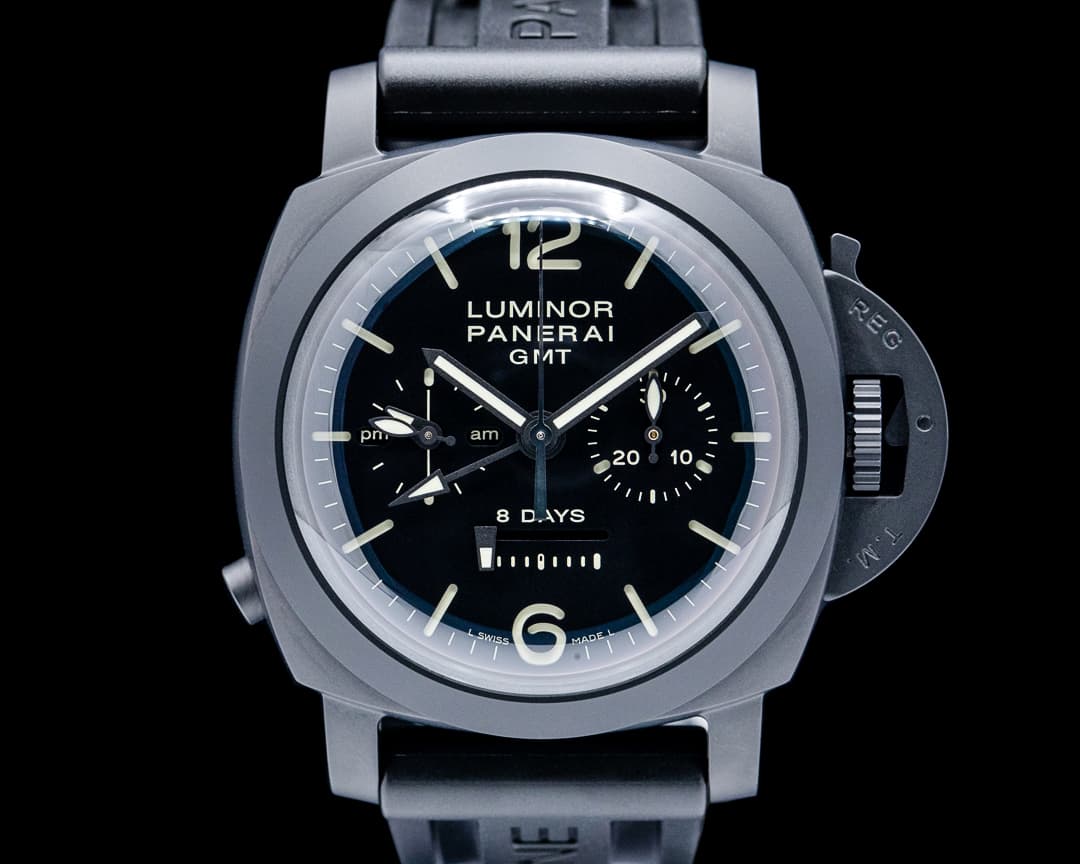
Luminor 1950 Chrono Monopulsante 8 Days GMT Ceramic Black Dial LIMITED
$9,350
View Watch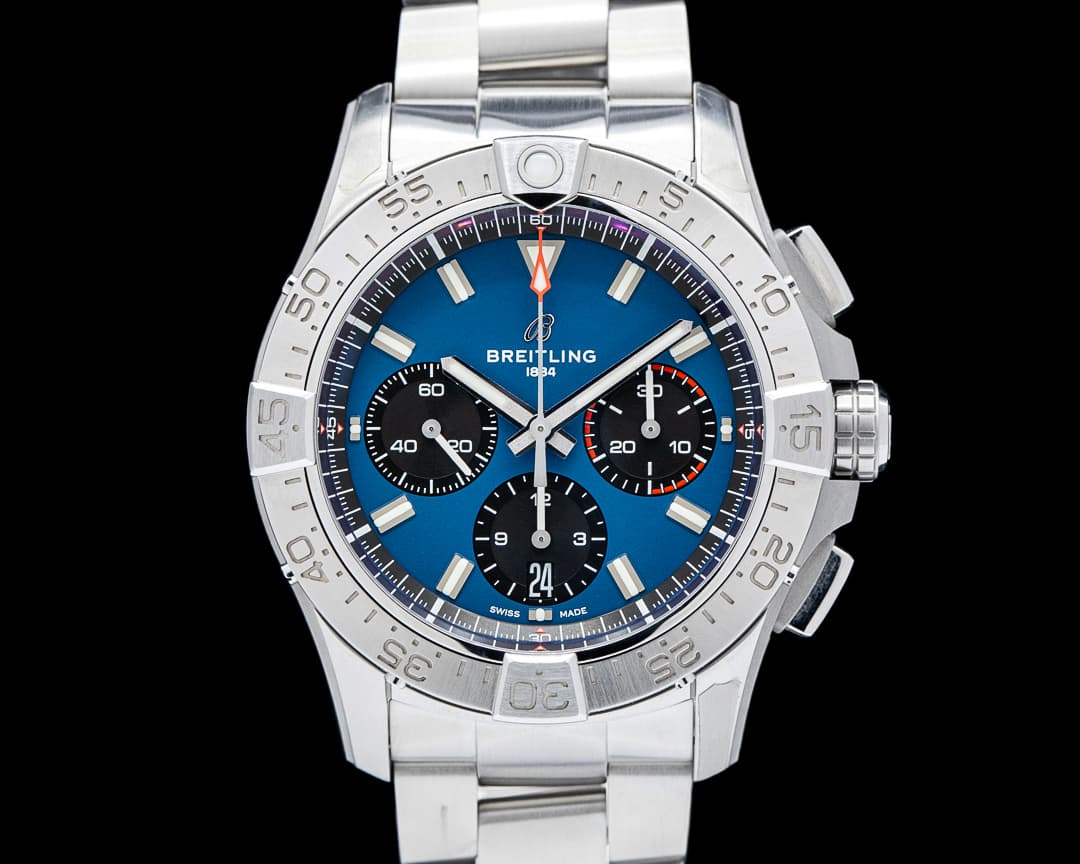
AB0146 Avenger B01 Chronograph 42 SS Blue Dial
$4,750
View Watch
Shop New Arrivals
CBS2213 Carrera Skipper Chronograph SS Blue Dial
$5,450
View WatchIW3713 Pilot Doppelchronograph Automatic SS Black Dial
$7,650
View WatchLuminor 1950 Chrono Monopulsante 8 Days GMT Ceramic Black Dial LIMITED
$9,350
View WatchAB0146 Avenger B01 Chronograph 42 SS Blue Dial
$4,750
View Watch
More Content