The F.P. Journe Chronomètre à Résonance: What a $13.9 Million Auction Result Actually Says
Published on 7/10/2026
A $13.9 Million Data Point
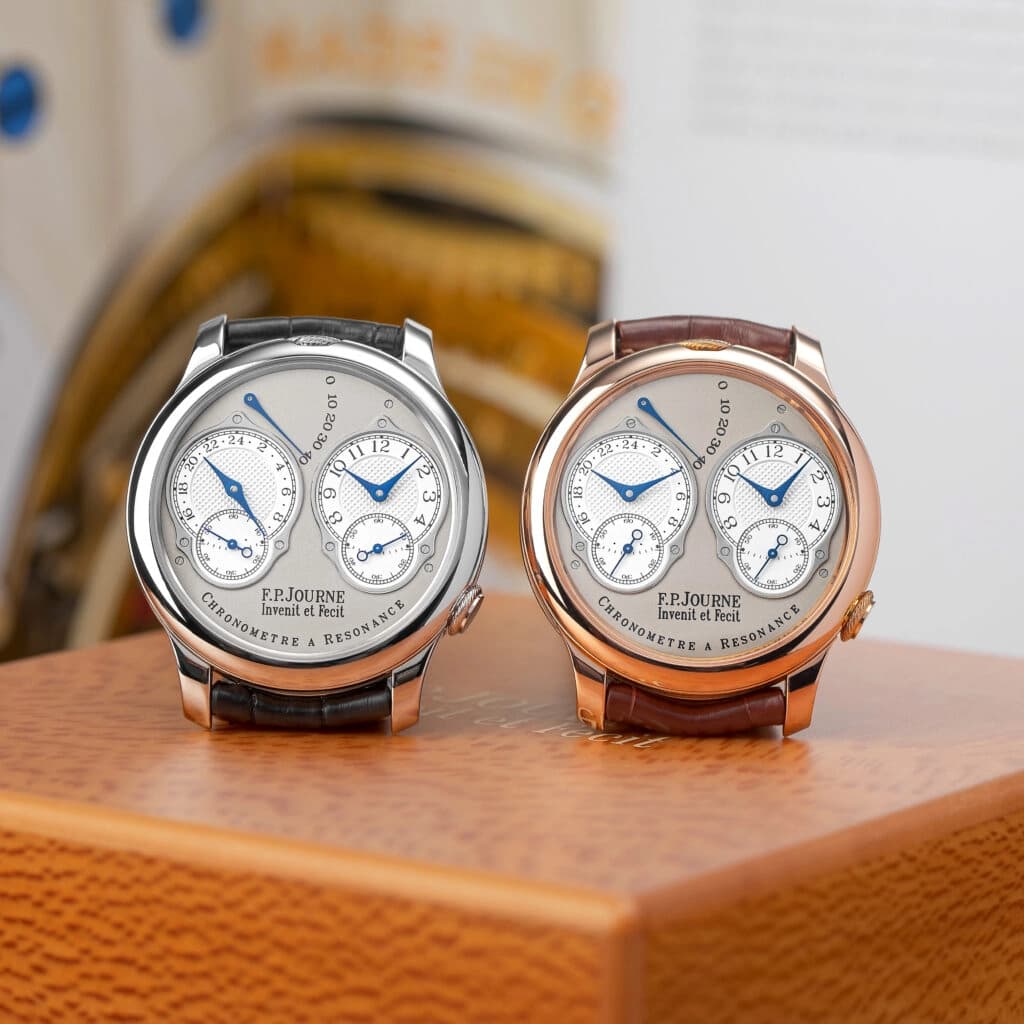
On June 13, 2026, after nine minutes of bidding at Phillips New York Watch Auction XIV, a platinum and pink gold F.P. Journe Chronometre a Resonance, subscription No. 007, circa 2000, sold for $13,922,000. It is now the highest price ever paid at commercial auction for any 21st-century wristwatch, and the highest price ever achieved for a watch made by an independent watchmaker. Those two distinctions are not generic rankings. They point at a fundamental shift.
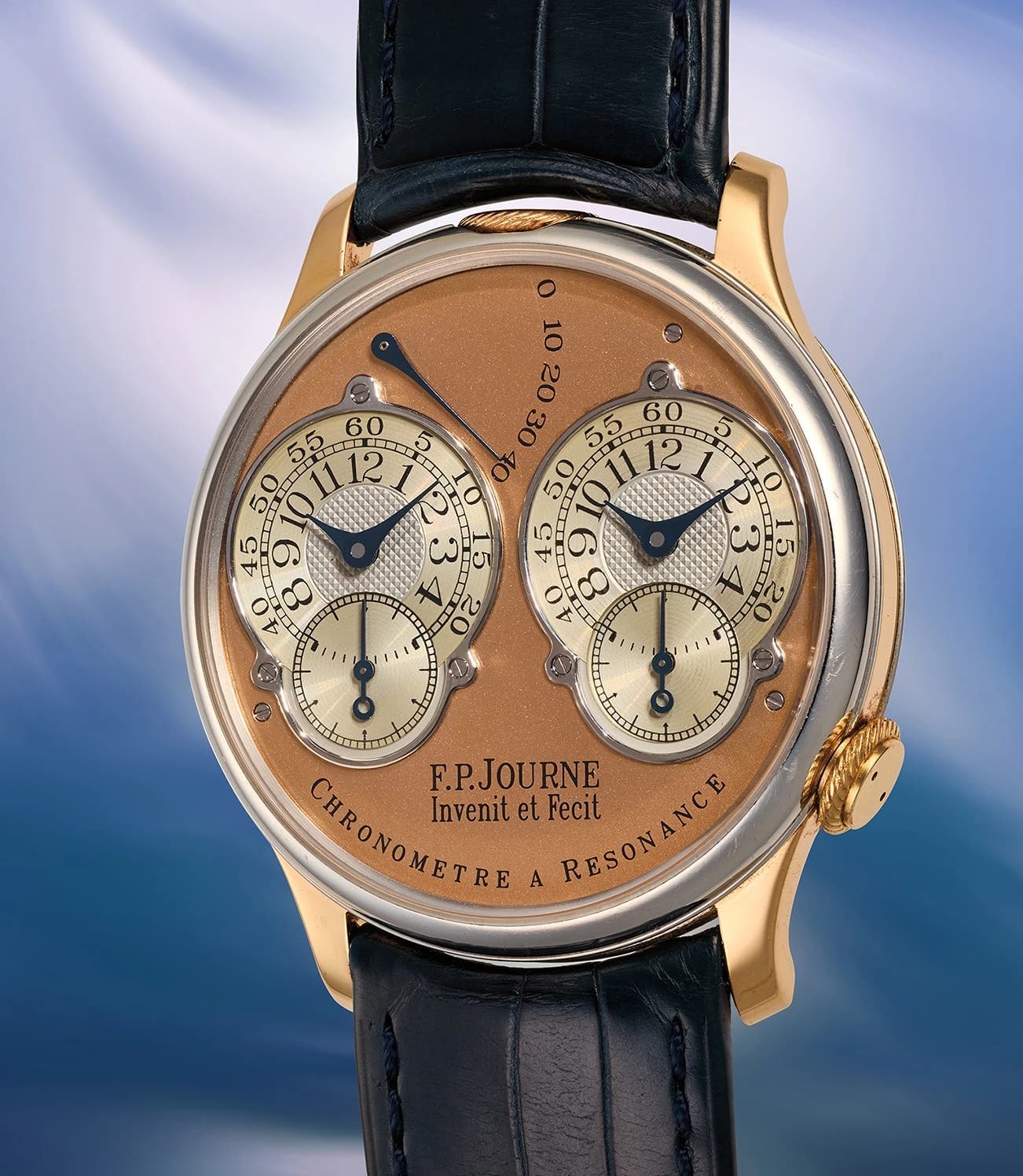
Journe Souscription No. 7 Source: Phillips
No. 007 is believed to be one of only two subscription Resonances cased in both platinum and pink gold with a matching pink gold dial. It comes from an edition of twenty watches that Journe offered to founding clients at the turn of the century to fund his manufacture's launch before it existed as a going concern. The auction estimate was listed simply as "in excess of $1,000,000." The result came in at nearly fourteen times that floor.
For context: six months earlier, in December 2025, Francis Ford Coppola's personal F.P. Journe FFC prototype sold at Phillips New York Watch Auction XIII for $10.75 million, itself a record for independent watchmaking at the time. The Resonance cleared that bar by more than $3 million. Both records fell at the same auction house, in the same city, within two consecutive sales. The June 2026 auction closed at $75.8 million across two days, the highest-grossing watch sale ever held in the United States.
A single result is not a pattern. But two consecutive records, at the same house, six months apart, both from F.P. Journe, against the backdrop of the most valuable watch auction in US history: that is a pattern worth examining further.
What Resonance Actually Does (and Why It's Hard)
The operating principle of the Resonance is not new. Christiaan Huygens observed in the 17th century that two pendulum clocks mounted on the same surface would eventually synchronize, each absorbing and correcting the other's errors through vibrations transmitted through their shared support. The phenomenon is sympathetic resonance: two oscillators coupled mechanically, converging on a common frequency. Antide Janvier was the first to deliberately build this into a timekeeping instrument, and his double-pendulum resonance clocks became reference works in 18th-century horology. Abraham-Louis Breguet later explored the concept in pocket watches.
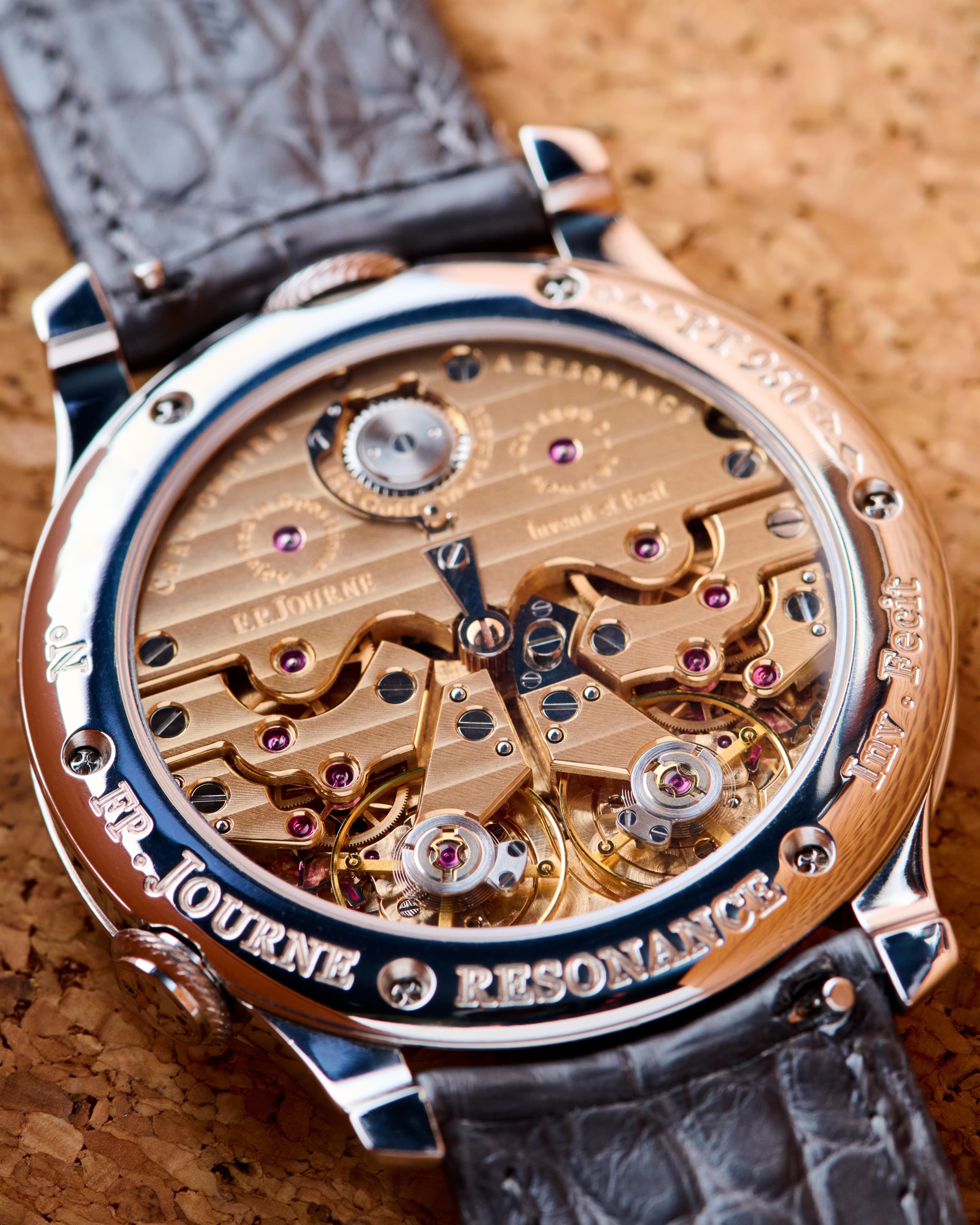
Resonance Movement
What none of them solved reliably was making it work on the wrist. The challenge is the coupling action: the two balances must be close enough to influence each other, and the energy transfer between them must be tuned precisely, or the effect collapses into interference rather than stabilization. On the wrist, with variable position and shock, the problem compounds. Resonance does not happen automatically. It has to be engineered to happen and to persist.
Journe's solution, a bespoke coupling spring bridging two independent gear trains, each driving its own balance wheel, displayed on a symmetrical dual-regulator dial, is why the watch exists in the literature as a genuine technical achievement rather than a novelty. When one balance is disturbed, the other corrects it. In principle and, in Journe's execution, in practice.
None of this means the watch is easy to build or to service. It is not. Which is part of why only twenty subscription pieces exist.
The Generation-by-Generation Evolution
The Resonance arrived in stages. Journe's own taxonomy, as documented by auction houses and collector resources, breaks into three early generations before the watch entered standard production.
The first generation, estimated to be ten pieces circa 1999, were pre-production prototypes. The second generation, sometimes called "pre-souscription," ran to approximately thirty pieces between 1999 and 2000. The third generation is the subscription series proper: twenty pieces, produced in 2000, offered to founding clients who funded the manufacture before it was a going concern. This is the tier that produced No. 007.
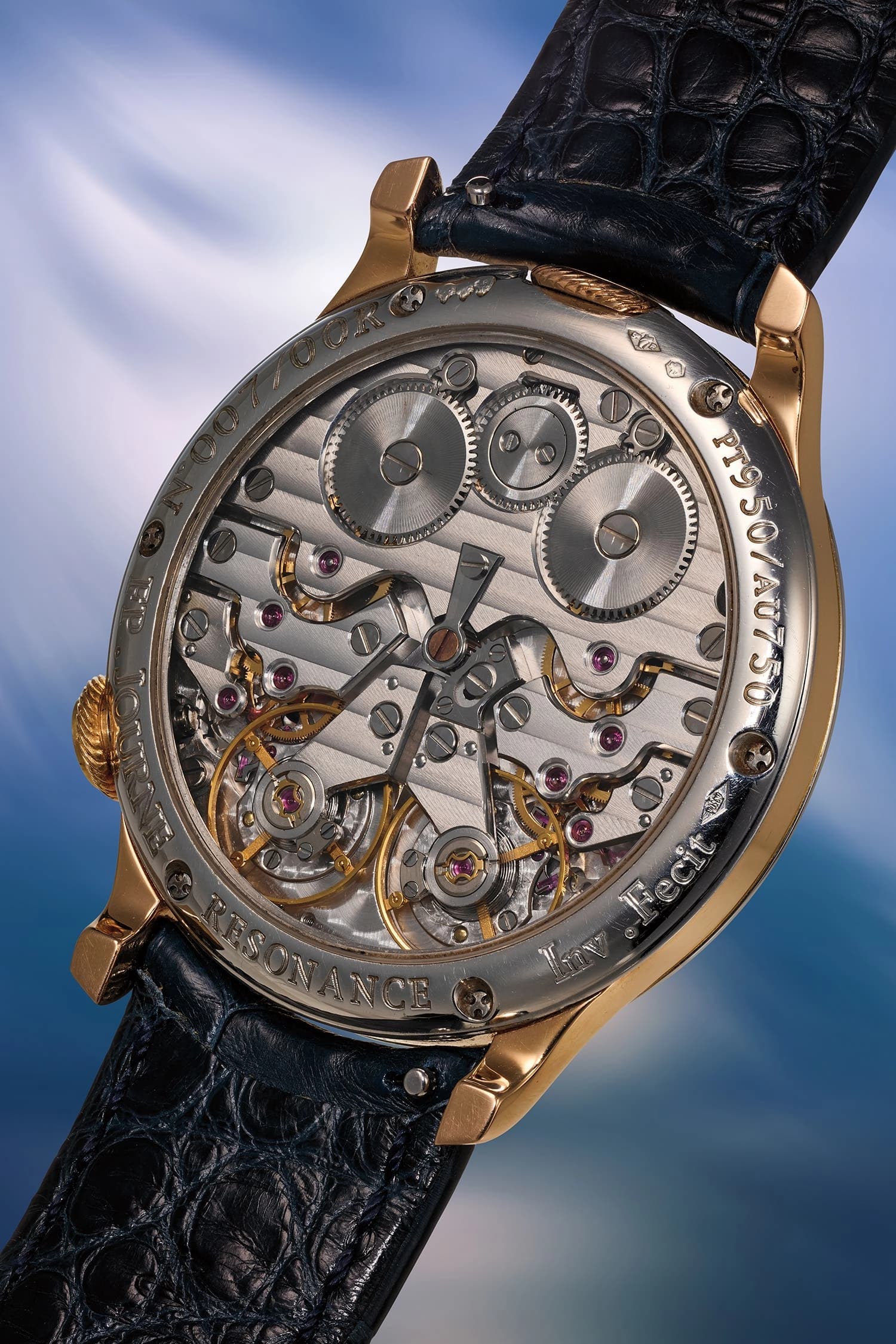
Brass Movement on Souscription No. 7: Phillips
What distinguishes the subscription, pre-subscription, and early production pieces is movement material. The earliest Resonance calibers, including all subscription examples, are built in rhodium-plated brass. Journe transitioned to gold calibers around 2004. The brass-movement pieces are earlier, and in the context of the subscription program, they carry the provenance of the manufacture's founding moment. Collectors have priced that distinction accordingly.
Aesthetically, the Resonance's dial layout is immediately legible across all generations: two time zones displayed symmetrically, one on each side, each with its own hours, minutes, and seconds, driven by separate gear trains and sharing a single mainspring barrel on the contemporary iteration. The symmetry is not decorative. It reflects the mechanical logic underneath, two oscillating systems balanced against each other and interconnected. Through the caseback of any Resonance, the bridge architecture housing the twin balances reads differently from other complicated movements. It is more evidently a constructed argument than a display of complication for its own sake.
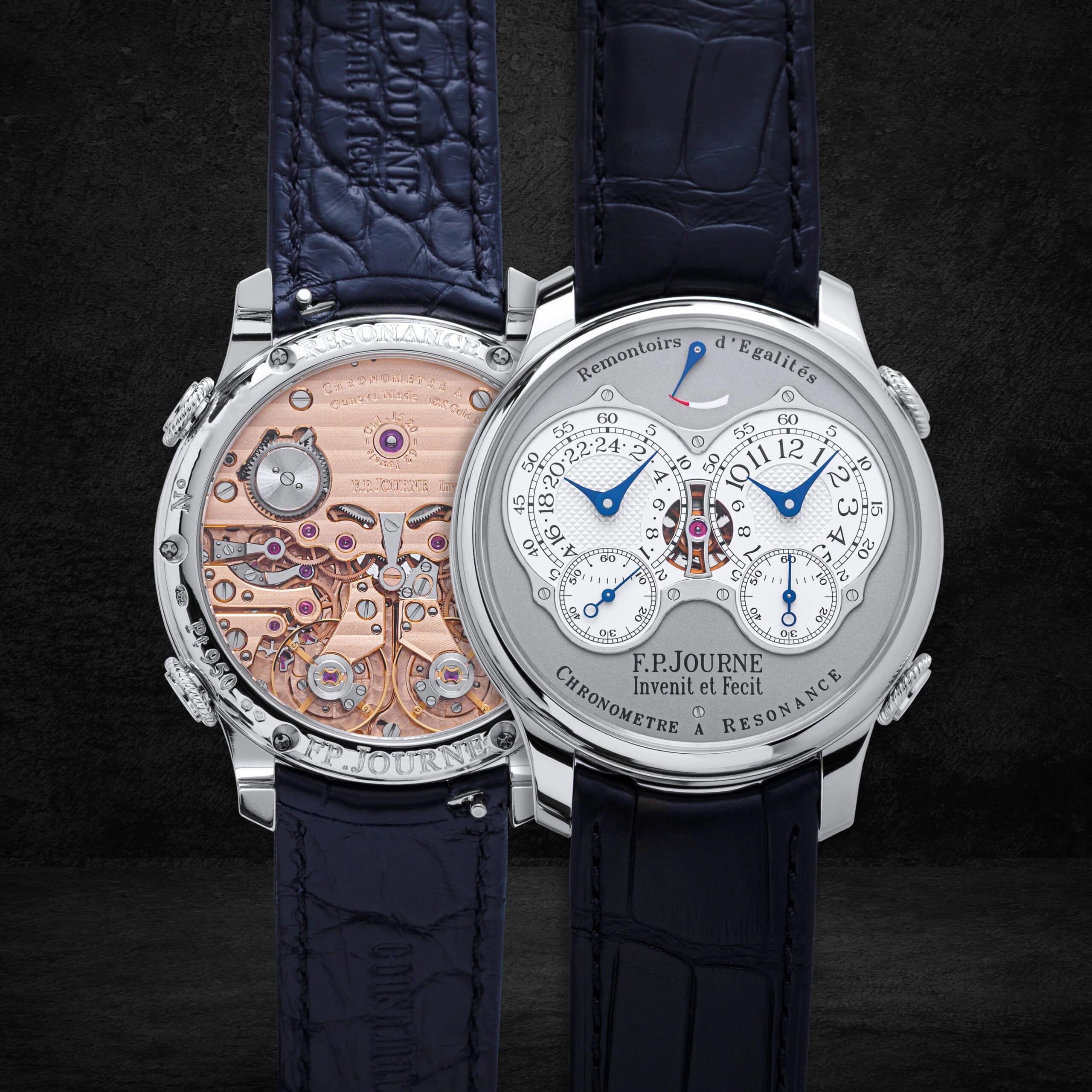
Resonance Current Generation
The subscription pieces predated the contemporary surge in Journe interest, and the result has been an explosion in collector enthusiasm about early canonical models. No. 007's platinum and pink gold combination is specific to its moment, and to its rarity within that moment.
The Subscription Tier: Why Those Pieces Are Different
The subscription model itself is worth understanding. Journe drew it from Breguet's 18th-century practice of offering watches to patrons before completion, effectively pre-sales that financed production. Journe revived the concept in 1999 to 2000 as a practical measure: twenty Chronomètres à Résonance and twenty Tourbillon Souverain references offered to founding clients who paid in advance, funding the manufacture's establishment in Geneva.
Those clients were not buying a watch off a shelf. They were funding a bet on a watchmaker. The pieces they received, brass-movement, hand-assembled, signed and numbered, are the physical record of that founding transaction.
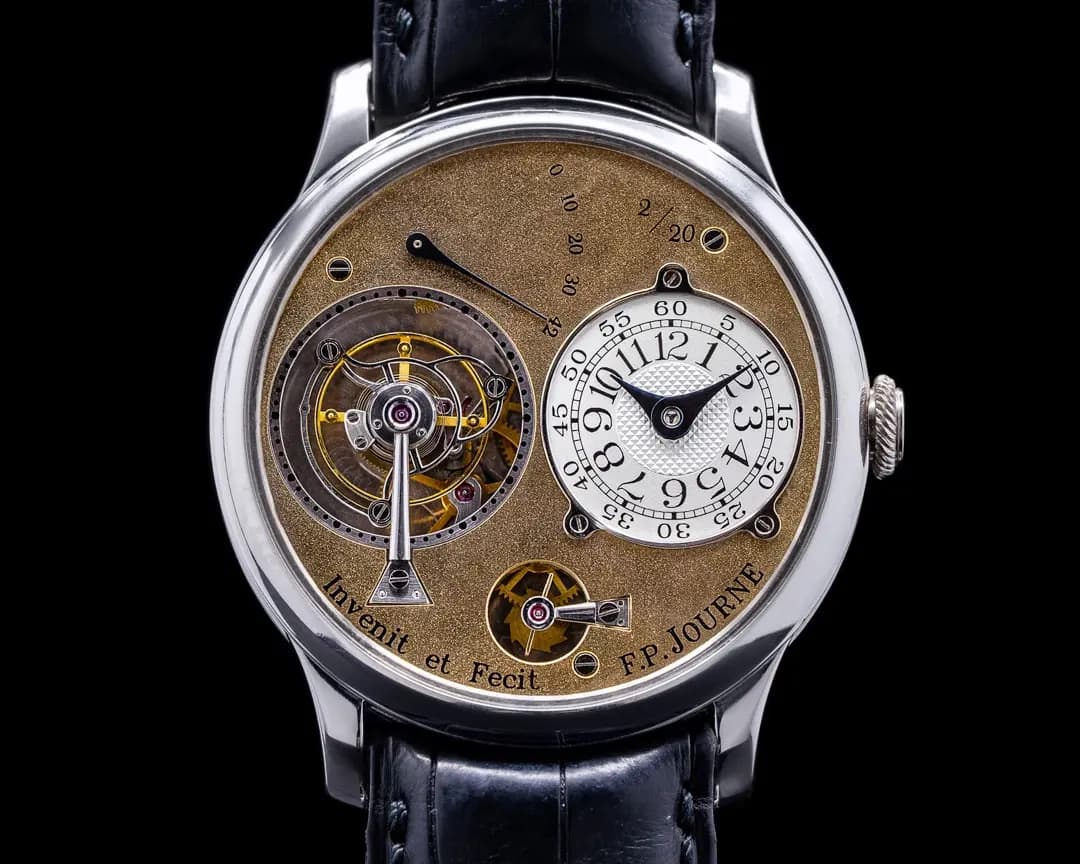
Souscription Tourbillon
Twenty pieces in total across the subscription Resonance run. Of those, No. 007 is believed to be one of two in the platinum and pink gold configuration with a pink gold dial. The other subscription examples exist in different case materials; that specific material combination makes No. 007 unusual even within an unusual group. Additionally, it is rumored that the other example that matches No. 007 is owned by Journe himself.
Six weeks before the June Phillips sale, a Resonance Souscription No. 18, also platinum and pink gold, sold at Phillips Geneva for CHF 4,875,500, approximately $6.3 million, itself a significant result. No. 007 exceeded it by more than $7 million. The gap between a rare piece and an exceptionally rare piece, when both are genuinely scarce, can be wider than intuition suggests.
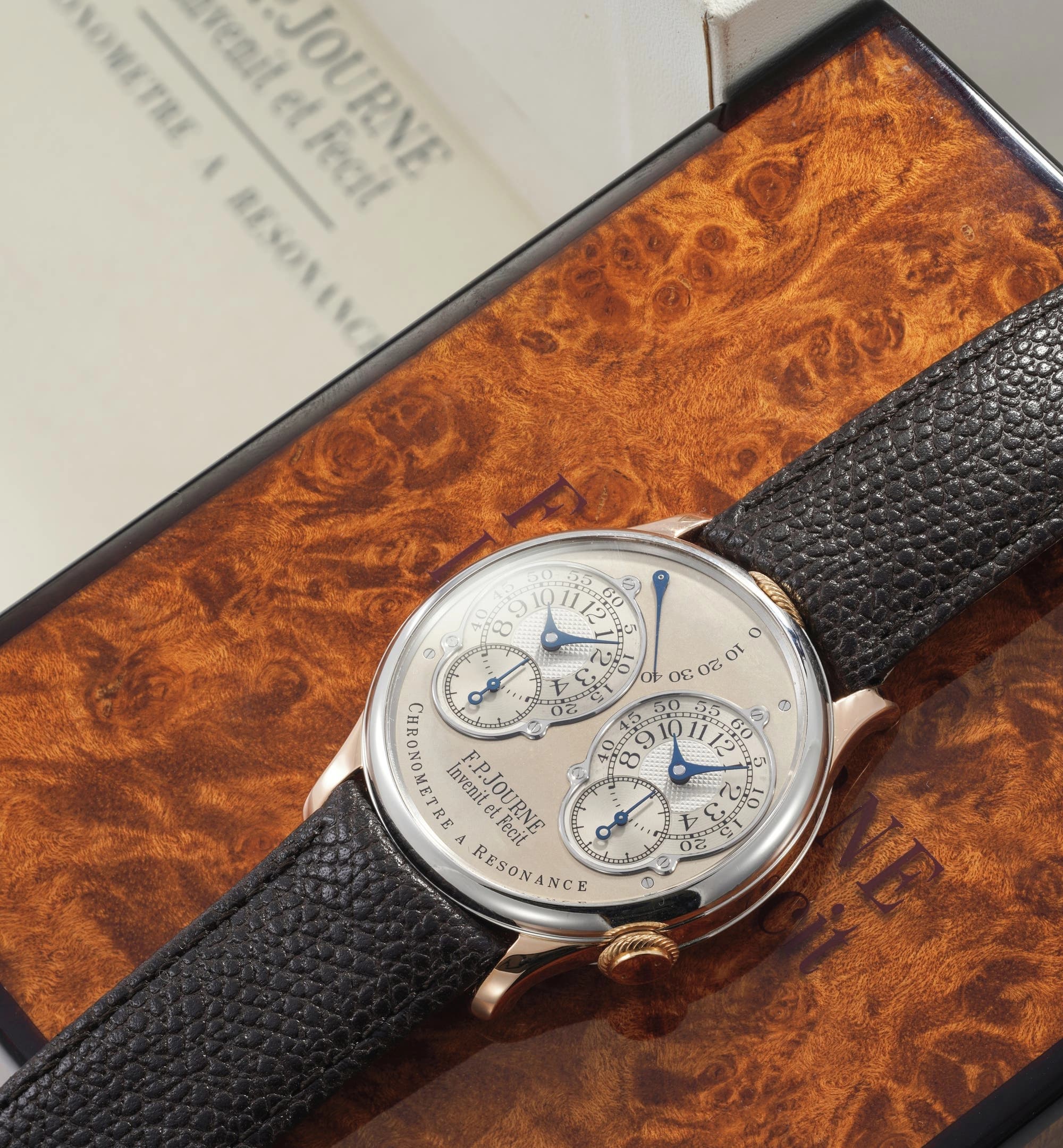
Souscription No. 18: Phillips
What the Record Says About the Independent Market
The Journe result does not exist in isolation. Q2 auction results reflect the rise in interest in independents, with a compression upward in the ceiling for pieces from Voutilainen, Roger Smith, Philippe Dufour, and Akrivia alongside Journe. The pattern is consistent: human workmanship, genuine scarcity, and traceable provenance are commanding the highest premiums in a market where major-house complications are broadly available. The same is visible even on the higher production scale, where brands like Lange are beginning to receive a swell in attention.
There is a counter-case worth acknowledging. F.P. Journe's own Americas manager, Pierre Halimi, said in November 2025 that "the prices are just stupid," warning that extreme valuations attract asset flippers rather than collectors who value the watch itself. That concern is not unfounded. A market driven by investment logic rather than collecting logic tends to chase name recognition and scarcity metrics rather than the actual quality of what's being bought.
What makes the Resonance result different from a pure speculation play is that the watch earns its position on technical grounds independent of the price. It is not a record because it is rare and people noticed. It is a record because it is rare, technically specific, mechanically meaningful, and historically situated in a way that a broader audience has now caught up to. That is not the same as a bubble, though for some buyers, the distinction may not feel like much comfort.
Two consecutive records at the same house, six months apart, against rising floors for independent watchmaking across multiple sales in Geneva and New York: that begins to look like a ceiling lifting rather than a single anomaly.
What Comes Next
The Chronometre a Resonance remains in Journe's current catalog, though the subscription pieces are long gone and the brass-movement era is two decades in the past. The watch has been updated over the years, the movement finishing, the dial options, the case variants, but the fundamental architecture is unchanged. Two balances. One coupling spring. Symmetric time display. The argument the watch makes about how a wristwatch can be regulated has not been superseded.
Whether Journe will revisit the subscription model or introduce a new Resonance generation is not something he has publicly committed to. What is clear is that the secondary market has formed a decisive opinion about the subscription-era pieces. They are the founding documents of a manufacture that has produced, by most serious accounts, the most technically distinguished body of work in independent watchmaking of the last thirty years.
The June 2026 result will be cited for a long time. Not because $13.9 million is a number that needs underlining, but because of what Halimi said in Miami the November before: "The prices are just stupid." He meant it as a warning. The market heard it as a verdict.
Shop New Arrivals
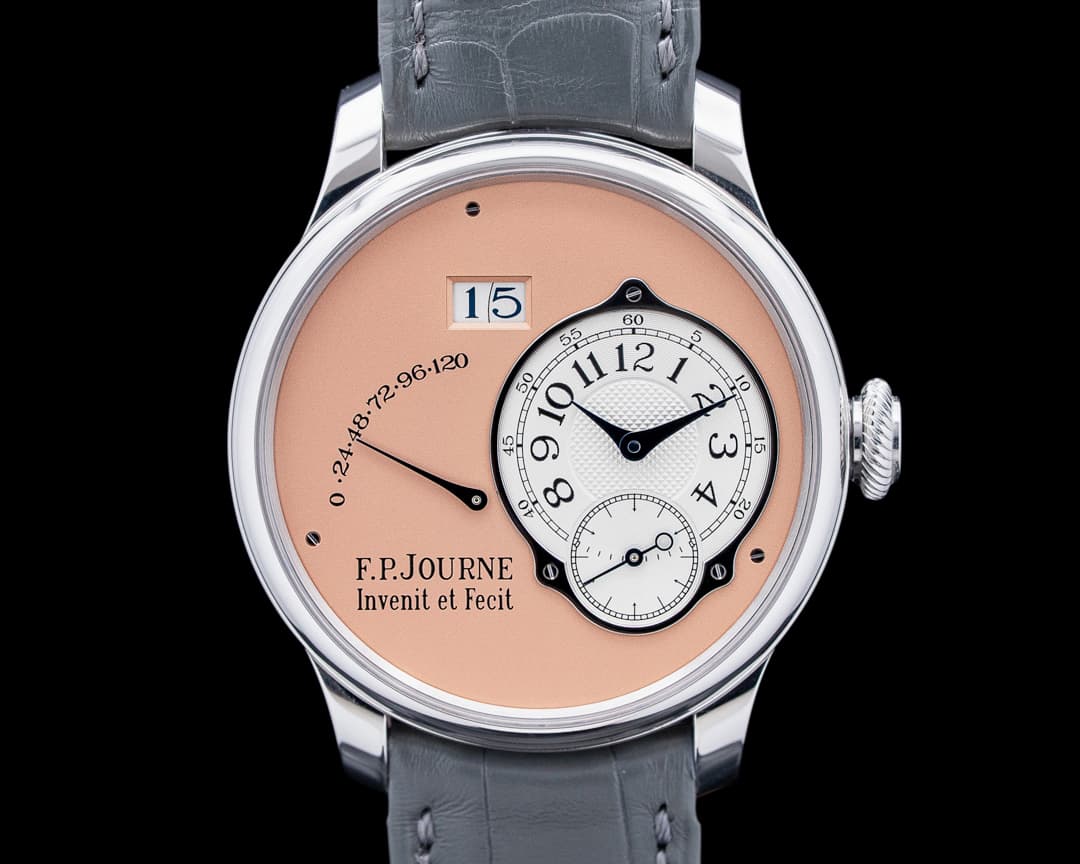
Octa Automatique Reserve De Marche Platinum Salmon Dial 2026 UNWORN
$295,000
View Watch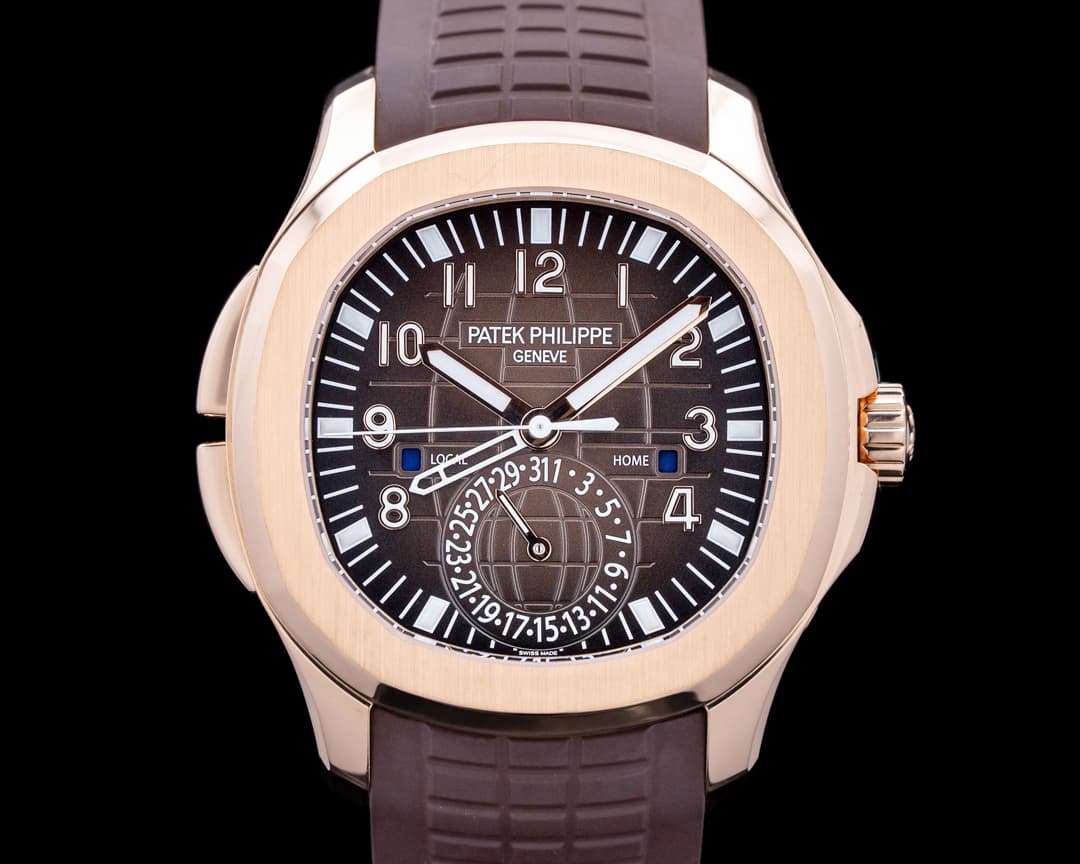
5164R Aquanaut Travel Time 18K Rose Gold Brown Dial
$132,500
View Watch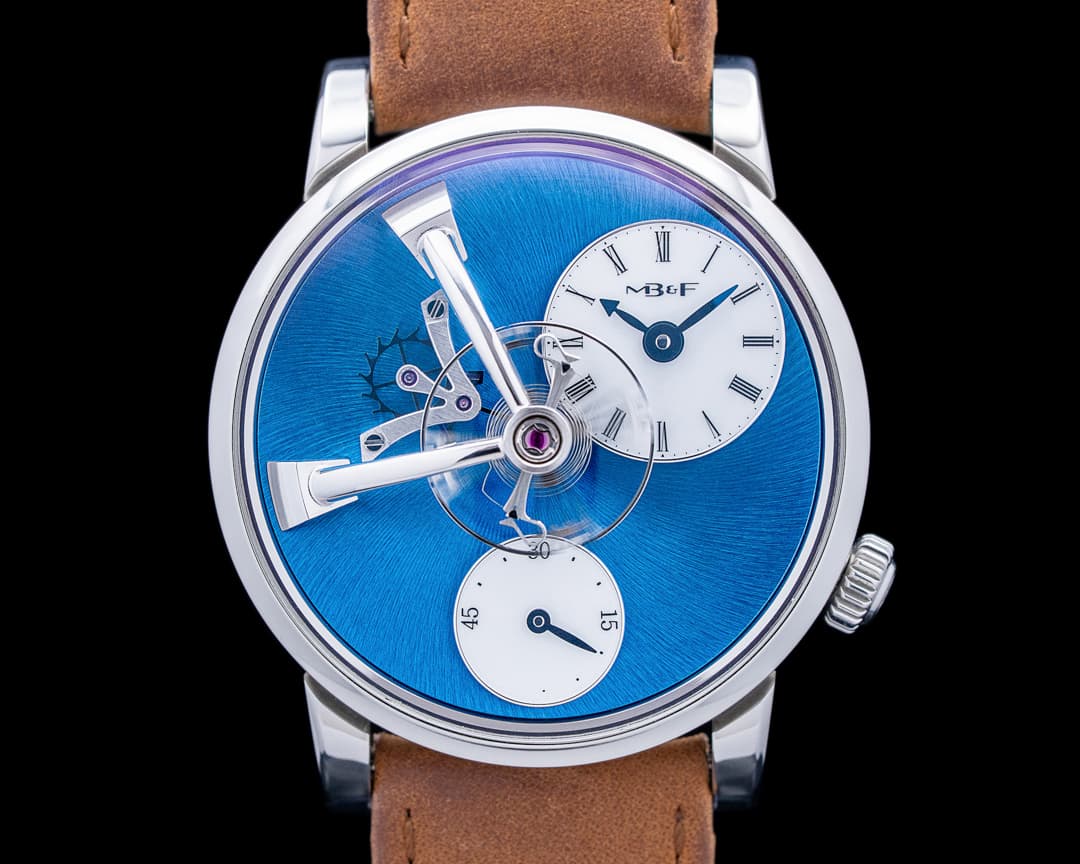
LM101 Legacy Machine SS Blue Dial
$89,500
View Watch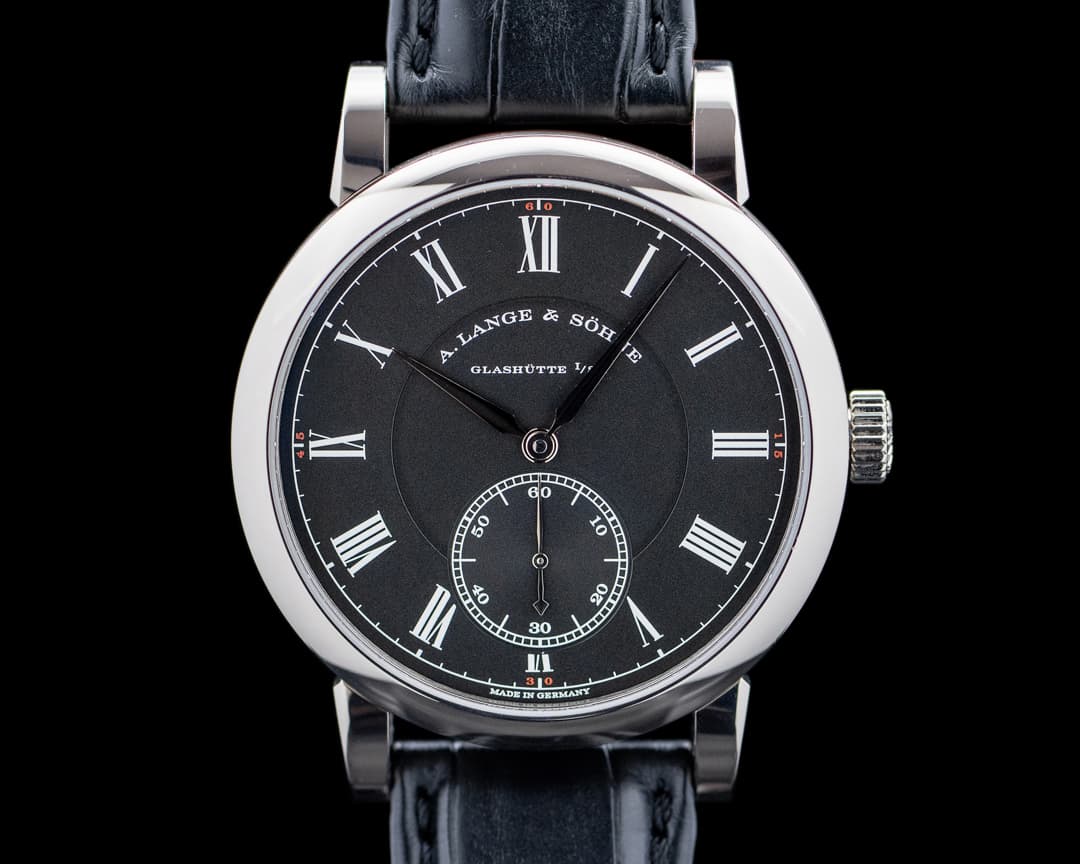
Richard Lange Pour Le Merite 18K White Gold Black Dial LIMITED
$86,500
View Watch
Shop New Arrivals
Octa Automatique Reserve De Marche Platinum Salmon Dial 2026 UNWORN
$295,000
View Watch5164R Aquanaut Travel Time 18K Rose Gold Brown Dial
$132,500
View WatchLM101 Legacy Machine SS Blue Dial
$89,500
View WatchRichard Lange Pour Le Merite 18K White Gold Black Dial LIMITED
$86,500
View Watch
More Content