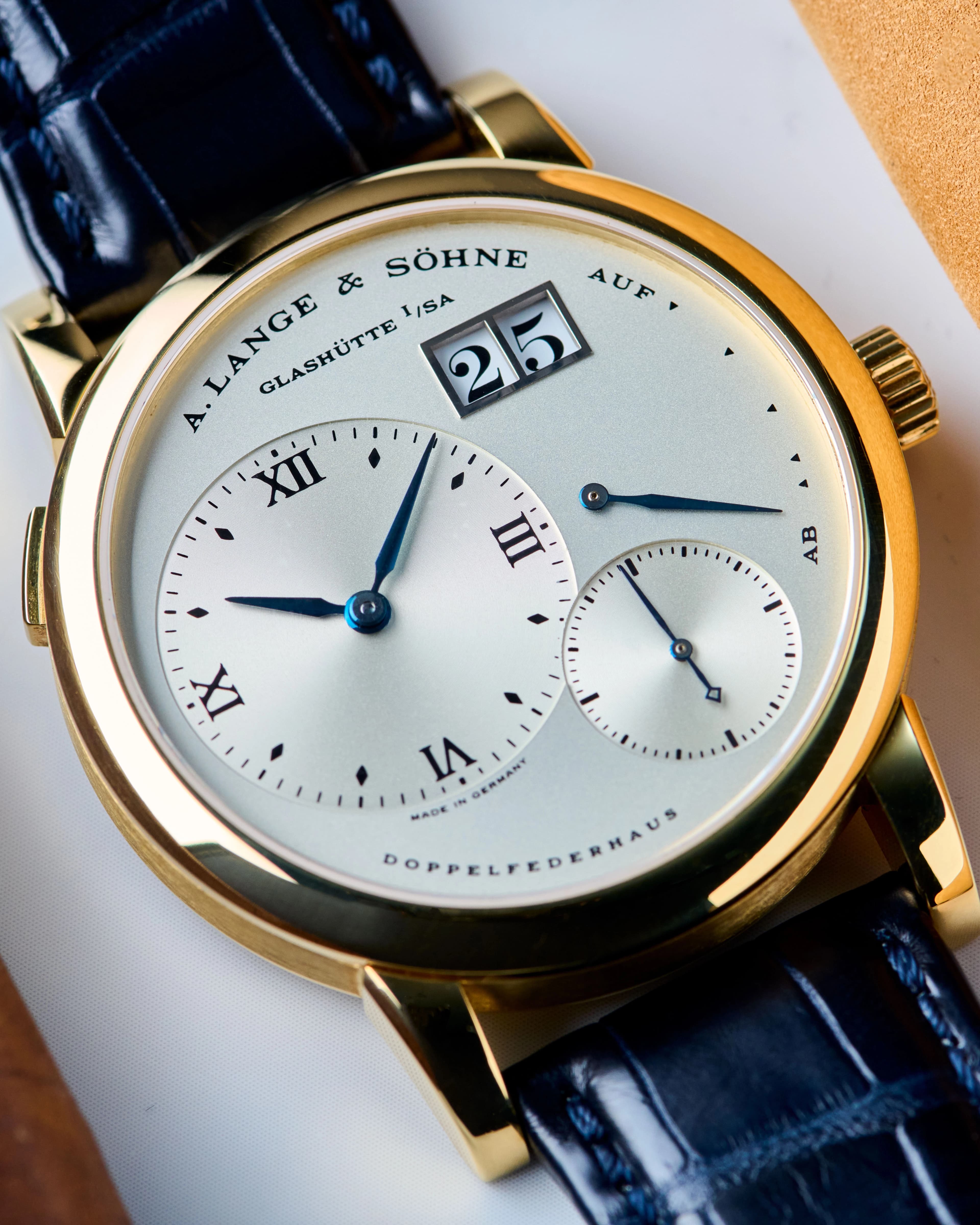
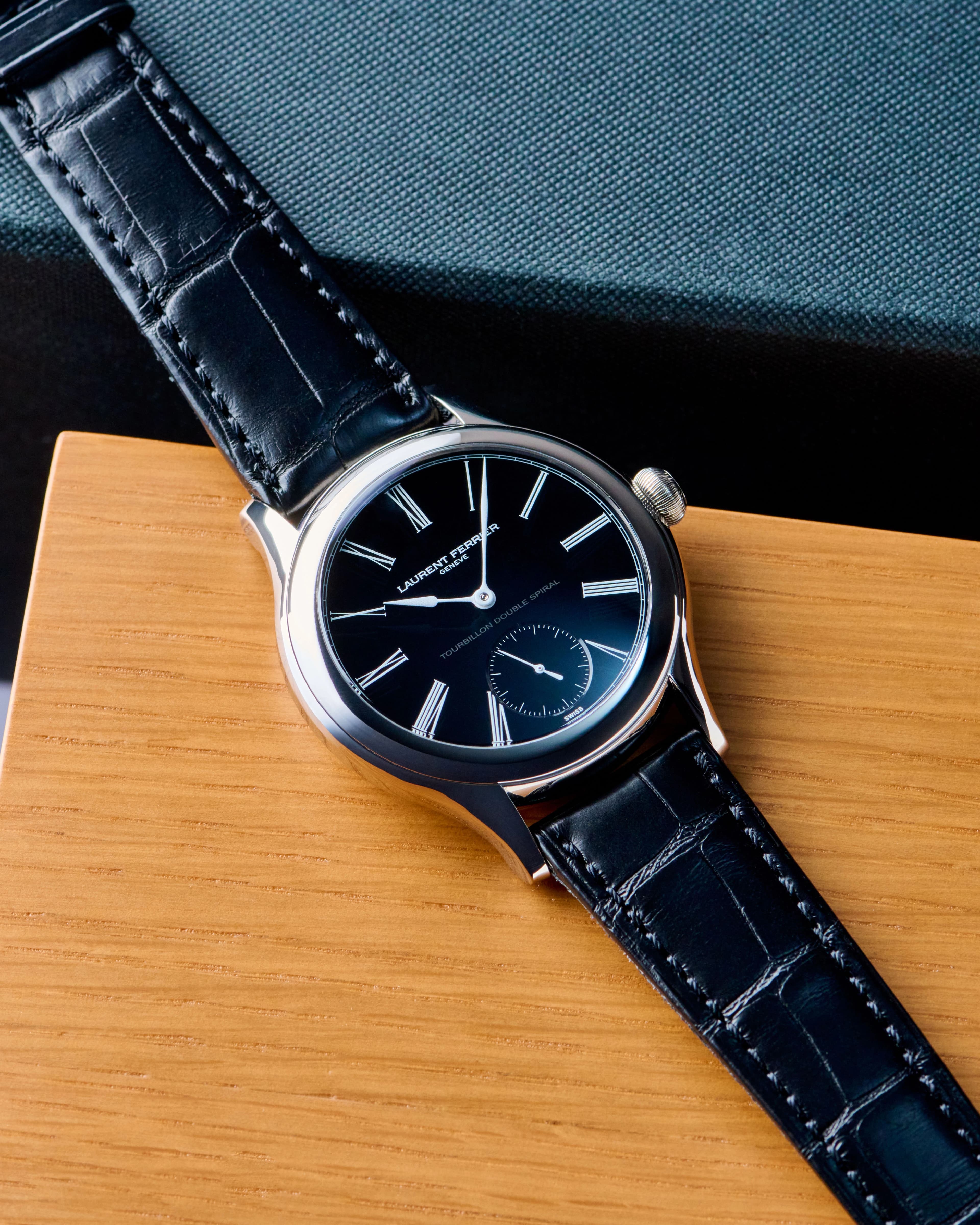
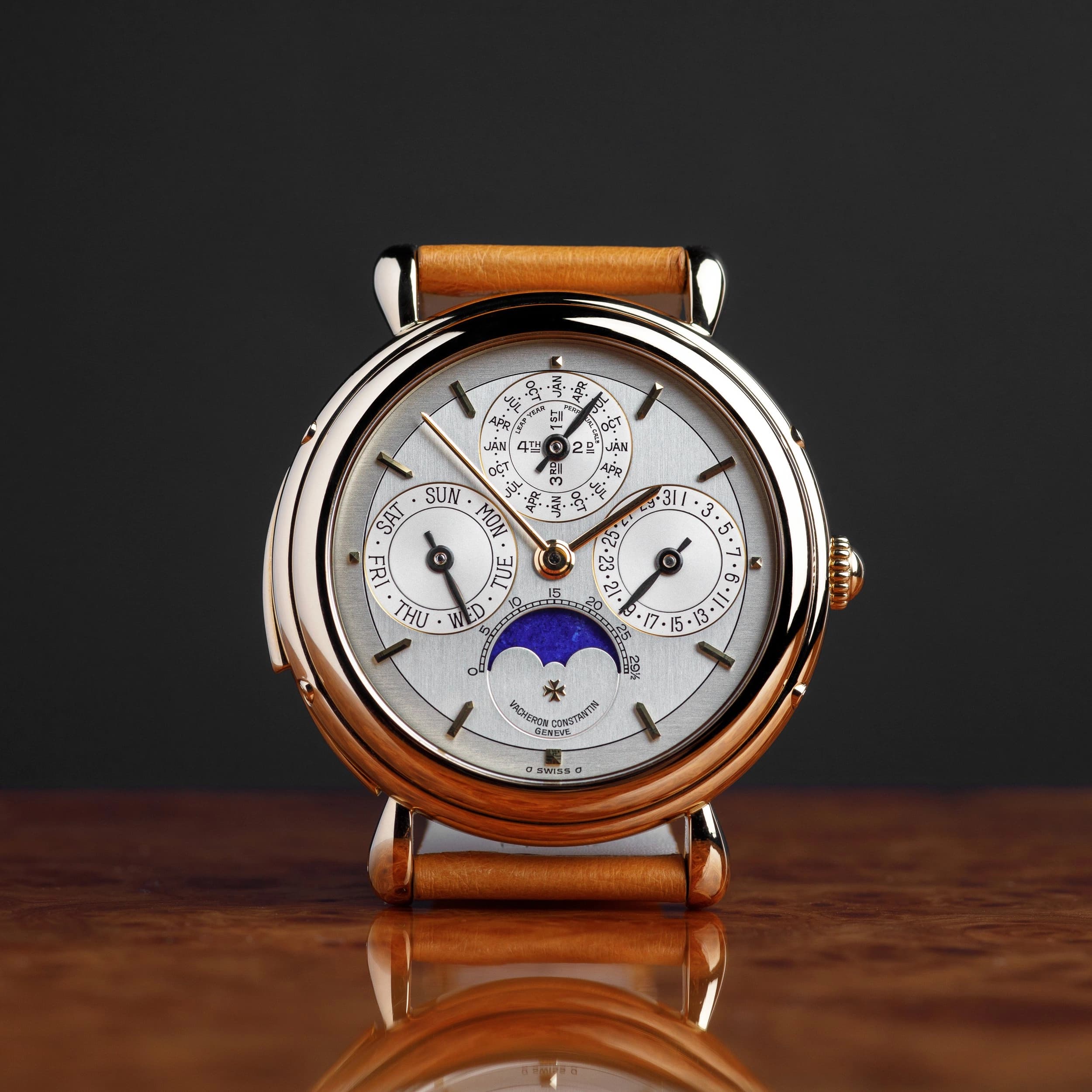
How to Read a Lange Movement: A Pre-Owned Buyer's Guide to Finishing
Published on 6/6/2026
Why Finishing Matters For a Purchase
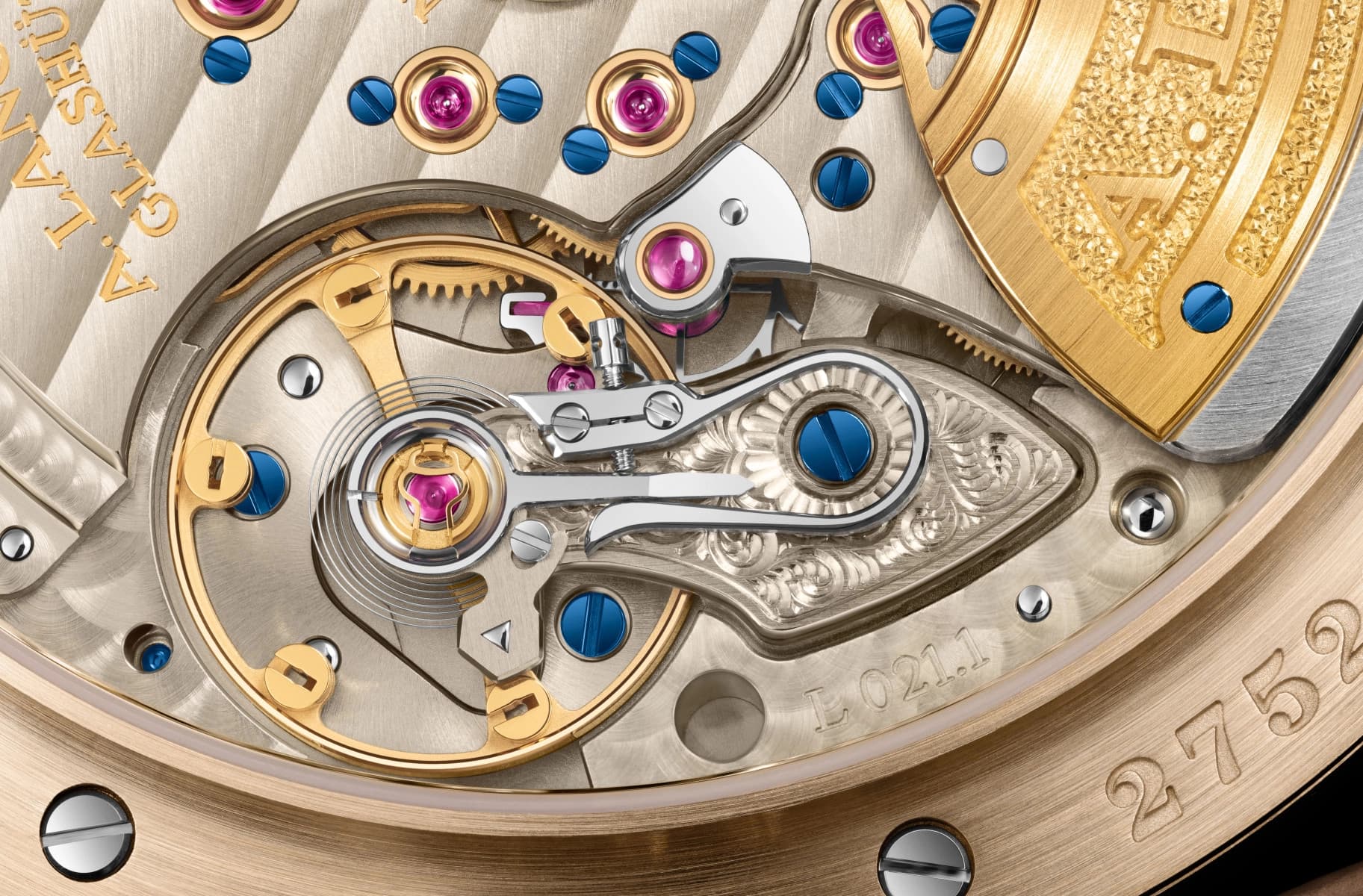
Movement finishing is a work of precision craftsmanship. The hours required to bring a movement to a high standard of hand-finishing cannot be shortchanged or shortcutted: you cannot create mirror anglage with a machine and produce the same result. Finishing quality is, in a reliable way, a proxy for the overall standard of a movement's construction. A manufacture that finishes well tends to build well. The attention required for one reflects the culture that produces the other.
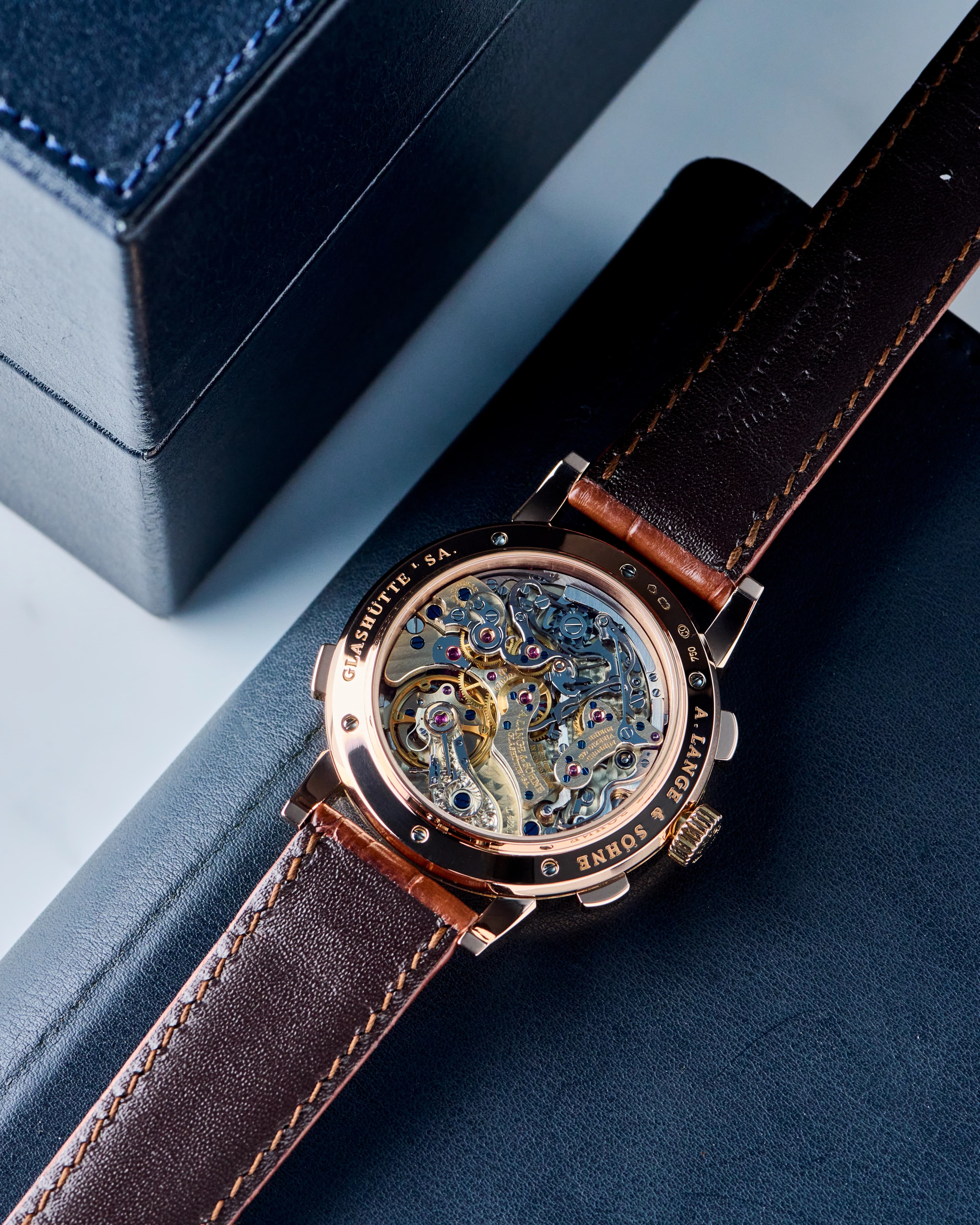
Lange Datograph
For the pre-owned buyer, this has a second implication. Finishing is also a record of what has happened since the watch left the manufacture. Polishing a movement incorrectly during a service destroys the watch. A poorly executed service, one that touched the movement without the right tools or the right hands, leaves marks. Scratches, rounding at edges that should be crisp, cotes de Geneve interrupted or worn soft: these are not simply cosmetic problems, they are a testimony to what has happened to a watch prior to acquisition.
None of this means that a serviced watch is a compromised watch. It means that how a watch was serviced matters if you know where to look.
One of the best representations of high quality movement finishing is A. Lange & Sohne. Within the hierarchy of high end watch makers, A. Lange & Sohne produces some of the most intricately finished masterworks available on the pre-owned market. Their watches are a case study in what proper finishing can and should look like. Through studying Lange movements, one learns to read how movements should look more generally. Let's get started.
What to Look For: The Techniques and What They Tell You
Anglage. The beveling of component edges, bridges, plates, levers, is the most demanding individual finishing operation and the easiest to read. On a properly finished Lange movement, every beveled edge is hand-filed and polished to a consistent width, meeting adjacent surfaces at a precise angle with no rounding at the transition. Run your eye along a bridge under a loupe: the bevel should be uniform from end to end, bright and mirror-polished, with a clean junction where it meets the flat surface above. Any abnormal variation in width, any softening at a corner, any scratch running across the flat, would be cause for further research. On pre-owned pieces, look especially at the corners, where re-polishing tends to round what should be sharp. It should be mentioned that these are hand-finished movements from the factory, and so small imperfections are not a red flag on their own. Hand craft yields micro imperfections. But anything truly abnormal is a cause for pause.
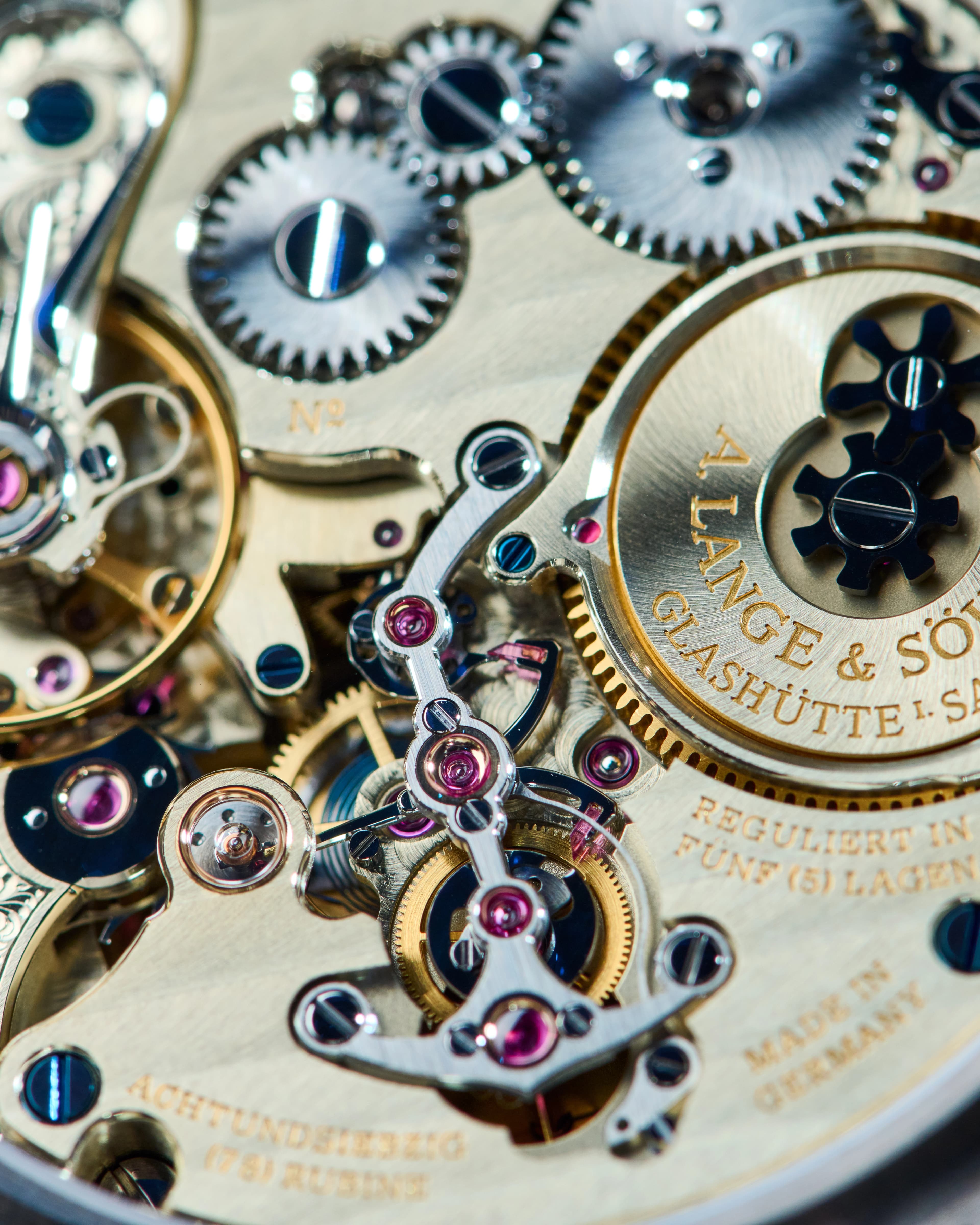
Anglage on Zeitwerk Striking Time Movement
Cotes de Geneve or Glashutte Striping. The parallel stripes decorating plates and bridges on most Lange movements are applied by machine and then hand-finished at the edges. On a new movement they are crisp, evenly spaced, and consistent in depth. What degrades them is contact: an instrument that shouldn't have been there, a cleaning process that was too aggressive, or a service that involved unnecessary disassembly. Interrupted stripes, variation in depth across a single bridge, or any area where the pattern grows faint or disappears are signs of either heavy wear or a service that went wrong. On a non Lange movement, this striping is called Cotes de Geneve (Geneva Stripes). Lange movements feature a variation on Cotes de Geneve called Glashutte Striping.
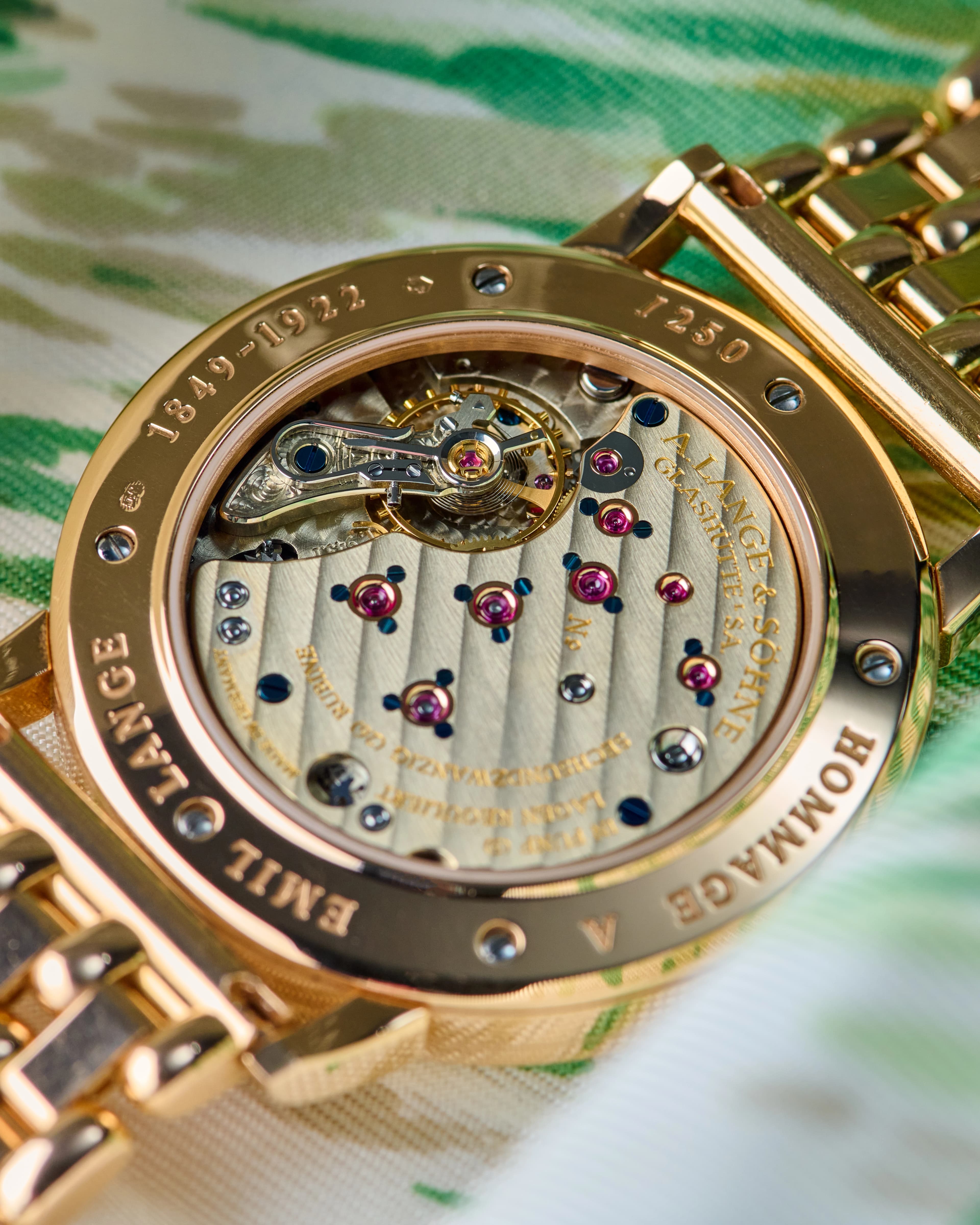
Glashutte Stripes on 1815 Moonphase Homage to Emil Lange
Perlage. The small circular overlapping scratches applied to the undersides of plates and hidden surfaces (beneath the balance cock for example) are not visible in normal wear. Their presence, and their condition tells you something about the standard of finishing applied to surfaces that a buyer will never see under ordinary circumstances. A Lange movement with clean, even perlage on its hidden faces was finished by people who finish movements to a high level purely because that's the standard they feel should be upheld. It's not about what others see, it's about doing things right because they should be done right. On pre-owned pieces, getting a look at these surfaces is not always possible, but when it is, take the opportunity.
Polished steel, mirror finishing, and black polish. Screws, levers, and swans neck regulators in Lange movements are brought to a Glanzschliff finish, a near-perfect mirror achieved through extremely fine lapping on a flat surface. This finish is unforgiving. Any mark, any microabrasion in the surface shows. On a pre-owned piece, the condition of the polished screws is often the fastest read of how carefully the movement has been handled since it left Glashutte. Bright, unmarked, uniform screw heads are a good telltale of a well cared for timepiece. Screws that are dull, scratched, or show tool marks at the slots is a sign of a botched service job. Sometimes, when components are polished to an extremely high level, this mirror finish will turn black in the light. This is often referred to as black polish.
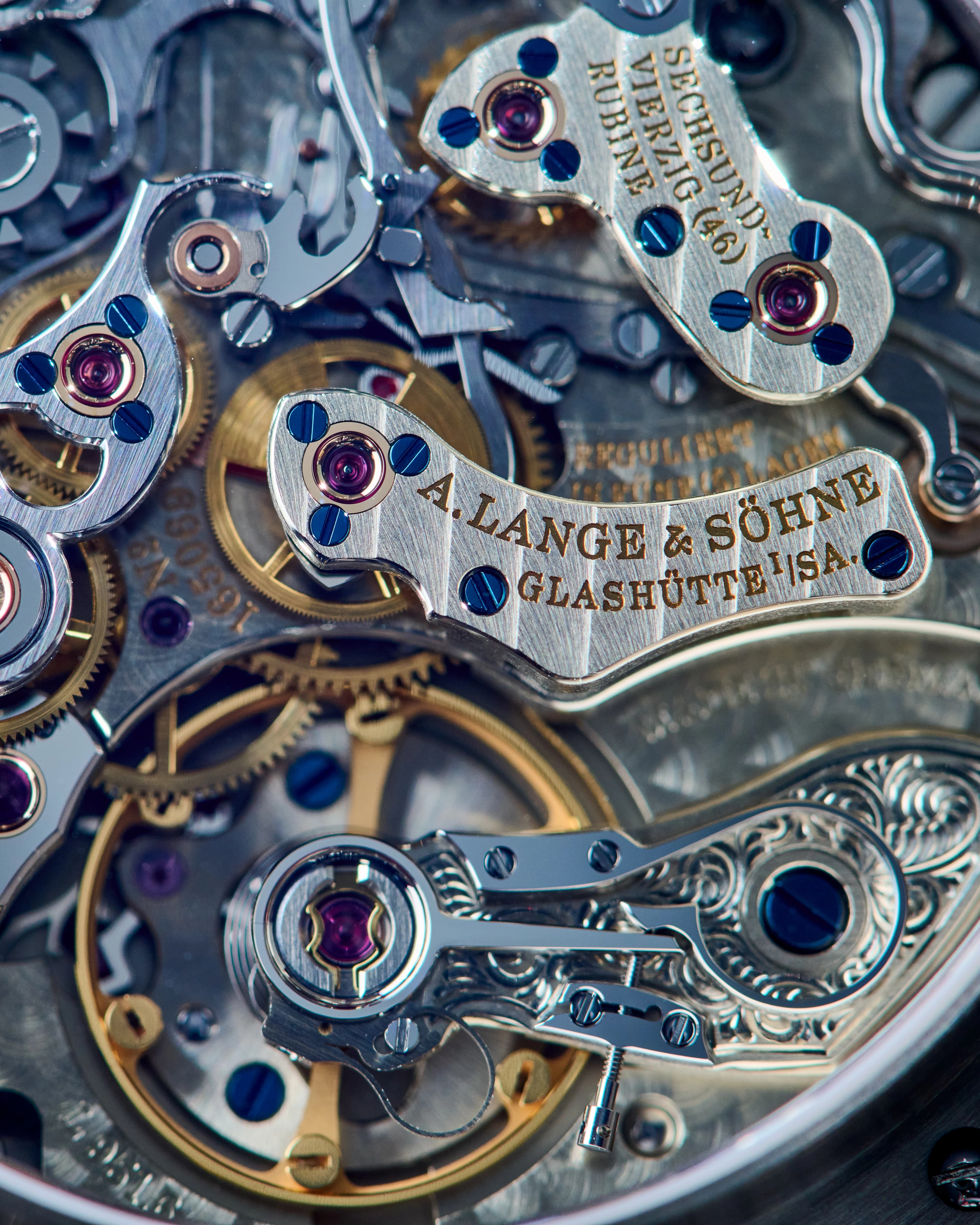
Black Polish on Swans Neck Regulator
The three-quarter plate. Lange's signature construction, a single large German silver plate covering most of the movement's upper side, is worth understanding specifically because it provides an unusually large, uniform surface on which finishing quality is immediately apparent. There is nowhere to hide an uneven stripe, a rounding at a corner, or a scratch. The three-quarter plate is both Lange's most recognizable feature and its most demanding canvas. Buyers who learn to read it on one reference can read it on almost any other.
Reading a Lange Movement Reference by Reference
Not every Lange movement presents identically. The finishing standards are consistent, but the execution varies by reference in ways that matter for pre-owned buyers.
The Lange 1 is the most widely traded Lange family and the most useful baseline. The three-quarter plate is prominent, the Glashutte stripes broad and easy to read, and the anglage on the balance bridge is among the more elaborate in the catalog. Buyers should look closely at the outswept end of that bridge, where the anglage follows a curved profile. This is where a poor service or a factory second shows most clearly.
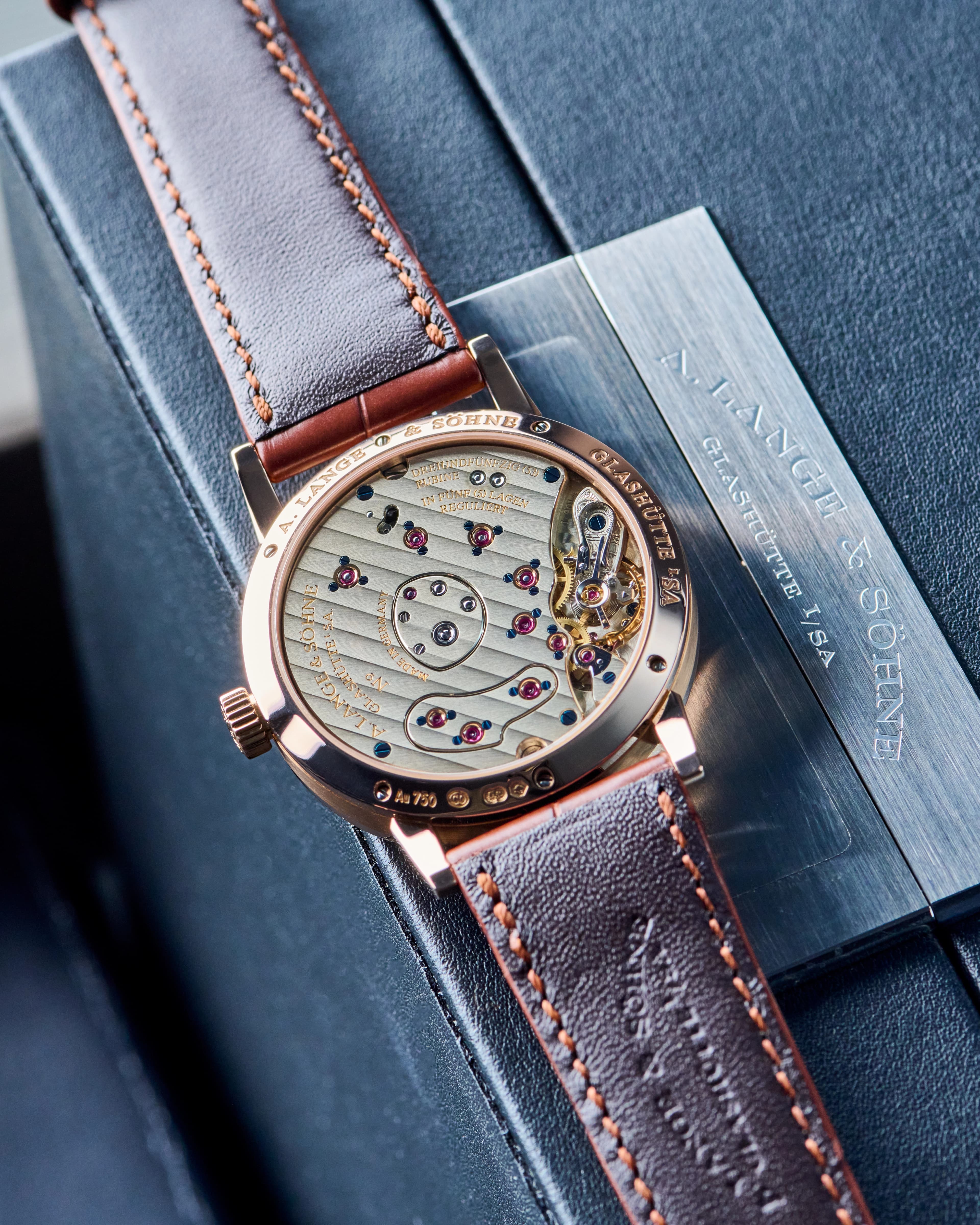
Little Lange 1 Movement
The Saxonia Thin presents a different challenge. The movement is caliber L093.1, and the minimal dial design means that the caseback view is where most of the visual interest lives. The plate surfaces here are large and unobstructed; any irregularity reads immediately. Be sure to check the click spring connected to the keyless winding works. It should be fully black polished and precise.
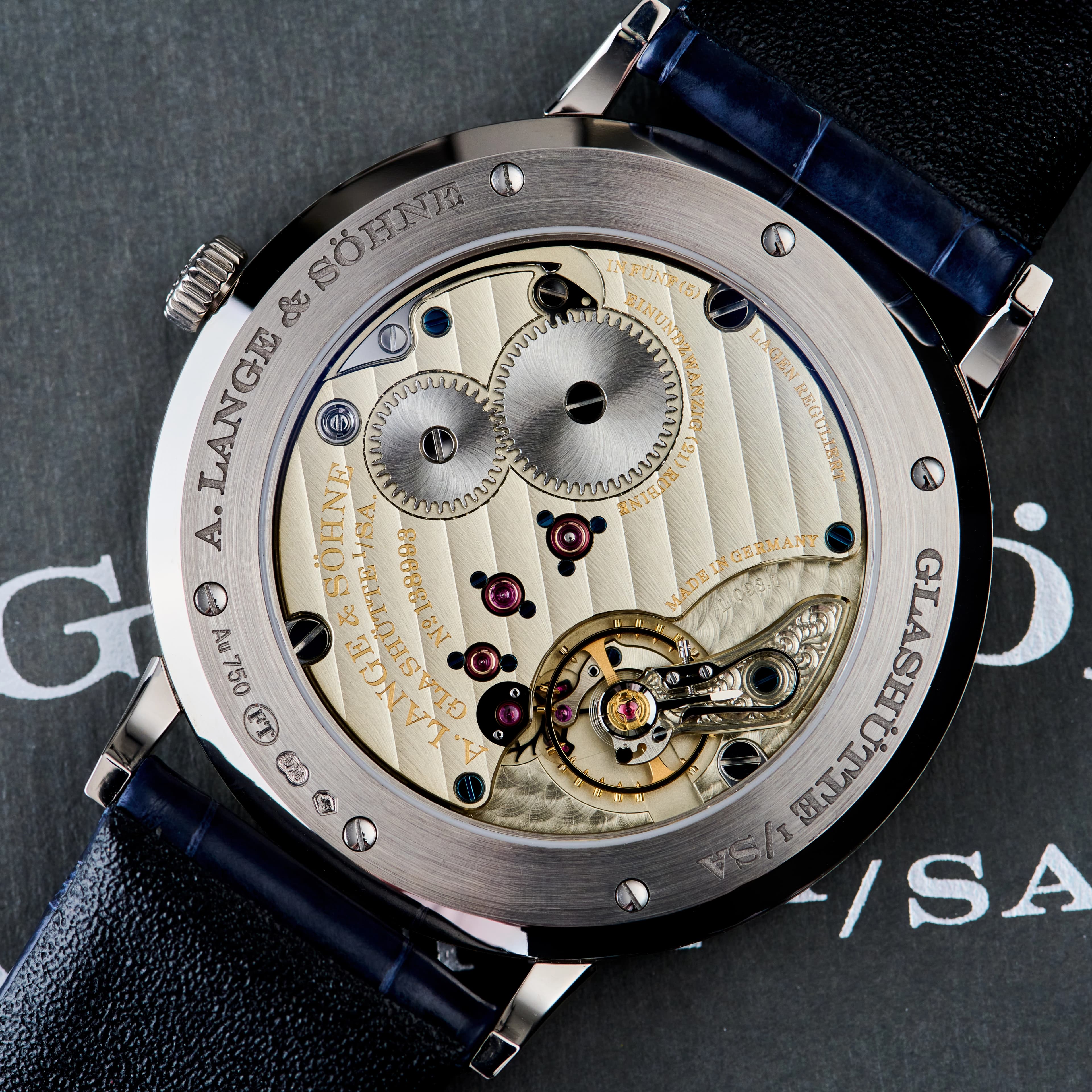
Saxonia Thin
The Datograph is among the most mechanically complex movements in the catalog, and its finishing reflects that. The column wheel, the chronograph levers, and the flyback mechanism all present surfaces and edges that require individual attention. Look carefully at golden chatons, blued screws, and black polished screws. These movements often require multiple tweakings during a tune up that leave marks on those screwed surfaces when done imporoperly. A Datograph movement that has been poorly serviced tends to show it first on the chronograph levers: look for rounding at the working edges and any disruption of the polish on the lateral faces. A Datograph in genuinely good pre-owned condition is not easy to find, which is one reason the price spread between well-preserved and worn examples is substantial from reputable dealers.
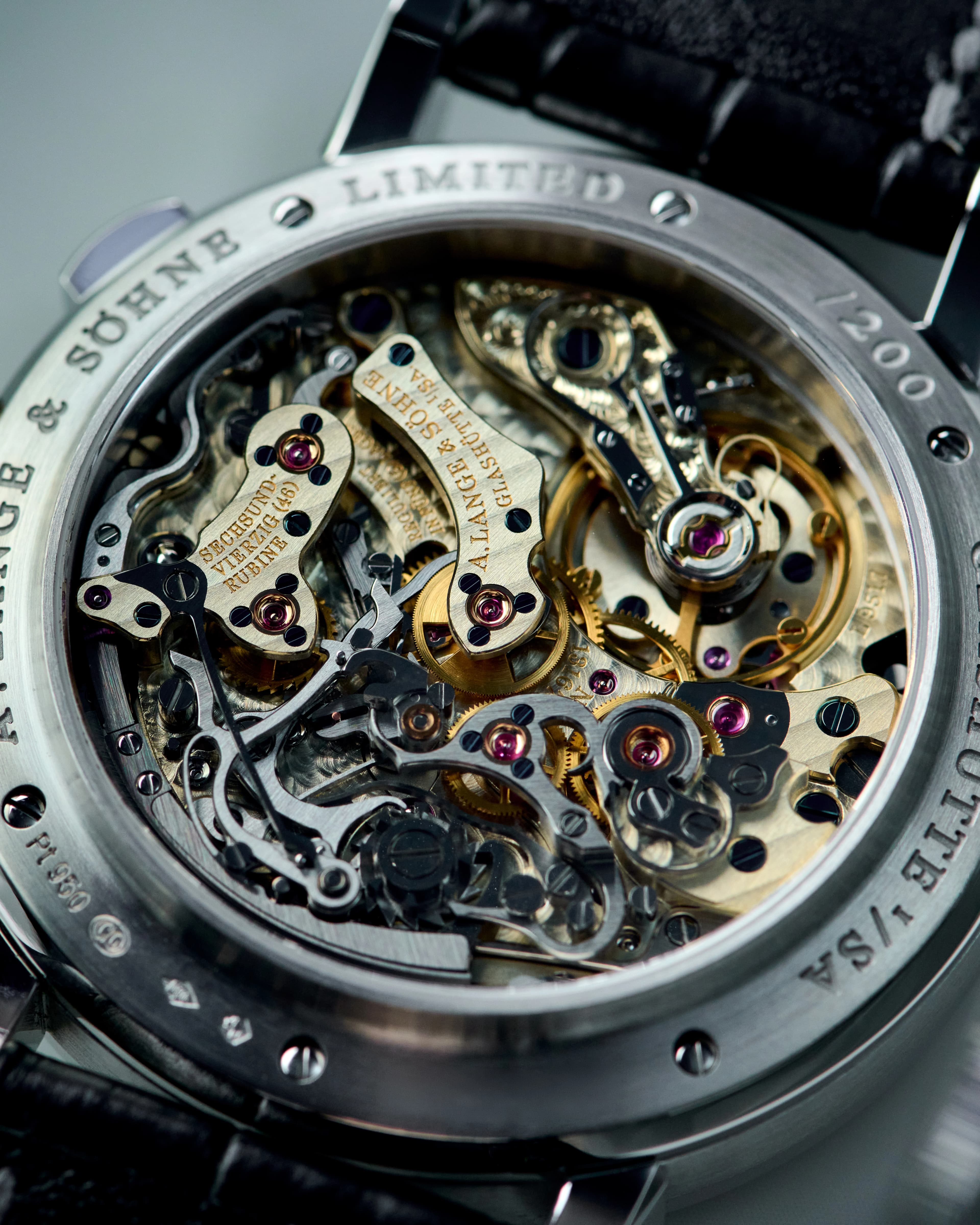
Datograph Lumen
The 1815 is often described as Lange's purest expression of traditional Glashutte finishing, and that is accurate in the sense that it is less encumbered by complications. The movement, while not simpler in technique, is easier to evaluate precisely because there is less going on mechanically. For a buyer new to Lange movements, the 1815 is a reasonable place to develop an eye before moving to the Datograph or something else more complex.
1815 Emil Lange
How Condition Affects Value in the Pre-Owned Market
Pre-owned Lange prices are not uniform, and they should not be. A Lange 1 in unworn condition with box and papers commands a meaningfully different price (up to $3,000-$5,000 or more) than the same reference showing a poorly executed service. The question is whether buyers are actually capturing that difference, or paying the same price for meaningfully different goods.
The finishing condition is part of the answer. A movement with intact, pristine finishing is not merely more beautiful; it is more original. It has been altered less, handled with more care, and, if the finishing is genuinely as-new, almost certainly has fewer service hours on it. That is a different watch from one that has been in and out of a service center three times under indifferent hands, regardless of what the dial looks like from the front.
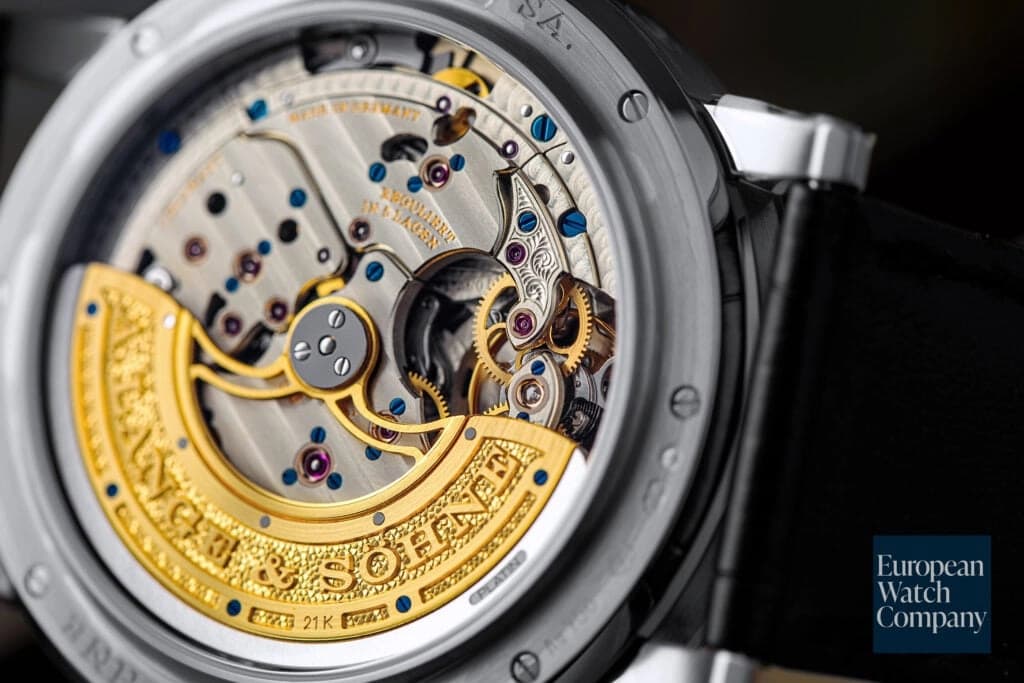
Lange 1 Tourbillon Perpetual Calendar
Pricing in the pre-owned market does not always reflect this with precision. That creates opportunity for buyers who can make the distinction and a trap for buyers who cannot.
Practically: a Lange with finishing in excellent condition, even at a premium to comparable references in average condition, is typically the more rational purchase. As an extension of that, dealers that are reputable in the service department, know what to look and screen for themselves, providing a service to their trusting customers.
What This Means When You're Actually Buying
Reading a movement well requires magnification, light, and patience. A loupe at 10x is the minimum; a watchmaker's loupe used in good natural light is often more practical in a real transaction. The caseback should come off, or the seller should be able to provide high-resolution images taken through the caseback crystal under raking light. Dealers that photograph well have nothing to hide behind: they provide the transparency you need to know what you are getting.
Know what you are looking for before you are in front of the watch. The descriptions above are a starting point; time spent studying reference images of what things should look like, particularly from Lange's own documentation and launch photography builds the eye faster than any written guide.
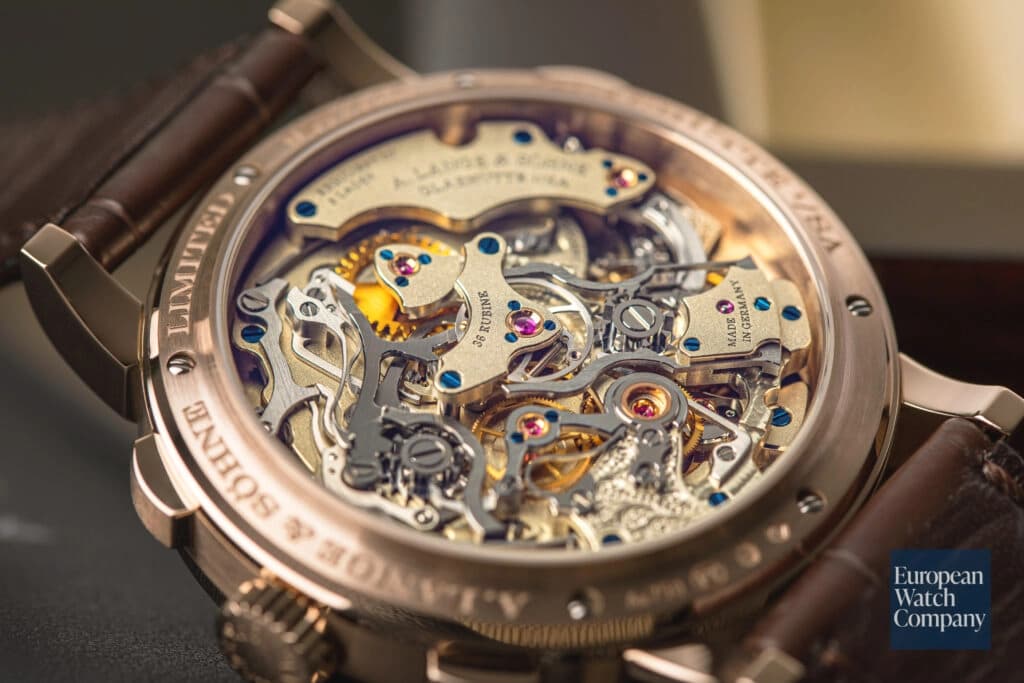
1815 Rattrapante Honeygold Homage to F.A. Lange
For some buyers, all of this will feel like more than the purchase warrants. That is a fair position. But for a Lange at the prices Lange commands, with pre-owned references trading across a wide range depending on the complication, the fifteen minutes required to read a movement carefully is not a disproportionate investment. The watch will tell you whether it deserves what you are about to pay. You only have to know how to look!
Shop New Arrivals
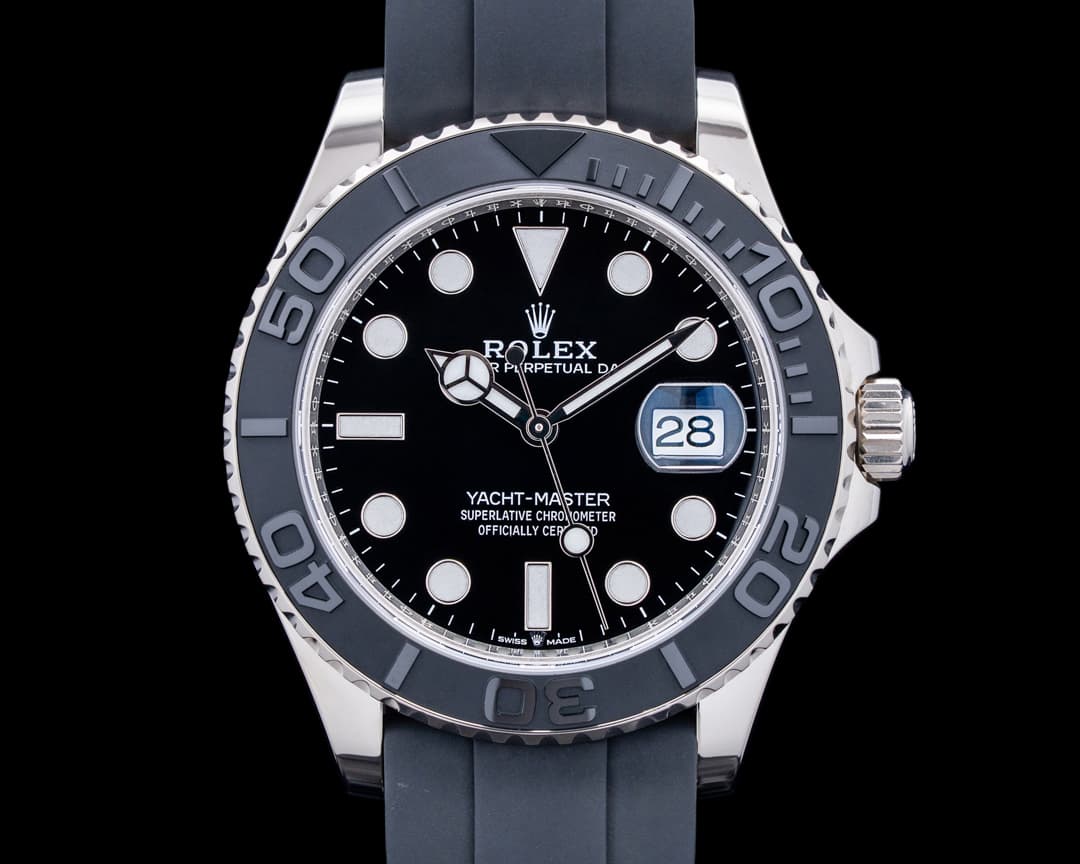
226659 Yacht-Master 18K White Gold Black Dial
$31,900
View Watch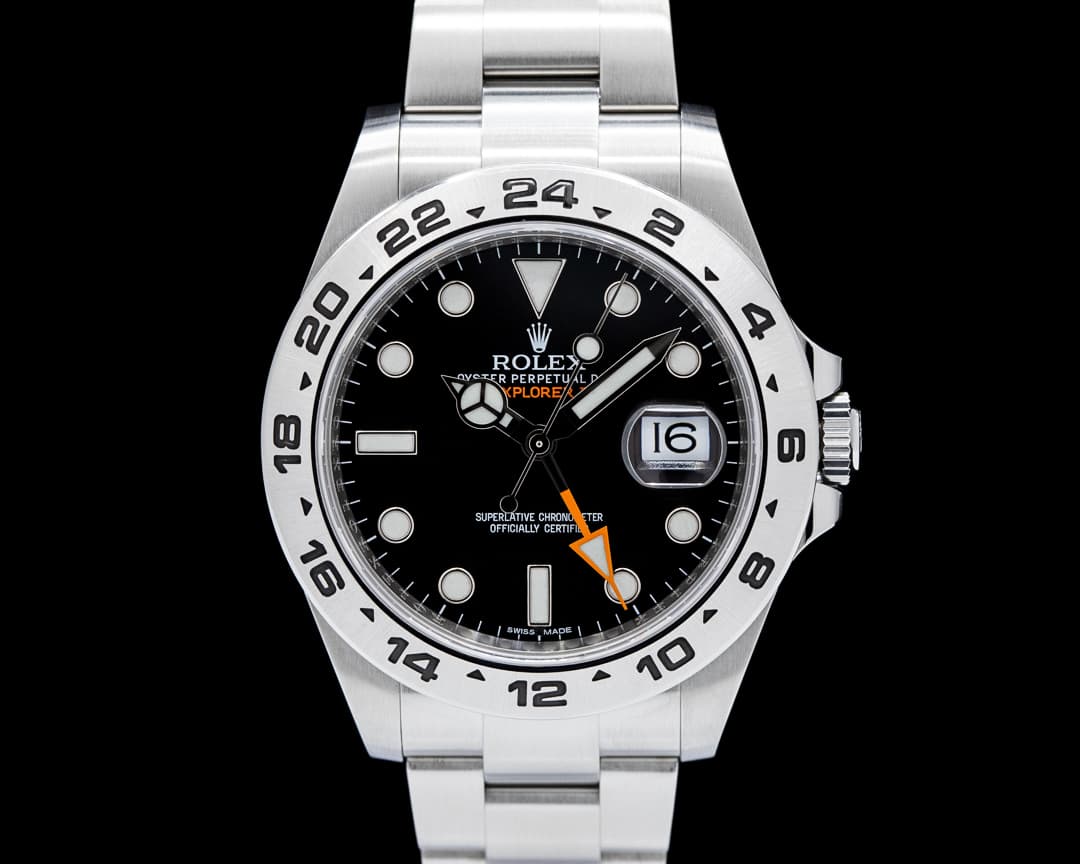
216570 Explorer II SS Black Dial
$10,900
View Watch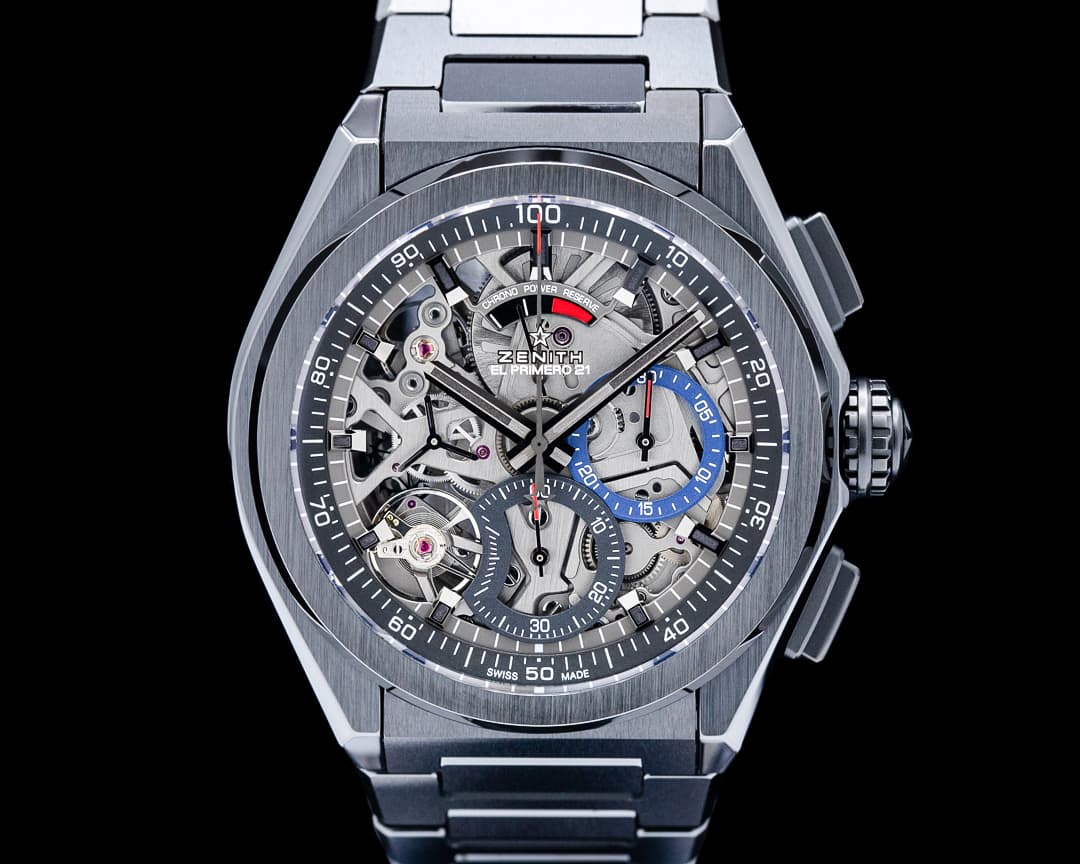
Defy El Primero 21 Chronograph Black Ceramic Skeleton Dial
$9,900
View Watch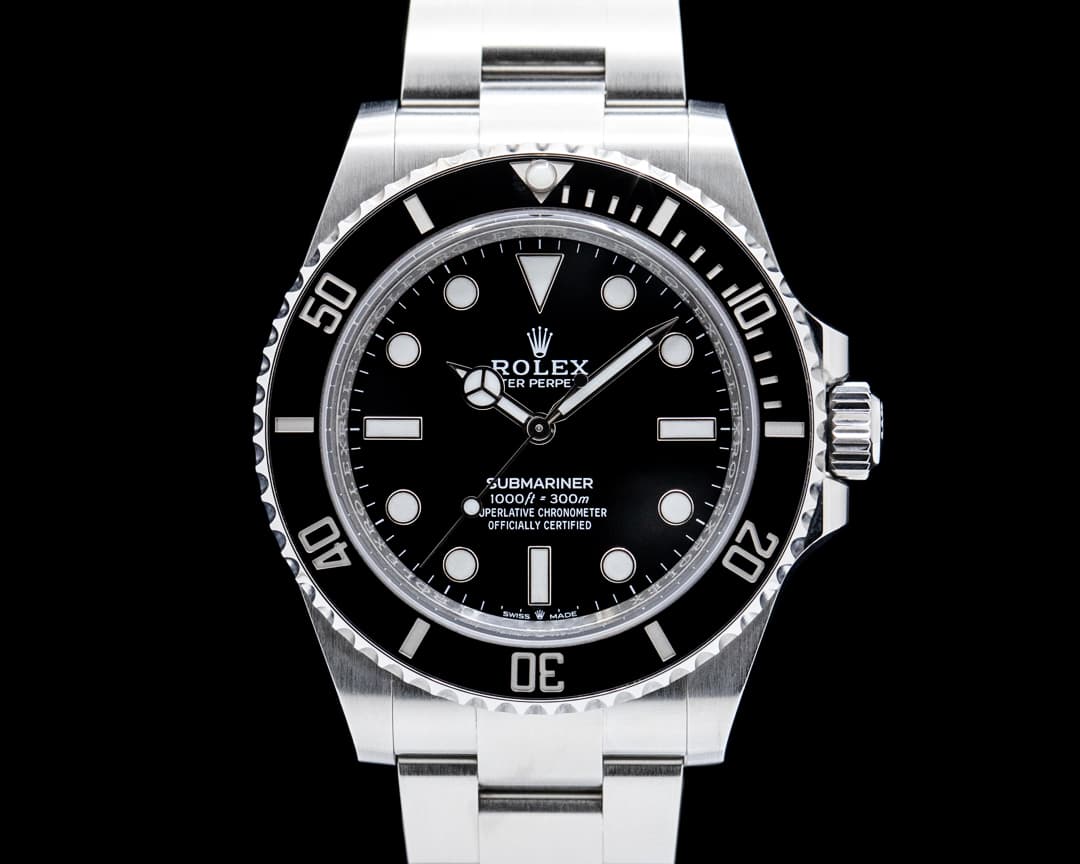
124060 Submariner No Date 41MM SS Black Dial
$13,900
View Watch
Shop New Arrivals
226659 Yacht-Master 18K White Gold Black Dial
$31,900
View Watch216570 Explorer II SS Black Dial
$10,900
View WatchDefy El Primero 21 Chronograph Black Ceramic Skeleton Dial
$9,900
View Watch124060 Submariner No Date 41MM SS Black Dial
$13,900
View Watch
More Content