A Buyer's Guide to the Patek Philippe Annual Calendar Complication
Published on 6/2/2026
The Annual Calendar
Patek Philippe invented the annual calendar in 1996, creating one of the most successful complications in the brand's history. The annual calendar reads the length of every month automatically, correcting itself for 30- versus 31-day months without any input from the wearer. The one exception is February. At the end of February, the owner advances the calendar manually, usually in the first days of March. One intervention per year, in a single predictable window.
The practical case over a perpetual calendar is real. A perpetual calendar is a more complex mechanism, requiring no corrections at all (except for the century years), and as a result costs significantly more to buy and service. If you put it in a drawer for a month and come back to it, you reset everything from scratch, just as you would with any watch. The annual calendar splits the difference: simpler to set than a perpetual and far less demanding than a standard calendar over the course of a year.
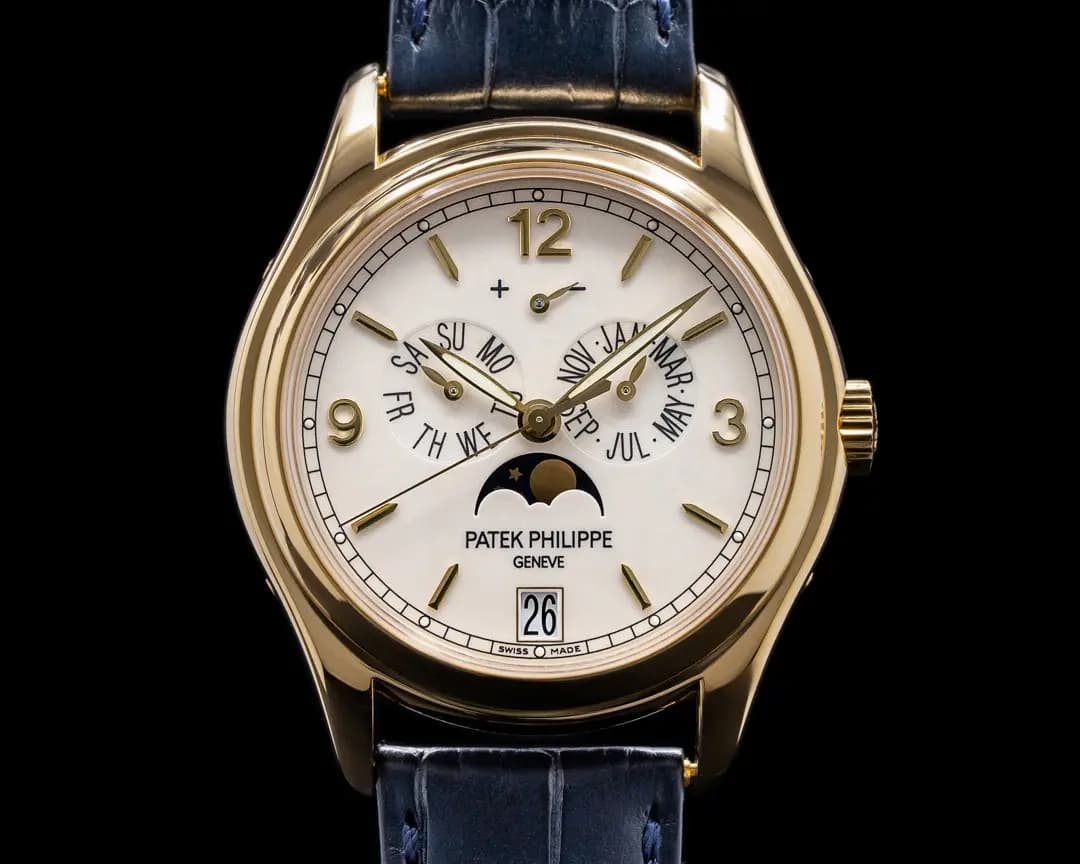
Patek Philippe Ref. 5146J
Patek's initial 1996 patent for the reference 5035's annual calendar movement was not a marketing story. The brand was hoping to create a practical bridge between the simple Calatrava models and complicated grand complications. This was no easy task. The mechanism uses a gear-based structure that reads month length through the watch's movement itself. The patent (CH685585G) was specific enough that competitors could not simply copy it, and Patek maintained a functional monopoly on the complication for roughly fourteen years before A. Lange & Söhne, Omega, and others engineered their own approaches.
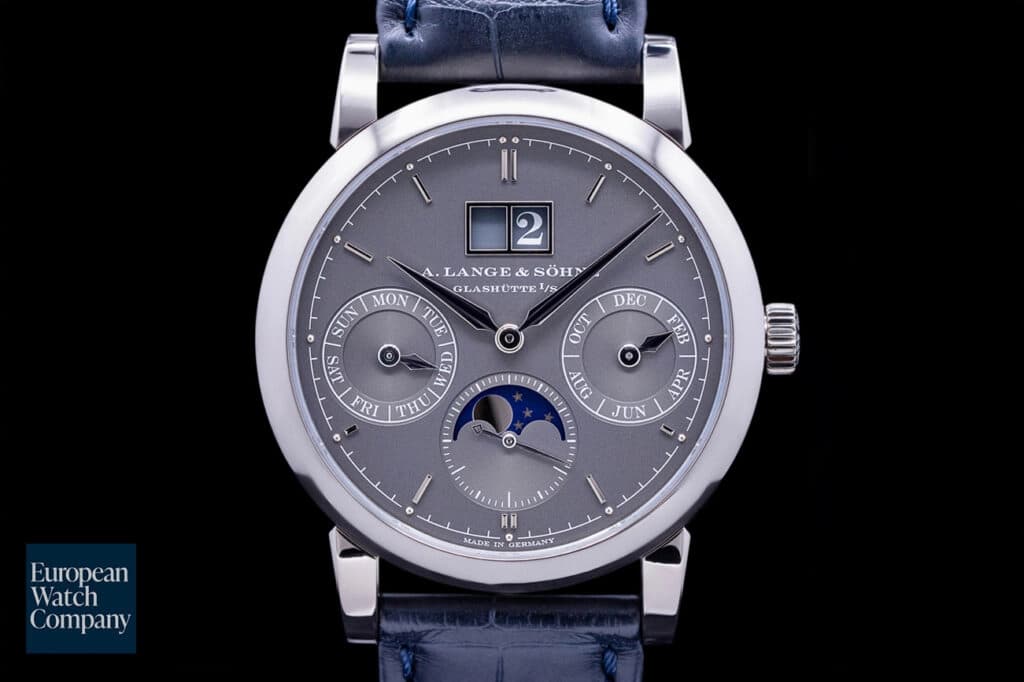
Lange Saxonia Annual Calendar 330.039
None of this means the annual calendar is for everyone. For some buyers, its logic will never be satisfying enough. One correction per year is one correction per year. Perpetuals are better watches for a certain kind of collector who wants nothing less than the most mechanically sophisticated movement available. The annual calendar is for someone who accepts a small trade-off in exchange for a significantly lower price point and, depending on the reference, a slimmer, more wearable case. For many, it's the perfect first or only complication in a collection.
This guide is written for someone who has already made that call and now needs to figure out which annual calendar to buy.
How the Reference Lineup Evolved
The 5035 (1996-2005) was the complication's debut. The 37mm yellow gold case, later available in white gold, houses caliber 315 S QA, an automatic movement with a 48-hour power reserve visible through the sapphire caseback. The dial is busy by Patek standards: the annual calendar display runs across the lower 2/3rds with large apertures for day and month and a window at six for the date, while an additional subdial tracks the 24 hr time. The two primary subdials sit opposite one another in a way that has become synonymous with the complication. The 5035 was the proof of concept that Patek used to launch a brand new family. Produced in roughly parallel to the 5035, Patek made the 5056 in platinum from 1998-2006.
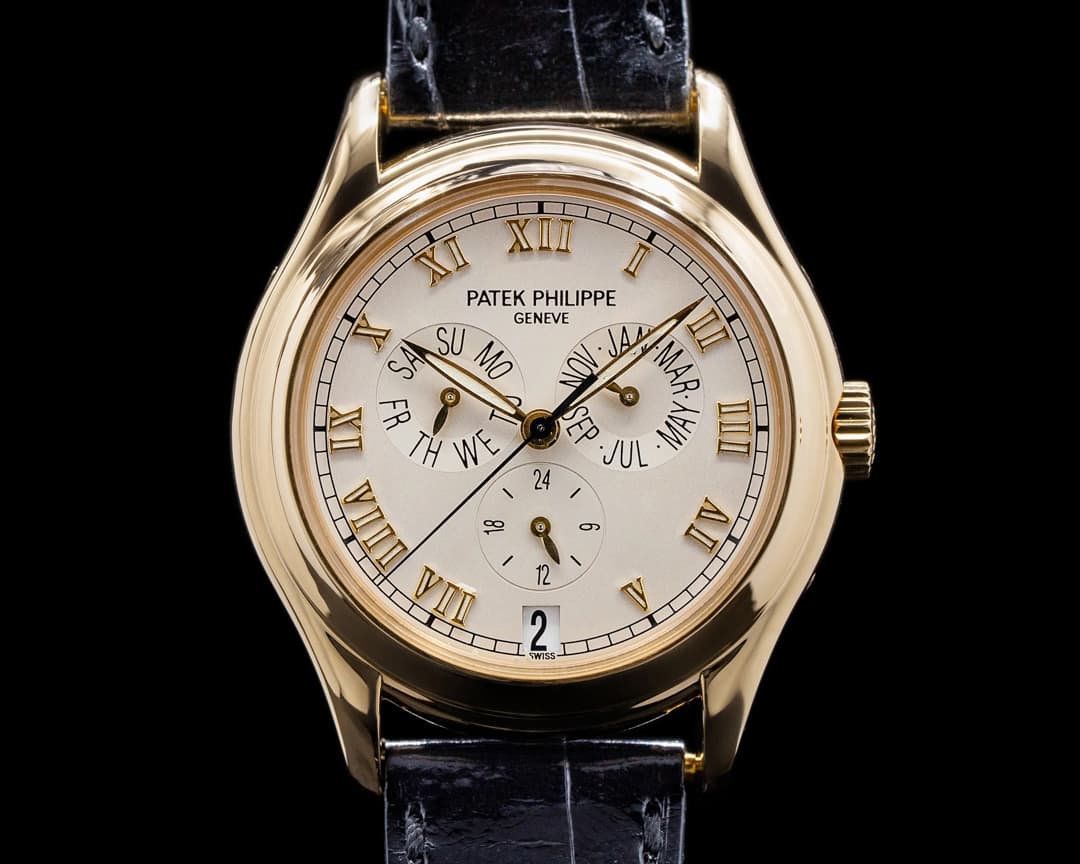
Patek Philippe 5035J
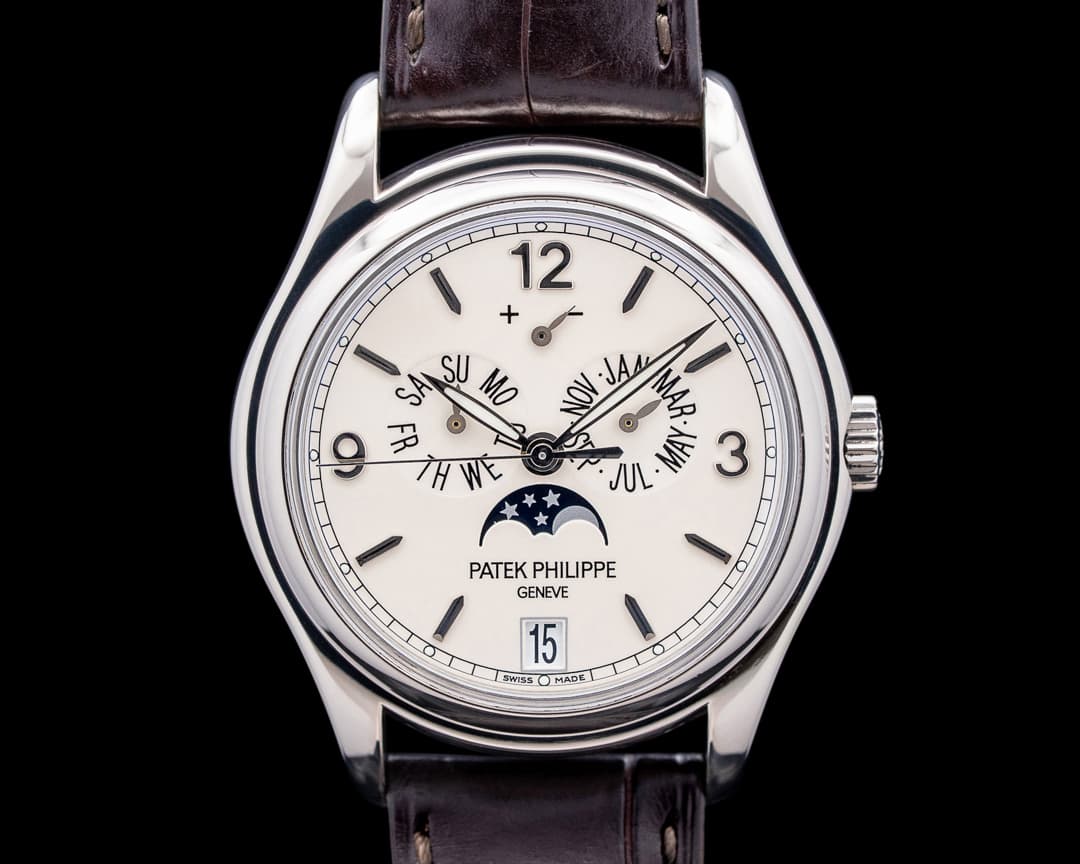
The 5146 (2005-2021) arrived as the 5035's successor and cleaned up the concept considerably. The case grew to 39mm and the dial architecture changed: Roman numerals gave way to baton indices, the subdial arrangement was rebalanced, the date window refined and the overall read became cleaner. The 5146 is the reference that established the annual calendar as a slightly more developed concept for Patek. This model remained in production until it was quietly discontinued in 2021.
Patek Philippe 5146J
The 5396 (2006-present) arrived a year after the 5146 and should not be misunderstood as its replacement--- they coexist and serve different collector aesthetics. At 38.5mm, the 5396 takes a more explicitly Calatrava-influenced form: a flowing case profile with Calatrava midcase and aperture displays. The movement is caliber 324 S QA LU 24H/303, a more recent generation than the 5146's unit. The 5396 remains in production.
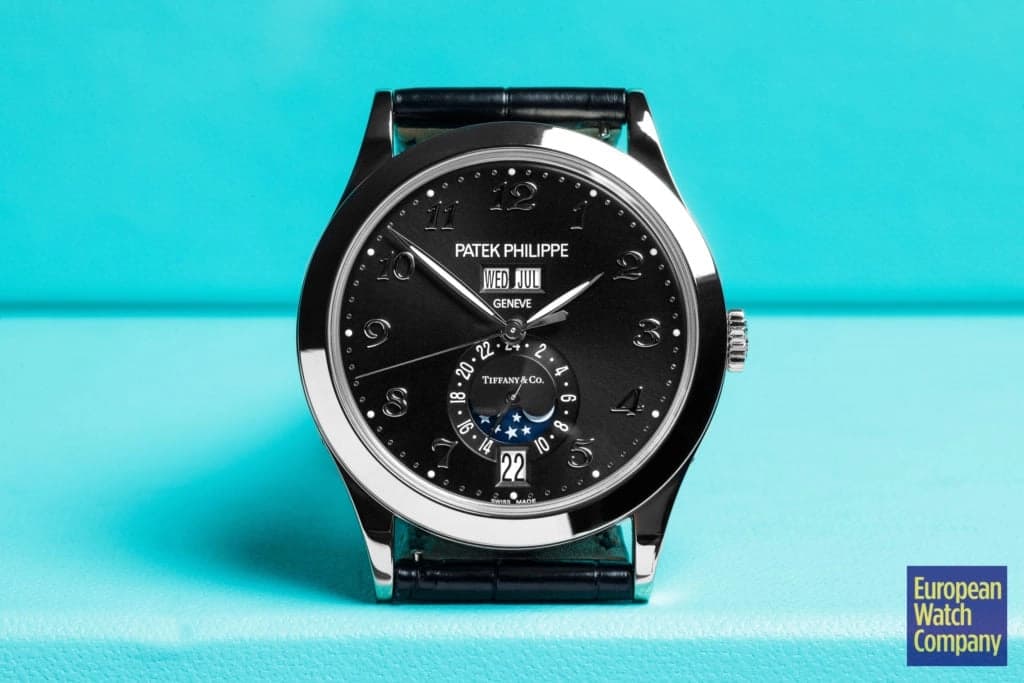
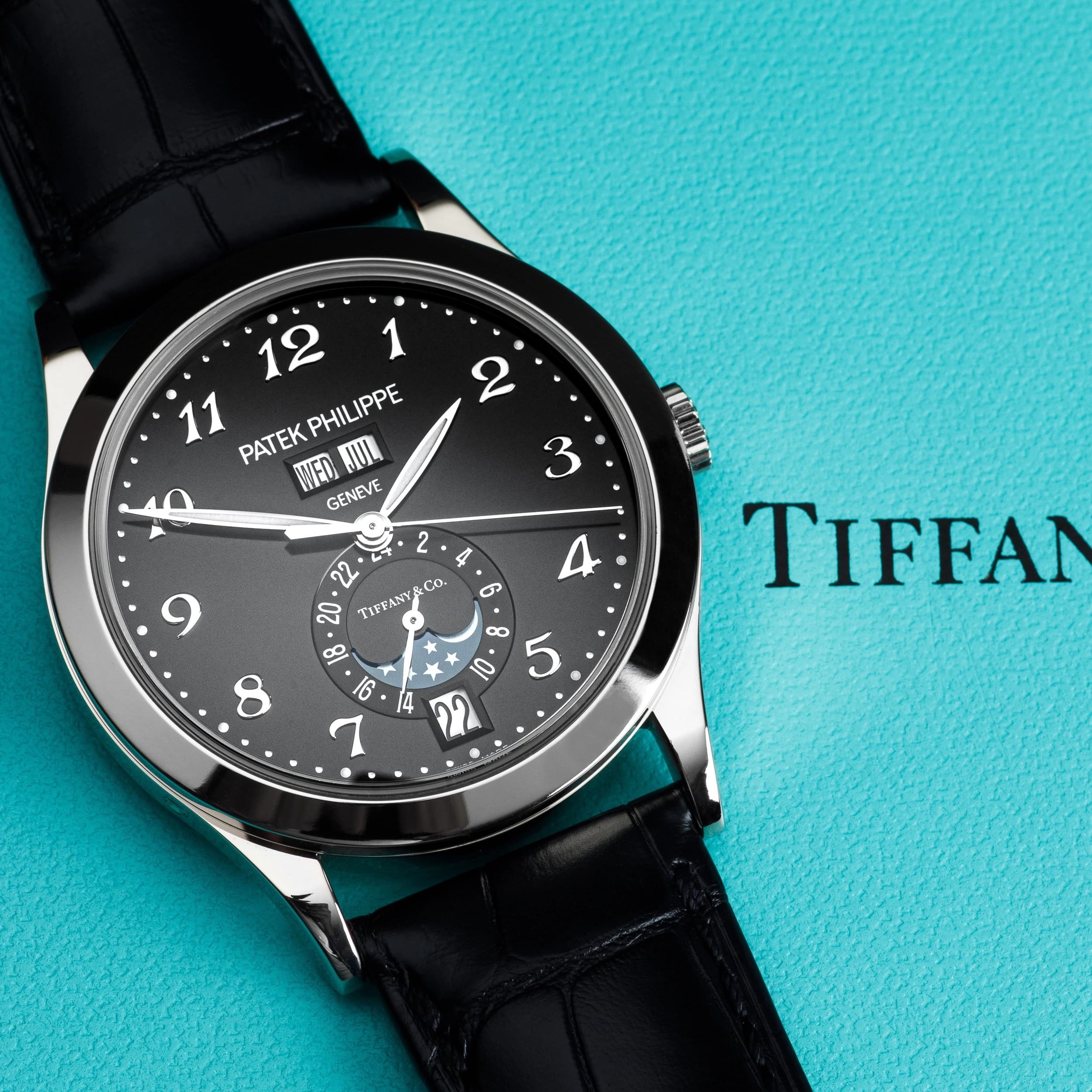
Patek Philippe 5396G-012 Tiffany
The 5205 (2018-present) is the current generation. At 40mm, it is the largest of the core annual calendar round cases, housing the newer 26-330 S QA LU caliber and offering dial options that go well beyond what the earlier references offered. The 5205 is now the most actively traded of the modern references on the secondary market.
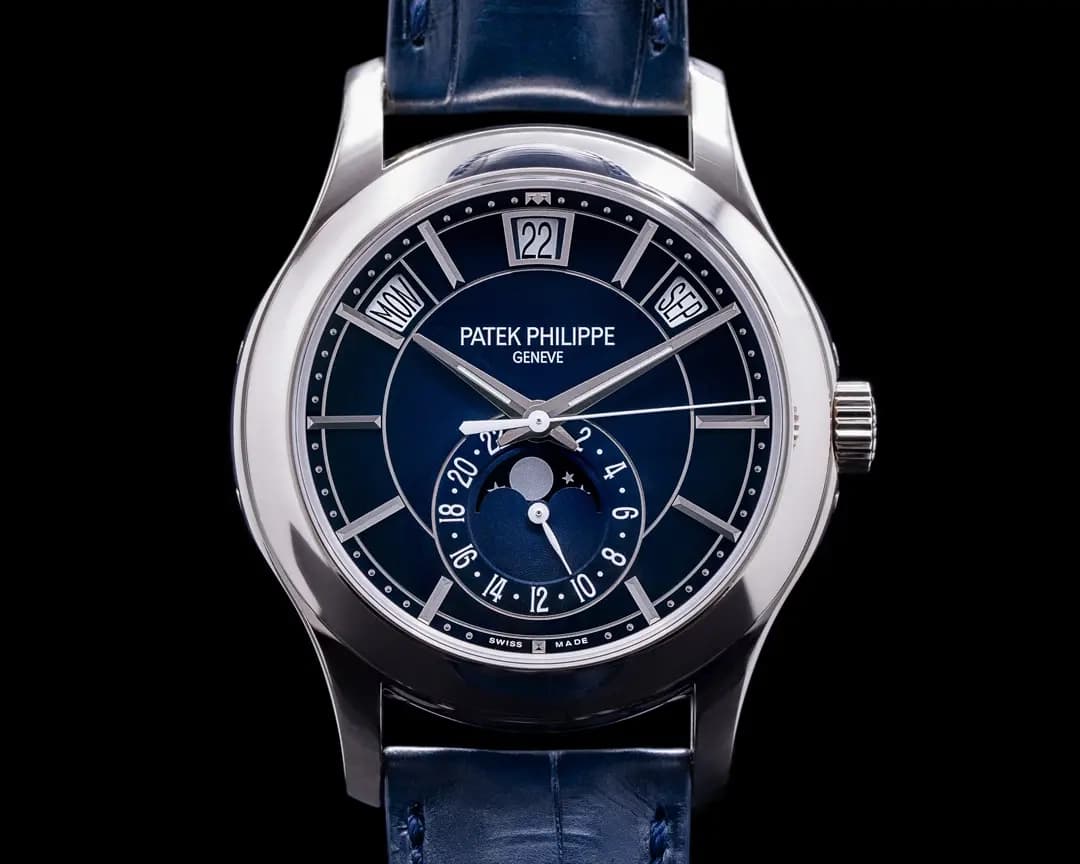
Patek Philippe 5205G
The Reference-by-Reference Breakdown
Patek Philippe 5035 and 5056
The 5035 wears small by modern conventions: 37mm across, with proportionally slim lugs and a case that disappears under a shirt cuff. In yellow gold it reads warm and traditionally formal; in white gold it is cooler but no larger. The dial's two major subdials sit in a cross at roughly 2:30 and 9:30 o'clock, with the calendar apertures, day, month, and date, arrayed across the lower register in large, readable registers and a window for the date at 6. This piece preserves truly excellent visibility with large registers. The aesthetic issue is that the dial reads crowded with its Roman numerals outbound, with an experimental quality that later references resolved.
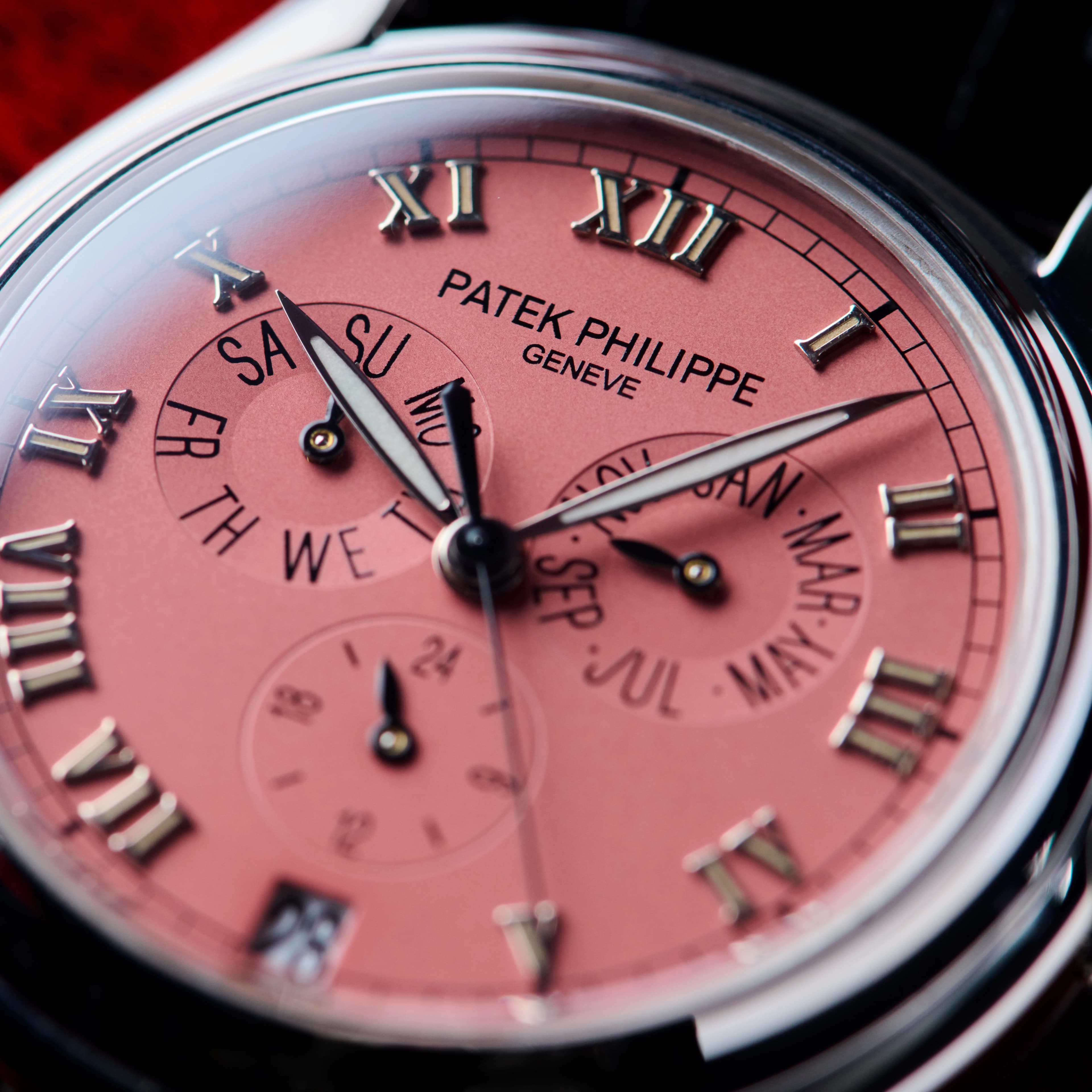
Patek Philippe 5035 Salmon Dial
Caliber 315 S QA runs at 21,600 vph with a 48-hour reserve. It is a proven, well-understood movement that Patek has serviced for decades. On the secondary market, the 5035 trades below later references at $22,000-$26,000, its dial architecture and smaller case work against it with buyers who came to Patek more recently. For a historically minded collector who understands they are buying the original, it is undervalued. Secondary market pricing should be verified before purchase; static figures go stale quickly. Alongside the 5035, the 5056 in platinum was produced from 1998 to 2006. This reference is largely similar too the 5035 but executed in platinum with its own reference number.
Patek Philippe 5146
The 5146 at 39mm is the sweet spot of the early annual calendar lineup. The case is round and traditionally proportioned, with lugs that curve cleanly to the wrist. In yellow, white, or rose gold, the case finishes are exactly what you expect from Patek's dress watch production: alternating polish and brushing on a profile that does not try to be anything other than a round dress case. The baton indices give the dial a slightly more contemporary read without breaking from the classical vocabulary.
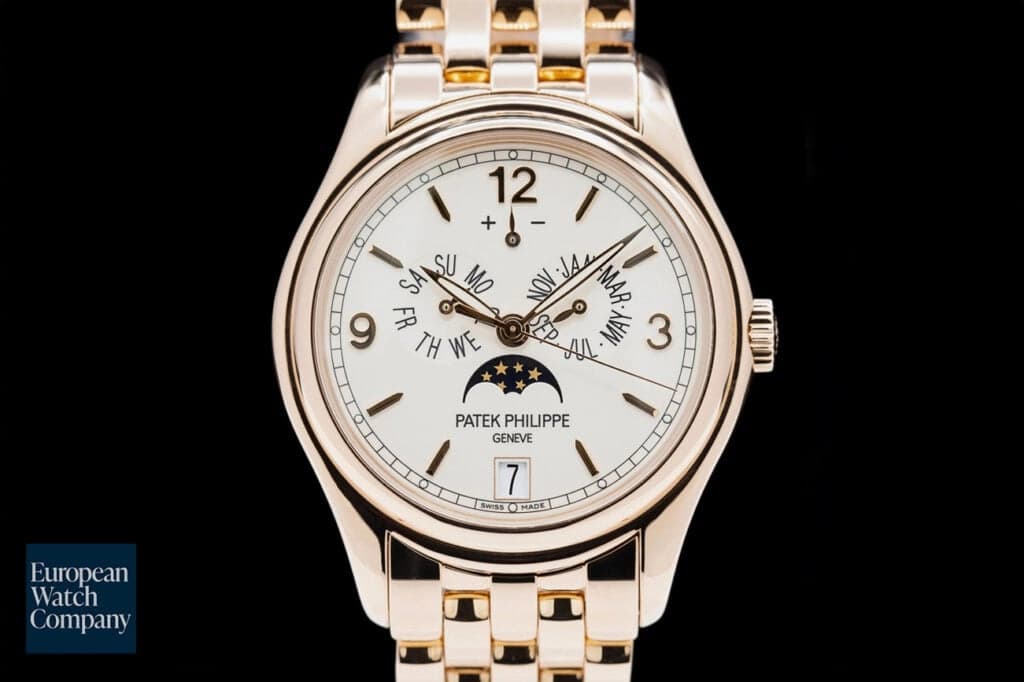
Patek Philippe 5146R
The dial layout is cleaner than the 5035's. The calendar apertures still occupy the lower half, but the subdial arrangement is more resolved. The moonphase adds an aperture at 6 o'clock that completes the lower hemisphere of the dial compositionally rather than cluttering it. The 5146 with moonphase is one of the better-looking annual calendar dials Patek has made. It has become the entry point for collectors new to Patek complications: available in good condition on the secondary market, well-supported by Patek's service network, and legible enough to wear as a daily driver. Standard examples on a leather strap trade for low $30,000s depending on configuration. At this price, this is a tremendous value.
Patek Philippe 5396
The 5396 at 38.5mm sits just below the 5146 in diameter and carries a different design language. On the wrist it wears more like a classic Calatrava than the 5146 does, with a Calatrava style solid midcase and flowing case profile. The dial is more traditional: the calendar apertures are arranged with day and month at 12, moonphase, date and 24 hr time at 6 o'clock.
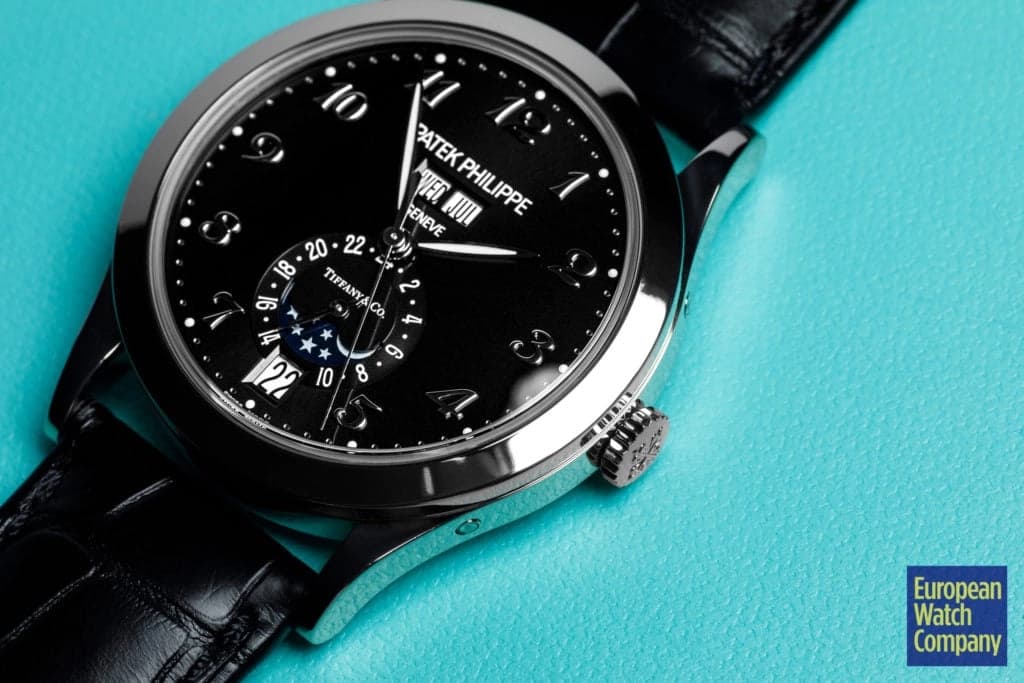
Patek Philippe Ref. 5396G-012 Tiffany & Co
Caliber 26-330 S QA LU 24H adds a 24-hour display to the standard annual calendar output, a small practical addition for travelers and a detail that distinguishes the 5396's dial from the 5146's without changing its fundamental character. The layout of this piece harkens back to early Patek designs. Current retail pricing for the 5396G and 5396R sit between $40,000 and $50,000 depending on the specific configuration. On the secondary market, the 5396 trades at a premium to the 5146, reflecting its newer movement, more resolved design, and ongoing production status.
Patek Philippe 5205
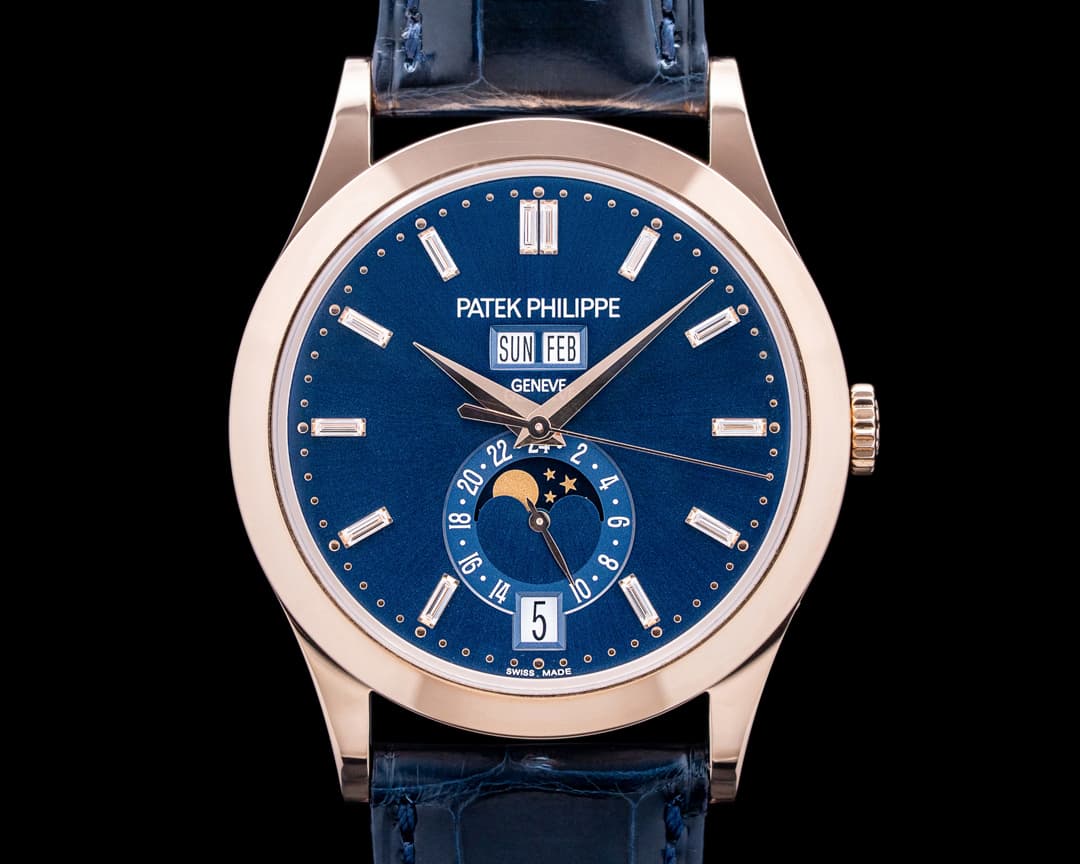
At 40mm, the 5205 is the largest of the core dress annual calendar references, and it reads that way on smaller wrists. On a 6.5 inch or larger wrist it sits well; under that, the case may feel oversized. The movement, caliber 26-330 S QA LU, is the current generation, with finishing standards that reflect where Patek is today. The dial options include some of the more interesting choices in the annual calendar lineup: the ref. 5205G-013 features a blue dial with applied indices that reads as a modern dress watch rather than a strictly traditional one. Ref. 5205R-011 features a beautiful green fume dial. The 5205 is one of the references that Patek has used to push the limits with more adventurous colors than they typically outfit their pieces with. The concave bezel profile reads contemporary, and the vaulted apertures at the top of the dial are reminiscent of some of Patek's other calendar pieces available in other collections.
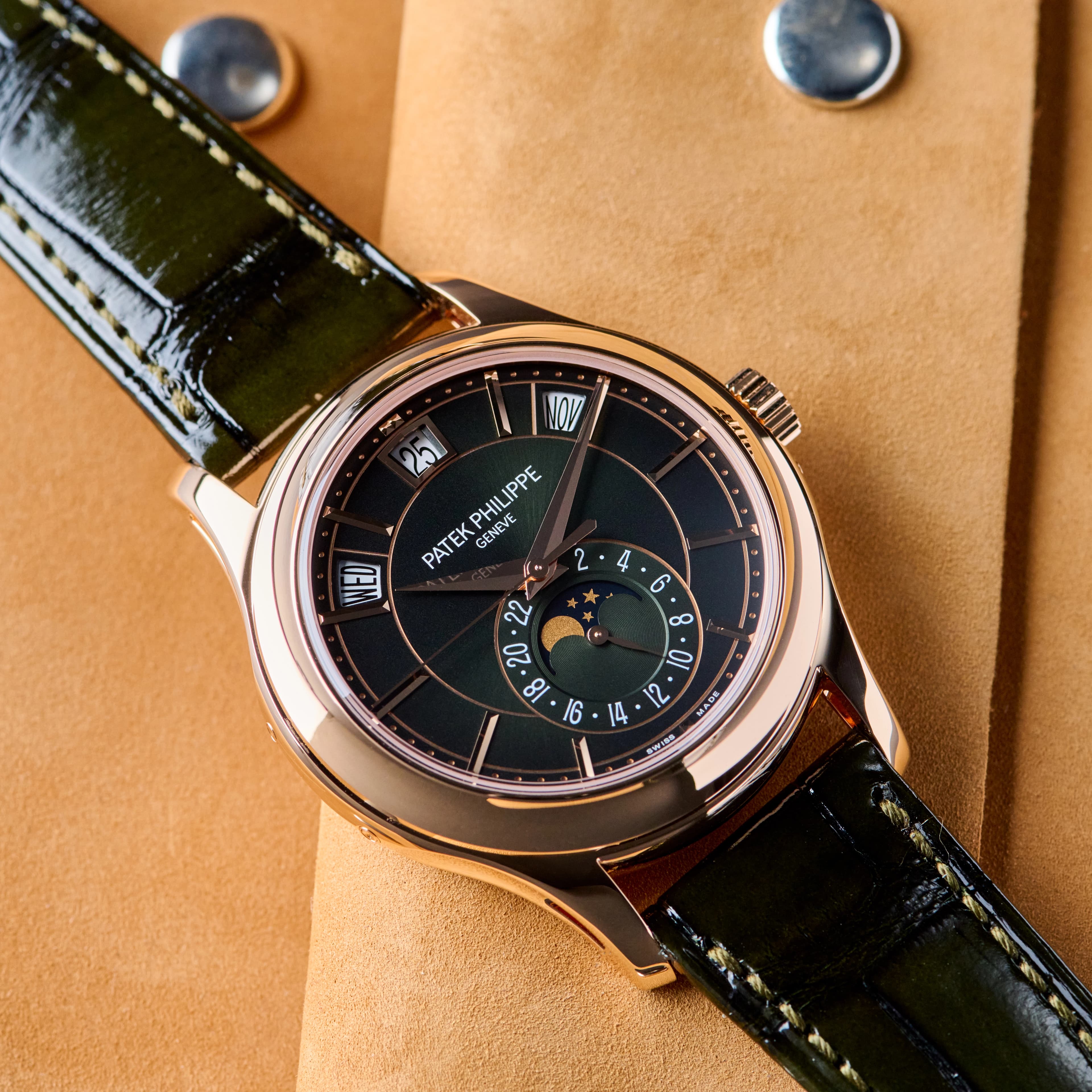
Patek Philippe 5205R
Secondary market pricing for the 5205 has ranged approximately $45,000 to $60,000 depending on condition and dial/ case pairing. The 5205 is the most actively traded reference in the current annual calendar lineup and offers the most contemporary wearability of the group. For those looking for a modern Patek complication, or to begin looking into complications in general, this is one of the greatest everyday references for any collector.
The Decision Framework: Which Reference Fits Which Collector
The dressed daily wear buyer
If you want to wear the watch most days, including to work, have the watch comfortable in a cuff, and want to avoid anything that demands constant, the 5396 is the right answer. It is thin enough for formal contexts, the 24-hour display adds utility without complicating the dial, and the movement is easy to service. The 5146 is the backup choice: available at lower prices in excellent condition and a proven daily driver across two decades of production.
The collector building a complication-focused collection
This collector probably owns a dress watch already, a Calatrava, a Lange 1, something in that register, and is looking at adding a complicated piece. The real question is whether the annual calendar or the perpetual calendar is the right move. If cost and serviceability are genuine factors, the annual calendar is the honest answer; the perpetual is meaningfully more expensive to acquire and to service. Within the annual calendar family, the 5205 in a grey or blue dial variant represents current-generation Patek at its most modern and will sit comfortably alongside later-generation perpetuals if your collection grows in that direction. For a historically minded collector, the 5035 in original condition, particularly in white gold or yellow is undervalued relative to its position as the complication's inaugural reference.
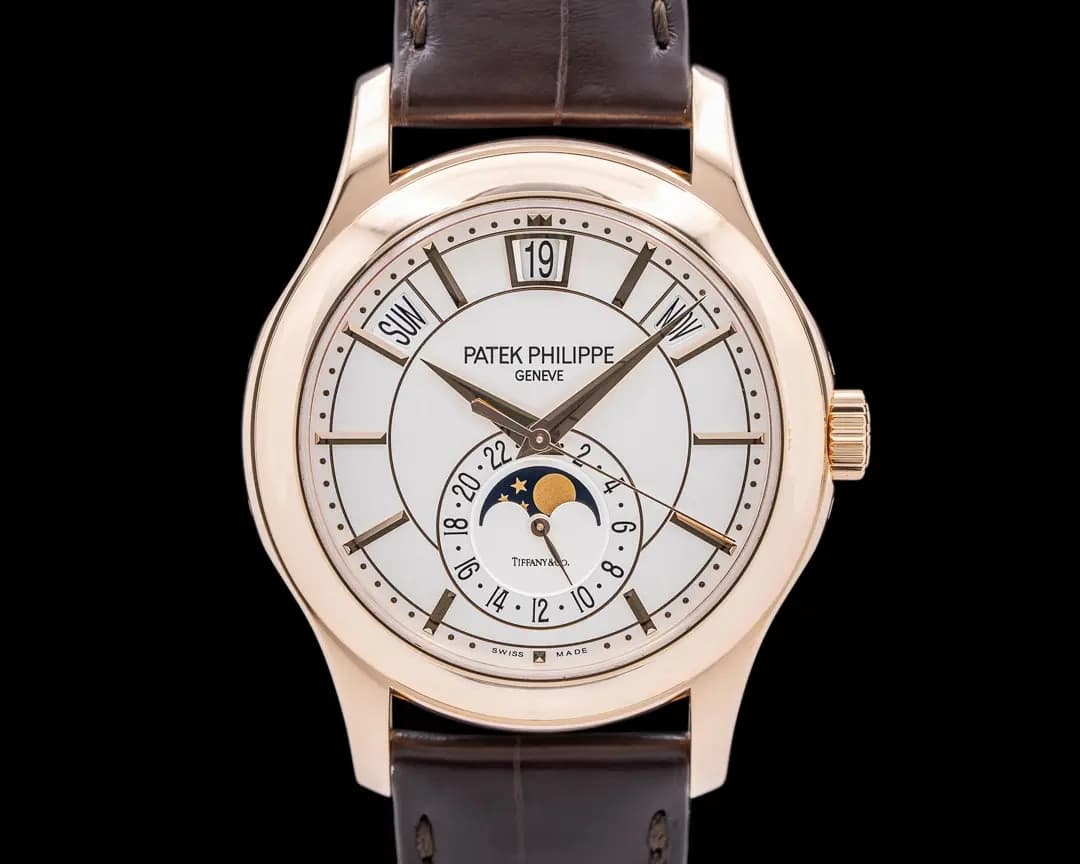
Patek 5205R Tiffany
The value-focused secondary market buyer
If you appreciate that the annual calendar trades at a significant discount to the perpetual, and you are looking for the strongest combination of condition, wearability, and market depth, the 5146 is one of the best options: deep secondary market availability, a known and serviceable movement, and a dial that looks great to this day. The 5035 offers more history at a lower price but carries dial legibility trade-offs that will limit its appeal when you eventually sell. The 5396 trades at a premium but tends to hold value more consistently owing to ongoing production and broader name recognition.
None of this means the choice is simple. The secondary market moves, condition matters enormously, and the right reference for your wrist is not the same as the right reference for someone else's. Across the board, the annual calendar bridges a lot of different tastes, and therefore, the differences between references aren't all that substantial.
What to Watch for When Buying Pre-Owned
Dial condition is the first and most consequential inspection point. Patek's annual calendar dials, particularly on the 5035 and 5146, use printed text for the calendar aperture labels, day abbreviations, month names, that can show wear over time. Look for flaking or fading at the aperture edges; this is difficult to restore without refinishing, which affects value. Applied indices and hands are more durable but should be checked for lifting or discoloration.
Crown and pusher wear matter more on calendar complications than on simple three-handers, because calendar corrections require pushing the corrector pushers repeatedly. The 5035 and 5146 use recessed correctors in the case flank; inspect these with a loupe for wear to the surrounding case metal. The crown itself should engage cleanly in all positions.
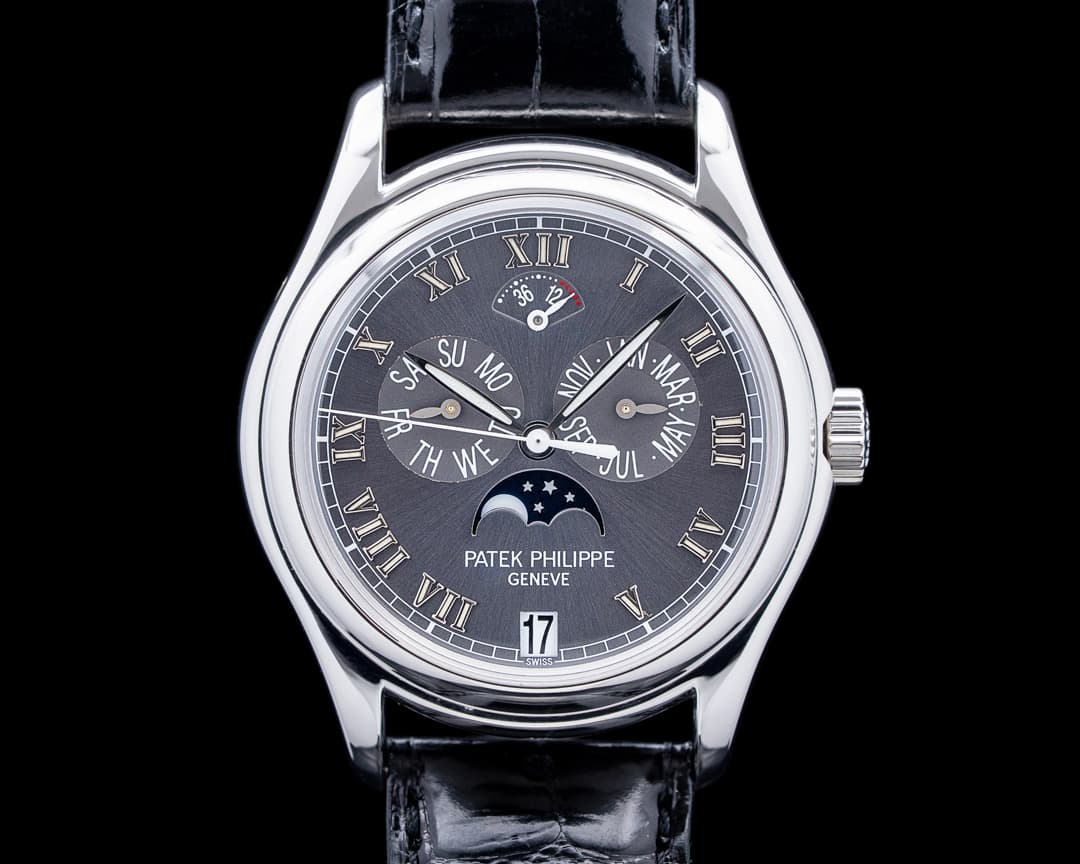
Movement condition is best assessed by a watchmaker rather than visually. If you are buying through a reputable dealer, this step is handled for you. If you are buying at auction or from a private seller, a pre-purchase inspection by an independent watchmaker experienced with Patek complications is worth the cost.
Reference-specific considerations: The 5035 is now old enough that movement service is likely due if it has not been done in the past five to seven years. The 5396 and 5205 are newer and generally better documented in the secondary market. The 5146 sits in between, inspect carefully for evidence of a recent service rather than assuming one.
Conclusion
The annual calendar's commercial success is not an accident. Patek built a complication that serious collectors can actually live with: demanding enough to be interesting, practical enough to wear, and priced at a level that a meaningful number of buyers can reach without taking on the perpetual calendar's cost. Nearly thirty years after the 5035 introduced the mechanism, the lineup offers options across case sizes, dial architectures, and price points. The 5396 and 5205 are the current generation of that idea in its simplest form, though there are sports annual calendars and compound annual calendar complications that are a topic of a separate article altogether.
Regardless of your ideal reference, you can be sure that an annual calendar from Patek Philippe is one of the most practical calendar complications available on the market--- a combination of utility-first thinking and a representation of Patek's history with the finest in complicated watchmaking.
Shop New Arrivals
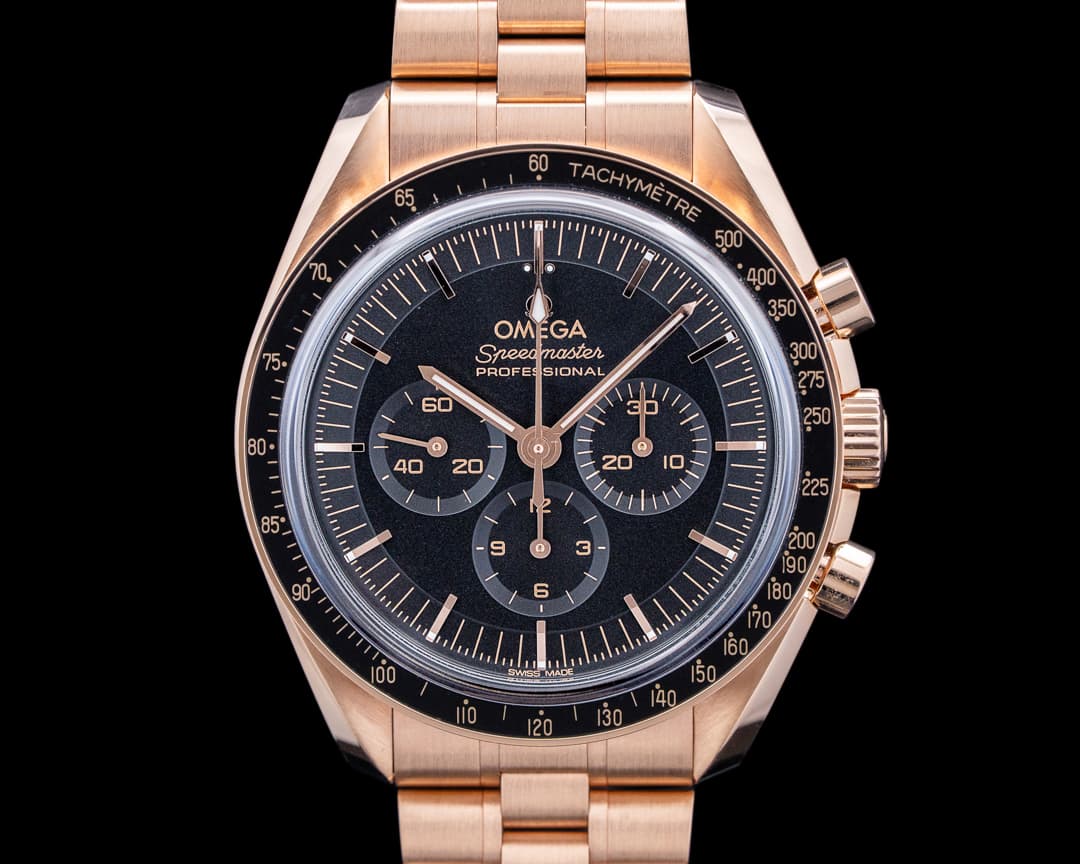
Speedmaster Moonwatch 18K Sedna Gold Black Dial
$29,900
View Watch
26170ST Royal Oak Offshore Chronograph SS Silver Dial
$22,900
View Watch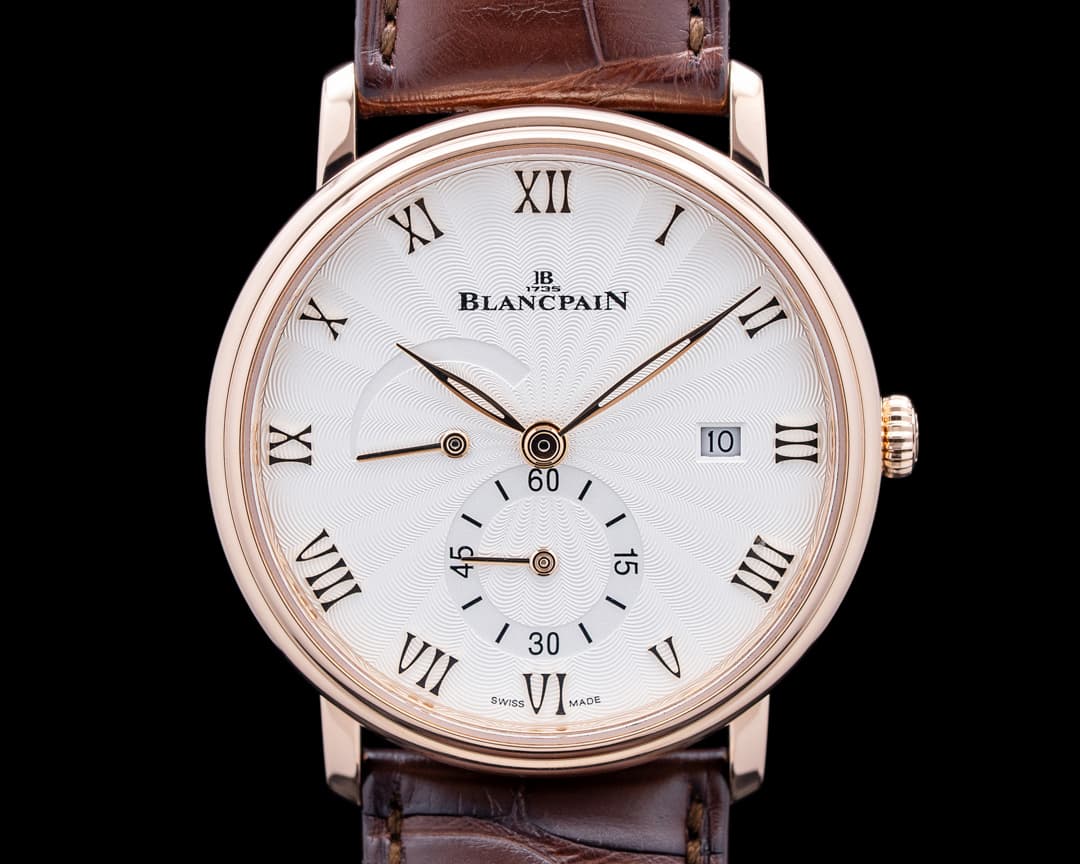
6606A Villeret Ultraplate 18K Rose Gold Opaline Dial
$20,900
View Watch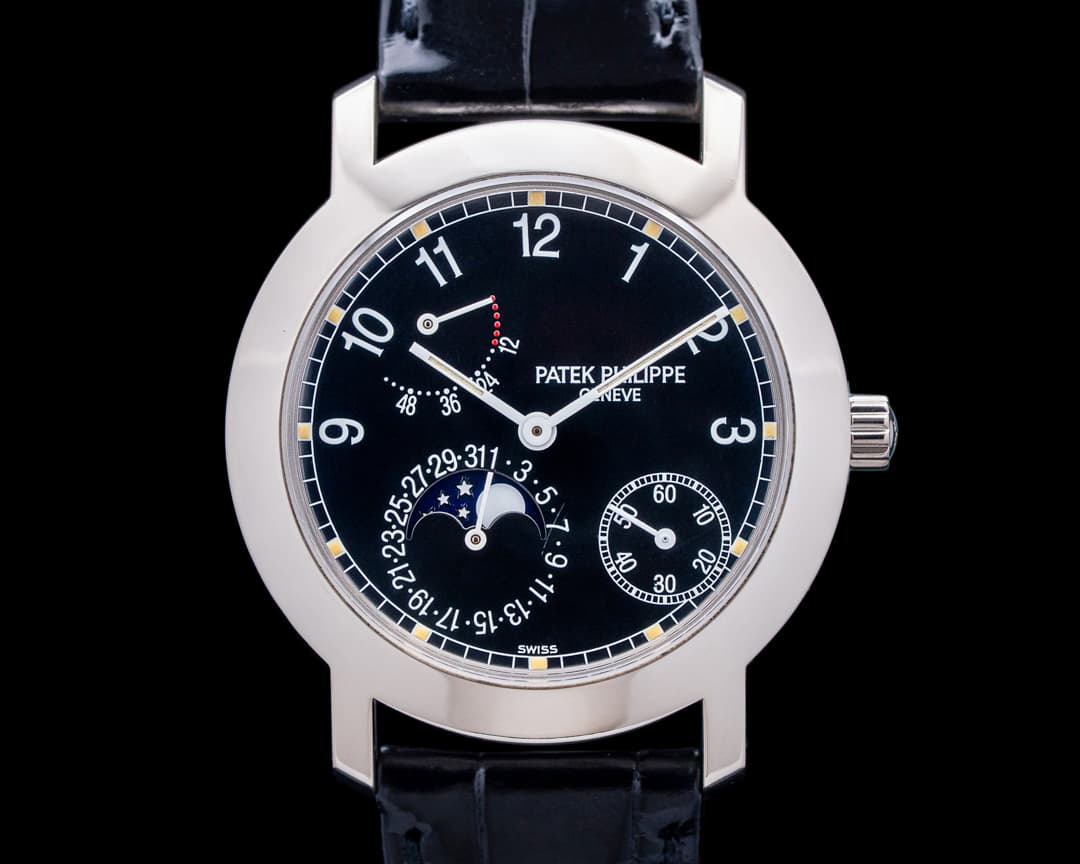
5055G Complications 18K White Gold Black Dial
$29,500
View Watch
Shop New Arrivals
Speedmaster Moonwatch 18K Sedna Gold Black Dial
$29,900
View Watch26170ST Royal Oak Offshore Chronograph SS Silver Dial
$22,900
View Watch6606A Villeret Ultraplate 18K Rose Gold Opaline Dial
$20,900
View Watch5055G Complications 18K White Gold Black Dial
$29,500
View Watch
More Content