Why White Dial Watches Are Trending With Collectors Again
Published on 7/18/2026
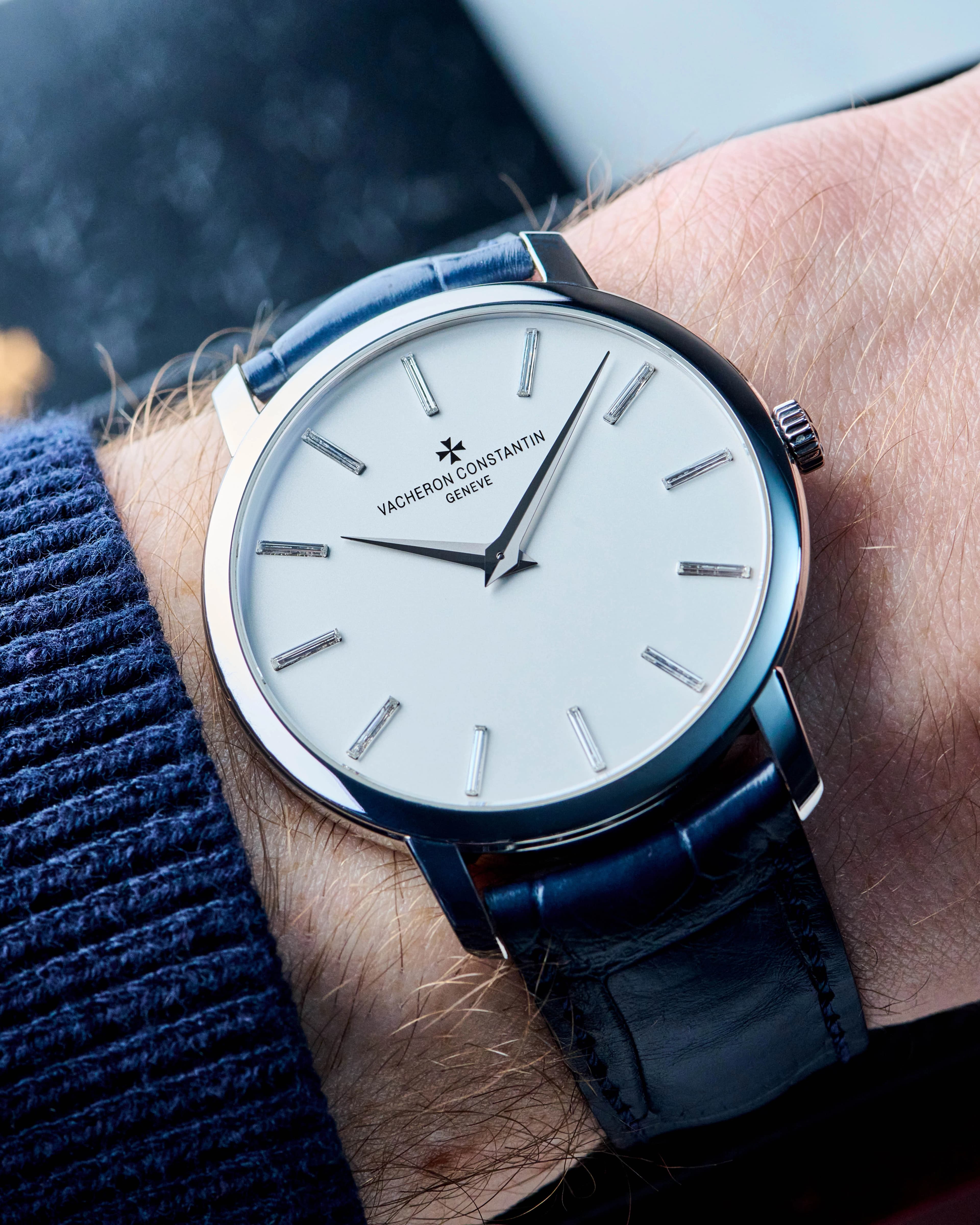
White dials have often seemed to be the default. They weren’t disliked necessarily, just underestimated. Black dials came across as serious, blue as stylish, green as the discerning collector's pick. White sat in the background, the color chosen when nothing more assertive was needed.
That’s changing. After a long run of deep blue lacquer, sunburst green, smoked gradients, and every shade between beige and champagne, a clean white dial now reads as distinctive rather than the default. Not because it's new, but because it delivers something the market has been circling back on for a while now: clarity. It needs to be just right, and that turns out to be harder than it looks.
White Dial Materials and Textures: More Than Just a Color
A white dial has almost no margin for error. A dark dial can lean on depth, gloss, and shadow to disguise weak proportions, and a colored dial gets a little extra credit just for the color itself. White offers no such shortcut. Printing has to be crisp, spacing exact, and any texture has to justify its presence. Even a date window appears more conspicuous than it would against nearly any other dial color.
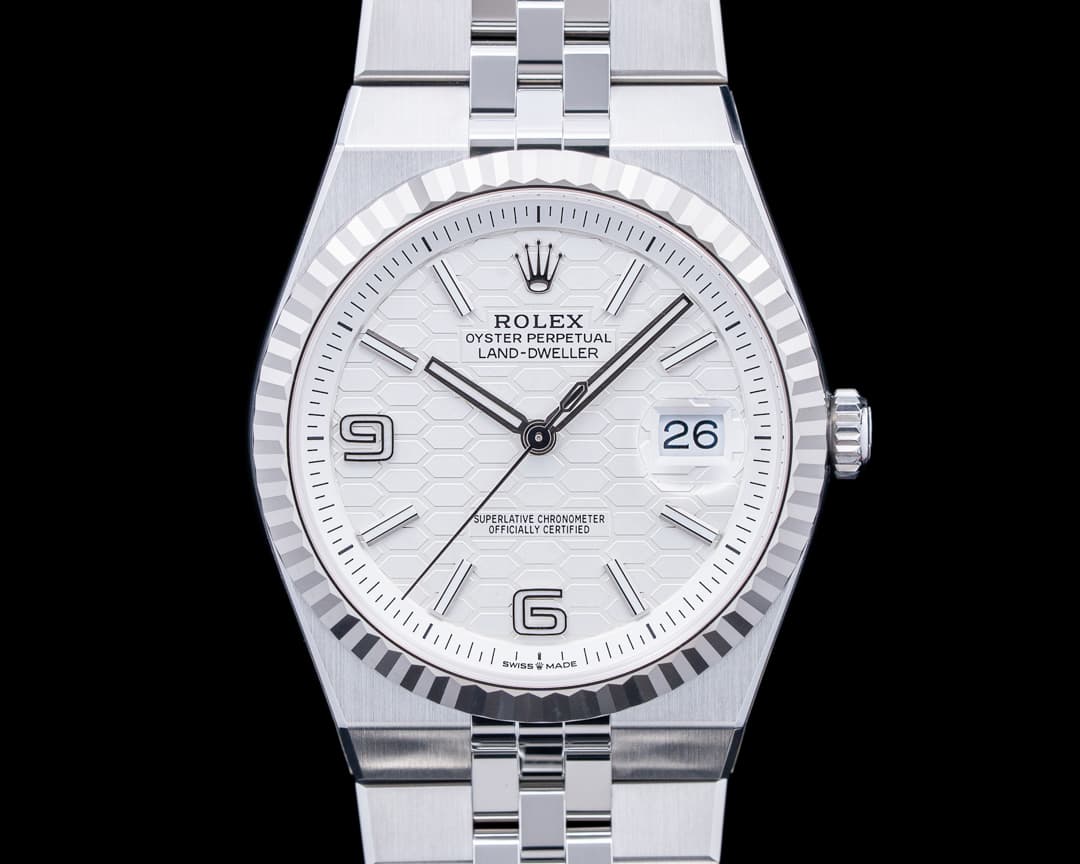
That's why the strongest white dials are rarely flat white. They tend to be enamel, opaline, silvered, or eggshell, shifting with their surroundings. They’re bright in outdoor light, softer indoors, and warmer against a precious metal case. That range is what lets white work across watches as different as a time-only dress piece and a full complication, sharpening one and organizing the other.
White Dials Through History: Cartier, A. Lange & Söhne, and Rolex
It’s simple to make a clear case for white as a dial color. "There's a clean, crisp aesthetic to white dials," said Taylor Wos, Watch Specialist at European Watch Company. "Especially in summertime, they can be very attractive. In a black-tie setting, black and white together can look incredibly elegant." She pointed to one combination as the format at its best: "Platinum, a white dial, Breguet numerals, clean lines, Art Deco beveling. Those are the details that make a white dial really interesting."
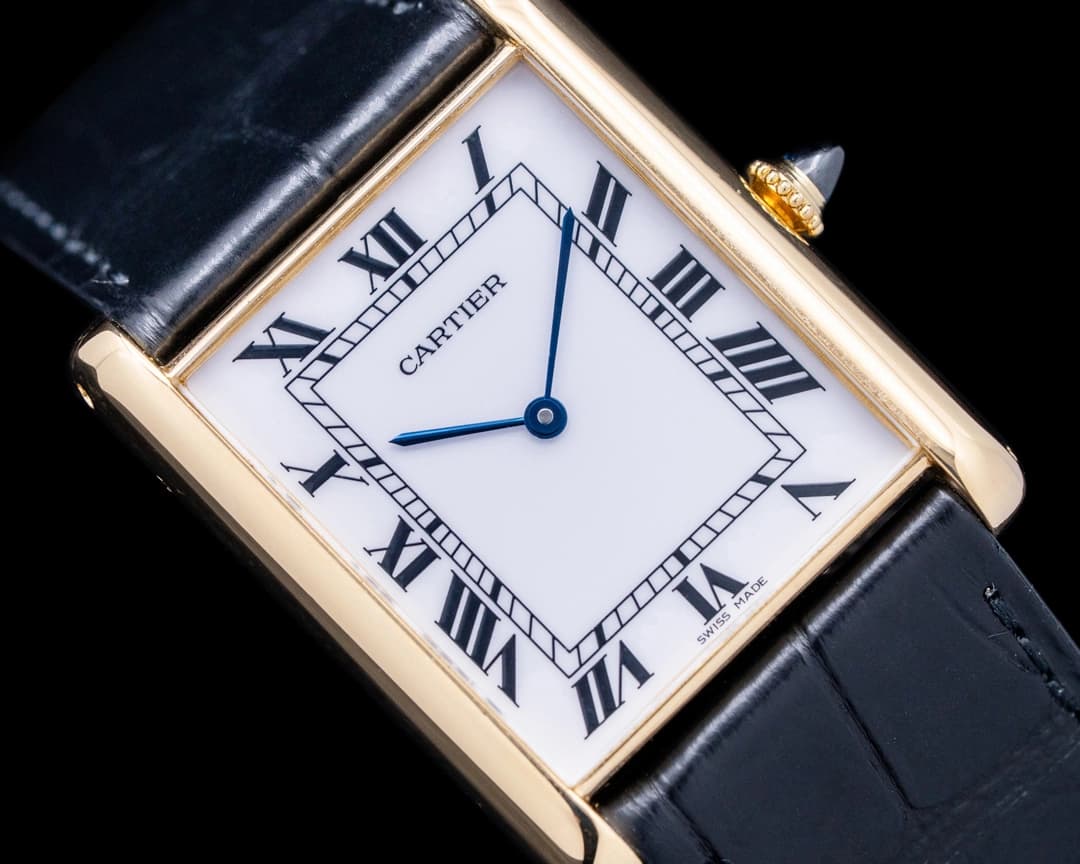
Her historical favorites span several eras. "Some of my favorite white dials throughout horological history are from Cartier," Wos said. "The Tank is probably the clearest example." The Cartier Tank Louis Cartier Jumbo, in 18k yellow gold, carries exactly that white lacquer dial, its blued steel hands and Roman numerals set off by the gold rather than competing with it.
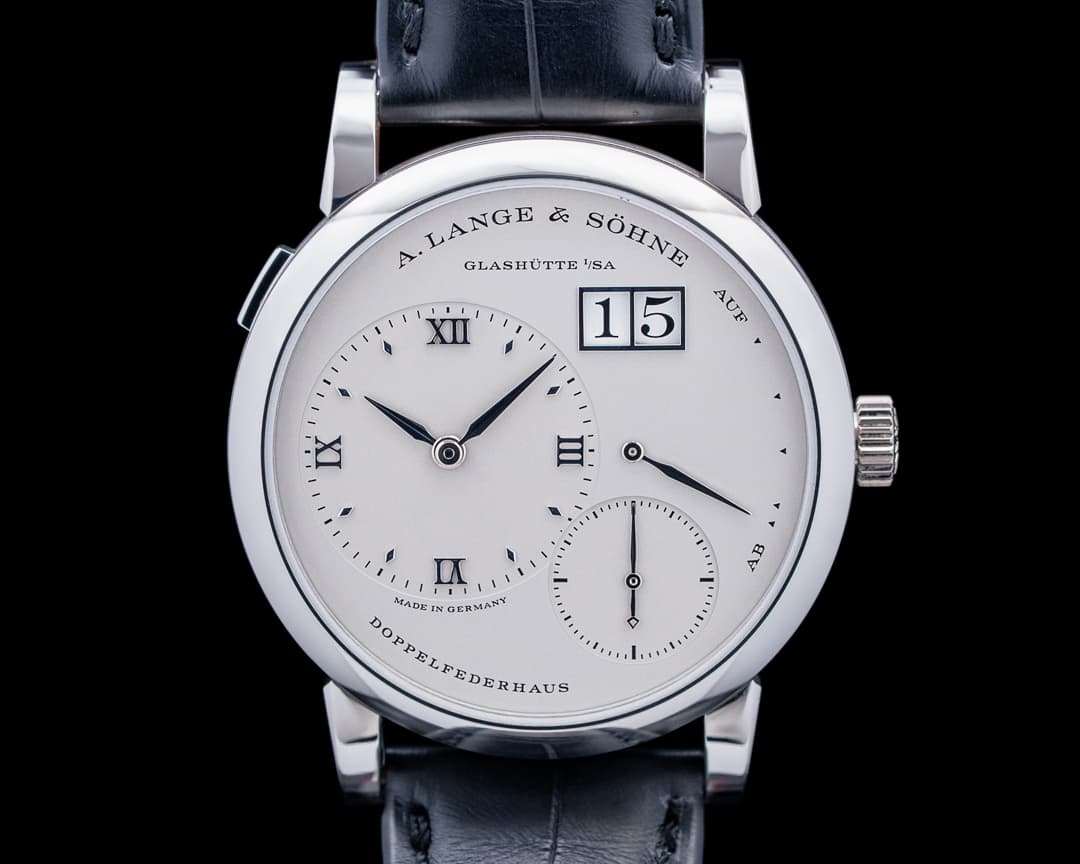
Wos also cited A. Lange & Söhne as an example of stellar execution in white dials. In platinum with a silvery-white dial and applied Roman numerals, the Lange 1 turns white into a structural device, organizing its big date, power reserve indicator, and small seconds subdial around its off-center layout without feeling cluttered.
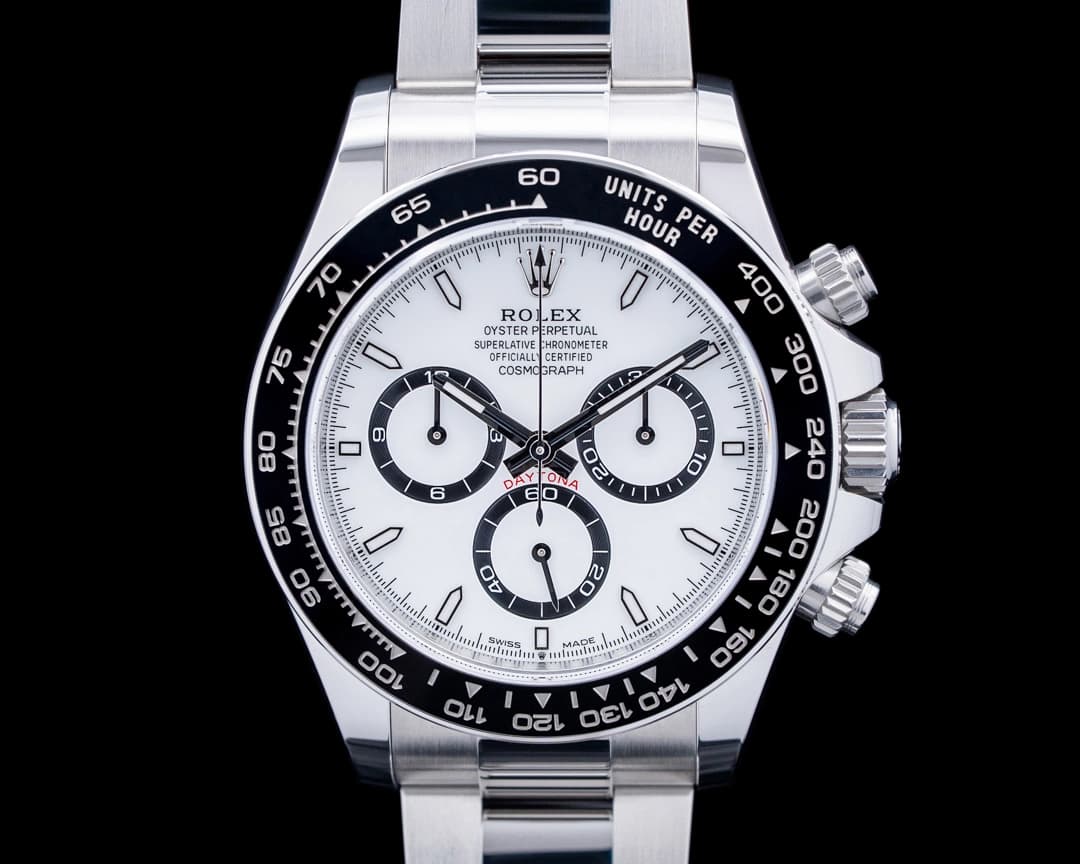
Rolex rounded out her list. The steel-and-white Daytona is the watch most responsible for the "Panda" nickname now used for any white dial with black subdials, and the 126500LN, in steel with the in-house caliber 4131, carries the same contrast that made the layout a modern classic.
Why Dial Color Alone Doesn't Make a Watch Reference New
None of this argues against colored dials. However, color has become the easiest lever to pull when a familiar case, layout, and movement need to feel new again, and a fresh shade is treated as a release event in its own right. That kind of minor change has a shelf life. Eventually, collectors look past the initial hit and ask whether the watch itself holds up. White has less to hide behind, so it's judged on proportion, typography, and finishing. The appeal isn't in the first five seconds of seeing a new watch; it's whether the watch still holds up a year later.
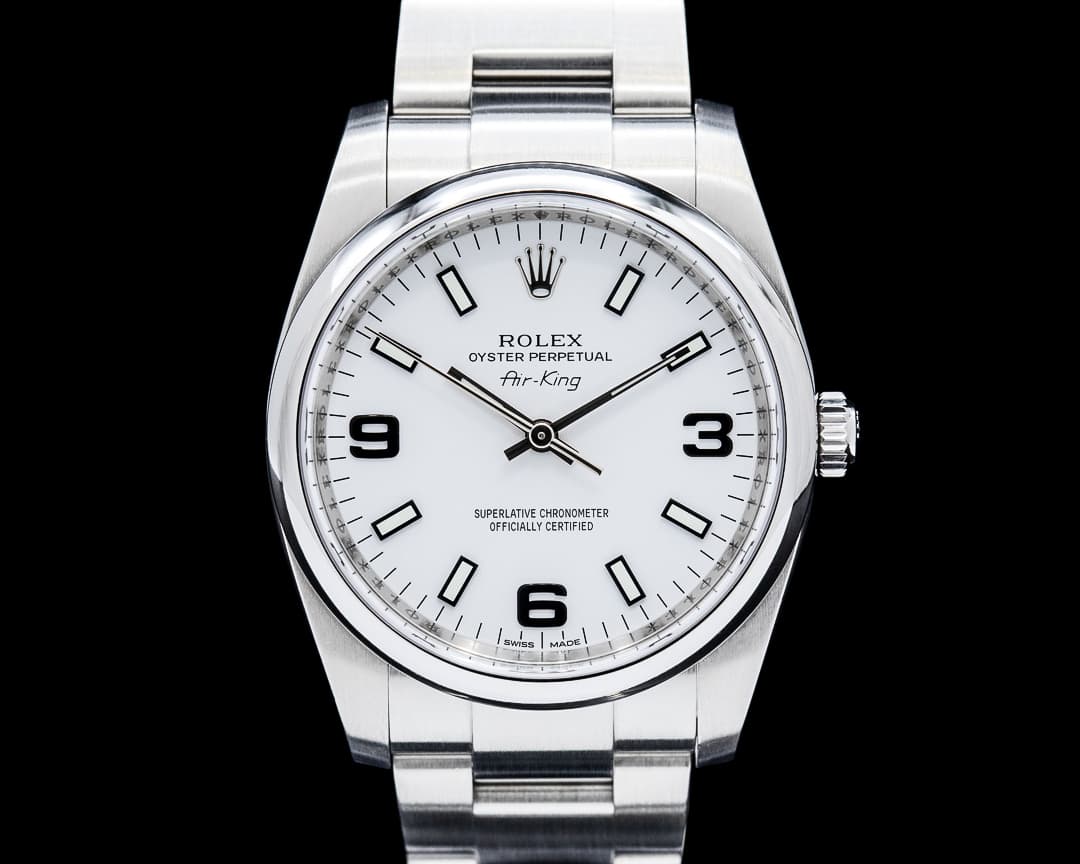
The Rolex Air-King ref. 114200 makes that case in a casual register. It's a 34mm steel Oyster with a no-date layout, an automatic movement, and the brand's 3-6-9 dial, so nicknamed because the 3, 6, and 9 are displayed in bold black while the rest of the dial has indices. The white gives it an Explorer-adjacent crispness, while the smaller case keeps it relaxed rather than sporty, useful and unhurried in a way that's harder to execute than it sounds.
Thor Svaboe, a Norwegian watch journalist and contributing editor for GQ and The New York Times, has observed the same pattern in his own collection. "I am, despite my lifeblood now being in writing about watches, a collector at heart, and I've seen this trend come and go," Svaboe said. "It echoes my own collection, where one of the standout pieces I sold and still regret was, fittingly, white of dial: versatility made metal."
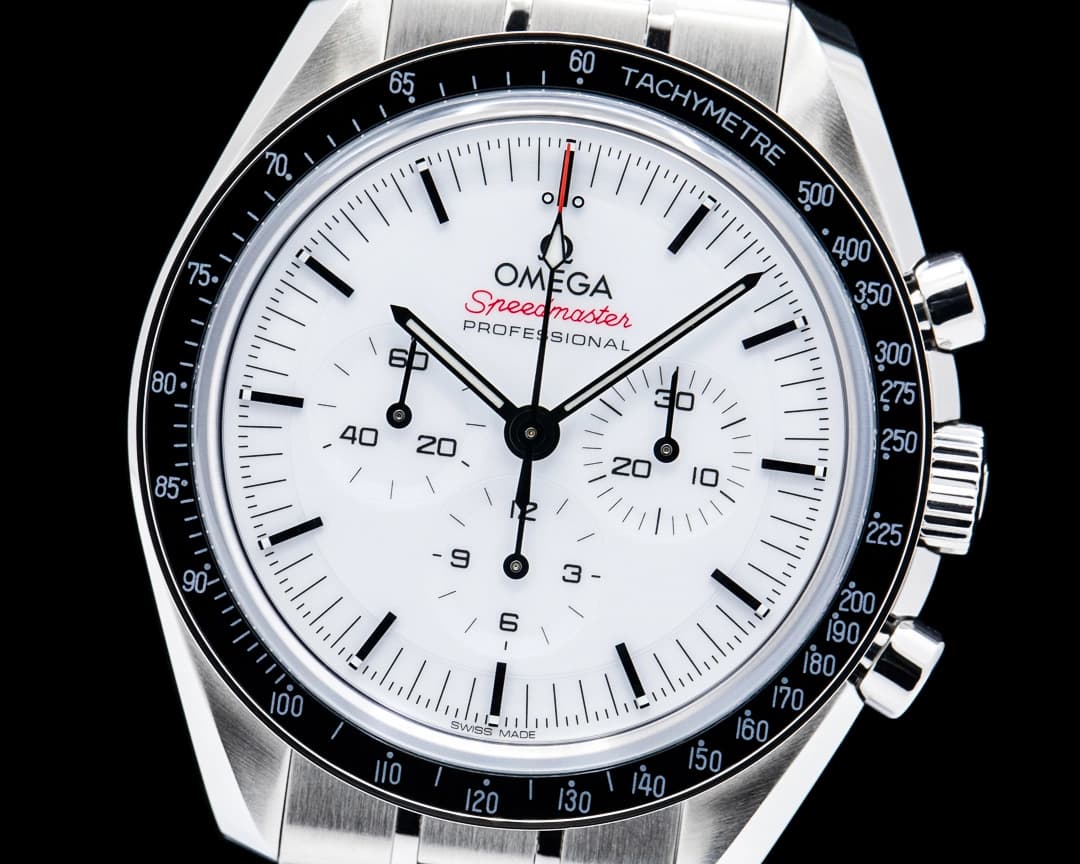
He sees the shift playing out across the market, from the majors down to the microbrands. "We could see it in the rapturous reception of the crisp white Omega Speedmaster, and even in small brands like my fellow Scandinavians behind Straum, masters of colored dials, who are now releasing a crisp white version of their own," Svaboe said. Texture, he added, is where the difficulty lies. "White is a difficult color to get right in combination with texture, and the wave-effect white of Bremont's Supermarine 500m, set against a matte black ceramic bezel, is a great example of how to do it right."
How White Dials Improve Legibility in Complicated Watches
White also earns its keep in complications, where a busy dial can quickly become a crowded one. A clean white or silvered surface acts almost like negative space, giving the eye somewhere to rest.
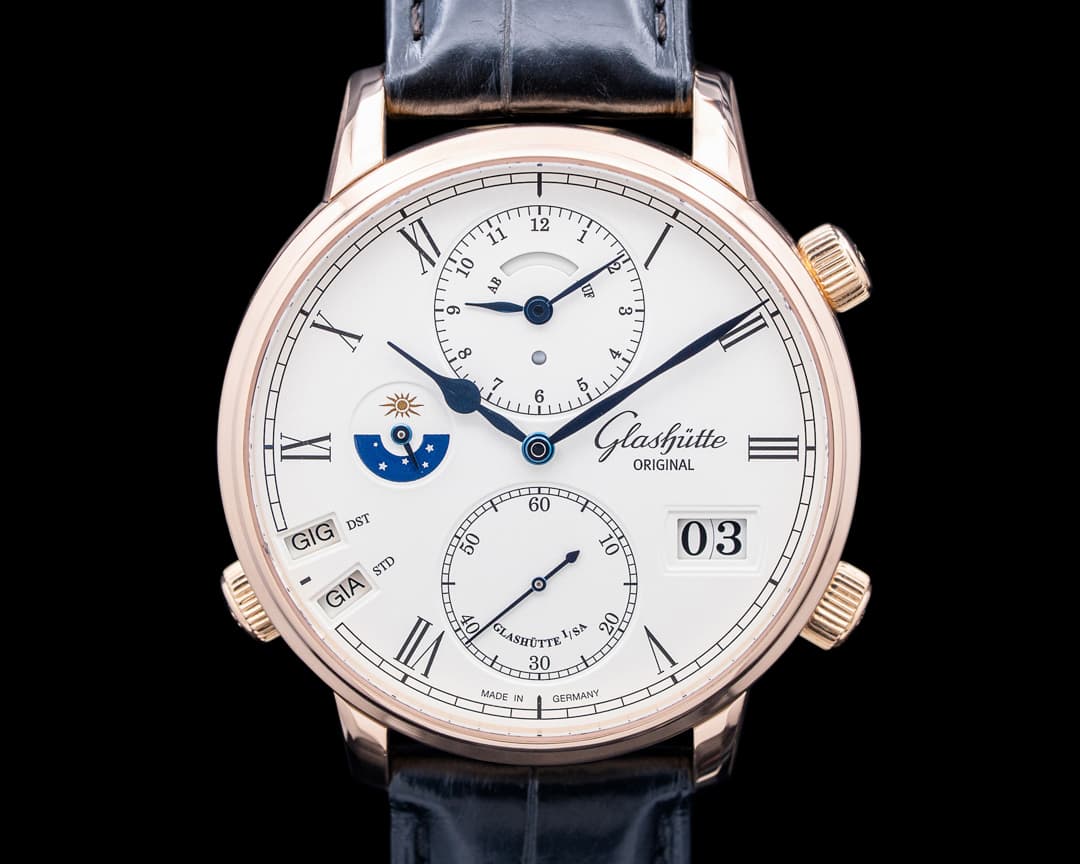
The Glashütte Original Senator Cosmopolite in rose gold shows this concept well. It's a serious travel watch, tracking home time, destination time, a Panorama Date, day and night indication, and a city-based system for time zones. That's a lot for one dial, but the silvery white keeps the layout composed and leaves the case to carry the warmth.
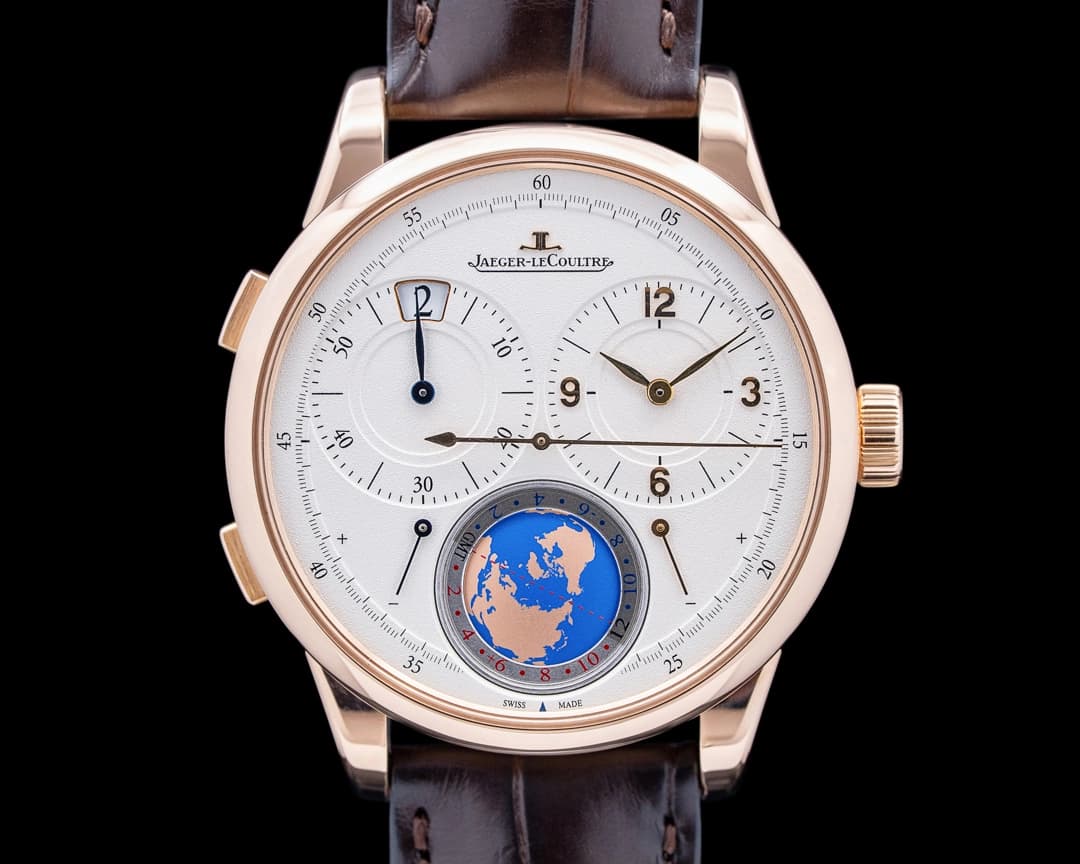
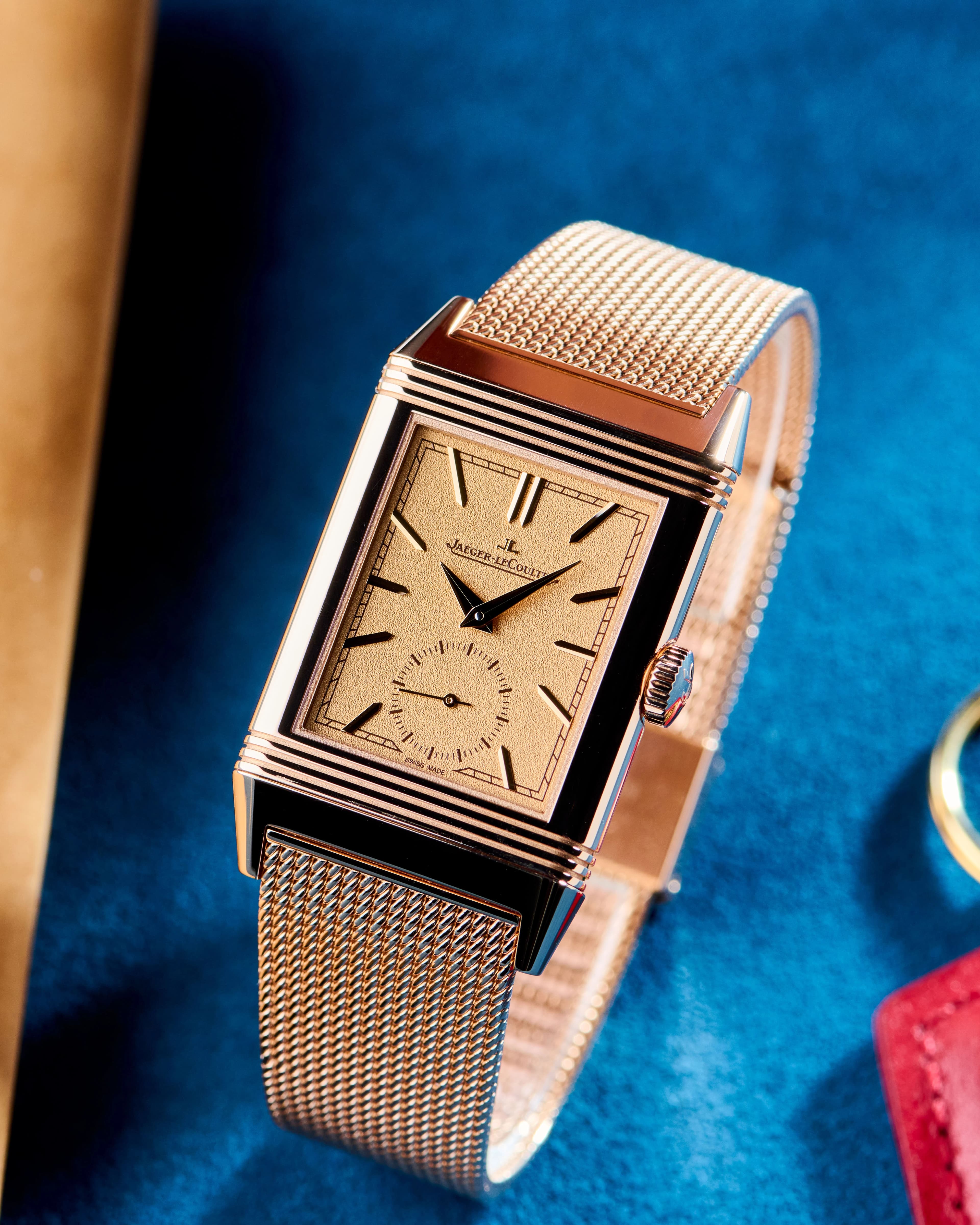
The Jaeger-LeCoultre Duomètre Unique Travel Time works the same way. Its asymmetrical Dual-Wing architecture already stands out, and the second time zone adds another layer. In rose gold with a silver dial, it feels technical without tipping into cold; a darker dial might have been more dramatic, but the lighter one keeps it legible and more wearable. That's why white dials get underestimated. People assume a white dial is simple, when the dial is often doing the hardest job on the watch.
White Dials Paired with Gold: A Warmer Take on a Classic Look
There was a stretch when white-dial gold dress watches were so common that the pairing often felt dated, but that reputation doesn't hold up. White tempers gold, gold warms white, and together they feel formal without becoming stiff.
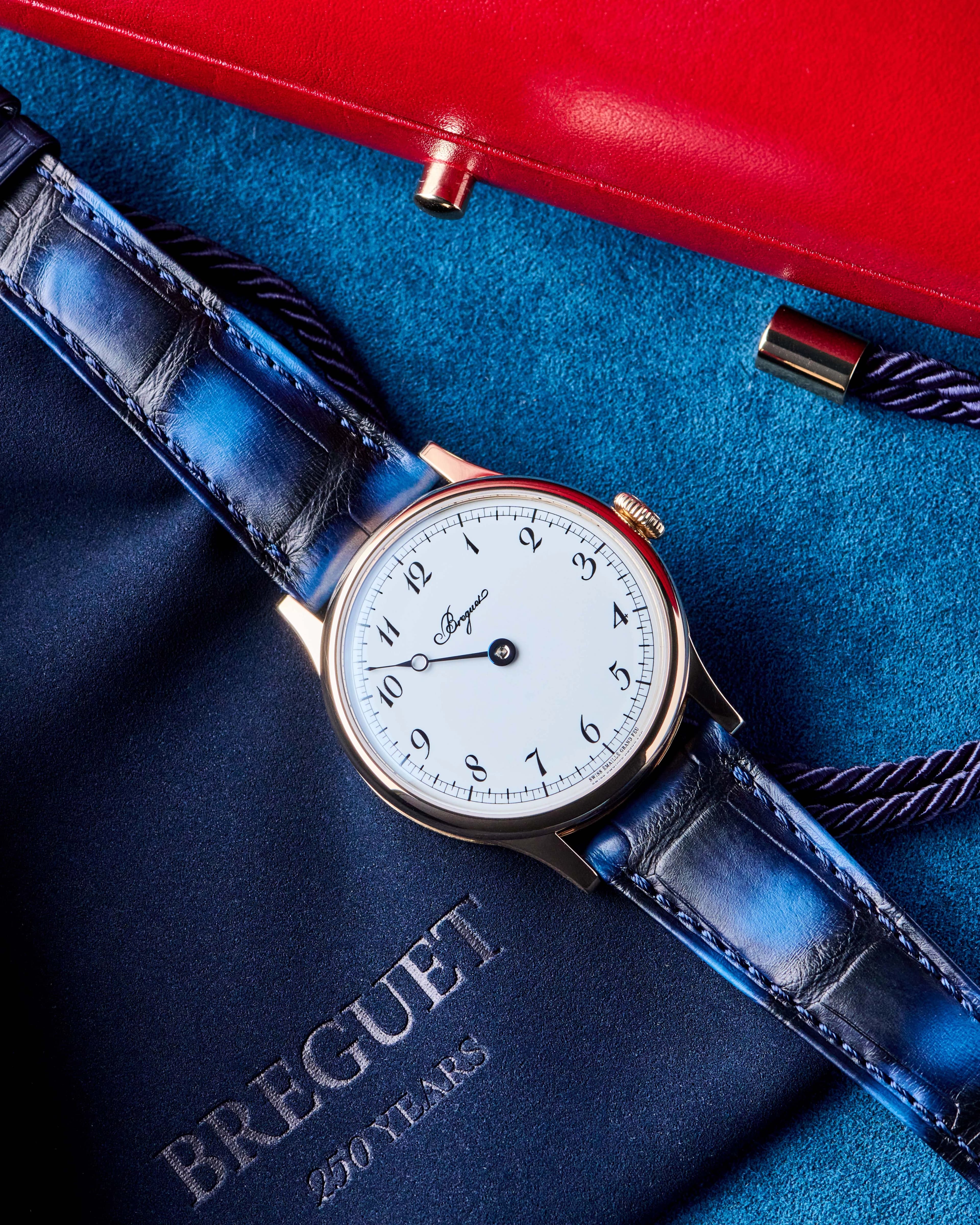
The Breguet Classique Souscription makes the case for the pairing. It's a 40mm watch in Breguet gold with a white Grand Feu enamel dial and a single hand, a configuration that sounds austere until it's on the wrist. It relies on craft, historical reference, and proportion rather than complexity. The enamel adds depth while the rose-toned case keeps it from becoming a museum artifact. A white enamel dial is plain the way a well-made white shirt is plain: the simplicity is deliberate. Every detail has to be correct, because there's nothing else to distract from a mistake.
The Bottom Line: Why White Dial Watches Are Back in Demand
White dials never disappeared, but they're newly relevant now. Smaller watches feel natural again, dressier pieces are getting attention after a long run of integrated sports watches, and collectors who have worked through the color-driven part of the market are looking for something quieter.
White also opens a watch up on the wrist, makes printed details more legible, and pairs with almost anything, which sounds minor until it becomes the deciding factor in what gets worn. Not every white dial earns a second look; some look flat, and some are too stark. But the ones that work share a specific confidence. They don't compete for attention, and they don't need to.
After years of dial color driving the conversation, white puts design, proportion, and execution back at the center of the decision. Done well, it remains one of the more quietly satisfying choices in collecting.
Shop New Arrivals
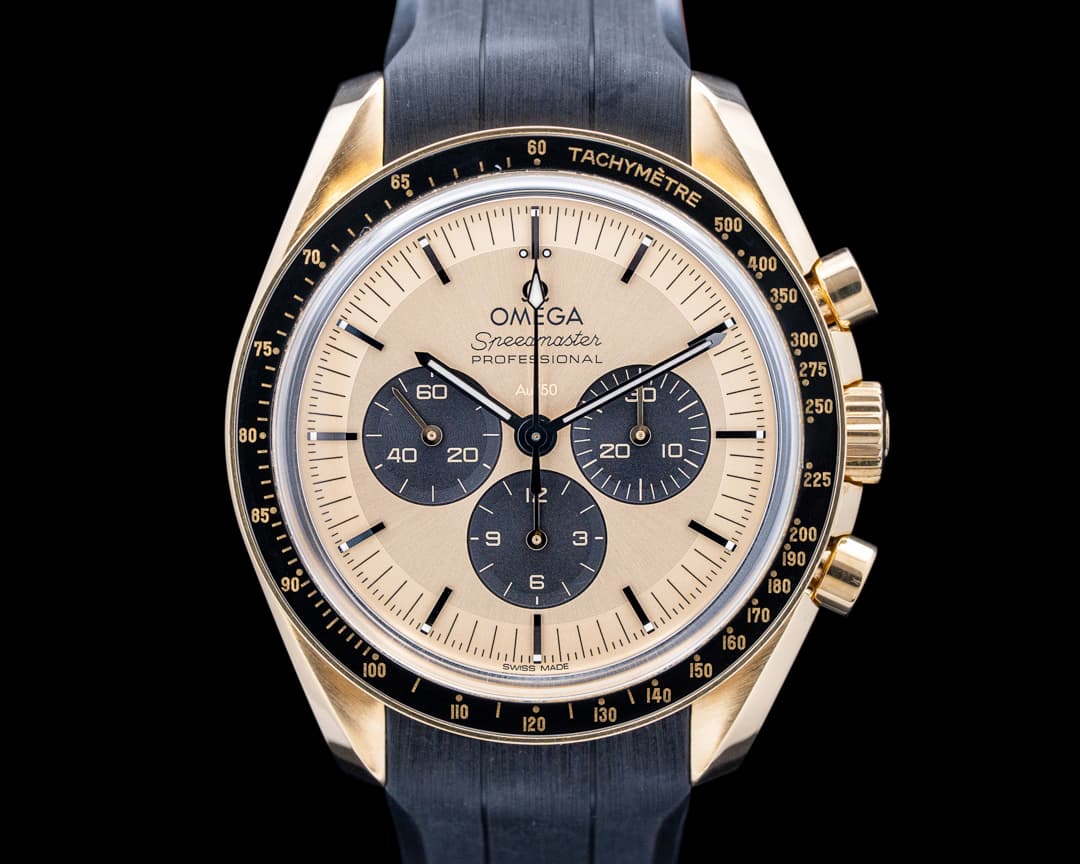
Speedmaster Moonwatch Professional 18K Moonshine Gold
$26,900
View Watch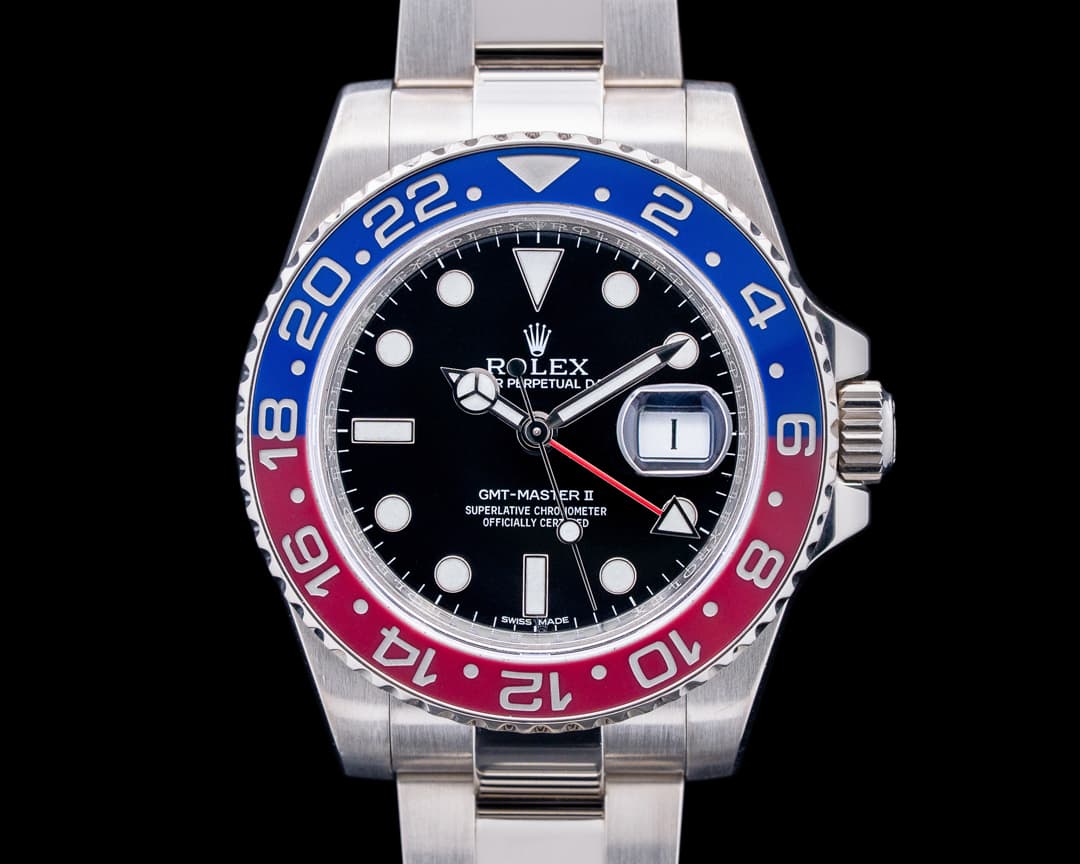
116719BLRO GMT-Master II "Pepsi" 18K White Gold Black Dial
$39,900
View Watch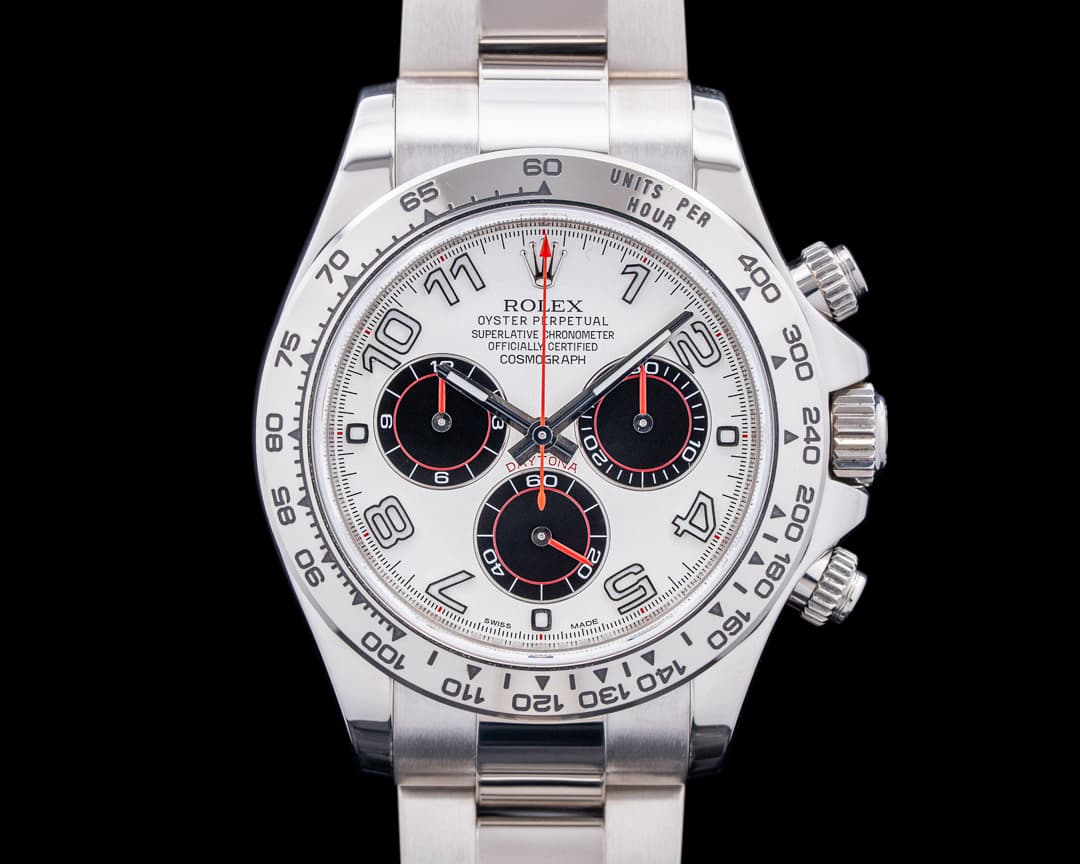
116509 Daytona SS Panda Racing Dial
$41,900
View Watch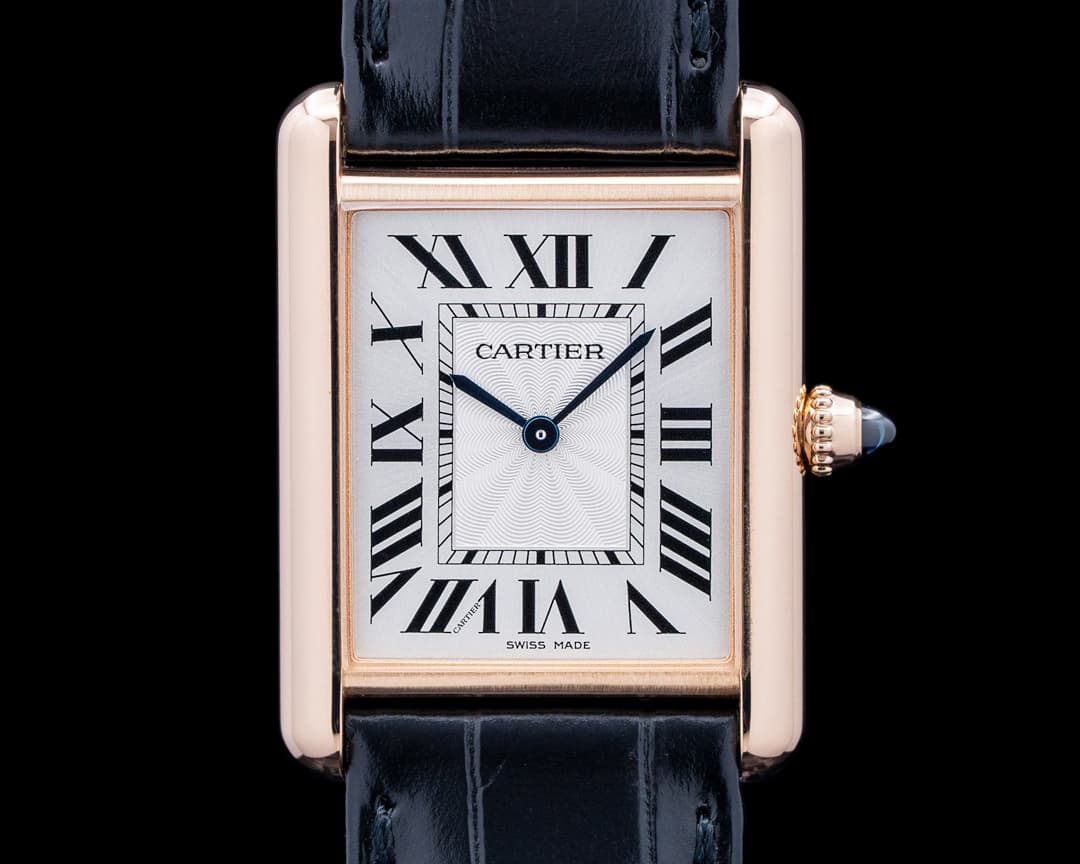
WGTA0011 Tank Louis Cartier Large 18K Rose Gold Silver Dial
$12,690
View Watch
Shop New Arrivals
Speedmaster Moonwatch Professional 18K Moonshine Gold
$26,900
View Watch116719BLRO GMT-Master II "Pepsi" 18K White Gold Black Dial
$39,900
View Watch116509 Daytona SS Panda Racing Dial
$41,900
View WatchWGTA0011 Tank Louis Cartier Large 18K Rose Gold Silver Dial
$12,690
View Watch
More Content