Longines Master Chrono Monopusher: Review and Chronograph History
Published on 10/26/2026
In 2026, chronographs could be considered wholly unnecessary, given the technology we routinely carry around in our pockets. But tactility and nostalgia still say a lot about how we choose to spend money and entertain our own brains. Pressing a tiny button and watching a seconds hand spring to action is far more satisfying than booping the screen on your smartphone. And since practicality has been chucked out the window, why do we need two pushers anyway?
Monopusher vs. Two-Pusher Chronographs: Why One Button Is Plenty
The two-pusher chronograph is history’s clear winner. There’s the Daytona, the Speedmaster, the El Primero, the Monaco, the Carrera, the Navitimer, the Tri-Compax, and the Chronomat, to name merely a few. You get the point. The monopusher sometimes gets overlooked in this veritable sea of two-pusher chronographs.
The familiar two-pusher chronograph has been around since 1934, but Longines was already pioneering wrist-worn chronographs in 1913 with its legendary caliber 13.33Z. Some sources claim this was the first wrist-worn monopusher; however, the truth is a little more nuanced.
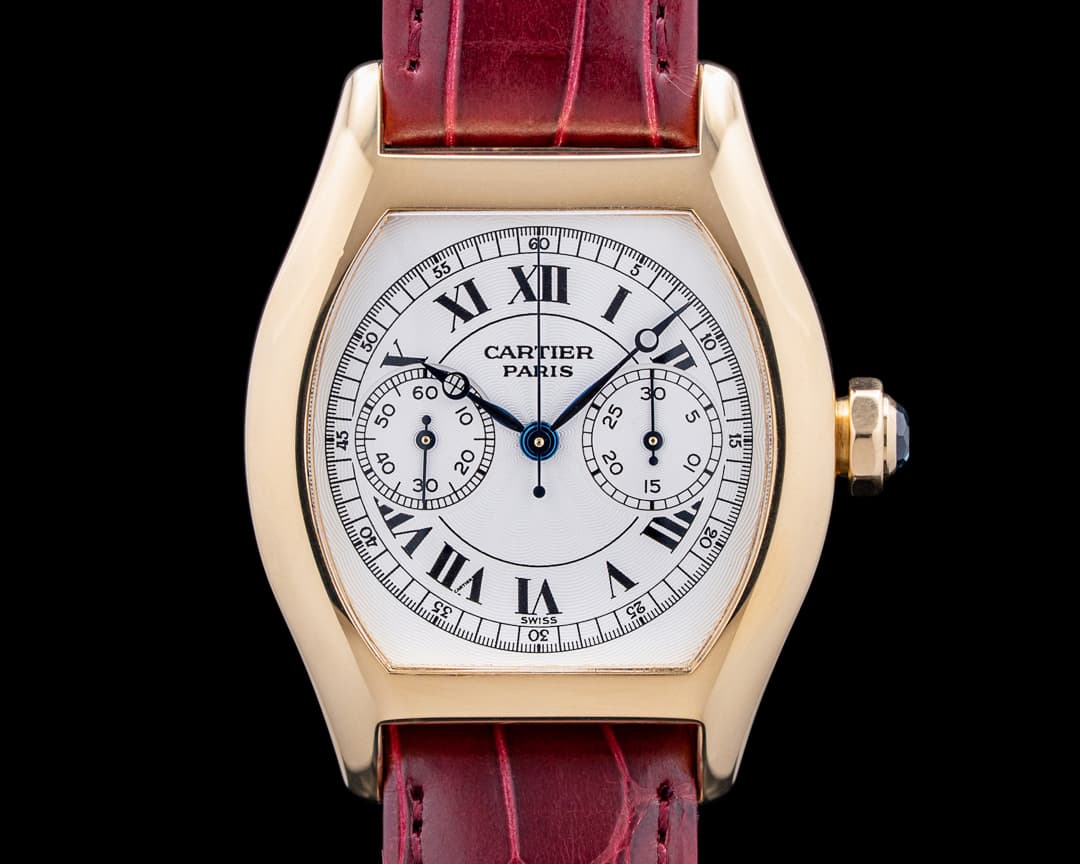
Dr. Sébastien Chaulmontet knows a thing or two about chronographs. A renowned movement developer, author of Chronographs for Collectors, and founder of independent watch brand Albishorn, Chaulmontet is one of the foremost authorities on the subject. He quickly pointed out that the history of watchmaking isn’t always as straightforward as it may seem at first glance, especially when it comes to the development of chronographs. "Longines undoubtedly made important contributions to the early development of wristwatch chronographs, notably with its calibre 13.33Z, introduced in 1913. However, monopusher chronographs already existed in pocket-watch form, and the transition to wrist-worn chronographs was a gradual process involving several manufacturers,” he said. "There is an important distinction between being a pioneer and being the inventor of something, and I think we should be careful with these historical claims," Chaulmontet added.
How a Monopusher Chronograph Works: Operation, Limits, and Ergonomics
Even if history is complicated, operating a monopusher chronograph isn’t. The two-pusher chronograph uses one pusher to start and stop the chronograph function and a second pusher to reset the chronograph seconds to zero. And if you accidentally press the reset pusher before you’ve stopped the chronograph seconds, well… science doesn’t actually know how big an explosion that will create. (In all seriousness, though, most modern chronographs have mechanisms to prevent a detrimental mishap, but where's the fun in that?)
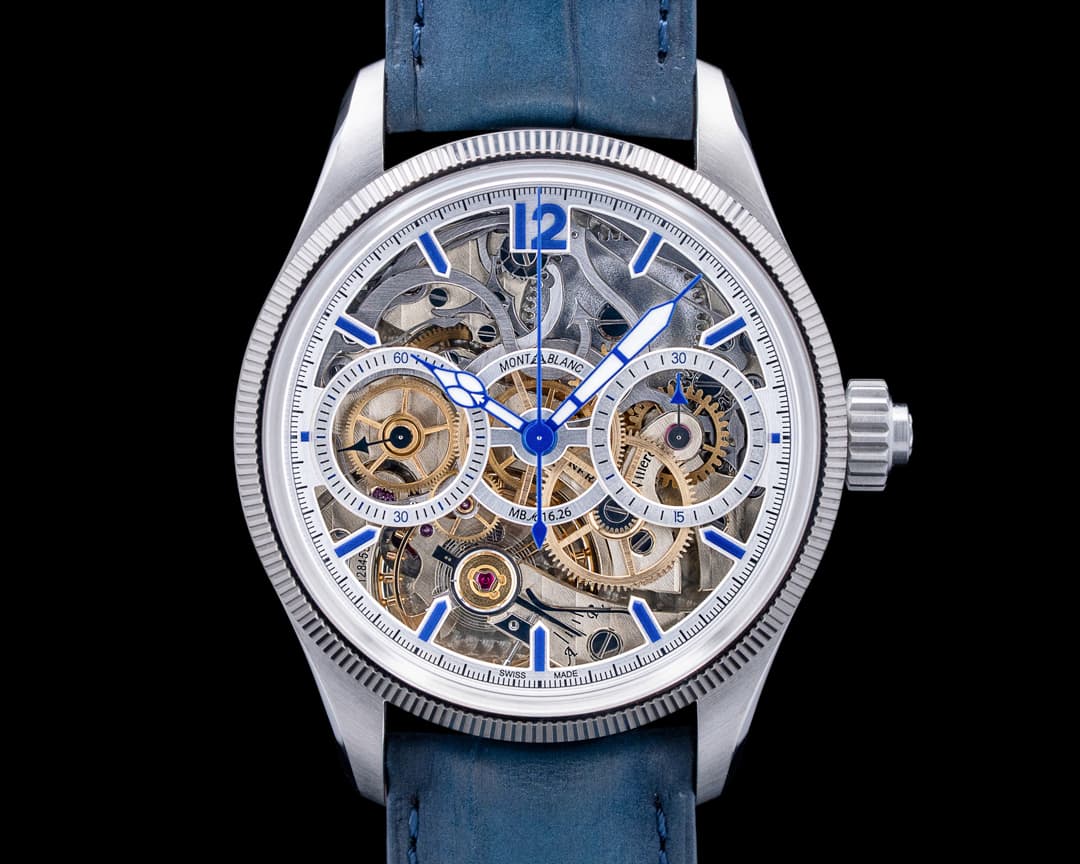
A monopusher chronograph handles all of that functionality with a single pusher, which is typically, but not always, located at the crown. Press once to start, once to stop, and a third time to reset the whole kit and caboodle. It’s clean and simple in both design aesthetic and function.
However, this arrangement has one glaring limitation, and it is not explosions. Because the functions of the monopusher operate in sequence, a traditional monopusher chronograph cannot be stopped and restarted from the same elapsed time. Once you’ve stopped it, the only choice you have next is to reset back to zero. So if you’re the fourth Omega Olympic timer, and the three automated digital timers fail while the runners are taking laps, you’ll want something a tad more sophisticated than a monopusher. For almost everyone else, the sacrifice is survivable.
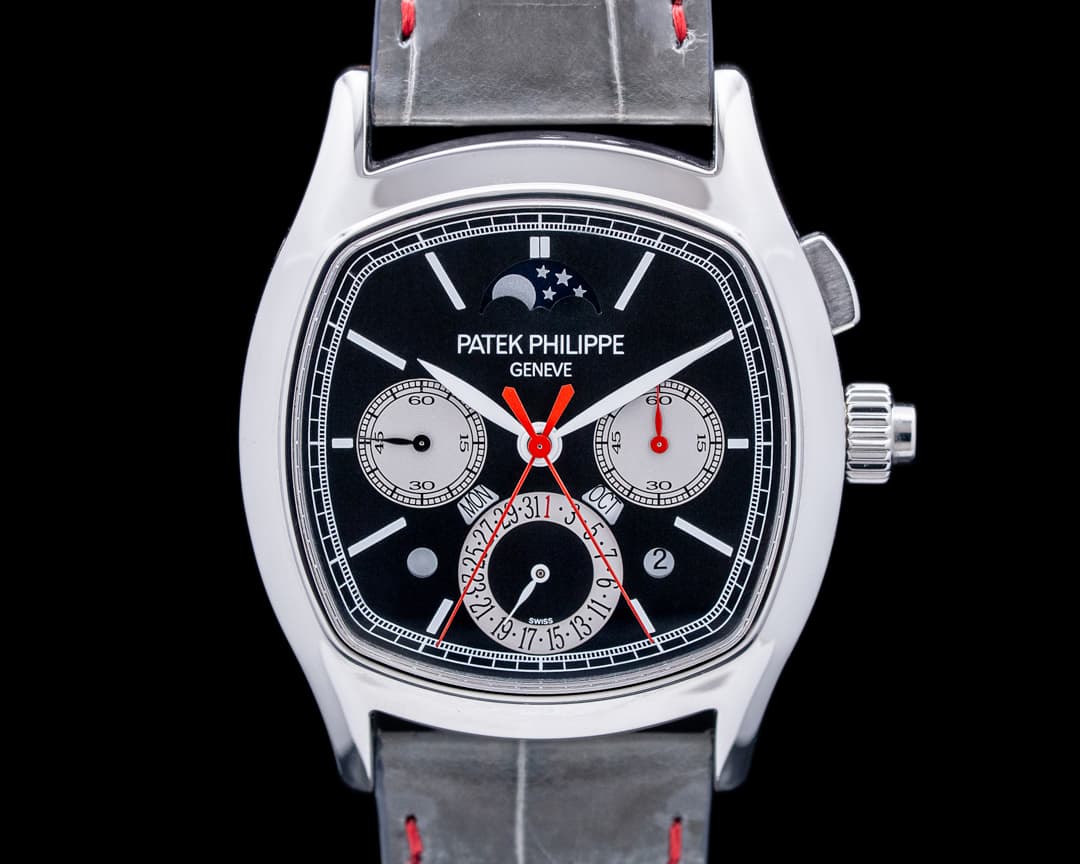
Chaulmontet agrees that the two-pusher design represents a genuine mechanical evolution, but he also believes the experience of a chronograph is about more than pure functionality. "After all, there is no entirely rational reason nowadays to own a mechanical watch in the first place, so I don’t think functionality should always be the ultimate argument,” he said, making a very fair point.
He also made an interesting point about ergonomics. At Albishorn, the monopusher sits on the left side of the case, letting the wearer operate it with their thumb rather than their index finger. "Because there is only one pusher, you can operate the chronograph very quickly without ever having to move your finger from one button to another,” Chaulmontet explained. It's a compelling argument. The monopusher doesn’t try to outperform the two-pusher chrono; today, it offers a different way to interact with the complication, and offers the opportunity for varied design.
It all comes down to style, and you could argue that monopushers clean up busy case and dial designs. Two-pusher chronos look a bit extra. Who needs all those buttons? But if case clutter doesn’t bother you, perhaps dial clutter does. With two-pusher chronos, there are usually more subdials, more hands, more text, all in an effort to let you know which doohickey is performing what task and for how long. Remove one pusher, or better yet, integrate both into the crown, and the entire watch is cleaner overall.
Longines Master Chrono Monopusher Review
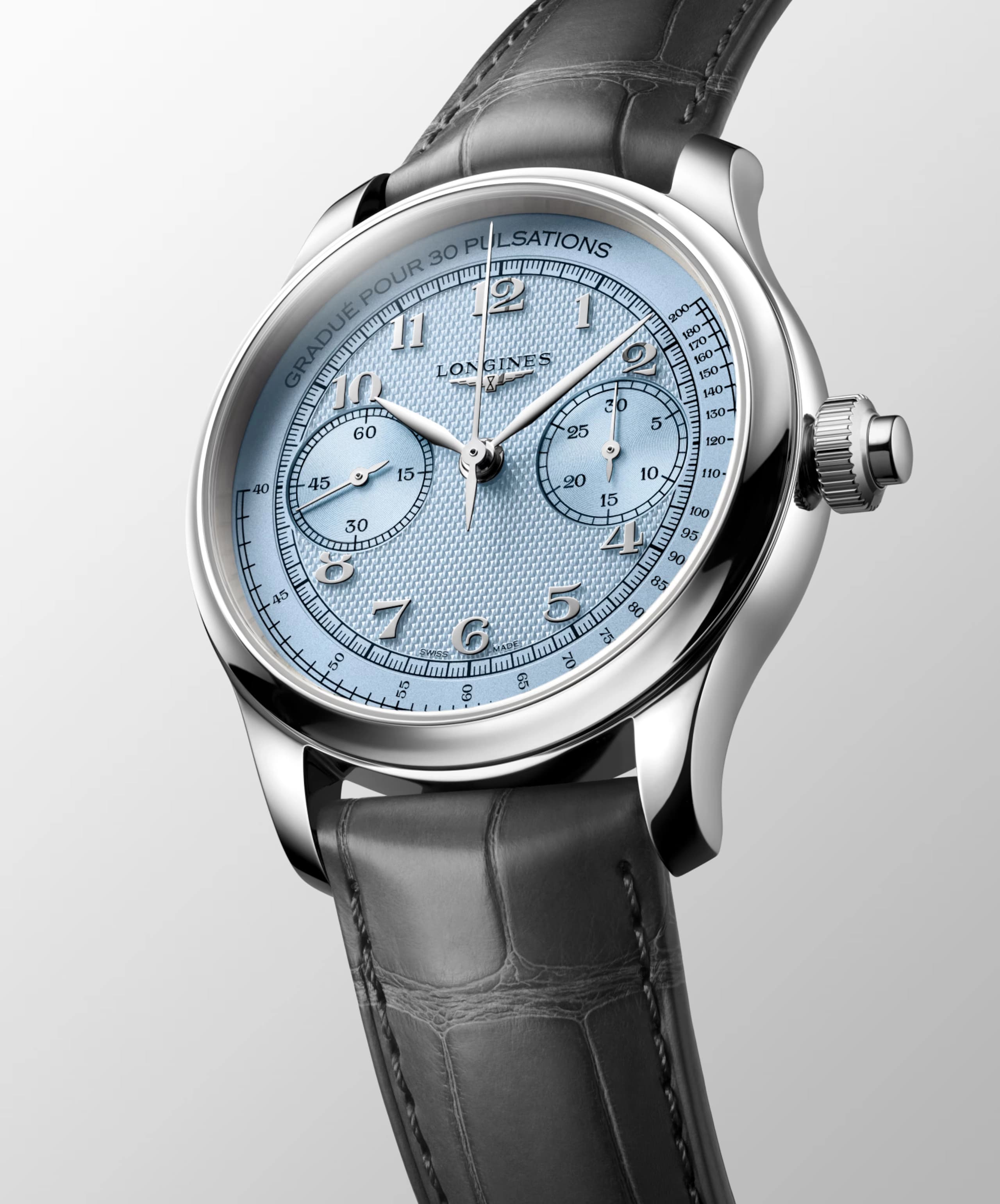
The new Longines Master Chrono Monopusher offers a clean design, streamlined function, and, on top of it all, a sophisticated mix of dial textures, motifs, and colors that add style without going too far. It’s a fetching addition to the redesigned Longines Master Collection. This collection originally debuted in 2005 and featured more classically styled pieces that sat on the dressier end of the Longines catalog. The monopusher fits into that realm, but elevates it to a slightly sportier level with the addition of the chronograph complication.
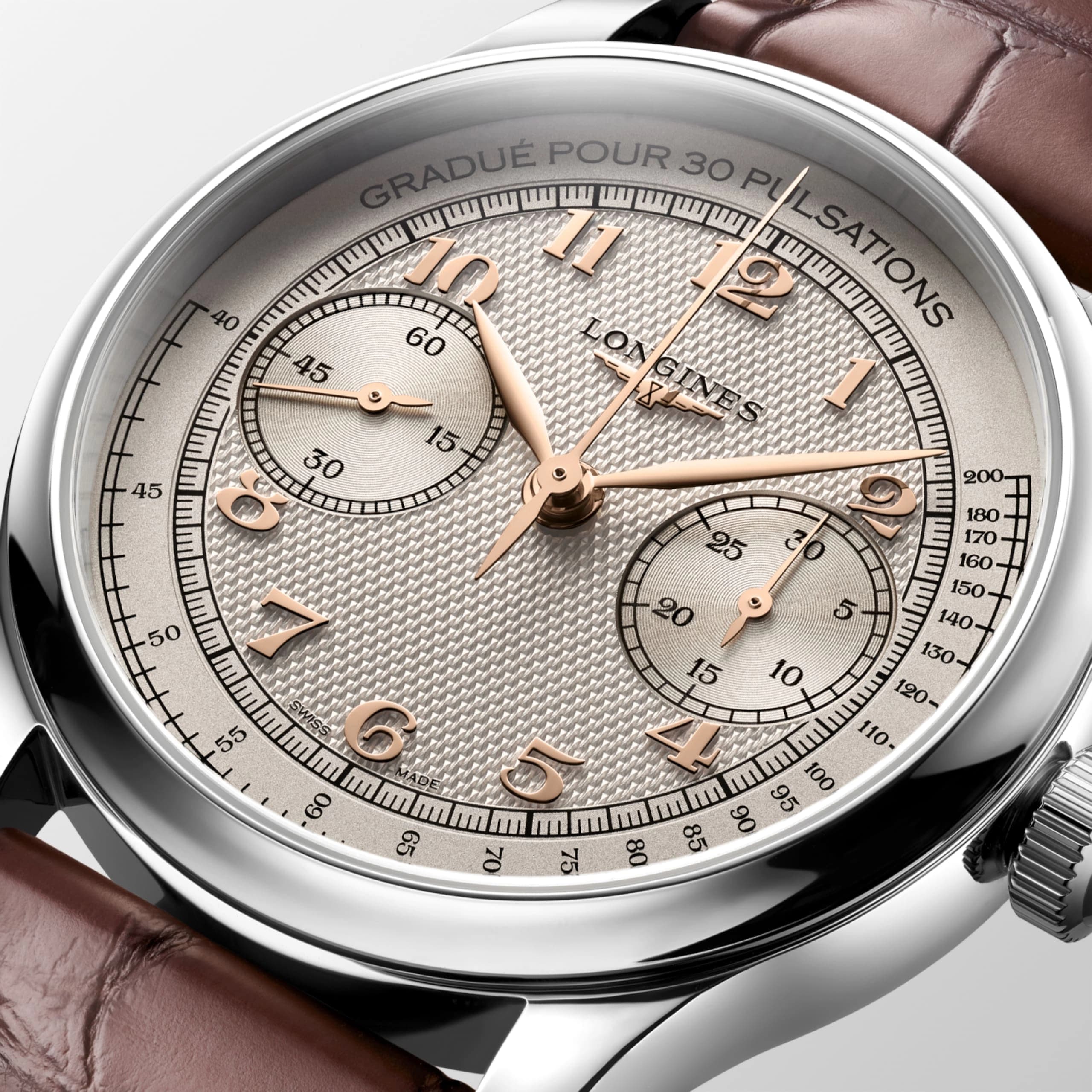
At 41mm in diameter and 12.6mm thick, the Master Chrono isn’t insubstantial, but it’s not monstrous either. It’s reasonable given the chronograph functionality and the size of many other competing chronographs. The Longines design integrates the chronograph pusher directly into the crown for a clean silhouette. It makes the watch a bit more unassuming. At a quick glance, it could even be mistaken for a conventional dress watch, before the dial gives away the farm.
This watch is all about that beautifully balanced dial. First, you can choose between a frosted blue dial or an ivory dial. The former is effortlessly cool, while the latter offers warmer accents and a more traditional appearance. Both dials feature a barleycorn texture in the center, surrounded by a pulsometer scale. The time-telling numerals are applied, while the small-seconds and 30-minute counter are recessed into the main dial and feature a snailed finish. The hour and minute hands add to the visual complexity. At first, they seem like more traditional leaf hands; however, they’re more angular at their bulkiest section than is typical. The Master Chrono Monopusher seems elegant overall, yet still appealing as a tool for getting the job done.
Visible through the sapphire crystal exhibition caseback is the Longines caliber L799.5, developed from the L788 family of previous Longines monopusher movements. This new movement operates at 28,800 vibrations per hour and offers approximately 68 hours of power reserve. It utilizes a column wheel and a vertical clutch to control the chronograph. The movement is finished beautifully and features Geneva stripes, perlage, polished components, blued screws, and a blue column wheel. Finally, the movement is manually wound, which seems appropriate, as someone interested in a monopusher chronograph would likely enjoy the added tactility of winding their watch in the morning.
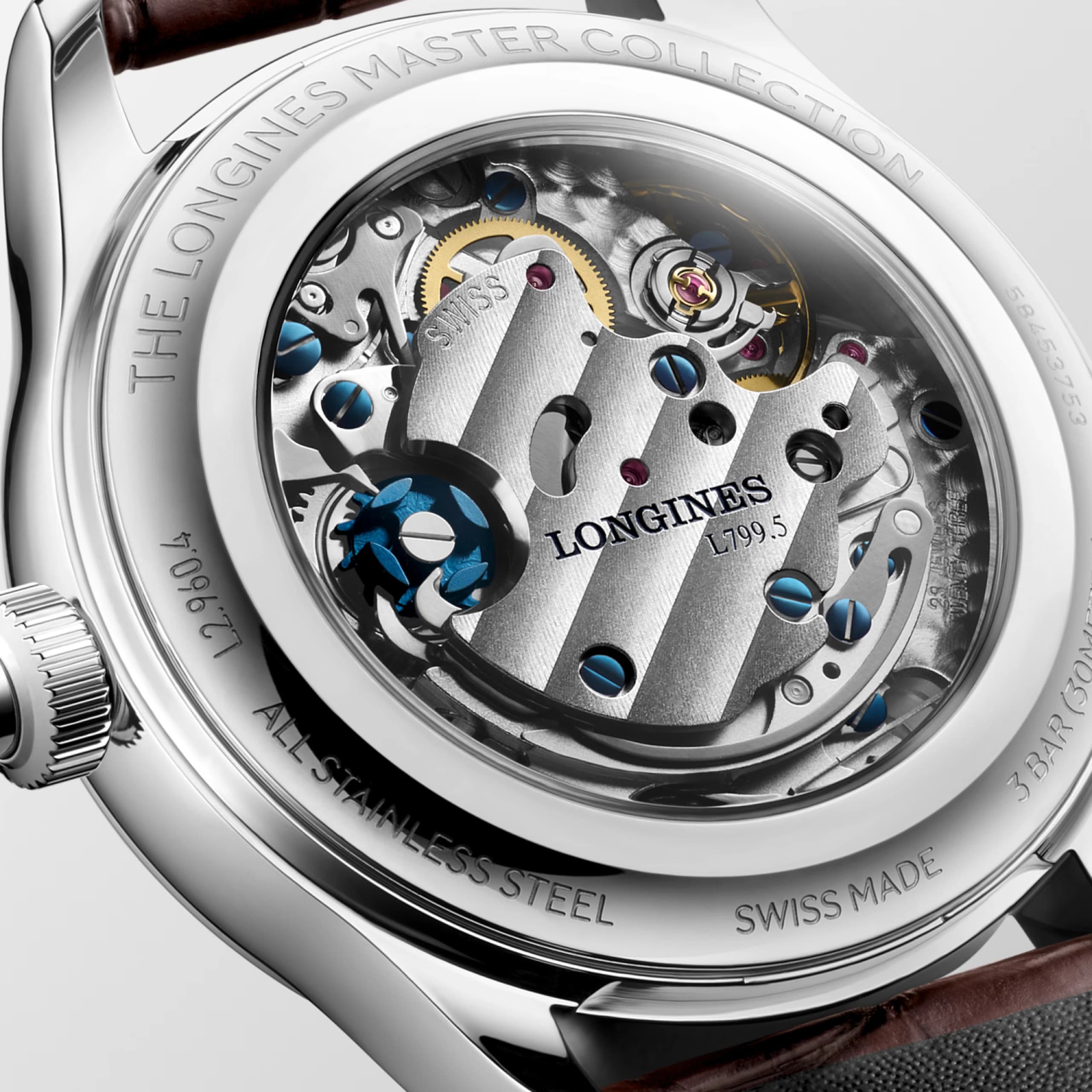
At $3,900, a steal in the entry-level luxury chronograph market, the Master Chrono Monopusher makes a convincing argument for the complication. It offers legitimate chronograph mechanics, a strong historical connection, and a distinctive design.
Chaulmontet shares that enthusiasm, though he offers an interesting take on the difference between today's Longines and the Longines that helped shape chronograph history. "It’s certainly a lovely chronograph, and very well priced. Longines knows how to make attractive, historically inspired watches for a broad audience, and I think it does that extremely well,” he said. He also pointed out that Longines made historically significant chronograph movements, including the 13.33Z, 13ZN, and 30CH. These examples are from a period when Longines reached the highest levels of Swiss watchmaking.
"Modern Longines is a very different proposition. It makes excellent, accessible watches for a much larger market, which is perfectly respectable. But I don’t think we should confuse that with the position the manufacture once occupied at the very pinnacle of chronograph development,” Chaulmontet said. This difference makes the Master Chrono Monopusher more interesting, as it brings a fun, historically-rooted complication to an audience that might otherwise find a mechanical monopusher financially out of reach.
Other Monopusher Chronographs to Consider
While the new Longines Master Chrono Monopusher is a tempting offer for a brand new watch, the pre-owned market offers plenty of unique examples of how the complication has been used, and the best argument for the monopusher's continued relevance is how differently watchmakers use it.
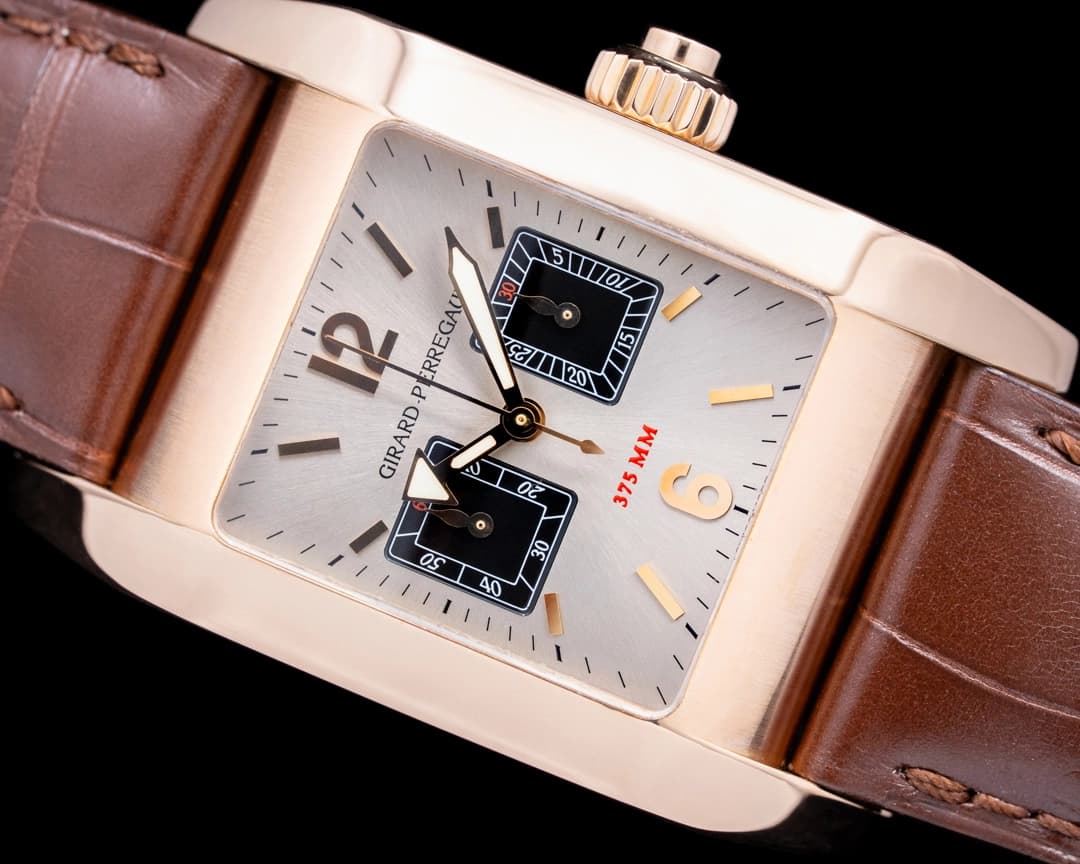
The Girard-Perregaux Ferrari Chronograph in 18k rose gold is an incredible alternative that balances instrument and indulgence. The Ferrari connection pushes the chronograph toward its motorsport roots, yet you won’t find an overt prancing Ferrari horse on the dial. The precious-metal rectangular case adds a smidge of extra elegance.
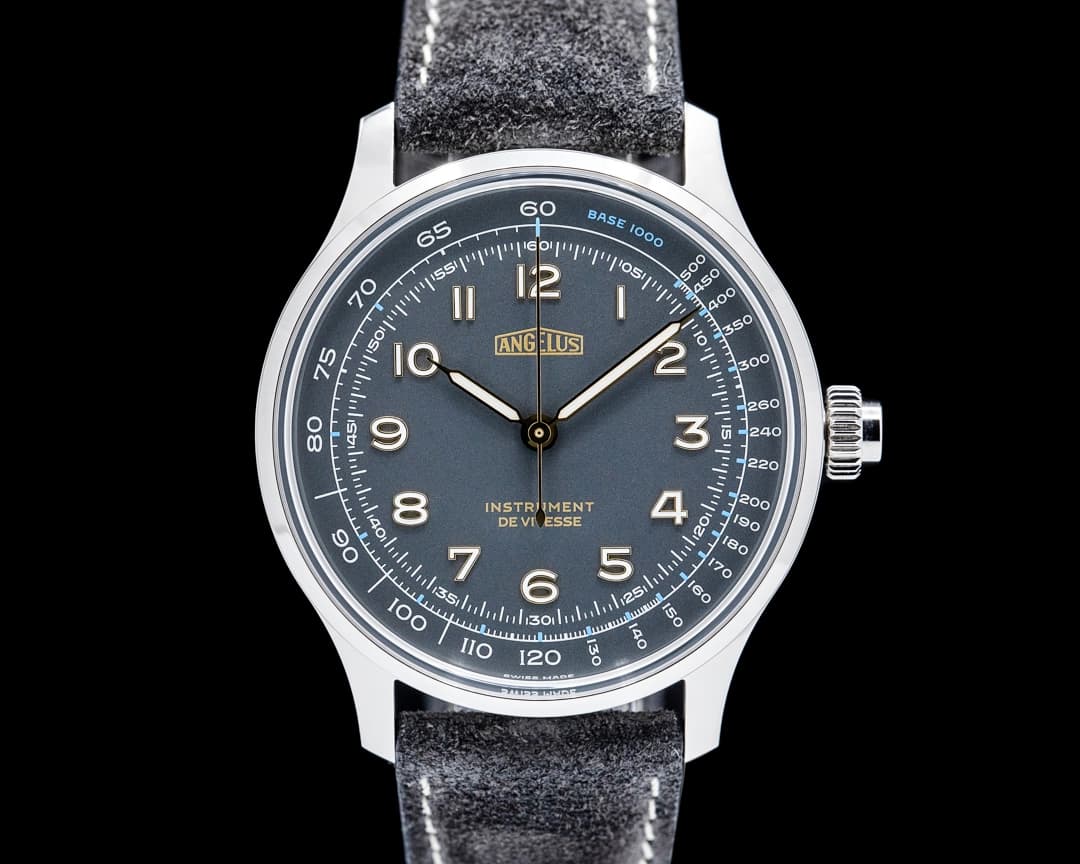
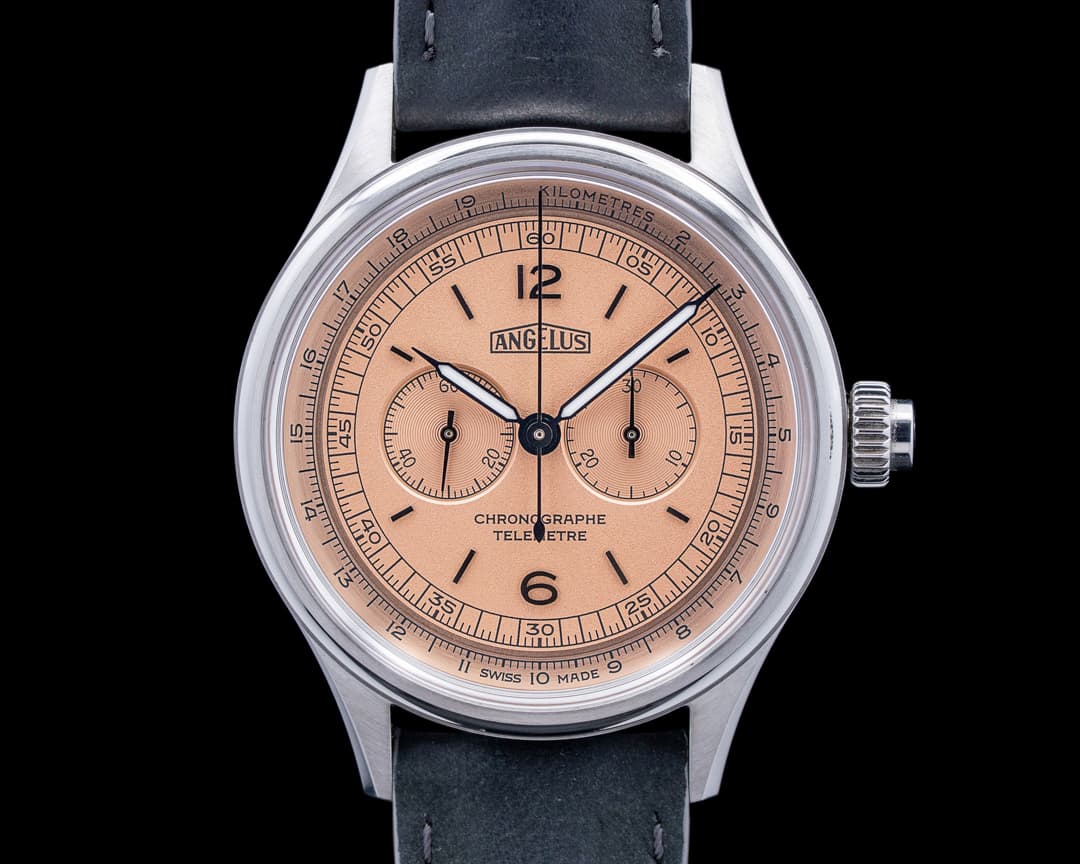
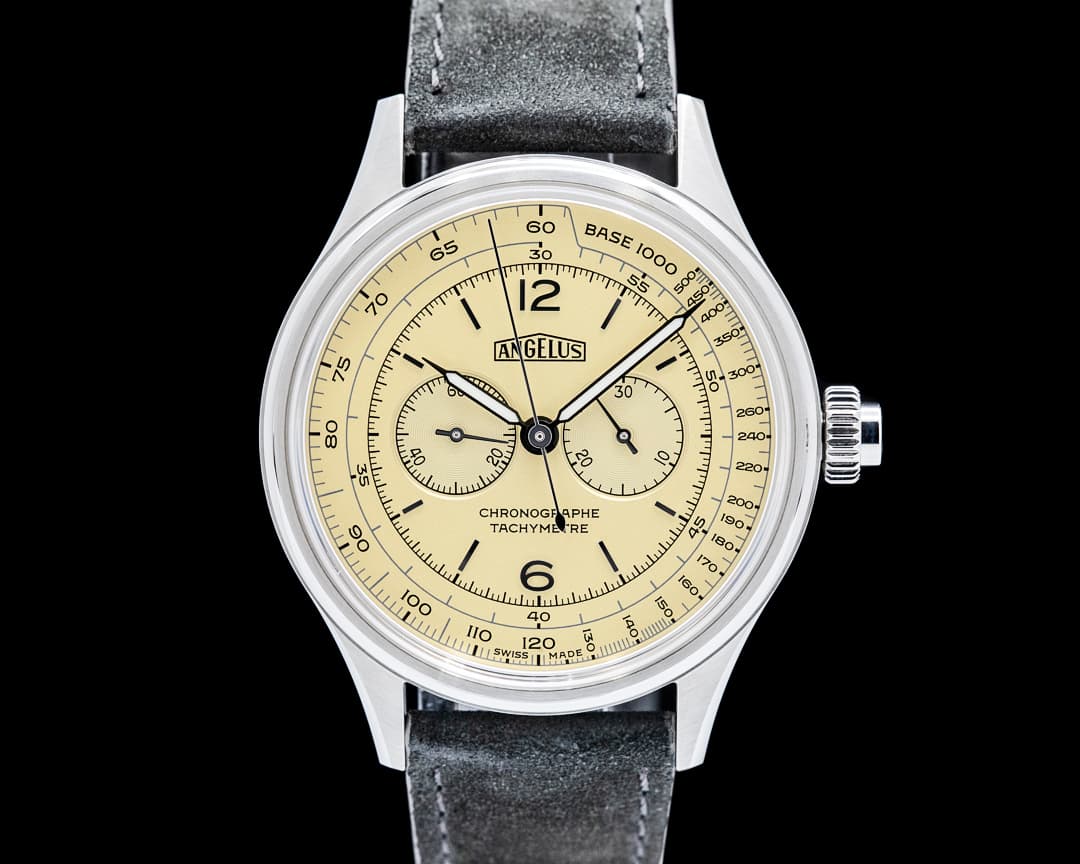
Then there is the Angelus Instrument de Vitesse. Rather than cramming typical chronograph indications onto the dial, the Instrument de Vitesse focuses on its motorsport-inspired design through a singular lens. There are no subdials, no small seconds, just a chrono seconds hand and a tachymeter scale. It’s like an early dashboard instrument. The Angelus Chronographe Télémètre x Monochrome offers another take compared to the Instrument de Vitesse; it leans harder into the vintage appeal.
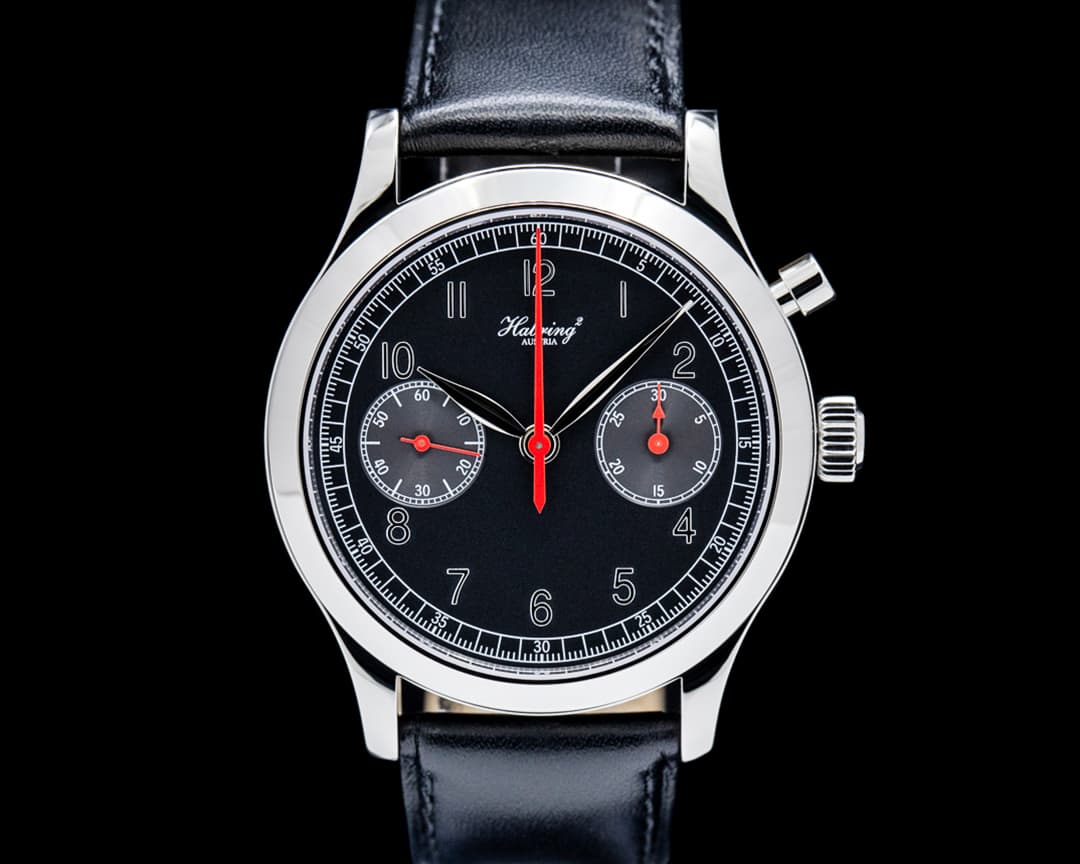
Finally, Habring², a brand built for enthusiasts, is an IYKYK watch if there ever was one. The Chrono-Felix x Define Watches takes the monopusher into the competitive arena of independent watchmaking. This watch is for the person who values movements and interesting complications first and isn’t looking for any pomp.
Is the Longines Master Chrono Monopusher Worth It?
Would you sacrifice the ability to restart for something you may find more considered in terms of design? The monopusher is not a “better” or “improved” variation of the more recognizable two-pusher chronograph, but it…presses us… to consider what we really need in terms of functionality.
Shop New Arrivals
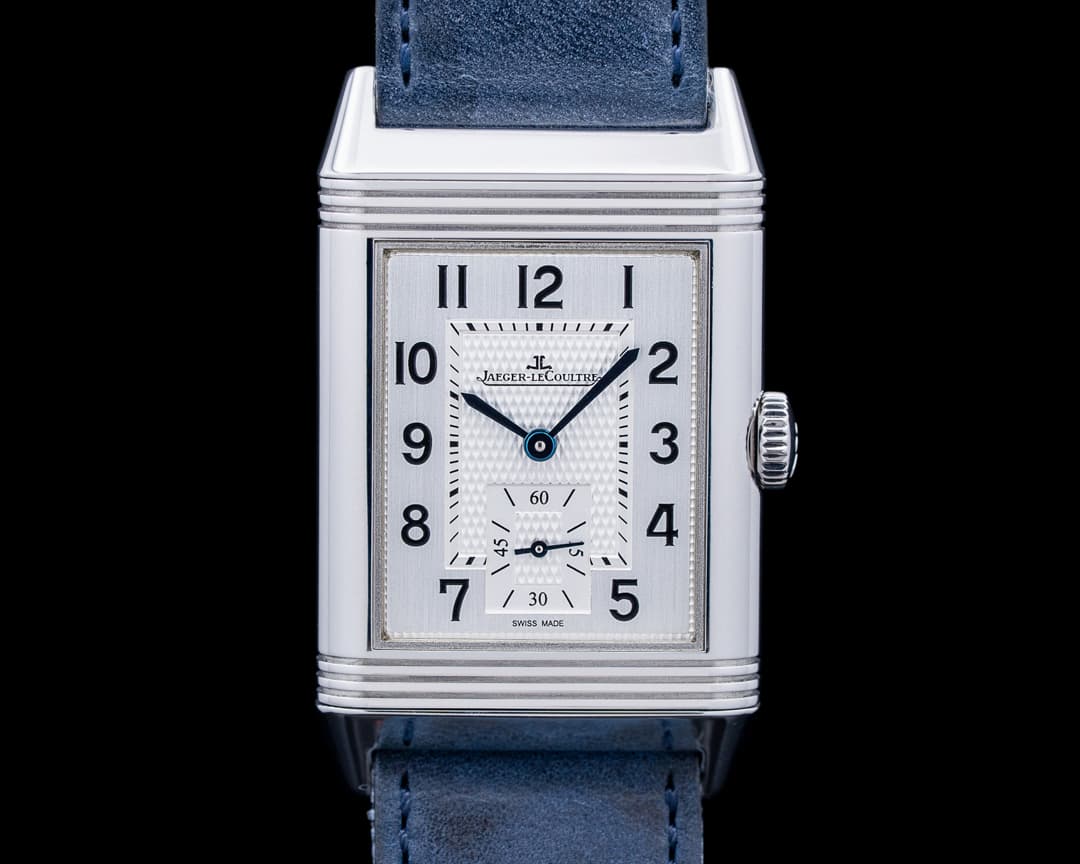
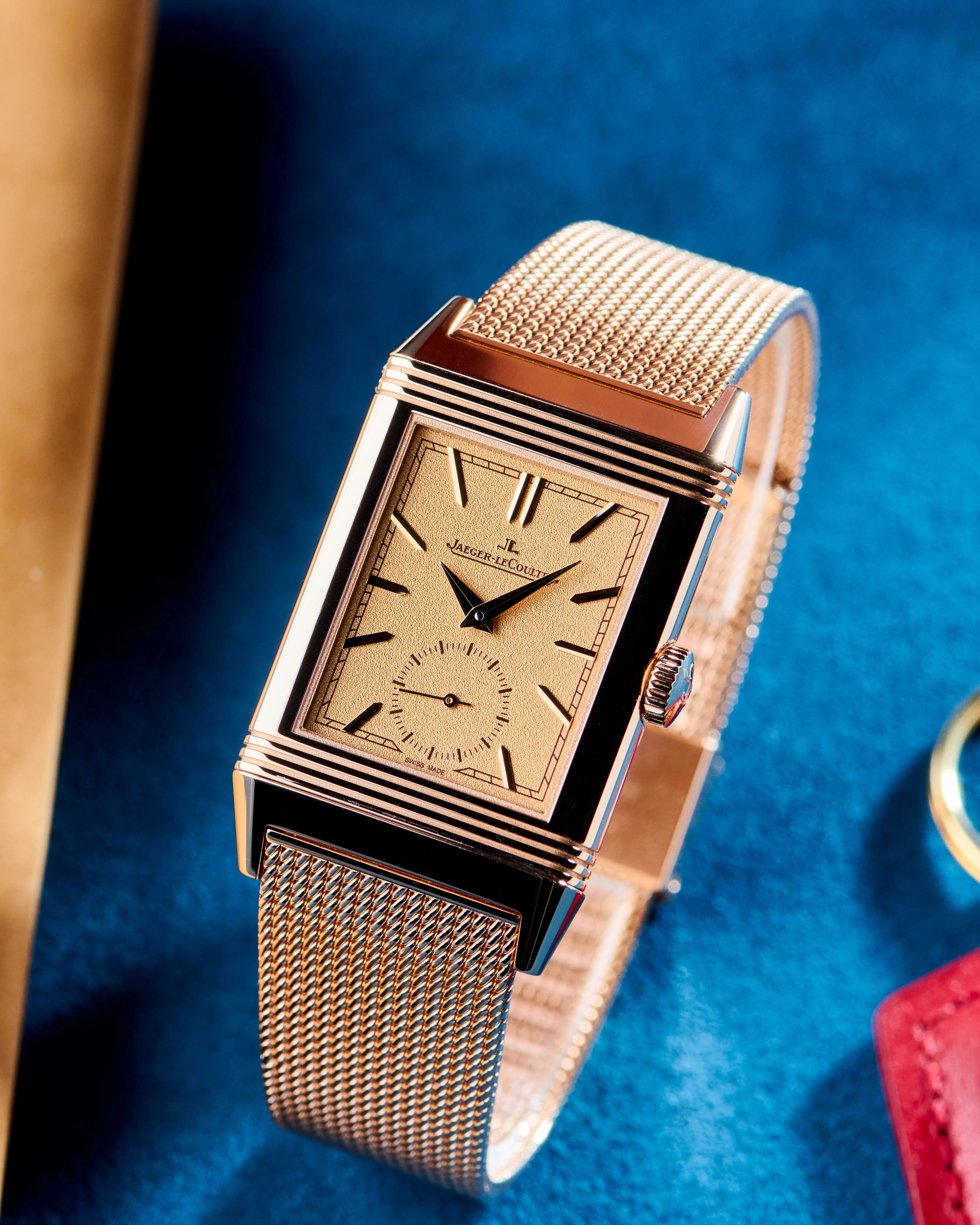
Q3858520 Reverso Classic Large Small Seconds SS Silver Dial
$9,500
View Watch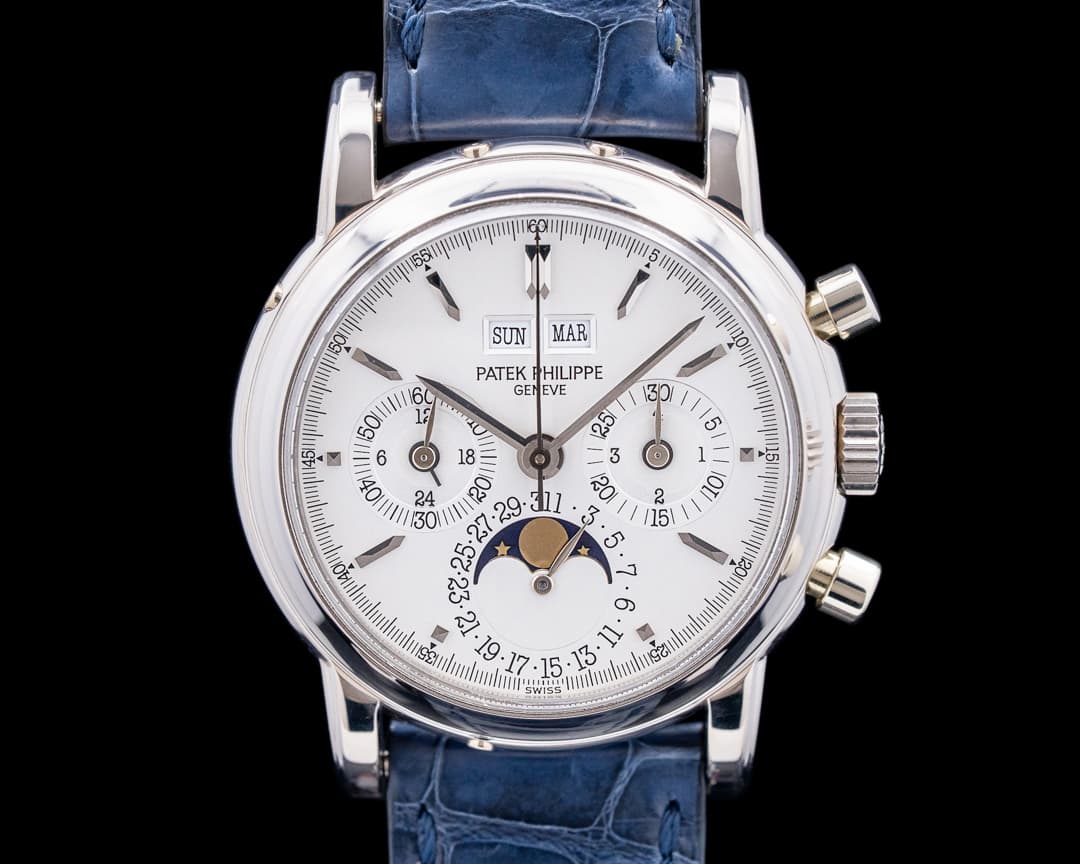
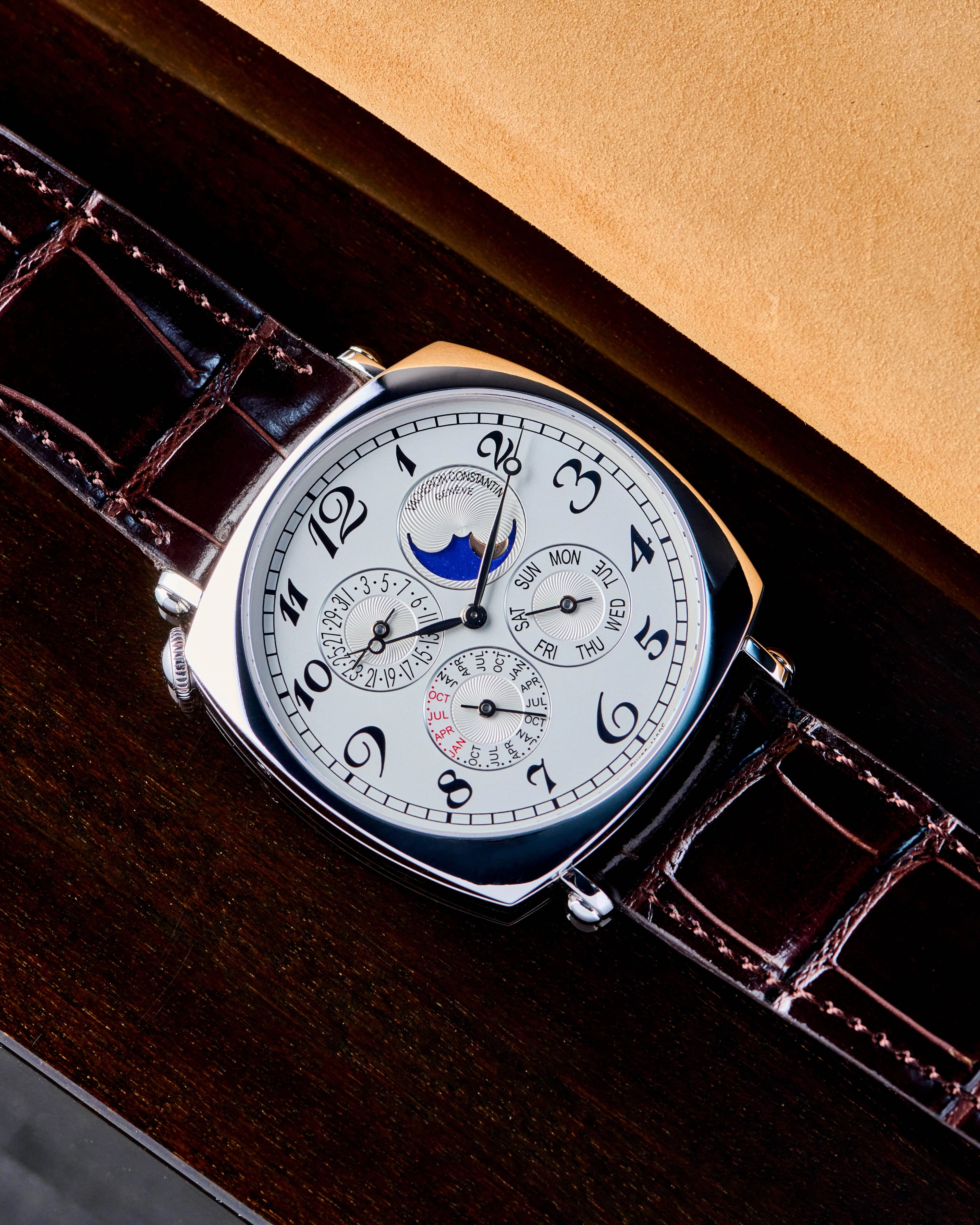
3970G Perpetual Calendar Chronograph "Transitional" BIG HALLMARKS RARE
Inquire for pricing
View Watch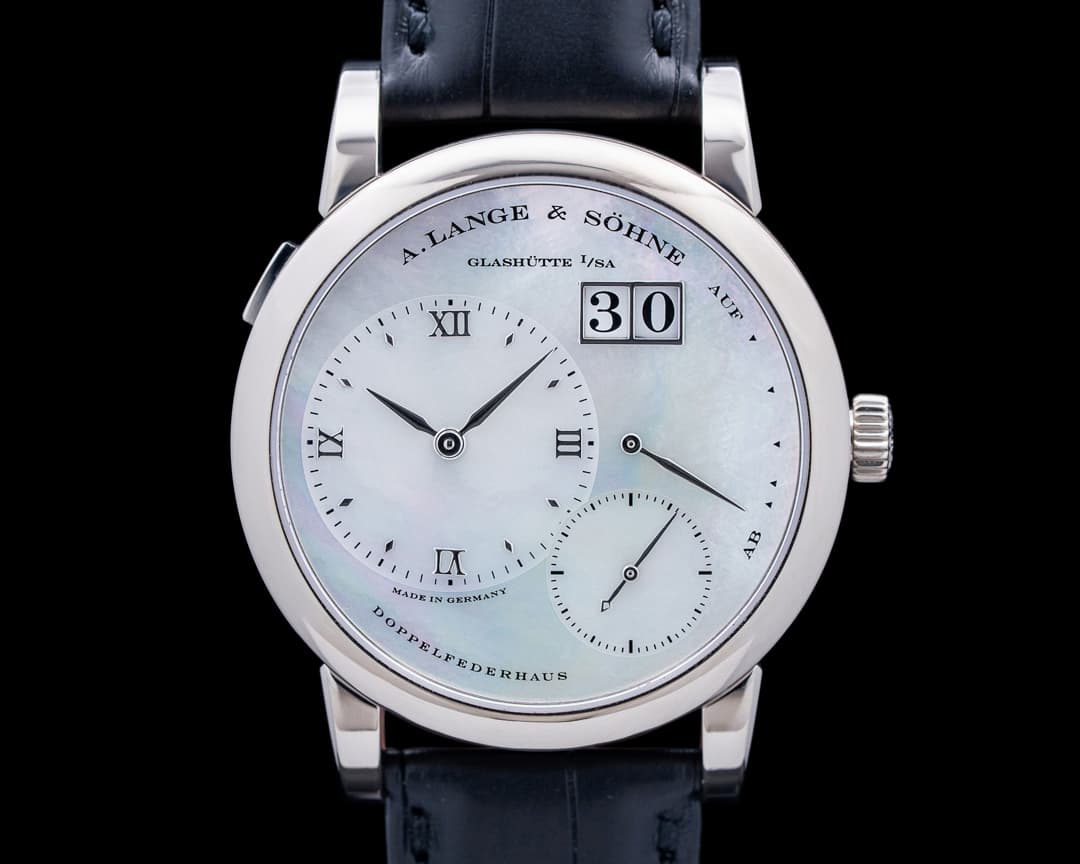
110.029 Lange 1 "Soiree" 18K White Gold Mother of Pearl Dial
$135,000
View Watch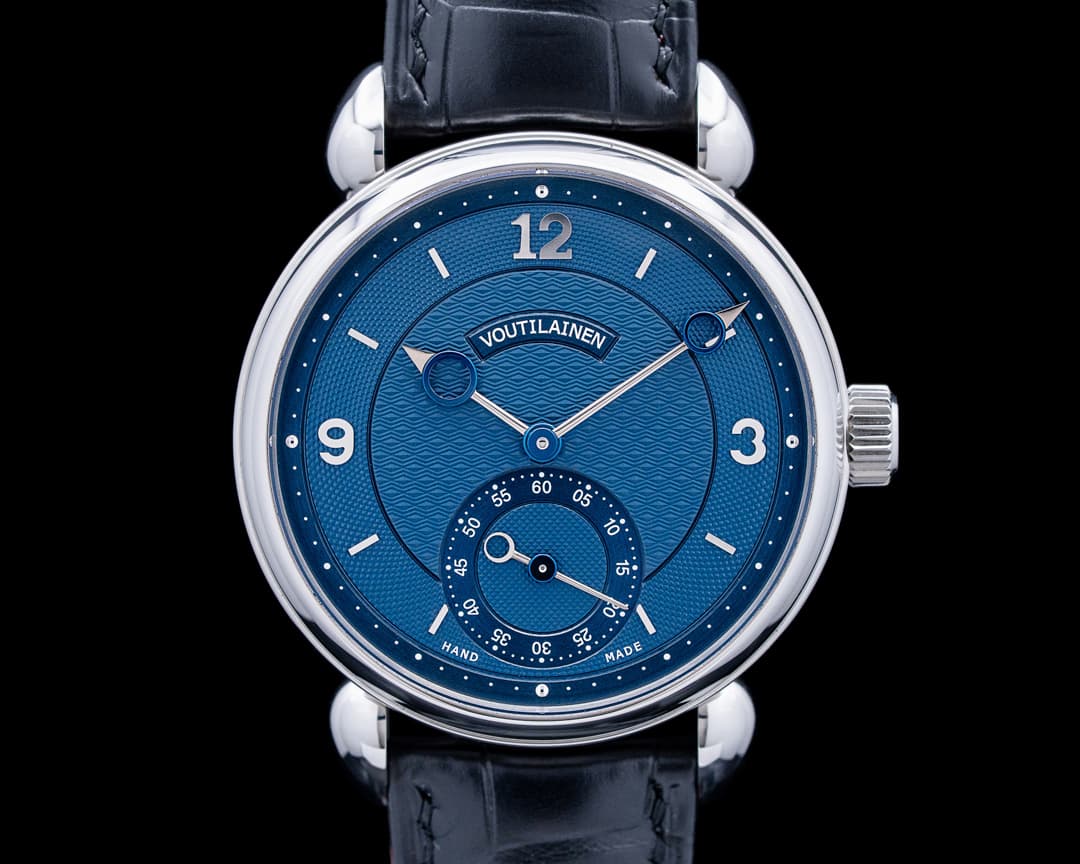
Vingt-8 SS Blue Dial 2026 RARE UNWORN
Inquire for pricing
View Watch
Shop New Arrivals
Q3858520 Reverso Classic Large Small Seconds SS Silver Dial
$9,500
View Watch3970G Perpetual Calendar Chronograph "Transitional" BIG HALLMARKS RARE
Inquire for pricing
View Watch110.029 Lange 1 "Soiree" 18K White Gold Mother of Pearl Dial
$135,000
View WatchVingt-8 SS Blue Dial 2026 RARE UNWORN
Inquire for pricing
View Watch
More Content